
Tech
Fitbit Edge vs Fitbit Charge 6: Is Google’s Rumored Tracker Worth the Upgrade?

Fitbit Edge leaks point to GPS, an altimeter, apps, and seven-day battery life. See how it compares with Charge 6 and whether it is worth waiting for.
The post Fitbit Edge vs Fitbit Charge 6: Is Google’s Rumored Tracker Worth the Upgrade? appeared first on TechRepublic.
>
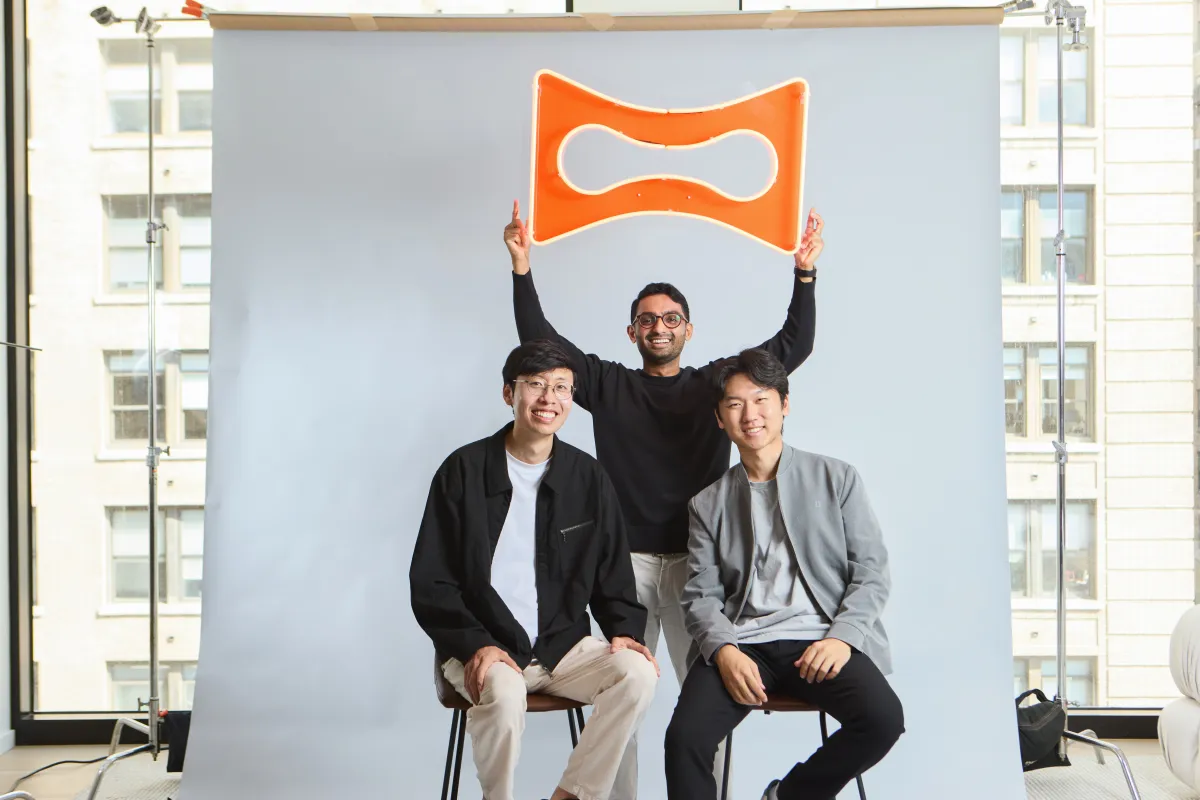
Melius, an AI platform for generating ad campaigns, images, and videos, announced on Tuesday that it raised a total of $25 million in funding, including a $20 million Series A led by CRV and a $5 million seed round led by General Catalyst.
While the startup claims to have hit more than $1 million in annualized revenue within two months of coming out of stealth in July, co-founder Joowon Kim (pictured on right) admits that Melius didn’t hit it out of the park initially.
When the New York-based company first launched over a year ago, Kim and his co-founders, Young Kim (pictured on left) and Arnav Ramu (pictured center) set out to build an AI-powered performance marketing tool. The three knew each other from working as engineers at Ramp, the corporate spending and finance software company.
More than six months after building the product, the co-founders decided their original idea didn’t “have legs,” Joowon Kim told TechCrunch.
Instead of helping marketers manage and optimize ad spend, the team chose to focus on what it saw as a much larger opportunity: building the tools that generate the creative assets and campaigns themselves.
“We scrapped the entire codebase; we burned all of it,” Kim said. Melius quickly went to work on an entirely new product. Nearly a year after its initial launch, it revealed a platform that it describes as an “agents lab for creative work.”
Melius is far from the only startup helping ad agencies, marketers, and brands generate creative assets and campaigns with AI. Competitors include rapidly growing Higgsfield, which was valued at $5.4 billion in August, as well as other small startups, including Krea and Flora AI.
Kim isn’t concerned about the competition.
He acknowledged that Higgsfield, a three-year-old that has hit over $700 million in annualized revenue, “is growing like mad,” but according to Kim, the size of the market is so large that it can support multiple competitors.
“There are a lot of players, which is pretty exciting,” he told TechCrunch. “That means there are customers to be won and there is demand in this space.”
As for why former Ramp engineers are building an ad generation product, Kim, who describes himself as a social media influencer, says he has been passionate about making short videos since elementary school and once dreamed of becoming a famous YouTuber.
“I tried my best to make vlogs,” he said. “My dad was great at using FinalCut Pro, but I wasn’t.”
Those early vlogs never quite took off, but his fascination with making digital media remained.
Now, with Melius, he’s building the tool he always wanted: a platform where anyone, including seasoned creative directors, can turn their ideas into reality using plain language.
When you purchase through links in our articles, we may earn a small commission. This doesn’t affect our editorial independence.
>
Tech
Silicon Valley’s AI wunderkind launches Underdog, the most private Instinct/Muse competitor yet
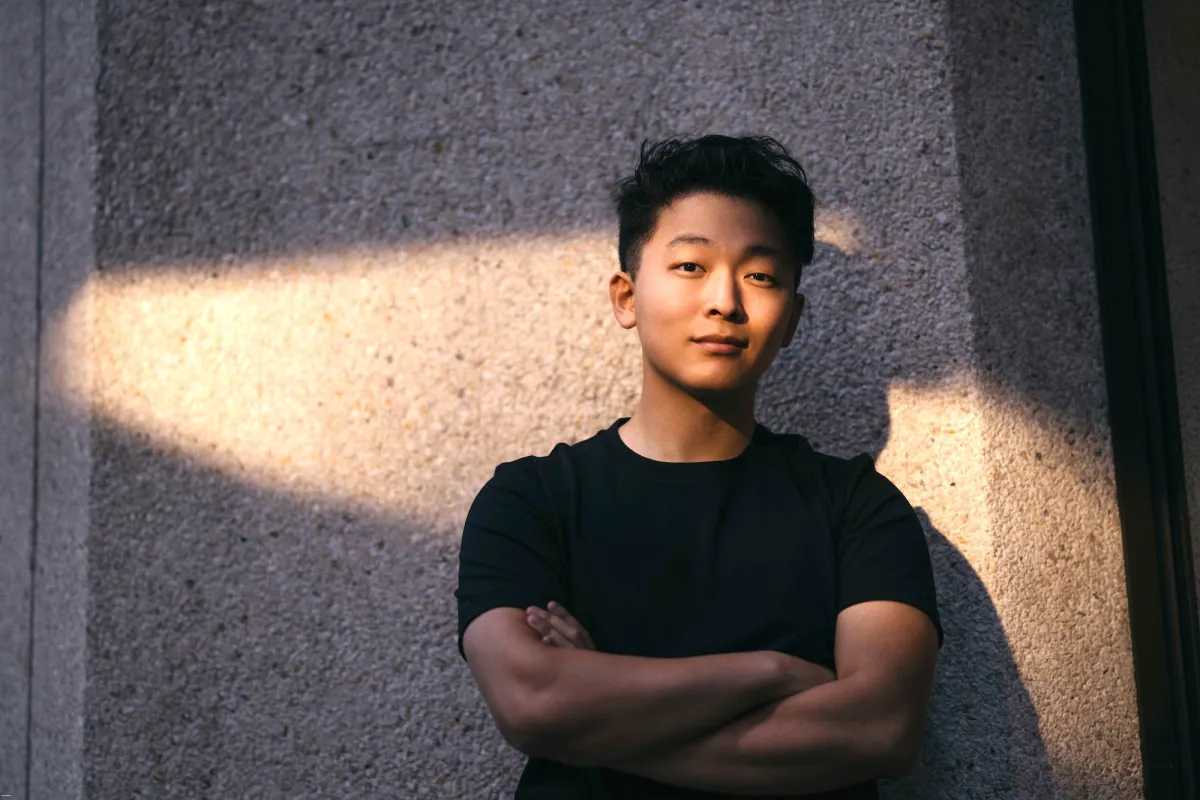
When self-taught coder Sigil Wen was 17, he moved to Silicon Valley and lived in an AI hacker house with famed AI researcher Andrej Karpathy.
While there, he hacked and coded alongside other people who would become the biggest names in AI, like Perplexity founder Aravind Srinivas and OpenAI researcher Noam Brown. He tested early versions of AI tools that would later become well known, including a chatbot shared by Anthropic co-founder Ben Mann that would become Claude, an image generator from David Holz that would become Midjourney, and what would become OpenAI’s GPT-3 and the image generator Stable Diffusion. Prominent investor and entrepreneur Naval Ravikant hired him for Airchat, Ravikant’s now-defunct rival to the Clubhouse social network.
For fun, he figured out how to get GPT-2 running on his Apple Watch. “It was a magical time,” Wen told TechCrunch.
Now a Thiel Fellow — the program from investor Peter Thiel that invites young founders to pursue projects instead of college — Wen on Monday launched an invite-only beta of Underdog, one of the most private AI assistants Silicon Valley has yet to offer. The model runs wholly on-device, meaning the user’s data remains on devices they already own, currently Macs and Windows PCs, with Linux, iPhone, and Android versions coming soon.
Wen built Husky, an inference engine, or software that runs AI models, and Husky is designed to run fast. Unlike other on-device engines, Wen says, it moves less data between the computer’s main chip and its graphics chip.
Underdog has other security features baked in, too, like encrypting the keys to the email and other accounts that users authorize Underdog to access.
Underdog is, however, using much smaller models than today’s state-of-the-art ones hosted in data centers. It currently uses a 27-billion parameter reasoning model fine-tuned from Qwen3.8 27B.
Wen argues that this model compares favorably with Claude Opus 4.6 in some benchmarks, or what was considered top performance six months ago. He says that means it can handle the everyday tasks that people want an AI assistant to do, like shopping research or answering math homework questions.
“You don’t need to sacrifice your privacy for the capability because they’re just as capable,” Wen says. He adds that small on-device models will continue to grow more capable over time.
Perhaps the most interesting thing about Underdog is its early business model. The app will be free at first and never ad-supported. Since the AI runs on users’ machines, Underdog doesn’t have the giant overhead of paying a provider for inference. “I don’t have to charge you a subscription to run this because my costs are so super low,” he said.
Instead, with Stripe co-founder Patrick Collison as one of his angel investors, he’s borrowing a play from the fintech era. Underdog will take a tiny percentage of payment transactions that the AI assistant makes using Stripe’s secure payment rails, something like an interchange fee. In this way, the AI assistant never has to mine your data. It is as aligned with you as your bank or credit card providers.
This runs contrary to the business motivations of many of the other players in AI assistants, whose privacy policies allow them to collect data on users that they may sell to advertisers or other third parties, or use to train other models.
That kind of data collection could be a particularly treacherous trade-off for users of an AI assistant, which may need access to the most intimate details about you in order to be useful, from medical conditions to financial data to data on your kids.
As Wen wrote in what he calls his AI manifesto, “Why should using AI require surrendering your private information?”
He tells TechCrunch: “I honestly want to build Underdog for myself. I’m building a product that I would be proud for my future children to use.”
The startup behind Underdog is named Conway Research, and Collison isn’t its only big-name investor. Conway is backed by Andreessen Horowitz via partner Chris Dixon, as well Khosla Ventures, Hummingbird, SV Angel, the Anthology Fund (the partnership fund between Menlo Ventures and Anthropic) and a prominent list of angel investors that includes Vercel founder Guillermo Rauch, Noam Brown, and Deedy Das, among others.
When you purchase through links in our articles, we may earn a small commission. This doesn’t affect our editorial independence.
>

As decision models spread across the industry, a company called Musubi has a new idea for how to put them to work: moderating content. On Tuesday, Musubi announced a lightweight decision model made for real-time moderation called PolicyLM-1.7B, released with open weights.
The idea is to take a content policy written in plain English and apply it to messages in under 50 milliseconds. Musubi’s model is designed to be similar in cost and speed to the AI classifier systems that power moderation on most social platforms — but because it has the flexibility of a modern LLM, it can apply complex policies without special training. Even more important, the model won’t need new training when the policy changes, allowing for human policy-setters to iterate as much as they need.
As Musubi co-founder and chief AI officer Filip Jankovic sees it, it gives platform managers a way to label content proactively.
“Product teams just want a better understanding of what’s happening on their platform, especially as the amount of content is exponentially increasing,” Jankovic says. “Being able to label all of that in a very scalable, customizable way is extremely useful.”
Decision models have become a hot topic in the AI world since the release of Typesafe AI’s Jev in September, which was shortly followed by competing decision models from OpenAI and Amazon. Instead of outputting text, a decision model outputs outcome probabilities, though in this case the model outputs a binary judgement: either the content is in the category or it isn’t. By limiting the model’s output to a set of predetermined choices, decision models are able to run faster and cheaper than large language models, while still maintaining the flexibility of the transformer architecture.
One early use case is reining in misbehavior by AI agents — so it’s only natural to apply the same technology to human misbehavior.
Notably, Jankovic says his interest in decision models predates Jev, tracing it back to a 2024 project called GLiNER (Generalist Model for Named Entity Recognition) that deployed many of the same techniques.
Still, Musubi isn’t wary of the comparison. If anything, the company is eager to use the new interest in decision models to shine a light on content moderation. “If Jev caught your eye, PolicyLM-1.7B is the same kind of model, trained specifically for content moderation, that you can run yourself,” the product announcement reads.
When you purchase through links in our articles, we may earn a small commission. This doesn’t affect our editorial independence.
>

England: What has boss Thomas Tuchel learned during international break?

Skydance Board Adds Laurene Powell Jobs, Bobby Kotick

Harry Kane breaks England appearance record but can he take that final step to complete his career? | Football News
-

 movies5 months ago
Search For Canadian TV Actor Stewart McLean Now Homicide Investigation
-

 Fashion9 years ago
These ’90s fashion trends are making a comeback in 2017
-
Fashion9 years ago
According to Dior Couture, this taboo fashion accessory is back
-
Fashion9 years ago
Model Jocelyn Chew’s Instagram is the best vacation you’ve ever had
-
Fashion9 years ago
Emily Ratajkowski channels back-to-school style
-
Fashion9 years ago
9 Celebrities who have spoken out about being photoshopped
-

 Anime4 months ago
Rurouni Kenshin: Hokkaido Arc Manga Takes 1-Issue Break – News
-

 Anime3 months ago
HIDIVE to Stream English Dubs for The World Is Dancing, The Forsaken Saintess and Her Foodie Roadtrip in Another World, The Dangers in My Heart: The Movie Anime – News