
Oliver Reed, Vanessa Redgrave in ‘The Devils’
Warner Bros.


The long-gestating merger of Paramount and Warner Bros. Discovery officially closed Tuesday, yielding a new major player in media.
Shares in the combined company, Skydance, will start trading Tuesday on the New York Stock Exchange. Shares of Paramount and Warner Bros. Discovery have been discontinued on the Nasdaq.
The closing brings to an end a year-long saga over who would control two century-old movie studios along with a pedigreed stable of TV studios, networks and streaming services. Now, attention will turn to the difficult economics faced by the new company, which starts off with some $80 billion in debt and an ambitious plan to convert a traditional media company into a tech firm.
“Today is a historic day, not just for Skydance but for our entire industry,” CEO David Ellison said in a statement. “From the start, our ambition was to bring these two storied studios together and create a stronger competitor, with the talent, resources, and reach to tell great stories in every genre, on every platform, for audiences everywhere. Now that ambition is a reality. We’re grateful to everyone who made this possible – the employees, creative talent, and production teams of both companies, who worked tirelessly to get us here and inspire audiences around the world every day, as well as the advisors and partners who guided this transaction to completion. Our focus now turns to the future: building a company that empowers creatives, entertains audiences and rewards shareholders. We couldn’t be more excited to get to work.”
Gerry Cardinale, a Skydance board member and key backer of the company via RedBird Capital, called the merger close “a defining moment for the industry. By applying our owner-operator model to Paramount and WBD’s unmatched portfolio of iconic franchises, premium original programming, and live sports rights, we can protect that legacy while building for a media landscape that’s undergoing transformational change.”
The merger was set in motion about a year ago when Paramount, soon after combining with the previous incarnation of Skydance, made an unsolicited offer to acquire Warner Bros. Discovery. The overture was rebuffed initially, and it took more than a dozen tries for the board of WBD to finally warm up to the deal. Along the way, the board accepted a bid from Netflix to acquire just the streaming and studio side of the company. Ultimately, that proposal fell by the wayside when Paramount made its sweetened pitch to buy all of WBD.
The transaction sailed through regulatory approval, only to hit a major road block in July when the attorneys general of 12 states filed a lawsuit seeking to block the deal on antitrust grounds. The Writers Guild of America filed a similar suit. Thousands of actors, writers, producers and others in the creative community signed a petition opposing the deal.
Initially, it seemed the legal and industry objections could have a chance to derail the combination, or at least result in a shrinking of its scale. In the end, though, the AGs agreed to settle with only so-called “behavioral remedies” being required in a 5-year consent decree. Skydance agreed to negotiate pay-TV deals for Paramount and Warner Bros. Discovery as though they were still separate companies as well as supplying a minimum number of theatrical movie releases, among other concessions.
>
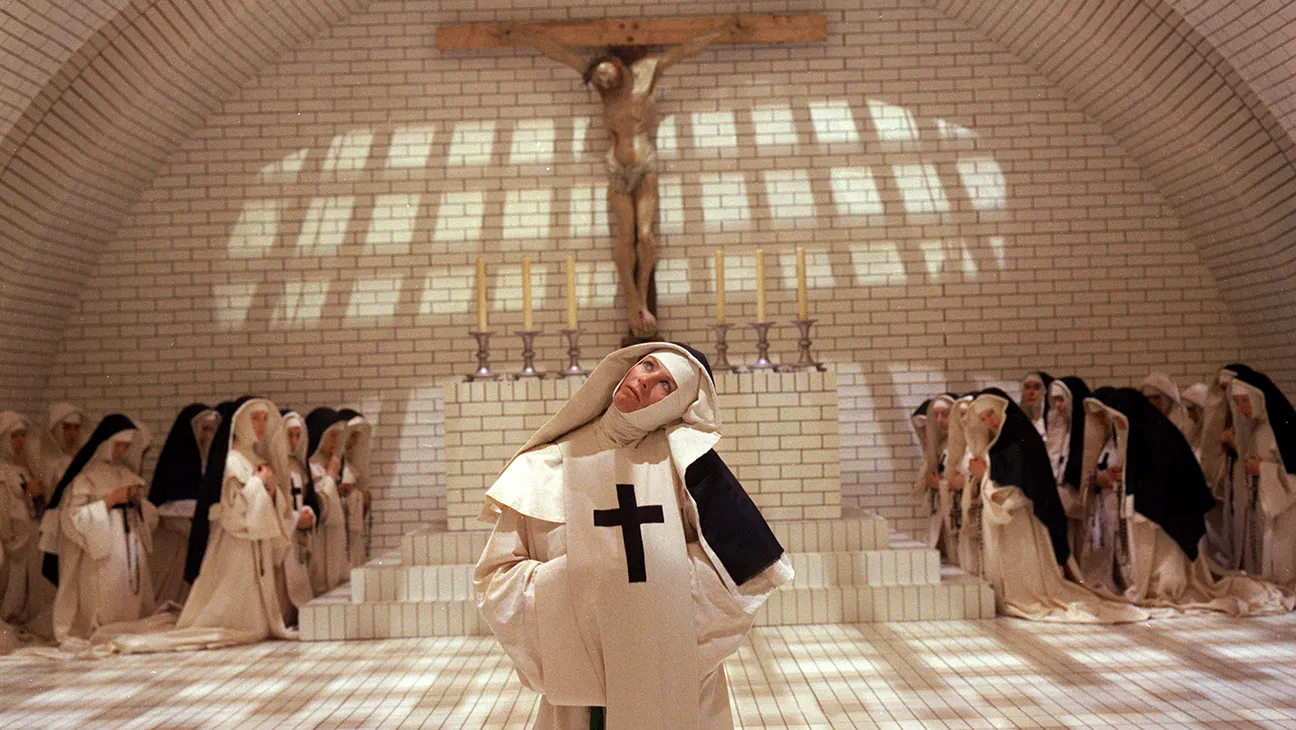
It was so shocking that censors demanded it be removed in its entirety. Its director later feared the footage had been destroyed.
Now Warner Bros. has restored the notorious “Rape of Christ” sequence to Ken Russell’s The Devils: frenzied nuns pull down a huge crucifix and sexually defile its sculpted figure of Jesus.
More than half a century after the film’s release, the scene is back in all its outrageous glory.
Opening in U.S. theaters Oct. 16 for a one-week engagement through Clockwork, Warner Bros.’ new specialty film label led by former Neon marketing chief Christian Parkes, the restoration follows a cut reconstructed in 2004 under Russell’s supervision, now receiving its first official theatrical release. The label has survived Warner Bros.’ move into Skydance.
Released in 1971, The Devils draws on Aldous Huxley’s The Devils of Loudun and John Whiting’s play “The Devils.” Its origins lie in the real persecution of Urbain Grandier, a priest in 17th-century France accused of bewitching a convent of nuns.
Oliver Reed plays Grandier; Vanessa Redgrave is Sister Jeanne, the head nun whose fixation on him helps fuel the catastrophe. Redgrave declined to comment on the film.
Russell turned the story into an extravagant examination of religious hysteria and political power, with stark white sets by Derek Jarman and an avant-garde score by Peter Maxwell Davies.
British film critic Mark Kermode learned how much the censored sequence mattered to Russell when he interviewed the director for Sight and Sound in 1995. Kermode had loved The Devils since seeing it on a late-night double bill with The Exorcist in 1979. Hearing Russell describe the missing footage, he promised to find it.
“You won’t find it,” Russell told him. “Because it’s gone. It’s lost. It’s probably been destroyed.”
Kermode began contacting vaults and Warner Bros., examining shipping logs and asking what survived. Eventually, a cryptic entry caught his attention: “C Cut 89.” He persuaded a skeptical studio employee to retrieve the can. When it was opened, it smelled. The film inside was beginning to decompose.
It also contained the missing sequence.
Its recovery, reconstruction and eventual restoration would span decades. Russell lived to approve the reconstructed cut, but not to see the completed restoration.
Kermode spoke today with The Hollywood Reporter about the film’s long journey back to the screen.
Oliver Reed, Vanessa Redgrave in ‘The Devils’
Warner Bros.
What did Ken Russell tell you about the censorship of The Devils?
Ken described what happened: He’d made the film, and it had been seen by John Trevelyan, who was the head of the British Board of Film Censors, before it was officially submitted. He said to Ken, “You’re going to have problems with this. It’s an important film, but there’s stuff that’s going to have to come out.” There was a central sequence that was going to come out in its entirety. Ken said, “You can’t take that out.” And he said, “Yeah, we can, and that’s what we’re going to do.”
What happens in that sequence?
The French king comes in and says that he has a vial containing the blood of Jesus Christ, and the demons appear to leave the nuns. Then he opens the box and there is nothing inside, exposing their performance as a fraud, at which point all hell breaks loose.
In the released version, things begin to break loose, then it stops. In the film as we have it now, it goes on to depict this ridiculous pantomime of blasphemy in which the nuns attack the huge crucifix and pull it down.
The film shows how religion was used by the authorities as a weaponized tool to distract the people and maintain power. The story is about the unholy marriage of church and state. For Ken, the juxtaposition of these two things was crucial.
Where did you begin looking for this lost scene?
I’m not an archivist. I’m a journalist. I just started getting in touch with vaults and Warner’s and asking, “What have you got? What are the logs? Where are things?” Warner in the UK were very, very accommodating. I would go in all the time and they’d go, “Here comes Mark again asking about The Devils.”
When we started making the 2004 Devils documentary Hell on Earth, it was like, “OK, now I’ve really got a purpose for doing this because I’d love to use those sequences in the documentary.” I had made a documentary about The Exorcist in which we had included for the first time the spider walk and the conversation on the stairs between the priests.
But we just couldn’t find anything at all. I had got to the point of thinking, well, maybe Ken was right. I said to Ken, “When did you last see it?” He said, “There was a single roll of film, and I remember it sitting on the side by the Moviola.” And then it was gone.
Eventually, I was going through shipping logs. There was a list of cans of film, and one was listed “C Cut 89.” I have a very stupidly retentive mind, and I remembered that 89 seconds was what was officially cut from The Devils by the BBFC.
We called it in and opened it. It was two complete assemblies of that central sequence that John Trevelyan had said had to come out in its entirety. And a selection of other bits that had also been taken out.
Did you see the recovered footage before Russell? What was your reaction?
Yes. It was astonishing, but the most amazing thing was that it was exactly as he had described it. Ken could conjure pictures in the room. He wasn’t making any of this stuff up.
If I remember correctly, there was a little bit of high-fiving, but there was also just standing there in awe that this thing we’d been talking about for all these years was actually there.
We hoped that would serve as the basis for a restoration. And it didn’t for 22 years.
Why do you think it finally happened in 2026?
The film did not have the reputation then that it has now. People didn’t rave about The Devils 20 or 30 years ago.
In the years since, the reputation grew, with people like Guillermo del Toro talking about how much they loved it. When Christian Parkes and [Clockwork marketing chief] Spencer Collantes arrived to set up Warner Clockwork, they said The Devils was the thing they needed to do.
They’re young and sharp, they’ve done brilliant work elsewhere, and they clearly had their ear to the ground. Warner said, “Great, fine, go ahead and do it.”
How did the audience at the Cannes premiere respond?
At the beginning, they asked how many people had seen The Devils already. At least half the audience didn’t put their hands up. A lot of people were seeing it for the first time. There were a lot of young people, a whole new generation.
It looked amazing. It looks like it was made yesterday. But the really important thing was that when you put those sequences back in, the film makes coherent sense. It tells the story it’s meant to tell. There aren’t any devils here other than the human devils. It is about the unholy marriage of church and state and the weaponization of religion for political purposes.
Gemma Jones, Oliver Reed in ‘The Devils’
Warner Bros.
Did the original controversy translate into box office?
It didn’t bomb, but it didn’t do gangbuster business. It opened, people were talking about it on television and in newspapers, and there had been all these scandals.
But as David Cronenberg’s Crash demonstrated, just having a scandal isn’t enough to bring audiences in. There were places in the UK that banned it, councils that refused to allow it to be played. It came, there was a scandal, it went away, and Ken moved on. It became a disappeared film, one that was quite hard to see for a long time.
Del Toro has invoked The Devils while defending Digger. Do you see a comparison?
I’m not a huge fan of Digger. My wife is a huge fan. I reviewed it, then my wife went to see it and told me how wrong I am about it.
I think it’s good to have any movie that divides opinions. I would advise everyone to go and see it because if you’re interested in cinema, you need to see it and make up your own mind.
The difference is that Digger costs something north of $150 million, right? The Devils was a big production, but Ken didn’t have a limitless budget, and he didn’t have Tom Cruise.
It’s great that there are divisive films, that there are films people argue about. I think the achievement of The Devils is the greater achievement because Ken was fighting an uphill battle to get his vision on screen, and the version he was able to release was not the version he wanted.
What does it mean to you to see audiences discovering the film now?
You cannot believe how, after all this time, to hear people speaking of it as they do now, how gratifying it is.
My only regret is that Ken isn’t here to see it because he would’ve loved this.
>
A rundown of October’s scariest films in theaters, including ‘The Devils’ and ‘Whalefall.’

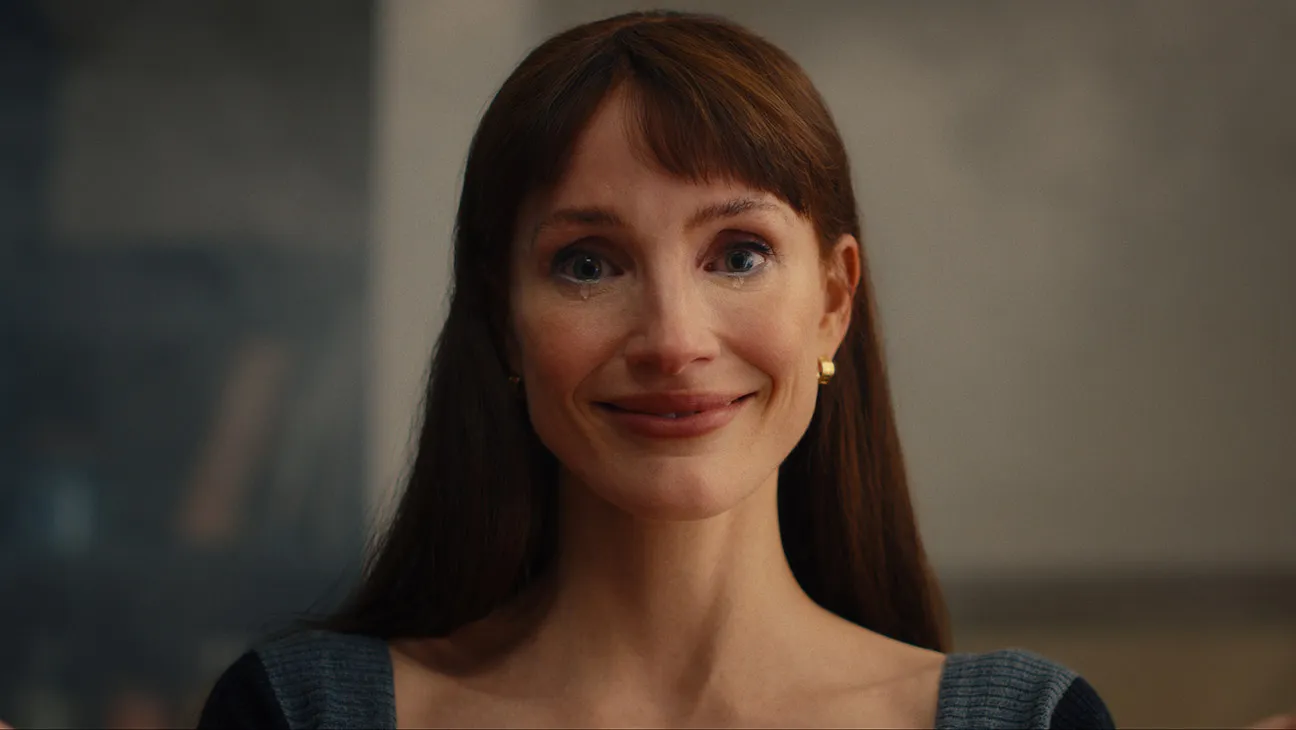
Jessica Chastain as Other Mommy in ‘Other Mommy.’
Universal Pictures
It’s spooky season at the box office, with several horror films set to open over the next few weeks.
Other Mommy kicks off the month, coming into theaters on Friday, but there are a bunch of other horror titles coming — including a couple of re-releases — that will attempt to scare audiences even more than that Elizabeth Holmes documentary.
Here’s what’s coming, each film’s early buzz, release date, and their respective trailers.

“A terrifying trip into the darkening world of a young girl, Bela, who forms a relationship with a sinister entity in her home who looks uncannily like her own mother.” Jessica Chastain plays the girl’s mother and the spectral “other mommy.” The film is based on the 2024 horror novel Incidents Around the House by Josh Malerman (“Other Mommy” is decidedly a major title upgrade). The studio is holding back both first reactions and reviews to the last minute on this one, which usually isn’t a positive sign, but the trailers certainly look strong. Directed by Rob Savage.

The 20th anniversary re-release of Guillermo del Toro’s beloved, Oscar-winning dark fantasy. “In 1944 Spain, as fascist forces tighten their grip following the Spanish Civil War, young Ofelia (Ivana Baquero) is uprooted to a remote military outpost commanded by her cruel stepfather (Sergi López). Amid the brutality of war, Ofelia discovers a hidden labyrinth and encounters a mysterious faun who claims she is a lost princess. To reclaim her throne, she must complete three dangerous tasks that test her courage and spirit.”

“Following the death of his father (Josh Brolin), Jay Gardiner (Austin Abrams) goes diving off the coast of California in search of his remains. He soon finds himself in a desperate fight for survival when he’s swallowed whole by a massive whale. Trapped inside its belly, he must figure out a way to escape as his oxygen supply starts to run out.” The film is based on the bestselling novel by Daniel Kraus and is more of a survival thriller than outright horror. The first reactions say the movie is intense and claustrophobic with another strong performance by Abrams, who similarly delivered a one-man show in Resident Evil, though some ding the film for becoming overly sentimental in its final act. Directed by Brian Duffield.

You think Blumhouse goes hard? Check this out. In theaters for one week only, this is a re-release of Ken Russell’s controversial and long censored 1971 cult classic with a 4K restoration. This version uses the definitive cut reconstructed in 2004 under Russell’s supervision. “In 17th-century France, a charismatic, politically defiant priest (Oliver Reed) becomes the target of a sexually repressed nun’s (Vanessa Redgrave) false witchcraft accusations, which are weaponized by a power-hungry Cardinal and church officials to crush local autonomy.” The re-release has 100 percent on Rotten Tomatoes across 10 reviews. The film is rated NC-17 (remember when that was a thing?).

DC Studios’ next turn at bat following the disappointment of Supergirl is another big swing, this time into body horror: “Actor Matt Hagen’s (Tom Rhys Harries) meteoric rise from Gotham street kid to Hollywood leading man is tragically cut short when a local crime boss’s actions leave him horribly disfigured. Abandoned by his team and with nothing left, Matt seeks out a cutting edge treatment that miraculously returns him to his former self… but also unexpectedly affects his grip on reality, spiraling him down a destructive path of all-consuming revenge.” No official reactions yet, but the trailers actually look rather good. Interestingly, DC Studios co-chief James Gunn recently fired back at a fan who snarked, “Who asked for a Clayface movie?” with a rather deft reply. Directed by James Watkins.

A limited release that’s billed as a horror comedy, the film opens the night before Halloween. “After moving to a quiet suburban neighborhood, the Seversons meet the Kringles, a family that celebrates Christmas year-round. When Mark, the father, discovers the Kringles’ sinister yuletide intentions, he teams up with a badass Santa in a high-stakes, action-packed fight to save his family.” Ron Livingston and Rachel Bilson star with Kevin Lewis directing.
>
The latest action flick from veteran director Renny Harlin (Die Hard 2, Cliffhanger) demonstrates its macho bona fides at the very beginning, when an onscreen crawl informs us that U.S. government security forces are a “dynamic, imperishable illustration of American might.”
It then goes on to add, “And it’s all just been fucking destroyed.”
The Beast
The Bottom Line
Donald Trump’s wildest fantasy.
Release date: Friday, October 9
Cast: Samuel L. Jackson, Joel Kinnaman, Guy Burnet
Director: Renny Harlin
Screenwriter: Umair Aleem
Rated R,
1 hour 39 minutes
Cut to an intense firefight, since this is the sort of B-movie that doesn’t believe in wasting time with such niceties as plot development or character definition. Instead, we watch as the titular vehicle — you know, the one in which the president rides — is speeding down a road while Joel Kinnaman, playing a Secret Service agent, is engaged in intense combat with a hooded terrorist in the back seat. As the car drives on while dodging a series of explosions, a seemingly endless number of terrorists armed with automatic weapons shoot at it to no avail.
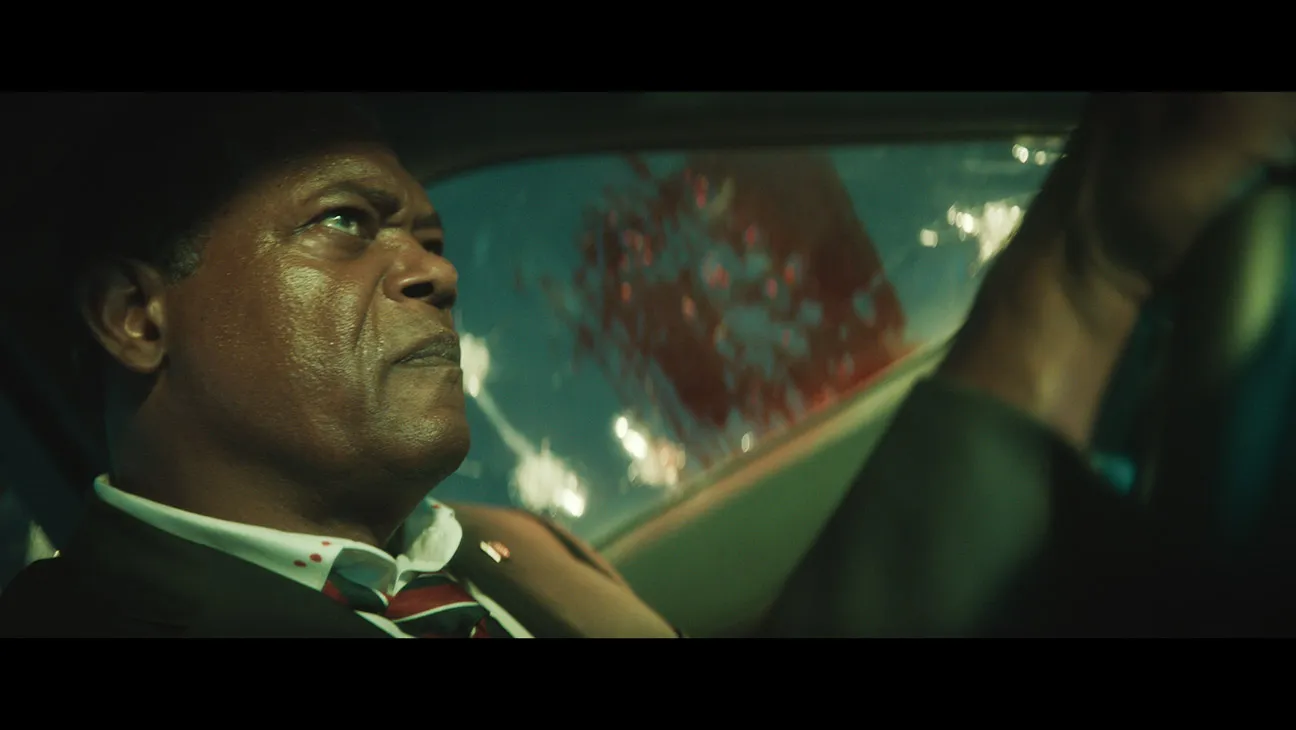
And did I mention that the armored car is being driven by the president, played by Samuel L. Jackson? And that nearly the entirety of the film takes place within the vehicle?
That’s the high concept of the rudimentary screenplay by Umair Aleem, who seems to have spent time studying Aristotle’s unity of place theory. He also seems to have studied Jackson’s film career, since the actor famous for his flair with the f-word plays a fictional president who relishes profanity even more than our current one.
“I love it when you say motherfucker,” the severely wounded agent, Taft, says admiringly to the president. “It sounds so good when you say it.”
Well, duh.
The two main characters have no idea who’s attacking them, and neither do we. But it doesn’t really matter, since the bad guys exist mainly to be mowed down by the Beast, which has even more tricked-up defenses and weaponry than we could have imagined, including armed drones and enough firepower to destroy a small city. It also has a self-driving function, for which we can presumably thank Elon Musk.
With Agent Taft reduced to bleeding out in the back seat, the action mainly falls to the president, a former military man with a very special set of skills. Now, we’ve seen plenty of badass presidents on the big screen, most notably Bill Pullman’s former fighter pilot in Independence Day and Harrison (“Get off my plane!”) Ford’s Vietnam War vet in Air Force One. Kickass presidents can also be women, as demonstrated by Viola Davis in G20.
But none of those compare to Jackson, playing a besieged U.S. president for the second time in his career, not that anyone remembers Big Game. This is a chief executive who drives a car like an F1 racer, displays the sort of hand-to-hand combat skills that Rambo would envy, and handles guns as if they were extensions of his arm. He also has serious medical skills, helping the wounded agent by removing the bullets from his body, hooking him up to an IV and suturing up his wounds.
You can rest assured that certain scenes from this film will soon be tweeted out by our current cosplaying commander in chief, only with his face superimposed over Jackson’s.
With The Beast determined to do for the Beast what Air Force One did for Air Force One, the film necessarily suffers from a certain claustrophobia despite the bulked-up car’s considerable space. Harlin applies his well-honed skills to the action scenes, meaning essentially the entire film, but there’s only so much he can do to compensate for its talkiness — Jackson’s POTUS, as you can imagine, tends to be a chatterbox — and the proceedings’ ultimate resemblance to a video game.
The film is about as silly as I hope I’ve made it sound and, more egregiously, tedious to boot. Although it’s sweet that when POTUS speaks on the phone to the first lady, she’s voiced by Jackson’s real-life spouse LaTanya Richardson Jackson.
>


Search For Canadian TV Actor Stewart McLean Now Homicide Investigation


These ’90s fashion trends are making a comeback in 2017
According to Dior Couture, this taboo fashion accessory is back
Model Jocelyn Chew’s Instagram is the best vacation you’ve ever had
Emily Ratajkowski channels back-to-school style
9 Celebrities who have spoken out about being photoshopped


Rurouni Kenshin: Hokkaido Arc Manga Takes 1-Issue Break – News


HIDIVE to Stream English Dubs for The World Is Dancing, The Forsaken Saintess and Her Foodie Roadtrip in Another World, The Dangers in My Heart: The Movie Anime – News