
Tech
6 days to Disrupt 2026: Save on your pass before doors open

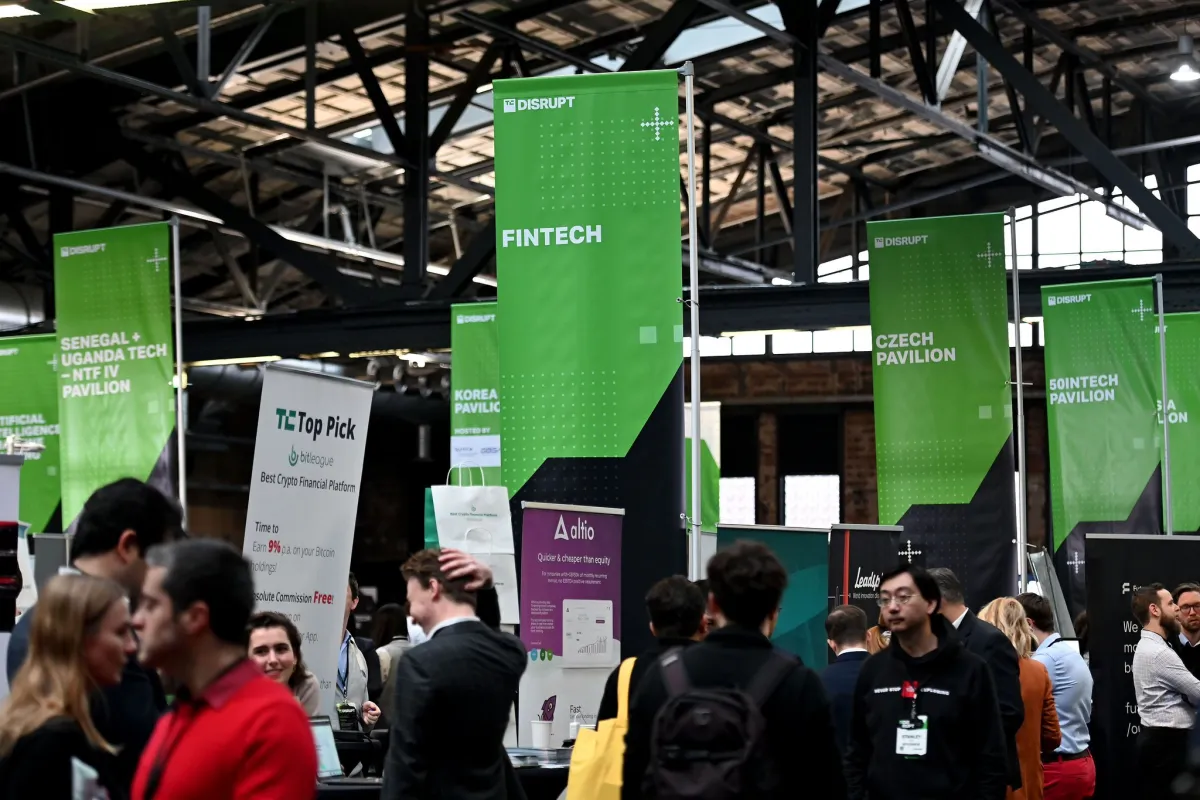
In six days, 10,000+ people from across the global startup and tech ecosystem will come together at San Francisco’s Moscone West for TechCrunch Disrupt 2026. If you’re planning to be one of them, don’t wait to register your ticket before prices increase at the door.
Discounted online pricing is available before doors open on October 13, with pass savings of up to $100. Plus, bring a colleague, co-founder, or friend and get 50% off a second eligible pass. Laid off? There’s a $75 Expo+ Pass with your name on it.

See what’s next at Disrupt before everyone else does
From October 13-15, the Expo Hall is where hundreds of startups and technology companies bring their latest ideas to life. Spend your time discovering emerging products, new business models, and companies that could be shaping the next wave of technology.
If the event’s activations and impactful connections are what bring you to Disrupt, there are also 200+ sessions across six stages, roundtables, and breakouts, featuring 250+ tech leaders covering everything from AI and fundraising to fintech, robotics, infrastructure, product, hiring, and scaling.
The lineup includes Mark Wahlberg, co-founder of MUNICIPAL; Dots product lead at OpenAI Alexander Embiricos, Rivian founder and CEO RJ Scaringe; Inspired Capital founder and managing partner Alexa von Tobel; Cerebras Systems CEO Andrew Feldman; Anthropic’s Cat de Jong; NVIDIA’s Les Karpas; and many more.

And don’t miss Startup Battlefield 200, where 20 finalists will compete live on the Disrupt Stage for the $100,000 prize and the attention of investors, media, and the global startup ecosystem. This is the pitch competition to lean in at if you’re thinking of or currently scaling. You’ll learn from top VCs what it takes to make a winning pitch and what makes a viable startup.
Save up to $100 before doors open
Six days remain until the Disrupt doors swing open at Moscone West. Save up to $100 on your pass now and get 50% off a second eligible pass when you register before the event. Laid off? Get an Expo+ Pass for just $75.

When you purchase through links in our articles, we may earn a small commission. This doesn’t affect our editorial independence.
>
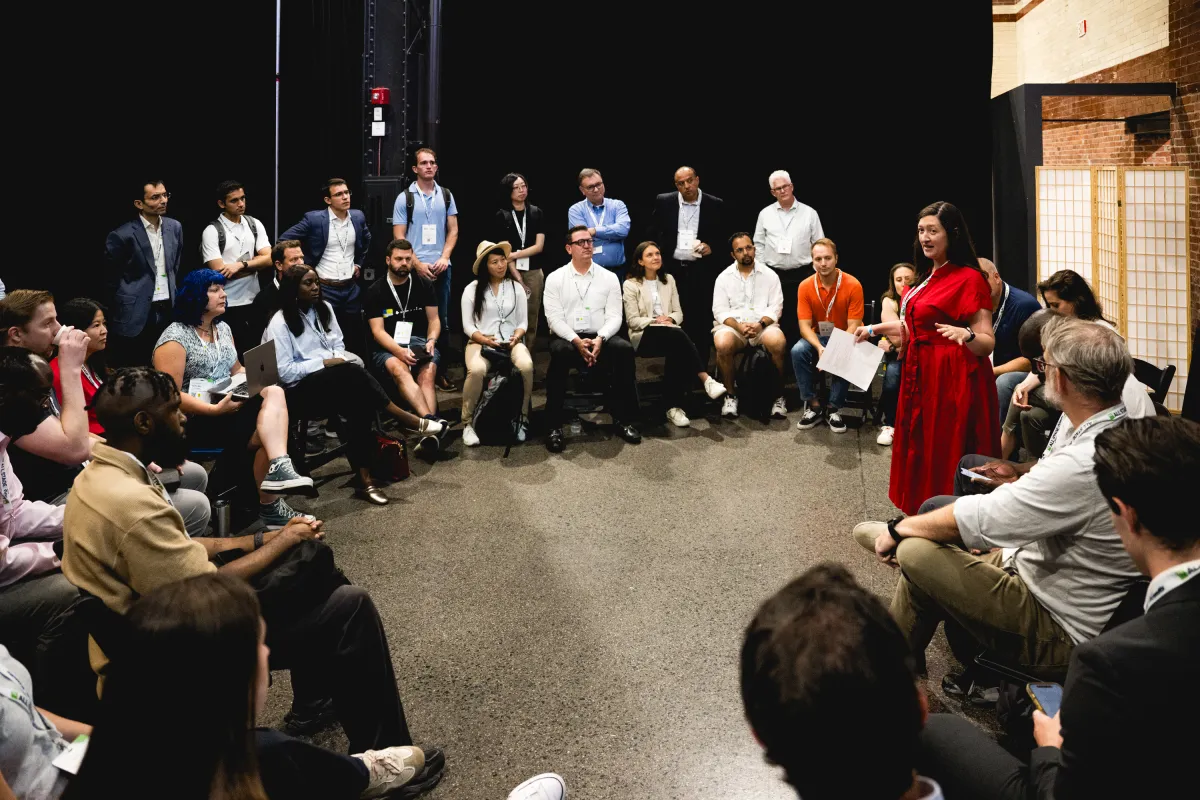
TechCrunch Disrupt 2026 is seven days away, bringing 10,000+ founders, investors, operators, and tech leaders to Moscone West in San Francisco from October 13-15 for three days of conversations, connections, and ideas shaping what comes next.
Included in your Disrupt pass, which you can currently save $100 on, plus 50% off a second, you’ll have the opportunity to take part in a series of interactive, deep-dive roundtables, where you’ll join founders, investors, operators, and industry experts tackling the same challenges you are. Bring your questions, share your experience, and get practical perspectives on everything from fundraising and AI to hiring, enterprise software, physical AI, and scaling a company.
Don’t miss the chance to spark meaningful connections in roundtables and throughout the event. Register now to save up to $100 on your pass and get a second pass at 50% off.
Explore the full roundtable agenda lineup
This year’s sessions run across two dedicated roundtable spaces throughout Disrupt. Here’s the full lineup currently on the agenda. Explore the Disrupt agenda to learn more about all the sessions.

Arm Wrestling Your Data: The Physical AI Challenge
Radha Basu, Founder and CEO, iMerit
Physical AI needs more than bigger models. Basu explores the data challenges behind robotics and autonomous systems, including edge cases, multimodal data, and building pipelines that can operate reliably in the real world.
Is SaaS Dead? AI Is Exposing What Enterprise Software Got Wrong
Rajeev Singh, CEO, Smartsheet
AI isn’t necessarily replacing SaaS — it’s exposing the fragmentation underneath it. Rajeev Singh explores why orchestration, organizational context, and intelligence across workflows could define the next generation of enterprise software.
Can AI Take You Public? The New Playbook for IPO-Ready Finance
Eléonore Crespo, Co-founder and Co-CEO, Pigment; and Sofia Fatakhova, Senior Vice President, Finance and Capital Markets, Chime
IPO readiness starts earlier than it used to. Learn how AI-enabled finance teams can automate, document, and build the financial discipline needed well before a company files to go public.
Specialty Post-Training Data: Powering the Next Wave of AI
Dani London, Investor, Base10 Partners
As models improve, specialized data is becoming an increasingly important differentiator. Explore where valuable datasets come from, which applications need them most, and the businesses emerging around this new layer of the AI stack.
Join these sessions and more at Disrupt. Register now to save up to $100 on your pass and get a second pass at 50% off.
AI’s Next Frontier: Modernizing Legacy Industries
Rob Biederman, Managing Partner, Asymmetric Capital Partners
Some of AI’s biggest opportunities may lie outside traditional tech. Biederman explores where outdated workflows and underserved industries are creating room for a new generation of startups.
The Science of Powerful Introductions: How to Be Remembered in an AI world
Cal Amir, Keynote Speaker and Founder, Introduction Lab
Your first minute with an investor, customer, or potential hire matters. Learn what makes an introduction memorable, which common approaches fall flat, and how to stand out without immediately launching into a pitch.
Atoms vs. bits: Physical AI for the Physical World
Jackson Feder, VP, Investment, MetaProp
AI is moving from digital workflows into construction, property, infrastructure, and energy. Explore where physical AI creates opportunities — and why building for the physical world requires a different approach from traditional software.
Beyond the Demo: Building Physical AI That Actually Works
Logan Farrell, Co-founder and CTO, Rugged Robotics; and Austin Yount, Partner, Brick & Mortar Ventures
A great robotics demo isn’t the same as a useful product. This conversation gets into reliability, workflow integration, trust, ROI, and what physical AI needs to deliver before customers adopt it at scale.
Beyond Inventory: The Commerce AI Playbook for the Intent Era
Srishti Chaudhary, Senior Manager, Product, Walmart eCommerce
Commerce is moving from understanding search terms to understanding intent. Explore what agentic shopping means for personalization, transactions, LLMs, and ultimately who owns the relationship with the customer.
The Quantum Revolution: What Investors Need to Know
Speaker details to be announced
Quantum computing is getting closer to commercial relevance. This session gives investors a practical grounding in the technology, emerging opportunities, and the milestones that matter when separating genuine progress from hype.
Healthcare Took 40 Years to Adopt EHRs, Then Adopted Generative AI in Three. What Comes Next?
Brian Butler, Partner, Questa Capital
Healthcare’s adoption of generative AI has moved unusually fast. Butler explores why, what barriers remain, and where founders can build durable value as healthcare organizations rethink the way they buy technology.
Beyond the Term Sheet: How to Architect a Great Fundraise
Alex Li, Partner, MVP Ventures
A fundraise is more than a pitch. Learn how to choose the right investors, secure introductions, manage a competitive process, negotiate terms, and build a cap table that helps rather than hinders future growth.
From Pilot to Production at Scale: Provable, Trusted Agentic AI for the Enterprise
Dr. Maha Achour, Co-founder and CEO, Kodamai; and Pankaj Kedia, Founder and Managing Partner, 2468 Ventures
Why do so many enterprise AI projects stay stuck in pilot mode? Explore what needs to change to move agentic systems into trusted, verifiable, scaled production environments.
Brutal Truth: 12 Critical Mistakes That Nearly Derailed My CISO Career
Stephen Ward, Founder and Managing Partner, Brightmind Partners
Ward shares lessons from mistakes made during his CISO career, from taking on unsustainable risk to approaching organizational maturity too early — and what other leaders can do differently.
What Comes After ChatGPT? AI for the Physical World
Jack Hidary, CEO, SandboxAQ; and Stacie Calad-Thomson, Global BD Lead, Life Science Labs and Manufacturing, Nvidia
The next wave of AI won’t just generate text. Explore AI grounded in physics, chemistry, biology, and mathematics — and the opportunities opening across healthcare, materials, energy, finance, and industrial systems.
The Rise of SoCal Hard Tech: Why VCs and Founders Are Gravitating to Gundo
Kevin Hawkins, Head of Partnership Development and Media Distribution, New York Stock Exchange; with Drew Boyles, El Segundo City Councilmember
Sponsored by New York Stock Exchange
Why has El Segundo become such a magnet for space, defense, and hard tech startups? Hear what’s attracting founders, capital, and talent — and how a city can create an environment where hard tech companies can thrive.
The Founder Playbook
Cassie Kozyrkov, Founder, Kozyr and former Chief Decision Scientist, Google
Sponsored by Signify Business Cash World Elite Mastercard by Wells Fargo
Bring a real business challenge. Kozyrkov leads an interactive discussion about making better founder decisions, where AI can help, and where human judgment remains essential.
“My Company Is a Rocket Ship.” What Comes After the Landing?
Vishal Kumar and Tushar Kumar, Private Wealth Advisors and Co-founders, Twin Peaks Wealth Advisors
Sponsored by Twin Peaks Wealth Advisors
An IPO, acquisition, or tender offer creates a new set of decisions. Explore tax, concentration risk, lockups, liquidity, and how founders can protect what they have spent years building.
When Frontier Models Are Not Enough: How to Make AI Capable of Breakthrough Scientific Discoveries
Piotr Byrski, CEO and Co-founder, Molecule.one
What happens when AI can test thousands of scientific ideas instead of a handful? Byrski explores autonomous experimentation, AI-driven discovery, and how these systems could change the pace of scientific progress.
How to Land Your First Institutional Check (From the Person Who Writes Them)
Aditi Maliwal, General Partner, Upfront Ventures
Get inside the decision-making process behind an early institutional investment. Learn which founder signals matter before traction exists, how to tell your story, and what can kill an investment before it gets started.
Grow Like a Founder, Think Like a CFO: Balancing Growth and the P&L
Marshall Egger, Founder and COO, Spacemilk
Growth can look good while quietly draining cash. Bring your own questions and explore forecasting, inventory, retail terms, cash flow, and how to grow without losing sight of the P&L.
Agentic AI in the Enterprise: Separating Signal From Noise for GTM and Ops Leaders
Ankita Mehta, Senior Product Manager, Databricks
Everyone wants agents, but not every workflow needs one. Learn where companies are seeing measurable value, why pilots stall, and how to evaluate agentic AI before committing infrastructure and teams to it.
Open-Weight Models and the New AI Stack
Mercedes Bent and Vanessa Larco, Co-founders and Managing Partners, Premise
Open-weight models are creating more choice for AI builders. Explore the trade-offs around cost, security, performance, control, and where open models may offer startups a genuine advantage.
The $100 Billion Entry Fee: Can Anyone Still Compete in AI?
Harrison Rolfes, Senior Research Analyst, Private Company Coverage, PitchBook
With extraordinary amounts of capital flowing into frontier AI, is the market already locked up? Dig into where defensibility really sits and what capital concentration means for founders and investors outside the biggest labs.
VC Insights for Founders: How to Raise Your First VC Round
Itamar Novick, Founder and General Partner, Recursive Ventures; and Brian Sparkes, CEO, Silicon Valley Venture Corp.
Sponsored by Silicon Valley Venture
Learn when to start raising, how to build an investor narrative, generate momentum, and navigate the journey from an initial VC conversation to a closed institutional round.
FDE: The Best Commercial Motion in Enterprise Software You’ve Never Heard Of
Kevin Bai, Member of Technical Staff, Anthropic
Forward-deployed engineers sit somewhere between software engineering, product, and consulting. Learn when startups need them, where they fit commercially, and why the model can improve enterprise retention and expansion.
Doing More With Less: Raising Venture Capital in an AI-First World
Neil Sequeira, Founder and Partner, Defy.vc
More capital isn’t always better. Sequeira explores overfunding, dilution, investor alignment, and how founders can raise enough to execute without creating expectations or incentives that hurt the business later.
I Built Before the Internet. AI Is Different.
James Joaquin, Co-founder and Managing Director, Obvious Ventures
Joaquin has built through multiple technology cycles. Hear why he sees AI as fundamentally different, where its real-world impact is already emerging, and how founders can operate when innovation is moving faster than conventional planning cycles.
Autonomous Intelligence: Investing in the Companies Redefining Work
Parul Singh, Investment Partner, 645 Ventures
Agents are moving from helping people complete work to completing entire workflows themselves. Explore which categories could benefit most and where founders and investors see the biggest opportunities emerging.
AI-Native Won’t Work for the Enterprise
Naren Krishna, CEO and Co-founder, Balerion; and Travis Skelly, Partner, Pruven Capital
Fortune 500 companies want AI without ripping out the systems their businesses depend on. Explore why intelligent agent layers could be a bigger near-term opportunity than replacing enterprise systems of record.
Berkeley Connect: Experience the World’s #1 Startup Ecosystem
Maryanne Alhallak, Co-founder and CEO, Lumeria; Anthea Guo, Co-founder and CTO, Lumeria; and Keith McAleer, Chief Marketing Officer, UC Berkeley SCET
Sponsored by UC Berkeley Sutardja Center for Entrepreneurship and Technology (SCET)
Explore UC Berkeley’s approach to entrepreneurship, hear directly from founders emerging from its ecosystem, and learn how investors, companies, and entrepreneurs can get involved.
Join these sessions and more at Disrupt. Register now to save up to $100 on your pass and get a second pass at 50% off.
Take your seat at the Disrupt 2026 roundtables
Roundtables are where the Disrupt agenda becomes a conversation. Instead of just hearing how someone else approached a problem, you can ask the questions that matter to your company, compare experiences with the people around the table, and leave with ideas you can put to work.
TechCrunch Disrupt 2026 takes place October 13-15 at Moscone West in San Francisco. It’s the startup epicenter where 10,000+ tech leaders come together for insights designed to push the needle and spark meaningful connections.
Register before doors open to save up to $100 on your pass and get 50% off a second ticket for a co-founder, partner, colleague, or peer.
When you purchase through links in our articles, we may earn a small commission. This doesn’t affect our editorial independence.
>
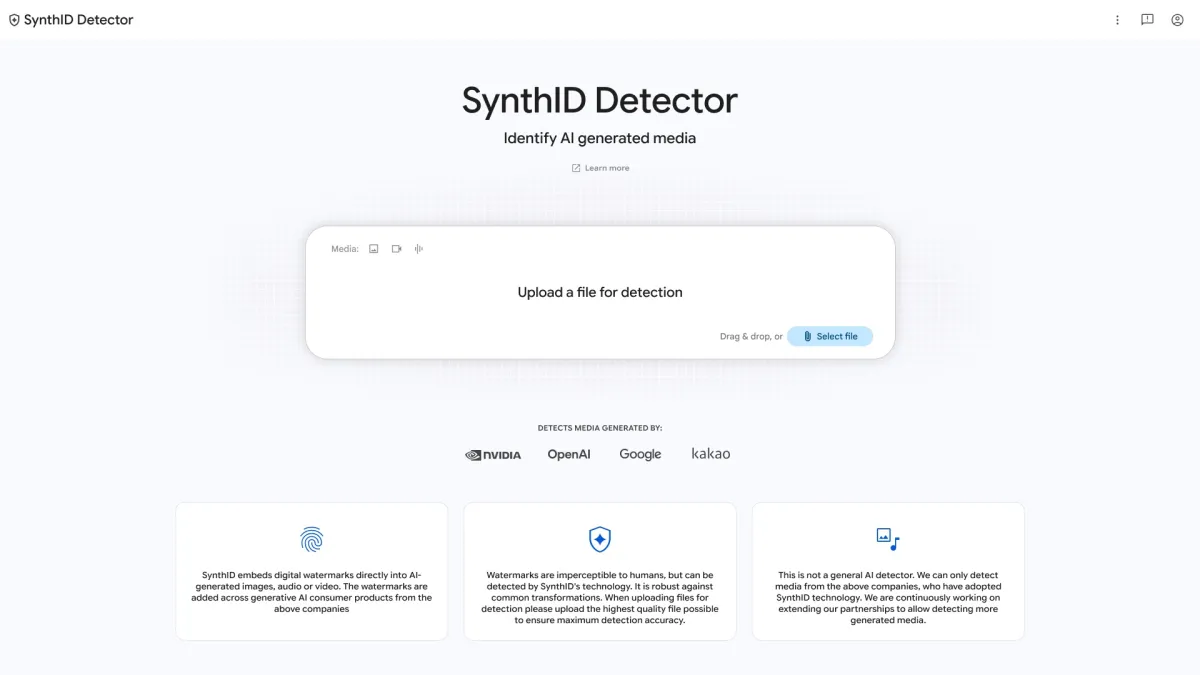
Google on Tuesday launched a new site that lets anyone verify whether a piece of media, be it an image, a video or an audio clip, is generated using AI.
The company had made this tool available to select journalists, media professionals and researchers for testing at Google I/O last year, and is now opening up access to the tool to everyone.
The site supports JPG, JPEG, PNG, BMP, WEBP, AVIF, HEIC, HEIF, TIFF, TIF, and GIF formats for images; MP4, MOV, and WEBM for videos; and WAV, MP3, OGG, FLAC, AAC, and M4A for audio.

Google is using SynthID, which it introduced in 2023, to identify whether media is AI-generated. The company’s Nano Banana, Veo and Lyria models, as well as tools with generation capabilities, like Gemini, Flow, ProducerAI and Vids, all use SynthID to watermark any media they generate.
OpenAI, NVIDIA and Kakao also support SynthID, and OpenAI maintains its own site for checking content. Apple is said to be adding support soon, too.
Google has baked SynthID verification into the Gemini app and Google Chrome. The company said people currently make 1 million requests to verify content every day.
Microsoft and Meta have their own standards for watermarking and verifying content. However, these tools are not infallible, often failing to identify content created by their makers’ models.
>

Ring, the Amazon-owned video doorbell maker, is entering a new market: smart locks.
Ring’s new device isn’t exactly a copy-and-paste of the other locks already on the market, however, as it tackles a big issue that often deters people from embracing this kind of smart home equipment: the fear of the battery dying and getting locked out.
To address this, Ring’s smart lock has added a power dial. If the battery on the device runs out, the homeowner can just turn the dial a few times to power the lock back up and enter their home.
Ring’s founder Jamie Siminoff said the idea to rethink smart locks came to him when he was looking to buy a lock for a vacation home. “I struggled because this particular house will get used very little, and I know the freaking battery will die on it,” he said.
He also worried that family or friends visiting the house might get stuck outside, as the door isn’t connected to a power source, and any smart lock would be dependent on the battery.
“I’m like, well, why don’t we just fix this,” he said. Using AI, he started working on a project to create a lock you could hand-crank just enough to power the lock to open. Once you’re in, you could then take out the rechargeable battery pack and charge it as usual.
Siminoff says the battery on Ring’s new lock will last about a year, and will alert users when it’s time to charge via the Ring app. The app also allows users to configure access for people who may need periodic access, like dog walkers or house cleaners. Eventually, the company wants to allow third-party app makers to design specialized software for the lock so it can be used in other ways — for example, Airbnb owners who may need to regularly change codes.
The Ring lock also offers four different ways to get in, so you won’t have to worry about forgetting a code. You can either use the device’s fingerprint reader, a backlit touchscreen keypad, the Ring app, or Alexa.
Siminoff admitted that the lock may be comparable to others on the market, but he thinks the fact that it addresses the anxiety over being locked out will be its biggest selling point.
“I do think the power thing is a huge limiter of why people are not buying, and why they’re not putting them in, and why they’re worried about them,” he said.
It’s also true that when smart locks do offer some sort of backup method, they usually involve something cumbersome and less secure — like hiding a physical key somewhere on the property.
Ring’s smart lock will fit a standard single-cylinder deadbolt, and will be available to purchase in the U.S. in the first quarter of 2027, after it receives FCC authorization. It will come in three finishes: black, silver, or brass.
Alongside the lock, Ring also introduced four new 4K cameras: the Outdoor Cam 4K Plus, Spotlight Cam 4K Plus, Floodlight Cam 4K Plus, and a pan-tilt Indoor Cam 4K.
When you purchase through links in our articles, we may earn a small commission. This doesn’t affect our editorial independence.
>
Manchester City and Spain legend David Silva, 40, comes out of retirement to join Hong Kong club

‘North Of North’ Gets Season 2 Release Date On Netflix & Trailer
German soccer club bans own fans from jumping in stadium
-

 movies5 months ago
Search For Canadian TV Actor Stewart McLean Now Homicide Investigation
-

 Fashion9 years ago
These ’90s fashion trends are making a comeback in 2017
-
Fashion9 years ago
According to Dior Couture, this taboo fashion accessory is back
-
Fashion9 years ago
Model Jocelyn Chew’s Instagram is the best vacation you’ve ever had
-
Fashion9 years ago
Emily Ratajkowski channels back-to-school style
-
Fashion9 years ago
9 Celebrities who have spoken out about being photoshopped
-

 Anime4 months ago
Rurouni Kenshin: Hokkaido Arc Manga Takes 1-Issue Break – News
-

 Anime3 months ago
HIDIVE to Stream English Dubs for The World Is Dancing, The Forsaken Saintess and Her Foodie Roadtrip in Another World, The Dangers in My Heart: The Movie Anime – News