
BLOODLINES: A Memoir, by Joe Manganiello
Simon & Schuster


When Joe Manganiello collapsed in pain on the set of Six in Wilmington, North Carolina, in 2016, the 39-year-old was at the apex of his career. He had made his name as Alcide, the sensitive and impossibly ripped werewolf in HBO’s True Blood, which led to the meaty role of Big Dick Richie in Steven Soderbergh’s critically acclaimed Magic Mike movies. People magazine had named him “Hollywood’s Hottest Bachelor” in 2014 and a year later, he wed Modern Family star Sofia Vergara. He was on the cusp of the A-list when a mysterious ailment cut him down. For weeks an autoimmune disease doctors couldn’t explain had been attacking his thyroid and ravaging his intestines. Now he could no longer endure the excruciating pain.
BLOODLINES: A Memoir, by Joe Manganiello
Simon & Schuster
During his extended stay in the hospital, the man who had come this close to being case as the next Superman, whose abs had made Arnold Schwarzenegger envious, withered from a hulking 235 pounds to 176, “a weight I hadn’t been since middle school,” he writes in his new memoir. Then came what he would recall as “The Night in Hell”: “Rectal blood sprayed out, turning the bathroom floor into a crimson pool, staining the walls, the sink, and tile grout bright red.” The next day he was rushed into surgery. “My entire large intestine had turned to pus and was about to explode. Had they not cut me open that morning, it would have ruptured, and I would have died immediately of sepsis.”
Vergara, as his next of kin, “made the brutal but lifesaving decision to allow my entire large intestine to be removed and a hole to be cut into my abdomen to divert my small intestine” into an ostomy bag he would have to wear for an unknown amount of time.
As Manganiello was just beginning to recover, weaning himself with difficulty from a heavy regimen of painkillers that had tested his sobriety, his agent called with the news that Ben Affleck wanted to discuss a role in the new Batman movie. Concealing his condition, adrenaline masking his pain, Manganiello powered through a meeting with Affleck, offered him the role of Deathstroke, the main villain in the Batman movie Affleck was writing, directing and starring in. In an excerpt from his memoir, Bloodlines (out October 13 from Avid Reader Press), Manganiello recounts how the offer gave him the motivation to begin clawing his way back to health — even as his marriage was beginning to fall apart.
Listen to Manganiello read the below passage in a clip from the Bloodlines audiobook.
She’d watched me transform from the strongest man she’d ever known to a skeleton who could barely move on his own. She had been preparing for me to die and was clearly, deeply traumatized by her fear of my impending abandonment via death.
“I just got offered the biggest role of my life,” I said.
“Are you insane?” she shouted at me. “You can’t do this movie!”
She wasn’t entirely wrong. There was a Gremlin in the control room of my body that had locked the door so no one could stop it and was madly flipping the control switches. It was against all odds that I was still breathing. My doctors were scrambling to find out which medication designed for rheumatoid arthritis and other conditions that I didn’t specifically have would mitigate my symptoms. They were unsuccessfully trying to solve one part of a many part problem, pumping me full of these drugs, one after the other, all of which had horrific side effects. Sofia had every reason to say what she did, but the way I saw it, I had one job now: to prepare for this role. It was just the carrot I needed dangled in front of me, the one that would lead me out of this nightmare that had become my life. I needed to believe, even if it turned out to be a delusion, that one year from now I could handle the rigors of shooting a superhero movie for six months.
This would be my trial by fire. The operation had left me with scars: the long one below my belly button that looked like I’d been split open with a survival knife, plus two smaller ones on the right side of my abdomen where the catheters had been inserted. They were very fresh, and while they might raise eyebrows if they were seen, they were nothing compared to the golf ballsized hole the doctors had drilled through my stomach wall to pull out the end of my fleshy, pink small intestine that was now covered by a large plastic ostomy bag.
Adjusting to life without a large intestine was like waking up in someone else’s body. Without the storage capacity of a colon, within minutes of eating anything, my body would immediately output waste through the stoma. There was no real way to feel when it was going to start or stop. Sometimes it began thirty minutes after eating, some-times sooner. Since I was trying to gain all that weight back, eating steadily all day long, my digestive system worked around the clock, which meant I changed bags constantly and got no rest, even over-night.
I had the routine down though. I’d take an adhesive putty, work a piece of it in my fingers until it was pliable and sticky, and spread it in a circle around the protruding hole. I’d then adhere a plastic ring to the putty, making sure it was airtight, before snapping an ostomy bag to the ring. When applied perfectly, the stoma emptied directly into the bag and didn’t leak.
To make matters more complicated, I’d always been a stomach sleeper. My whole life I’d slept face down, with a pillow under my chest and my arms splayed out above my head. I was now forced to sleep on my left side only because of how the bag sagged and hung once it started filling up. Lying on my back was out of the question because at that angle, the stoma fired straight up like a geyser and compromised the adhesive seal, causing it to leak down my abdomen.
This had resulted in several nervous breakdowns during my first few weeks back home. I’d wake up in the middle of the night gasping for air, lying in a puddle of sweat, my hair drenched. I’d reach down to discover that the bag was leaking through my pajamas and quietly get out of bed to dispose of the waste, hoping I didn’t wake Sofia. Because I couldn’t control the output, I would often have no other choice but to stand in the shower, lean against the wall, and close my eyes until my body ran out of sludge. The complete loss of muscle mass in my lats and back, as well as the rest of my body, compounded my sleep issues.
Having muscle mass was like having pillows attached to my skeleton: Not only did it make lying down more comfortable, it held my spine in place. Since I’d lost so much of it and was sleeping in unnatural positions, I began to have neck and spinal problems. And since my body was suffering from all manner of internal and external inflammation, I’d wake up at night shivering cold in a pool of sweat. I learned to lay towels down beneath me and change them out each time I woke up.
Sofia couldn’t bring herself to congratulate me on landing the biggest role of my career. She’d just watched me die and come back to life through the marvel of modern science, and I think during my illness part of her had begun to adapt to the traumatic thought of living her life without me. Now here I was packing to leave her for an unbelievably high-stakes job that I was in no shape to take. Hard as it was for her to understand, I needed it to survive. The role contained the shred of hope that I might get my life back in some capacity, and I had to believe it was possible.
My job was simple: Be a warrior. When I looked into my eyes in the mirror, there was no fear, just determination. In them, I saw a gaze like Clint Eastwood’s when he played the Man with No Name in Sergio Leone’s Dollars Trilogy or Dirty Harry. That look that told other men that he’d pull the trigger with no hesitation or remorse, the look that always made them back down. I was not afraid to die anymore; death already knew who I was, and that look was in my eyes now. I had fought my illness with every fiber of my being—and then fought some more. I had discovered extra gears within me. I’d gain the weight back, get my digestive system reconnected, lose the bag, and get back to my life. The role was my destiny. I had been removed from one set because of my health, but it wouldn’t happen again.
I hated the pity I saw in Sofia’s eyes when she looked at me now. When we first met, she looked up at me with such pride; I would have gone to war and taken over the world for that look. Now all I could see reflected back at me was this sick, pitiful patient. I was determined to see Sofia’s eyes flicker for me the way they used to once again—even if it killed me.
Joe Manganiello and Sofía Vergara attend The 22nd Annual Screen Actors Guild Awards at The Shrine Auditorium on January 30, 2016 in Los Angeles, California.
Getty Images
I boarded my flight to Heathrow and tried my best to sleep on my side in the pod. I had my blanket pulled up and was starting to doze when I reached down and felt moisture. There was a fucking leak in my ostomy bag, and shit had started to soak my underwear. I got up, carefully holding my shirt away from my body, praying none of the waste got on it, leaving a stain that would smell for the entire flight. I got my backpack from the overhead full of my supplies: a spare ring, the putty, a waste bag to hold the used bag, a fresh ostomy bag, and clean underwear. I’d learned pretty quickly that it was wise to keep clean underwear on hand at all times. I got to the bathroom, peeled my shirt off carefully, and started swapping out the bag. As I removed it, the stoma shot like a cannon, spraying onto the mirror and counter. With lightning reflexes, I grabbed a wad of tissues and plugged it, slowing the flow for the time being. I emptied the full bag into the toilet, then folded it up and put it into the waste bag. While the tissues stuffed into my stoma soaked through, I got the pieces ready and did my best to attach the new bag. Once it was secure, I cleaned the bathroom using the hand soap and paper towels. By the time I was done, I was sweating from the stress and embarrassment even though I was alone in the middle of the night with most of my fellow passengers asleep. Once I had things under control, I changed my underwear, which thankfully was the only article of clothing compromised. Then I took a deep breath and looked in the mirror. “You’re a tough son of a bitch,” I said. “You’re a bad dude. I love you.” I nodded silently to myself in affirmation, then headed back to my seat to try to sleep. I was going to need it.
I got to my hotel the next morning and had the entire day to get settled. I thought long and hard about how to get through the fitting. I planned to stop eating in the late afternoon and not eat again until after it was over, giving me about eighteen hours to allow my digestive system to clear. I knew the suits DC used for their superheroes were three to four layers, starting with a skintight spandex bodysuit, a second layer of heavier latex material, a layer of armor, and sometimes another layer over that. I had to be absolutely sure nothing would come out in the bag while I wore the suit because under that degree of compression it would probably explode. I was appropriately empty by morning when I met with the wardrobe staff. They handed me the tight spandex base layer and just stood there. This was not unusual for a fitting, but I couldn’t undress for an audience without revealing my scars and the bag. I acted demure, which, given their expressions, clearly seemed a little curious coming from Alcide the naked werewolf and Big Dick Richie the stripper. I smiled, shrugged my shoulders, and held up the spandex, as if to say, “Are you all just going to stand there?” They snapped to attention, embarrassed, and filed out. I took off my sweatpants, which I’d gotten used to wearing exclusively because it was impossible to wear jeans or pants with stiff waistbands due to the location of the ostomy bag. I confirmed that it was still empty—so far, so good—then I slipped into the bodysuit and called everyone back in. They helped me into the next layer, made of thick, heavy, contoured latex, and began strapping shiny chrome armor on me. They tried a number of different knee pieces, arm pieces, you name it, to replicate Deathstroke’s look in the video game. Once we settled on the configuration, the pieces would be painted the character’s trademark navy blue and orange.
The fitting went as smoothly as could be, but apparently that wasn’t the end of the day’s journey. They informed me that they also needed to create a full 3D body scan image of me using 256 cameras mounted around a podium. The scan would be used to make a replica mannequin of my body, which they’d use like a dress form to tailor and fit my suit over the next month before we shot my scene. There was just one problem: “We noticed you’re wearing black underwear,” one of them said. “The cameras don’t like black, so we found these for you.” They handed me a pair of tiny bright blue briefs sized for a man much smaller than me with, shall we say, a very different personal style from my own. I stared at them and began to panic. There was no way in hell that little thing would fit me, let alone hide the bag.
From BLOODLINES: A Memoir by Joe Manganiello. Copyright © 2026. Reprinted by permission of Avid Reader Press, an Imprint of Simon & Schuster, Inc. Printed by permission.
>

Hot on the heels of the European premiere of Elsinore, lead actor — and definitive awards frontrunner — Andrew Scott sat down for a career-spanning conversation at London’s BFI Southbank Thursday afternoon.
Scott’s tearjerker opened the 70th BFI London Film Festival Wednesday night, as the Irishman was joined by co-stars Olivia Colman, Billie Piper, Johnny Flynn, Luke Thompson and Joe Locke on the red carpet. He was emotional on stage following the feature’s screening and brought out the real-life people who inspired particular Elsinore characters, including Colman’s Professor Margaret Johnson, a pioneer of HIV/AIDS treatment in the late ’80s, as well as the National Theatre’s stage door keeper of 46 years Linda Tolhurst, and Ian Charleson’s sister, Lizzie.
Simon Stone’s Elsinore, from Pride‘s Stephen Beresford, follows the late Ian Charleson’s final weeks before his death from AIDS playing Hamlet at London’s National Theatre in 1989. The gala at this year’s London Film Fest was especially poignant for audiences, with the Royal Festival Hall just a stone’s throw from the NT.
Scott covered all bases in Thursday’s Screen Talk session, from playing James Moriarty in the BBC’s contemporary Sherlock revival to solidifying himself as an undeniably magnetic lead presence with his role as the Hot Priest in Phoebe Waller-Bridge’s Fleabag. His recent credits include All of Us Strangers (2023), Blue Moon (2025), Wake Up Dead Man (2025) and Pressure (2026), some of which he also spoke about in depth.
One of the session’s most memorable moments was when Scott, who is openly gay, was probed on the discourse that queer joy is dominating cinematic storytelling. He said: “I welcome things like Heartstopper and Heated Rivalry and Red, White, and Royal Blue and all those things that are joyful. I really, really, really do. And I think the fact that there’s lots of different types of gay drama, so to speak, on film [and] television is extraordinary.”
He continued about those who lament the return to “sad gays” with a project like Elsinore: “It troubles me a little bit because I think people perhaps don’t want to go back to a time when you’re talking about the AIDS crisis, or you’re talking about [a time] when it was incredibly difficult for gay people. I think that sometimes comes from a place of shame. You go, ‘I don’t want to go back there. I don’t want to see that anymore.’ There’s something a little troubling about that for me, to say: ‘I don’t want to go and see something that was a difficult time.’ Because the shame does not lie with the gay people. The shame lies with the governments who ignored the AIDS crisis and the stigma that was around people and the innate prejudice that was in society. That’s someone else’s shame,” said the actor defiantly as the room applauded.
Scott was beaming about Wednesday night’s premiere and described it as a “very, very, very special evening.” It is a surprisingly personal project for Scott, who is also a producer on Elsinore. He famously played Hamlet for 150 shows at London’s Almeida Theatre in 2017, and found the process grueling. “Everybody knows this, but [Hamlet] is three hours and 45 minutes long. We do it twice on a Wednesday and twice on a Saturday. I’ve played the part myself,” he said. “It absolutely knocks the stuffing out of you.”
He continued about the “Olympian” achievement of Charleson’s: “The idea that he did that when he had no immune system is so genuinely… the physical and psychological toll that must have taken on him. But in another way, it enlivened him, and I could sort of understand that.” Scott said one particular element he found so awful was Charleson’s swollen face from septicaemia, a common problem with AIDS patients. “I think he was concerned that people would be like, ‘Oh my god!’ because he was not recognizable necessarily at some stages, and that’s really heartbreaking and almost humiliating. I can imagine that he thinks this is going to be a humiliating experience to come out and have everybody facing the same direction — at you. The bravery of that, at a time when having that particular disease felt like there was some sort of blame attached to it,” said Scott.
Naturally, when discussing the likes of Sherlock, Fleabag and All of Us Strangers, he gushed over his co-creatives Benedict Cumberbatch, Phoebe Waller-Bridge and Paul Mescal. He felt the same working with Colman: “Not just Olivia, but seeing all those people, Phoebe and Paul and Benedict… Actors are the loves of my life in some way,” said Scott. “I love actors… They’re fun and brilliant people. If you are feeling awful when you go on stage, the actors are always there. But Ian Charleson, I know without a doubt that when he told them about [his AIDS diagnosis], the outpouring of support from the theater community, when there wasn’t a lot of support for anybody, was extraordinary. And I’m proud of that. The film sort of addresses that.”
He’s still admittedly in disbelief over how huge Sherlock was, and how it changed his career. “I’d been in lots of things before — film, theater, everything, but that was just seen across the world. It was in 230 countries across the world. It was an instantaneous hit with the public, and also the critics seemed to like it. So it certainly change things for sure.”
Scott reflected on being torn between pursuing painting or acting as a 17-year-old, and confessed to feeling like his late mother was the most influential creative presence he’s ever had. “Audiences are very discerning, and she was just an example of somebody who loved the theater, loved films, and loved everything about it, but lived a sort of so-called small life. But [she] had a giant effect on somebody who did go into the arts — her son, and my sister is in the arts too — so I guess that local theater groups and art galleries and book clubs and all that stuff matters so much because it’s inspiring and the world might get bigger, but the passion is exactly the same.” Again, the room rewarded the actor’s rallying cry with ardent applause.
Understandably, Scott was also asked about his producing aspirations — he loved the experience and plans to do it again — and his “processes” as an actor. He doesn’t consider himself a method actor, but is able to draw on his “sensitivities” and enjoys diving into a character without knowing too much. “What’s so extraordinary about Fleabag and the Priest and the Godmother and all those characters,” he explained, “[is] they don’t even have a name. We don’t know anything about them. We don’t know their backstory. I think sometimes backstory is overpraised, and sometimes I like, depending on the project, to know as much as the audience does.”
The B70th FI London Film Festival runs Oct. 7-18.
>

EXCLUSIVE: CAA has signed comedian Marcus D. Wiley for representation in all areas.
A Houston, TX native and frequent collaborator of Ali Siddiq, Wiley is a preacher’s son known for his clean, observational comedy centered around marriage, relationships, family, faith and everyday life. The comic has seen significant growth in recent years, elevating from clubs to theaters after releasing a string of independently released stand-up specials with major viewership.
In the last two years, Wiley has partnered with exec producer Siddiq on the specials Marriage Is Major Surgery and Rehab. The former has amassed more than six million views on YouTube, with the latter surpassing two million. Wiley’s newest special, Gimme 5, received more than 500,000 views in its first week on YouTube, premiering on his own channel in September.
Wiley continues to tour nationally with his Easy on the Eyes / Easy on the Ears Tour, with dates scheduled through 2027. His first headlining theater shows are set for this fall and early 2027, including a performance at The Town Hall in New York City.
Prior to his comedy career, Wiley was a professor at Texas Southern University. He continues to be represented by Joe Eshenbaugh of Irreverent Character Management, who’s exec produced his last three specials.
>
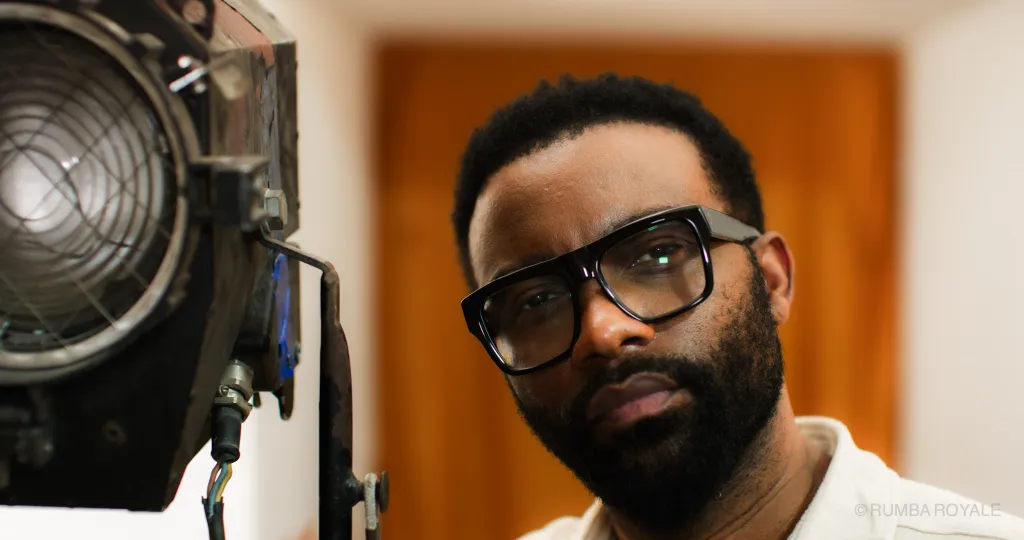
EXCLUSIVE: The Democratic Republic of Congo has selected historical thriller Rumba Royale as its entry for the Best International Feature Film category of the 99th Academy Awards. It’s a historic milestone for Congolese cinema in that the film is the second ever film submitted by the country for the category following its first submission in 1997 with Macadam Tribu.
Directed by Yohane Dean Lengol and Hamed Mobasser, Rumba Royale is set in 1959 Leopoldville, the former capital of Belgian Congo (which is now called Kinshasa), in the final months of Belgian colonial rule. It was a time when the pulsating rhythms of rumba set nightlife alight. The story takes place around the Club Rumba Royale, where white Europeans and Congolese citizens rub shoulders, and where the captivating melodies of rumba merge with aspirations and fiery debates of independence.
The story follows photographer Daniel, played by African rumba star Fally Ipupa, as political change, personal ambition and tragedy reshape the world around him.
Produced and filmed in Kinshasa, the project brought together Congolese actors, technicians, craftspeople, musicians and emerging film professionals in an environment where the local industry continues to develop despite limited infrastructure, production resources and financing opportunities.
The project is the brainchild of writers Kevin Dwyer and Mobasser, the latter of whom is a Belgian diplomat based in Washington D.C. who also co-directs the title.
“Rumba Royale demonstrates the extraordinary stories that can emerge when local talent is given the opportunity to create at scale,” said the filmmakers. “This selection is a celebration of Congolese creativity, resilience and ambition. We hope it helps shine a light not only on this film, but on the growing community of filmmakers across the region whose work deserves greater international attention and support.”
>


Search For Canadian TV Actor Stewart McLean Now Homicide Investigation


These ’90s fashion trends are making a comeback in 2017
According to Dior Couture, this taboo fashion accessory is back
Model Jocelyn Chew’s Instagram is the best vacation you’ve ever had
Emily Ratajkowski channels back-to-school style
9 Celebrities who have spoken out about being photoshopped


Rurouni Kenshin: Hokkaido Arc Manga Takes 1-Issue Break – News


HIDIVE to Stream English Dubs for The World Is Dancing, The Forsaken Saintess and Her Foodie Roadtrip in Another World, The Dangers in My Heart: The Movie Anime – News