
Tech
Microsoft’s Satya Nadella says AI models need an ‘emergency brake’

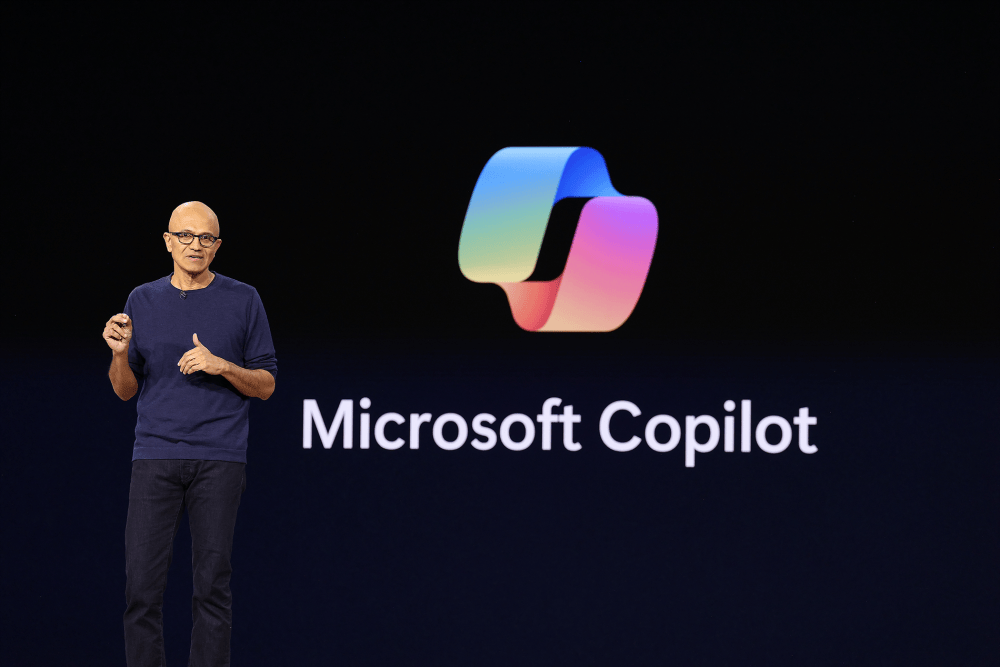
Microsoft CEO Satya Nadella is the latest tech executive to offer lengthy thoughts on how AI safety might be improved.
In a Saturday morning post on X, Nadella wrote that it’s time “to step back and assess the trust architecture” of AI.
“We can’t treat Super Intelligence as a set of nested black boxes and simply accept or reject its recommendations, answers, and actions,” Nadella wrote, using the Trump administration’s preferred term for AI.
As outlined by Nadella, this approach “means separating the model from the harness that orchestrates its work,” as well as “externalizing controls and safeguards.” He also called for “every meaningful model action” to be documented with “tamper-proof human readable evidence,” and for systems where “an authorized person” always has the ability “to pause or shut down a model mid-task.”
“We must assume a model is compromised and contain it from the start,” he said. “Think of it like an emergency brake.”
Nadella’s comments come as leading AI companies acknowledge more and more incidents where they seemed to lose control of their models, and after Anthropic CEO Dario Amodei published a plan for more cautious AI development.
>

Apple revealed in a regulatory filing that it has reached an agreement to bring on team members and technology from personalized audio startup Huxe, in what’s commonly known as a reverse acqui-hire deal.
As first reported in MacRumors, Apple disclosed to the European Commission that it has agreed to make employment offers to “certain employees of Huxe AI,” and to “receive a non-exclusive license to Huxe’s intellectual property rights.”
Reverse acqui-hires emerged in recent years as a way for larger companies to hire key team members and license technology from startups without acquiring the startups outright — presumably allowing them to build up AI talent and tech without drawing as much antitrust scrutiny. (Confusingly, these deals have both been referred to as “reverse acqui-hires” and as plain old “acqui-hires.”)
In the case of Huxe, the startup was founded by developers who’d previously worked on the AI-generated podcast features in NotebookLM (recently renamed Gemini Notebook). But Huxe announced on May 21 that it was shutting down, with the team posting on the Huxe website that the company would be removing its app from the Apple and Google stores, halting service, and deleting user data.
“The team is moving on to new things, and we won’t be continuing development of the product,” the company said. It also thanked its users, saying, “The fact that you used it, told friends about it, sent us your suggestions and your ideas, made it feel like we built it together.”
On June 9, shortly after Huxe’s announcement, Apple notified the European Commission of its deal.
The filing does not say who received employment offers or if they accepted. Nor does it disclose anything about Apple’s plans.
Possibly related: Huxe’s shutdown announcement came just a day after Spotify unveiled AI-powered podcast generation features of its own, so Apple could be hoping to add similar functionality to its Podcasts app. Tech executives seem enamored with the idea that personalized audio can replace regular podcasts (and maybe even parent-child interaction?), though it’s not clear how many normal listeners agree.
When you purchase through links in our articles, we may earn a small commission. This doesn’t affect our editorial independence.
>
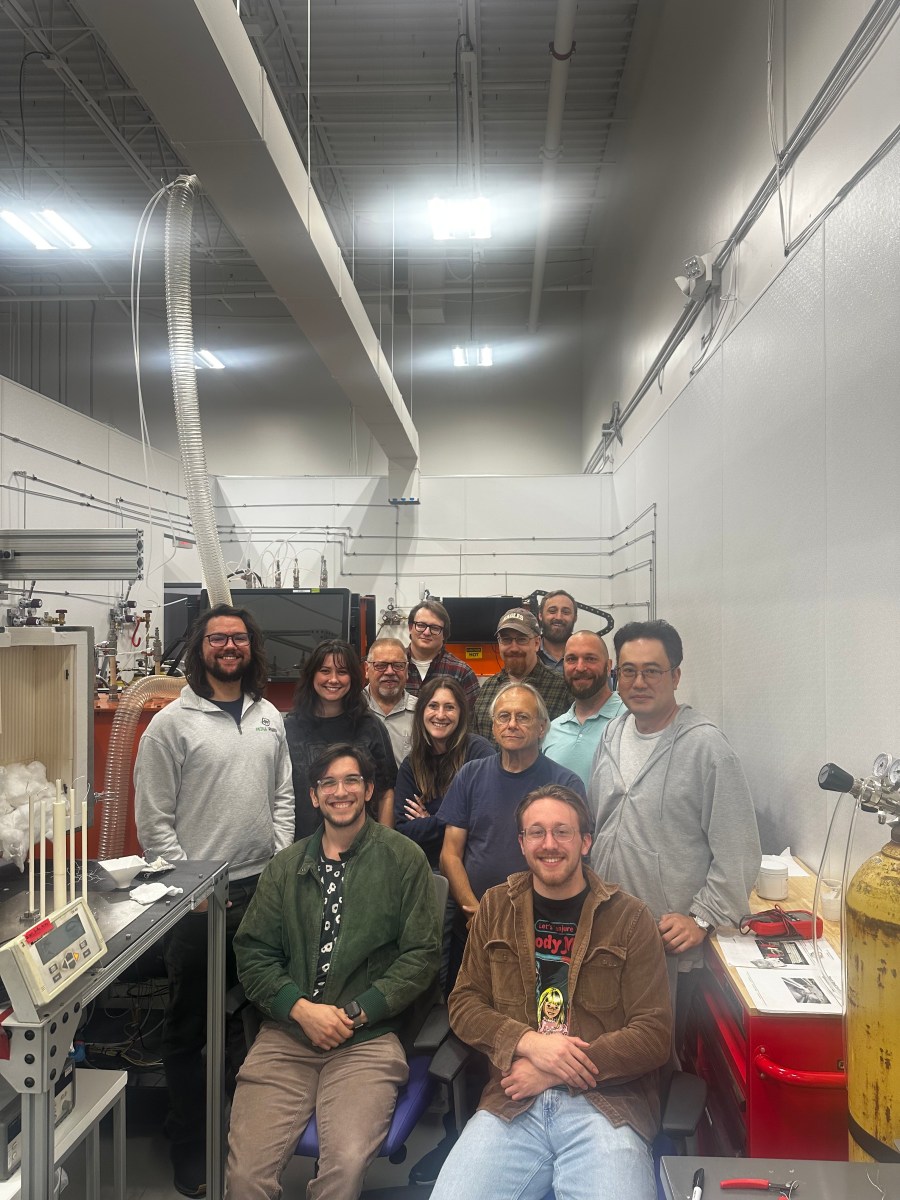
As AI gobbles up an ever larger amount of energy, the hunt is on for efficient and cost-effective power sources. One of the companies leading the charge is Petra Power.
Petra, which was founded in 2017, sells solid oxide fuel cells — ceramic devices that convert fuel, like natural gas, into electric power without burning it. The company markets them as a more efficient and environmentally friendly way to operate data centers and large vehicles.
Petra’s founder, Aaron Goodman, told TechCrunch that his company’s product has significantly lower fuel costs and emissions than traditional power sources, and that they have much less of a physical footprint, too, because they’re more compact and lightweight.
The efficiency, and the cost savings that come with it, is what makes the fuel cells attractive. “Combustion takes fuel and creates explosions,” Goodman said, describing how traditional power generation works. “Those explosions create heat. That heat creates motion. The motion powers an electromotive force, which eventually creates electricity. It’s a lot of steps, and they all have so much loss in them that you end up with a really inefficient system.”
Petra’s fuel cells skip most of these steps. “What fuel cells do is they take the electrons directly off of the fuel, so they strip the fuel of its electrons, which creates electricity,” he explained. “It’s one step, no loss, and subsequently, in theory, at least, they’re much, much more efficient.”
As a result, companies that run off fuel cells stand to save a significant amount on fuel costs, Goodman said.
Although it may offer an innovative product, the customer base is still emerging for Petra. Goodman said that his company is targeting two different types of customers: data centers and the Defense Department.
Goodman doesn’t want to reveal specific agreements just yet, but said Petra is currently working with neoclouds and other infrastructure providers that were a few steps down from the hyperscaler crowd. The target for first deployment with these customers is 2028, with full-scale production for the company hopefully set for 2029, Goodman said.
“Hyperscalers are an ICP [ideal customer profile] for us, and we talk a lot to them, but we don’t have anything firm with them yet,” said Goodman. “We’re still kind of working in that direction. Obviously, they’re the largest consumers of power. They’re the ones that we can make the biggest impact with, so that’s where we’d like to go.”
The other customer — the government — is also still taking shape. The idea is that Petra’s fuel cells will be able to provide auxiliary power for land vehicles, meaning electricity for onboard equipment when the main engine is off. But Petra’s product has not actually deployed on a live vehicle yet, Goodman clarified. Instead, the fuel cells are in the testing phase, during which the government is deciding whether to move forward, he said.
Petra is a small team — some 15 people — but the company is growing, Goodman said. Petra has so far received nearly $9 million in contracts from the Defense Department, and the hope is to scale that work significantly in the coming years, he said.
Petra Power was selected for this year’s TechCrunch Startup Battlefield 200, a group of 200 startups chosen for the program. You can catch all the action this coming week in downtown San Francisco at Moscone West.
When you purchase through links in our articles, we may earn a small commission. This doesn’t affect our editorial independence.
>

Cloudflare announced Friday that it’s acquiring Deno, the startup behind the programming runtime of the same name.
According to Cloudflare’s Kenton Varda, Cloudflare will use this acquisition to improve its Workers programming model and platform, which allows customers to build and run software on Cloudflare’s network. (Varda is principal engineer for Cloudflare Workers.)
Deno — which was co-founded by Bert Belder and Node.js creator Ryan Dahl — recently launched celld, an open source implementation of Workers, which Varda wrote “delighted” the Cloudflare team. Varda argued that contrary to “a popular theory” that the company “made Cloudflare Workers work differently from other cloud platforms in order to create ‘lock-in,’” the company believes “being open source and giving people an escape hatch is good business.”
Dahl, meanwhile, wrote that his team is “joining Cloudflare to make the Workers programming model a mainstream way to build servers.”
The financial terms of the acquisition were not disclosed. Deno had raised a total of $26 million, including a Series A led by Sequoia.
>
Even against less-intimidating Indiana, Nebraska loses in the most Nebraska way, again
Bring on BYU: Notre Dame pastes Stanford to complete warmup phase of 2026 schedule

'Absolutely superb' – How Caicedo proved pivotal in Chelsea win
-

 movies5 months ago
Search For Canadian TV Actor Stewart McLean Now Homicide Investigation
-

 Fashion9 years ago
These ’90s fashion trends are making a comeback in 2017
-
Fashion9 years ago
According to Dior Couture, this taboo fashion accessory is back
-
Fashion9 years ago
Model Jocelyn Chew’s Instagram is the best vacation you’ve ever had
-
Fashion9 years ago
Emily Ratajkowski channels back-to-school style
-
Fashion9 years ago
9 Celebrities who have spoken out about being photoshopped
-

 Anime4 months ago
Rurouni Kenshin: Hokkaido Arc Manga Takes 1-Issue Break – News
-

 Anime3 months ago
HIDIVE to Stream English Dubs for The World Is Dancing, The Forsaken Saintess and Her Foodie Roadtrip in Another World, The Dangers in My Heart: The Movie Anime – News