
Tech
These execs think voice AI hasn’t reached its ChatGPT moment yet

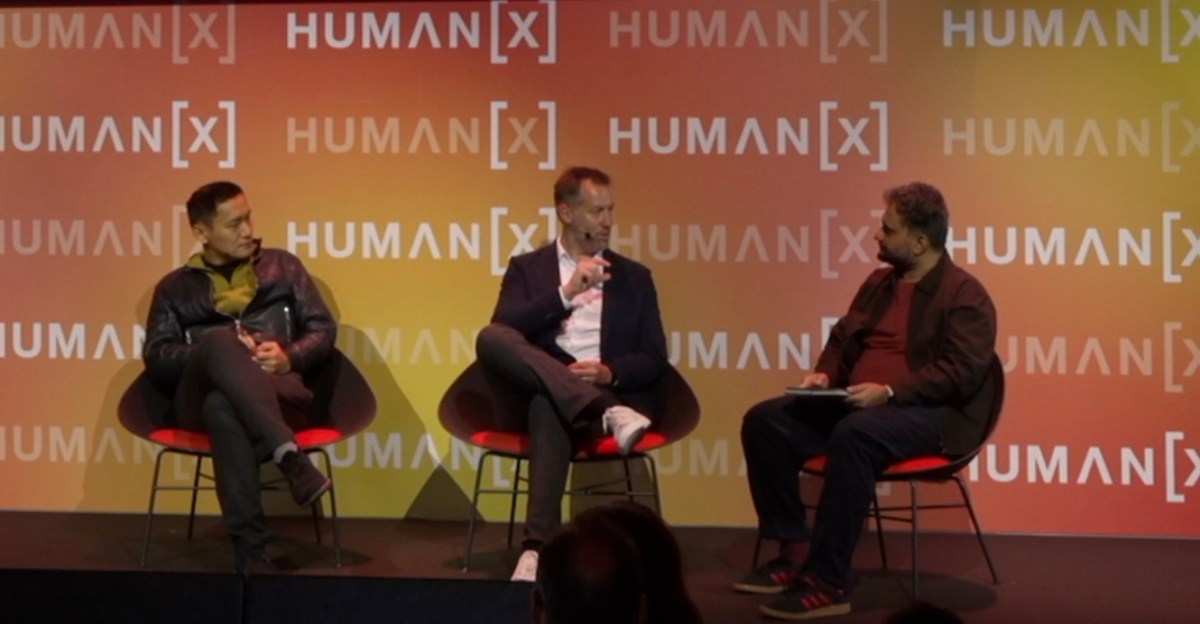
The theory of voice being the next big interface has picked up strong momentum, with investors pouring billions of dollars into voice AI startups working on areas ranging from model makers to enterprise customer service providers, and from meeting note-takers to AI-powered dictation.
Every week there is a new model or a tool release that claims to sound human and converse like one. However, in reality, that might not be the case. Enterprise voice AI platform PolyAI’s CTO Shawn Wen thinks that despite the release of full-duplex models — which can speak while listening to you — voice AI doesn’t have its “ChatGPT moment” yet.
“We have reached the milestone of developing full-duplex models. The next challenge is to make reasoning very fast, so that the models can fetch answers quickly and the conversation feels natural,” he told me on stage at the HumanX conference last month.
He also said that AI agents in customer service should not sound robotic and should give callers enough confidence that they can solve problems.
“I think the next stage will be slightly different because once the voice is good enough, like, and the customer is willing to engage with them for the first two or three turns, they start to build confidence, and over time, they will feel like I probably don’t have to talk to a human if the agent can solve my problem,” he said.
Alex Gay, CMO for meeting notetaker Otter, opined that speaker identification, intent capture, and typing that up with organizational knowledge is a key step for enabling automation. The company is also working on digital twins that might represent people in meetings. For that technology, he said it’s paramount that the output voice gives the same emotive expressions of talking to a human in a meeting.
“If you think about the meetings that you’re in right now, the best conversations that you have are where you can have debate, and strategic discussions, and when you feel like there’s a relationship that underpins it. If you aren’t able to have that with an avatar, then it’s just a q and a chatbot,” Gay noted.
Voice AI’s understanding and transparency
While voice AI models have improved, AI assistants often don’t understand users, or your meeting notetaker shows the wrong transcript or a summary.
Wen thinks that ASR (Automatic Speech Recognition) models often miss important keywords, and that creates an issue in capturing the whole context.
Otter’s Gay agreed with this, adding that the company keeps working on improving transcription. He also said that language is one area where voice models need to improve.
“For Otter, you know, transcription was never the end point. It was just the layer that we could start to drive some of the productivity gains on the back of. But if your original transcription didn’t have the accuracy that you needed, all the follow-up actions that you have become flawed. And the minute that starts to take action, that is wrong. You lose trust in the platform. It is critical for us to continue to improve that ASR model because all of the downstream impacts are significant,” he said.
With the new voice tools, there is also a question of transparency. Tools should declare to customers that they are being recorded or talking to AI. Otter said that it wants to instill trust in people who are in a meeting, so even for a meeting where the bot is not present, it wants to try methods like notifying everyone in the chat that the meeting is being recorded. PolyAI’s Wen also said that it’s important to establish that people are talking to an AI in enterprise calls.
When you purchase through links in our articles, we may earn a small commission. This doesn’t affect our editorial independence.
>

Earlier this year, the streaming and entertainment industry witnessed one of its most high-stakes megadeals ever, stunning industry observers. Not only is it historic in its size, but it is also predicted to disrupt Hollywood and the media business as we know it.
After years of Warner Bros. Discovery (WBD) struggling under the weight of billions of dollars in debt, compounded by declining cable viewership and fierce competition from streaming platforms, the company has been considering major strategic changes, including selling its entertainment assets to one of its rivals.
Several major players saw the potential in acquiring the media giant, and in December, Netflix announced it would acquire WBD’s studios and streaming for $82.7 billion.
But in a surprise eleventh-hour move in late February, the David Ellison-run Paramount became the winner of this bidding war, offering $111 billion to acquire all of WBD’s assets, including its studios, HBO, streaming platforms, games, and TV networks such as CNN and HGTV. Paramount was recently acquired by Ellison with significant support from his father, Larry Ellison — the Oracle chairman, world’s sixth-richest person, and major Trump donor.
Paramount’s offer was approved by the U.S. Department of Justice (DOJ) in June. A federal judge then paused the deal after a lawsuit was filed on July 13 by a coalition of 12 state attorneys general. However, a judge approved it in late September, with the acquisition finally official as of October 6.
Let’s break down exactly what happened and what could come next.
What has happened so far?
This all started back in October 2025 when Warner Bros. Discovery revealed it was exploring a potential sale after receiving unsolicited interest from several major players in the industry.
The bidding process quickly became competitive, and Paramount and Comcast emerged as serious contenders, with Paramount initially viewed as the frontrunner.
However, WBD’s board eventually determined that an offer from the streaming giant Netflix was the most attractive. Netflix offered $82.7 billion for just Warner’s film, television, and streaming assets.
Thus began the bidding war. Paramount believed its bid of approximately $108 billion for all of Warner’s assets was superior to Netflix’s offer that focused on just the studios and streaming. To sweeten its deal, Netflix amended its agreement in January to an all-cash offer at $27.75 per share of Warner Bros. Discovery, further reassuring investors and paving the way for the deal to proceed.
Paramount persisted in its attempts to acquire WBD. Still, the Warner board repeatedly rejected its offers, citing concerns about Paramount’s heavy debt load and the increased risk associated with its proposal, including concern over the suite of investors bankrolling Paramount’s bid, which includes Saudi, Qatari, and Abu Dhabi sovereign wealth funds. The board noted that Paramount’s offer would have left the combined company burdened with $87 billion in debt, a risk they were unwilling to take at the time.
In January, Paramount filed a lawsuit seeking more information about the Netflix deal. A month later, the company sought to sweeten its deal by announcing it would offer a $0.25 per share “ticking fee” to WBD shareholders for each quarter the deal fails to close by December 31, 2026. It also said it would pay the $2.8 billion breakup fee if Warner backs out of its deal with Netflix.
Then, in a final attempt to secure a deal, Paramount increased its offer to $31 per share in February. This prompted the WBD board to prolong discussions with Paramount regarding a potential agreement, considering it as a superior offer. Netflix declined to increase its bid and withdrew from the negotiations.
“The transaction we negotiated would have created shareholder value with a clear path to regulatory approval,” Netflix co-CEOs Ted Sarandos and Greg Peters said in a statement on February 26. “However, we’ve always been disciplined, and at the price required to match Paramount Skydance’s latest offer, the deal is no longer financially attractive, so we are declining to match the Paramount Skydance bid.”
In addition to the billions Paramount already holds in debt, the company is also set to assume the approximately $33 billion in debt Warner Bros. Discovery holds under the agreement. The deal will be backed by a $54 billion debt commitment from Bank of America, Merrill Lynch, Citi, and Apollo Global Management, as well as $45.7 billion in equity from Larry Ellison.
Regulatory hurdles and other concerns
In addition to the assumption of substantial debt posing a significant financial burden, Paramount faced several other hurdles in its deal with WBD.
For one, Ellison has warned about significant job reductions that are expected in the near future. There have already been widespread concerns among critics about potential job losses and lower wages.
Ellison is also a controversial figure in the industry, and his ownership of CBS News has been seen as sympathetic and supportive of the administration of Donald Trump, of whom his father, Larry Ellison, is a major donor. Under Ellison’s ownership of Paramount, reporting critical of the administration has been shelved or received increased scrutiny from Ellison or his appointed head of CBS News, the conservative provocateur Bari Weiss.
This has led to some concern among employees at Warner-owned CNN. Trump has personally sought concessions from news divisions critical of him, including a $16 million settlement from CBS, before his FCC would approve the Ellison takeover of Paramount. Before Netflix bowed out of the deal, Trump pressured the company to fire the former Biden White House official Susan Rice from its board. He has publicly stated his intentions to bring CNN to heel under new owners.
Regulatory scrutiny was another hurdle. Such a large-scale merger attracted attention from lawmakers.
For instance, California attorney general Rob Bonta said in a statement on February 26 that “these two Hollywood titans have not cleared regulatory scrutiny — the California Department of Justice has an open investigation, and we intend to be vigorous in our review.”
A day before Netflix backed out, a coalition of 11 state attorneys general urged the U.S. Department of Justice to review the merger under concerns it will stifle competition and increase subscription prices. This comes months after U.S. senators Elizabeth Warren, Bernie Sanders, and Richard Blumenthal voiced their concerns to the Justice Department’s Antitrust Division, warning that such a massive merger could have serious consequences for consumers and the industry at large. The senators argue that the merger could give the new media giant excessive market power, enabling it to raise prices for consumers and stifle competition.
Despite the DOJ approving the deal in June, a coalition of 12 state attorneys general filed a lawsuit on July 13 to block the merger. The suit argues it would lessen competition and harm movie theaters, cable distributors, and viewers. The coalition is led by Bonta, with Arizona, Colorado, Connecticut, Massachusetts, Minnesota, Nevada, New Jersey, New Mexico, New York, Oregon, and Washington also joining.
In response, U.S. District Judge Araceli Martínez-Olguín issued a 14-day pause.
What now?
As of October 6, Paramount and Warner Bros. has officially been renamed Skydance, and the new combined corporation will have annual revenue of almost $70 billion.
In terms of its streaming services— Paramount+, HBO Max, and Discovery+,— those are all set to be combined eventually.
When you purchase through links in our articles, we may earn a small commission. This doesn’t affect our editorial independence.
>
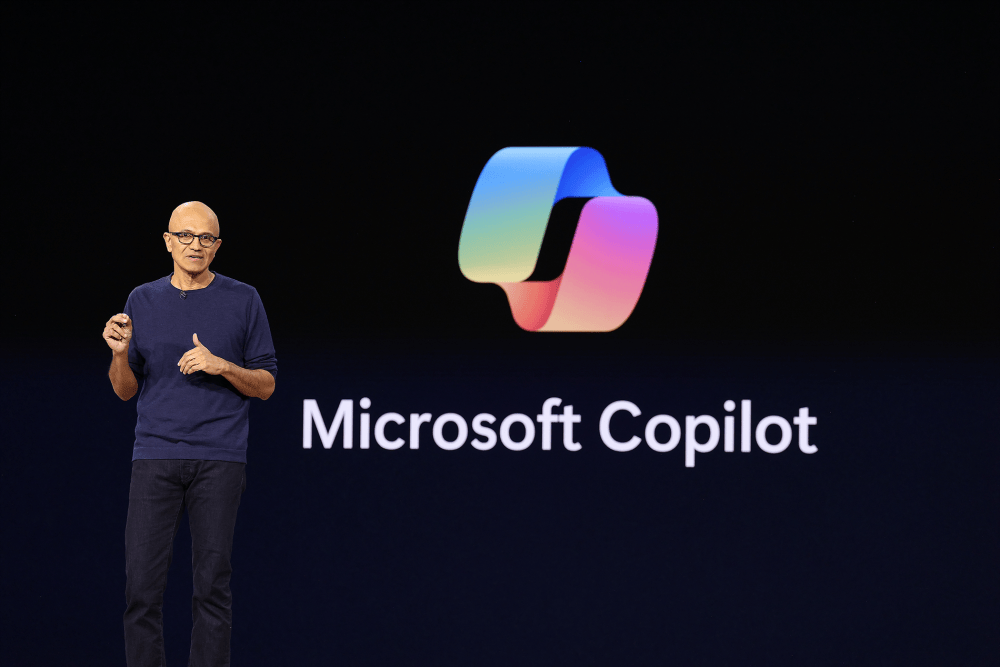
Microsoft CEO Satya Nadella is the latest tech executive to offer lengthy thoughts on how AI safety might be improved.
In a Saturday morning post on X, Nadella wrote that it’s time “to step back and assess the trust architecture” of AI.
“We can’t treat Super Intelligence as a set of nested black boxes and simply accept or reject its recommendations, answers, and actions,” Nadella wrote, using the Trump administration’s preferred term for AI.
As outlined by Nadella, this approach “means separating the model from the harness that orchestrates its work,” as well as “externalizing controls and safeguards.” He also called for “every meaningful model action” to be documented with “tamper-proof human readable evidence,” and for systems where “an authorized person” always has the ability “to pause or shut down a model mid-task.”
“We must assume a model is compromised and contain it from the start,” he said. “Think of it like an emergency brake.”
Nadella’s comments come as leading AI companies acknowledge more and more incidents where they seemed to lose control of their models, and after Anthropic CEO Dario Amodei published a plan for more cautious AI development.
>

Apple revealed in a regulatory filing that it has reached an agreement to bring on team members and technology from personalized audio startup Huxe, in what’s commonly known as a reverse acqui-hire deal.
As first reported in MacRumors, Apple disclosed to the European Commission that it has agreed to make employment offers to “certain employees of Huxe AI,” and to “receive a non-exclusive license to Huxe’s intellectual property rights.”
Reverse acqui-hires emerged in recent years as a way for larger companies to hire key team members and license technology from startups without acquiring the startups outright — presumably allowing them to build up AI talent and tech without drawing as much antitrust scrutiny. (Confusingly, these deals have both been referred to as “reverse acqui-hires” and as plain old “acqui-hires.”)
In the case of Huxe, the startup was founded by developers who’d previously worked on the AI-generated podcast features in NotebookLM (recently renamed Gemini Notebook). But Huxe announced on May 21 that it was shutting down, with the team posting on the Huxe website that the company would be removing its app from the Apple and Google stores, halting service, and deleting user data.
“The team is moving on to new things, and we won’t be continuing development of the product,” the company said. It also thanked its users, saying, “The fact that you used it, told friends about it, sent us your suggestions and your ideas, made it feel like we built it together.”
On June 9, shortly after Huxe’s announcement, Apple notified the European Commission of its deal.
The filing does not say who received employment offers or if they accepted. Nor does it disclose anything about Apple’s plans.
Possibly related: Huxe’s shutdown announcement came just a day after Spotify unveiled AI-powered podcast generation features of its own, so Apple could be hoping to add similar functionality to its Podcasts app. Tech executives seem enamored with the idea that personalized audio can replace regular podcasts (and maybe even parent-child interaction?), though it’s not clear how many normal listeners agree.
When you purchase through links in our articles, we may earn a small commission. This doesn’t affect our editorial independence.
>
Javier Bardem on Declining ‘Skyfall’ Role and His Pitch to Sam Mendes
Ironman World Championships: USA's Taylor Knibb wins as Solveig Løvseth collapses while leading race
Singapore Grand Prix briefing: Magnificent Verstappen wins, Antonelli closes in on title
-

 movies5 months ago
Search For Canadian TV Actor Stewart McLean Now Homicide Investigation
-

 Fashion9 years ago
These ’90s fashion trends are making a comeback in 2017
-
Fashion9 years ago
According to Dior Couture, this taboo fashion accessory is back
-
Fashion9 years ago
Model Jocelyn Chew’s Instagram is the best vacation you’ve ever had
-
Fashion9 years ago
Emily Ratajkowski channels back-to-school style
-
Fashion9 years ago
9 Celebrities who have spoken out about being photoshopped
-

 Anime4 months ago
Rurouni Kenshin: Hokkaido Arc Manga Takes 1-Issue Break – News
-

 Anime3 months ago
HIDIVE to Stream English Dubs for The World Is Dancing, The Forsaken Saintess and Her Foodie Roadtrip in Another World, The Dangers in My Heart: The Movie Anime – News