
Jeremy Allen White and Mikey Madison in The Social Reckoning.
Sony Pictures


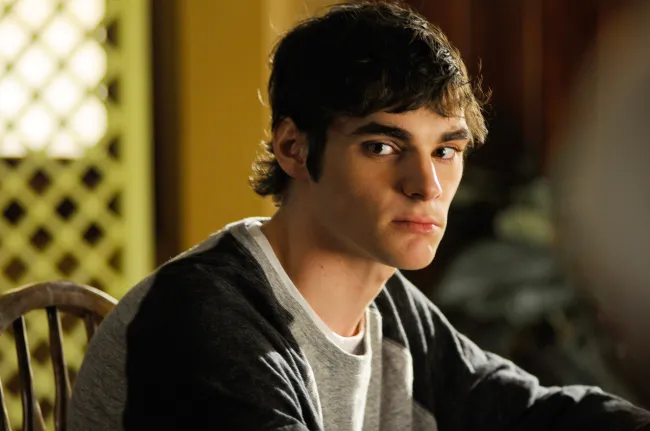
Tragedy struck Hollywood on Monday when RJ Mitte, the actor and disability advocate best known for playing Walter White Jr. on “Breaking Bad,” died at the age of 34. “It is with profound sadness that we share the tragic passing of beloved actor, philanthropist, and passionate disability rights advocate RJ Mitte,” the actor’s representatives said in a statement announcing the news.
Mitte was born in Jackson, Mississippi in 1992 and moved to Los Angeles in 2006 to pursue an acting career. He rose to prominence for his role on “Breaking Bad” beginning in 2008 and appeared in 57 episodes throughout the show’s five-season run.


After being diagnosed with cerebral palsy when he was three years old, Mitte dedicated much of his personal and professional life to advocating for disabled actors. He served as a spokesperson for SAG-AFTRA on topics relating to accessibility and portrayals of disabilities and worked as a celebrity ambassador for the United Cerebral Palsy organization.
Mitte’s tragic passing caused an outpouring support among his fellow actors on Monday afternoon, with many remembering him as both a talented performer and a compassionate public speaker who never stood down from what he believed was right. Tributes poured in from Mitte’s “Breaking Bad” collaborators, allies from his advocacy work, and fellow actors who admired his work from afar.
“My best is shattered. There will never be another like RJ Mitte,” Marlee Matlin wrote, summarizing the thoughts of countless others. “You’ll always have a place in my heart.”
Keep reading for an updating roundup of reactions to Mitte’s death.
>

“I passed on a show where I would have to have sex all the time because of the sex,” Amanda Seyfried said during a recent interview at the Hamptons International Film Festival. “Doesn’t matter [who it’s with] … I don’t wanna do it. I’m uncomfortable with it. I’m not into it right now.”
Seyfried, who has in the past done racy projects like Jennifer’s Body and Lovelace, says she’s in a different place in her life.
“I have kids now who are paying attention to what I do,” she told interviewer Alec Baldwin during the conversation.
“Our jobs are weird,” she said to Baldwin. “And as I get older, it gets weirder. We have to be romantic with people that we’re not romantic with.
“Sometimes it’s great. Sometimes it’s really uncomfortable. But I can’t believe back in the day I was just like, ‘We gotta make out. Great! This is awesome. I know how to make out,” she laughed.
“And it used to be so fun,” Seyfried continued. “It was a non-thing. It was like, ‘I get to make out with a hot person today … And they’re paying me.’”
The Emmy-winner didn’t entirely rule out such work in the future.
“Maybe if [the project] came along again [at a later point], maybe I’d be in a different space,” she said.
Right now, however, “I don’t wanna deal with being naked with a stranger.”
>
ABC‘s legal team told a federal judge on Monday that because the FCC ordered that it submit its station licenses for early renewal rather than a host of less-drastic options, the agency only underscored “their retaliatory motive.”
The network has asked a federal judge to halt the license review proceedings, arguing that it is a punitive action for First Amendment protected speech from the news division, late-night host Jimmy Kimmel and other content disfavored by Donald Trump.
When the FCC moved to an early renewal proceeding in April, it said that the unusual move was due to the lack of sufficient response by the network as part of an investigation into its diversity, equity and inclusion practices, which have been a target of the administration.
After a two-hour hearing last week, U.S. District Judge Loren AliKhan asked the FCC to submit an additional filing outlining the other options that were available to compel the network to comply with document requests.
In its filing on Friday, the FCC, represented by the U.S. attorney in Washington, D.C., said that the early renewal order was the “best tool for the task before the agency.”
The agency acknowledged that other options were available, including issuing administrative subpoenas, imposing monetary penalties and holding hearings.
“Asking whether the Commission might have chosen a different tool to combat Plaintiffs’ failure to provide complete responses in the anti-discrimination investigation does not address the operative question in this case: whether the agency lawfully elected to call for early renewal,” the government’s attorney argued in the filing.
Tools like administrative subpoenas and monetary penalties would require DOJ enforcement, the government attorney stated, while the agency launched an early renewal proceeding that included a public comment period.
In a filing on Monday, ABC’s legal team wrote, “Defendants’ own admissions leave no doubt as to why—Defendants sought to inflict maximal coercive pressure on the media company whose speech the Administration sought to curb, while deliberately evading judicial review.”
“Defendants’ excuses for not using a less intrusive tool to address the supposed discovery deficiency only underscore their retaliatory motive.”
The network is seeking a preliminary injunction, but the judge has not said when she would issue a ruling.
>
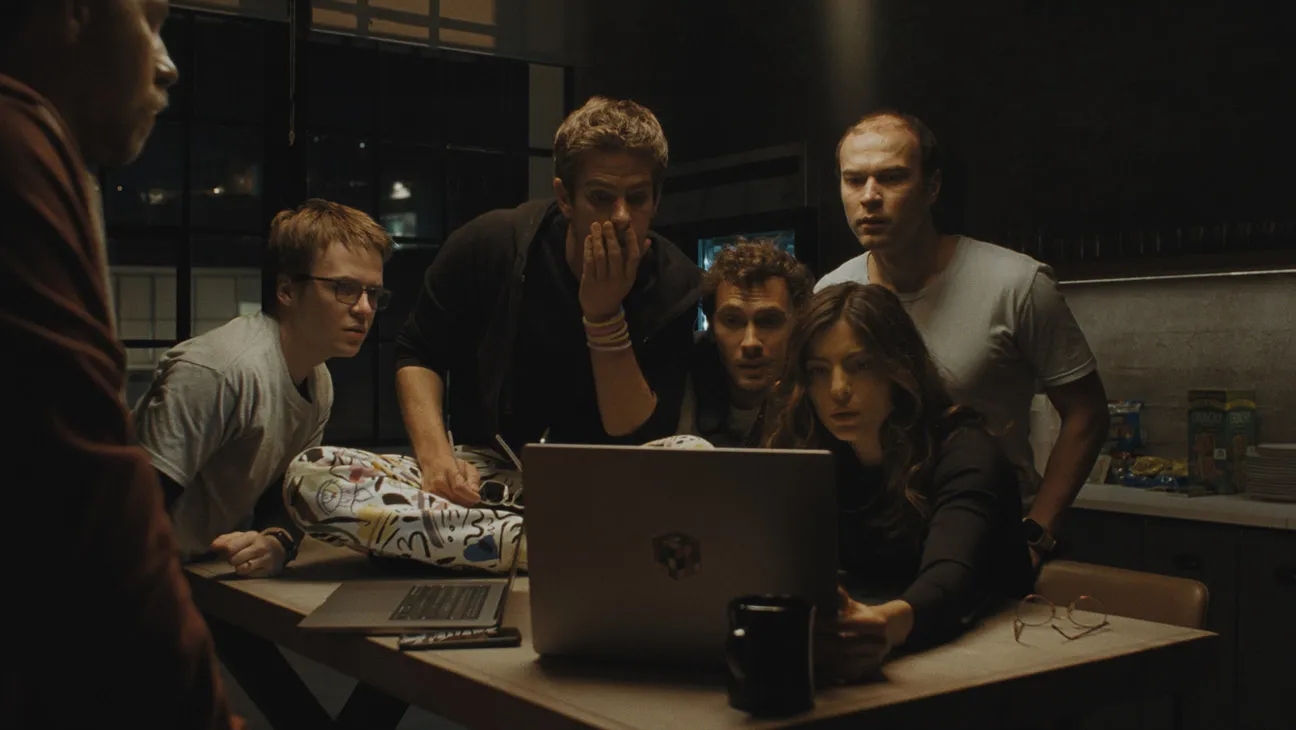
The Social Reckoning had a tough time making noise at the box office in its opening weekend, spurring debate about the prospects for a spate of 2026 titles examining the tech sphere.
Aaron Sorkin‘s follow-up to director David Fincher’s acclaimed 2010 hit The Social Network, for which Sorkin nabbed the Oscar for adapted screenplay, grossed a disappointing $5.5 million domestically, below even the soft initial projections that distributor Sony Pictures had set for the wide release of the $30 million-budgeted film. While the 2010 movie starred Jesse Eisenberg as Facebook co-founder Mark Zuckerberg in the story of the platform’s early days, The Social Reckoning replaced Eisenberg with Jeremy Strong as the CEO. Mikey Madison stars as a Facebook staffer who teams up with a journalist (Jeremy Allen White) to expose dark truths.
After a great box office run with a global cume of $224 million, The Social Network continues to be heralded as a masterpiece of its era. But it’s clear that much about the world has changed since that time. While the impact of technology — and the billionaires who run such companies — on American lives has never been more evident, it remains to be seen whether today’s Hollywood takes can successfully capture what it is that makes this sphere such fodder for conversation and discussion.
The Social Network dove into the world of Facebook “at a time when people had a much more emotional connection to the platform,” Rentrak’s Paul Dergarabedian tells The Hollywood Reporter. “Quite frankly, Facebook was a much sexier subject in 2010. Today, it’s become more of a utility, and the story being told in The Social Reckoning is much different and arguably more challenging from a commercial standpoint. Combine that with the mixed reviews, and you have some significant headwinds in an already competitive theatrical marketplace.”
Jeremy Allen White and Mikey Madison in The Social Reckoning.
Sony Pictures
Clearly, tech figures have an outsized role in everyday lives, as the often polarizing personalities generate ire and debate. But some recent social media posts surrounding the release of The Social Reckoning, which holds a middling 55 percent critics approval on Rotten Tomatoes, have suggested that the dealings of self-absorbed billionaires amid the public’s fear of AI and tech figures’ political sway are not the stories that audiences might see as particularly escapist in this challenging cultural moment.
“In the 16 years since The Social Network, the story became one of corporate misbehavior,” David A. Gross, who runs the box office newsletter FranchiseRe, tells THR about such films not always feeling especially cinematic or relatable. “Public sentiment has soured, and audience interest has declined. The story lost its edge.”
Also debuting in theaters over the weekend was Alex Gibney’s Elon Musk-focused documentary Musk, with the nearly four-hour feature collecting $69,321 from four screens to rank as the frame’s second-best average per screen. Next weekend sees the arrival of Nathan Fielder and Lance Oppenheim’s buzzy three-hour Elizabeth Holmes documentary You Can See Everything. Meanwhile, Neon has set Luca Guadagnino‘s Artificial for a December release after the film, starring Andrew Garfield as OpenAI CEO Sam Altman, was shelved by Amazon earlier this year.
A scene from Musk.
Courtesy of the Venice Film Festival
Unlike the situation with The Social Reckoning, reviews for Artificial, You Can See Everything and Musk have been stellar. While their collective impact at the box office is still uncertain, their fates will likely improve if they continue building awards buzz, which is something that may be eluding Sorkin’s film at this point.
“The rich and powerful have always been irresistible media fare, so it seems pretty obvious why we’re seeing so many films about tech billionaires right now: They’re our new overlords,” quips Allison de Fren, Occidental College media arts and culture professor and a Science Fiction Research Association award winner. “Although neither Musk nor Zuckerberg strikes me as a particularly charismatic character, what’s fascinating is the extraordinary, often invisible influence they wield over our everyday lives.”
Hollywood and Silicon Valley continue to share complex connections, with Amazon’s decision to drop Artificial having come months after the tech giant announced a major partnership with OpenAI, the subject of the blistering film. A recent example of the continued commingling came last week with the news that tech entrepreneur and philanthropist Laurene Powell Jobs — who was once Disney’s largest shareholder after the passing of husband Steve Jobs — has joined the board of the recently formed Skydance Corporation, whose founder, David Ellison, is the son of Oracle billionaire Larry Ellison.
“The worlds of Hollywood and big tech have become increasingly intertwined and synonymous, in line with the flows of funding, ownership and influence that come with ever greater convergence,” says Ithaca College professor of screen studies Andrew Utterson. “The hope is that filmmakers continue to tell the tech-focused stories that matter without undue influence from powerful individuals and corporate entities alike.”
Indeed, the soft turnout for The Social Reckoning might remain more representative of its particular focus than whether tech stories can captivate on the big screen.
“There’s a sense in which concerns about misinformation feel like yesterday’s news,” says Gabriel Rossman, an economic sociology professor at UCLA. “But obviously, people are very interested in AI, and they’re interested from various perspectives. So, the outlier of these movies [as a potential breakout] would be [Artificial, given that] Altman is arguably one of the most important human beings alive right now.”
>


Search For Canadian TV Actor Stewart McLean Now Homicide Investigation


These ’90s fashion trends are making a comeback in 2017
According to Dior Couture, this taboo fashion accessory is back
Model Jocelyn Chew’s Instagram is the best vacation you’ve ever had
Emily Ratajkowski channels back-to-school style
9 Celebrities who have spoken out about being photoshopped


Rurouni Kenshin: Hokkaido Arc Manga Takes 1-Issue Break – News


HIDIVE to Stream English Dubs for The World Is Dancing, The Forsaken Saintess and Her Foodie Roadtrip in Another World, The Dangers in My Heart: The Movie Anime – News