
Tech
Apple makes another push into the smart home market with HomeView

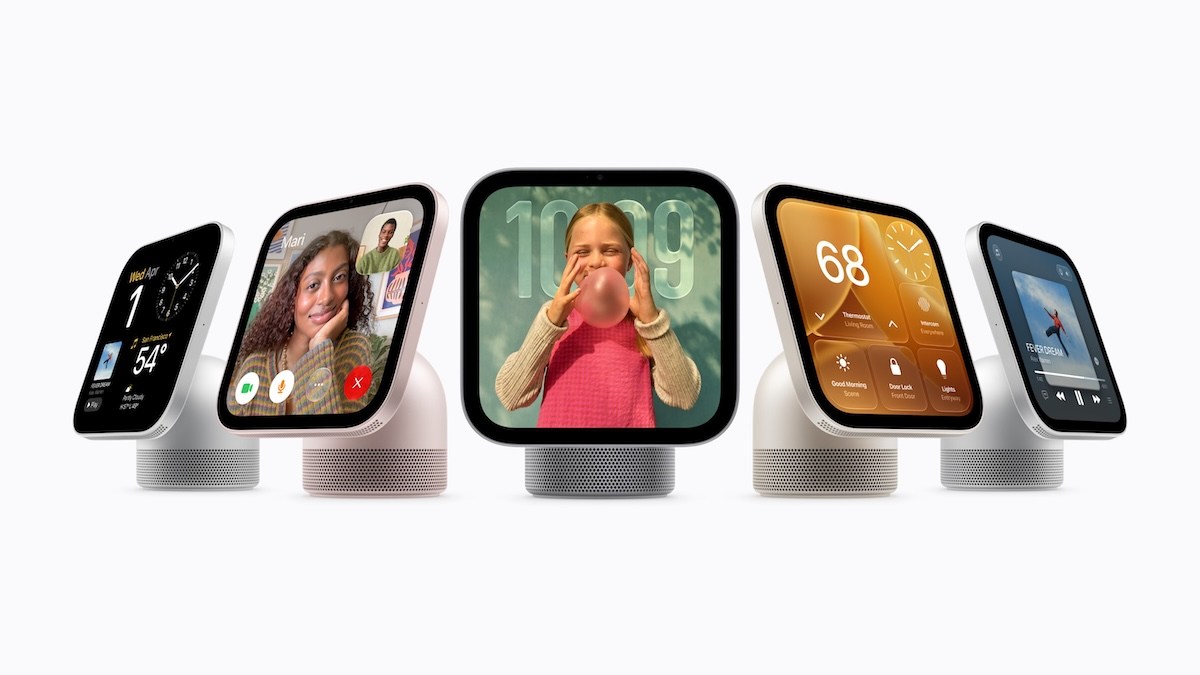
Apple is taking a big swing at the smart home market. The company on Tuesday unveiled its long-rumored smart home hub, dubbed HomeView, that can act as a central control point for smart home devices, be used for FaceTime calls, playing music, watching videos, displaying photo slideshows, and more.
The new $299 device looks like a cuboid version of the HomePod, but with a display added to the front. The HomeView comes in two versions: one can sit on a countertop and the other can be mounted on a wall. Measuring 7 inches wide, the hub features a single FaceTime camera on the front, and has microphones and speakers built into its base. There is no camera on the back.
Apple has preloaded the device with several of its apps, including Calendar, Messages, Photos, FaceTime, Notes, Reminders, Music, and Podcasts. That means users won’t need to reach for their iPhone if they want to check a calendar appointment, send a message, play some music, or look at photos.
Apple sees the device being particularly useful in places such as the kitchen. Someone cooking dinner, for example, could pull up a recipe, watch a video, check a calendar, or start a FaceTime call without resorting to their phone.
One of the more interesting aspects of the device is how it works with different members of a household.
The hub runs Apple’s updated Siri AI assistant, and can recognize individual people in the house. Once it identifies someone, the screen can show information meant for that person, such as their messages, contacts, calendar appointments, notes, and preferred apps. The experience changes automatically when another family member walks up to the device.
HomeView puts Apple in a much more direct fight with Amazon and Google, both of which already have established smart display products: Amazon has its Echo Show line, while Google offers the Nest Hub.
Apple has had a mixed history in the smart home space, however, with products such as the HomePod struggling to reach the same level of popularity as competing devices. The new hub is an opportunity for Apple to change that by combining home controls with the company’s wider ecosystem.
The device has been rumored for quite some time, with reports pointing to delays caused in part by problems with Siri AI. Those issues have reportedly affected Apple’s broader smart home plans as well.
This may only be the first step in Apple’s plans for the smart home space. Bloomberg’s Mark Gurman has previously reported that Apple could eventually take the concept further with a more advanced version that features a robotic arm. Such a device could move its display and interact in a more physical way.
Pre-orders start today, and the device will be available to buy from November 13. It comes in four colors: silver, starlight, rose pink, and space gray.
When you purchase through links in our articles, we may earn a small commission. This doesn’t affect our editorial independence.
>

Bumble is getting a new owner. The dating app announced Tuesday that it has agreed to a $1.3 billion acquisition deal with Ithaca Holdings, marking a major shift for a company that once looked like one of the biggest success stories in online dating.
The deal would take the company private after years of declining subscriber numbers, falling revenue, and mounting pressure to rethink the online dating experience. The move may give Bumble a chance to work on its next chapter away from the pressure of public markets.
Founded in 2014 by Whitney Wolfe Herd, Bumble made a name for itself for its unique approach where only women made the first move. That helped it stand out in a crowded dating market, and the company eventually went public in 2021 at a valuation of roughly $14 billion.
Since then, however, the dating app landscape has changed considerably. Bumble has faced declining paying users, weaker revenue, and growing dissatisfaction with the familiar swipe-based model. The company recently reported second-quarter 2026 revenue of $211 million, down 15.2% year over year, while its paying user base fell 16.4% to approximately 3.2 million.
The acquisition follows a review of strategic options by an independent committee of Bumble’s board, which recommended the transaction after consulting outside legal and financial advisers. Wolfe Herd did not participate in the board’s discussions or vote on the deal, according to the press release.
“In Ithaca, we have found a partner who shares our vision, believes in our women-first mission, and is committed to investing in Bumble’s future,” Wolfe Herd said in a statement.
She also confirmed that she plans to stay actively involved in the business, working alongside Ithaca’s Ravi Gupta and John Hegeman, and the Bumble team.
Going private might give Bumble more flexibility to experiment with new features and make changes without having to answer to public-market investors every quarter. The company has been exploring AI-driven features and putting more energy into helping people connect offline, reflecting a broader shift in how younger users approach dating.
One example is Plans, announced in July, which focuses on bringing people together through real-world activities. Wolfe Herd also recently revealed that the company is developing a new way for users to interact that could eventually replace the swipe-based model.
When you purchase through links in our articles, we may earn a small commission. This doesn’t affect our editorial independence.
>

Day 1 of TechCrunch Disrupt 2026 is officially underway, bringing together 10,000+ startup founders, investors, and tech leaders under one roof at San Francisco’s Moscone West. Big ideas are colliding, connections are forming at every turn, and the startup ecosystem’s most influential voices are driving the conversation.
From Startup Battlefield to six new industry stages focused on scaling, AI, fintech, climate tech, and more, Disrupt is packed with game-changing perspectives and opportunities. The next partnership, investment, or breakout company could emerge from any meeting, session, or coffee line conversation. Meet the 250+ speakers shaping the discussion.
Grab your ticket now so you don’t miss a moment at Disrupt. There’s still a little time to grab your pass and be a part of this annual startup epicenter.

Explore. Connect. Discover.
Day 1 highlights
Registration hours: 7:30 a.m. – 5:00 p.m.
Stop by the registration desk in the Level 1 lobby of Moscone West to register in person or pick up your scannable event badge. The badge features Klik technology, which makes it easy to exchange contact information with people you scan your badge with. Using the event app, you can access and keep those contacts even after the event ends.
Expo Hall (8:00 a.m. – 5:00 p.m.)
Explore 300+ exhibiting startups showcasing cutting-edge technologies across industries. This is the center of Disrupt, where 10,000+ attendees converge to discover new breakthroughs and spark new connections.
Haven’t registered yet? You still can — but don’t wait, or you will miss out. Grab your ticket now and walk straight into the action: six industry stages, interactive roundtables, Q&A breakouts, hundreds of exhibiting startups, investor-founder meetings, AI-powered matchmaking networking, and side events lighting up the Bay Area tech scene all week long.

Pitch Showcase Stage
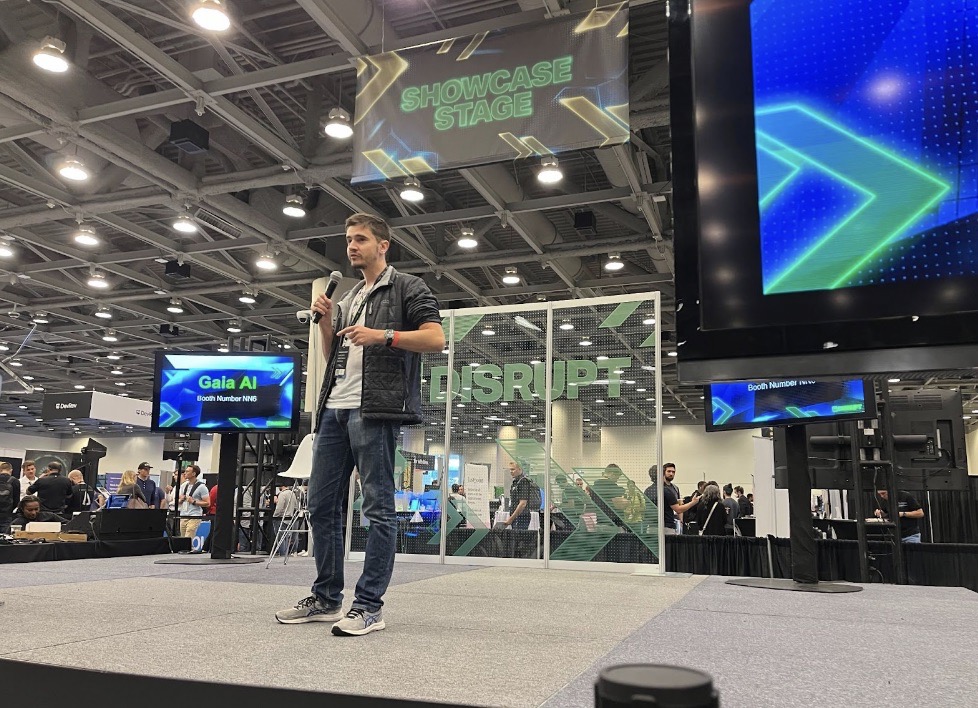
Make your way to the Pitch Showcase Stage at the back of the Expo Hall to experience one of the most electrifying formats on the conference floor: rapid-fire, one-minute lightning pitches from some of the most promising startups representing their home countries and regions.
The Startup Battlefield Fast Pitches — Built World
The Startup Battlefield 200 Built World category showcases the most innovative early-stage startups tackling major challenges in real estate, construction, architecture, smart cities, and infrastructure. Discover the technologies transforming the physical spaces where we live, work, and play. Stop by to catch their lightning pitches and meet the bold entrepreneurs building what’s next.
The spotlight also shines on Startup Battlefield, TechCrunch’s renowned “World Series of pitch competitions.” After vetting thousands of applicants, TechCrunch selected the top 20 early-stage startups to pitch in front of some of the world’s most seasoned VCs. They’ll compete for a $100,000 equity-free prize and the coveted Disrupt Cup.
Startup Battlefield 200 Fast Pitches – Sustainability
The Startup Battlefield 200 Sustainability category highlights the most groundbreaking early-stage companies tackling the world’s most urgent environmental and climate challenges, from renewable energy and carbon capture to circular economy platforms, sustainable agriculture, clean water solutions, and beyond.
These are the founders turning bold climate commitments into real-world technology, building businesses that prove profitability and planetary impact are not mutually exclusive — and they’re making their case in just two minutes. Stop by, catch their lightning pitches, and meet the startups who are determined to leave the world better than they found it.
Stage sessions
From physical AI and the future of intelligent systems to fundraising, hiring, and scaling breakout companies, today’s speakers are tackling the opportunities and challenges shaping the next generation of startups. Here’s a look at what’s happening across the stages today. Check out the full agenda that includes 200+ sessions.
Disrupt Stage
The Startup Battlefield — Space and Physical AI: Judges include Anu Bharadwaj (ICONIQ), Sara Deshpande (Maven Ventures), Benjamin Narasin (Tenacity Venture Capital), Aatish Nayak (Kleiner Perkins), Michael Palank (MaC Venture Capital)
Building the Impossible: RJ Scaringe (Rivian)
The Startup Battlefield — Energy and Manufacturing: Caleb Appleton (Bison Ventures), Feyza Haskaraman (Felicis), Sho Sho Leigha Ho (General Catalyst), Leah Solivan (Precedent.vc)
Can AI Keep Scaling?: Andrew Feldman (Cerebras Systems)
Beyond Screens: Max Hodak (Science Corporation)

Builders Stage
Equity Live: The Startup Stories Shaping 2026
TechCrunch’s Equity podcast takes the Builders Stage for a live recording from Disrupt. Join the Equity team as they break down the biggest startup, venture, and technology stories of the moment and what they mean for founders and investors heading into 2027.
What Happens When OpenAI Ships Your Roadmap: Rob Toews (Radical Ventures), Linda Tong (Webflow), Michel Tricot (Airbyte)
The Rise of Agentic AI: Lessons for Hardware Founders: Ziad Asghar (Qualcomm Technologies, Inc.), Florence Ion (PCMag)
Competing for AI Talent: Pay, Equity, and Retention: Matt Birnbaum (Wylder.co), Ioana Hreninciuc (Runware), Atli Thorkelsson (Redpoint Ventures)
The Builder’s Playbook: What Founders Need to Win the Agentic Era: Stephan Bitton (Google Cloud)
PMF Red Flags: How to Tell If You Really Have It: Anu Bharadwaj (ICONIQ), Rajeev Dham (Sapphire Ventures), Rahul Vohra (Superhuman)
From MVP to Billions of Users: How Product Decisions Must Change at Scale: Robby Stein (Google)
When Machines Clock In (Hosted by NYSE Wired): Brian Baumann (New York Stock Exchange), Dr. Adam Campbell (Gatik), Samir Menon (Dexterity AI), Sankaet Pathak (Foundation Future Industries, Inc.)
Hiring When AI Is a Co-founder: Michelle Johnson (Insight Partners), John Koelliker (Leland), Josh Reeves (Gusto)

Industry Stage: Smart Money
The Future of Money Movement in the Agentic Economy: Nikhil Chandhok (Circle), Rodney Robinson (TabaPay, Inc.), Carlotta (Lotti) Siniscalco (Emergence Capital)
AI, Trust & Verification in Financial Services: Hannah Bozian (American Express), Pedro Sanzovo (Plaid), Victoria Zuo (QED Investors)
Winning the Modern Financial Consumer: Abhishek Fatehpuria (Robinhood)
Industry Stage-Smart Systems
Where the AI Infrastructure Boom Is Creating Winners: Ben Longmier (Ambrosia Energy), Bill Thayer (Bloom Energy)
When the Energy Gets Smart: What Vertical AI Actually Delivers at Scale: Deepak Garg (SEW.AI), Paul Lau (SMUD)
How Twilio’s Founder Is Tackling the Power Problem: Jeff Lawson (Twilio)
Bringing Fusion to the Grid: David Kirtley (Helion), Brandon Sorbom (Commonwealth Fusion Systems)
Rewiring the Grid for the Electric Age: Apoorv Bhargava (Weave Grid, Inc.), Kristin Eberhard (Rewiring America), Tim Heidel (VEIR)
Breakout Stage
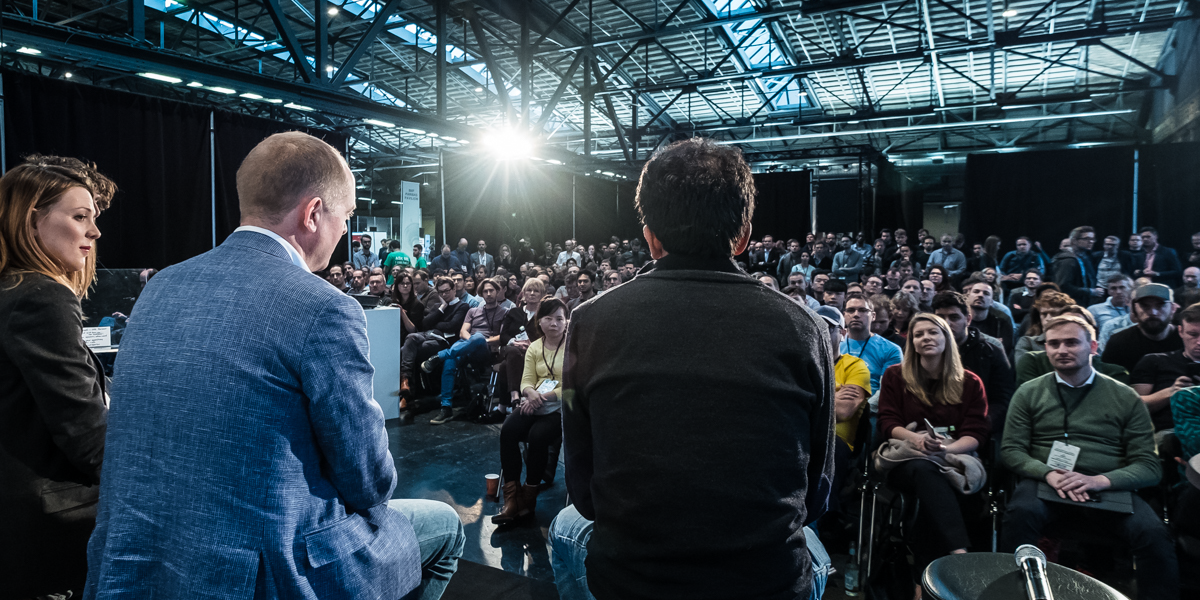
Located at the end of the Expo Hall, breakout sessions include a panel of experts on the presented topic, with room at the end for attendees to ask direct questions. See the full three-day lineup in the Disrupt agenda.
What is Physical AI, Anyway?: Susan Schofer (SOSV HAX), Parikshit Sharma (SOSV SF), Duncan Turner (SOSV HAX), Pae Wu (SOSV SF)
The New Job of the Data Team is Providing Context to AI: George Fraser (Fivetran + dbt Labs)
The Quantum Revolution: What Investors and Builders Need to Know: Andrew Dzurak (Diraq)
Taiwan Powering the Next AI Revolution: Connect, Invest & Scale: Michelle Chan (Phison Electronics USA), BoGaun Chen (ITRI International), Erica Lin (ITRI International), Mingche Wang (ITRI International)
How to Build AI We Can Trust: Robbie Goldfarb (Forum AI)
The Inference Economy: Why AI’s Next Trillion Dollars Won’t Look Like Its First: Hagay Lupesko (Cerebras Systems), Ali Mahmoud (Glasswing Ventures)
Roundtables
These small-group sessions give founders and investors the chance to tackle real-world challenges up close. Remember: Pre-registration on the event app is required for entry. Visit the Disrupt agenda to see all the roundtable sessions for the next three days.
Arm Wrestling Your Data: The Physical AI Challenge: Radha Basu (iMerit)
Can AI Take You Public? The New Playbook for IPO-Ready Finance: Eléonore Crespo (Pigment), Sofia Fatakhova (Chime)
AI’s Next Frontier: Modernizing Legacy Industries: Rob Biederman (Asymmetric Capital Partners)
Atoms vs. Bits: Physical AI for the Physical World: Jackson Feder (MetaProp)
Beyond Inventory: The Commerce AI Playbook for the Intent Era: Srishti Chaudhary (Walmart eCommerce)
Healthcare Took 40 Years to Adopt EHRs, Then Adopted Generative AI in Three. What Comes Next?: Brian Butler (Questa Capital)
From Pilot to Production at Scale: Provable, Trusted Agentic AI for the Enterprise: Dr. Maha Achour (Kodamai), Pankaj Kedia (2468 Ventures), Yasser Shaaban (Humain)

Specialty Post-Training Data: Powering the Next Wave of AI: Dani London (Base10 Partners)
The Science of Powerful Introductions: How to Be Remembered in an AI World: Cal Amir (Introduction Lab)
Beyond the Demo: Building Physical AI That Actually Works: Logan Farrell (Rugged Robotics), Austin Yount (Brick & Mortar Ventures)
Labs or Factory Floors: Who Will Win Physical AI?: Matt Burns (Insight Media Group), Roman Hölzl (RobCo)
Beyond the Term Sheet: How To Architect a Great Fundraise: Weston Moyer (MVP Ventures)
Brutal Truth: 12 Critical Mistakes That Nearly Derailed My CISO Career: Stephen Ward (Brightmind Partners)
Networking opportunities
Networking Lounge powered by Signify Business Cash World Elite Mastercard® by Wells Fargo: Open 9:00 a.m. – 5:00 p.m. Find your next co-founder, investor, or mentor through meetings you schedule via the event app or spontaneous meetups.
Deal Flow Cafe: Opens at 9:00 a.m. Exclusive to founders and investors, providing a quiet space to make deals over coffee.

Disrupt 2025 Side Events
Company-hosted Side Events are happening throughout San Francisco this week, extending the Disrupt energy well beyond Moscone West. Here are a few events happening tonight — panels, parties, and meetups designed to connect founders, investors, and innovators across every corner of tech. Make sure to RSVP for your spot at any of these. Explore the full lineup of Side Events and fill your schedule with more time for connections and insights.
The Irish Shark Tank – Hosted by Enterprise Ireland
SafetyWing Happy Hour at Harrington’s – Hosted by SafetyWing
Born2Global Founder Networking Night – Hosted by WayFounder

Still time to join Disrupt 2026
There’s still some time left to register for your pass and explore all these activations. Get your ticket now. There’s still so much more to experience at TechCrunch Disrupt 2026 — including more Startup Battlefield pitches, game-changing sessions, and unforgettable connections. Tickets are available through the final day. Secure yours now and be part of the future of tech. Do not wait.

When you purchase through links in our articles, we may earn a small commission. This doesn’t affect our editorial independence.
>

In a bid to attract more subscribers, the company now known as SpaceX Super Intelligence is bundling all its subscriptions, including X Premium, Grok, and Cursor, into one plan called simply “The X Subscription.”
The idea is that the combined offering could potentially attract more subscribers than any single subscription, given the competitive paid AI subscription market, where SpaceXSI faces rivals like OpenAI, Anthropic, and others.
With the X Subscription, users can gain access to Grok for AI-powered chat, with support for voice, images, video and the API. Grok’s agentic AI Bot is also available, as is Cursor for AI coding and the paid features that come with an X Premium subscription, like the blue verified checkmark, creator tools, and fewer ads.
There are five plans available on the new subscription: free, Plus ($8/month), Premium ($30/month), Super ($100/month) and Ultra ($200/month), with AI usage caps increasing as you move up through the tiers. The free plan will only offer limited chat and agent usage, and Premium or higher is required to access the latest Grok models.
There’s another draw for existing X Premium+ subscribers: the comparable plan on the new X subscription costs the same or less, the company noted.
Existing users can either switch from their subscription settings on X to upgrade to the new bundle, or maintain their current plan. The option to upgrade will roll out gradually, so interested customers will need to keep an eye on their billing settings for the offer to upgrade.
>

Dengeki Daisy’s Emotionally Gripping Premiere Has Some Crazy Directorial Choices – All the News and Reviews from New York Comic Con 2026

Trial hears woman recall fan falling on her at Ipswich Town v Maidstone

Bumble agrees to a $1.3B acquisition deal as online dating faces a reset
-

 movies5 months ago
Search For Canadian TV Actor Stewart McLean Now Homicide Investigation
-

 Fashion9 years ago
These ’90s fashion trends are making a comeback in 2017
-
Fashion9 years ago
According to Dior Couture, this taboo fashion accessory is back
-
Fashion9 years ago
Model Jocelyn Chew’s Instagram is the best vacation you’ve ever had
-
Fashion9 years ago
Emily Ratajkowski channels back-to-school style
-
Fashion9 years ago
9 Celebrities who have spoken out about being photoshopped
-

 Anime4 months ago
Rurouni Kenshin: Hokkaido Arc Manga Takes 1-Issue Break – News
-

 Anime3 months ago
HIDIVE to Stream English Dubs for The World Is Dancing, The Forsaken Saintess and Her Foodie Roadtrip in Another World, The Dangers in My Heart: The Movie Anime – News