
Tech
India delays digital payments fee rollout amid retailer pushback

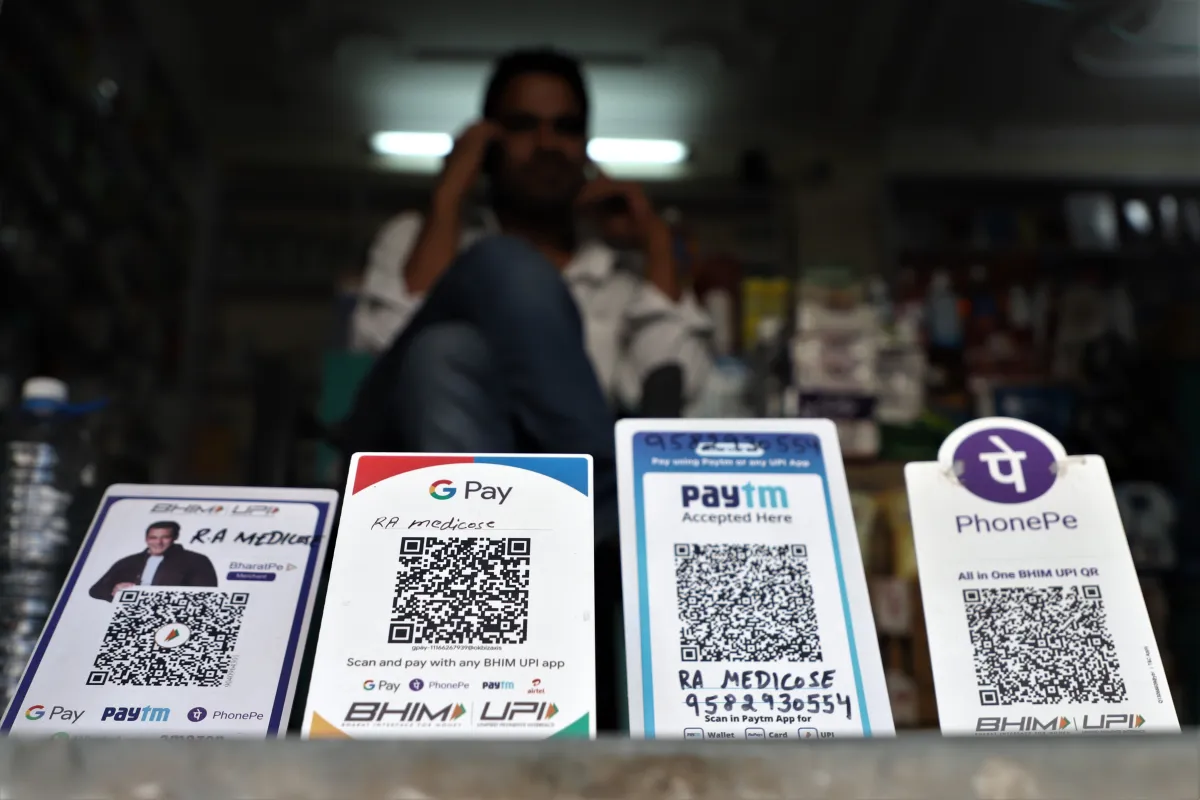
Following broad pushback from merchants across the country, India has delayed plans to introduce merchant fees on its digital payments network that aimed to make the business more lucrative for the companies that facilitate the payments service, long dominated by Google and PhonePe.
The National Payments Corporation of India (NPCI), which operates the country’s Unified Payments Interface (UPI), said on Tuesday it was postponing the planned October 15 rollout of a 0.4% fee on eligible merchant transactions exceeding ₹2,000 (about $21), citing the festive shopping season. The fee, announced last month, would mark a significant departure from India’s years-long policy of keeping UPI payments free for merchants.
The rollout will now take place after Diwali, one of India’s biggest festivals and shopping periods, though the NPCI did not specify a new date. In September alone, UPI processed 24.07 billion transactions worth ₹29.37 trillion (about $305 billion), per NPCI.
The proposed fee drew opposition from retailers and petrol pump operators, some of whom warned they could stop accepting UPI payments if the charge took effect.
Over the past several years, UPI has become the backbone of India’s digital payments system, powering payments through apps such as Google Pay, PhonePe, and Paytm. Its growth has been supported by the Indian government keeping UPI payments free for merchants and providing subsidies to banks and payment providers to help them cover some of the costs.
UPI was not always free for merchants, however. Banks and payment providers previously charged merchants for transactions, but the Indian government scrapped those fees in January 2020 as it sought to encourage more people to shift away from using cash, long the dominant way people have paid for goods and services in the country. UPI has continued to grow in both transaction volume and value.
In recent years, the government has sought to take UPI overseas. In April 2020, NPCI set up its international arm, and the network is currently available in several countries, including Singapore, the United Arab Emirates, and France.
NPCI had sought to limit the impact of the new merchant fee by exempting payments of ₹2,000 or less, as well as small merchants that receive less than ₹100,000 (about $1,033) a month through UPI. It also capped the fee at ₹300 (around $3) for larger transactions. The organization said it would share the money collected among participants in the UPI ecosystem to help pay for infrastructure, cybersecurity and fraud prevention.
Citing industry estimates, NPCI said last month that the annual cost of running UPI was about ₹200 billion (around $2.1 billion), including spending on server capacity, fraud prevention, and technical support. Banks and payment companies have for years argued that they need a way to recoup those costs as transaction volumes grow.
When you purchase through links in our articles, we may earn a small commission. This doesn’t affect our editorial independence.
>

Twenty founders just earned their shot at Disrupt glory. They’re headed to the Disrupt Stage at TechCrunch Disrupt to compete for the $100,000 prize and the coveted Disrupt Cup.
Every year, thousands of founders from around the world pitch us on what they believe the future should look like. This year’s Top 20 are building it from organs to orbit and everywhere in between.
Across this cohort, one theme kept emerging: Making the previously invisible measurable.
These founders are finding ways to understand signals we couldn’t previously capture, model systems too complex to predict, and turn the physical world into data that machines can actually act on. They’re measuring the biological clocks inside our bodies and growing miniature human organs in labs. They’re teaching robots to take on increasingly complex physical work and modeling the real world closely enough to predict what might happen next — even the behavior of wild animals. They’re extracting intelligence from scam calls and finding new ways to use the computing power already orbiting above our heads.
And then, of course, there’s the company trying to launch cargo into space with a giant hydrogen-powered cannon.
Subtle, this group is not.
What connects these 20 companies isn’t a single technology or industry. It’s an ambition to understand more of the world around us — biological, physical, industrial, and digital — and use that understanding to make better decisions, automate what once required human intervention, and tackle problems that previously seemed too complex to solve.
Now they have six minutes on the Disrupt Stage to prove it.
Here are the 2026 Startup Battlefield Top 20.
Tuesday, October 13
Startup Battlefield Semifinals Session 1 (10:00 a.m. – 11:15 a.m.)
Space and Physical AI
Longshot Space: Reinventing the economics of space by launching cargo to orbit at $50/kg using hydrogen-powered kinetic launchers.
Veritas: Protecting luxury brands with custom microchips that verify authenticity and enable connected post-purchase experiences.
Laplace Intelligence: Building agentic world models that help cities, ports, and airports roll out counterfactual futures of the real world before they act.
Flox Intelligence: Preventing deadly wildlife collisions at airports and railways with real-time AI that detects animal behavior and safely redirects them.
Satlyt: Helping satellite operators unlock and monetize idle compute by transforming their spacecraft into virtual AI data centers with a single line of code.
Battlefield Semifinal Session 2 (1:00 p.m. – 2:15 p.m.)
Energy and Manufacturing
LNK Energies: Delivering clean hydrogen power cheaper than diesel through breakthrough compact reactor technology compatible with existing diesel infrastructure.
Helix Carbon: Helping steelmakers cut emissions and fuel costs by electrochemically upcycling blast furnace waste gas into replacement fossil fuels on-site.
IndustrialNext: Automating high-precision, contact-rich assembly tasks by deploying AI-driven robotic systems that learn from production data and adapt to new products.
Niobia AI: Helping process and materials engineers compress weeks of root-cause analysis into minutes with domain-expert AI reasoning.
Licube: Producing ultra-high purity lithium and lithium isotopes (Li-6/Li-7), the critical inputs for nuclear fusion and advanced materials.
Wednesday, October 14
Battlefield Semifinal Session 3 (10:00 a.m. – 11:15 a.m.)
Health Tech and Life Sciences
Mosqitter: Detecting and preventing mosquito-borne disease spread with real-time disease intelligence platforms that turn sensor networks into early warning systems for national health agencies.
Hiyd AI: Delivering proactive health insights by combining sleep, movement, and nutrition data through an ultra-slim, discreet wearable tracker and AI app.
TimeTeller GmbH: Measuring people’s biological clocks to determine optimal treatment timing through molecular diagnostics and AI, improving efficacy and reducing side effects.
NTangible: Helping coaches and front offices make smarter recruiting decisions by quantifying how athletes perform under pressure with a validated cognitive score.
Intero Biosystems: Accelerating drug development by producing miniature human organs that enable pharma companies to identify safer, more effective medications while reducing clinical trial costs.
Battlefield Semifinal Session 4 (1:30 p.m. – 2:45 p.m.)
Enterprise and Security
Apate.ai: Dismantling scam operations by deploying conversational AI bots that engage scammers and turn their interactions into real-time intelligence for banks, telcos, and governments.
CedarDB: Delivering the data layer for the AI age — real-time transactions and analytics in one engine with guardrails inside the database system that AI agents can’t bypass.
Prismm: Helping banks retain deposits and relationships across generations by automating secure inheritance workflows and financial continuity infrastructure.
Floqer: Streamlining B2B sales by enriching customer data across 80+ sources and stitching every interaction into one millisecond-retrievable timeline for AI agents to act on.
GUDEA: Delivering immediate, actionable insights into audience behavior, engagement patterns, and how information spreads to give organizations a competitive edge in communication management.
And then there were five
After four semifinal sessions across two days, five companies will advance to the Startup Battlefield Finals on Thursday, October 15.
Before the finalists take the stage at 11:30 a.m., we’ll welcome Glīd, Nephrogen, and Molecule.one back to the Disrupt Stage for an alumni update on what’s happened since their time in Startup Battlefield.
Then, at 4:15 p.m., one company will be crowned the 2026 Startup Battlefield champion, taking home $100,000 and the Disrupt Cup.
Feeling the FOMO? It’s not too late. Grab a last-minute Disrupt ticket for 50% off and watch it all unfold live.
Startup Battlefield is proudly supported by Google for Startups and SAP.

When you purchase through links in our articles, we may earn a small commission. This doesn’t affect our editorial independence.
>
It’s now easier to use Spotify by talking to Siri on iPhones updated to iOS 27, Spotify said on Tuesday. Users will no longer need to specify “on Spotify” when they’re asking Siri to play music or other content using the streaming service’s apps.
Instead, users can just say whatever it is they want to hear, and Spotify will play the content, whether that’s a specific track, album, podcast, audiobook, or a broader query, like “play workout music,” or a request for one of Spotify’s features, like “play my DJ.”
Siri’s voice control can also be used to do things like request personalized recommendations, resume podcasts, search your library, or even create a Prompted Playlist with AI.
Spotify says removing the extra voice command will make hands-free listening feel more natural, as users can just focus on what they want to hear, not how to phrase the request properly to get their preferred music app to respond.
This feature works because Siri can now learn your music app preference. If you consistently use Spotify, it will route your audio requests to that app automatically.
The new feature is available globally for users with an iPhone 15 Pro or later, outside the EU, if Apple Intelligence is enabled in Settings.
>

Bumble is getting a new owner. The dating app announced Tuesday that it has agreed to a $1.3 billion acquisition deal with Ithaca Holdings, marking a major shift for a company that once looked like one of the biggest success stories in online dating.
The deal would take the company private after years of declining subscriber numbers, falling revenue, and mounting pressure to rethink the online dating experience. The move may give Bumble a chance to work on its next chapter away from the pressure of public markets.
Founded in 2014 by Whitney Wolfe Herd, Bumble made a name for itself for its unique approach where only women made the first move. That helped it stand out in a crowded dating market, and the company eventually went public in 2021 at a valuation of roughly $14 billion.
Since then, however, the dating app landscape has changed considerably. Bumble has faced declining paying users, weaker revenue, and growing dissatisfaction with the familiar swipe-based model. The company recently reported second-quarter 2026 revenue of $211 million, down 15.2% year over year, while its paying user base fell 16.4% to approximately 3.2 million.
The acquisition follows a review of strategic options by an independent committee of Bumble’s board, which recommended the transaction after consulting outside legal and financial advisers. Wolfe Herd did not participate in the board’s discussions or vote on the deal, according to the press release.
“In Ithaca, we have found a partner who shares our vision, believes in our women-first mission, and is committed to investing in Bumble’s future,” Wolfe Herd said in a statement.
She also confirmed that she plans to stay actively involved in the business, working alongside Ithaca’s Ravi Gupta and John Hegeman, and the Bumble team.
Going private might give Bumble more flexibility to experiment with new features and make changes without having to answer to public-market investors every quarter. The company has been exploring AI-driven features and putting more energy into helping people connect offline, reflecting a broader shift in how younger users approach dating.
One example is Plans, announced in July, which focuses on bringing people together through real-world activities. Wolfe Herd also recently revealed that the company is developing a new way for users to interact that could eventually replace the swipe-based model.
When you purchase through links in our articles, we may earn a small commission. This doesn’t affect our editorial independence.
>

Rakuen Tsuihō -Expelled from Paradise- Kokoro no Resonance Anime Film’s Trailer Reveals Theme Song – News
How to watch Kraken vs. Flyers: TV channel and streaming options for October 13

Meet Terry Matalas, the New King of Sci-Fi TV and ‘VisionQuest’
-

 movies5 months ago
Search For Canadian TV Actor Stewart McLean Now Homicide Investigation
-

 Fashion9 years ago
These ’90s fashion trends are making a comeback in 2017
-
Fashion9 years ago
According to Dior Couture, this taboo fashion accessory is back
-
Fashion9 years ago
Model Jocelyn Chew’s Instagram is the best vacation you’ve ever had
-
Fashion9 years ago
Emily Ratajkowski channels back-to-school style
-
Fashion9 years ago
9 Celebrities who have spoken out about being photoshopped
-

 Anime4 months ago
Rurouni Kenshin: Hokkaido Arc Manga Takes 1-Issue Break – News
-

 Anime3 months ago
HIDIVE to Stream English Dubs for The World Is Dancing, The Forsaken Saintess and Her Foodie Roadtrip in Another World, The Dangers in My Heart: The Movie Anime – News