
Anime
Shangri-La Frontier Pulls No Punches in Season Three’s First Two Episodes! – All the News and Reviews from New York Comic Con 2026

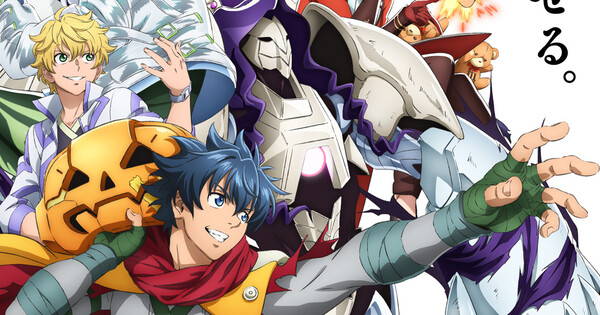

硬梨菜・不二涼介・講談社/「シャングリラ・フロンティア」製作委員会・MBS
At New York Comic Con 2026, Crunchyroll premiered the first two episodes of the highly anticipated third season of Shangri-La Frontier, a show about gamers playing video games. While there is a lot of lore and foreshadowing about some of the inner workings of the titular game that the main characters are playing, there is no massive world-ending threat like other anime with a similar premise. The thing that sets Shangri-La Frontier apart from other anime is the fact that it is just about a bunch of hyper-fixated gamers playing free-roaming video games. While entertainment value may vary depending on the arc, that has remained a consistent appeal for the show from beginning to end. Season two ended in an awkward spot, right before a tournament began, so I appreciate the fact that season three is jumping right into the action.
Oikatzo calls in a favor, needing Sunraku and Arthur to help him win a game tournament where it’s one team of four versus another team of four. However, Oikatzo cannot be present for most of the tournament due to prior obligations, and thus the rest of his team needs to simultaneously win their rounds while also stretching out the combat rounds for as long as possible for the sake of giving Oikatzo enough time to make it back to the tournament venue before it’s his turn as the anchor. What I like about this arc so far is that it establishes the stakes and how it will influence almost every decision of the main cast. The timer for each round is always prevalent throughout the matches, so even when the action gets very intense, the show makes it very clear that there is a simultaneous battle against the clock that is taking place.
Unlike Shangri-La Frontier, which was an open-world action RPG that actively punished players for attacking each other, this tournament is a fighting simulation game built in the same engine. So every movement, strategy, and attack is built upon taking the other person out instead of taking down a boss. This is where this arc generates more excitement compared to previous arcs because the action never stops. It is integral to the story’s momentum itself. Watching these episodes with the crowd was actually phenomenal because it felt like we were the audience in the show watching the tournament unfold, reacting to everything that the characters were doing and being shocked whenever their actions were meant to invoke a specific reaction. Episode two of season three in particular probably got the most crowd engagement because it very much played up Arthur’s character in a very entertaining way. The fighting game that they’re playing does have a direct combat system, but there’s also a role-play mechanic involved where one fighter acts as the hero while the other acts as the villain. Seeing Arthur go full mask off, playing a villain in a video game where she doesn’t have to suffer any consequences and is even incentivized to act as villainous as possible was an absolute highlight.
The action itself was kinetic; there was a great use of the environment, and you can really tell that whoever wrote this has a fundamental understanding of arena-based fighting games. There’s even a breakdown in episode two about how the game works and how both advantages and disadvantages depend on the class of fighter that you choose. The first episode did a good job of setting the stage with the new character Megumi, who is already on Oikatzo’s team before the rest of the cast was introduced. Her fight acted as a perfect contrast to Arthur’s because Megumi is a good person pretending to be a villain. But then by episode two, Arthur is free to go absolutely insane, and the cliffhanger that episode two ends on was the first time in a while that I was ready to jump out of my seat, cause I wanted to see what happened next. My feelings for Shangri-La Frontier have fluctuated a lot throughout the first two seasons, but season three so far captures just how entertaining watching gamers’ game can be.
>
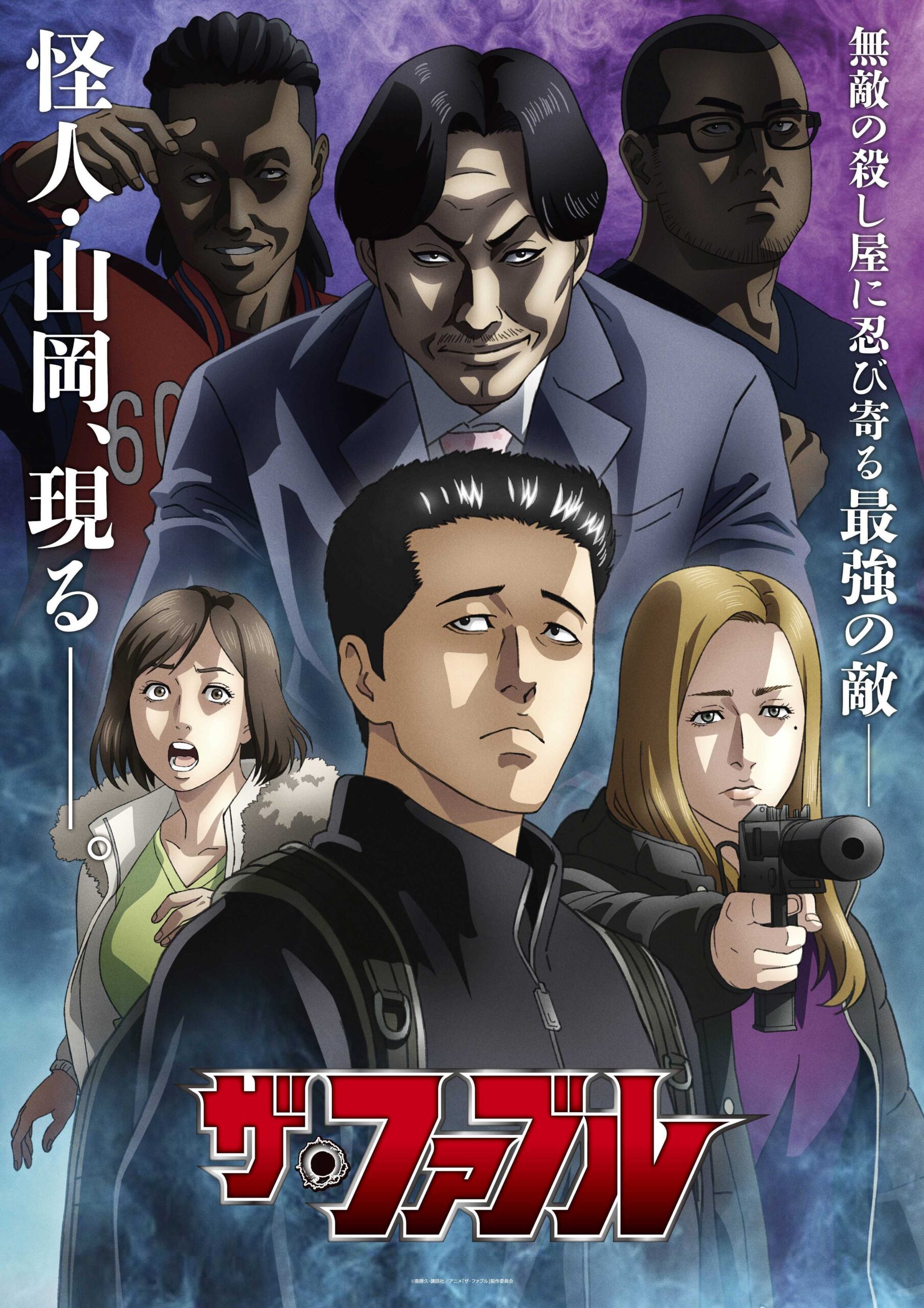
 The official website for the The Fable television anime revealed additional cast and the main visual (pictured) for its second season on Wednesday. The new season will adapt the Yamaoka-hen (Yamaoka Arc) from Katsuhisa Minami‘s crime comedy manga and is scheduled to premiere on the Nippon TV network on January 10, 2027, airing every Sunday at 12:55 a.m.
Cast
Yamaoka: Kouichi Yamadera (Yozakura-san Chi no Daisakusen)
Azami: Takanori Hoshino (Sentai Red Isekai de Boukensha ni Naru)
Eucalyptus: Hiroyuki Yoshino (Yomi no Tsugai)
Koji Mizuno: Satoshi Mikami (Kami no Shizuku)
Jiro: Taiten Kusunoki (Hidarikiki no Eren)
Suzumushi: Seiyuu Fujiwara (Liar Game)
Ryousuke Takahashi (Soukou Kihei Votoms) is returning to direct the second season at Tezuka Productions. Yuuya Takashima is handling the series composition. Mayumi Morita (Megami no Café Terrace) and Yuuya Takashima are writing the script. Saki Hasegawa (Darwin Jihen sub-character design) and Kyuuma Ooshita (My Home Hero chief animation director) are designing the characters. Yo Tsuji (Tasokare Hotel) is composing the music.
The first season aired in 25 episodes in Spring 2024. Disney+ and Hulu simulcasted the anime with subtitles and dub in multiple languages.
Minami serialized the manga in Weekly Young Magazine from November 2014 to November 2019. The sequel, The Fable: The Second Contact, serialized in the same magazine from July 2021 to July 2023.
A second sequel, The Fable: The Third Secret, began in March 2025. Kodansha shipped The Third Secret‘s fifth volume on July 6, with the sixth volume scheduled to go on sale on November 6.
Kodansha USA licensed the original manga in English in March 2022 and released the 22nd and final volume in January 2024. All three manga series are simulpublished on the K Manga platform.
The Fable won at the 41st Kodansha Manga Awards in the General category in 2017. The manga is also placed among the top 20 titles in the Kono Manga ga Sugoi! rankings’ Male Readers division in 2019 and 2020.
Source: Comic Natalie
>
Anime
Rakuen Tsuihō -Expelled from Paradise- Kokoro no Resonance Anime Film’s Trailer Reveals Theme Song – News

The official website for Rakuen Tsuihō -Expelled from Paradise- Kokoro no Resonance (Heart’s Resonance), the all-new feature-length anime film sequel to the Expelled from Paradise film, began streaming on Tuesday a trailer, and it reveals and previews the theme song “Beyond the Night” by TeddyLoid feat. Ayane Sakura (as Gabriel) and Nagi Inoue (from Nogizaka46).
The song will launch digitally on November 11 and physically on November 18.

© 東映アニメーション・ニトロプラス/楽園追放ソサイエティ2
The film will open in Japan on November 13. The franchise is also spawning a new game titled Expelled from Paradise -The Stellar Angel- (Rakuen Tsuihō -The Stellar Angel-) with an original story that will launch on November 26 for Nintendo Switch and PC via Steam.
While the original announcement of the film had featured the title Rakuen Tsuihō: Liberated from Paradise, a later announcement listed the title as Rakuen Tsuihō -Expelled from Paradise- Kokoro no Resonance as well as Rakuen Tsuihō: Kokoro no Resonance instead.
The cast members are:
Rie Kugimiya reprises her role as Angela Balzac in the film.
The film reunites the main staff of Expelled from Paradise, including director Seiji Mizushima, scriptwriter Gen Urobuchi of Nitroplus, character designer Masatsugu Saitō, and composer NARASAKI. Toei Animation is producing the animation.
The other staff members include:
Expelled from Paradise debuted in 13 theaters in Japan in November 2014, and sold 110,000 tickets. The film’s Blu-ray Disc and DVD release in Japan sold more than 70,000 copies. The film won the Best Animation of the Year Award at the 24th Japan Movie Critics Awards in May 2015.
Aniplex of America released Expelled from Paradise in 15 theaters across the United States in December 2014. The company then released the film on Blu-ray Disc in North, Central, and South America in June 2015.
The film returned to theaters in Japan in November 2024 in 4K resolution as Expelled from Paradise -Impelled by 10th Anniversary- to commemorate the film’s 10-year anniversary.
Sources: Rakuen Tsuihō -Expelled from Paradise- Kokoro no Resonance film’s website, Comic Natalie
>
Anime
Dragon Ball Super’s NYCC Panel Brings the Show’s Voice Actors and a (Not Exactly) New Episode – All the News and Reviews from New York Comic Con 2026
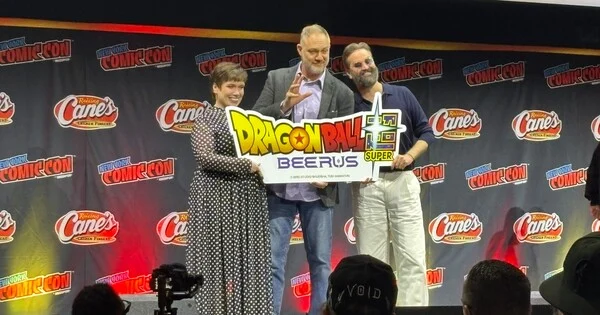

Dragon Ball is back… again! Dragon Ball Super: Beerus is very interesting, as it is basically a reanimated cut of the original Dragon Ball Super series, but this time it is recut with better animation. Despite the fact that the franchise is retreading very similar ground, that did not stop the premiere of the first episode at the New York Comic Con panel from being packed to capacity. The panel was hosted by Monica Rial, the current English voice of Bulma, with special guests Jason Douglas, the voice of Beerus, and Ian Sinclair, the voice of Whis. It was nice listening to the three of them talk about just how excited they were to return to the franchise that they have such a strong affection for. Probably the highlight of the panel outside of the episode premiere was Ian talking about how Sean Shimmel himself called everybody super excited when Dragon Ball Super: Beerus was first announced, even though it was apparently super late at night for Ian while he was sleeping.
The panel also featured some special videos featuring Masako Nozawa and Kōichi Yamadera, the Japanese voices of Goku and Beerus, respectively. Not only did they wish a lot of luck to the English dub cast, but they hoped that everybody at Comic-Con was ready to enjoy the excitement of the series. The cherry on top was Ian acting especially giddy over the fact that Nozawa referred to everybody on the stage by name. One big group Kamehameha sent off later, and it was time to enjoy the first episode of Dragon Ball Super: Beerus.
Even though it has been over ten years since Dragon Ball Super aired, I am still very aware of a lot of scenes and production issues that plagued the early arcs of the series. This led to a lot of random filler episodes and very off-looking animation. Right off the bat, I can say with absolute certainty that based on this first episode, both of those issues are drastically corrected, as the first couple of episodes from the original Dragon Ball Super‘s airing are completely condensed here. This episode starts with Beerus awakening and him immediately going on a destruction spree for the sake of trying to jog his memories about the dream he had of the Super Saiyan God. What’s interesting about the way that this episode is framed is that the series seems to be properly mirroring Beerus’s awakening with Goku’s resolve to get stronger.

© BIRD STUDIO/SHUEISHA, TOEI ANIMATION
On Goku’s end, the episode started with him already on his farm, taking a quick break to train while Goten took over his tractor. He did image training, imagining his past fights with Frieza, Cell, and Majin Buu, with Goku pointing out that he wouldn’t have been able to defeat the latter on his own without everybody’s help. The entire side story from the original Dragon Ball Super series regarding Goku trying to earn money to appease his wife, Chi-Chi, was immediately resolved here as Mr. Satan showed up to give him the money as a thank you for saving the world, as long as he kept quiet about Satan taking the credit.
While I miss a lot of the charming humor in the filler moments from the original series, I do love the shift in tone and tighter focus of this retelling. This episode immediately establishes one of the main prevailing themes of this arc, with Goku being unsatisfied that he wasn’t able to defeat Majin Buu and wanting to be strong enough to handle the next threat on his own, which will tie directly into the awakening of Super Saiyan God. While a lot of the scenes with Beerus were handled a little too quickly, Beerus does have more of a menacing presence. It’s incredible what a few tweaks to the style can do for establishing a stronger sense of tone.
Most of the scenes in this episode are from the original series, but they have all been heavily tweaked, redrawn, or drawn over for a stronger sense of stylistic consistency. Instead of all of the characters having this glossy shine like flat action figures, Dragon Ball Super: Beerus instead gives everybody intense-looking shadows. The animation is a lot more fluid, and there are even a couple of new scenes added to better bridge the leftover scenes. While this first episode is definitely here to establish that tone and setup, I could definitely feel the animators trying to flex that this is probably how they wanted the series to look when it was first conceived versus what we got. Overall, it is a very solid start, and if they can keep this level of consistency moving forward, then this might end up becoming one of the best ways for new fans to enjoy this story.
>

Lawrence O’Donnell Labels Trump ‘Pathological Liar’ Over Russia Deal

Reinaldo Marcus Green Launches Film Fellowship At NYU Tisch School

‘The Fable 2nd Season’ Announces Additional Cast
-

 movies5 months ago
Search For Canadian TV Actor Stewart McLean Now Homicide Investigation
-

 Fashion9 years ago
These ’90s fashion trends are making a comeback in 2017
-
Fashion9 years ago
According to Dior Couture, this taboo fashion accessory is back
-
Fashion9 years ago
Model Jocelyn Chew’s Instagram is the best vacation you’ve ever had
-
Fashion9 years ago
Emily Ratajkowski channels back-to-school style
-
Fashion9 years ago
9 Celebrities who have spoken out about being photoshopped
-

 Anime4 months ago
Rurouni Kenshin: Hokkaido Arc Manga Takes 1-Issue Break – News
-

 Anime3 months ago
HIDIVE to Stream English Dubs for The World Is Dancing, The Forsaken Saintess and Her Foodie Roadtrip in Another World, The Dangers in My Heart: The Movie Anime – News