
Entertainment
Audiences Want Documentaries on Gaza. Why Are Distributors Nervous?


When the Oscar-nominated drama “The Voice of Hind Rajab” about a Palestinian girl trapped under Israeli military fire began playing at New York City’s Film Forum theater in late 2025, screening at the same time at the theater was documentary “Holding Liat.” That film, which won the top Berlin doc prize a year after “No Other Land” did the same, profiled one Israeli family’s efforts to recover their kidnapped daughter after being taken in the October 7 attacks.
These two films were not in opposition to each other; rather, they were in conversation with one another. The movies weren’t consciously programmed side-by-side, but the platforming of each of them did not spark mass protests outside the venue or outrage that the perspective of one group was given equal footing with another.


“This film is about this family, and it’s not to say that this is the penultimate story about what’s happening in this moment,” Lance Kramer, co-director of “Holding Liat,” told IndieWire. “This is one story that needs to live in a constellation of many stories made by Palestinian filmmakers, made by other Jewish filmmakers, made by all kinds of people. We always said that, and we were always supportive of that. But it was hard for those platforms to see or believe that.”
Kramer believes that not only is it not a detriment for these movies to screen alongside one another, it may be necessary to get all sorts of stories about the crisis in Gaza to the screen at a moment when distributors haven’t been willing to step up and have that conversation.
“Hind Rajab” was released by WILLA and Watermelon Pictures, an upstart distributor that has specialized in sharing Palestinian-led stories, seizing on an opportunity in the market to release these films that others won’t. And “Holding Liat” was self-distributed, released into theaters without the aid of a proper distributor and marketing push. Absent that dedicated marketing and even suppression of these stories, creating grassroots conversations between films of several different perspectives will be key to getting them to reach an audience.

“That became a model for others to follow. But then there were other theaters and other markets where they wouldn’t even watch the film,” Kramer said. “The more common thing is people would say, ‘I love the film, but I’m scared what would happen if we played it.’ Usually that fear was based off one or two people in the community they were really scared of, and that could be the difference between offering the film up to the whole community.”
Setting aside the usual post-Covid difficulties of getting any documentaries to succeed at the box office, movies specifically about Israel and Palestine post-October 7 are especially facing a gatekeeper problem. The reasons may seem obvious: this is too polarizing a subject, especially in Hollywood, and people want escapism, not a harsh dose of reality, when they buy a movie ticket. Those apprehensions naturally got worse after October 7.
But there’s something more going on beyond the pushback political films like “Ask E. Jean” have faced in getting exposure. “Hind Rajab” after its Oscar nomination eventually landed a home on Hulu, but many of Watermelon’s other titles have not been released via streamers, and they’ve even faced the same ad suppression on social media that movies like “Musk” reportedly dealt with. “Holding Liat,” which just went live on digital earlier this month, is only being released as a TVOD rental, again without any other streamer backing it.
“We genuinely feel the industry has not caught up with the audience,” Watermelon Pictures co-founder Hamza Ali told IndieWire. “There is an appetite for a lot of these films. We’re demonstrating it. But we’re still not getting major streamers to come on for a lot of our films. I’m not going to name names, but the one exception was ‘The Voice of ‘Hind Rajab,’ which was nominated for an Academy Award, and to be quite honest, that’s what it took to get it placed was a nomination. Outside of that, we’re just not seeing it. I don’t know the answer. They really need to get with the program and get caught up.”
The Oscar-winning “No Other Land” and this month’s “NAZA” are the most high-profile examples of the challenges these movies face. The movies from filmmakers Yuval Abraham and Rachel Szor have each been self-distributed, partnering with independent distribution consultant Michael Tuckman on the targeted rollout, and after deciding against a distributor for “No Other Land,” “NAZA” immediately cut out the middleman and went straight to an indie release, with newspaper The Guardian planning to put it online in November for as swift a release as possible. “No Other Land” wound up making $3.6 million worldwide, and “NAZA” has already surpassed half a million dollars domestically after just two weekends in which it has expanded to only a handful of theaters.

Other docs have found their audience. Watermelon’s “American Doctor” from this year has made over half a million from just a domestic release, all from art houses and independent venues. “Holding Liat” has only made $80K, but the film has screened in over 70 festivals, 25 countries, and 40 U.S. cities, not including community and campus screenings. “Coexistence, My Ass” about an Israeli comedian and which was also self-released with Tuckman’s help, made $37K in just a couple of weeks in theaters.
It could be that with numbers like that, distributors aren’t seeing the upside that can come with the risks, but the question is, what risks? What are they really afraid of?
“I never encountered a single thing that merits that fear,” Kramer said. “What I saw was people going to a movie theater and watching a movie that they cared deeply about, or didn’t know much about. There was one protest that happened out of the 300+ screenings. Even then, I talked to the protesters, there was a dialogue. It was the theater’s right to play the film and the protesters’ right to protest the film. That’s what happens in a democracy. The fears that people expressed to us in our experience never materialized. It was an example of people who do have these forms of gatekeeping responsibility and power are working through some of their own insecurities and personal fears and not trusting that they can give the audience the chance to do that for themselves. I think the audience really suffers when that happens.”
Kramer said during the filming of “Holding Liat,” all the distributors they spoke with “were looking for some difficult-to-articulate balance” in terms of the politics and human elements of the story. They wanted to know how the movie would end and what their angle was, all while Liat was still in captivity, and eventually the filmmakers stopped those conversations. When the film premiered in Berlin, the conversations started again but didn’t go any different.
“There were people telling us no one will ever see the film, or if you play this film all these bad things will happen,” Kramer said. “We were told by one publicist, the best thing we could hope for was to keep our heads down and be as low-profile as possible and not get canceled.”

“The contradiction that we experienced was that these companies kept telling us it’s too divisive, it’s too polarized, and what we were experiencing in over 100 of them was the exact opposite,” co-director Brandon Kramer added. “They weren’t fueled by divisiveness, they were exhausted. They want opportunities to experience films from different perspectives.”
Theaters, not just distributors, are similarly feeling apprehensive. They too feel that by even programming a film it gives the perception of a political stance, and they don’t want to take that risk without knowing if the intended audience will show up. Watermelon Pictures then is doing added grassroots promotion, identifying local support groups, and not leaving that work up to the theaters themselves.
“I have compassion for cinemas because it’s about survival at this point for them in terms of programming,” said Watermelon’s head of distribution Justin DiPietro. “Theaters that would be very adventurous with their programming pre-pandemic, now they have to be careful with what they’re putting on screen in bringing in revenue. It’s much easier to put an extra screen of ‘Spider-Man’ than it is to take a risk on a really good documentary.” He adds that people may feel they can wait to see a film on streaming, but that’s not always the case with movies about Gaza.
Richard Lorber, CEO of art house distributor Kino Lorber, pushed back on the notion that distributors aren’t willing to give these films a home. While the major streamers may not have the same appetite, he believes there are other indies like his own that have a “commitment and passion to address issues of the day.” Despite widespread belief that “No Other Land” didn’t have any distributors interested, Lorber said Kino put in an aggressive bid to release the film before it went the self-distribution route. The company also just released the Palestinian doc “Put Your Soul on Your Hand and Walk” and is even releasing the narrative drama “Yes” from an Israeli filmmaker.

Lorber, though, has seen how the “NAZA” team has benefited from a self-distribution strategy, allowing them to be nimble and unencumbered about where they play in a way that other traditional distributors can’t, and that’s shaped how he and others have thought about getting these films out with urgency. Kino did just that with “Mr. Nobody Against Putin,” riding the film’s momentum to an Oscar win. Watermelon also moved up their release date for a documentary called “The Encampments” by several months when its protagonist was detained by ICE and made headlines. And the success that “NAZA” has had in a short time can and should inspire other Gaza docs to use it as a test case, but not everyone can have the same success with self-distribution.
“There are a lot of there are other filmmakers that might try to pursue that same path and might come up empty-handed or find the outcome very disappointing, not just financially, but in terms of reaching the audiences they want beyond the echo chamber of a small cohort of audiences,” Lorber said. “The do-it-yourself, indie filmmakers, we’re learning for them because they’re doing some smart things. They need us, but we also need them.”
>

Adapting C.S. Lewis’ beloved children’s book series The Chronicles of Narnia is no easy task, and certainly one that’s primed for some online controversy.
So it’s probably no surprise that the trailer (below) for Netflix‘s adaptation of The Magician’s Nephew — chronologically the first novel in Lewis’ seven-book series — is getting some strong reactions on social media.
The adaptation was already receiving some early pushback among conservative media figures before the trailer dropped given that the Christian allegory is being adapted by Barbie writer-director Greta Gerwig, who also made the sacrilegious-to-some decision to cast Meryl Streep as the voice of the franchise’s Jesus-figure, Aslan.
Now the Narnia: The Magician’s Nephew trailer has dropped in all its glittery glam rock glory, set to the tune of Led Zeppelin’s famously difficult-to-license “Stairway to Heaven,” and reactions are all over the place.
The most common pushback concerns the trailer’s psychedelic space-rock visuals, with many comparing the project to a Marvel movie. Some quips from the official YouTube video and across Reddit and X: “Narnia: Rangarok,” “They managed to Thor: Love & Thunder Narnia,” “Guardians of Narnia’s Galaxy,” “Aslan the Lion will return in Avengers: Doomsday.”
Many said they loved the trailer and that it surpassed their expectations.
“The trailer for The Magician’s Nephew is, hands down, the best trailer I’ve seen in years. They’re definitely leaning into the pagan side of Narnia.” Another: “Man people were preemptively fuming over this one but I recognize just about every scene and every line [from the book]. Looks to be a very faithful adaptation with a sort of rock opera twist.” And: “Greta Gerwig going full ‘Jim Henson’s Dark Crystal/Labyrinth + Chris Columbus’ Harry Potter + Led Zeppelin + blockbuster budget’ was not on my bingo card, but it looks fantastic.”
Some agreed that they liked the trailer — just not as a Narnia adaptation.
“Visually stunning trailer but nothing really jumped out to me indicating that this is a Narnia movie,” wrote one. And: “This might be the most conflicted I’ve ever felt about a trailer. It looks dope af and honestly like it’s going to have this ethereal awestruck quality to it. I just wish it wasn’t Narnia she was doing this with.”
Others just wholesale bagged on the trailer.
“Who’d have ever guessed that giving a legendary, beloved book series like The Chronicles of Narnia to modern Hollywood would result in a bizarre, disastrous fever dream interpretation with some of the worst looking CGI backgrounds ever put on film?” And: “This is a prime example of how something can lose its soul to CGI overuse …The visuals of Netflix’s butchering of Narnia literally looks like it was made with AI.” And: “I am extremely unimpressed. This is not Narnia. This is Thor: Love and Thunder and Barbie had a baby. They make the boy a coward, they make the girl the adventurer, and Aslan is supposed to be the pinnacle of masculinity.”
The cast includes David McKenna, Beatrice Campbell, Emma Mackey, Carey Mulligan, Ciarán Hinds, with Daniel Craig and Meryl Streep, Kobna Holdbrook-Smith, Denise Gough and Susan Wokoma. Netflix will release Narnia: The Magician’s Nephew in theaters and Imax on Feb. 12, 2027.
>
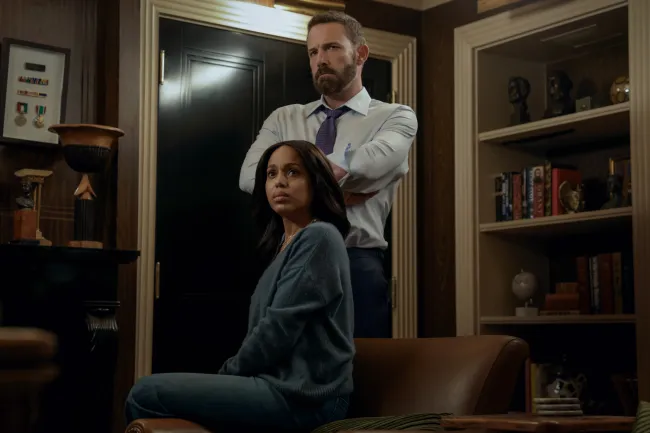
There’s a very fine art to doing cityscape b-roll and establishing shots. “Insecure” is great at it. “Hacks” is really good at it, too — in no small part because DP Adam Bricker and his longtime collaborator Charlie Panian perfected the art on “Chef’s Table.” The handoff to a drone for a haunting wide shot in “Adolescence” at the end of a 40-minute oner is kind of legendary.
Unfortunately, the more versatile the technology gets — the easier it is to achieve landscape-spanning vistas, awe-inspiring angles, and epic sweeps of scope — the easier it is for shots that should pack a punch to come across as flat and plastic as an empty takeout container run over by a bus. Even when Gillian Anderson is driving that bus, to belabor the metaphor, there’s only so much cinematography can do to involve viewers in a story if its visual style looks perilously close to a SmartTV screensaver.

It’s not necessarily the fault of director of photography Robert Elswit that the cinematography of “Animals,” which I’ve been alluding to, is so anonymous. As Stephen Sondheim teaches us, (forgettable) content dictates (forgettable) form. Given how many streamer films and true-crime docs are being quickly turned around online, though, it’s worth pausing to note that the returns on drone photography are worse right now than the price of diesel.
But a better world is possible. There are ways to use drone photography so that it counts. IndieWire spoke with DP Jeff Hutchens, who began his career as a photojournalist before transitioning to documentary and feature cinematography, about how his work avoids some of the worst clichés drones make so easy.
Sweeping a drone over a sun-drenched location is a big temptation, especially when a story beat needs a sense of scale or landscape. It’s fairly economical, logistically, to do. But for Hutchens and his team on Showtime’s “Murder in Big Horn,” embedding viewers in the story had to meld with emotional resonance that pushed the story just as far forward — and he found the right way to do that by leaning into on-the-ground limitations.

“The land on a lot of those reservations is so important, and the whole history of it plays such a huge role in how everything has unfolded to this day. You want to have some sense of the landscape. But that part of Montana is pretty flat, and it’s a little hard to get [height] and get perspective,” Hutchens told IndieWire. “What we decided to do was put the camera on a full, heavy-lift drone, take it up 400 feet, and use it as a tripod up there.”
By limiting what the drone photography would do — avoiding the easy, sometimes overly smooth movement that didn’t read as fast as it used to five years ago anyway — Hutchens found completely different, surprising, and resonant visuals that felt kin to the stories the show was documenting.
“With these static landscapes, we really looked at some of these dissonant shapes and lines and things that were cutting through the terrain out there,” Hutchens said. “You don’t want it to feel like, ‘OK, here comes another drone shot.’ It’s way overused. I think any time you can tweak a tool, at least, that is commonplace and work with it in a way that is a departure from what’s expected, I think that helps.”
However, cinematographers always need time and encouragement to get inventive with commonplace tools, especially in the documentary world where Hutchens does so much work. Almost all documentaries, he thinks, would prefer to be doing more verité footage, but it’s very hard to get networks to pay for the time and attention and mountain of footage that requires. “It’s really tricky to get commissioned work done that way,” Hutchens said.

But it’s all the more important, as fellow documentarian John Wilson makes clear in his latest feature, “The History of Concrete.” Wilson takes a swipe at drone photography in the film itself when he talks about receiving default-mode drone footage of a 3D-printed concrete Starbucks and the implications of it refusing to be subtext.
“There’s a sameness to the way that a lot of drone-heavy stuff looks and you can tell that it’s filler,” Wilson told IndieWire. “And I just find that’s not a great relationship to have with imagery. You’re using it almost, like, an artificially intelligent thing could make, you know? It doesn’t have this human element to it as much, and you are relying on this machine to get you this shot that is, ultimately, just screensaver material.”
Sometimes the mechanical, inhuman feeling of technological tools is an intentional choice — “Severance” DP and director Jessica Lee Gagné set that show’s template to give the camera inside Lumon HQ a smooth, mechanical, surveillance feel, for reasons the series makes clear. But drones can, when used at just the right moment and not overused, also carry deep, human emotions.
That’s exactly what cinematographer Matthew Lewis achieves at the end of the second episode of “Adolescence,” with a drone handoff that brings the camera from the school the police are investigating to the crime scene/memorial where the murder took place. ”A real concern of mine was that the camera had its own personality and that it would start making decisions that didn’t feel connected to the motivations of our characters,” Lewis told IndieWire about the series.

But Lewis said justifying camera movements through human mannerisms and tics also made the drone the episode’s poignant exhale. “It’s impressive to do a sequence with loads of stunts if it’s an action scene,” Lewis said. “There’s this constant relief and release of, you know, there’s an explosion, that justifies why we’re still here. There’s a gunshot, so that explains why we’re still here. It’s in the downtime and in the pauses and in the restful moments, where you think you should rest, but you can’t, and you don’t know why — that’s what’s interesting.”
It’s also what is most human, and doing the human thing, rather than the easy thing, may be the healthiest thing going forward. “There is a lot of fear around what are [filmmakers] useful for in this landscape, you know? If we are creating this robotic imagery via stuff like drones, then it’s like we aren’t that different from the machines in certain ways,” Wilson said. “You should, I think, take a bit more care to have things feel like they were made by a human.”
Drones can be a part of that, but not by mindlessly speeding along the LA River like in “Animals.”
>
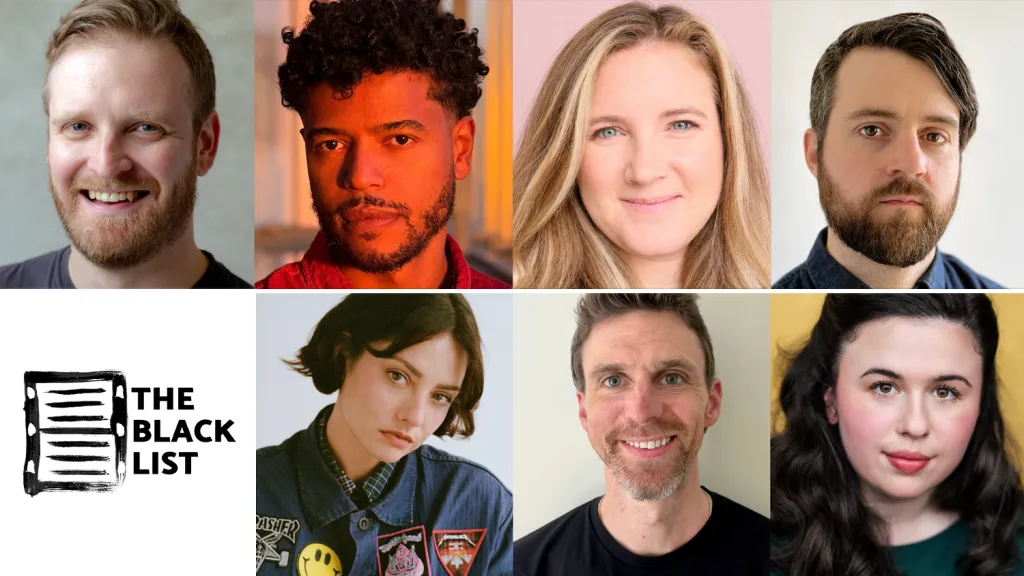
EXCLUSIVE: The Black List has named the six writers and projects chosen for its 2026 Writers Lab. They are Elton de Almeida (A Mark of Kin), Yasmin DeWinter (Guillaume), Scott Leddy (Nightwatch), Marcelle Pallais (One Last Summer), Alexander Seltzer and Kyle Jutkiewicz (Depths) and Emma Taylor Stock (Denial).
The program, now in its 13th year, provides creative mentorship and professional support to promising feature writers as they further develop their selected project during a weeklong workshop in Ojai, CA.
The Black List’s Annual Lab program supports two distinct cohorts: writers and filmmakers. The Writers Lab focuses on developing feature scripts to be sold in the studio system and/or used as voice samples. The Projects Lab, which will be announced in November, offers writer-directors the chance to develop a screenplay that they intend to direct.
During the Lab, each writer will develop their screenplay through peer workshops and one-on-one sessions with working professional screenwriters, including returning mentors Travis Braun (One Night Only), Stephany Folsom (Toy Story 4, The Lord of the Rings: Rings of Power), Katie Silberman (Set It Up, Don’t Worry Darling), Victoria Strouse (Seekers of Infintie Love, Finding Dory) and Christina Hodson (Birds of Prey, Bumblebee).
Black List Annual Lab alumna Savion Einstein (A Cuban Girl’s Guide To Tea and Tomorrow) will also join as a session mentor. After the lab concludes, the writers cohort will participate in a yearlong support program involving monthly meetings with screenwriters, agents, managers, producers, and executives.
“We’re excited to welcome the latest cohort of screenwriters to the Black List Lab fold. At a time when the industry can seem particularly challenging and harder than ever to break into, we’re thrilled to be able to support projects that make us excited to go to the movies. These writers are bringing distinctive voices, bold points of view, and stories that deserve to be heard to the Lab and we’re privileged to be able to give them space to take risks, challenge themselves, and build community with other writers, in Ojai and beyond,” said Megan Halpern, Black List SVP.
Submissions for the 2027 Labs are now open on the Black List website.
Previous Black List Lab alumni include Claire Ayoub (Empire Waist), Minhal Baig (We Grown Now), Tom Dean (Carolina, Caroline), Gia Gordon (Law and Order), Danny Hogan (The Pitt), Jimmy Keyrouz (Broken Keys), Dagny Looper (The Resort), Alexandra Qin (ThirstyGirl), Michelle Steffes (For When You Get Lost), and Jason Young (The Magic Flute).
Learn more about the 2026 Writers Lab projects, and the creatives behind them, below.
2026 Writers Lab Projects:
Elton de Almeida – A MARK OF KIN
Haunted by her family’s tragic past, a cunning scammer seeks revenge on the uncle who abandoned her decades ago — only to be trapped by a demonic curse that feeds off her bloodline.
Yasmin DeWinter – GUILLAUME
Paris, 1898. Two American brothers walk into a brothel. The others pulls a knife. Within the hour, they owe a madam five thousand francs they don’t have. Their ship sails at dawn. The elder just had a seizure in a piss-soaked allegy – and if anyone finds out, he loses his wife, his childen, and his name.
Scott Leddy – NIGHTWATCH
In the midst of an apparent nuclear attack on NATO and the US, a communications blackout with the President places the Defense Secretary in the hot seat on America’s Doomsday Plane, but with the minutes ticking down, a comms expert discovers an anomaly that could change everything.
Marcelle Pallais – ONE LAST SUMMER
A restless, sharp-witted teen aching for meaning and adventure escapes to a wealthy beach town, only to be pulled toward a charming boy and his family’s deadly secret. Adapted from NORTHANGER ABBEY by Jane Austen.
Alexander Seltzer and Kyle Jutkiewicz – DEPTHS
Trapped aboard a US nuclear submarine, a former priest turned navy engineer must stop a demon-possessed Soviet defector before she turns the Cold War hot.
Emma Taylor Stock – DENIAL
When a health insurance giant denies their bestie’s cancer treatment, three friends attempt to approve the claim themselves. But their plan spirals when they accidentally kidnap the CEO and must expose his fraud to save themselves.
>

Tsūkaku Tantei Tsūtenji Natsume, Isekai Yurutto Survival Seikatsu Manga Both End – News
Richarlison scores for Tottenham Under-21s after exile from first-team squad
Apple October 13 Smart Home Event: HomeView, HomePod Mini 2, Apple TV 4K, and More
-

 movies5 months ago
Search For Canadian TV Actor Stewart McLean Now Homicide Investigation
-

 Fashion9 years ago
These ’90s fashion trends are making a comeback in 2017
-
Fashion9 years ago
According to Dior Couture, this taboo fashion accessory is back
-
Fashion9 years ago
Model Jocelyn Chew’s Instagram is the best vacation you’ve ever had
-
Fashion9 years ago
Emily Ratajkowski channels back-to-school style
-
Fashion9 years ago
9 Celebrities who have spoken out about being photoshopped
-

 Anime4 months ago
Rurouni Kenshin: Hokkaido Arc Manga Takes 1-Issue Break – News
-

 Anime3 months ago
HIDIVE to Stream English Dubs for The World Is Dancing, The Forsaken Saintess and Her Foodie Roadtrip in Another World, The Dangers in My Heart: The Movie Anime – News