
Anime
Hirayasumi Anime Promises a Cute Slice of Ordinary Life

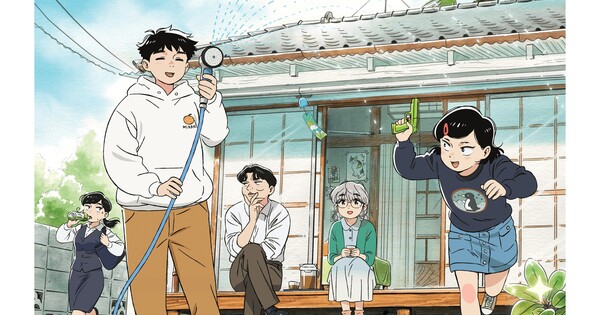

© Keigo Shinzo/Shogakukan/Hirayasumi Project
When the Japan Society announced it would be screening “a preview version” of the first episode of Hirayasumi “still undergoing finishing touches,” my mind leapt to the legendary work-in-progress screening of Beauty and the Beast at the 1991 New York Film Festival, where the audience got to witness the workings of the animation process (some scenes finished, some as pencil drawings, some as storyboards) while seeing the film for the first time. Turns out this preview screening wasn’t actually something like that. Maybe a few “finishing touches” will be made over the next few months — and as with just about every months-in-advance preview screening I’ve been to for a new anime, there’s no opening or ending yet — but this looks and sounds finished enough to air tomorrow.
And not just finished, but great! The team at Production +h. still has to finish the rest of the season before the show’s January 2027 premiere, but barring any serious production difficulties, Hirayasumi seems like a safe bet for one of Winter 2027’s better-looking shows. Keigo Shinzō‘s award-winning manga’s soft line work and rounded designs, along with the watercolor backgrounds of its cover art, translate perfectly to animation. It’s gentle, cute, and instantly appealing, and it suits this laid-back slice-of-life story perfectly.
Also appealing: an ordinary adult protagonist! 29-year-old Hiroko Ikuta is still technically on the list of anime adults I’m older than (the first time I felt “old” was when I realized I was older than Spike Spiegel), but he’s very relatable as a freelance worker dealing with finances, anxiety, and disappointment — and very likable in how he chooses to approach his life with utmost positivity. He’s not good at talking to girls his own age, but old ladies love him, and one in particular invites him over twice a week for tonkatsu dinners. When “Granny” dies, Hiroko inherits her house, and his 18-year-old art student cousin Natsumi Kobayashi moves in with him.
In terms of plot, not much happens in this first episode, and from the sound of things, there might not be much plot in the series as a whole. There’s light humor throughout, but it’s not exactly a comedy. Granny’s death might be the big inciting incident (and there are some well-observed notes on how grief hits Hiroko later than he thinks it will), but it’s not going for big weepy drama either. It’s a pure iyashikei series, content to just be nice and pleasing — and when the world feels so mean, that niceness might just be enough to hook people. I knew I needed something like this after watching a depressing movie and reading some horrifying news earlier. Someone brought a baby to the screening, and it didn’t feel too distracting; it’s the sort of show where the occasional baby noise in the background kind of fits the vibe.
After the screening, composer Kaori Sawada, anime producer Junichi Katsutani, and Junya Okamoto from manga publisher Shogakukan did a Q&A. Seeing the episode for the first time was most surprising for Sawada. While she communicated more with the rest of the creative team than she had on most live-action dramas, she wrote the music without seeing the animation, submitting a bunch of pieces without knowing exactly where they’d be used in the show. The show’s use of her score fulfills her intention to “complement the story rather than override it,” keeping the mood relaxed and subtle. She was impressed that some of her more comical music in the tonkatsu scene led into the more serious funeral scene, blending heaviness with lightheartedness. Sawada praised the show’s diverse cast of characters (presumably there are more to be introduced in future episodes), and how there are “no true villains.”
While Sawada’s presence meant the most detailed behind-the-scenes discussion centered on the music, Katsutani made sure to also call attention to the show’s animation. He described Shinzo’s manga as “having a gentle touch that’s also very fresh,” and made sure the crew “protected and respected that.” He singled out the contributions of character designer Naoyuki Asano and character designer Mika Nishimura, who “took their time and paid a lot of attention to the small details.”
Okamoto thanked the audience for taking a chance on something that’s “a slightly different kind of anime than you’re used to seeing.” Promising he wasn’t “talking smack” about other series, he said, “there’s no ogres, there’s no monsters, it’s an everyday story about a hyper-local residential area.” He thinks this may be “the first time” such a low-key manga has been animated. I’m sure iyashikei fans have evidence to dispute this claim, but at the very least, this is the first time Shinzo’s had a manga adapted into animation after several live-action adaptations (while the Hirayasumi anime was announced before the live-action drama, the live-action one ended up airing first). He realizes Hirayasumi might be “hard to describe,” but thinks it’s a “must-see anime” that can connect with a wide audience.
>

Glacier Bay Books announced on Sunday the following new manga licenses:

Title: Oedo-chan of Moguraya
Author: Serata Naminami
Summary: A heartwarming errand-running manga of Edo…
Oedo-chan works at Moguraya with Captain.
Captain is a mole, and Oedo-chan is a stray cat.
The world can be so big, so cruel and mysterious.
But Oedo-chan is a hard worker, she isn’t afraid of anything.
And you shouldn’t be either.
A sweet story around various lives in a fable-like old Edo, including hard-working Oedo-chan’s tragic backstory.
This release includes the SFB bonus story.

Title: A Vase of Life
Author: Aoi Mukoubi
Summary: A sparing glimpse of those shimmering, fragmented moments at the very end of the line…
“When I die, will you hear my story?”
From the author of TO THE SEA comes a beautiful and disturbing selection of their early sci-fi flavored work.

Title: Faraway Blue
Author: Akino Kogomi
Summary: Two poetic & ephemeral stories about love, and what comes after. A debut collection from a new illustrator and comic artist.
“I feel myself beginning to disappear from this world.”
Pre-orders for the above titles as well as Codomopaper‘s Juji and Aichi and Courtney Loberg’s We Don’t Go Through the Angelgrass open next week on Kickstarter.

Title: All I Can Do
Author: Aoi Ikebe
Summary: A tender examination of what it means to be human. Especially poignant, looking headlong into a world rushing to remove that which is human, which can be human.

Title: The Dovecote Express
Author: Ikuko Hatoyama
Summary: The strange, luminous journey of a young boy aboard a mysterious train. A romantic vision of the voyage of the souls of wartime carrier pigeons.
The company is also releasing Ding Pao-Yen’s Future Unfolding.
Glacier Bay Books is also continuing Star Fruit Books‘ reprint releases, including Hideshi Hino‘s Occult Detective Club / Graveyard of the Death Dolls, Hino’s Panorama of Hell manga. Yōichi Abe‘s PRISM -short story collection-, Noroi Michiru’s The Horrors of Noroi Michiru Part 2, Sachiko Asuka‘s The Phantom Thief Baron Bat, Taro Kanafuro‘s Suburban Hell, Yamazaki’s Let’s Meet in the Next Life, Tatari Takayama‘s TATARISM, and Minami Q-ta‘s Not All Girls Are Stupid.
Glacier Bay Books had announced in February that Star Fruit Books was transferring its publishing line and inventory to Glacier Bay Books following the death of Star Fruit Books‘ founder Matt Haasch in September 2025. Glacier Bay Books previously stated it has received most of Star Fruit Books‘ inventory.
Source: Glacier Bay Books‘ Bluesky account
>
Anime
The Importance and Influence of Global Manga is Not Slowing Down! – All the News and Reviews from New York Comic Con 2026

© Naoya Matsumoto, Shueisha, Viz Media
As an art form and commercial product, manga’s influence has continued to grow beyond Japan. This influence has grown worldwide, despite global releases of chapters and volumes for manga often lagging behind the original Japanese releases. However, there have been various recent initiatives to provide these manga stories to a more global audience alongside Japanese audiences in real time. Apps like MANGA Plus, Manga UP!, and K manga have all contributed to this initiative in some way. At New York Comic Con, I was able to attend a panel featuring speakers who represented these platforms—including Yūta Momiyama of MANGA Plus, Nobuhiko Muranaka of Manga UP!, and Yuta Hiraoka of K manga. Together, the three answered questions about this growing global interest in Japanese manga.
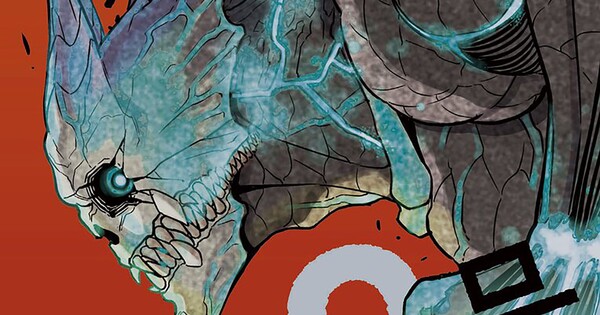
One of the most significant changes and benefits of these online manga reading apps is the sense of immediate feedback. According to Hiraoka, originally creators would have to go through licensing teams in order to understand what fans outside of Japan thought about their series. But now a lot of these apps feature comment sections where anybody can leave feedback in real time that can immediately be checked out by publishers and creators. Muranaka even commented how this is very motivating for the creators themselves while also providing a lot of immediate data on what is popular globally. Momiyama commented on how manga has the potential to rally a movement of people, even without an anime adaptation, pointing to shows like SPY x FAMILY and Kaiju No. 8, which were already significantly popular before their anime aired. The ability of these online apps to bring more fans together has only strengthened that rallying power. Hiraoka commented that this is probably due to the fact that manga is always better when everyone is reading it together because it facilitates conversations between fans. The shorter the gap between a Japanese and global release of a manga chapter, the better.

©2019 by Tatsuya Endo/SHUEISHA Inc.
When asked if the sudden influx in global attention has affected what genres are popular, Muranaka commented that there isn’t much difference compared to how things used to be. He noted that Americans seemed to like the same things that are usually popular in Japan, and the three of them agree that some things are just sort of universally beloved, sort of like how Spider-Man is held as one of the most popular superheroes in the West and is also extremely popular in Japan. Hiraoka commented that there might be some minor differences in appeal depending on genre, like how gag manga in particular might be difficult to translate to a global audience, whereas some series like Black Torch might be a bit more popular in America compared to Japan. But overall, there has not been a significant shift in what publishers are seeing as popular despite the larger audience pool.
However, the three also made it clear that these apps aren’t just about putting out more manga that’s already been created; they’re also about fostering new talent. Kodansha‘s Manga Academy and other programs where people from all over can apply with their own series are set up in order to encourage more sparks of creativity. All three speakers emphasized the fact that they want to see more manga creators outside of Japan because they are always looking for a new series that can appeal to as many people as possible. While Hiraoka points out that the industry is not quite at a point where a manga can get serialized without it first being popular in Japan, they will always prioritize a series’ art and ability to reach people above all else. Muranaka says that there might be more manga readers in America than in Japan in the next ten years, given how significantly bigger America is compared to Japan, and Momiyama would love to see more manga creators going to the States. There was a general air of excitement during the panel about how all of these changes are only scratching the surface of how much further this industry can go. There is a lot of amazing potential out there. It’s only a matter of time before everyone is able to fully capitalize on and appreciate it.
>


The X/Twitter account for manga creator Masako Watanabe announced on Tuesday that Watanabe died on October 3 at 12:38 a.m. JST. She was 97.
Watanabe was born in Tokyo on May 16, 1929. She debuted in 1952 with the story “Suama-chan.” She launched the Himegoto manga in 2020 at the age of 91.
Watanabe specialized in shojo and josei during her long career. She won the 16th Shogakukan Manga Award in 1971 for her series Glass no Shiro (Glass Castle). Her 1985 manga Hitori Matsuri inspired a live-action television drama. In 2002, Watanabe earned the Minister of Education, Culture, Sports, Science and Technology Award at the 31st Japan Cartoonists Association Awards. In 2006, she became the first female manga creator to receive the Order of the Rising Sun decoration. Watanabe was the director of the Japan Cartoonists Association.
Her other works include Dai-San no Onna, Hakuba no Shōjo, Mimi to Nana, and Saint Rosalind.
Sources: Masako Watanabe‘s X/Twitter account, Comic Natalie
>
Vinicius Jr's struggle for Real Madrid form 'breaks my heart', says Jose Mourinho
Manchester City deserved trophies, says PSG's Luis Enrique: 'I hope they avoid sanctions'

Scarlett Johansson To Produce ‘Assassins’ Reality Show For Peacock
-

 movies5 months ago
Search For Canadian TV Actor Stewart McLean Now Homicide Investigation
-

 Fashion9 years ago
These ’90s fashion trends are making a comeback in 2017
-
Fashion9 years ago
According to Dior Couture, this taboo fashion accessory is back
-
Fashion9 years ago
Model Jocelyn Chew’s Instagram is the best vacation you’ve ever had
-
Fashion9 years ago
Emily Ratajkowski channels back-to-school style
-
Fashion9 years ago
9 Celebrities who have spoken out about being photoshopped
-

 Anime4 months ago
Rurouni Kenshin: Hokkaido Arc Manga Takes 1-Issue Break – News
-

 Anime3 months ago
HIDIVE to Stream English Dubs for The World Is Dancing, The Forsaken Saintess and Her Foodie Roadtrip in Another World, The Dangers in My Heart: The Movie Anime – News