
Entertainment
Ava DuVernay’s ’14th’ Tops Critics Choice Doc Nominations

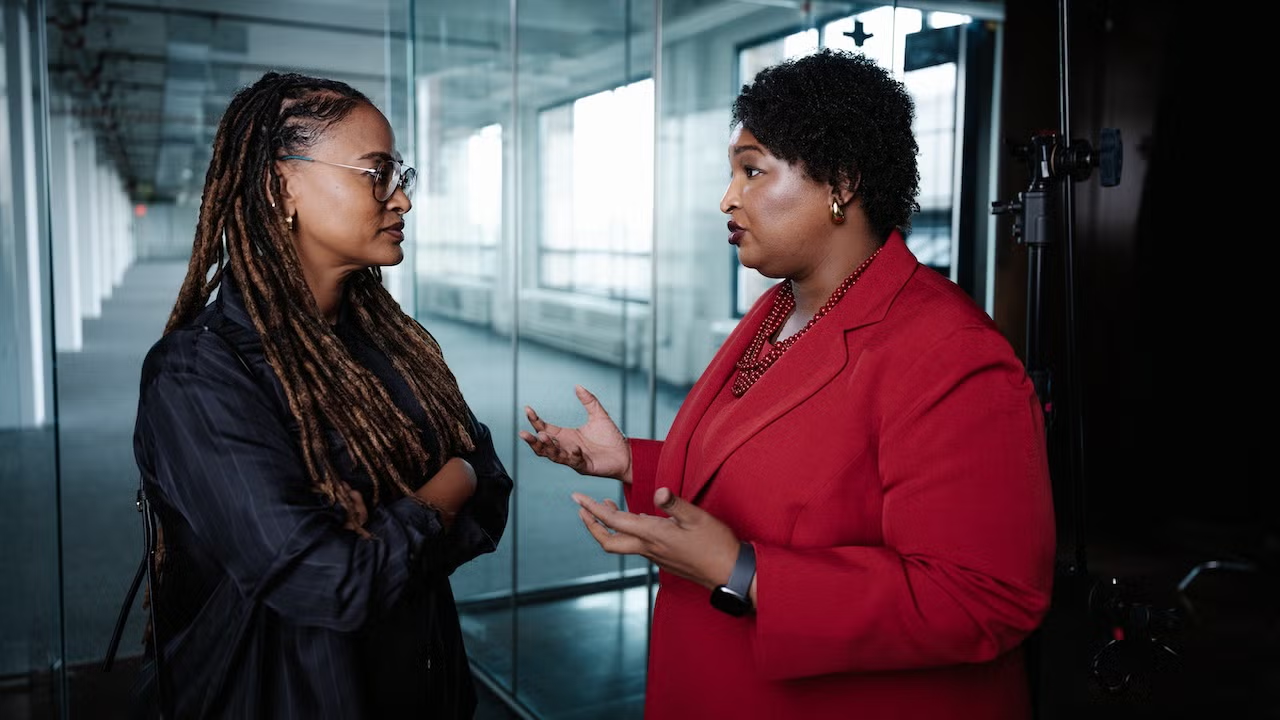
Ava DuVernay’s “14th” led all films with six nominations for the 11th annual Critics Choice Documentary Awards, the Critics Choice Association announced on Tuesday.
The wide-ranging film about the 14th amendment to the U.S. constitution, and the way it is being undermined today by the Trump administration, received nominations in the Best Documentary Feature, Best Director, Best Editing, Best Music Score, Best Political Documentary and Best Historical Documentary categories.
Nathan Fielder and Lance Oppenheim’s freewheeling Elizabeth Holmes documentary, “You Can See Everything,” was one of three films that earned five nominations, along with David Greaves’ “Once Upon a Time in Harlem” and Gabriela Osio Vanden and Jack Weisman “Nuisance Bear.”
“Everest: The Other Side,” “Everybody to Kenmure Street,” “The History of Concrete,” “Rehearsals for a Revolution,” “Remake” and “EPiC: Elvis Presley in Concert” received four nominations each.
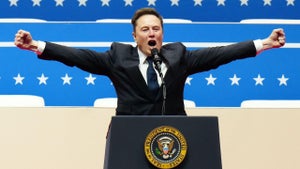
The high-profile docs “Musk” and “NAZA” received three nominations each, while Morgan Neville’s “Man on the Run” and “Lorne” received two and Questlove’s “Earth, Wind & Fire (To Be Celestial vs. That’s the Weight of the World),” Ron Howard’s “Avedon,” Werner Herzog’s “Ghost Elephants,” Barbara Kopple’s “Union Town,” Lawrence Kasdan’s “Marty, Life Is Short” and Judd Apatow’s “Mel Brooks: The 99 Year Old Man!” each earned one.
Over the first 10 years of the Critics Choice Documentary Awards’ existence, 26 of its 113 nominees in the Best Documentary Feature category have gone on to receive an Oscar nomination, and 59 of them have made the Oscar shortlist. As the Academy’s Documentary Branch has gotten increasingly international and increasingly adventurous, the overlap between the two bodies has lessened, with Critics Choice voters going for more mainstream films and fewer international ones. Since 2019, 75% of the Critics Choice nominees in the top category have been American-made docs, compared to less than 29% of the Oscar nominees.
The winners will be announced on Sunday, Nov. 8 at the Edison Ballroom in New York City. Also at that ceremony, Howard will be presented with the Critics Choice Impact Award, while Jehane Noujaim will receive the Pennebaker Award from Chris Hegedus, the widow and collaborator of D.A. Pennebaker.
Nominees were chosen by volunteer committees from the membership of the Critics Choice Association, which represents more than 500 critics and entertainment journalists.
BEST DOCUMENTARY FEATURE
“14th” (Netflix)
“Everest: The Other Side” (National Geographic Documentary Films)
“Everybody to Kenmure Street” (Icarus Films)
“The History of Concrete” (Magnolia Pictures)
“Musk” (Bleecker Street)
“NAZA” (The Guardian / mk2 films)
“Once Upon a Time in Harlem” (Neon)
“Rehearsals for a Revolution” (Sony Pictures Classics)
“Remake” (Music Box Films)
“You Can See Everything” (A24)
BEST DIRECTOR
Yuval Abraham & Rachel Szor – “NAZA” (The Guardian / mk2 films)
Felipe Bustos Sierra – “Everybody to Kenmure Street” (Icarus Films)
Ava DuVernay – “14th” (Netflix)
Nathan Fielder & Lance Oppenheim – “You Can See Everything” (A24)
Ross McElwee – “Remake” (Music Box Films)
Orlando von Einsiedel – “The Cycle of Love” (Variance Films)
BEST FIRST DOCUMENTARY FEATURE
David Greaves – “Once Upon a Time in Harlem” (Neon)
Baz Luhrmann – “EPiC: Elvis Presley in Concert” (Neon)
Gabriela Osio Vanden & Jack Weisman – “Nuisance Bear” (Mubi)
Xander Robin – “The Python Hunt” (Oscilloscope Laboratories)
Poh Si Teng – “American Doctor” (Watermelon Pictures)
John Wilson – “The History of Concrete” (Magnolia Pictures)
BEST CINEMATOGRAPHY
David Bolen – “You Can See Everything” (A24)
David Bolen & Matt Clegg – “The Python Hunt” (Oscilloscope Laboratories)
Sophie Darlington – “Lion” (National Geographic)
Franklin Dow – “The Cycle of Love” (Variance Films)
Gabriela Osio Vanden & Jack Weisman – “Nuisance Bear” (Mubi)
Clair Popkin, Jimmy Chin, Christopher Murphy – “Everest: The Other Side” (National Geographic Documentary Films)
BEST EDITING
Spencer Averick – “14th” (Netflix)
Anne de Mare & Lynn True – “Once Upon a Time in Harlem” (Neon)
Adam Locke-Norton – “You Can See Everything” (A24)
Colin Monie – “Everybody to Kenmure Street” (Icarus Films)
Jonathan Redmond – “EPiC: Elvis Presley in Concert” (Neon)
Cori Wapnowska – “The History of Concrete” (Magnolia Pictures)
BEST NARRATION
“The AI Doc: Or How I Became an Apocaloptimist” (Focus Features)
Written by Daniel Roher & Caroline Lindy
Performed by Daniel Roher & Caroline Lindy
“The History of Concrete” (Magnolia Pictures)
Written by John Wilson
Performed by John Wilson
“Lorne” (Focus Features)
Written by Morgan Neville, Alan Lowe, Jake Hostetter
Performed by Chris Parnell
“Nuisance Bear” (Mubi)
Written by Mike Tunalaaq Gibbons
Performed by Mike Tunalaaq Gibbons
“Rehearsals for a Revolution” (Sony Pictures Classics)
Written by Pegah Ahangarani
Performed by Pegah Ahangarani
“Remake” (Music Box Films)
Written by Ross McElwee
Performed by Ross McElwee
BEST MUSIC SCORE
Ari Balouzian – “You Can See Everything” (A24)
Dan Deacon – “Time and Water” (National Geographic Documentary Films)
Caroline Ho – “Everest: The Other Side” (National Geographic Documentary Films)
Jason Moran – “14th” (Netflix)
Cristóbal Tapia de Veer – “Nuisance Bear” (Mubi)
Hans Zimmer, Niccolò Pacella, George Hutson Warren – “Lion” (National Geographic)
BEST MUSIC DOCUMENTARY
“Earth, Wind & Fire (To Be Celestial vs. That’s the Weight of the World)” (HBO Max)
“EPiC: Elvis Presley in Concert” (Neon)
“Man on the Run” (Amazon MGM Studios)
“Oasis: Don’t Look Back in Anger” (Walt Disney Studios Motion Pictures)
“Peter Asher: Everywhere Man” (Greenwich Entertainment)
“Sara Bareilles: Good Grief” (Group Effort Films / Naked Edge Films)
BEST POLITICAL DOCUMENTARY
“14th” (Netflix)
“American Doctor” (Watermelon Pictures)
“Ask E. Jean” (Abramorama)
“Everybody to Kenmure Street” (Icarus Films)
“Musk” (Bleecker Street)
“NAZA” (The Guardian / mk2 films)
“Union Town” (Cabin Creek Films)
BEST HISTORICAL DOCUMENTARY
“14th” (Netflix)
“Once Upon a Time in Harlem” (Neon)
“Rehearsals for a Revolution” (Sony Pictures Classics)
“SCTV: The Greatest Show You’ve Never Heard Of” (Netflix)
“Soul Patrol” (Kino Lorber)
“Turning Point: Generation 9/11” (Netflix)
BEST BIOGRAPHICAL DOCUMENTARY
“Avedon” (Netflix)
“Jean-Michel Basquiat” (Netflix)
“Lorne” (Focus Features)
“Marty, Life Is Short” (Netflix)
“Mel Brooks: The 99 Year Old Man!” (HBO Max)
“Musk” (Bleecker Street)
BEST ARCHIVAL DOCUMENTARY
“EPiC: Elvis Presley in Concert” (Neon)
“Making Marie Antoinette” (Mubi)
“Man on the Run” (Amazon MGM Studios)
“Once Upon a Time in Harlem” (Neon)
“Rehearsals for a Revolution” (Sony Pictures Classics)
“Remake” (Music Box Films)
BEST SCIENCE/NATURE DOCUMENTARY
“The AI Doc: Or How I Became an Apocaloptimist” (Focus Features)
“Ghost Elephants” (National Geographic Documentary Films)
“Lion” (National Geographic)
“Nuisance Bear” (Mubi)
“Secrets of the Bees” (National Geographic)
“Time and Water” (National Geographic Documentary Films)
BEST SPORTS DOCUMENTARY
“The Dynasty: UConn Huskies” (Apple TV)
“Everest: The Other Side” (National Geographic Documentary Films)
“Give Me the Ball!” (ESPN)
“Rafa” (Netflix)
“Standout: The Ben Kjar Story” (Samuel Goldwyn Films)
“Tyson” (Netflix)
BEST TRUE CRIME DOCUMENTARY
“Baby Doe” (Narrative Distribution)
“Funny Money: The Dane Cook Story” (Dark Star Pictures)
“The Idaho Murders: College Nightmare” (Netflix)
“A Killer Story” (HBO Max)
“Lost Women of Alaska” (Investigation Discovery)
“Murder in Glitterball City” (HBO Max)
BEST SHORT DOCUMENTARY
“The Baddest Speechwriter of All” (Netflix)
“A Derailment” (POV)
“Escalation” (Bonfire Films)
“Miller Night Football” (HBO Max)
“Oh Whale” (The New Yorker / Switchboard Magazine)
“The Second Life of Freddie Nole” (Sweet World Films)
“A Short Documentary About a Giant Pencil” (archilux)
“They’re Here” (Praxis Films)
BEST LIMITED DOCUMENTARY SERIES
“9/11: Reunited” (National Geographic)
“The Dark Wizard” (HBO Max)
“The Dynasty: UConn Huskies” (Apple TV)
“High Horse: The Black Cowboy” (Peacock)
“Lion” (National Geographic)
“The Man Will Burn” (HBO Max)
“Rafa” (Netflix)
BEST ONGOING DOCUMENTARY SERIES
“30 for 30” (ESPN)
“American Masters” (PBS)
“America’s Sweethearts: Dallas Cowboys Cheerleaders” (Netflix)
“The Food That Built America” (History)
“Hazardous History with Henry Winkler” (History)
“Independent Lens” (PBS)
“Untold” (Netflix)

>
Filmmaker Kim Jee-woon’s The Hole has found an opening on the summer 2027 release calendar.
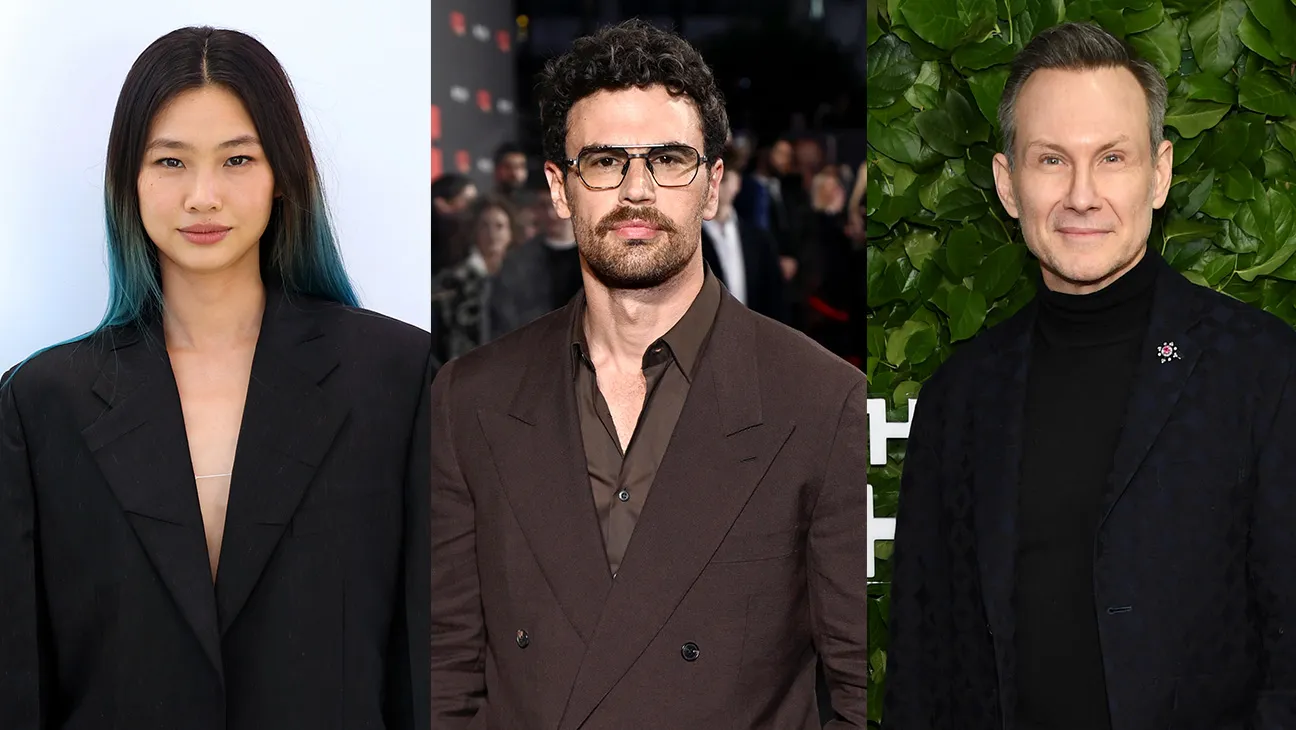
Amazon MGM Studios‘ specialty film label Orion Pictures is set to release The Hole theatrically on June 25, 2027, The Hollywood Reporter has learned. Theo James, Hoyeon, Yeom Hye-ran and Christian Slater round out the movie’s cast.
The Hole centers on Owen (James), an American professor living in South Korea. After his wife dies in a car accident, Owen’s Korean mother-in-law cares for him and begins learning secrets about his marriage and past. The suspenseful thriller takes place in Seoul and Berkeley, Calif.
Jee-woon helms The Hole from a script by Christopher Chen that adapts author Hye-young Pyun’s 2016 best-selling Korean-language novel of the same name. Producers include Anthology Studios, K. Period Media and Esmail Corp, while Department M and Medan are financing and executive producing.
Also set for theatrical release on June 25, 2027, is Warner Bros.’ untitled Ocean’s Eleven prequel from writer-director Bradley Cooper, who will star alongside Margot Robbie, Wagner Moura and Monica Barbaro.
James leads the Guy Ritchie-created series The Gentlemen for Netflix, which is set to return for its third season, while his feature credits include Fuze, Rosemead, The Monkey and the Divergent franchise.
Hoyeon is known for her breakout role on Netflix’s Squid Game, along with starring in the recent feature Hope and appearing on the series Disclaimer.
Hye-ran was seen in the recent film No Other Choice and is also known for such series as The Glory and The Uncanny Counter.
Slater has had roles in such features as If I Had Legs I’d Kick You and Blink Twice, and he can soon be seen in Amazon MGM’s How to Rob a Bank, opposite Nicholas Hoult and Zoë Kravitz.
Jee-woon’s previous features include Cobweb, Illang: The Wolf Brigade, The Age of Shadows and the Arnold Schwarzenegger-led The Last Stand.
>

The 84th annual Golden Globes Awards are months away, but the once boozy and often unhinged ceremony is front and center right now, at least in the court dockets.
Two months after the remnants of the Hollywood Foreign Press Association sued Penske Media Corporation for it’s part in dick clark production’s purchase of the Golden Globes in 2023 with allegations of monopolization and fraudulent misrepresentation, the Penske-controlled Golden Globes is going after the Golden Globe Foundation for trademark infringement and unfair competition.
Now, if you need to take a moment and re-read that to separate the Globes from the Globe, we get that – it’s a lot. This might also be a good time for some transparency to remind everyone that PMC is the parent company of Deadline owners PMX.
In this particular point of legal loggerheads, the Golden Globes say they need a jury to step in and get the GGF to stop trying to muddy the waters.
Putting a lot of emphasis on GGF board boss Raffi Boghosian, the Golden Globes’ four-claim complaint details: “Defendant has adopted and continued using the GOLDEN GLOBE mark as part of its corporate name and in connection with a broad array of activities, including hosting events, conducting auctions, awarding grants, publishing materials, and developing merchandise—activities that are confusingly similar to Plaintiff’s business and have caused and threaten to continue to cause consumer confusion—without authorization from Plaintiff and over Plaintiff’s express demand that Defendant cease such use.”
What the Globes and their Sidley Austin attorneys want from the court and the GGF is an injunction to stop them using said mark and a trophy cabinet of unspecified damages to make sure they don’t try to do it again.
The filing also alleges that “GGF’s activities and use of the GOLDEN GLOBE Mark have also expanded well beyond its stated charitable mission” to now engage “in other commercial and quasi-commercial activities.” In fact, the September 30 filing in federal court insists the non-plural Foundation rejected a 2025 cease and desist letter and cut off licensing negotiations in July 2026 when Boghosian took over the GGF.
Add to that, as well as listing the many HFPA scandals over the years and the havoc and near death it bought to the GG ceremony’s lucrative TV rights, the complaint says the “GGF’s unauthorized and expanding use of the GOLDEN GLOBE Mark is part of a broader pattern of coordination between GGF and the HFPA directed against Plaintiff and its affiliates.”
Then there’s that previous lawsuit. As always, there’s also the money.
“On information and belief, GGF and the HFPA have since entered into or are in the process of finalizing a settlement of the HFPA’s claims against GGF that would result in GGF transferring charitable funds to the HFPA,” the Golden Globes filing of last months asserts.
“On information and belief, the HFPA’s inclusion of GGF as a defendant was a pretext designed to facilitate this transfer, and the settlement is intended to redirect charitable funds to finance the HFPA’s lawsuit and other private disputes against Plaintiff. This coordination between GGF and the HFPA further demonstrates that GGF’s continued use of the GOLDEN GLOBE Mark is not undertaken in good faith, but rather as part of a concerted effort to trade on the goodwill of Plaintiff’s mark while acting in alignment with the HFPA against Plaintiff’s interests.”
Guess what? The GGF don’t see it that way, or at least not with that characterisation.
“The Golden Globe Foundation was created in 2023 as part of the same deal that sold the Golden Globes to the company now suing us,” GGF spokesman Nate Miller said in a statement Tuesday. “That company then promoted our name. The Golden Globes’ president welcomed guests to our first grants dinner, where we gave $5 million to 96 organizations, and publicly thanked Penske Media’s own Robb Report for supporting the Foundation.
They went on to say: “Now that company, owned by Penske Media and billionaire Todd Boehly’s Eldridge, is suing a nonprofit that supports schools and press freedom over the same name it once celebrated. This lawsuit is a transparent attempt to pressure the Foundation, and we will answer it in court.”
As these lawsuits ramp up, so does awards season again.
To that, the submission deadline for the 2027 Golden Globes is October 30 this year. Kicking everything to the other side of the holidays, and Nikki Glaser will be back for a third time hosting the ceremony when it airs on CBS and streams on Paramount+ on January 10, 2027.
>

If there’s an object lesson right now in the different paths that franchises can take, and their varying levels of success, it’s found in the year that “Avatar” is having. “Avatar: The Last Airbender” was a project of Nickelodeon Animation Studios back in 2005, created by Michael Dante DiMartino and Bryan Konietzko, and its omission from the New York Times Best TV Shows of the 21st Century is so egregious that ten different friends yelled at me, a person who has never worked there, about it.
(IndieWire would never make such an error).
The series ended in 2008 after three seasons (or “books,” as the show puts it) and a four-part finale that is one of, if not the, most structurally flawless series wrap-ups in television history, animated or otherwise. The style, influenced by the expressiveness of anime but very much shaped in boldness of line and color by the very different martial arts disciplines behind elemental “bending.”


Lots of people can bend one of the four elements, of course, and are therefore known as Earthbenders, Firebenders, Waterbenders, etc. But only the Avatar — sing along if you know the words — can master all four elements and bring balance to the world. The animation of the original series was overseen by three South Korean studios, chiefly JM Animation in the early seasons and MOI Animation in the latter ones. The unified look that they all achieved was a fantastic kind of balance in its own right.
“ATLA” could be as exuberant and imaginative and chaotic as its protagonist, Aang (Zach Tyler Eisen), the titular last airbender, and his best buddy, the sky-bison Appa (Dee Bradley Baker). It was also capable of soulful, luminous landscapes that made the world of the show, the “Four Nations,” feel fascinatingly complete and distinct.
Much is written, and rightly so for a series such an unapologetically, joyfully Asian and Aboriginal world, about the influences on “The Last Airbender.” The Earth Kingdom is very height of the Chinese bureaucracy-coded, for instance, while the Fire Nation simmers with the sharp industrialism of Imperial Japan. But “ATLA” has had its own influence on the direction of animated series, too — from the visual lushness of something like “Blue Eye Samurai” to the incredible action of a “Fullmetal Alchemist: Brotherhood,” to the deep friendships and tectonic character growth in shows like “She-Ra: Princesses of Power” or “Star Wars Rebels.”
All that doesn’t scratch the surface, let alone under the Secret Tunnels, of what makes “Avatar: The Last Airbender” great. Which perhaps explains why people keep trying to run it back.

There’s the M. Night Shyamalan “The Last Airbender” live-action film adaptation of the original from 2010, and the less said about that, the better. Netflix has tried a live-action series reciting chapter and verse of its animated ancestor, “Avatar: The Last Airbender,” and while Dallas Liu has somehow found a way to become Prince Zuko, the show has also run into a number of similar problems of live-action adaptation. There’s this desire, understandable on its face, to make the design and aesthetics of the live-action world recognizably similar to the animated world. But animation is just so much more expressive, so much more information can be carried through color and line size and boldness and the kind of unreal physicality that nonetheless conveys real emotion. Neither live-action project has found ways to do the things that only animation can.
On the animated front, DiMartino and Konietzko first made a direct sequel, “The Legend of Korra,” which ran on Nickelodeon for 2012 to 2014 and focused on the Avatar directly following Aang, following the Water Tribe’s own himbo princess/Avatar Korra (Janet Varney) as an older teen compared to the 12-year-old Aang. This is in part to account for a slightly older audience, already familiar with the original series, and also to make some truly awful (complimentary) silent film jokes in Season 2.

“Korra” builds complexity onto the animation style of “ATLA,” which fits the main metropolitan setting of Republic City where the story takes place. Everything is a little bit more rivets and angles, a little bit less wide expanse. The animation is, perhaps, less careful and clear, relying more on weight and impact, and larger explosions that the intricate choreography of “Avatar.” But it feels very much like a companion piece.
Or it did, until the “Avatar” franchise started spinning up so many other companions. Leaving aside the comics, tie-books, video games, and other ancillary delights of exploiting successful IP, there’s the Netflix show, of course. But in 2021 DiMartino and Konietzko spun-up Avatar Studios, to manage the many, many other animated projects still gripping the original harder than a turtle crab.
It’s a sign of how Paramount+ wants to proceed as Hollywood’s new Lion Turtle that there is a new animated film, out earlier this year, called “Avatar Aang: The Last Airbender,” which follows a now-grown Aang and tries valiantly to be more than a bit of fan service to adults who are also now grown past the most interesting part of the Avatar’s story. There is also a spinoff devoted to another previous Avatar, Kuruk, although “Avatar Kuruk: Wave of Chaos” will probably not involve as much monster-fucking as Kuruk’s furs in flashback have promised.
Again and again, the creative team behind the original and newcomers have looked at “Avatar: The Last Airbender” and decided not to overthrow the Fire Lord of design aesthetic, overall time period, focus characters, and tone. And as a result, none of those projects are as good as the original.

Neither is the newest effort set in the world of “ATLA,” at least not yet. But “Avatar: Seven Havens” is at least a breath of fresh (irradiated, post-apocalyptic sandstorm-y) air because it really gives itself the room to be its own thing in animation style, storytelling framework, and themes.
Set hundreds of years after “Korra” in a world that looks vastly different to the Four Nations we’ve known and loved, “Seven Havens” has kind of a “The Force Awakens” relationship to its ancestor series — young protagonists with cute animal sidekicks, a very similar spin on the opening voiceover announcing each episode, big fighting set pieces, and heavier themes paired right alongside kid-appropriate hijinks. There is a fun, as-yet-underexplained mystery as to how Korra did or did not create a cataclysm that rendered most of the world uninhabitable, and a fun, as-yet-underexplained double-down on the number of Avatars in existence. But it gets away with hewing closely to the original in plot and tone because it looks different.
The animation of “Seven Havens” comes mainly from French studio La Chouette Compagnie. While some of the colors and cultural touches in shapes and fighting style still align with the original animated shows, much of “Seven Havens” is really different — to use a Ghibli analogy (a Ghibnalogy?), “Seven Havens” looks to “Nausicäa of the Valley of the Wind,” instead of the original’s eye on “Totoro” or “Korra’s” kinship with “Howl’s Moving Castle.”
On the one hand, the show’s eye for creative destruction and interesting critters and a kind of broken stained-glass feel to the world beyond the Haven (one of the seven) of Ellora is just another reminder that “Scavengers Reign” looked really cool. On the other hand, though, by pulling in more Hindu and Jainist influences into the design of Ellora and remixing those with the existing world of “ATLA,” “Seven Havens” feels richly evolved from that existing world, rather than a pale shadow.
The show has already proved that doing something that looks radically different is maybe the only way for a franchise like “Avatar” to survive.
The first three episodes of “Avatar: Seven Havens” are now streaming on Paramount+.
>

The Hole: Theo James, Hoyeon, Christian Slater Movie Gets 2027 Release
Atlanta Dream change playoff date, time to host finals games at State Farm Arena
Mariners to interview Astros' Joe Espada for managerial vacancy: Source
-

 movies5 months ago
Search For Canadian TV Actor Stewart McLean Now Homicide Investigation
-

 Fashion9 years ago
These ’90s fashion trends are making a comeback in 2017
-
Fashion9 years ago
According to Dior Couture, this taboo fashion accessory is back
-
Fashion9 years ago
Model Jocelyn Chew’s Instagram is the best vacation you’ve ever had
-
Fashion9 years ago
Emily Ratajkowski channels back-to-school style
-
Fashion9 years ago
9 Celebrities who have spoken out about being photoshopped
-

 Anime4 months ago
Rurouni Kenshin: Hokkaido Arc Manga Takes 1-Issue Break – News
-

 Anime3 months ago
HIDIVE to Stream English Dubs for The World Is Dancing, The Forsaken Saintess and Her Foodie Roadtrip in Another World, The Dangers in My Heart: The Movie Anime – News