

movies
‘Hunkkaar’ Explores India’s Attitudes Through A Procedural Lens

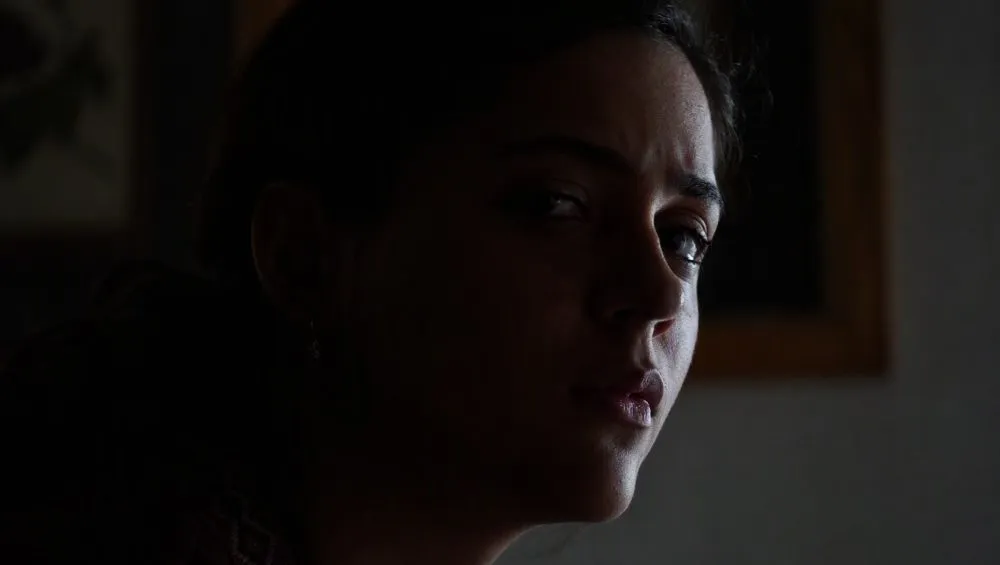
Welcome to Global Breakouts, Deadline’s strand in which, each fortnight, we shine a spotlight on the TV shows and films killing it in their local territories. The industry is as globalized as it’s ever been, but breakout hits are appearing in pockets of the world all the time and it can be hard to keep track… So, we’re going to do the hard work for you.
This week, we’re back in India, where streaming audiences have been digesting the meaning of Hunkkaar (known locally as Hunkkaar: The Roar), a miniseries about teenage girl who accuses a powerful spiritual leader of sexual assault, triggering a chain of reaction that becomes a national story. Executive produced by Priyanka Chopra, it explores the balance between power, faith, truth and justice in modern day India.
Name: Hunkkaar
Country: India
Streamer: JioHotstar
Producers: Applause Entertainment, Birla Studios, Purple Pebble Pictures, Mangata Films
Distributor: Applause Entertainment (rights holder)
For fans of: Mindhunter, Spotlight, David Fincher films
Hunkkaar is a very modern Indian miniseries. While the country’s Bollywood machine continues apace, favoring melodramatic stories, this JioHotstar program has challenged its audience – and wider society, by extension – to really think about the nature of life in the country.
“We were very intentional about taking a non-melodramatic approach to trauma,” says co-creator Karan D. Kapadia. “I love Bollywood’s melodrama genre, but we wanted to look at trauma in a grounded way.”
The trauma he refers to underpins the story. It follows a 17-year-old girl, Meenu Rawat (Aneet Padda), who accuses Baapji (Sunil Chakosi), a powerful ‘godman’ (cult-like Indian spiritual leaders whose supporters can revere them as demi-gods) of sexual assault. The case becomes national news, with Meenu supported by a small group of police officers, advocates and TV journalists as she is publicly slut-shamed and put on trial by the media.
The idea for the show began years earlier. “We came across a powerful article about a godman who had created an industrial-scale system of sexual abuse,” says Kapadia. “He had constructed a world in which his devotees believed that what he was doing to them was not wrong.
“That was the starting point. It led us into deeper questions about how we perceive women, and the fact that rape remains a major social issue in India that needs to be addressed. From there, we developed the David-and-Goliath theme: A 17-year-old from Gen Z taking on a system. The man at the centre of the story eventually represents a level of power comparable to that of the state. We also wanted to explore the arduous road to justice.”
As Kapadia and co-creator Nitya Mehra‘s resulting six-part series developed, Mehra says it became clear Chakosi’s godman character would not just represent a religious leader, but of corrupted power itself, with the cult created as a mirror to power structures in wider society.
“Although the story deals with rape, which is one of the biggest social issues to have plagued India for decades, the godman became something larger than the spiritual leader we initially imagined,” she adds.
Priyanka Chopra’s support
The project had initially gone into development through Kapadia’s Mangata Films label, but received a big shot in the arm when Scam and Black Warrant producer Applause Entertainment boarded to produce and distribute the finished show.
Aditya Birla Group-backed Applause is noted for always producing scripted TV before selling the finished product to a streamer – in effect guaranteeing production will go ahead. Another company in Applause’s extended circle, Ananya Birla’s new firm Birla Studios, also boarded, as did White Tiger and Bajirao Mastani actress and storied producer Priyanka Chopra, who had known Mehra since they worked together on 2006 Hindi pic Don.
Mehra simply calls Chopra “a powerhouse,” recalling how she and her team had immediately boarded the project after seeing a tape.
“I’m always drawn to stories that have depth and meaning, and Hunkkaar: The Roar is one such story,” says Chopra. “It takes on a deeply sensitive subject and tells the story with honesty and conviction. I have immense respect for Nitya and Karan, Applause and the entire team for the thought and care they’ve brought to this project.”
Kapadia and Mehra praise Applause’s Nair, who stepped down in April after nearly a decade as CEO, as “the key person behind the process” of producing without an anchor commissioner. As such, Kapadia says the resulting program has “the potential to travel internationally,” adding: “Without Sameer, we wouldn’t be here. He was a rock for us. He championed the show, enhanced our vision and gave us the space to grow into the filmmakers we are today.”
Deepak Segal, producer at Applause, says: “The success of Hunkkaar: The Roar is a testament to the power of stories that are deeply rooted yet universally felt. We believe the future of Indian storytelling lies in stories that emerge from our local realities, from the ambition of our young nation and travel far beyond them. The brilliant response to Hunkkaar shows us that when a story speaks to something deeply human and can appeal to the hearts of the audience, its horizon can be limitless.”
Shooting was finished by the end of 2024, with local reports then suggesting the series had been delayed when it didn’t immediately launch. That was partly down to Kapadia being a “perfectionist” in the edit, Mehra laughs, but also down to a misunderstanding of Applause’s produce-then-sell model.
“We wanted to take our time, find the right home and make sure it was mounted on the right platform in the way we wanted,” says Kapadia. “It wasn’t really a delay in the traditional sense. We had the show in the bag. The question was how to release it with the kind of marketing and positioning we felt it deserved. It is a luxury to have the time to mount something properly, and the response suggests that the approach worked.”
Ultimately, JioHotstar boarded the series and with the service launching in territories such as Canada and the UK as the show debuted on September 25, Mehra says the timing was serendipitous.
Structurally, what’s notable about Hunkkaar is that it manages to be both a legal procedural following a high-profile case, and a human story about shame, justice and power. Mehra and Kapadia both note during the interview for this article how unexpected the number of people JioHotstar has recorded bingeing through the series was, given the themes. However, it wasn’t all just a happy accident.
“We made a conscious decision in the writers’ room to be aware of the subject matter and the fact that it could become a procedural,” says Mehra. “Structurally, we wanted to bind it together in a way that felt immersive.”
Kapadia – known for producing the likes of Jolly LLB 3, Blank and Durgamati: The Myth – says the approach worked. “Indian audiences are desperate for content that challenges them, moves them and inspires them,” he argues. “When there is a good story, it works.
“The emotional intelligence of the audience is expanding, partly because technology is moving so quickly and hundreds of millions of people have smartphones. The volume of data and content people encounter is exponential. Many viewers have told us, ‘Thank you for trusting us to read between the lines and for not hammering everything over our heads. Thank you for taking the time to articulate the pain.’”
Kapadia and Mehra point to David Fincher’s meticulous approach to filmmaking as a reference point for telling the complex story, while Joe Penhall’s Netflix serial killer series Mindhunter gave them confidence “that it was possible to keep audiences immersed and allow them to sit uncomfortably in a moment,” as Mehra puts it.
Mehra – director of 2016 pic Baar Baar Dekho and creator of Prime Video series Big Girls Don’t Cry – says that while Indian audiences are besieged by films and TV content right now, where Hunkkaar has cut through is in its subject matter.
“One of the victories for Karan and me is receiving messages from people saying they feel seen and represented on screen. We made our previous show about an all-girls boarding school, and girls from small-town India told us they had never seen themselves represented before.
“With Hunkar, young Indians are finding their voice. The world is burning, and people are speaking up. I think this show represents that voice.”
For market-leading Indian streamer JioHotstar, the show represents where domestic TV production in the streaming era is headed. “At JioHotstar, we want to back fresh, distinct voices telling authentic Indian stories, which drive conversations and help shape society,” says Alok Jain, Head of Hindi and English Entertainment for Streaming, TV and Studios at the Reliance- and Disney-backed JioHotstar. “Hunkkaar is exactly that.
“What drew us most was its heart – an ordinary girl who finds extraordinary courage. Meenu is 17 when she walks into a police station and accuses a man her whole town worships. She’s not a conventional hero, and that’s what makes her stand so powerful. It’s also why others find the courage to stand with her.”
Jain praises Mehra and Kapadia for “handled a difficult subject with care and without sensationalism,” and notes Padda “brings a fearless presence to Meenu,” while “Priyanka Chopra Jonas, Birla Studios and Applause backed that vision completely.”
He points to the audience response as evidence – though as ever streamers don’t provide specific ratings details.
“Hunkkaar is one of our most engaging Hindi specials this year, with viewers moving straight from one episode to the next. As JioHotstar expands into new markets, it’s encouraging to see the show trending not just in India, but also in Singapore, the UK and Canada. That’s the kind of storytelling we want to keep investing in – made in India, for the world.”
There are indications of U.S. distribution, so the noise around Hunkkaar could become a roar in the not-too-distant future.
>
Continue Reading
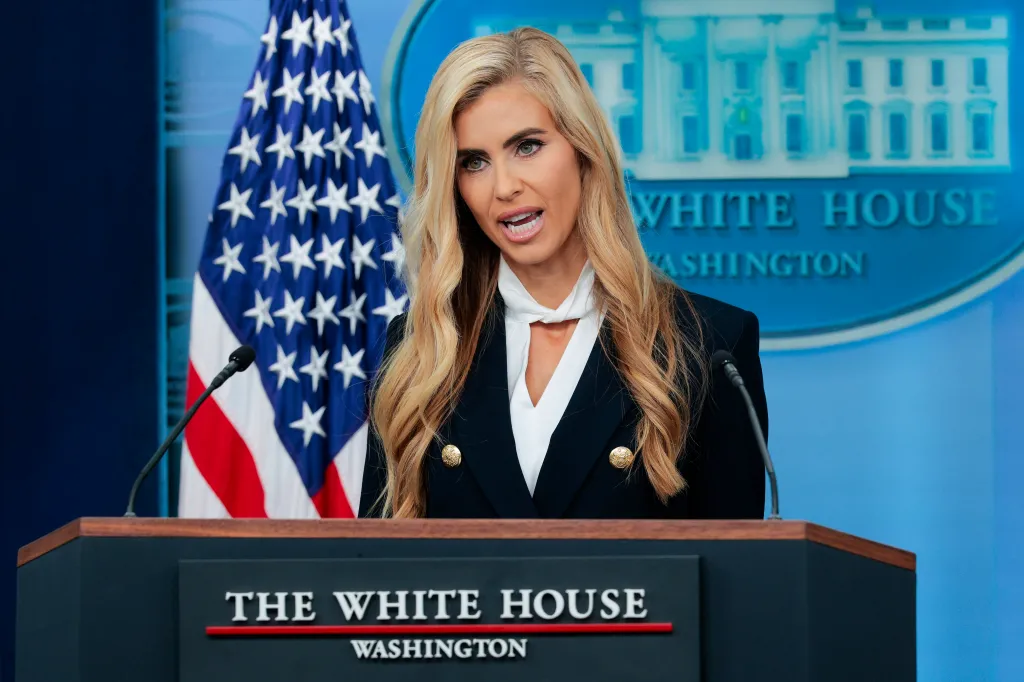
Katie Zacharia made her debut as Donald Trump‘s new White House press secretary on Tuesday with a very short briefing that nevertheless offered a bit of breaking news as well as a lot of praise and thanks for her new boss.
“I have wanted to work for him for a very long time,” she told reporters, crunched into the tight briefing room space of the West Wing.
The briefing lasted less than 15 minutes, as she took only a handful of questions before noting that the president would soon be speaking to reporters as he departed for three-day midterm campaign swing. But there were some laughs of surprise among reporters, caught off guard at the abrupt end to the briefing.
As short as it was, she did breaking some news. Asked about the fate of Kimberly Guilfoyle, the former fiance of Donald Trump Jr. who is now the U.S. ambassador to Greece. Zacharia said, “We have asked Ambassador Guilfoyle to resign.” In a bombshell story last week, The Wall Street Journal reported on a message that Guilfoyle sent to a Trump donor, asking him to wire $100,000 directly to American Express to pay off her bill. The donor had been seeking her help accessing administration officials. Her attorney has challenged the authenticity of the messages, per the Journal.
Zacharia was not as well known to the press corps as were other candidates floated following the departure of Karoline Leavitt in August. Under Trump, the job has become much more about playing to an audience of one, which was apparent as she started her briefing by referring to his rally in Youngstown, OH, on Monday night.
“The arena was overflowing with enthusiasm as thousands came out to support President Trump, as well as special guests Jake Paul and football legend John Gruden,” she told reporters, perhaps as a way to counter social media posts of rows of empty seats at the event. At his first appearance as Trump’s first press secretary in 2017, Sean Spicer called in reporters to insist that the new president’s inaugural crowd size was record setting.
She also made clear that, at least for the next few weeks, her job will be to tout, defend and amplify Trump’s record, as she ran through a list of accomplishments amid the president’s sagging approval numbers. At one point, she compared average annual earnings under Trump to that of Biden, reflecting White House efforts to point to economic data while polls show the president way underwater on issues like inflation.
>
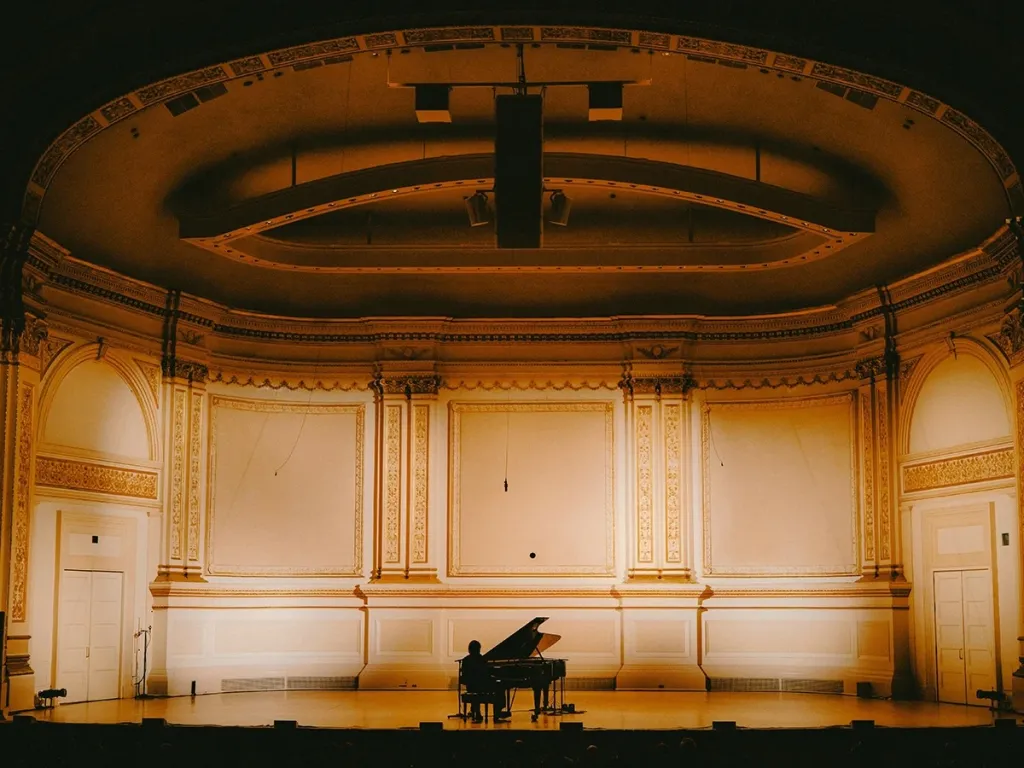
Every auteur’s favorite side hustle is the music video, and Paul Thomas Anderson is no exception. But where the likes of Martin Scorsese like to go bigger when they make a full-blown concert movie, PTA runs in the opposite direction. Jonathan Demme is a big influence here, inevitably, but Cameron Winter At Carnegie Hall doesn’t bear the slightest resemblance to the latter’s 1984 Talking Heads doc Stop Making Sense. What it does look like is his extraordinary 1985 promo for New Order’s The Perfect Kiss, perhaps the only reason one would ever mention Powell and Pressburger and MTV in the same breath.
Though Winter’s esoteric music is an acquired taste, PTA’s film — working in partnership with Benny Safdie — offers a tremendous sense of occasion. Carnegie Hall seats well over 3,000 people, but this intense performance film gives life to the old saying about feeling alone in a crowd. Using warm 35mm color stock to capture the old-fashioned, almost music-hall ambience of the venue, Cameron Winter At Carnegie Hall makes both the grandeur and the intimacy of the event; in stark contrast to the raucous crowd scenes of, say, the recent Oasis movie, PTA captures the audience as both a blurry mass and a sequence of highly focused individuals, each experiencing their own kind of communion with a musician who doesn’t speak to them or even turn to face them.
Winter, 24-year-old frontman with a New York rock band called Geese, is a self-confessed admirer of Leonard Cohen and Bob Dylan, which is abundantly clear from the outset. With the odd nod to the fire and brimstone of Nick Cave at his most religious, the show is simply one man and a grand piano, which somehow came as a shock to a woman sitting three rows from the front at its second screening at the London Film Festival (she left after the second song had barely begun). The stark simplicity of the sound, given the sprawling, almost classical nature of the songs, sometimes make the film surprisingly hard to follow — are we watching a full set or just one long song cycle? — and if it weren’t for the informed applause of an audience in the know, it would be hard to tell where one song ends and the next one starts.
Like its subject matter, PTA doesn’t really seem to care whether you’re enjoying yourself; much like Winter’s lyrics — which contain humdingers like “Names are donuts on the sea” — so much of Cameron Winter At Carnegie Hall is about interpretation. The camera is always finding ways around the artist, sometimes examining him with the forensic disinterest of a doctor, the next close up and in his face like an adoring fan. Winter remains slippery and impervious throughout, and when he makes his one and only act of showmanship — pretending to leave the stage after 30 minutes — it’s hard to know whether this is a joke or then start of a panic attack that has thankfully subsided.
The show and encore, which take up a little over an hour, are bookended by scenes of concertgoers filling the room and then emptying it. What happens in between is an interesting interrogation of the highly personal nature of art, how it happens and the neurological ripple effect it causes in a roomful of like-minded people. But is it any good? If that’s your main criteria, Cameron Winter At Carnegie Hall is not for you.
Title: Cameron Winter At Carnegie Hall
Festival: London, New York
Director: Paul Thomas Anderson
Distributor: Mubi
Running time: 1 hr 11 mins
>

The upcoming Apple TV series 12 12 12 has dropped its first trailer, starring Anthony Mackie and Jamie Dornan, which can be found above. The eight-episode drama will premiere on Friday, November 13.
From creators and executive producers Dudi Appleton and Jim Keeble, each episode of 12 12 12 unfolds across three timelines of a heist: the 12 months of planning, the 12 hours of the heist, and the 12 days following the heist. The series follows a disgraced FBI agent (Mackie) and an American career criminal (Dornan) who play a zero-sum game of cat and mouse across Europe. At the center of it all is the daring, epic raid on a bank vault deep beneath the streets of Zurich.
Jack Kesy, Agathe Rousselle, Sallie Harmsen, José Garcia and Kali Reis also star.
The project reunites Mackie and Dornan, who co-starred in the movie Synchronic, as well as Mackie and director Kari Skogland, with whom he collaborated on The Falcon and the Winter Soldier.
Skogland directs multiple episodes, including the pilot, and serves as an executive producer. In addition to starring, Dornan and Mackie executive produce, with Mackie executive producing under his Make It With Gravy production banner alongside Samantha Corbin-Miller, David Knoller and Jason Spire for Inspire Entertainment. The series is produced by Paramount Television Studios and Anonymous Content.
Watch the action-packed trailer above.
>

movies2 minutes ago
New White House Press Secretary Debuts With A Very Short Briefing
Sports3 minutes ago
How the U.S. *can* beat Spain. Plus: What 'Ted Lasso' got wrong

movies7 minutes ago
‘Cameron Winter At Carnegie Hall’ Review: PTA’s Esoteric Concert Movie
-

 movies5 months ago
Search For Canadian TV Actor Stewart McLean Now Homicide Investigation
-

 Fashion9 years ago
These ’90s fashion trends are making a comeback in 2017
-
Fashion9 years ago
According to Dior Couture, this taboo fashion accessory is back
-
Fashion9 years ago
Model Jocelyn Chew’s Instagram is the best vacation you’ve ever had
-
Fashion9 years ago
Emily Ratajkowski channels back-to-school style
-
Fashion9 years ago
9 Celebrities who have spoken out about being photoshopped
-

 Anime4 months ago
Rurouni Kenshin: Hokkaido Arc Manga Takes 1-Issue Break – News
-

 Anime3 months ago
HIDIVE to Stream English Dubs for The World Is Dancing, The Forsaken Saintess and Her Foodie Roadtrip in Another World, The Dangers in My Heart: The Movie Anime – News