Industrial intelligence — a manufacturer’s accumulated know-how, operating practices, production data and understanding of its own business — is emerging as the next big growth opportunity for manufacturing, according to a new MIT Technology Review analysis.
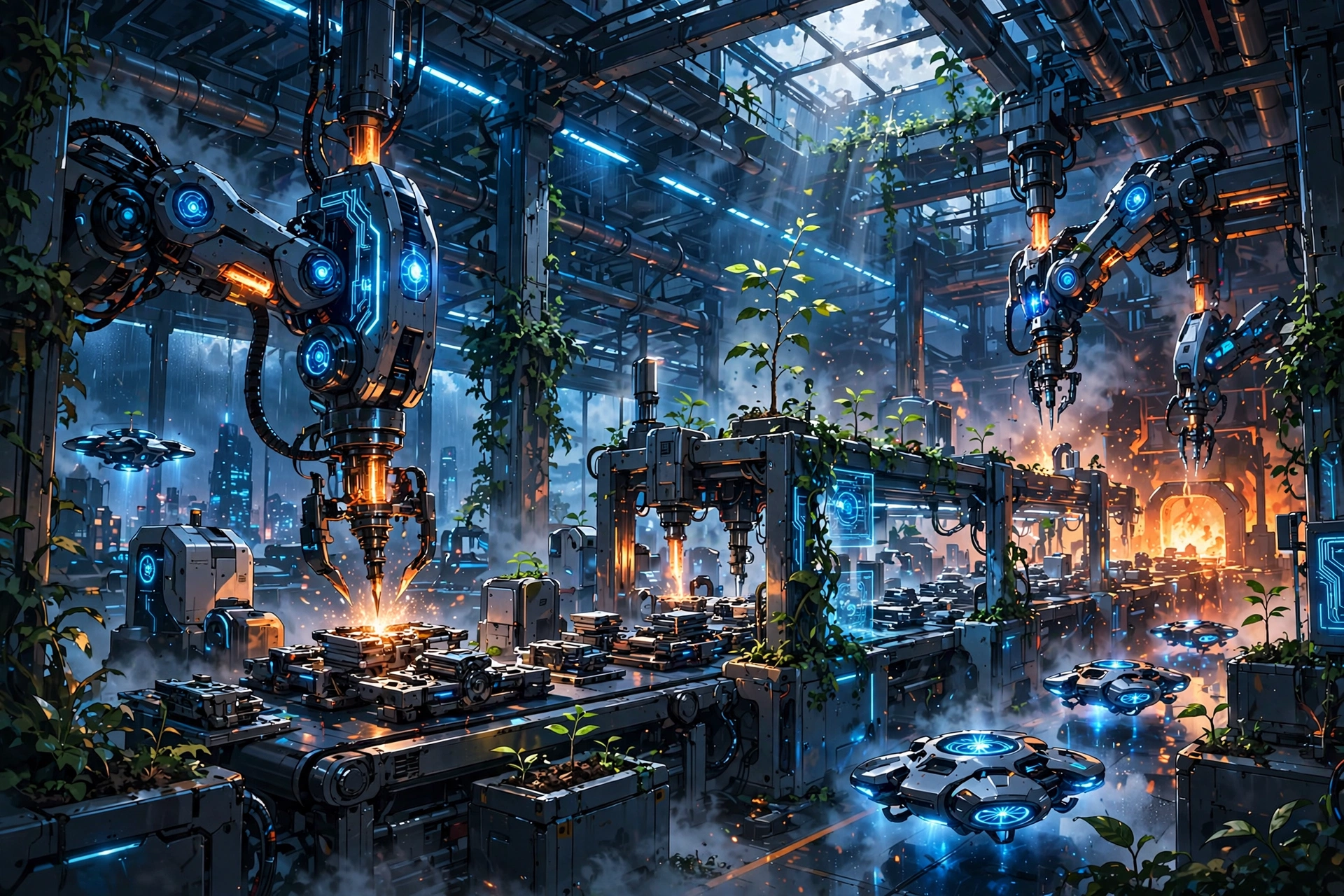
Factory floor automation (Credits: MIT Technology Review)
The argument is simple: every factory already holds valuable intelligence, but much of it lives only in the heads of experienced workers. Some of it is documented, and some of it is pure judgement built up over years on the floor.
What Is Industrial Intelligence in Manufacturing?
Consider an experienced operator preparing to restart a line after a changeover. The machine settings matter, but so does knowing how a particular material behaves, what happened during the previous shift, and when a small variation deserves a closer look. A procedure can describe the sequence, but successful execution depends on experience.
That combination is industrial intelligence. The opportunity now, the analysis argues, is to make more of that intelligence available wherever decisions are made, and then connect it to the physical world of manufacturing. The goal is not simply to deploy more AI agents, but to turn existing business intelligence into an engine for profitable growth.
Physical AI: From Knowing to Acting on the Factory Floor
Expertise has limited reach when it stays with one person, inside one system, or within one plant. When individual knowledge becomes widely accessible, innovation can spread to the maintenance workshop, the planning office, the engineering team and the production floor, because more people can work with what the organisation already knows.
But manufacturing is ultimately physical. It depends on materials, machines and products. This is where physical AI comes in: systems that can perceive conditions, reason about them, and take action in the physical world. By connecting machines and processes, manufacturers get a clearer view of the factory floor, and agents can reason on top of that information to spot patterns, predict problems and choose the best course of action.
A robotic-handling operation facing variation in incoming parts offers a concrete example. Vision can assess a part’s position, a model informed by the material and task can determine the right movement, and connected controls can execute an adjustment within validated limits. The value is not merely seeing the variation — it is responding appropriately.
The same principle shows up in quality operations. When Toyota Industries connected previously fragmented paint shop data, engineering and operations teams gained the context needed to understand defect drivers. The company reports that analysis cycles fell from five days to under four hours, while its pilot reduced relevant paint defects by about 25 percent. The breakthrough, the analysis notes, was not simply finding another signal — it was helping people understand why defects were occurring and respond before the outcome was locked in.
In short, data can reveal what is happening, but industrial intelligence provides the context for what should happen, which constraints cannot be breached, and when human judgement still matters most.
Also Read: Nvidia Backs Indian Startup Simplismart in $14 Million Round to Run AI Models With Fewer GPUs | ContextGem 1.0: Extract Data From Documents With LLMs and Decision Models
Source: MIT Technology Review — read the full story there.