Got a brand-new spool of filament? Do not trust the label alone. This guide explains the 3D-printable filament swatch that reveals colour shifts, transparency and tiny tolerance quirks before you commit to a big print — and why a quick test print beats discovering a problem halfway through a project.
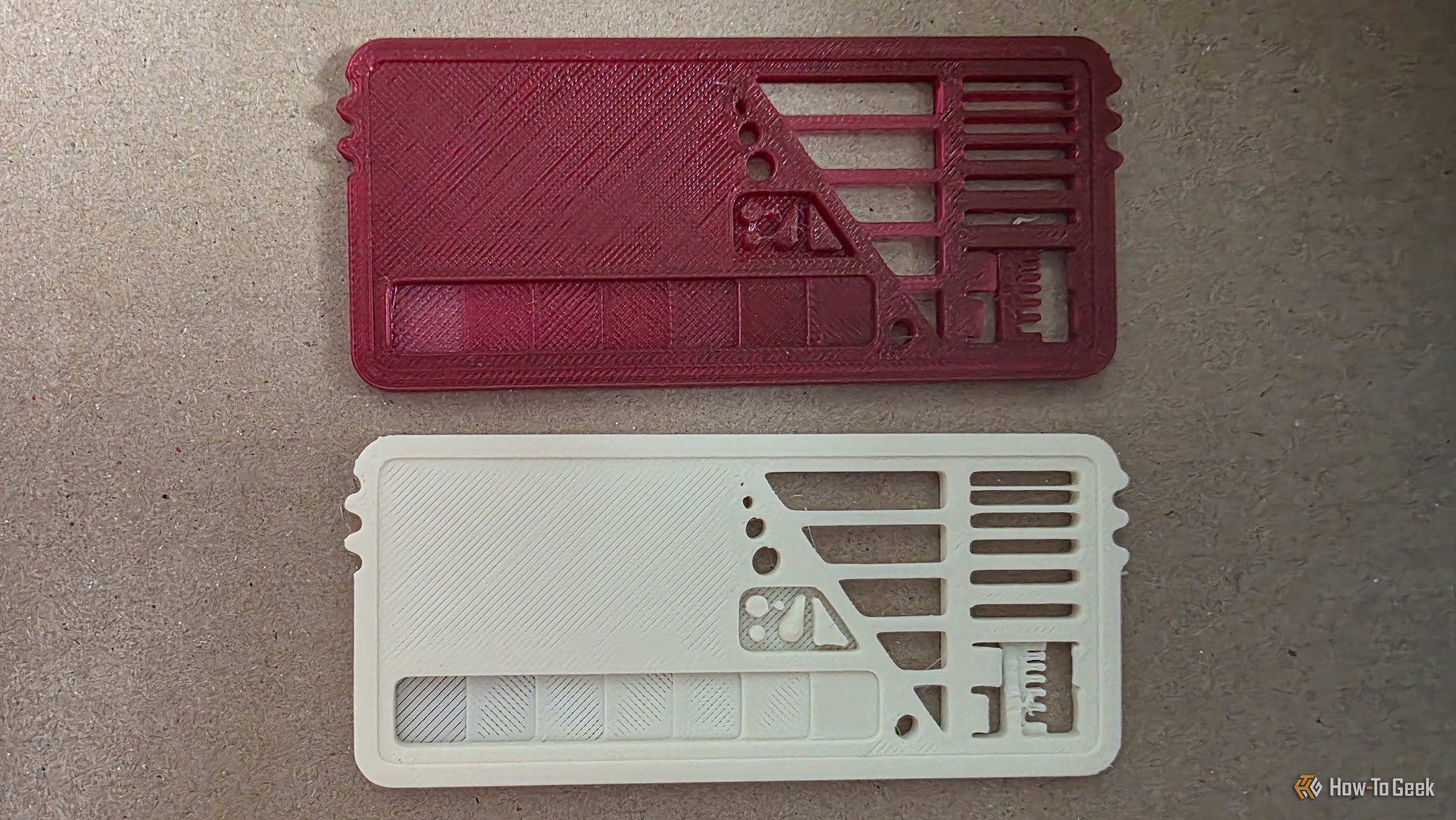
Filament swatch (Credits: How-To Geek)
The Problem: A Spool’s Label Does Not Tell You How It Prints
A new roll comes with plenty of on-paper information: the base material, rough additives, and recommended temperatures and settings. You can even see its colour and texture with your own eyes. But none of that tells you what will actually come out of your printer’s nozzle, because extrusion can dramatically change how a filament looks and feels.
Seeing an example print from someone else’s printer does not solve it either. One filament can print beautifully on one machine and struggle on another, so the only reliable preview is a test on your own printer.
How the Filament Swatch Test Works
The model highlighted by How-To Geek is Blauwkeut’s Filament Swatch, a compact printable card designed to preview a filament in one small print. Instead of waiting hours for a large project, you print the swatch first and inspect the result.
The swatch combines several useful checks in one piece: a variety of textures, a segment for testing transparency, and details that expose the small quirks that only appear after extrusion. For the transparency section to work correctly, the source notes, you need to print at 100 percent infill.
That matters most with tricky materials. The article’s example is a translucent rainbow PLA that proved difficult to work with — exactly the kind of spool where a swatch can save time, filament and frustration.
Swatch vs Benchy vs Torture Toaster: Which Test Print Should You Use?
The author has long used small, fast test prints before committing to a big project. The classic Benchy Boat has been a go-to for years when the goal is simply to see what a material looks like without waiting hours, and it doubles as a mild printer benchmark. For pushing a filament to its limits on the same printer, the author has also used the well-known Torture Toaster.
The filament swatch does not replace those models, but it pulls together much of what they were used for into a single previewing tool. Think of it this way: Benchy for a quick look, Torture Toaster for limits, and the swatch for the practical question every maker actually asks first — what will this spool really look like as a finished object on my printer? Print the swatch, check the textures and transparency, and only then start the project you bought the filament for.
Also Read: 3 Quick 3D Prints Fixed the Little Annoyances I’d Ignored Around My House for Years, Woodworkers Already Solved Your 3D Printing Design Problems — Steal These Two Tricks
Source: How-To Geek — read the full story there.