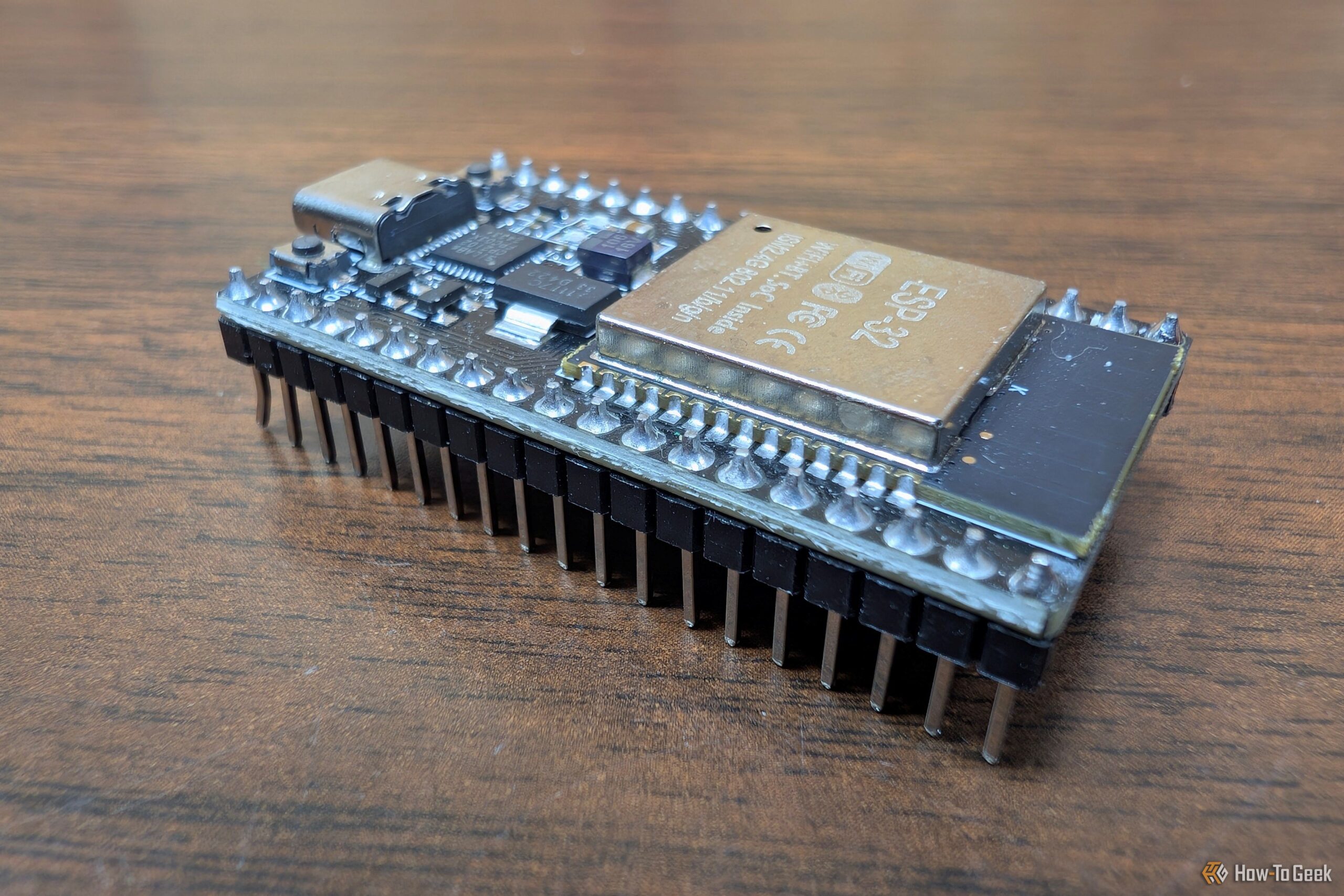
An ESP32 development board costs just a few dollars — but the board alone won’t build your project. If you’ve ever started a DIY smart home build and watched the receipt creep past what a ready-made device costs, these hidden ESP32 project costs are exactly why.
ESP32 project parts (Credits: How-To Geek)
ESP32 Hidden Costs: What Your ‘$5 Board’ Actually Costs
1. USB cables and power supplies. An ESP32 can’t do anything without electricity. Your first few boards can live off spare chargers and cables from the junk drawer, but once those run out, every new board needs a new adapter and cable. Also check the connector: some cheap boards still use Micro-USB while others use USB-C.
2. The sensors. The onboard Wi-Fi and Bluetooth cover simple builds like Bluetooth proxies, but the moment your project needs to sense the world, you pay for it. Cheap soil moisture sensors cost a few dollars each, while the accurate sensors for a proper air quality monitor can cost far more than the ESP32 itself.
3. Wires and breadboards. Board plus sensor still isn’t a working device — you need jumper wires to connect them, and a breadboard to prototype without soldering. Neither is expensive, but both are easy to overlook when budgeting.
4. Cases and mounting hardware. Bare boards with cables hanging out look awful and get damaged. Factor in a project box — or filament if you 3D-print your own enclosures — plus screws, spacers, brackets, and adhesive strips to mount devices where they belong.
How to Budget an ESP32 Project Properly
The fix is simple: when you price a project, price the system, not the chip. Add power, sensors, wiring, and an enclosure to the board price before you compare against buying off the shelf. For simple jobs like Bluetooth proxies, the ESP32 still wins easily. For sensor-heavy builds, the total can surprise you — and knowing that up front is the difference between a finished project and a drawer of half-built boards.
Also Read: 5 ESP32 Weekend Projects You Can Build With ESPHome Without Writing a Single Line of Code | 5 Ways Flashing Cheap Smart Home Devices Beats Building ESP32 Projects From Scratch
Source: How-To Geek — read the full story there.