
Tech
Maritime intelligence startup Quartermaster raises another $140M

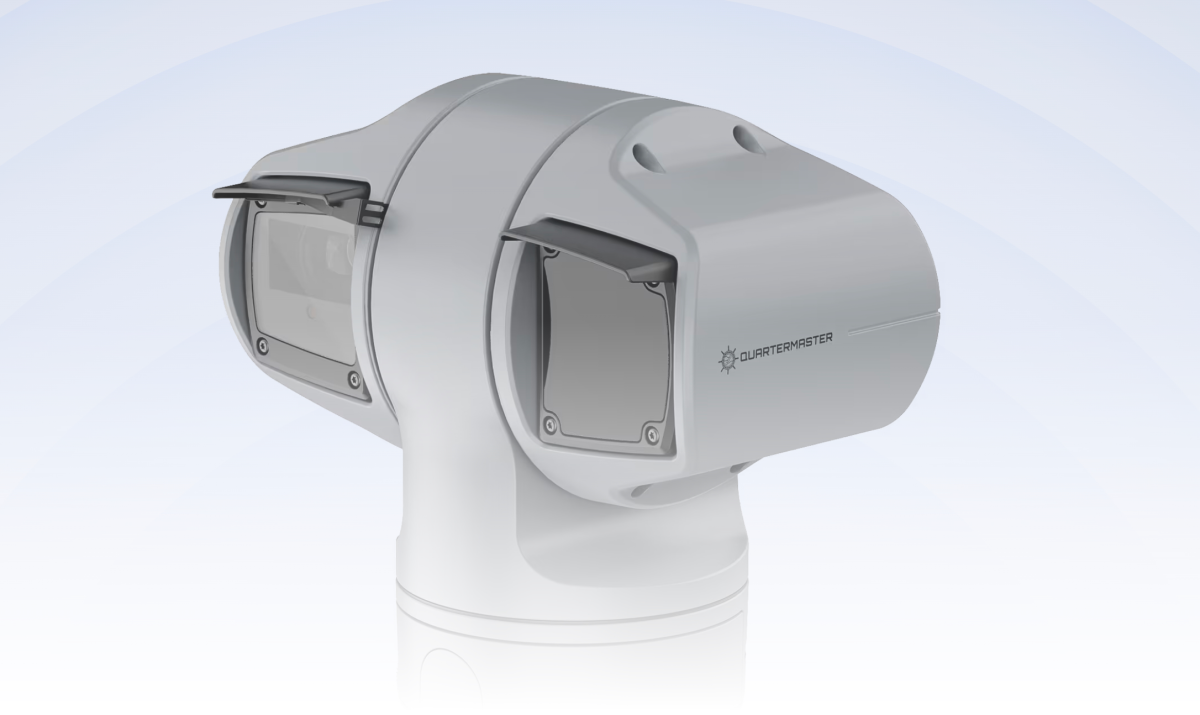
Arlington, Virginia-based startup Quartermaster in May closed a $43 million Series A around its idea of using weather-hardened sensors to capture data and generate insights about maritime activity. That idea has proven popular, because Quartermaster has already closed a much larger Series B, bringing in $140 million this time.
Founder and CEO Neil Sobin said the round was preempted by software-focused venture firm Insight Partners, and the interest in what Quartermaster is building was helped by the war in Iran and the shipping chaos it’s caused.
“I think we we’ve gained huge amounts of conviction in the core thesis,” Sobin said in an exclusive interview. “A big part of the story for us this year was, events in the world drive that clarity and drive that conviction and urgency, and when you see that, you gotta seize the opportunity.”
About $100 million of the Series B came from Insight and new investor, defense-focused firm Overmatch Ventures, as well as existing backers like First Round Capital. The remaining $40 million came in the form of a debt facility from investment bank Stifel.
“Quartermaster is building a distributed network for the ocean, where reliable, real-time data has been difficult to come by,” Nick Sinai, managing director at Insight Partners, said in a statement to TechCrunch. “The team’s execution and the strong demand for maritime data and awareness made this an investment we wanted to lead, and we’re proud to back Neil and the team as they scale to meet the opportunity with commercial fleets.”
Quartermaster’s hardware, which it calls “SmartMast,” is a fairly straightforward setup. The startup integrates cameras and radios into a package that’s mounted on a ship’s mast, and can capture and relay real-time maritime data. This allows governments, shipping companies and insurance providers to know far more than the current standard of AIS, or the “automatic identification system,” which is more or less just a series of location pings.
This real-time awareness data creates all kinds of opportunities for what Quartermaster calls the “largest blind spot on Earth.” Everything from helping ships avoid collisions, to better understanding congestion in shipping lanes, to rescuing lost mariners is on the table. Sobin said each SmartMast records tens of gigabytes per day, and the startup and its customers are still finding new uses for the data being captured.
“There isn’t a lot of prior art in maritime AI, and so it’s been exciting to, one, have our own source of data,” he said. “But two, there’s just so much low hanging fruit that we’ve been knocking down this summer in what you can start to build and then deliver value for our customers on.”
Sobin said the startup spends a lot of time engaging with people across the maritime industry — and not just vessel owners and operators — in order to find out what they want out of this technology.
“This is an ignored field. Mariners around the world have been ignored by technology for a really long time, and so when they meet us, they’re so excited, because they’re like: ‘Oh, I have so many ideas, let’s work on them’,” he said.
More than 650 vessels are now equipped with SmartMast in 25 countries, Sobin said, and the startup has shipped over 800 to customers. That gap is largely driven by the fact that Quartermaster is about to start deploying the SmartMast system to entire fleets, a sign that early adopters are really buying into the idea.
Quartermaster has had to hustle to keep up with demand, Sobin said. The startup has doubled its manufacturing capacity and continues to tweak its design so its hardware can be manufactured at a quicker clip.
“We know we can do this, and we are seeing a lot of proof that tells us we’re really onto something massive and important in the world,” Sobin said. “So, what do you do when you have that position? You run faster and you move faster and you double down on that strategy.”
When you purchase through links in our articles, we may earn a small commission. This doesn’t affect our editorial independence.
>
Nvidia adds a Sentry hardware monitoring design to its AI agent safety platform. See what OpenShell offers now and what IT teams still need to verify.
The post Nvidia Adds Hardware Monitoring Design to AI Agent Safety Platform appeared first on TechRepublic.
>
While some retailers, like Amazon (and Adidas, apparently!), are blocking AI agents from making purchases on users’ behalf on their respective platforms, e-commerce platform Shopify has moved in the other direction.
On Monday, the company announced that browser-based AI agents can now complete purchases on Shopify merchants’ sites, extending their capabilities beyond just searching for products and adding items to carts.
Shopify previously supported WebMCP for its storefronts and carts, allowing browser-based AI agents to comb through a Shopify retailer’s inventory, search for products, and add them to a cart. The addition of WebMCP support for checkout, including Shop Pay, means these agents can now read the checkout screen, update it, and submit the transaction with the buyer’s authorization, without relying on screenshots or scraping webpages, the company said.

This update introduces three new tools — get_checkout, update_checkout, and complete_checkout — that allow agents to inspect a checkout, change things like the customer’s address or delivery option, and then place an order after the buyer authorizes it.
The feature is rolling out to all eligible Shopify merchants, said Gil Greenberg, a staff product manager who works on agentic commerce at Shopify, in a post on X.
Shopify already offers a hosted Model Context Protocol (MCP) server, which allows agents to work server-to-server. The proposed standard WebMCP, meanwhile, is designed for agents that work inside the buyer’s browser. Both leverage Shopify’s Universal Commerce Protocol (UCP), which provides a common way to search for and discover products, build carts, and check out.
Top AI agents like Muse and Instinct already have direct partnerships with Shopify for agentic commerce. The Instinct partnership was announced today.
“If your agent is operating in the buyer’s browser, use WebMCP tools provided on storefront and checkout to efficiently complete order placement, instead of navigating HTML built for humans,” Greenberg wrote on X. “These WebMCP tools provide structured and efficient APIs, purposely designed — via UCP — to ensure accurate commerce facts, required disclosures, and handoff requirements.”
When you purchase through links in our articles, we may earn a small commission. This doesn’t affect our editorial independence.
>

Tesla is pushing back the reveal of its redesigned, second-generation Roadster once again, this time due to a forecast of severe weather.
Originally slated for October 1 in Waco, Texas, the event is being pushed to October 15, Tesla said.
“We’ve been tracking the weather closely with local meteorologists, but given the severe conditions predicted & because this event can only be held outdoors, we’ve made the difficult decision to reschedule,” the company wrote in a post on X.
The event presumably needs to be held outdoors because Tesla has been working on integrating cold gas thrusters from SpaceX that are supposed to make the Roadster fly in some capacity.
This reveal has been delayed many times before, and Musk has pushed it for months altogether before this scheduled date. At one point, Musk even planned to hold the event on April Fools’ day of this year. He said during Tesla’s annual meeting in 2025 — the same one where he was awarded a $1 trillion pay package — that an April Fools’ day event would offer him “some deniability” if it got delayed again.
“Like, I could say I was just kidding,” he said at the time.
Tesla first showed off its concept of a second-generation Roadster in 2017 at an event where it debuted the Semi, the company’s electric big rig. The new-look roadster was supposed to be the first supercar the company designed from the ground up, as the original Roadster, which got the company its start in the early 2010s, was largely based on the Lotus Elise.
At the time, Tesla promised the new Roadster was just a few years away. It collected $50,000 deposits from prospective customers of the car, which had an estimated base price of around $200,000. Some people even paid the company $250,000 to reserve one of 1,000 “Founders Series” versions of the supercar.
The project languished for years, until Musk reportedly tasked the Tesla team with redesigning the second-generation Roadster, and committed to the idea of using the SpaceX thrusters.
The promise of something outrageous like a flying car hasn’t been enough to tame critics of Musk and Tesla. Last year, OpenAI CEO Sam Altman wrote on X that “7.5 years has felt like a long time to wait” for his own new Roadster, though Musk claimed Altman had gotten a refund.
Much like the Roadster will be at this event, the ship date for the vehicle is up in the air. Musk himself has said he expects it to take a year or more before the new Roadster goes into production after it is finally revealed.
When you purchase through links in our articles, we may earn a small commission. This doesn’t affect our editorial independence.
>

Diablo Cody Movie Always, Roxanne In Works With True North (EXCLUSIVE)

Man City charges: CEO Ferran Soriano issues defiant message to European club bosses

Cells at Work! Gets Dental Spinoff Manga – News
-

 movies4 months ago
Search For Canadian TV Actor Stewart McLean Now Homicide Investigation
-

 Fashion9 years ago
These ’90s fashion trends are making a comeback in 2017
-
Fashion9 years ago
According to Dior Couture, this taboo fashion accessory is back
-
Fashion9 years ago
Model Jocelyn Chew’s Instagram is the best vacation you’ve ever had
-
Fashion9 years ago
Emily Ratajkowski channels back-to-school style
-
Fashion9 years ago
9 Celebrities who have spoken out about being photoshopped
-

 Anime4 months ago
Rurouni Kenshin: Hokkaido Arc Manga Takes 1-Issue Break – News
-

 Anime3 months ago
HIDIVE to Stream English Dubs for The World Is Dancing, The Forsaken Saintess and Her Foodie Roadtrip in Another World, The Dangers in My Heart: The Movie Anime – News