
Tech
Next five VCs judging Startup Battlefield 200 at Disrupt 2026 | TechCrunch

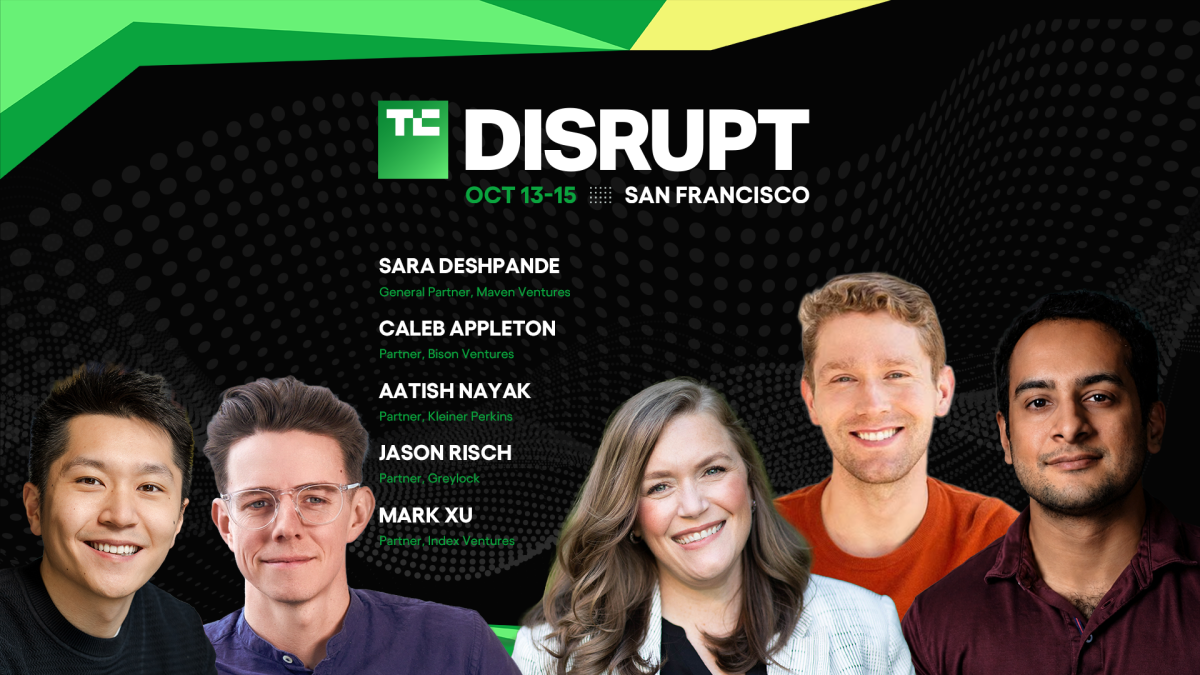
Thousands of applications. Multiple rounds of review. Hundreds of hours spent evaluating startups from around the world. Now comes the part everyone has been waiting for.
Startup Battlefield 200 is almost here, and with today’s announcement, the judging panel is nearly complete. In just a couple of weeks, 200 carefully selected startups will gather at TechCrunch Disrupt 2026 to exhibit, meet investors, and compete for one of the most coveted opportunities in the startup world. Only a select group will advance to the live competition, where they’ll pitch in front of thousands of founders, investors, media, and customers and face questions from some of the sharpest minds in technology.

Today’s judges bring decades of experience building companies, backing founders, and spotting transformative ideas before they become obvious. They’ll help decide which startups continue their journey toward the Startup Battlefield finals and, ultimately, who has a chance to lift this year’s trophy. If you want to see tomorrow’s industry leaders before the rest of the world does, there’s no better place to be than TechCrunch Disrupt.
The only way to be front and center at the Disrupt Stage and witness the ultimate pitch competition of the year is to register for TechCrunch Disrupt. Grab your pass and bring your co-founder, partner, or peer for 50% off. Bringing a community of four or more? Save up to 30% on passes.
Meet the next wave of Startup Battlefield judges
Get to know all 20 judges revealed so far by visiting the Disrupt agenda. Stay tuned for the final announcement, where we’ll unveil the five judges who will evaluate the finalists and determine who takes home the $100,000 equity-free prize and coveted Disrupt Cup.

Caleb Appleton, Partner, Bison Ventures
Caleb Appleton is a partner at Bison Ventures, where he invests in physical AI across techbio, robotics, and real-world intelligence. A biomedical engineer by training, his investments include Cobot, Vivodyne, Passkey, Sleuth, Inner Logic, Cosmon, and Grid Aero. Previously, Appleton invested in frontier technologies at Innovation Endeavors and spent several years as an operator at TuneIn, giving him experience spanning early-stage science, venture investing, and scaling a technology business.
Sara Deshpande, General Partner, Maven Ventures
Sara Deshpande is a general partner at Maven Ventures, where she invests in seed-stage companies built around emerging consumer behaviors and trends. She focuses on consumer software spanning digital health and consumer applications of AI. Deshpande joined Maven as its first employee in 2014 and has spent a decade in venture capital. She received her MBA from Stanford, where she now teaches a course on startups and entrepreneurship.
Aatish Nayak, Partner, Kleiner Perkins
Aatish Nayak joined Kleiner Perkins as a partner in May 2026, where he focuses on partnering with AI native founders with deep vertical expertise across all domains.
Prior to joining Kleiner Perkins, Narak was the first PM and VP of Product at Harvey, where he helped build the early product, design, marketing, analytics, and support teams. Before that, he was an early product leader at Scale AI working on data infrastructure for ecommerce, early NLP (GPT-2), and autonomous vehicles. And before that, he was at Shield AI working on the core knowledge stack for robotic defense systems that save lives.
Jason Risch, Partner, Greylock
Jason Risch is a partner at Greylock, where he invests in enterprise security, AI and ML infrastructure, data platforms, and developer tools. His portfolio includes Onehouse, a cloud-native managed lakehouse platform, and Baseten, an ML model serving toolkit for data science teams. Before joining Greylock, Risch worked in business operations at Opendoor, as a management consultant at McKinsey’s Bay Area practice, and as a startup builder at the AI Fund. He studied Mathematical and Computational Science at Stanford University.
Mark Xu, Partner, Index Ventures
Mark Xu is a partner at Index Ventures, where he invests across stages in cybersecurity, infrastructure, and AI. He has backed companies building at the frontier of AI, including Fireworks, Parallel, 7AI, Simile, and Flapping Airplanes, and previously worked as a growth investor at Lightspeed, supporting companies including Wiz, Glean, and Grafana. Xu looks for deeply technical founders who combine domain expertise with hustle and an obsession with their customers.
Grab your Disrupt pass and don’t miss Startup Battlefield
TechCrunch Disrupt 2026 is happening October 13-15 at San Francisco’s Moscone West, bringing 10,000+ tech leaders, VCs, and founders together to meet the next generation of breakout startups, connect with leaders who could change their startup’s trajectory, and get a front-row seat to where the industry is headed.
Register now to save up to $100 before Disrupt doors open, and bring your co-founder, colleague, or peer with a second pass for 50% off. Experience all that Disrupt has to offer together, from six industry stages, roundtables, and breakout sessions to the startups and connections shaping what’s next in tech.

When you purchase through links in our articles, we may earn a small commission. This doesn’t affect our editorial independence.
>
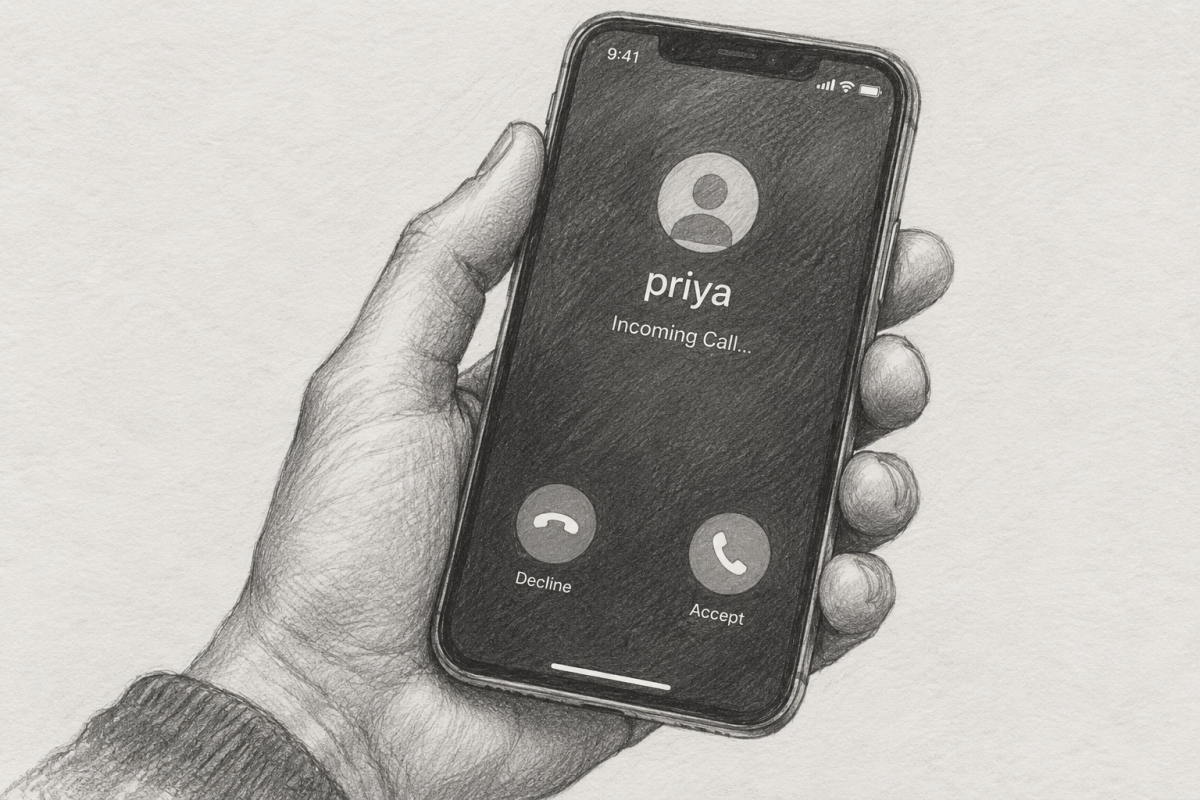
When the call came, Tarini Padmanabhuni’s grandfather believed he was talking to his brother. The voice on the other end of the line said his brother had been kidnapped and that the only way to get him back was to pay a ransom. Her grandfather paid, only to learn later that his brother had been somewhere else entirely, with no clue any of it was happening. The voice, it turned out, was a deepfake: an AI-generated imitation of his brother’s.
“What stayed with me wasn’t the money,” Padmanabhuni says of the incident. “It was that he had no way of telling.”
That was about two years ago. Today, she says, DetectifAI, the San Francisco-based company she founded, aims to ensure that others can’t be hoodwinked the same way.
It’s a big and growing problem, and a market to match. According to the FBI, Americans lost close to $900 million to AI-driven scams last year, up 24% from 2024. People 60 and older lost twice as much as those aged 50 to 59.
There’s no shortage of competition in deepfake voice detection, from companies such as Reality Defender, Pindrop, Resemble AI, Microsoft Azure AI Content Safety, and Nuance (which Microsoft also owns). But today’s detection products, Padmanabhuni argues, run in the cloud on remote servers, so phone makers can’t build them directly into their devices, leaving the person being targeted with little in the way of defense.
Rather than shrinking large cloud models to fit on a phone, as some companies do, DetectifAI says it designs compact AI models from the start that are small enough to run inside a smartphone’s operating system. The aim is to deliver an instant verdict on whether a voice is AI-generated during calls, in voice messages, and in other audio, without the audio ever leaving the device.
DetectifAI is selling first to phone manufacturers, licensing its software tools so that detection can ship as a built-in feature of the phone’s operating system. Her analogy is AT&T’s role in the original iPhone launch, when the carrier’s exclusive deal set it apart from its rivals: the first phone maker to ship DetectifAI will gain an edge over competitors, she argues, and deepfake detection will become a standard spec, like camera resolution.
The core of the product is DetectifAI’s software development kit (SDK), a package of code other companies can build into their products and can be licensed through existing channels. Padmanabhuni says a secondary revenue stream will come from licensing the technology to businesses and fraud-prevention firms.
In the meantime, the startup already has early revenue, according to Padmanabhuni, and handles more than 100,000 calls a month for financial institutions in India. Those calls are placed by AI voice agents that handle debt collections and follow up on loan documents, with deepfake detection and speaker verification (confirming that callers are who they claim to be) on every call. She declined to name customers, citing confidentiality agreements.
Padmanabhuni says she began working in machine learning at age 12 and later studied cyber-physical systems (technology that links software with physical machinery) at Manipal Institute of Technology in India, where she says she became the youngest team lead of what she describes as India’s first driverless racecar division in Formula Student, an international student engineering competition.
Asked about the most rewarding moment for the startup so far, she points to a small WhatsApp beta test in which users forward suspicious voice notes and get back an assessment of whether they’re real. One tester, whose own relatives had been scammed, called to say they would pay for it without hesitation. “My grandfather didn’t have that,” she says.
DetectifAI has so far raised a small seed amount from investors Josh Constine (formerly an editor at TechCrunch) and Manohar Kamath, a principal at the consulting services firm KM Growth. The outfit is one of the startups vetted by TechCrunch’s editorial team to compete in its prestigious Startup Battlefield competition, taking place at TechCrunch Disrupt October 13 to 15 in downtown San Francisco.
When you purchase through links in our articles, we may earn a small commission. This doesn’t affect our editorial independence.
>
For decades, commercial fusion power has seemed perpetually out of reach. Now two companies are building toward something much more concrete: putting fusion-generated electricity on the grid.
Commonwealth Fusion Systems (CFS) is building SPARC, a demonstration fusion machine intended to pave the way for its first commercial power plant, ARC. Helion is developing Orion, a 50-megawatt fusion power plant intended to supply electricity to Microsoft beginning in 2028.
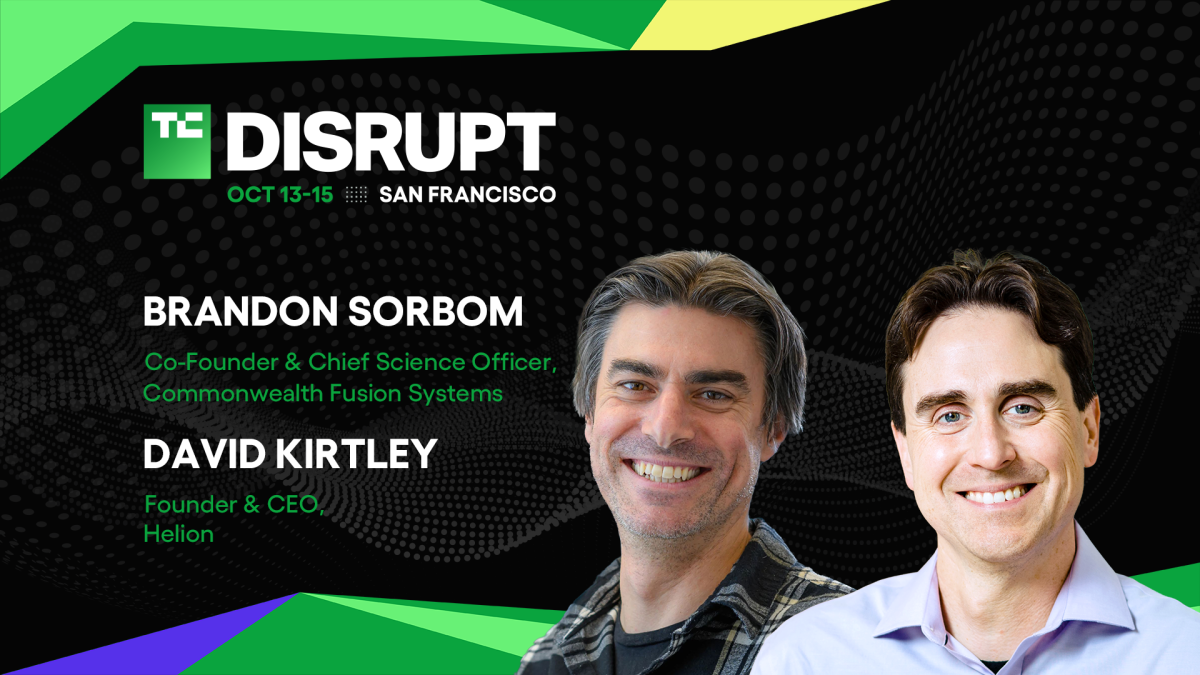
At TechCrunch Disrupt 2026, CFS co-founder and chief science officer Brandon Sorbom and Helion founder and CEO David Kirtley will take the Smart Systems Stage for “Bringing Fusion to the Grid.” They’ll discuss the breakthroughs moving fusion forward, the challenges that remain, and what it will take to deliver fusion power to the grid at scale.

Want to hear what stands between today’s fusion breakthroughs and commercial power? Grab your pass and bring your co-founder, partner, or peer for 50% off their pass. Discover the insights shaping the future of fusion, together.
Moving fusion from science to commercial power
Sorbom co-founded CFS in 2018 with the goal of commercializing fusion energy in time to help combat climate change. As chief science officer, he leads the company’s scientific direction and R&D and helps advance the design of ARC. The idea has roots in his work at MIT, where Sorbom was lead author of the paper proposing the original ARC design while earning his Ph.D. in nuclear science and engineering.
Today, CFS is working toward ARC through SPARC, the company’s demonstration fusion machine. In April, CFS became the first fusion company to apply to PJM Interconnection, the largest U.S. wholesale electricity market — a necessary step toward eventually connecting ARC to the grid. In July, the company raised another $1 billion, bringing its total funding to $4 billion.
For founders and technology leaders, Sorbom brings a perspective that spans the journey from academic research to designing a commercial fusion power plant, and the scientific and engineering challenges that have to be solved along the way.
How do you turn decades of fusion research into commercial power? Secure your Disrupt pass and grab a second at 50% off to hear from one of the scientists working to make that transition.
Putting fusion power to the test
Kirtley founded Helion to develop fusion technology that could ultimately deliver electricity at commercial scale. An NSF and NASA Advanced Concepts Fellow, he has expertise in high-Beta plasmas for energy and space propulsion applications and today leads Helion as it works toward commercial fusion power.
In February, Helion announced that its Polaris prototype had heated plasma to 150 million degrees Celsius. The company is now developing Orion, a 50-megawatt fusion power plant intended to supply electricity to Microsoft as early as 2028. In June, Helion announced a key regulatory milestone on the path to building and operating the plant. Its Series G funding round, initially announced at $465 million in June, closed at $500 million in September.

That timeline puts the questions at the heart of the Disrupt session into sharp focus. Scientific milestones matter, but commercial fusion also has to make the leap to a functioning power plant capable of reliably delivering electricity to customers.
What will it take to turn fusion milestones into electricity on the grid? Register for Disrupt and bring someone with you at 50% off to hear Kirtley’s perspective on the work still ahead.
Learn what still stands between fusion and the grid at Disrupt 2026
CFS and Helion are pursuing different approaches to fusion, but both are confronting the challenge at the center of this session: moving from scientific and engineering progress to commercial power.
At Disrupt, Sorbom and Kirtley will bring firsthand experience building companies around that transition. For founders, investors, and technology leaders, their conversation offers a chance to hear what is moving fusion closer to commercialization, which challenges remain, and what it will take to bring fusion power to the grid at scale.
Their session is one of 200+ sessions across six industry stages, roundtables and breakouts at Disrupt, October 13–15 at Moscone West in San Francisco. More than 10,000 founders, investors, operators and tech leaders are expected, along with 250+ speakers and 300+ exhibiting startups. Beyond the agenda, matchmaking, dealmaking and networking create opportunities to connect with the founders, investors and builders shaping what comes next.
Fusion has spent decades as the energy technology of the future. Hear from two leaders working to bring it closer to the grid. These are the final days to grab your pass and get a second of the same type at 50% off.

When you purchase through links in our articles, we may earn a small commission. This doesn’t affect our editorial independence.
>
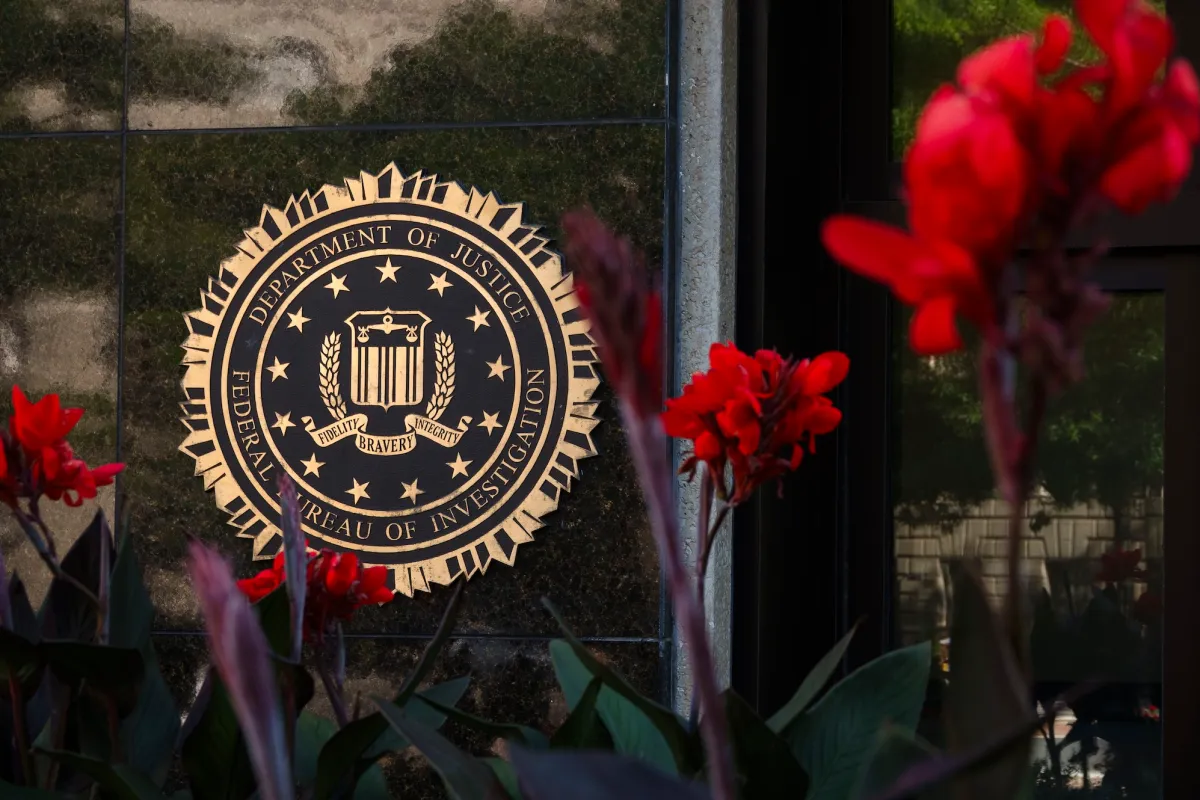
The Federal Bureau of Investigation has reportedly told its agents and support staff that their personal information was stolen in a recent cyberattack that targeted the bureau’s job application portal.
It’s the bureau’s first acknowledgement that the personal information of FBI agents was taken in the breach. The FBI has not publicly confirmed a breach beyond a statement last week, in which it said it was aware that a hacking group had claimed a cyberattack, but that the theft of data was “still undetermined.”
As reported by MS NOW reporter Ken Dilanian over the weekend, the FBI has since declared a “cyber security incident” in an internal notification to staff, telling employees that their names, addresses, job titles, and their Social Security numbers were exposed.
Several media outlets have since confirmed that some of the stolen data included medical information, such as records relating to blood and urine samples, as well as psychiatric reports.
The hacking group called ShinyHunters previously told TechCrunch that they “have data on mostly all of FBI,” and a “substantial” amount of information on applicants who applied through the FBIJobs.gov portal. The hackers broke in by exploiting a vulnerability in an Oracle PeopleSoft server, which hosts reams of human resources information on agents and now-employees who applied through the portal.
The hackers told TechCrunch that they are not seeking a financial ransom, but are demanding the correction of an earlier FBI-issued report, which they say misrepresents their activities.
Justin Sherman, a national security expert, called the data breach a “counterintelligence disaster” for the U.S. government in a blog post for Lawfare. He warned that the data theft would “expose thousands of FBI personnel to profiling, phishing, foreign intelligence approaches, and much more.”
While the bureau has notified employees, it’s less clear if the FBI has disclosed the incident to lawmakers in Congress who have oversight of the FBI. Under federal law, alerting Congress is required when an intrusion meets the bar of a “major incident” — such as if a data breach involves the theft of personally identifiable information that is “likely to result in demonstrable harm” to U.S. national security.
It’s likely that bureau lawyers are trying to figure that out right now. If a disclosure is required, it would be the FBI’s second known notification to lawmakers this year about a data breach, after hackers, suspected to be Chinese, broke into a surveillance system that exposed targets of FBI surveillance and investigations earlier this year.
A spokesperson for the FBI did not respond to TechCrunch’s request for comment on Monday, and a White House spokesperson also did not respond to an email asking if the bureau had declared a major incident.
Representatives for several lawmakers whose jurisdictions cover oversight of the FBI did not have any immediate answers.
ABC News reports that the FBI’s job site has been the primary way to apply for a job with the bureau since 2017. The portal remains down at the time of publication.
Do you work at the FBI and have received a notice about the data breach? We want to hear from you. You can contact this reporter securely on Signal at zackwhittaker.1337, or reach him by email at zack.whittaker@techcrunch.com.
When you purchase through links in our articles, we may earn a small commission. This doesn’t affect our editorial independence.
>
‘La Bola Negra’ Trailer: Los Javis’ Queer Spanish Epic Drops in Fall

‘Bleach: Sennen Kessen-hen – Kashin-tan’ Announces Additional Cast Pair
Dodgers NLDS roster projection: Will breakout rookie Josue De Paula make the cut?
-

 movies4 months ago
Search For Canadian TV Actor Stewart McLean Now Homicide Investigation
-

 Fashion9 years ago
These ’90s fashion trends are making a comeback in 2017
-
Fashion9 years ago
According to Dior Couture, this taboo fashion accessory is back
-
Fashion9 years ago
Model Jocelyn Chew’s Instagram is the best vacation you’ve ever had
-
Fashion9 years ago
Emily Ratajkowski channels back-to-school style
-
Fashion9 years ago
9 Celebrities who have spoken out about being photoshopped
-

 Anime4 months ago
Rurouni Kenshin: Hokkaido Arc Manga Takes 1-Issue Break – News
-

 Anime3 months ago
HIDIVE to Stream English Dubs for The World Is Dancing, The Forsaken Saintess and Her Foodie Roadtrip in Another World, The Dangers in My Heart: The Movie Anime – News