
Tech
Two Google alumni raise $11.3M to back AI startups that enterprises will actually pay for

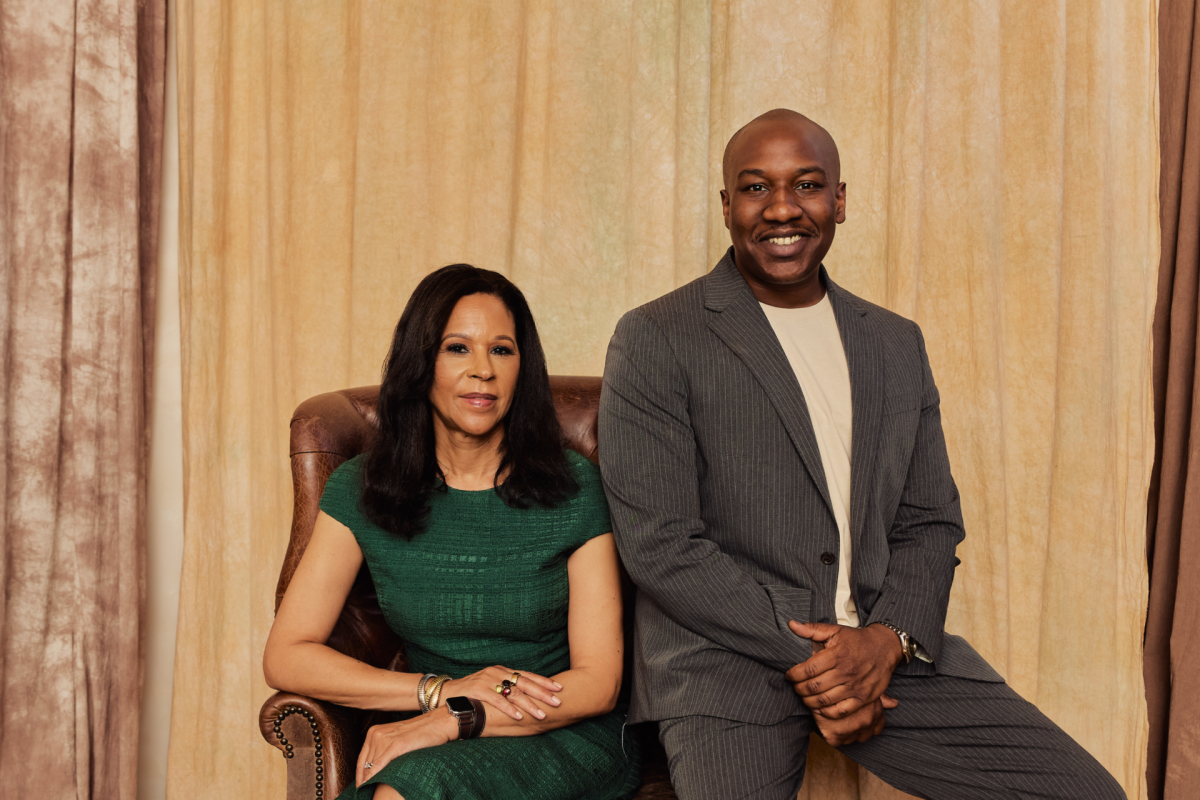
Two Google alumni have closed an $11.3 million fund to back early-stage AI startups, betting that the era of enterprise AI experimentation is ending and that customers will increasingly pay only for products that prove their worth.
BAG Ventures, founded by Bontia Stewart, a former Google vice president, and Jackson Georges Jr., a former CapitalG partner, closed the fund after about two years of investing from it as it came together. The firm has already backed 10 companies, including the software company SXD, the AI travel agent BizTrip, and the agentic reasoning platform Nomadic.
It invests in startups in areas like AI infrastructure, compute, physical and edge AI, security, governance, and vertical SaaS. Check sizes range from $100,000 to $500,000, and the team hopes to invest the rest of the fund over the next two years.
Stewart spent 17 years at Google, including nearly a decade as a vice president. During that time, she also served on the board of Gradient Ventures, Google’s early-stage AI fund. She is a limited partner in the Female Founders Fund and the Operator Collective. With Georges, she also co-led the angel syndicate BAG Collective, which has more than 450 members.
Georges worked at GE Healthcare and at Google, where he met Stewart. He later became a partner at CapitalG, Alphabet’s growth fund. He and Stewart were in the first cohort of the Black Venture Institute at Berkeley.
The pair say their edge is access. They launched BAG Ventures to “address the emerging AI divide between founders and operators,” Georges said.
“Founders needed inside access to the organizations they wanted to sell into, and we knew so many high-level operators who wanted to support early founders but didn’t know how,” he said. As a result, “we don’t just give founders capital; we give them direct warm introductions to potential customers and hands-on [go-to-market] advice,” he continued, adding that the firm, whose limited partners include Google, as well as operators from Nvidia, Amazon and Snowflake, has more than 150 limited partners altogether at a wide range of companies.
“Lots of firms have an operator network,” Georges said. “We want to be one that’s genuinely useful.”
Georges’s investing thesis rests on a shift he sees in how enterprises buy AI. He said the “experimental sandbox” phase is ending. “Enterprises are dialing in heavily on the unit economics right now,” he noted. “They aren’t just paying for open-ended chatbots anymore; they are paying for deterministic solutions. The real value is coming from solutions that integrate deeply into legacy workflows and actually execute the work.” Examples include automating code reviews and parsing legal documents.
Georges is preparing for a world where enterprises no longer buy per-user seats for SaaS tools. “We’ll be buying completed jobs and outcomes driven by multi-agent workflows,” he said.
Toward that end, BAG Ventures wants core technical teams that have worked together before, have a minimum viable product and at least one partner, and have “a very clear path to monetization within 24 hours.”
He also wants to back founders building products that go deep into enterprise workflows and capture proprietary data that can’t be scraped. With frontier AI labs launching more products themselves, not even a technically sound product from a startup is enough to succeed in the long run otherwise, he observed, and “if a startup is just a thin wrapper around a frontier model API, they’re going to get wiped out.” It’s why they look for teams building products that go deep into enterprise workflows and capture proprietary data that can’t be scraped. “We want companies that own the intent layer and have the customer lock-in to survive the next big model release.”
The firm is also looking at startups selling into highly regulated industries, where data privacy needs may require specialization. “That means securing internal data flows, building acceptable-use guardrails, and deploying continuous automated red-teaming,” said Georges. “We’re already seeing this approach work well with our portfolio company Defendremate.”
Georges also said enterprises will need Identity and Access Management tools for non-human workers, like AI agents. “Startups that can build the next level of ‘zero trust’ architecture and orchestration rails specifically for agentic systems are going to fill a massive and very lucrative gap,” he said.
When you purchase through links in our articles, we may earn a small commission. This doesn’t affect our editorial independence.
>

Amazon Web Services released an open-source decision model inspired by TypeSafe’s Jev, with AI developers increasingly seeking intelligence that is more suited to computer automation than frontier LLMs.
Amazon’s Strands Decider 2B, released the same week OpenAI announced a similar offering, is a high-speed, low-cost way to sort between pre-decided options and deliver a measure of how confident it is in its choice. The model is fully open-sourced, available now, and small enough to run locally.
Amazon distinguished engineer Marc Brooker came up with the project after seeing Jev and trying to build his own take on such a model. The homebrew project was successful enough—it briefly reached the top spot on the Jevbench ranking for models of its size—that Amazon engineers cleaned it up and released it as an offering from their Strands Labs, an organization developing new tools and protocols for deploying AI agents.
Brooker says the need for a tool like this emerged in conversations with AWS customers, whose agentic workflows didn’t always require the capability or cost of a fully-featured LLM all the time.
“What originally piqued my interest in this class of models was that they make a perfect decider for a workflow step— ‘what is the next thing for me to do here, based on where I am?’” Brooker told TechCrunch. He said it offers customers “a workflow step that can be structured in a way that is more reliable, thanks to the confidence scores, thanks to the closed domain of answers, [and is] lower latency, potentially lower cost.”
Like other decision models, Strands Decider is built on the “torso” of an LLM, in this case Qen3.5-2B, but instead of generating text, it delivers calibrated choices. TypeSafe named their model Jev after the economist William Stanley Jevons, with hopes of invoking his theory that the falling cost of something—like computer intelligence—can, in fact, increase its demand.
The fact that dozens of similar models have been produced by researchers since TypeSafe debuted its idea shows the wide interest, but also raises the question of how valuable they can be. Brooker suggests that the challenge will be in optimizing the model’s speedy decision-making without compromising its intelligence.
“There is a very careful balance to be found where you want to push its performance on accuracy and calibration on these kinds of tasks, without degrading its performance on understanding different languages, on having the kind of knowledge it has, which is what makes it general purpose and interesting and useful,” he told TechCrunch.
Still, he doesn’t necessarily expect the frontier labs to dominate the space, especially since, with smaller markets, the cost to build something interesting is in the hundreds or thousands of dollars.
For their part, TypeSafe executives say they are keeping their heads down and improving future models.
“I get that people think it’s a gold rush, but they might be underestimating the difficulty of making the models actually smart,” CEO and founder Diogo Almeida told TechCrunch, saying that for now, he didn’t see real competition for his company emerging yet.
“The current batch seems more like ML people wanting to implement a cool architecture than a team deeply dedicated to making intelligence useful.”
When you purchase through links in our articles, we may earn a small commission. This doesn’t affect our editorial independence.
>

Shopify introduced a new site-building tool Thursday called Canvas that lets merchants set up their Shopify store by chatting with AI. While Shopify already offered a fairly capable no-code builder before Canvas, it involved editing a selected theme by rearranging modular sections and blocks. Deeper customizations, however, would require editing code or bringing in a developer.
Now, with Canvas, merchants simply chat with Shopify’s AI agent, Sidekick, to create their site. As the AI makes changes, Canvas displays the results in real time, allowing merchants to see how the store looks overall as it comes together or zoom in to focus on certain details.
Notably, this isn’t a static preview, but the real code behind their store being rendered, according to Shopify. That means merchants can test the page’s full interactivity and animation, and view pages as they’d appear across different screen sizes. Sidekick also takes screenshots of the work so it can see the same thing the merchant sees as the site updates.
Canvas’s launch is part of a broader shift toward a future where building a website no longer requires coding it directly. It joins numerous other AI-powered site-building tools from companies like Wix, Squarespace, Webflow, and Framer, alongside vibe-coding platforms like Lovable and Replit.
Merchants can still click on individual elements to make changes directly, if they choose. But more likely, they’ll just tell Sidekick in a chat what they want to do.
Sidekick itself is not new, as it’s already been used to write code, build apps, customize themes, and make other edits. But it had yet to be pulled together into a full site-building product like Canvas, where users can see the entire store at once and zoom and pan around while making updates to the site’s actual files.
To make this work, Shopify gave Sidekick the ability to work directly with the theme’s files and simplified the theme architecture so the store’s structure, logic, and design would be easier for Sidekick to understand and change.
The product is still in its early days, so there are areas where it will need to expand and improve. However, Canvas could make becoming an online seller more accessible to those who don’t have the budget for developers and designers, or the time to learn to code.
When you purchase through links in our articles, we may earn a small commission. This doesn’t affect our editorial independence.
>

California governor Gavin Newsom has used his veto authority to send a bill passed by the state’s legislature back to lawmakers, which would have made it unlawful to secretly record people with wearable recording devices.
Newsom said in a letter to lawmakers on Wednesday that he declined to sign the draft law, California Senate Bill 1130, on grounds that it defines wearable recording devices as “too broadly or imprecisely” and that this could lead to confusion and unintended consequences. Newsom added that the proposed bill also includes protections that already exist in California’s law.
The bill would have made California the first state to regulate the use of smart glasses, as countries like Norway seek to potentially ban the technology. Had California’s law passed, violators could face fines or prison time, while wearable makers that did not comply with the rules would have also faced fines.
The bill sought to prevent people from being recorded in public places without their explicit consent, amid a rising number of wearable products containing cameras and microphones that always listen and record everything nearby, like internet-connected glasses made by Meta and Snap. Meta sold more than 7 million wearable glasses last year alone. Several other hardware wearables, such as AI-powered pendants, have launched with mixed reactions.
The bill’s author, California state senator Eloise Gómez Reyes, was quoted by ABC News as saying that the bill aimed to help California respond to the rapid rollout of always-listening tech.
Critics and consumers alike have dubbed the controversial wearables “pervert glasses” following multiple reports of people recording and harassing people. Apple announced last month that its latest Apple Watch software will include an always-listening feature that allows wearers to replay a transcript of the past 15 seconds and also recap and summarize conversations from the day.
When you purchase through links in our articles, we may earn a small commission. This doesn’t affect our editorial independence.
>

Hollywood Dealmakers Eye Creators as Mega-Merger Options Dwindle

Tim Daly & Téa Leoni Take A Quick Trip To The Altar In ‘Newlyweds’ Trailer
Mumps outbreak hits San Diego State football as Aztecs prepare for Texas State
-

 movies4 months ago
Search For Canadian TV Actor Stewart McLean Now Homicide Investigation
-

 Fashion9 years ago
These ’90s fashion trends are making a comeback in 2017
-
Fashion9 years ago
According to Dior Couture, this taboo fashion accessory is back
-
Fashion9 years ago
Model Jocelyn Chew’s Instagram is the best vacation you’ve ever had
-
Fashion9 years ago
Emily Ratajkowski channels back-to-school style
-
Fashion9 years ago
9 Celebrities who have spoken out about being photoshopped
-

 Anime4 months ago
Rurouni Kenshin: Hokkaido Arc Manga Takes 1-Issue Break – News
-

 Anime3 months ago
HIDIVE to Stream English Dubs for The World Is Dancing, The Forsaken Saintess and Her Foodie Roadtrip in Another World, The Dangers in My Heart: The Movie Anime – News