
Politics
Politics Home Article | Vote Green To Push Labour Left, Says Zack Polanski


Zack Polanski delivered his speech to Green Party conference on Friday (Alamy)
3 min read
Zack Polanski has urged people to keep voting for the Greens to force Labour into more left-wing positions.
“Vote Green and watch Labour move,” the party leader said in his conference speech in Brighton on Friday.
Polanski is hoping to defeat Labour in the by-election to succeed former prime minister Keir Starmer in the London constituency of Holborn and St Pancras next week.
The Greens have performed well in the capital in recent months after enjoying a surge in popularity when Polanski first took over last year. However, Labour sources are confident that their candidate Sagal Abdi-Wali will win on Thursday.
Polanski is facing questions about how he will combat Labour now that it is under the leadership of Prime Minister Andy Burnham.
Labour’s polling has improved significantly since Burnham replaced Starmer in No 10 this summer, while the ratings of both Polanski and the Greens have dipped.
Polanski used his speech to urge Green members to keep the pressure on Labour, arguing that their electoral threat has forced the government to change position on several occasions.
“Through our sustained pressure – and our historic wins – we have held the worst instincts of the Labour government in check. And we have started to move them in the right direction,” the London Assembly Member said.
Polanski pointed to examples such as Gaza, where pressure on Labour has forced the government to change direction.
Speaking at Labour conference in Liverpool, Foreign Secretary Ed Miliband said that “political pressure” played a part in the government moving to a harder stance on the Israeli government’s conduct in Gaza.
The Green leader said there were still plenty of issues on which the party could push Labour further, including on climate action and energy bills.
On climate change, Polanski said that the “silence” around extreme heat “shocked him the most” this summer as wildfires spread across the country.
“The silence from our government. From the people whose first duty is to keep us safe.”
“This summer’s fires should have been the final nail in the coffin for new oil and gas. We know that drilling for new fossil fuels won’t bring down bills. We know it won’t make us more secure. And we know that it locks us into a hotter, more dangerous climate. And we say no. No more fossil fuel extraction – and a clean energy revolution, now.”
Polanski had previously faced criticism for not focusing on the environment since taking over as leader around a year ago.
Former leader Caroline Lucas told The House magazine earlier this year that she would “love” for Polanski to spend more time talking about the environment.
>


Andy Burnham spoke about the UK’s future with the EU in his speech on Tuesday (Alamy)
4 min read
Andy Burnham opening the door to rejoining the European Union has been well-received by large parts of the Labour Party. But starting a new debate about Brexit is not without risk.
Addressing Labour Party conference on Tuesday, the Prime Minister said he would return from a UK-EU summit later this year with a series of options for Britain’s long-term relationship with the bloc that he would then present to the public in a bid to find consensus. He later confirmed in interviews that the options could include rejoining.
The announcement was one of the stand-out elements of Burnham’s speech.
PoliticsHome understands that a previous draft was more explicit, specifically questioning the government’s long-standing red lines of staying out of the Single Market or Customs Union.
No 10 is now asking think tanks and pollsters for evidence on public opinion about the UK’s EU relationship, as reported by The Guardian. The Institute for Public Policy Research think tank, influential in Labour circles, plans to publish a paper setting out its stance on rejoining the EU in the coming weeks, PoliticsHome understands.
According to Anand Menon, Director of the UK in a Changing Europe think tank, there is a risk for Burnham in that his EU position shifts the political debate to “culture and identity” and away from the economic issues that he put at the forefront of his conference speech, like public ownership and reforming the triple lock to fund social care.
It could be “all-consuming and drown out the stuff that Labour should be doing”, he said.
“What you don’t want to be doing is talking about immigration…
“There is a potential danger that you rejuvenate Reform and Reform voters, because this is the issue they really care about,” Menon told PoliticsHome.
Reform leader Nigel Farage has claimed since Burnham’s speech that the EU announcement “might just have given me the biggest boost in my career I’ve ever had”.
Will Jennings, politics professor at the University of Southampton, believes some MPs with memories of the Brexit referendum and polarised nature of the debate will be nervous about reopening the issue.
“I understand why members of the government, MPs probably on all sides, but particularly those who are on the receiving end of it would be rather nervous about re-entering another extremely destabilising period,” he said.
Former Labour leader Lord Kinnock, a strong advocate for rejoining the EU, acknowledged that ministers would need to spend time persuading voters about the merits of doing so.
“There is work to be done on further building trust and relationships [with EU countries], and on proving to the public that joining again would be the practical patriotic way to bring strong material advantages. I’m sure that the government can do that over the coming years,” he told PoliticsHome.
A YouGov poll published in recent days found that 59 per cent of people support rejoining the EU, while 32 per cent oppose it.
There was even greater support for closer ties with the bloc without rejoining or being part of the Single Market or Customs Union. Nearly three-quarters of respondents were in favour of this (73 per cent), while 15 per cent opposed it.
However, the same pollster notes that previous research has found net opposition to rejoining the EU if the UK cannot keep its previous opt-outs.
Speaking at a Labour Movement for Europe rally in Liverpool on Sunday, Menon warned that polling numbers are “soft” and would change in the event of a new Brexit debate because renegotiating with the bloc will be “very, very difficult” and “take a significant amount of time”.
“The whole thing is just a bit messier than it’s being made to sound,” he said.
“It is not a negotiation. The EU lays down a bunch of conditions and says, when you’ve ticked all the boxes, get back to us, and it works in a very bureaucratic way.”
Jennings agreed, telling PoliticsHome: “We’re far too obsessed with opinion polls in British politics as a means to what the public really want, because, actually, public attitudes can be influenced by the framing of questions, but also just actually the framing of debates.”
Labour MP Stella Creasy, chair of the Labour Movement for Europe, argued that the EU is actually showing “a huge level of flexibility and creativity” in its dealings with non-members.
However, when asked whether there should be another referendum, she told PoliticsHome that any move to rejoin the EU would need the public’s “consent”.
“I want the [next] manifesto to say what we know is the truth, that we are better off when we’re trying to face the challenge of the future being part of the EU, than outside. How we do that and how quickly we can rebuild some of that is a very open question.”
>
Politics
Politics Home | There Is Too Much Westminster “Doomerism” About Artificial Intelligence, Says AI Minister

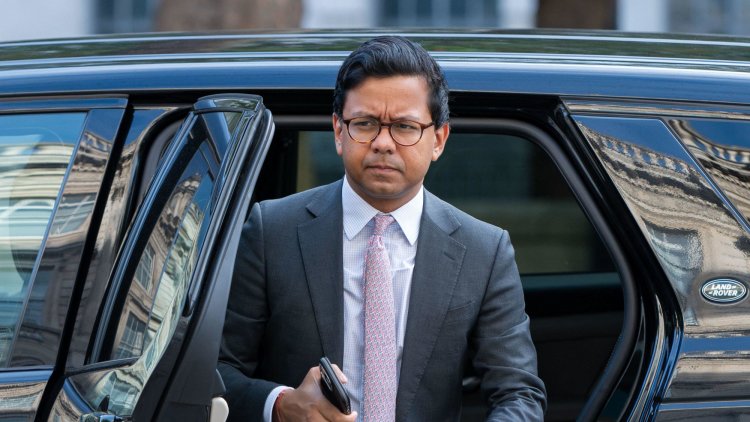
Kanishka Narayan attends Prime Minister Andy Burnham’s Cabinet as Minister for Artificial Intelligence (Alamy)

10 min read
The AI minister has said the government must find a middle ground between “boomerism” and “doomerism” on artificial intelligence.
Kanishka Narayan added that the government must “make the weather” when it comes to public opinion on AI, rather than simply following what opinion polls say.
He spoke to PoliticsHome at the Labour Party conference in Liverpool earlier this week, as AI becomes an increasingly salient talking point in British politics.
According to Narayan, the “median” view in Westminster on AI is too negative, and the government should position itself closer to the middle ground.
“If we take either the path of extreme boomerism of our tech and just say ‘go, go, go’, we would have done a disservice to the British public view. If we take the path of extreme scepticism and doomerism, which I think is the median view in the Westminster bubble, I think we would have done a disservice to the British public view,” he said.
“The only view that is an appropriate democratic representation of the British public view is to take all of that together, and also to shape the practical instantiation of that, rather than to simply take polls as both reading the weather and making the weather. We have to try and make the weather.”
Numerous tech industry insiders, including an employee of Anthropic, have issued warnings in recent months about the risk of an AI apocalypse, in which the technology could “kill all humans” in the next decade.
According to Narayan, who was appointed as a junior minister for AI and online safety last year before being promoted to the cabinet table this year by Prime Minister Andy Burnham, these warnings should be taken seriously because they are “backed up by the evidence that I’m seeing”.
“I’m absolutely never going to belittle or diminish the scale of concern, and that’s exactly why we’re trying to move extremely fast, both on testing, on defending and resilience, and on building capacity,” he said.
Technology as an industry has not engaged sufficiently with politics and the British public
However, Narayan is concerned that the media and politicians can overstate public fears about the existential risks posed by AI. As AI minister, he wants to build greater public trust in the technology.
“Technology as an industry has not engaged sufficiently with politics and the British public,” he admitted.
“It’s also true that people who represent the British public’s views, through in particular media, society, and civil politics, have done a very bad job of representing the richness and nuance of public influence.”
Narayan has used AI-generated synthetic focus groups provided by a private company, particularly while he was a backbench MP, to test public opinion on AI and other issues. The model is trained on data from real-life focus groups.
“They have a chatbot interface, and you can just say, ‘I want to try and do a speech about this; here is a broad-brush draft of my speech. What do you think, can you do some message testing with your synthetic focus group?’
“You might not get as much real-time understanding because there’s a lag between when they did the real focus group, but segmentation and views don’t change that much, so on broad-brush questions like how should I think about AI, doing static focus groups with that is very useful.
“It effectively meant that all of us in politics, instead of just the Labour Party HQ and No 10, being able to use focus grouping, were able to effectively challenge ourselves in our thinking by being able to do that.”
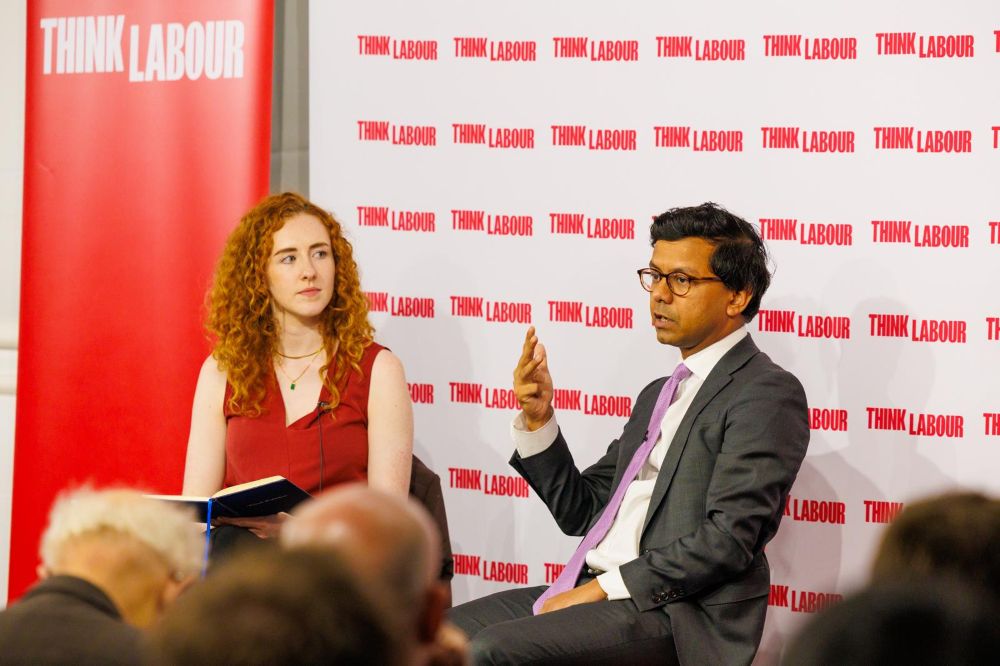
Despite his own enthusiasm for the technology, Narayan is “sceptical” about putting too much of his own private data online, so he mostly limits his use of AI chatbots to an “authorised” professional setting.
The minister also does not use AI for tasks that might limit his own capacity to think for himself, including writing his speeches or carrying out people management tasks.
“I never use AI to write speeches because I actually really love the ability to craft speeches, and as a consequence of doing so, clarify my own opinion,” he said.
“So I try not to use AI for those reasons. Not because I think AI is bad at the business; it’s actually in some cases pretty good, potentially better than others, but for me, it’s really important not just to preserve private data, but also to think: what are we doing to our capacity over time?”
The minister said that the British public’s fears about AI are not as salient in political debate as they are in the US, and argued that the British public is “most consistently extremely against giving our data to foreign companies”, while also being concerned about the impact of AI on the jobs market.
This is why Narayan believes that building the UK’s sovereign artificial intelligence strategy is crucial. The government has designated five AI Growth Zones (AIGZs) across the country to accelerate the construction of large-scale AI data centres and boost local digital economies.
However, tech industry bodies have warned about a gap between the aims of these zones and their deliverability, with several having faced setbacks in their development.
Narayan admitted the pace has not matched what he wants it to be.
“If people want to build a dashboard and attract where we are, I’m super happy to be held accountable for it,” he said.
“I want to do better in terms of pace,” he continued, adding that the government had made policy changes late last year to accelerate grid connections and planning.
“The pace with which I would like that to happen has not been the pace in practice, and so I’m very focused on rolling up my sleeves on all of those five sites to make sure that we can move faster in execution.”
He dismissed a report by The Guardian that showed the government does not know exactly what UK data centres are actually used for.
“What I’m absolutely not trying to do is fail to build the absolute minimum level that this country needs, which is what we’re really aiming for, and even within that minimal amount, be extremely picky about making sure that we’re forcing every unit of that for usage in one area or another.”
While the AI Growth Zones would provide energy discounts to some qualifying AI data centre operators in specific regions, Narayan rejects the idea of setting standardised mandatory incentives or discounts across the country for residents where new data centres are built.
the biggest capital investment cycle of our lifetime, probably since the railroads
While he believes building public consent is important, he said he is “not wedded to a singular way of driving that through central diktat”, and thinks that reform of the planning process is needed instead.
He also wants to gain public consent for data centres by communicating the potential manufacturing jobs created and the positive impact of investment – “the biggest capital investment cycle of our lifetime, probably since the railroads” – which he thinks could also help to drive investment in clean energy.
“While we’re building this, we should be very clear about the scale of what we’re trying to build. We are not trying to build a ton of data centres in every postcode. That is not the plan.”
There have also been numerous major hacking incidents involving AI agents across the world in recent months, including a rogue OpenAI agent hacking Australian government websites and systems in June. OpenAI has confirmed that it is also reviewing a report of a failed hacking attempt against a Canadian government body. The incidents have raised major concerns about tech companies’ grip on the technology.
Narayan said that the UK’s reliance on the US for access to frontier large language AI models – the most advanced, high-capability artificial intelligence systems – is his biggest concern when it comes to AI security.
“If you think about all the constraints that apply, within those constraints, what is the maximum control that we can get?” he said.
“That’s the question that we have to answer. Across the three dimensions of testing, defending, and building, there is a lot more that we can do than we have done historically. None of it gives you complete control because it’s not possible in this world.
“We need a major uplift in our cybersecurity and in some part of our security defence as well. And actually, as a country, we have great capability there. It’s just a question of now executing on it.”
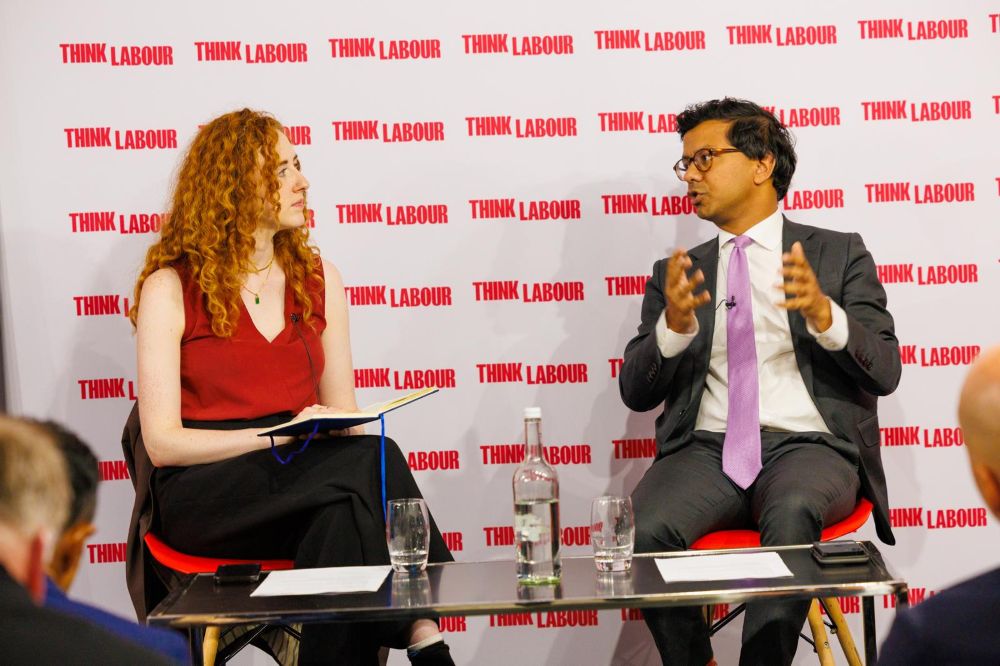
The minister said that the G20 summit next year, to be hosted by the UK, will be crucial for the UK to be able to exert control and convene world powers to agree on values surrounding tech.
In his speech to the conference, Burnham said he wants to see the UK become a “global leader” and an “honest broker” in AI.
He added that at the G20 next year, he wanted to put AI “centre stage” and work with the other G20 nations to “develop a new global code to capture its benefits whilst being clear-eyed about its risks”.
Former prime minister Keir Starmer was described by those who worked with him as being enthusiastic about the benefits of AI. Asked whether he feels the same about Burnham, Narayan said that Burnham’s pledge to put AI centre stage was a “maximalist ambition”.
Narayan added that the Prime Minister’s first personal request upon promoting him was to ask him to prioritise creating regional population health datasets that match up with genetic data to provide better services for patients and drive foreign investment.
“He’s now said that to me three times,” Narayan said.
During his tenure as Mayor for Greater Manchester, Burnham oversaw the region’s resistance to awarding any contracts to the US data analytics giant Palantir, arguing that local data platforms functioned better and strengthened public trust. There are now questions over whether the PM will translate this into national policy by exercising an upcoming break clause to cancel the NHS’s £330m contract with Palantir.
As the first AI minister to sit on the cabinet, Narayan said he now spends “most of my time convincing the cabinet, my parliamentary colleagues and the bubble that technology is the way that we can achieve our primary political growth.”
“I tried to bring in the last year a startup philosophy to government, and I think we now need to bring a sort of government philosophy to startups and technology,” he added.
For Narayan, a distinctly Labour vision for AI should be framed around how people’s lives will directly be improved by 2030, listing his hopes that they will have higher wages, jobs that give them confidence in their own and the country’s future, and an education attainment gap that is closed through tech enhancing the work of teachers.
“And in all of that, when people come home from school and from work, they will feel like when they go on their screens or their devices, they are doing so with a sense of control over their lives,” he said.
>


(Image by Antonello Sticca)
7 min read
In making the case for trustworthy news in the digital age, the government may force online platforms to carry public service media. Ros Taylor explores whether the proposal is workable
What has the BBC ever done for me? That was the question posed by Romesh Ranganathan in a promotional video the corporation put out in July. Packed with celebrities, the advert was surprisingly light on the contribution of BBC News. Yet getting more public service news back into people’s lives is something the government is very keen to do.
To that end, minister Ian Murray (who has kept his post under Andy Burnham) is consulting on how to “foster a healthy information environment where trustworthy news is easy to find”.
According to the green paper, that might mean legislating to ensure that the places where people now spend their screen time – YouTube, Netflix and TikTok, for example – are forced to carry trustworthy news.
But then the problems start. Who decides what is trustworthy? How can you shape a social media environment that has been driven by what people want to watch, rather than what would help them become better-informed citizens – or, “the basis of a cohesive country and a healthy democracy”, as the green paper puts it?
“The principle is a very good one,” says Martin Moore, the director of the Centre for the Study of Media, Communication and Power at King’s College London. “The real difficulty and complexity is in how you do that, not least because the very basic elements of the broadcasting ecosystem have changed significantly.”
In other words, we used to have a limited choice of TV and radio channels, and the government controlled them through Ofcom. That has not changed, but the public’s viewing habits have. Last year YouTube caught up with the BBC, with each commanding 19 per cent of viewing time. Netflix has overtaken Sky and Channel 4. Many people simply no longer bother with public service media (PSM, defined as the BBC, Channel 4, ITV, STV, Channel 5 and the Welsh-language S4C). They might listen to The Rest is Politics podcast, or watch GB News, or just rely on whatever TikTok serves up in the way of news.
That is their choice. But it has consequences. People who get their news from PSM providers are better at identifying facts, trust institutions more and are less polarised than those who do not, according to Ofcom. If we ask whether the UK is becoming ‘ungovernable’, as the Institute for Government did this summer, the lack of a shared news agenda is one of the reasons why.
In exchange for their spectrum privileges, PSM agree to conditions such as impartiality and strict regulation during election periods. Giving them prominence online might seem a relatively uncontroversial policy. Boosting their visibility while ignoring other news sources would meet furious resistance from competitors, however.
The green paper suggests adopting a definition of trustworthy news based on a definition in the Online Safety Act (OSA), but Moore believes it “really underestimates the complexity and difficulty” of that: “I can understand their motivation, but it opens a real Pandora’s box.” He describes the OSA criteria as “extremely broad and vague”. On paper, GB News would meet them. It is already regulated by Ofcom. But few Labour MPs would legislate to ensure it had a right to appear on everyone’s YouTube.
“It feels like the most enormous boast for broadcasters that have struggled to find a new online audience,” says Jim Waterson, founder of local news site London Centric, whose limited resources would make it very unlikely to qualify as ‘trustworthy’. “I would be fuming if I were GB News.” (GB News did not respond to an invitation to comment for this article.)
“The principle is delightful, but even the people nodding along to it might be quite shocked when they find out which outlets are included in it. London Centric breaks award-winning stories, about everything from dubious landlords to tax-evading Harry Potter shops, that are raised in Parliament and change policy. Will smaller independent news outlets that break agenda-setting public interest stories be given access to this privileged public service media slot?”
Part of the problem with choosing what to promote is that ‘legacy’ media have become more biased as they pursue clicks and engagement. “I am something of a defender of British journalism,” says Charlie Beckett, a professor of practice at the London School of Economics’ media department, “but I would never hold it up as a paragon of virtue. The evidence is our media has become more partisan and more interested in opinion content … It’s much harder to honestly put your hands up and say British mainstream media is worth privileging.”
“Even a three- to four-minute TV package is too long. People are just not going to watch it”
Assuming the Department for Digital, Culture, Media and Sport can get agreement on a definition of trustworthy news media – which is somewhat doubtful – further challenges remain. On a streaming service like Netflix, PSM could be promoted fairly easily. The French channel TF1 did a deal with Netflix last year to promote each other’s content. But on an algorithm-driven app, the challenge is much harder. While YouTube is already thought to amplify certain organisations, the lack of transparency around its algorithm makes that hard to verify.
“TikTok is measuring everything you do and trying to serve you things that will keep you online,” says Moore. “How you integrate news within that becomes much more complicated.”
Or as Waterson puts it: “Younger audiences don’t really seem to read. The dominance of short-form video is a challenge. Even a three- to four-minute TV package is too long. People are just not going to watch it.”
Moore warns that digital platforms may not be particularly keen to co-operate with the plans and will try to drive a hard bargain. “They’ve underestimated how far platforms will push back against this and will probably be supported by the current US administration,” says Moore.
Earlier this month, PoliticsHome reported that British officials were called into the US Embassy to hear concerns from American diplomats over the impact on US-headquartered tech firms. Optimistically, however, these firms might see it as an opportunity to boost their credibility. “You are then giving them an institutional role, should they choose to accept it,” says Beckett. “It may be because they want other advantages.” Facebook ultimately decided not to co-operate with governments except if the law required it, but other platforms might.
Are there other ways of encouraging people to consume PSM? Perhaps by requiring operating systems like Apple and Google to pre-install their apps on UK mobiles? That would be difficult, says Beckett, especially given that they want to promote their own apps such as Apple News.
“There’s a lot of wishful thinking here,” he adds, comparing the green paper proposals to the plans to ban social media for under-16s. “The social media ban is an incredibly crude attempt to pretend that social media doesn’t exist.” Hoping that people will return to PSM when they have so many other ways to spend their viewing time risks becoming an exercise in nostalgia.
Indeed, in his foreword to the green paper, the 50-year-old Murray evoked “evenings… gathered around the living room TV set”, watching The Generation Game and Noel’s House Party.
And even as the government mulls how to encourage people to consume more public service news, it is overseeing cuts to BBC journalism. Income from the licence fee has fallen and the current charter review has ruled out replacing it with a levy on streamers or rolling it into general taxation. “Why have you been cutting back on the BBC in the past 10 years if you think public service media is such a good idea?” asks Beckett. At first glance, Ian Murray’s aims look praiseworthy. But as Lord Leveson knows, any attempt to regulate the British press soon becomes extremely controversial.
>

Show Your ‘Siga’ Pride With New Goodbye, Lara Sweatshirt & T-Shirt – Interest

Bahrain GP in Malaysia: Crucial final practice under way ahead of Qualifying LIVE!
The science behind Cavan Sullivan’s custom Adidas cleats: Foot scans, algorithms and 3D printing
-

 movies4 months ago
Search For Canadian TV Actor Stewart McLean Now Homicide Investigation
-

 Fashion9 years ago
These ’90s fashion trends are making a comeback in 2017
-
Fashion9 years ago
According to Dior Couture, this taboo fashion accessory is back
-
Fashion9 years ago
Model Jocelyn Chew’s Instagram is the best vacation you’ve ever had
-
Fashion9 years ago
Emily Ratajkowski channels back-to-school style
-
Fashion9 years ago
9 Celebrities who have spoken out about being photoshopped
-

 Anime4 months ago
Rurouni Kenshin: Hokkaido Arc Manga Takes 1-Issue Break – News
-

 Anime3 months ago
HIDIVE to Stream English Dubs for The World Is Dancing, The Forsaken Saintess and Her Foodie Roadtrip in Another World, The Dangers in My Heart: The Movie Anime – News