
Entertainment
What Happened to Row K? From Splashy Acquisitions to a $110,000 Opening


$169. That’s it.
That’s how much “Charlie Harper” averaged per theater when it opened domestically on 650 screens at the end of September.
A year ago, Row K Entertainment tried to make roughly $80 million in acquisitions at the Toronto International Film Festival, according to insiders. It picked up four films to distribute: “Charlie Harper,” “Dead Man’s Wire,” “Poetic License” and “Cliffhanger.”
Last month, the troubled indie distributor put the last of its TIFF 2025 pickups in theaters — one of only two it actually ended up releasing. The Nick Robinson/Emilia Jones romantic drama barely grossed roughly $110,000 on its opening weekend, Row K reported.
The box office blip marks the latest stumble for the troubled indie distributor co-founded by Christopher Woodrow, who made a name for himself in Hollywood running Worldview Entertainment, only to be ousted by the company over allegations of embezzlement. Row K launched in August 2025 with great fanfare, laying out plans to put out up to 10 wide releases a year, aimed at the space between studio tentpoles and boutique labels.
Then reality hit.
The company’s president and chief marketing officer, Megan Colligan and Ben Carlson, left in March. A company insider said some vendor invoices date back six months and bills still haven’t been paid.
In response to TheWrap’s inquiry, a Row K spokesperson said that “the majority of outstanding vendor invoices have been paid, and we expect to settle the remaining balances in due course.”
Still, the lack of financial planning has struck many indie film veterans as odd.
“I think Row K was designed in a way that they had no backup if every single film they put out didn’t hit, and that’s particularly surprising because they had some institutional money that you’d think would have done more due diligence,” one distribution insider told TheWrap.
In January, Row K released its first film, Gus Van Sant’s thriller “Dead Man’s Wire,” to a dismal $3.8 million box office, but after that things got even rougher. Maude Apatow’s “Poetic License” was initially scheduled for release in May, but the date was delayed after rumors swirled that Row K couldn’t afford to put it out. In March, Row K dropped it. The same thing happened with the $60 million budgeted “Cliffhanger” — as a planned August release date loomed, Row K looked to offload that film as well, eventually selling it to indie distributor Vertical.
Yet despite the turmoil, Row K was in attendance at this year’s TIFF and the company’s spokesperson told TheWrap that it would be looking to acquire new films. But no deals have been announced, and most insiders who spoke to TheWrap said they believe the company is finished.
Asked about its future, Row K said, “Over the past several months, we have devoted considerable time and resources to restructuring and strengthening Row K. We have been actively positioning the company for its next phase of growth. We expect to make several significant announcements in the coming months and look forward to a strong 2027 and beyond.”
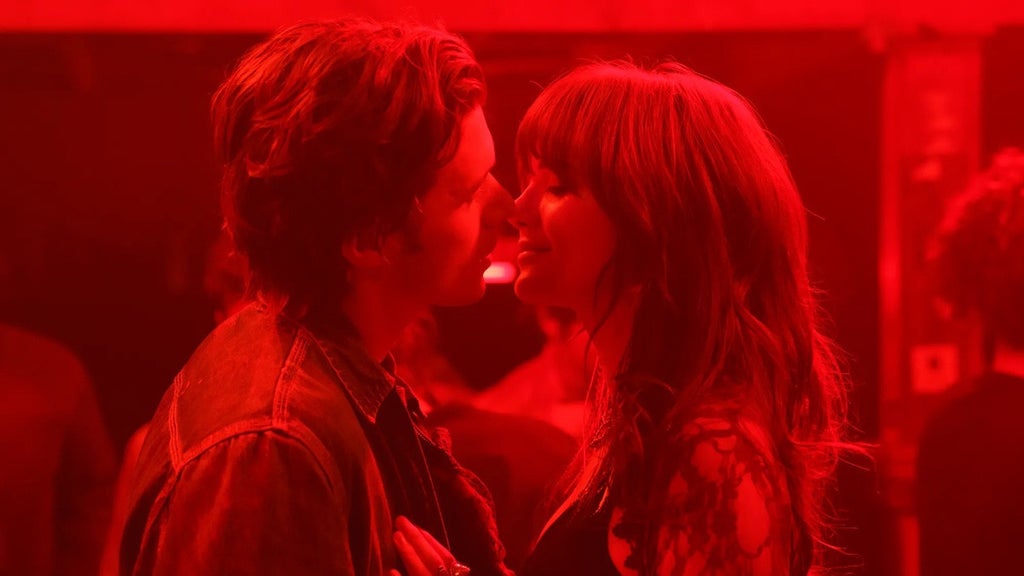
Releasing “Charlie Harper”
So why did “Charlie Harper” get released? It’s all due to the combined intense pressure from the film’s producer and foreign sales agent Patrick Wachsberger and CAA Media Finance Co-Head Roeg Sutherland, TheWrap has learned. “Wachsberger held their feet to the fire,” an insider with knowledge of the film said of the former Lionsgate Motion Picture Group co-chairman.
Wachsberger did not respond to numerous requests for comment.
A Row K spokesperson said the minimal marketing for “Charlie Harper” was handled by “a mix of consultants, agencies and in-house personnel.” TheWrap also learned that one individual ran the film’s social media marketing campaign by posting on an X/Twitter account that had been dormant for six months until Sept. 15.
“Charlie Harper” centers on the complicated relationship between Charlie (Nick Robinson) and Harper (Emilia Jones) and unfolds in a non-linear way, illustrating the shifts in how they relate to one another over time. It received mixed-solid reviews out of TIFF and stands at 59% on Rotten Tomatoes.
A company spokesperson blamed the dismal opening weekend on a “particularly competitive weekend for specialty releases,” asserting the company believes it has a “long commercial life ahead” with its PVOD and Pay-TV windows.
CAA has been close to Row K from the start. TheWrap previously reported that Sutherland has been integrally involved in helping to build the company. CAA Media Finance also represented the filmmakers on the “Cliffhanger” sale that eventually landed at Vertical.
An insider previously told TheWrap that Row K never formally closed its deal to acquire “Cliffhanger.” Neon’s Decal label was rumored to be taking the film around Cannes before backing out, according to Deadline.
TheWrap has learned that “Cliffhanger” actually sold to Vertical for barely $3 million. An individual with knowledge of the project denies the $3 million figure.
How Row K got here
Media Capital Technologies, led by Woodrow, announced the formation of Row K on Aug. 26, 2025. Former Imax Entertainment and Paramount exec Colligan was named president shortly thereafter. At the time, Row K, co-led by Woodrow and fellow principal Raj Singh, a former investment analyst and CEO of National Lampoon, declined to say how much it had raised beyond “significant funding.”
Woodrow was already notorious for his controversial exit from Worldview Entertainment in 2014 amid allegations of embezzlement. The company shut down the following year. He countersued for $55 million, and the parties settled in 2018 in a walkaway agreement with no money exchanged and Woodrow cleared of fault.
Within weeks of launching, Row K was buying in Toronto.
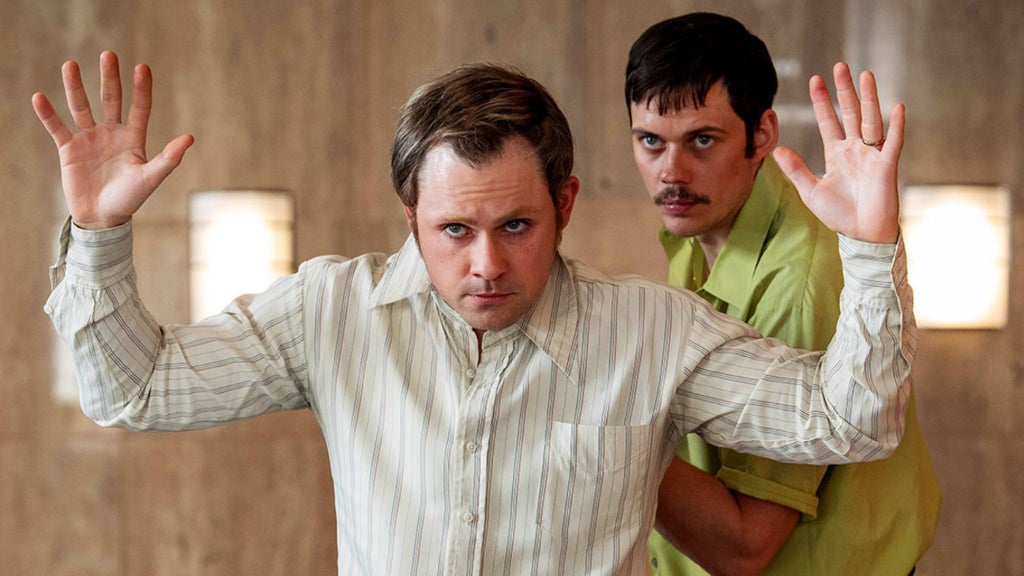
“Dead Man’s Wire” was the first test. Row K released it in January to dismal box office after the company spent about $5 million to acquire it and another $5 million to market it, according to an insider.
Then the company had to give up “Poetic License.” Sony Pictures Classics eventually picked it up.
This spring, Colligan and Carlson left the company, TheWrap reported, and Row K canceled its CinemaCon presentation. Woodrow and Singh said at the time they were making “a deliberate pivot toward a more commercially focused slate.”
But Row K has made no more acquisitions after that.
No shortcuts
There’s certainly an audience for the sort of films Row K pursued. Over the last couple of years, the specialty box office, after struggling to regain its footing following the COVID pandemic, has pivoted away from the older moviegoers that once defined it in the 2010s and towards a more discerning, Letterboxd-loving crowd that has shown up for films like Mubi’s “The Substance” and A24’s “Marty Supreme.”
But as one rival executive who spoke to TheWrap anonymously pointed out, building an indie distributor that audiences recognize that can turn out specialty hits on a regular basis isn’t something that happens overnight. During A24’s first year in operation in 2013, its five theatrical releases combined for approximately $28 million, with half of that coming from the $14.1 million run of Harmony Korine’s “Spring Breakers.” A24’s latest film, “Primetime,” exceeded $28 million in less than 10 days of wide theatrical play.
“Row K just thought they could shortcut their way to the top and quickly found out they can’t,” the exec said. “This is a hit-driven business, but you have to operate in a way that allows you to keep making attempts even during long periods where that hit doesn’t come.”
That is especially necessary at a time when Pay One deals that determine where a film streams first, like the one that A24 has with HBO Max, have largely shriveled up as streamers opt instead to pick festival titles they are interested in a la carte, along with the indie distributors they can partner with.
“At TIFF, we got a call from HBO Max about a title they were interested in and let us know they were open to working with us, but also said they were talking to three other studios,” the exec said. “That’s how it works with the streamers nowadays. It’s much more cost effective to just have one big Pay One deal, and most of them have that right now, and then just do festival deals on a film-by-film basis. If Row K was hoping with all these big acquisitions to make a big slate deal, that wasn’t going to happen.”
Breaking into the box office as a distributor is a marathon, not a sprint, and it’s not uncommon for a company to leave little theatrical mark. Take Black Bear, a longtime production/film financing company that last year made its first foray into U.S. distribution with the Sydney Sweeney boxing film “Christy,” which only made $1.95 million at the box office. Its more recent titles haven’t fared much better, as the Jake Gyllenhaal/Henry Cavill thriller “In the Grey” grossed $5.7 million domestically this past summer while the female-focused comedy “Spa Weekend” grossed $7 million. Now its head of U.S. distribution is leaving the company.
But Black Bear has its production division to fall back on, having worked on Netflix’s Oscar-nominated drama “Train Dreams” and A24’s prison drama “Sing Sing” in recent years. The studio has also found some success as a U.K. distributor with films like “Longlegs,” the 2024 indie horror hit which grossed $10.4 million in that country.
What’s Next
When asked how many staffers remain at Row K, a company spokesperson said it “continues to operate with a dedicated team of employees and outside consultants,” but declined to reveal specifics.
Singh and Sutherland are scheduled to speak on a panel at the new European Investment Hub at Rome’s MIA market Oct. 19-23 . A CAA insider added, however, that Sutherland is not confirmed to attend. In a separate session, Singh plans to unveil a new financing venture.
Many find that relationship unusual.
“It’s odd to me that he’s propping them up the way he is,” a film finance insider said of Sutherland. “I don’t know why anyone would trust them with their money, and I don’t know that they have any money.”
Sutherland did not respond to TheWrap’s request for comment.
A second film finance insider also found it “odd” that Sutherland is still working with the duo.
“Roeg thinks Woodrow is so good at raising money,” the second film finance insider said. “But he’s even better at spending it recklessly. I’m not sure it’s a con as much as that.”
Jeremy Fuster contributed to this report.
The post What Happened to Row K? From Splashy Acquisitions to a $110,000 Opening appeared first on TheWrap.
>

>
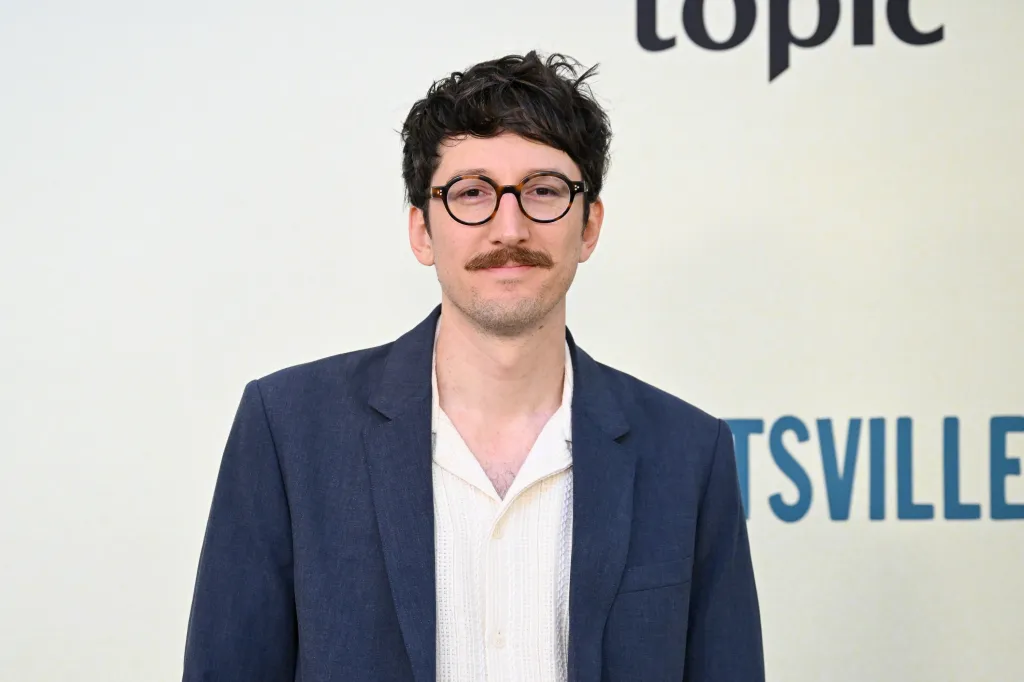
EXCLUSIVE: Focus Features and Blumhouse-Atomic Monster have snapped up Play House, a micro-budget horror film from Nicolas Curcio, in a competitive situation, sources tell Deadline.
We’re told this was a seven-figure deal for worldwide rights, excluding Latin America and India. This is a major coup for Curcio’s debut feature, a film made for just $100,000 — roughly 13% of the reported budget of Curry Barker’s low-budget Focus phenomenon Obsession.
Curcio set the project in motion last September after winning the inaugural Fantastic Pitches contest, a micro-budget genre initiative spearheaded by Alamo Drafthouse’s Fantastic Fest and indie studio Chroma, thereby securing funding and distribution. He returned to Fantastic Fest to premiere the film last month.
Play House will release in theaters in 2027, with Universal Pictures International handling international distribution.
Written by Curcio and wife/creative partner Kirby Gladstein, the film follows Elliott (Will Harrison), who while renovating a dilapidated house to win back his ex, discovers VHS tapes of an unaired children’s TV show which begins to seep into his life, threatening his last chance at reconciliation.
Pic’s cast also includes Jessica Sula, Jordan Gonzalez, and James Urbaniak. Curcio and Gladstein produced for Skinny Ghost, alongside Ben Gojer, Jack Forbes, and Derek Tramont. Exec producers include Ahbra Perry via Chroma, Daniel Levin via Narrative, Adam Hendricks and Greg Gilreath of Divide/Conquer, and Jason Blum of Blumhouse Atomic-Monster. NPerry repped the film for sales via Narrative Distribution.
While Universal art-house label Focus Features has not historically been known as a major horror distributor, outside of recent work with Robert Eggers on titles like Nosferatu and the upcoming Werwulf, they’re now aggressively expanding into the space as supporters of emerging filmmakers, after seeing Obsession break out as their highest-grossing film ever at over $522M worldwide. Divide/Conquer’s Hendricks and Gilreath — EPs on Play House — previously brought that film to Blum, who set it up at Focus, along with his follow-up Anything but Ghosts, dated for May 7, 2027.
You can expect much more to come from the collaboration between Focus Features and Blumhouse-Atomic Monster. Most recently, they announced their partnership on director Josh Giuliano’s Occupant following the buzzy TIFF debut of his first horror film, River.
Curcio is a rising filmmaker who recently set up his high-concept thriller spec Sweet Spot, penned with Gladstein, at Paramount Primal, as we first reported. A writer on Sony Pictures Animation’s hit GOAT, he has developed projects for multiple studios, including a live-action Magic School Bus for Universal and an adaptation of Planet of the Nerds for Paramount. His script Barron made the Black List in 2019.
Curcio is also known for running a popular screenwriting TikTok account with nearly 200K followers and over 10M likes, and has partnered with studios like Neon, A24 and Paramount to promote films. He is repped by 3 Arts, UTA, and Jackoway Austen Tyerman.
>
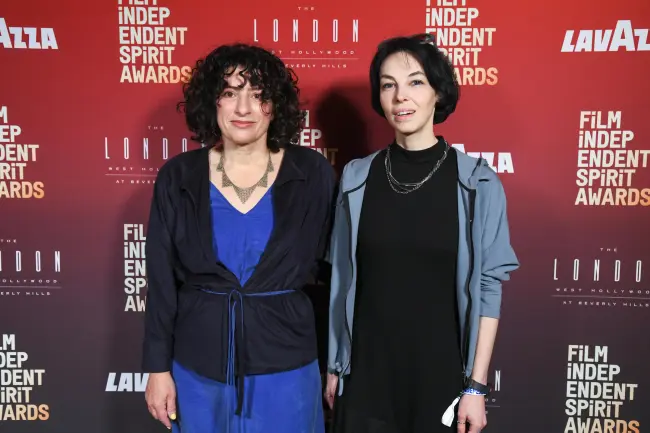
So many unlikely stories went into the making of both parts of director Julia Loktev‘s sprawling “My Undesirable Friends” movies, which total nearly 12 hours, or half a day in a viewer’s life.
For 2025’s “Part I — Last Air in Moscow,” the Russian-American filmmaker, based in New York, didn’t know that when she arrived in Moscow in fall 2021, she’d capture the implosion of the country’s only remaining independent news network, TV Rain, under Vladimir Putin. Nor did she anticipate that, for this year’s sequel “Part II — Exile,” she’d then follow that mostly female dissident journalism collective as they dispersed across Europe after Putin’s 2022 invasion of Ukraine. Nor that Meryl Streep would sign on as executive producer, let alone watch her movie, to help promote the Venice premiere during the stateside awards season.


Often during the Oscar corridor, a celebrity will pin their imprimatur to a worthy documentary or short film to get word out. But what’s in a name without real weight behind it?
“It’s a kind of funny story,” Loktev told IndieWire. “I always wonder the same thing actually, also. I have to admit, I don’t hang out with Meryl Streep regularly. But I was working before ‘My Undesirable Friends’ on a fiction film that Colin Firth was going to produce, and it fell apart during COVID. And then the events of this [film] started. So I reached out to Colin with ‘My Undesirable Friends.’ I was like, ‘Will you watch it?’ And I was like, ‘Can you think of anyone to sort of present it, maybe?’”
Loktev wanted the executive producer to ideally “be a woman because it’s a film about women. And he was like, ‘Well, I could send it to Meryl.’ And I was like, ‘That would be awesome,’ right? The way that she told the story when she presented the film is that Colin wrote her and said, ‘You have to watch this. It’s essential,’ which caused her to roll her eyes.”
You hear “essential,” and you’re just like, “No,” as Loktev explained. “She was super busy, and apparently, the way that she told the story, she sat down thinking, out of respect to Colin Firth, ‘I will sit down and watch this for 15 minutes’ — and then got up five and a half hours later. So it’s an incredible story. Then, she really just offered to help in any way she could. So she’s a kind of patron saint angel.”

“Part II – Exile” also now counts Oscar-winning documentary filmmaker Laura Poitras among the executive producers, a natural fit for a director who’s brushed against state scrutiny for her muckraking portraits. Loktev’s position as a Russia-born American has inured her to the persecution faced by her documentary subjects, whom the Kremlin labeled “foreign agents” for broadcasting news that questioned and criticized Putin’s regime.
Among the reporters and news anchors whom Loktev’s extraordinarily intimate epic follows in the sequel: the former TV Rain anchor Anna Nemzer, who flees to Georgia and then New York; Elena Kostyuchenko, who may have been the victim of poisoning by the Kremlin; and TV Rain journalist Peter Ruzavin and Ukrainian reporter Nataliya Gumenyuk, whose relationship unfolds across Zoom calls between Vienna and Ukraine. Journalists Ksenia Mironova and Valeria Ratnikova (TV Rain’s youngest anchor), meanwhile, are now in New York City and attending Q&As this weekend. After news of the invasion, they fled to Istanbul, where “Part II” kicks off.
Working as a one-woman crew on the film, shooting only via iPhone, proved empowering for Loktev as a director. “The fact that I was shooting alone without a crew made the logistics infinitely easier,” she said. “You don’t have to book a crew … sometimes I would wake up in New York, and something would happen in Europe, and I’d have to wake up, go to the airport, and start shooting off the plane. You don’t have to get a crew. I can figure out how to book a ticket and a hotel room for myself. It makes you really portable and nimble that you can do things when you’re shooting alone. Often I didn’t know I would be told something would be happening the day before or something, or I would just have to be there.”
Loktev, meanwhile, doesn’t want audiences intimidated by the film’s size and scope. Rather than an exhaustive knowledge of the current Russian political climate, “You need empathy and a bit of curiosity and a sense of humor. I always thought that it should be a film about Russia for people who really don’t care about Russia or don’t know about Russia, or without making it dumbed down. But if you hung out with a bunch of young Russian women who were forced to flee their country during the time you were hanging out with them, you kind of figure things out a lot just by hanging out with them. It’s like when you go visit a friend somewhere in another country.”
As for TV Rain, it’s up and running out of Amsterdam, where “most of the hosts have now been declared extremists and terrorists in Russia. Many of them have been sentenced in absentia for speaking about war crimes. They drive the Russian propagandists crazy. The Russian government keeps trying to find ways to block it. They do slow down. It’s like a kind of whack-a-mole situation where Russia will slow down YouTube, which is still accessible, but they slow it down. … Information is increasingly being blocked in Russia because it’s the goal of the Russian government to keep people from learning the truth.”
“My Undesirable Friends: Part II — Exile” is now in select theaters from Mubi.
>

‘Morning Joe’ Condemns ‘Beyond Outrageous’ NYC ICE Shooting

‘Play House’ Sells To Focus Features, Blumhouse Atomic Monster
How to watch Dream vs. Liberty: WNBA playoffs Game 3 TV channel and streaming options for October 9
-

 movies5 months ago
Search For Canadian TV Actor Stewart McLean Now Homicide Investigation
-

 Fashion9 years ago
These ’90s fashion trends are making a comeback in 2017
-
Fashion9 years ago
According to Dior Couture, this taboo fashion accessory is back
-
Fashion9 years ago
Model Jocelyn Chew’s Instagram is the best vacation you’ve ever had
-
Fashion9 years ago
Emily Ratajkowski channels back-to-school style
-
Fashion9 years ago
9 Celebrities who have spoken out about being photoshopped
-

 Anime4 months ago
Rurouni Kenshin: Hokkaido Arc Manga Takes 1-Issue Break – News
-

 Anime3 months ago
HIDIVE to Stream English Dubs for The World Is Dancing, The Forsaken Saintess and Her Foodie Roadtrip in Another World, The Dangers in My Heart: The Movie Anime – News