
Entertainment
Aaron Sorkin Talks The Social Reckoning, Zuckerberg

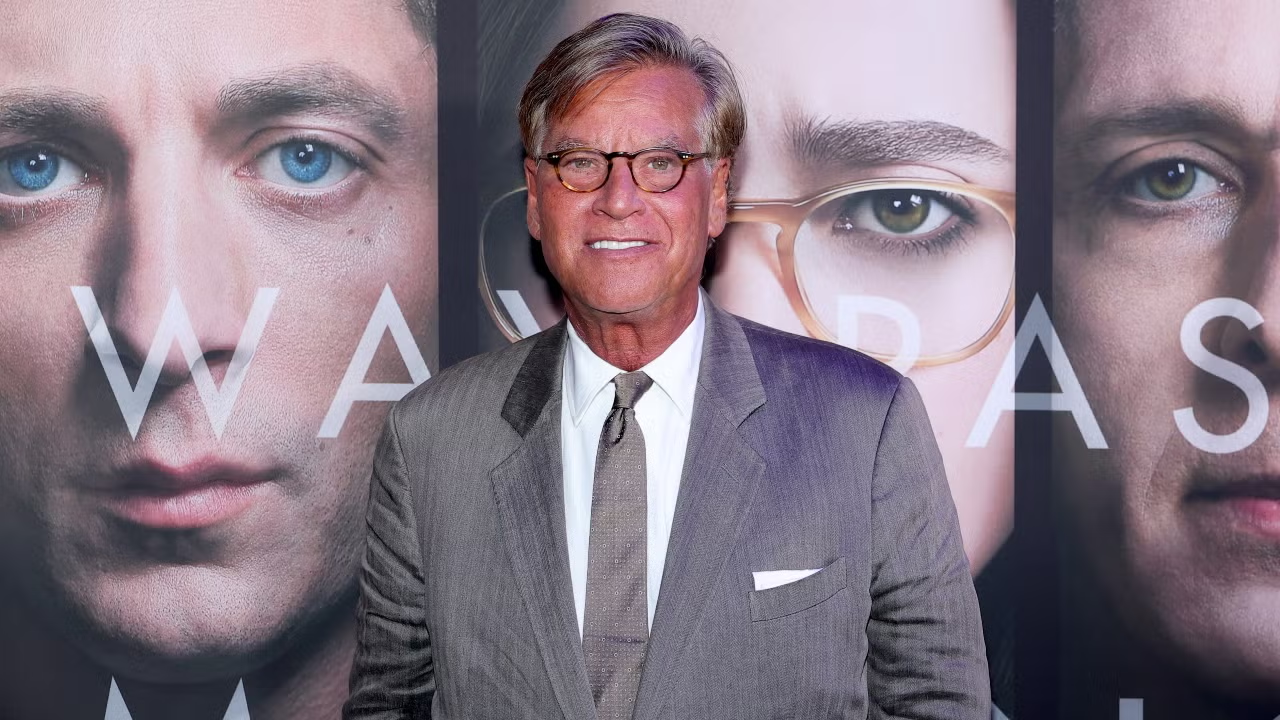
There’s a moment towards the end of “How Did They Ever Make a Movie of Facebook?” — the feature-length documentary by David Prior about the making of “The Social Network” that was included in that movie’s home video release — where screenwriter Aaron Sorkin took the wheel from David Fincher.
“It was the very last day of shooting and there were three relatively small things to be gotten that day, and after the second of those three things, Fincher had me come to his trailer. He wanted to show me some cut footage that he’d put together,” Sorkin explained. (He had no idea this was in the documentary.)
While he was in Fincher’s trailer, Fincher told Sorkin, “Now here’s what’s going to happen – I’m going to get in my car and go home, and you’re going to direct the last shot of the day.”
“I assumed he was kidding. I started laughing, but then all of a sudden, a second assistant director is coming up to me and wants me to approve background. And Jeff Cronenweth, the DP, has set up the shot, and he wants me to look at it and I realize that David is being serious,” Sorkin recalled in an interview with TheWrap. “And sure enough, he was in his car, just drove by me and waved, and went off the lot. I think the reason he did that, the reason he out and left, was he didn’t want me to feel like a little kid who’d been invited to come up to the cockpit of a plane and Look, you’re really flying the plane now. He really was going to want me to do it.”
Sorkin had another theory about the handoff.
“I also think David doesn’t like mushy goodbyes and wanted to leave before everybody was wrapped,” Sorkin said. Still, he directed “I think it’s 1.2 seconds of the movie.”
It’s a fitting moment considering Sorkin has now taken the baton from Fincher fully, as he wrote and directed “The Social Reckoning,” a pseudo-sequel to “The Social Network” that picks up years later. Facebook is now a powerful, self-governing entity that also includes Instagram. And instead of a plucky kid in his dorm room writing code and attempting to challenge the status quo, Mark Zuckerberg (now played by Jeremy Strong) is a kingly ruler. That rule is challenged by a series of articles put together by Jeff Horwitz (Jeremy Allen White), a Wall Street Journal investigator, and a Facebook whistleblower named Frances Haugen (Mikey Madison).
Sorkin thought of this moment as he embarked on the follow-up.
“I was my second choice to direct the movie, but David has an exclusive deal at Netflix that wouldn’t allow him to work at Sony. David has become an enthusiastic cheerleader. He was the first person to read the script. And a couple hours later, I got an email from him that it said, ‘This is very good.’ Very was capitalized. And underneath that, in all caps, was, ‘And it’s nitroglycerin.’ I thought, This might be a good first draft,” said Sorkin.
But how much of a “Social Network” sequel “Social Reckoning” is remains murky. Cinematographer Cronenweth is the only department head to migrate from Fincher’s film to Sorkin’s; composers Trent Reznor and Atticus Ross have been replaced by Alexandre Desplat; and Strong stepped in for Jesse Eisenberg, who was offered the chance to reprise the role and turned it down.
“Even if Jeff Cronenweth hadn’t done ‘The Social Network,’ I think I would have asked him to do this. I love Jeff. But I did like that there was some ‘Social Network’ DNA in this. I’ve never really thought of this in terms of ‘The Social Network.’ I haven’t thought of it as the first movie or the second movie, at least while I was writing it and making it,” said Sorkin. “I understand that it’s received that way. I get it. I always felt like it was a movie about Facebook by the same person who wrote ‘The Social Network’ and one of the characters from ‘The Social Network’ is in ‘The Social Reckoning’, as if Henry Hill showed up as a character in ‘Casino.’”
Still, while publicity insists that “The Social Reckoning” is not a sequel, it has been marketed almost exactly like the first film, including a print campaign that riffs on the poster of “The Social Network” and a trailer that utilizes a few notes of the Reznor/Ross score.

“They are and I’m OK with that. I’ve made my peace with the fact that it will likely be received by certain critics and possibly even audience members. It’ll be graded on a curve with ‘The Social Network.’ I wish it could be just seen as its own movie but God knows I’m proud of ‘The Social Network’ too. There are burdens in the world,” said Sorkin.
One way in which the movie is set apart from “The Social Network” is how the narrative plays out. Sorkin acknowledges that it has “a very unusual structure,” with two timelines – one of the timelines is the investigation into Facebook’s practices, and the other shows Zuckerberg getting ready for a congressional hearing that takes place over a single morning, which Sorkin described as “like a one-act play that has been fit into the movie.”
“When and how did I reach that structure? I just had this idea – I wanted Mark to be in an argument about not each of the problems with Facebook, just one. And I picked not fact checking political ads,” said Sorkin. “And I knew where the whole thing was going to end up, but then I got the idea that this one day, we were going to find out what day that was by the end, and it was a matter of, Can I do this without just being incredibly confusing?”
Sorkin said initial cuts of the movie didn’t have a sliding calendar at the bottom of the screen, the kind of thing you’d see in a Netflix true-crime documentary. But after showing it to Sony head Tom Rothman, he “was not able to understand what was happening,” so they went back and tried a few things before landing on the sliding calendar that toggles between the two timelines.
Regarding fixes during post-production, “The Social Reckoning” reportedly went through some last-minute reshoots, which prevented the movie from premiering at the early fall film festivals. (Coincidentally, the same thing was happening with David Fincher’s “The Further Mis-Adventures of Cliff Booth,” which Netflix will premiere theatrically on Imax screens this Thanksgiving.)
Sorkin said there are two types of reshoots – there’s the $200 million superhero movie “and there’s a problem with an action sequence or something and that’s the kind where you need to fix it.” Then there’s the other type of reshoot is “where the studio really likes the movie, and they’re willing to spend a little more money to do something.” Rothman asked Sorkin if he had three days to rewrite and reshoot anything, what would he do? Sorkin answered that there “were some clarifying things” that he wanted to work on. Rothman told him, “Do that. We’ll give you the money.”
But did Sorkin the writer ever tussle with Sorkin the director?

“Tom would say the director has to kick the writer out of the room. I would tell Tom, ‘I promise you, the writer’s hope for the movie and the director’s hope for the movie are exactly the same. There’s no difference.’ There’s not very much at all on the cutting room floor,” Sorkin said. There would be a line or two that was jettisoned “for the sake of moving a scene along” and would occasionally cut a good joke. But it was all for the sake of the movie.
“This is the first time I knew I was going to be the director while I was writing it,” Sorkin said. “The first three, it was a surprise each time. I’d turn in the script, and the producers would say, ‘You’re not done yet,’” said Sorkin. Most famously, “The Trial of the Chicago 7” was designed as a Steven Spielberg project.
Sorkin said he was “trying to go to film school as a director.” For “The Social Reckoning,” he was looking at newspaper movies and whistleblower movies – “Spotlight,” “All the President’s Men,” “The Insider” (where he took some great ideas about how to deploy the movie’s score). And while he referred to “All the President’s Men” as “the godfather of all newspaper movies,” there were some things he wanted to stay away from.
“I had to make it clear at an early production meeting to the art department that, for the San Francisco bureau of the Wall Street Journal, do not think about the Washington Post newsroom in ‘All the President’s Men.’ There’s nobody there,” said Sorkin. “This is what we want to see. As the editor says, ‘This is the last two minutes of print journalism.’”
Combined with “The Social Network” and 2015’s “Steve Jobs” (directed by Danny Boyle), “The Social Reckoning” combines a loose “tech trilogy” for Sorkin – three films linked by concerns about these companies’ overreach and portraits of the very difficult men behind them.
“If you knew me, you would know how ironic it is that I’m someone who has devoted so many screen hours to glamorizing the binary system. Because it takes me five minutes in the morning to find the power button on my laptop,” Sorkin said. “With ‘Steve Jobs,’ I had the hardest time getting traction on why we should care because he likes rounded corners on the phones. What is the genius of the guy? All of those Seth Rogen scenes, those speeches about ‘what is it that you do? What makes you a genius?’ That that was really coming from me.”
With “The Social Reckoning,” Sorkin said, he was curious “about Mark and his motivation.”

“Motivation can’t possibly be money at this point, right? It can’t be. There’s nothing you can buy for $121 billion that you can’t buy for $120 billion. He can’t get up in the morning thinking about money,” Sorkin said. Instead, he thinks that was drives Zuckerberg is “getting as many people as possible to live in the metaverse,” driven by his inherent social awkwardness.
“He’s a guy we saw in ‘The Social Network.’ He doesn’t fit easily into the social structure of college. He feels like there’s a cool kids table that he doesn’t get to sit at, and so he built his own cool kids table that he is the mayor of, and it worked,” Sorkin explained. “Now I feel like it’s about users and getting more experiences happening out of the physical world and into the digital world, where he is most comfortable.”
Sorkin is intrigued with the possibility of returning to Zuckerberg every few years – to see how both he has changed as a person and how his goals have shifted when it comes to the technology. Not that he knows what he’s going to do next: “I have never known when I’m done with something. I’m just Sisyphus back at the bottom of the mountain. It’s terrible feeling,” Sorkin said.
Or imagine where he’d find Zuckerberg next – and what he’d be doing.
“I’d like to check back in and see what’s come of that project,” said Sorkin.
Just don’t call it a sequel to “The Social Reckoning.”
“The Social Reckoning” is now playing exclusively in theaters.

>
Looking for some romantic Valentine’s Day weekend date plans? Or, better yet, looking for some counter programming to Greta Gerwig’s “Narnia” movie? Shudder has you covered.
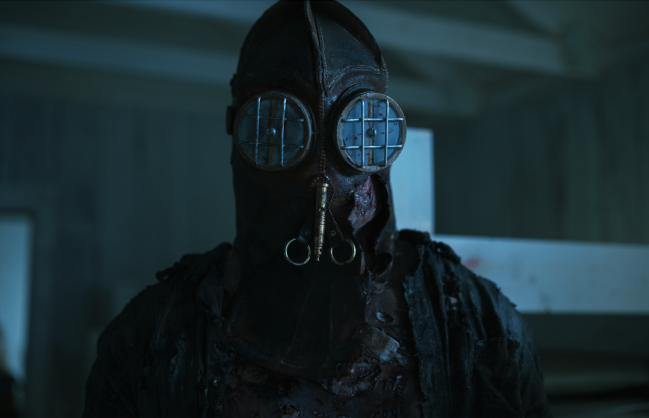
“In a Violent Nature: Part 2,” the sequel to the breakout indie slasher horror film “In a Violent Nature” from Independent Film Company and Shudder, has set a release date of February 12, 2027. The news was announced at New York Comic Con during Shudder’s panel, with Ry Barrett, who plays the masked killer Johnny in both films, making a surprise appearance at the convention.
“In a Violent Nature: Part 2” is the follow-up to the 2024 film, which made $4.5 million globally at the box office and followed a killer whose body was resurrected as a vengeful spirit determined to recover a locket that was buried along with him. The new film picks up immediately where the first ended and, of course, sees Johnny return and continue his violent rampage, this time leading him to a summer camp where a young, outcast camper is forced to spend the night with his counselor sister and her friends at their annual end-of-season party. His lore is also deepened, the kills get more intense, all good stuff.


The original film was arresting in that it told the horror movie from the perspective of the slasher himself, not his victims. Plus it was ultra violent in a way that one of our writers called “oddly comforting”? To each their own.
“Part 2” was first teased way back in February of this year, and attendees at Fantastic Fest also got a first look at the film last month. The film itself was announced shortly after the success of the original back in 2024.
The sequel is co-directed by Nate Wilson and Chris Nash, who also wrote the script. The film is produced by Peter Kuplowsky, Shannon Hanmer, and Nash.
Independent Film Company also this year released the killer shark thriller “Chum,” “Faces of Death,” and “Night Nurse,” and as IndieWire first reported, it produced the film “River” from director Josh Giuliano, which then flipped to Universal Pictures and Blumhouse as they look for the next “Obsession.”
>
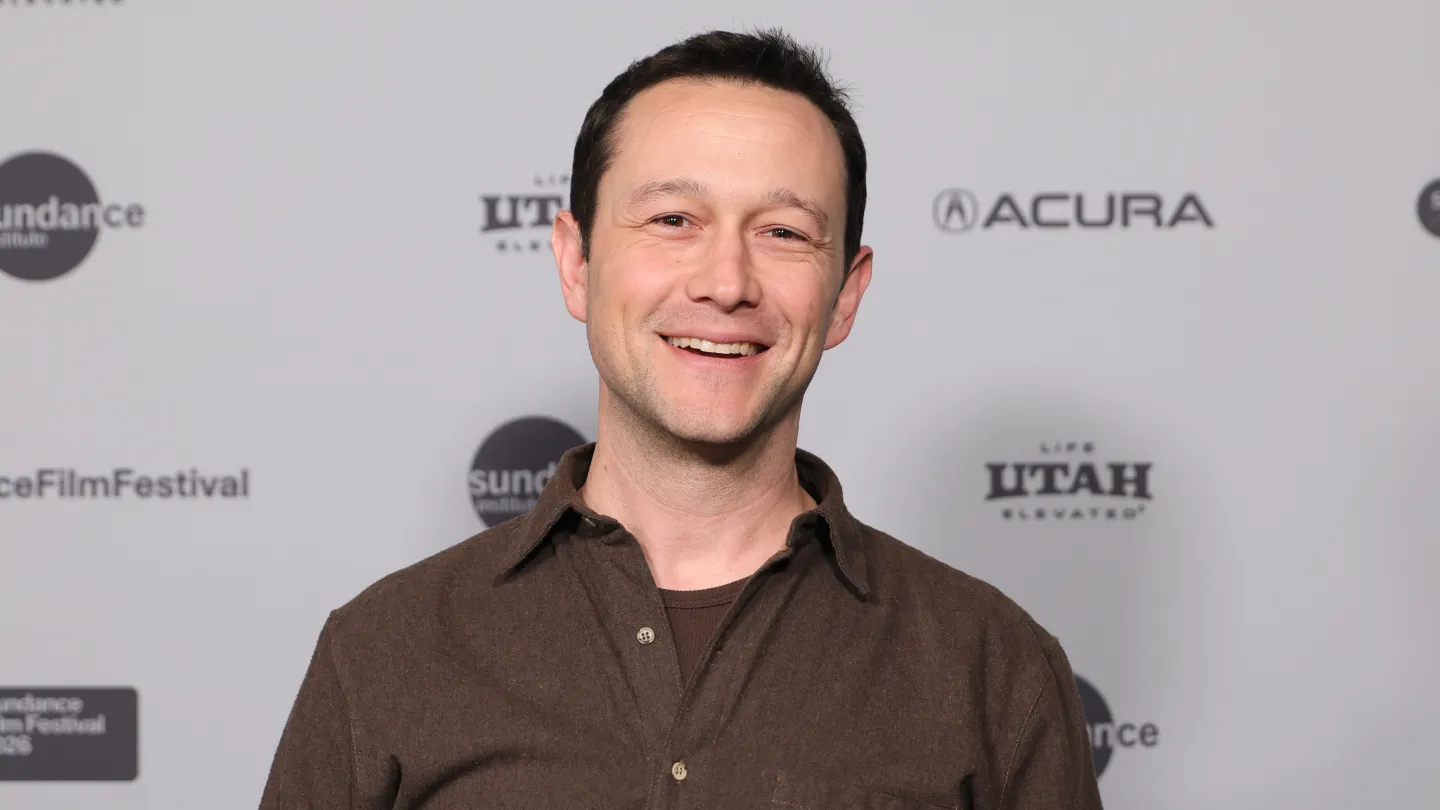
Joseph Gordon-Levitt, who was appointed the United Nations’ first global advocate for human-centric digital governance in March, is arguing that instead of being afraid of AI, “we should be concerned about the people building AI.”
In a new video interview with The New York Times, the actor was asked his current biggest fear about the technology. “I would object to that question just because reducing these concerns into one sound bite of fear — that’s one of the problems,” Gordon-Levitt responded.
“To me, saying: Oh, I’m scared that AI could exterminate all of humanity — that doesn’t really get at the substance of the concern. There’s real validity to that concern. But that’s not the thing that really worries me,” he said, explaining that his worries are “a lot more complicated and a lot more boring to talk about, because it’s a lot more dense,” citing “the decline of democracy, the decline of human empathy” as a concern.
“These companies are betting on the notion that they’re going to take over the entire economy. That would be totalitarianism, and that would be really bad,” Gordon-Levitt added. “Simultaneously, these models are being trained to hijack your intimacy, to make friends with you, to get you to fall in love with it. We shouldn’t be scared of an AI. We should be concerned about the people building AI.”
The Don Jon star previously opened up about his concerns about AI, arguing at a panel hosted by The Hollywood Reporter and Autodesk at Sundance that “we need to build a system for ongoing compensation” as the technology depends on “human input.”
He also joined a group of industry insiders last December to form the Creators Coalition on AI, with its mission being to provide “a central coordinating hub to upgrade our industry’s systems and institutions.” The group additionally has an advisory council that seeks “to establish shared standards, definitions and best practices as well as ethical and artistic protections for if and when AI is used in entertainment projects.”
>
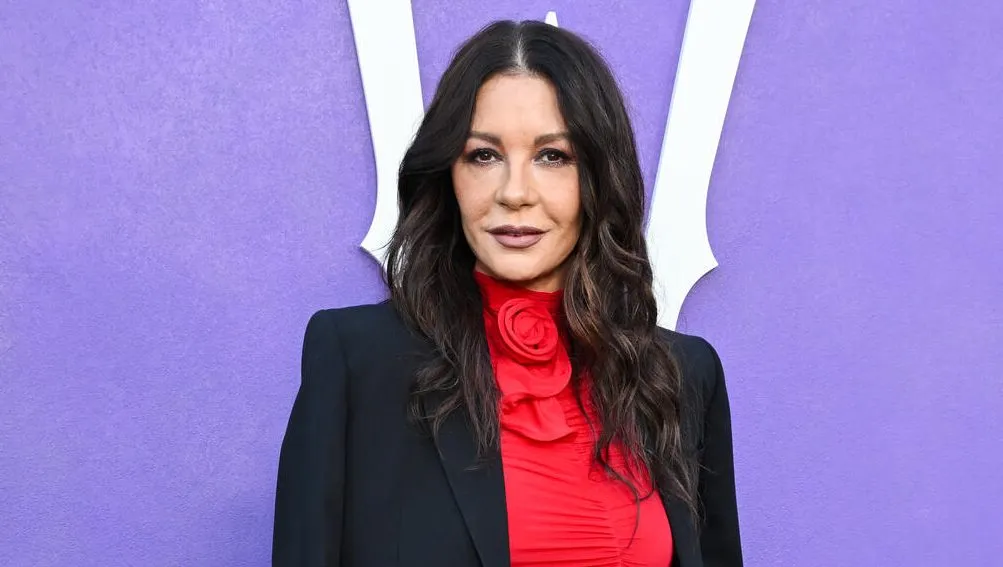
Catherine Zeta-Jones wants to see less AI “actors” onscreen and more undiscovered human talents.
The Oscar winner recently commented on actors that have “given themselves over” to artificial intelligence companies, explaining that she prefers “not knowing anything” about the actors she watches in movies and television.
“There’s so many actors already, who have given themselves over to an AI company, and that’s everyone’s choice,” she told the Associated Press. “But I like going to the theater and seeing real people talk.”
Zeta-Jones continued, “I like going to movies and not knowing anything about the actors. I don’t wanna know who they’re sleeping with, what they wore, what they drink in the morning, how they keep their figure. I wanna be taken away and see a character, and that has happened for years.”
The Kill Jackie star’s comments come amid ongoing concerns around AI’s plagiarism of copyrighted materials and the threat it poses to jobs in Hollywood and beyond, as well as recent warnings from those working in AI that continued progress could “cause a billion deaths.”
California Gov. Gavin Newsom signed an executive order last month to fast-track stringent oversight and control of AI. Convening “a group of world-leading experts” within the next 60 days, the order lays out a discussion of “safety plans” and “an emergency shutoff, or ‘kill switch,’ for frontier models.”
On a federal level, Trump has brushed off concerns about AI as “a hoax,” insisting the U.S. government “already have tremendous CRIMINAL and REGULATORY power” over AI companies.
>
UCLA's beautifully ugly win puts Oregon on brink of disaster, Bruins in Playoff contention

‘In a Violent Nature: Part 2’ to Release Valentine’s Day Weekend 2027
Ten-man Tottenham rescue late draw at Man United. Did Spurs deserve more?
-

 movies5 months ago
Search For Canadian TV Actor Stewart McLean Now Homicide Investigation
-

 Fashion9 years ago
These ’90s fashion trends are making a comeback in 2017
-
Fashion9 years ago
According to Dior Couture, this taboo fashion accessory is back
-
Fashion9 years ago
Model Jocelyn Chew’s Instagram is the best vacation you’ve ever had
-
Fashion9 years ago
Emily Ratajkowski channels back-to-school style
-
Fashion9 years ago
9 Celebrities who have spoken out about being photoshopped
-

 Anime4 months ago
Rurouni Kenshin: Hokkaido Arc Manga Takes 1-Issue Break – News
-

 Anime3 months ago
HIDIVE to Stream English Dubs for The World Is Dancing, The Forsaken Saintess and Her Foodie Roadtrip in Another World, The Dangers in My Heart: The Movie Anime – News