
Image: BBC/Clerkenwell Films Ltd./Kerry Spicer
BBC/Clerkenwell Films Ltd./Matt Towers


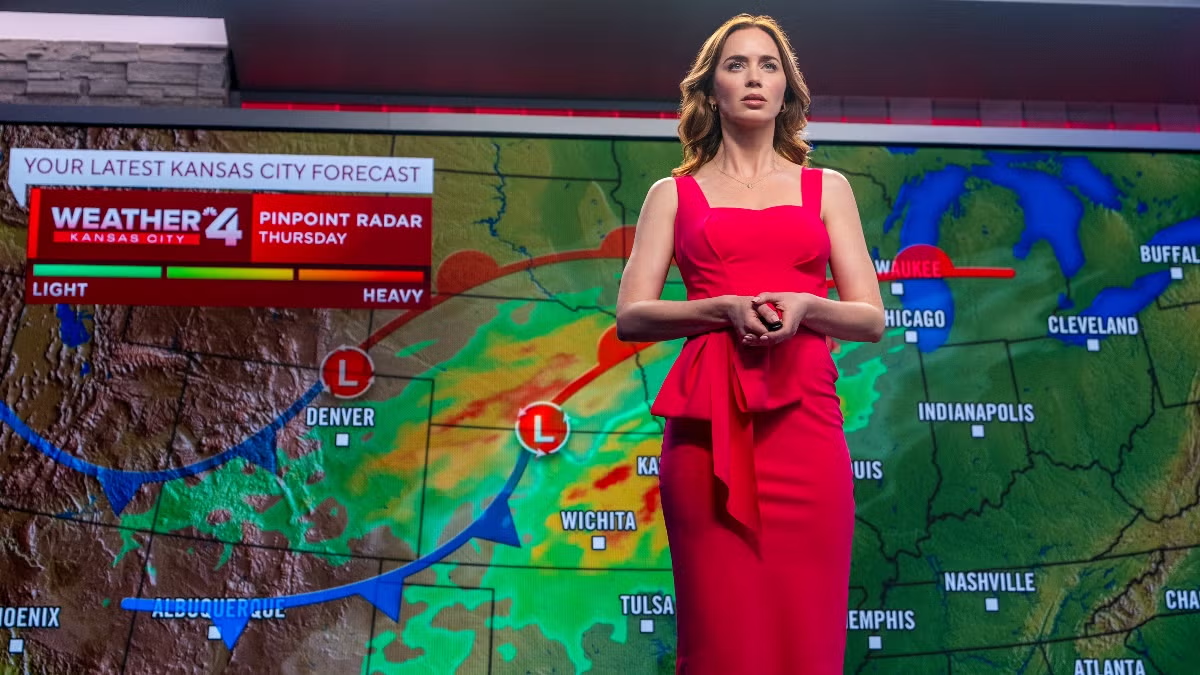
Emily Blunt refused to use Artificial Intelligence during a key scene in director Steven Spielberg’s new sci-fi film “Disclosure Day,” admitting that she is “a bit terrified” of the technology.
Blunt appeared on this week’s episode of “Hot Ones” to discuss not only “Disclosure Day” but other films, projects and moments from her career. Early in the interview, “Hot Ones” host Sean Evans asked Blunt about a “singular sequence” in “Disclosure Day” where her character starts abruptly making inhuman clicking and breathing sounds in the middle of a weather broadcast.
“It’s a four-minute oner that we shot that leads up to that moment where she’s gradually sort of disintegrating,” Blunt noted of the scene, “There’s various ways you could do it. You could go the AI route, which I’m a bit terrified of. I thought I could make some real, really strange sounds.”
“I said, ‘Maybe I could come in and we’ll just do a range of weird sounds,’ and it’s what we did,” Blunt continued. “I did sort of clicking sounds. I did sort of humming sounds, consonant sounds, breathing-strange sounds. And what we did was we put a one microphone here [by her mouth] and one here [by her throat], and so it kind of captures it in a really weird way. Then the sound designer went away and created that weird sound.”
You can watch Blunt’s full “Hot Ones” interview yourself below.
Blunt’s comments about refusing to use Artificial Intelligence in her “Disclosure Day” scenes reflect previous remarks that she, a one-time Oscar nominee, has made about AI. Last year, while promoting director Benny Safdie’s “The Smashing Machine,” she commented on Tilly Norwood, the AI-generated “actress” that made headlines in the second half of 2025.
“Good Lord, we’re screwed. That is really, really scary,” Blunt said when asked about Norwood during an appearance on Variety’s “Awards Circuit” podcast. She also reacted to then-recent reports that Hollywood talent agents had reached out about representing Norwood, remarking, “Come on, agencies, don’t do that. Please stop. Please stop taking away our human connection.”
Blunt’s “Hot Ones” admission comes at a time when certain studios and companies, including Amazon MGM Studios, are becoming more aggressive about their AI pursuits. Earlier this week, Amazon announced a new GenAI Creators’ Fund designed to greenlight and produce more AI-supported and generated entertainment titles.

>

On the one hand, Travis Knight’s “Wildwood” is an epic, eye-popping, and almost unfathomably well-crafted celebration of everything that makes Laika special — of everything that makes the Oregon-based stop-motion studio a singular force for good in a film industry where most companies are less interested in savoring the magic of animation than they are in seeing how many shortcuts they can take without breaking its spell. On the other hand, the remarkable time and care that went into “Wildwood” doesn’t prevent it from being the least enchanting of Laika’s films, even if its flaws help to reinforce the power of a story about how magic can persist in spite of itself.


The longest and most ambitious movie of its kind ever made, this sprawling fantasy saga about the overlap between reality and imagination — about a teenage girl in the Pacific Northwest who ventures into an enchanted kingdom to rescue her toddler little brother after he’s abducted there by a murder of crows — pushes the form to new extremes at a time when the rest of the business is hoping that audiences will learn to settle for less. It’s a mad feat of muchness.
Laika 3D-printed 142,000 different face models, hand-molded 728 individual trees, and used more than 715 miles of brass wire across 1,155 days of production. They created a “Braveheart”-style battle one frame at a time, built a perfect miniature replica of Powell’s City of Books to bring the movie’s version of Portland to life (complete with a Drag Queen Story Hour sign), and even designed tiny little Decemberists posters to adorn the heroine’s living room; she seems to be more of a fan of their post-“The Crane Wife” output, but I’m trying my best not to hold that against her.
That degree of loving attention comes at a massive price, of course (with one negligible exception, each of Laika’s films has cost more and grossed less than the one before it), but studio owner and Nike co-founder Phil Knight can certainly afford it, and it doesn’t hurt that his son is running the shop. Not all Hollywood nepo babies! In lieu of any prolonged fawning over the pursuits of a billionaire heir, let’s just say the Skydance merger would probably seem a bit less cataclysmic if David Ellison were capable of directing something as artful and transcendent as “Kubo and the Two Strings” (or even something as competent and colorful as last summer’s live-action “Masters of the Universe,” for that matter).
Which is all to say that “Wildwood” epitomizes why Laika should be treated like a national treasure: It’s stunning, it’s sincere, it’s possessed by a combination of American moxie and a Ghibli-esque willingness to push young audiences out of their comfort zones, and it’s seemingly at peace with losing enough money to sink any other animation studio on the planet. It is, in so many respects, the ultimate testament to what makes Laika unique. It’s also, in so many others, the first of their movies that doesn’t feel as special as it looks (and sometimes doesn’t look as special as it should feel).
Appropriately enough for a project that suggests Laika’s care may not be enough to preserve its magic, “Wildwood” is a story about losing faith in the wonder of the world. And appropriately enough for a project that still has so much to offer in spite of its flaws, “Wildwood” is also a story about how magic can persist in our lives even after we stop believing in it — even after its child-like purity gives way to something mottled and imperfect.
It’s a story that Knight and Laika’s go-to screenwriter Chris Butler have adapted from the 2011 novel of the same name by Decemberists frontman Colin Meloy, and from the Carson Ellis illustrations that brought that book to life. (Ellis is Meloy’s wife, and her album art is as crucial to the Decemberists’ identity as any of their early songs about castaways, cutouts, and homesick legionnaires.) The drawings were extraordinary, but the text — while unsurprisingly playful — was also tropey and wanting, and the wanting came in waves.
The visuals are exponentially more expansive and nuanced in this “Wildwood.” The writing is not. It is often charming though. It is dark. Very dark. Even by the standards of the animation studio behind “Coraline” and “Paranorman.” (Parents should be advised that the PG-13 rating is there for a reason from the first scene, even though I suspect this film will be broadly enjoyable for most older kids.) And, for a time, it is obviously — inimitably — the work of Laika, if only because no other studio would ever love Portland this much.
Teenage Prue McKeel (Peyton Elizabeth Lee), however, seems kind of over the hippie Never-never Land of it all. She rolls her eyes at her dad’s plant collection, and his juvenile bedtime stories about the “Impassable Wilderness” on the other side of The St. John’s Bridge, and probably also his beloved red beanie when he isn’t looking. (Mr. McKeel is voiced by a sweetly pained Jake Johnson.) Prue barely even acknowledges the guy riding a unicycle past her local coffee shop while playing the bagpipes from under a Darth Vader mask. It’s time for her to put childlike things aside. Things like her underdeveloped friendship with the nerdy Curtis Mehlberg (Jacob Tremblay), a lovably round-faced dork who’s still obsessed with playing tabletop fantasy games where he pretends to be a hero.

It’s Curtis who Prue (literally) bumps into when she takes her baby brother Mac downtown against her parents’ wishes, and it’s Curtis who’s there when a murder of computer-generated crows — more like a massacre, given their numbers — scoop Mac up and fly him toward the forest on the other side of the Willamette River. “There are places in the world people were never meant to go,” is what Mr. McKeel has always said about those woods, and sure enough Prue and Curtis have barely just biked there across the foggy train tracks before they’re beset upon by a fascistic talking coyote voiced by Tom Waits, the most loyal of the many animals that a grief-mad dowager governess named Alexandra (Carey Mulligan) has conscripted into her uncertain war against the realm.
Does she want to rule the Impassable Woods, or does she want to destroy them? Her intentions remain as difficult to parse as her plan for executing them (which has something to do with seizing control over a sentient and powerful breed of ivy), but it’s more important that Alexandra’s demented pathos allows her to be Jadis, Sarumon, and the Evil Queen from “Snow White” all at once, as her pain has soured the special love she felt for her late son into a more generic fixation with cheating death, or at least commanding it under her control. Mulligan sells the governess’ heartbreak and madness with every poison-tipped word, but her character’s struggle to negotiate between the five stages of grief is entombed within a fantasy saga that has a similarly hard time of harnessing its obsessions.
“Wildwood” is a mind-boggling visual smorgasbord on a scale that Laika has never attempted before, but the brilliance and density of its design can’t help but call attention to the ordinariness of its storytelling. While the movie is far too lovingly crafted to ever flatline altogether, a vertiginous discomfort kicks in after Curtis and Prue are split up (he’s forced to fight in the dowager governess’ army, while she’s imprisoned by the human bureaucrats she asks for help), as the singular genius infused into each frame seldom extends to the alchemy between them.
Individual sequences are incredible, Prue’s escape from the bureaucrats’ mansion chief among them, every new detail we learn about the Impassable Woods — and every new creature we meet within them — makes the film’s world seem less worthy of Laika’s painstaking attention. I adored the flamboyantly theatrical Owl Rex (instant “Celebrity Traitors” legend Richard E. Grant), and then felt betrayed that his only purpose was to establish Alexandra’s backstory. I was delighted to hear Mahershala Ali in the role of a bandit king named Brendan, and then disappointed that his character is reduced to a stock archetype in the fight against Alexandra.

Elsewhere, “Wildwood” makes slightly more surprising use of go-to voice actors Charlie Day and Awkwafina than most of the many animated movies they’ve been slotted into before, but it’s hard to shake the sense that Laika’s most ambitious project so far is also hedging its bets by stealing a page from “The Super Mario Galaxy Movie” and “Angry Birds 2.” So it goes in a film whose heroine — and whose studio — are both struggling to bridge the gap between kid sensibilities and more adult concerns, and yet there’s little beyond such meta-textual flourishes to help shape Prue’s journey of self-discovery, which is diluted into tedium by the parade of enchanted trees, friendly rats, and fearsome warriors she meets along the way. All the 3D-printed faces in the world can’t stop these characters from feeling two-dimensional, and the film’s strained efforts to fit Meloy’s novel into the stuff of an 131-minute story force Knight and co. to make compromises that “Wildwood” can only survive on the strength of its abundant wonder.
Despite his ample screentime as a co-lead, Curtis is nevertheless the most obvious victim of those compromises; while he makes sense as a counterweight to Prue’s headlong precociousness, he’s also never given much of his own reason to exist. A more adult film, or at least one more capable of exploring the life-long negotiation between holding on and letting go might have brought Prue’s mom (Maya Erskine) and dad to the fore after a mid-story revelation complicates their own relationship with magical thinking, but even that bombshell plot twist proves something of a dud in a movie that shares the McKeels’ struggle to split the difference between imagination and reality — a movie that strains to honor both sides of the equation, and ultimately serves neither to their fullest extent.
As tactile as it is dependent upon the sorcery of illusion, Laika’s brand of stop-motion animation is the ideal medium for transmuting that struggle into art. Perhaps that’s why the studio’s new reliance upon computer trickery — courtesy of a collaboration with Wētā FX — feels more like more of a symptom of Prue’s crisis than part of the solution to it. 670 of the movie’s 2,804 shots have been augmented by CGI, many of them too obviously to ignore. That’s not because the effects work is glaringly obvious (much of it is seamlessly woven into Laika’s signature look), but rather because it’s impossible. The film’s digital environments, cannon explosions, marching coyote armies, and soaring walls of wild ivy all fly in the face of what human hands can do, to the point that the movie’s most impressive scenes are partially deflated by the uncanniness of their creation.
Only partially, of course. Just as courage doesn’t mean the absence of fear, and growing up doesn’t mean leaving every trace of childhood astonishment behind, a trite story and a few digital embellishments don’t mean that “Wildwood” isn’t a rare spectacle worth savoring, or that Laika has somehow lost its way. Indeed, the film almost seems to deliberately court these defects, as if to focus its audience on appreciating the beauty that survives them. As one particularly wizened character tells Prue it: “You’re so intent on seeing no magic in the world, but you miss it in every blade of grass and budding flower.” To watch a Laika movie, even — or especially — this one, is to rediscover that magic everywhere you look.
“Wildwood” premiered at the 2026 London Film Festival. Fathom Entertainment will release it Wednesday, October 23 in theaters.
>
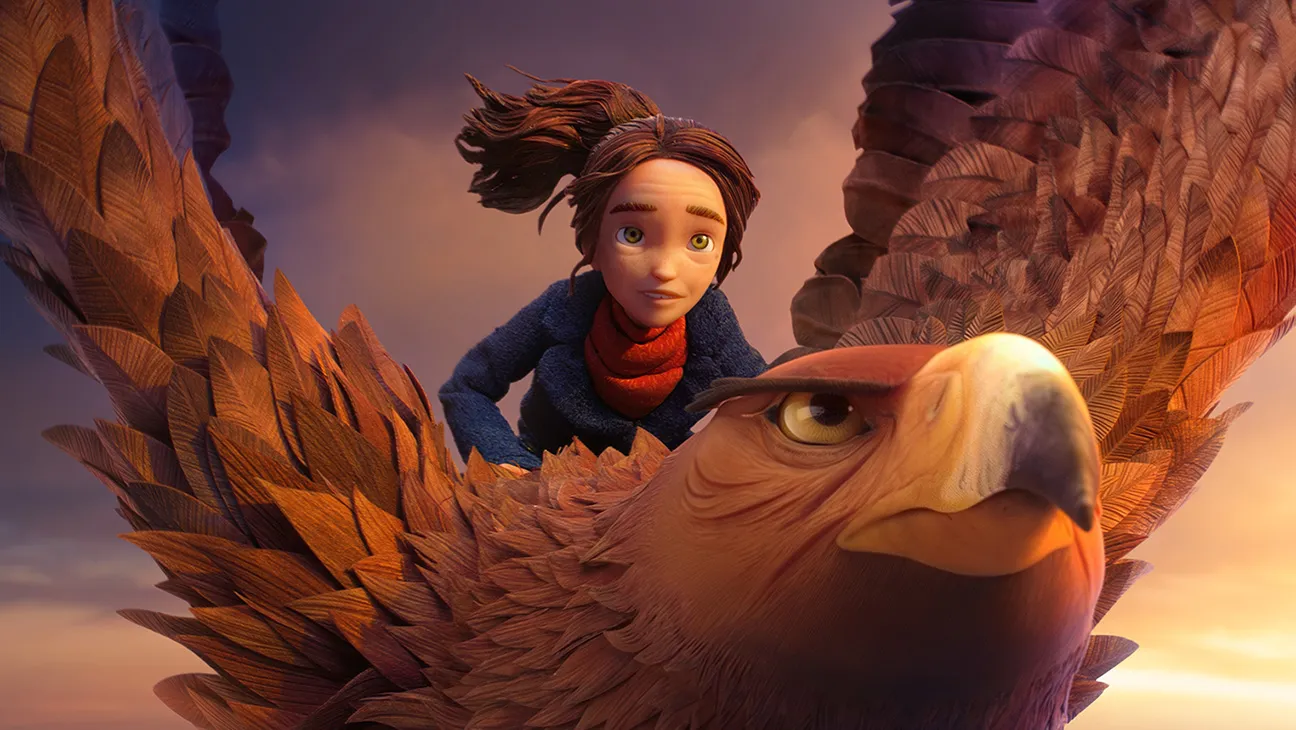
“I don’t know whether this is terrifying or adorable,” the central character in Laika’s new stop-motion animation film observes at one point. The answer is both, with Wildwood representing a staggering achievement from the company that has given us such superb efforts as Coraline and Kubo and the Two Strings. This breathtaking fantasy adventure runs 132 minutes, setting a record as the longest stop-motion movie, but it manages to be enthralling from first moment to last.
Based on Colin Meloy’s 2011 bestselling fantasy novel of the same name featuring illustrations by Carson Ellis, the expansive storyline revolves around teenage girl Prue (Peyton Elizabeth Lee), who lives in the Portland, Oregon, area with her loving parents (Jake Johnson, Maya Erskine) and baby brother Mac (Arthur Knight). Despite her folks’ strict instructions that Mac not leave the house, Prue takes advantage of their temporary absence to take him on a joy ride through Portland, winding up in a playground where he is suddenly abducted by a murder of crows in a scene that proves just as frightening as anything in Hitchcock’s The Birds (the film deserves its PG-13 rating).
Wildwood
The Bottom Line
Stupendous in every respect.
Release date: Friday, October 23
Cast: Peyton Elizabeth Lee, Jacob Tremblay, Carey Mulligan, Mahershala Ali, Angela Bassett, Awkwafina, Maya Erskine, Jake Johnson, Charlie Day, Tom Waits, Richard E. Grant, Amandla Stenberg, Tantoo Cardinal, Len Cariou, Marc Evan Jackson
Director: Travis Knight
Screenwriter: Chris Butler
Rated PG-13,
2 hours 12 minutes
Accompanied by her nerdy friend Curtis (Jacob Tremblay), who clearly has a crush on her, Prue desperately pursues the birds into the mysterious Impassible Wilderness located nearby and inhabited by talking animals, including coyotes in red military uniforms. They’re in the service of the dowager governess Alexandra (Carey Mulligan), who once ruled the kingdom but has become unhinged with grief after the accidental death of her 12-year-old son. We eventually learn that she has orchestrated Mac’s kidnapping as part of a nefarious pact involving black magic.
Trying to find her brother, Prue — aided by Curtis, who reveals previously unseen pluck and ingenuity — encounters a variety of colorful animal and human characters as both friends and foes. They include, among others, the General (Angela Bassett), the giant eagle leader of the Avian Principality; Brendan the Bandit King (Mahershala Ali), who becomes a strong ally; Septima (Awkwafina), a brave rat with whom Curtis forms a tight connection; and Iphigenia (Tantoo Cardinal), a wise, elderly sage who acts as a sort of Yoda stand-in for the story.
The narrative and visual imagination on display is truly stunning, but they’re overshadowed by the genuine feeling in the screenplay crafted by director and Laika CEO Travis Knight and writer Chris Butler (ParaNorman, Missing Link). Alexandra is far from a cartoon villain, her motivation stemming from the traumatic loss of a son whom she vainly tried to replace with a mechanical replica. The tender family bonds between Prue and her parents and infant brother provide beautiful grace notes, as does Prue’s growing respect and affection for her classmate Curtis, whom she once considered a “loser.”
There’s plenty of humor as well, stemming from the colorful characters and situations. At one point Prue finds herself meeting with Owl Rex (a delightful Richard E. Grant), a leader in the Avian Principality, in her efforts to find her brother. She tells him that she doesn’t believe in magic.
“And here you are, talking to an owl in a waistcoat,” he tartly observes.
And, of course, action abounds, culminating in an elaborate climactic battle sequence in which Alexandra’s coyote forces are commanded by the rabidly loyal Maksim, memorably voiced by Tom Waits.
With Caleb Deschanel behind the camera (it’s the six-time Oscar nominated cinematographer’s stop-motion debut, although he previously shot Jon Favreau’s photorealistic animated remake of The Lion King), Wildwood looks gorgeous throughout. But what’s truly astonishing is the sheer scope of the effort involved in the gargantuan stop-motion production that involved some 200 practical puppets and 130 practical sets to bring the elaborate story to life. Not to mention how the puppet characters, both animal and human, feel so thoroughly lifelike throughout, completely involving us in the emotion-packed storyline.
Much credit should also go to the voice performers — who also include such notable actors as Amandla Stenberg, Blythe Danner, Rob Delaney and Jemaine Clement — who give varied, complex performances rather than merely delivering the jokey asides permeating so many animated films.
Laika’s most ambitious effort to date, Wildwood may also be the company’s masterpiece.
>

EXCLUSIVE: What would happen if you took the “visual reference” of the Coen brothers and transported this vibe to the UK’s port town of Grimsby.
That question is posed in Shy & Lola, a BBC drama starring Harry Potter’s Bel Powley and The Night Manager’s Hayley Squires, which will be taken to buyers at MIPCOM next week before launching on the BBC.
In an interview with Deadline, Powley and Squires stressed the highly original nature of the Amanda Coe-penned series from Baby Reindeer maker Clerkenwell Films, but they did say the work of the Coen brothers influenced its look and tone.
“The Coen brothers often explore incredibly dark subjects, such as murder, death, blood and guns, but they shoot them in a way that gives the material a sense of levity and lightness,” said Powley. “I think that’s what the cinematographer was looking for visually.”
Squires said the “Coen brothers’ influence probably comes through in the humor” of Shy & Lola, which also “comes out in the geography where the stories take place and the things that are specific to that place.”
Revealed by Deadline several months back, Shy & Lola spotlights its protagonists, two very different women who are forced to become allies when a murder entangles them in the criminal underworld operating in Grimsby. Shy is a cleaner, scraping by and dreaming of a new life in Portugal. Lola is an ex-model-turned-grifter who arrives in town with trouble at her heels. The unlikely pair build an operation that threatens to blow the local bad guys out of the water, as opposing futures beckon.
Coe, whose credits include Apple TV’s Dior series The New Look and the BBC’s Apple Tree Yard, was inspired by Fargo.
“I love the idea that you can create a world of its own that resonates with the real world but is very heightened and blackly comic,” added Coe. “We use violence sparingly but in an interesting way. There’s a theme of violence going through the show without glorifying it.”
Shy & Lola is based on the French show Cheyenne & Lola starring Charlotte Le Bon and Veerle Baetens. BBC Studios approached Clerkenwell with the idea to adapt the French show and the indie immediately saw an opportunity to add its own twist. “It has that mix we love at Clerkenwell,” said Petra Fried, who runs the indie and is an EP on Shy & Lola. “It’s a darkly comic, propulsive story with real emotional depth underneath it. It’s funny and entertaining, but the stakes are very real, so you never stop caring about these women.”
Coe, who said she has a track record of making “female-led shows,” noted that there are major distinctions between Cheyenne & Lola and her version. “The French version starts with a character in their underwear looking amazing,” she added. “That is not the vibe of our show.”
“I’ve never witnessed that in a chemistry read before”
Image: BBC/Clerkenwell Films Ltd./Kerry Spicer
BBC/Clerkenwell Films Ltd./Matt Towers
In order for this “vibe” to work, the chemistry between the leads had to impeccable. Luckily, they matched perfectly. Powley and Squires are two actors at the top of their game, with BAFTA nominee Powley about to be seen as Aunt Petunia in HBO’s eye-catching Harry Potter, and Squires, who wowed in Ken Loach’s I, Daniel Blake a decade ago, playing a big role in the BBC and Prime Video’s The Night Manager.
“I’ve never witnessed that in a chemisty read before where you just go ‘wow’ after 10 seconds,” said Coe. “Together they were more than the sum of their parts.”
Squires admired Powley from when she had a small part in one of her breakout hits, Julia Jarrold’s rom-com A Royal Night Out. She said the pair quickly made a “silent pact to find the best version” of the characters they were playing. “We are quite different people but have a real understanding of each other,” she added. “That mirrors the characters of Shy and Lola. They essentially fall platonically in love with each other on screen, which was a beautiful relationship to play out.”
Powley also spoke to Shy and Lola’s “unlikely charm” and praised Squires for bringing “such gravity and being so grounded in her performances.”
Another “character” in Shy & Lola, according to Powley, is the port town of Grimsby, a place rarely represented in British TV or movies, although it is the home of Sacha Baron Cohen’s ill-fated 2016 comedy that bears its name.
Squires, who joked that when she first read the scripts she simply thought to herself, “How am I going to master the Grimsby accent,?” something she eventually did with the help of Grimsby-born Shy & Lola co-star Thomas Turgoose, said the setting brings with it a “sense of community.”
“There’s an ensemble of characters who make up the community where they work and live, and it has a real richness to it,” she added. “These aren’t people who despise where they come from or hate where they live. The majority of working-class people actually don’t [hate where they live].”
Squires thinks this “richness” has been lost somewhat in the recent depiction of working class communities, as she harks back to successful, multi-faceted 1990s shows like Our Friends in the North. “I feel as though that trend might have changed,” she added. “It’s the same with anything to do with class or culture; if your writer has knowledge of that community then it comes through.”
She is enthused by the success of shows like the BBC’s Sherwood, however, and throws her weight behind the national broadcaster as an “organization that has had to battle to hold its ground, and I think it has.”
BBC Studios will be selling Shy & Lola at MIPCOM this week.
>


Search For Canadian TV Actor Stewart McLean Now Homicide Investigation


These ’90s fashion trends are making a comeback in 2017
According to Dior Couture, this taboo fashion accessory is back
Model Jocelyn Chew’s Instagram is the best vacation you’ve ever had
Emily Ratajkowski channels back-to-school style
9 Celebrities who have spoken out about being photoshopped


Rurouni Kenshin: Hokkaido Arc Manga Takes 1-Issue Break – News


HIDIVE to Stream English Dubs for The World Is Dancing, The Forsaken Saintess and Her Foodie Roadtrip in Another World, The Dangers in My Heart: The Movie Anime – News