
Katseye on ‘Saturday Night Live’


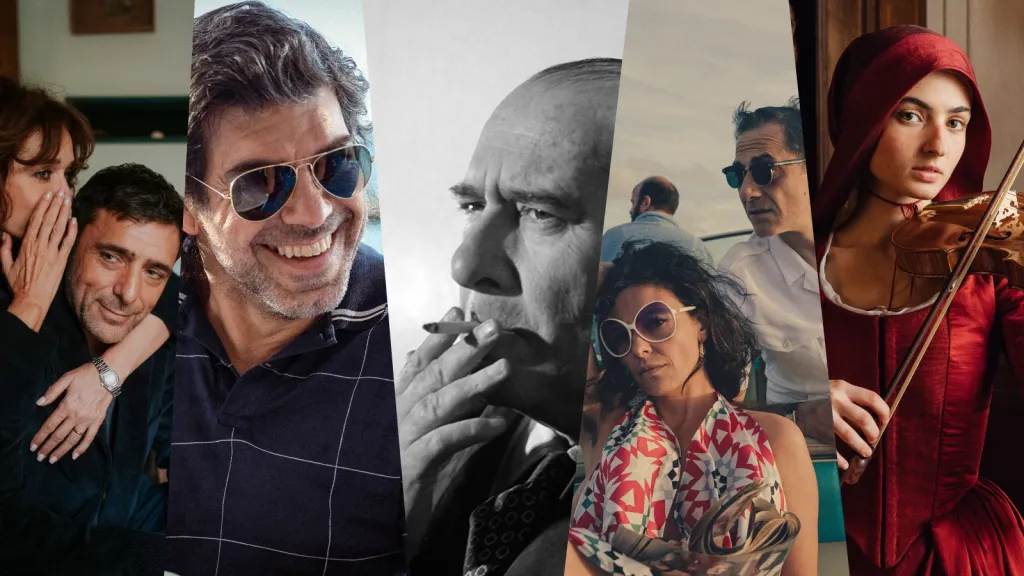
EXCLUSIVE: Open Roads: New Italian Cinema, the Italian cinema showcase hosted by Film at Lincoln Center and Cinecittà in New York City, returns for its 25th edition this year and will run from May 28 to June 4. Scroll down for the full list of titles.
The programme will feature 15 films, including nine North American premieres.
The event will open with a screening of Carolina Cavalli’s The Kidnapping of Arabella. The film stars Benedetta Porcaroli as a 28-year-old who runs away with a girl she believes to be a younger version of herself. Also starring are Chris Pine and Eva Robins. Like many of the titles in the Open Roads lineup, The Kidnapping of Arabella debuted at last year’s Venice Film Festival. Porcaroli won the Venice Orizzonti’s Best Actress award for her performance.
Laura Samani will bring her 2025 Venice Orizzonti title A Year of School to Open Roads for its North American premiere. The film follows a 17-year-old Swedish girl who enrolls in an all-male high school class in her new home of Trieste. Giacomo Covi won the Orizzonti Best Actor award for his performance in the film.
Other titles receiving their North American premieres at Open Roads include Andrea Di Stefano’s My Tennis Maestro, a sports comedy set in the 1980s that follows a 13-year-old budding tennis star and a former pro on a shared journey of training and competing along the Italian coast. And Andrea De Sica’s The Eyes of Others.
Elsewhere, veteran filmmaker Mario Martone returns to Open Roads with his latest Fuori. The film, which was nominated for nine Donatello Awards, including Best Film, Best Director, and Best Actress for Valeria Golino, follows a writer who lands in prison for an unexpected act. Inside, she creates a unique bond with some of the young inmates. Once released from prison, the women maintain their friendship to the surprise of everyone else in their lives.
Open Roads, this year, also celebrates the 120th anniversary of Roberto Rossellini’s birth. The event will screen Rossellini’s 1946 film Paisan and hand a North American premiere to the doc Roberto Rossellini, Living Without a Script from Ilaria de Laurentiis, Raffaele Brunetti, and Andrea Paolo Massara. The film is a portrait of the filmmaker using archival footage.
Open Roads is supported in collaboration with the Italian Cultural Institute in New York and with the support of NYU Casa Italiana Zerilli-Marimò, and the New York State Council on the Arts with the support of the Office of the Governor and the New York State Legislature.
Film at Lincoln Center Programmer Dan Sullivan described this year’s edition as “especially stimulating” with its focus on “spotlighting some of Italy’s greatest up-and-coming talent” while honoring Roberto Rossellini, a “pivotal, paradigm-shifting figure in the history of world cinema.”
“Taken as a whole, this lineup offers some interesting propositions about the present and future of Italian cinema, while also deeply engaging with its incomparable past,” Sullivan said.
Manuela Cacciamani, CEO of Cinecittà, hailed Open Roads as a champion of Italian cinema and said the event’s 25th edition was a distinct mark of success, but also provided “an opportunity to look ahead.”
“Perhaps in light of this anniversary, the selection of Italian films heading to Film at Lincoln Center feels especially dazzling—young, experimental, and full of new energy,” he said. “And there is a towering masterpiece: Paisà by Roberto Rossellini. A film that, 60 years ago, captured Italy with striking immediacy—alive with expressive urgency and hope.”
Cacciamani added: “Here they are: this year’s Open Roads films offer a moving snapshot of a vital and evolving Italian cinema, one that gives us real reason to be hopeful for the road ahead. Open Roads knows—and will continue to know—how to embrace this creative energy.”
OPEN ROADS 2026 LINEUP:
All films will screen at the Walter Reade Theater (165 W. 65th Street)
Opening Night
The Kidnapping of Arabella / Il rapimento di Arabella
Carolina Cavalli, 2025, Italy, 107m
Italian with English subtitles
New York Premiere
A delightfully idiosyncratic homage to sisterhood, Carolina Cavalli’s sophomore feature stars Benedetta Porcaroli as stifled 28-year-old Holly, who has a chance encounter with the titular 8-year-old (Lucrezia Guglielmino). Intuitively convinced that this girl is quite literally a younger version of herself, Holly runs away with Arabella and sets into motion a frequently comic and just as often profoundly reflective chain of events by which our heroines will strive to make peace with their pasts, their present, and their futures. Chris Pine makes an unforgettable appearance as Arabella’s deadpan novelist father. Porcaroli won the Orizzonti Best Actress Award at the film’s Venice Film Festival premiere, and she was nominated for a Donatello Award, alongside Cavalli’s nod for Best New Director, for her 2022 debut, Amanda. An Oscilloscope Laboratories release.
Thursday, May 28 at 7:00pm – Q&A with Carolina Cavalli and Benedetta Porcaroli
Wednesday, June 3 at 6:00pm
A Brief Affair / Breve storia d’amore
Ludovica Rampoldi, 2025, Italy, 100m
Italian with English subtitles
North American Premiere
A delectably funny and mischievous sex comedy that mines romantic infidelity to unforgettable effect, decorated screenwriter Ludovica Rampoldi’s feature debut at the helm boasts an all-star cast more than up to the task of performing her meticulously crafted games of the heart. Pilar Fogliati’s Lea meets cute with Adriano Giannini’s Rocco and they begin a hesitant affair, which takes a turn when Lea becomes a patient of Rocco’s therapist wife (a brilliant, devious Valeria Golino). A Brief Affair’s pleasures are unmistakably throwback, but Rampoldi unspools her drama with a sly, modern energy that makes its twists and turns all the more delightful. Rampoldi earned a nomination for Best New Director at this year’s Donatello Awards, and Golino was nominated for Best Supporting Actress.
Friday, May 29 at 6:00pm – Q&A with Ludovica Rampoldi
Tuesday, June 2 at 3:30pm
Agnus Dei
Massimiliano Camaiti, 2025, Italy, 73m
Italian with English subtitles
North American Premiere
A fascinating, patient observation of papal arcana, Massimilano Camaiti’s hypnotic and sensitive documentary captures the process by which, each year at the Monastery of Saint Cecilia in Rome, two newborn lambs are blessed and afforded treatment befitting His Holiness himself, cared for closely by a cloistered nun who prepares their wool for its destiny as part of a sacred vestment to be worn by the Pope on June 29, the Solemnity of Saints Peter and Paul. A Venice Film Festival selection in the College Cinema section, Agnus Dei is an indelible, transfixing glimpse at movingly mystical procedures carried out in a sacred, somewhat obscure place while the winds of change blow outside its walls.
Sunday, May 31 at 3:00pm
Thursday, June 4 at 12:30pm
Elisa
Leonardo Di Costanzo, 2025, Italy/Switzerland, 105m
Italian and French with English subtitles
Italian with English subtitles
New York Premiere
Leonardo Di Costanzo (The Inner Cage, Open Roads 2022) returns with this magnetic study of pathology and memory, based on real-life criminological research on perpetrators of violent crimes. Barbara Ronchi stars as the titular convict, 10 years into a prison sentence after having been convicted of murdering her sister without any apparent motive. Elisa claims to remember nothing about the crime and refuses to delve into her own past, but when she agrees to be a subject for a criminologist’s (Roschdy Zem) research, she finds herself confronting head-on her repressed feelings of guilt and the feasibility of something like redemption. Valeria Golino plays a supporting role as the grieving, insistent mother of a victim who meets with Zem’s criminologist. Nominated for two Donatello Awards, including Best Actress for Ronchi.
Friday, May 29 at 8:30pm – Q&A with Barbara Ronchi
Thursday, June 4 at 2:30pm
The Eyes of Others / Gli occhi degli altri
Andrea De Sica, 2025, Italy, 90m
Italian with English subtitles
North American Premiere
The latest from Andrea De Sica (Children of the Night, Open Roads 2017) is a captivatingly wicked, satirical parable about sexual obsession and the violence of power. An enigmatic, surprising Jasmine Trinca (who won the Monica Vitti Award for Best Actress at the Rome Film Festival) stars as Elena, a woman whose arrival on the private island of an exorbitantly wealthy marquis (Filippo Timi) inaugurates a by turns passionately tender, sordid, and murderous chronicle of the clash between love, eros, and reckless, ruthless privilege. The rich textures and thick ambiance of The Eyes of Others are pure high modernist 1960s Italian cinema, but De Sica unfurls the film’s winding intrigues with a contemporary sense of suspense, carnality, and visual boldness.
Saturday, May 30 at 6:00pm – Q&A with Andrea De Sica
Tuesday, June 2 at 8:30pm
Fuori
Mario Martone, 2025, Italy/France, 115m
Italian with English subtitles
New York Premiere
One of Italian cinema’s true latter-day maestros, Mario Martone returns to Open Roads (following a three-film sidebar with his film Nostalgia in 2023) with this richly traced, dimensional, and surprising real-life tale of the bond between three women who meet in prison—one of whom, Goliarda Sapienza (Valeria Golino, operating at the height of her powers), is a well-known writer. After the three are released, their relationship deepens amid the challenges of rejoining society on the outside. Based on a 1983 novel by Sapienza, Fuori is marked by Martone’s characteristically elegant dramatization, performed and embodied with an entrancing brilliance by a never-better Golino. Nominated for nine Donatello Awards, including Best Film, Best Director, and Best Actress for Golino.
Thursday, May 28 at 3:30pm
I Want Her Dead / Il quieto vivere
Gianluca Matarrese, 2025, Italy, 86m
Italian with English subtitles
North American Premiere
Mining decades-long conflicts within his own family to analyze the ties that bind in a small Calabrian village, Gianluca Matarrese boldly melds high-tension documentary and expressive fiction in this tale of enmity between Luisa and Imma, two sisters-in-law with a mutual axe to grind (to say the least). Matarrese delves into the history underlying these two women’s longstanding feud and arrives at a tragicomic, inventive meditation on the metaphysical possibility of reconciliation and forgiveness.
Sunday, May 31 at 12:30pm
La gioia
Nicolangelo Gelormini, 2025, Italy, 108m
Italian with English subtitles
New York Premiere
A blackly comic tale about the fragility of human connection in a cynical world, Nicolangelo Gelormini’s new film stars Valeria Golino as a cloistered high school teacher living under the oppressive thumb of her parents. An improbable relationship emerges between her and one of her students (Saul Nanni), a hustler selling his body to support his mother, and the fallout finds sexual repression and quasi-nihilistic social ambition colliding to terrible, engrossing effect. In a year of standout roles for Golino, La gioia might mark her most playful, surprising performance.
Friday, May 29 at 3:00pm – Q&A with Nicolangelo Gelormini
Tuesday, June 2 at 1:00pm
Mosquitoes / Le bambine
Valentina Bertani, Nicole Bertani, 2025, Italy/Switzerland/France, 105m
Italian with English subtitles
North American Premiere
The debut feature from sisters Valentina and Nicole Bertani is a swirling, stylish twist on the coming-of age film. Set in 1997, the film follows 8-year-old Linda, who hails from a wealthy family, as she meets two other girls, Azzura and Martha, forging a summertime sisterhood that protects them in clashes major and minor with the selfish, petty agendas of the adults in their midst. An especially visually striking debut, Mosquitoes exists in a saturated hyperreality that is consummately engrossing, and announces the Bertani sisters as formidable portraitists of girlhood cast against the backdrop of an alternately beautiful and oppressive world.
Sunday, May 31 at 5:30pm
Wednesday, June 3 at 8:30pm
My Tennis Maestro / Il maestro
Andrea Di Stefano, 2025, Italy, 125m
Italian with English subtitles
North American Premiere
A sports comedy with a big heart, the latest from Andrea Di Stefano reteams the director with his Last Night of Amore star Pierfrancesco Favino for a charming, sensitive tale of the crushing expectations levied upon young athletic prodigies. Set in the late 1980s, the film follows 13-year-old Felice (an exceptional Tiziano Menichelli), a budding tennis star whose overbearing father hooks him up with Raul Getti (Favino), a flameout former pro with a new lithium prescription and a serious ladies-man streak. Raul and Felice set off on a shared journey of training and competing along the Italian coast as Felice struggles to figure out his identity outside of his on-the-court gifts, while Raul questions whether his eminently laid-back approach is a good fit for his star pupil.
Sunday, May 30 at 8:45pm – Q&A with Andrea Di Stefano
Orfeo
Virgilio Villoresi, 2025, Italy, 74m
Italian with English subtitles
North American Premiere
A visual adventure marked by formal ingenuity and a profound feeling for dream logic, Virgilio Villoresi’s singular take on the myth of Orpheus is an entrancing celebration of the possibilities of cinematic artifice. Villoresi reenvisions Orpheus as a loner pianist whose gaze meets that of a stranger, Eura, at the club where he performs one night; they fall in love, only for Eura to disappear almost as suddenly. Orpheus catches a glimpse of her some time later and follows her into what we come to realize is a visionary, sensual reimagination of the underworld. Adapted from Dino Buzzati’s 1969 graphic novel Poema a fumetti, Villoresi’s feature debut combines beautiful 16mm photography, lovingly handcrafted sets, meticulously orchestrated stop-motion animation, and in-camera optical effects to arrive at a mesmerizing, artisanal work that announces its director as one of Italian cinema’s most exciting new voices. An Oscilloscope Laboratories release.
Sunday, May 31 at 8:45pm
Wednesday, June 3 at 3:30pm
Primavera
Damiano Michieletto, 2025, Italy, 111m
Italian with English subtitles
New York Premiere
The improbable relationship between a young orphan violin virtuoso and composer Antonio Vivaldi in early-18th-century Venice is at the heart of acclaimed opera and theater director Damiano Michieletto’s debut feature. Cecilia (Tecla Insolia) lives at the Ospedale della Pietà, a secluded home for abandoned girls run by no-nonsense nuns, while she awaits the return of the man with whom she will enter an arranged marriage when he returns home from war. But when the Pietà brings on Vivaldi to serve as their new musical instructor, Cecilia’s life takes a turn, and the possibility of a hitherto unimagined future emerges. Written by Ludovica Rampoldi (whose own directorial debut, A Brief Affair, is also in this year’s edition of Open Roads), Primavera is a gripping, gorgeously realized meditation on the seldom-simple relationship between talent and destiny.
Friday, May 29 at 12:00pm
Wednesday, June 3 at 1:00pm
Roberto Rossellini, Living Without a Script / Roberto Rossellini, Più di una Vita
Ilaria de Laurentiis, Raffaele Brunetti, Andrea Paolo Massara, 2025, Italy, 96m
Italian with English subtitles
North American Premiere
2026 marks the 120th anniversary of the birth of Roberto Rossellini, one of 20th-century Italian cinema’s undisputed masters. But as this rich new documentary shows us, Rossellini found himself at a particularly challenging point in his career 70 years earlier, in 1956, reeling from the mixed response to his legendary films with wife Ingrid Bergman as their marriage appears to be at the point of collapse. An invitation from the Prime Minister of India, Jawaharlal Nehru, to shoot a documentary about modern India marks a reinvention for Rossellini and an exciting new development in his iconic artistry. Using a wealth of archival footage, this deeply pleasurable documentary paints a dazzling portrait of Rossellini across the years leading up to his death in 1977, and is an ecstatic, cinephilic tribute to one of world cinema’s true titans.
Monday, June 1 at 6:00pm – Introduction by Ingrid Rossellini
A Year of School / Un anno di scuola
Laura Samani, 2025, Italy/France, 102m
English, Italian, and Swedish with English subtitles
North American Premiere
The latest from Laura Samani (Small Body, Open Roads 2022) recasts a 1929 novella by Giani Stuparich in 2007 Trieste, following 17-year-old Swede Fredrika (Stella Wendick) as she enrolls in an otherwise all male class at the local technical high school after her father uproots her family following his reassignment to the city by his employer. Fredrika’s friendships with the boys in her midst transform her, leaving her navigating the currents of burgeoning adulthood. Featuring an especially magnetic performance by Giacomo Covi, who won the Orizzonti Best Actor Award at the Venice Film Festival.
Tuesday, June 2 at 6:00pm
Roberto Rossellini 120th Birthday Tribute Screening
Paisan / Paísa
Roberto Rossellini, 1946, Italy, 126m
English, German, and Italian with English subtitles
Roberto Rossellini followed up his paradigm-shifting Rome, Open City with this exceptionally ambitious anthology film set at the end of World War II, chronicling the liberation of Italy from a multitude of perspectives gathered from across the country. Marked by the documentary-infused directness of Rome, Open City, the film’s cast of professional actors and striking nonprofessionals enact a kaleidoscopic account of the extreme consequences of life during wartime, as well as the emerging relations between American soldiers on their liberation campaign and the Italian civilians they cross paths with. A crucial installment of his War Trilogy (alongside Rome, Open City and Germany Year Zero), Paisan endures as one of the great cinematic depictions of the effects of war on the lives of everyday people—and a signature work in Rossellini’s astonishing oeuvre.
Monday, June 1 at 8:30pm – Introduction by Ingrid Rossellini
>
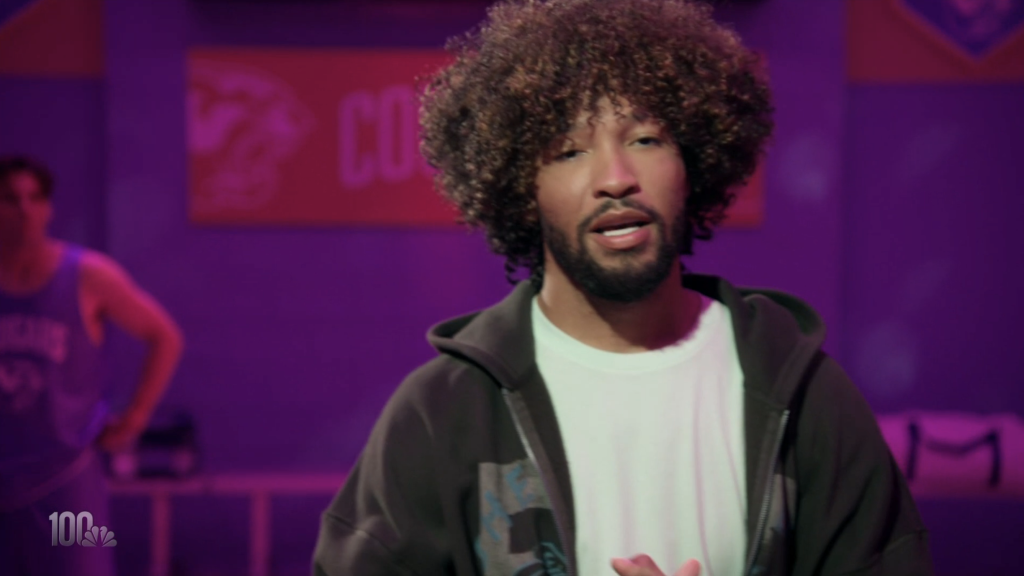
Following the Knicks’ big win at Madison Square Garden, Jalen Brunson took the stage at 30 Rockefeller Center for his Saturday Night Live hosting debut.
On Saturday’s Season 52 premiere, the NBA Finals 2026 MVP showed off some comedic chops in an otherwise business-as-usual episode of the NBC sketch comedy show, which featured Katseye as its musical guest.
Introducing new cast members Grace Reiter and Saidah Belo-Osagie, Katseye returned to a parody season of The Debut: Dream Academy to crown a new girl group. The quartet also performed in a mini music video with the awkward group of ladies, also featuring Jane Wickline and Veronika Slowikowska.
The next sketch was a support group featuring Brunson as one of several men whose spouses were grinded on at Usher and Chris Brown’s The R&B Tour.
“When I spent $1,200 on that meet-and-greet, I never expected her to actually greet his meat,” said Brunson as the other group members comforted him.
Katseye on ‘Saturday Night Live’
Jeremy Culhane and Jalen Brunson in ‘Saturday Night Live’
Jalen Brunson, Jeremy Culhane and Ben Marshall on ‘Saturday Night Live’
Brunson also starred in the parody sketch High School Musical: The New Generation as an athletically gifted new student who hilariously keeps dunking on the new Troy Bolton stand-in (Jeremy Culhane) and steals his girlfriend (Slowikowska).
As Shark Tank judge Daymond John, Brunson asked if the invention Respectacles, a pair of glasses that sounds an alarm when the wearer looks at breasts, “works for ass.” The inventors’ (Culhane and Ben Marshall) presentation keeps getting interrupted as they check out Lori Greiner.
Saturday Night Live kicked off its 52nd season this weekend on NBC with host Brunson and musical guest Katseye. The season continues with guest hosts Dakota Johnson, Shane Gillis and Inde Navarrette, along with musical guests Turnstile, Rosalía and Gracie Abrams.
>
For those wondering how SNL‘s new cast members factored into tonight’s season premiere, the answer is: not much.
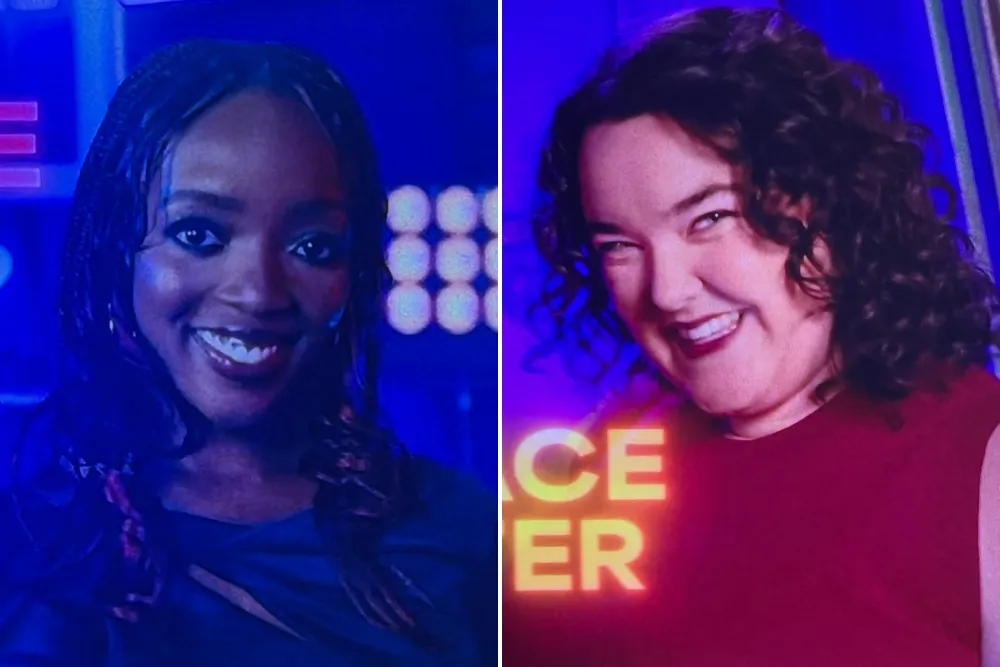
The two new featured players, Saidah Belo-Osagie and Grace Reiter, were introduced together, as part of an early sketch on the search for reality competition The Debut: Dream Academy‘s next breakout girl group.
Belo-Osagie played Neelsa Boyce, a 17-year-old entrant who sought to become a pop star after playing Young Nala in The Lion King on Broadway when she was a kid.
Reiter got more screen time as Margle, who “only wear [s] flip flops because I keep passing out when I try to tie my shoes.”
After she’s first introduced onscreen, Margle shows up fully nude to a dance choreography session. We later learn that she and another eccentric contestant on the series named Duff (Jane Wickline) were only invited to participate after witnessing an executive behind the show, played by Ashley Padilla, committing a hit and run.
Margle is surprised to learn what Dream Academy is actually about, as a show: She says she thought it was a “show where you learned to control dreams.”
Subsequently, she pitches “Moose Knuckle” as a band name and the line “Newton’s Cradle, come and get it” during a songwriting exercise.
The sketch culminates with a performance by the final girl group, featuring Margle, who performs the hot new single “Newton’s Cradle” alongside The Debut Season 1’s KATSEYE (who happened to be the SNL season premiere’s musical guest).
Reiter made one other appearance tonight in the night’s final sketch, which opens on host Jalen Brunson (of the recent NBA Finals-winning New York Knicks) in the locker room. He won’t be meeting with reporters after tonight’s game, he says — though he’s visited regardless by a grey-haired Kenan Thompson, who reveals himself to be the NBA star’s third-grade coach — you know, the one who had a “really bad drinking problem”?
Coach Dennis has come around seeking a “small loan” and in hopes of getting Brunson to read his porno screenplay. Thompson introduces Reiter as Tonya, an immigrant who came to the U.S. eight years ago with a dream, who he hopes to rope into his porn. Kam Patterson also features in the sketch, which culminates in his, Reiter and Thompson’s characters stealing jerseys from the empty locker room and running away.
That was all the night had in the cards for Belo-Osagie and Reiter. Often, SNL will use its Weekend Update segment to help break in its new talent, though special segments of tonight’s presentation were instead devoted to special panelists Dario Amodei (played by Wickline) and Tucker Carlson (played by Jeremy Culhane).
Before returning for the new season, SNL said goodbye to Chloe Fineman and writer-performer Martin Herlihy, who was first introduced on the show as part of the trio Please Don’t Destroy. Other returning cast includes Kenan Thompson, Michael Che, Colin Jost, Mikey Day, Sarah Sherman, Marcello Hernández, James Austin Johnson, Andrew Dismukes, Ben Marshall, Tommy Brennan, Kam Patterson and Veronika Slowikowska.
Jalen Brunson, point guard for the 2026 NBA Finals-winning New York Knicks, hosted the kickoff episode for Season 52. Upcoming episodes will pair Dakota Johnson & Turnstile (October 3), Shane Gillis & Rosalía (October 10) and Inde Navarette & Gracie Abrams (October 31).
>
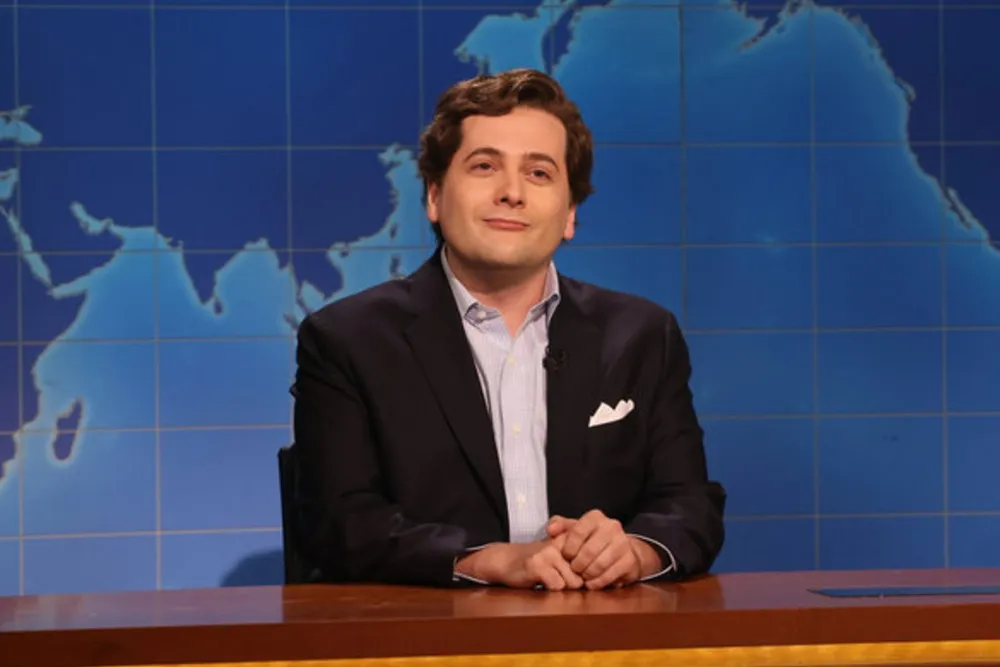
Saturday Night Live’s Weekend Update was back and focused on the movie business.
Jeremy Culhane returned as Tucker Carlson and he was giving his thoughts on the summer’s slate of blockbusters.
“It’s movie time, let’s find our seats, silence our cell phones and abandon Christian values,” he opened. “Of course, I’m talking about Paw Patrol: The Dino Movie. Let me get this right: Jesus didn’t live at the same time as the dinosaurs but Paw Patrol did? What are we doing? What’s going on?”
Other kids movies in the spotlight were Toy Story 5 and Minions and Monsters.
“It was also a big summer for Minions and Monsters and no I’m not talking about the children’s film, I’m talking about the Trump cabinet. That’s right, I’ve turned on Trump, I’m so brave,” he said.
On the fifth installment of Disney’s Tom Hanks-narrated film, he added, “Let me understand this, you’ve got a friend in me and his name is Woody?”
It wasn’t just the kids slate that took a hit. Culhane’s Carlson also had some words for Christopher Nolan’s The Odyssey, Spider-Man: Brand New Day and Obsession.
“The Hollywood cabal shoots its filth with millimeters, or what I like to call it, the gay edge. I like The Odyssey, it’s so nice to see Greek people do something other than make women feel uncomfortable,” he said.
On Tom Holland’s superhero flick, he said, “Everybody Loves Spider-Man: Brand New Gender. Spider-they, Spider-them, uses whatever bathroom it feels like.”
On Curry Barker’s horror movie, he added, “Obsession, the left’s idea of a horror movie is that a woman is forced to love a man. Oh no, help, I’m being chased by a heterosexual relationship.”
All of this came after Weekend Update anchor Michael Che took aim at David Ellison’s Paramount+ and Taylor Sheridan.
“The White House responded to major news networks canceling coverage of President Trump by launching a live stream called Trump TV. But if that’s Trump TV, what the hell is Paramount+?,” joked Che.
The shows on screen? Sheridan’s Yellowstone, prequel 1883, spinoff Dutton Ranch and Sylvester Stallone-led Tulsa King.
>


Search For Canadian TV Actor Stewart McLean Now Homicide Investigation


These ’90s fashion trends are making a comeback in 2017
According to Dior Couture, this taboo fashion accessory is back
Model Jocelyn Chew’s Instagram is the best vacation you’ve ever had
Emily Ratajkowski channels back-to-school style
9 Celebrities who have spoken out about being photoshopped


Rurouni Kenshin: Hokkaido Arc Manga Takes 1-Issue Break – News


HIDIVE to Stream English Dubs for The World Is Dancing, The Forsaken Saintess and Her Foodie Roadtrip in Another World, The Dangers in My Heart: The Movie Anime – News