
Anime
Glasses With a Chance of Delinquent Volumes 1-3 Manga Review – Review

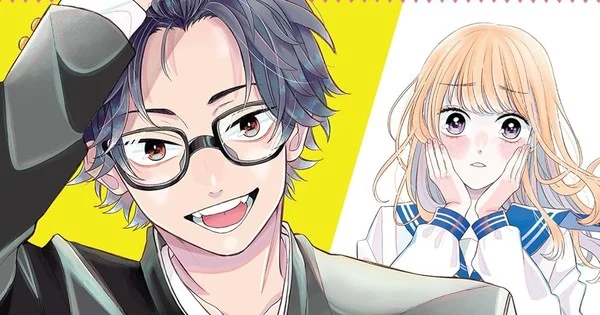
The high school debut or glow-up has become a staple of shoujo and shounen romances in recent decades. You know the story: a kid who was bullied or ignored or perhaps bad in middle school decides that since high school is a chance to start over, they’re going to make some serious changes and become someone different – possibly better. For Momose, the impetus behind her efforts is the fact that she was picked on and bullied by the bad actors at her middle school, the delinquents and the gyaru. Determined not to be a target this time, she’s dyed her hair, gotten contacts, and is going to present herself as someone aggressively normal who no one would want to target. And so far, it’s going great…
…which means that there’s no way it can last. Enter Ichikura, the bespectacled, studious boy in her class. Ichikura largely floats by under the radar with a reputation as one of the good, smart kids, and he’s even the sole member of the Helpers Club, which devotes itself to lending a hand to anyone who needs it. He seems completely harmless. But as Momose soon discovers, he’s also enacting a high school debut: he’s transforming himself into a nerd from a delinquent, and those aren’t two personas that shift particularly easily. That’s a nice way of saying that Ichikura’s not doing a great job of hiding his past, and Momose figures him out pretty quickly.
If there’s one thing that these volumes have going for them, it’s that both Ichikura and Momose earnestly want to change. It’s not easy, but they’re truly trying. Both of them slip back into their old selves with an ease that reminds readers how long they spent in those guises and what brought them to the point they wanted to change. At the end of the first book, Ichikura asks Momose out so that he can prove to her that he’s not like the guys who made her life hell in middle school, and while he does slip when an old acquaintance pops up in the second book, he apologizes for scaring her. In volume two, an upperclassman who happens to be a gyaru comes to the Helpers Club for aid, and Momose is sent careening back into her past – she’s instinctively afraid of the girl. But she musters up her courage and tries not to let the older girl get to her. These kids stumble a lot, but they largely keep themselves from falling.
The pair is dating as of the end of volume one, and that mostly works for the story. They must be closer in order to continue to effectively change (at least within the confines of a romance), and it opens the door for their very different life experiences to clash a bit. Ichikura, for example, is much more comfortable in the dating sphere than Momose is – and he’s fully cognizant of that. While Momose is fluttering around, wondering if kisses really taste like lemons, Ichikura is trying not to scare his girlfriend off – at least, until the end of volume two, that is. He’s much more conflicted when it comes to their relationship, not in the sense that he’s not sure he wants to date her, but rather in his attempts to handle the relationship in a way that won’t freak her out while wanting rather more. It takes them several near-misses before they kiss (it does not taste like lemons), and once he feels he has permission, he takes any opportunity to put his arm around her waist. She’s clearly not comfortable with this, and volume three takes a few turns into dangerous territory where Ichikura comes off as a creep. While statements like “I’m yours, and you’re mine” can sound romantic, if possessiveness isn’t your idea of romance, volume three won’t work for you.
Creator Naruki does, however, get credit for totally turning the no-chance rival storyline on its head. When a middle school acquaintance of Ichikura’s turns up in volume two and later transfers to their school, it’s not because he has a crush on Momose. No, he’s there because he wants to be friends with Ichikura, and he’s trying to wrap his head around Ichikura’s self-proclaimed transformation from delinquent to nerd. While this does bring on a jealousy subplot, it’s overall a great subversion of the typical romance love geometry – and I imagine that for some readers, jealous Ichikura will be alluring.
This is Naruki‘s first serialization, and that shows at times. (Their assumption that volume two would be the end of the series is the most obvious.) But you can see them getting more comfortable with their craft and series as these books go on, as page layouts become easier to follow and the character writing sharpens. This isn’t reinventing the wheel, but it’s a fun turn of it, and if you’re a fan of shoujo romances, I think it’s safe to say that you’ll have a good time with Glasses With a Chance of Delinquent.
>
Anime
We Are Aliens Film, Eri Short Anime, Candy Caries Win at Ottawa Int’l Animation Festival – News


©NOTHING NEW, MIYU PRODUCTIONS
NOTHING NEW‘s We Are Aliens (Ware Ware wa Uchūjin) anime film, Honami Yano‘s Eri animated short, and Tomoki Misato and Wit Studio‘s original television anime Candy Caries were all awarded at the 50th Anniversary Awards Ceremony of the Ottawa International Animation Festival, on Saturday. We Are Aliens won the Grand Prize for Animated Feature, Eri won the Best Animated Short Award, and Candy Caries won at the Animation for Young Audiences 7+ Competition.
We Are Aliens opened in Japan on Friday. Kōhei Kadowaki directed the film. The film screened at the Directors’ Fortnight of the Cannes Film Festival on May 14, and screened in competition at the Annecy International Animation Film Festival, which ran from June 21 to 27. Aside from the Ottawa International Film Festival (OIAF), the Melbourne International Film Festival (MIFF) and the New Zealand International Film Festival (NZIFF) also screened the film. The film will screen in the “Japanese Animation Special: Masterpieces of Madness, Exhilarating Prospects 12+1” category of the 31st Busan International Film Festival (BIFF), which will take place on October 6-15.
Kadowaki, who created the second BEASTARS season’s ending sequence and music videos for YOASOBI, served as the film’s planner, scriptwriter, director, storyboard artist, and editor. Yaffle — who previously produced music for Fujii Kaze, Kenshi Yonezu, and others — composed the music. NOTHING NEW planned and produced the film, and French studio Miyu Productions (Ghost Cat Anzu, A New Dawn) collaborated on the production, after joining on the project in June 2025. adieu performs the film’s theme song “Sasakure” (Split).
Director Honami Yano describes Eri:
In a world where dairy cows must bear calves to survive, Eri, a Holstein, falls in love with another cow.
Her sighs linger through sleepless nights — will they find their way to the one she loves?
Yano (A Bite of Bone, ChromosomeSweetheart) wrote the script, animated, and directed the Japanese-French production Eri short. It is an adaptation of Kasumi Asakura’s 2008 Hoka ni Dare ga iru (Who Else is There?) novel. The short had its world premiere at the Directors’ Fortnight of the Cannes Film Festival held on May 14.

©Tomoki Misato/WIT STUDIO/トゥースフェアリーズ
The Candy Caries original television anime premiered within the Yoru no Brunch variety program on TBS on April 15. Amazon Prime Video streams the anime.
Misato (Pui Pui Molcar) and Wit Studio are credited for the original work. Misato is directing the series at TORUKU from WIT STUDIO. Kenshirō Morii (Anime-Gataris, Grand Blues!) serves as assistant director. Chiaki Nishiaka (The Ancient Magus’ Bride, Shinkalion Change the World) writes the script and Akari Saitō (Etotama, Spy×Family) edits the series. Keigo Hoashi (Summer Time Rendering, Dusk maiden of Amnesia) composes the music.
The Candy Caries anime is a slapstick comedy about Ame, a child who loves sweets, and the tooth decay that lives in her mouth called Caries. Caries lives a carefree life inside Ame’s mouth and even calls her “Mama,” and Ame’s body is always at Caries’ mercy.
Candy Caries was first revealed as a stop-motion anime promotional video in 2021 after Wit Studio had established a stop-motion studio with Misato in December 2020.
According to Misato, he used plastic board and acrylic for Candy Caries, and describes it as a semi three-dimensional animation that’s “flat like an illustration, but plump and thick.”
Source: Press release
>
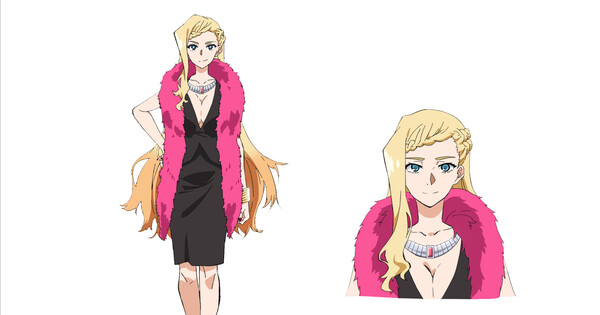
The staff for the television anime of Sho Kasugai‘s Millennium Family (Odoru Sennen Kazoku) manga announced on Sunday that Lynn will voice the character Eve, the eldest daughter of the Benfield family.

©春日井晶・少年画報社/「踊る千年家族」製作委員会

©春日井晶・少年画報社/「踊る千年家族」製作委員会
The anime will air on TBS and other stations.
The anime will star:
- Rikuya Yasuda as Theo
- Katsuyuki Konishi as Hayden
- Ryōta Suzuki as Hugo
Masato Jinbo (Fate/kaleid liner Prisma Illya 2wei!/2wei Herz!/3rei!!, Chaos;Child, The Rising of The Shield Hero Season 2) is directing the anime at PartsCraft, and is also supervising the scripts. Hiroshi Yoneda (Fate/kaleid liner Prisma Illya: Vow in the Snow) is the character designer and chief animation director.
AI localization company Orange Inc.‘s e-bookstore service emaqi licensed the manga, and it describes the story:
Seven immortal siblings born in England possess humanity’s ultimate dream: eternal life. But their gift makes them targets for the criminal underworld, corrupt hospitals, and international military organizations!
After centuries apart, this extraordinary family reunites for a thrilling new chapter in their lives.
Kasugai launched the manga in Shōnengahōsha‘s Young King Ours magazine in March 2021. Shōnengahōsha released the manga’s ninth compiled book volume on July 30.
Source: Press release
>
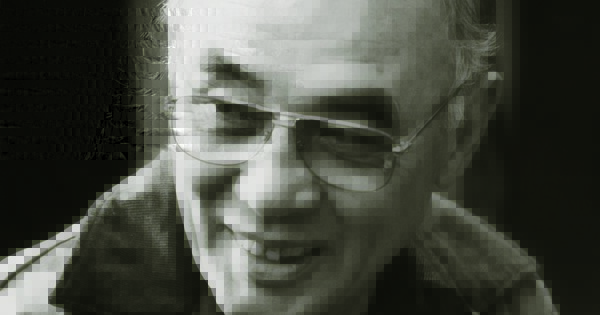
Newspapers Mainichi Shimbun and Yomiuri Shimbun both reported on Thursday that film director and screenwriter Toshio Masuda died of old age on August 26. He was 98.
Masuda was born in Kobe in October 1927. He made his directorial debut in 1958 with the film Kokoro to Nikutai no Tabi while working at Nikkatsu, which he joined in 1954 after working for Shintoho. At Nikkatsu he also directed such films as Rusty Knife, Red Handkerchief, and Red Quay.
He is perhaps best known outside of Japan for co-directing the Japanese sequences of the 1970 Japanese-American war film Tora! Tora! Tora!. Some of his other famous works include High Teen Boogie, Katayoku Dake no Tenshi, and Prophecies of Nostradamus, and he was nominated for the Best Director Award at the 4th and 13th Japan Academy Film Prizes for his films The Battle of Port Arthur and Company Executives, respectively.
In anime, Masuda oversaw the scripts and supervised the 1974 Star Blazers TV series. He later directed the 1977 Space Battleship Yamato film compilation of the series. He was one of the directors and scriptwriters for the 1978 film Farewell to Space Battleship Yamato, the 1979 film Space Battleship Yamato: The New Voyage, and the 1980 film Be Forever Yamato.
Additionally he was the chief supervisor and one of the scriptwriters of the 1983 film Final Yamato, and was the general supervisor for the 2009 film Space Battleship Yamato Resurrection.
He also co-directed the Future War Year 198X film, and was the chief director and one of the screenwriters for the Odin – Starlight Mutiny film.
Masuda directed 82 total films in his career, and was praised as “a craftsman among craftsmen.” He received the Award for Distinguished Service from the Chairman at the 41st Japan Academy Prizes in 2018. He was awarded with the Medal of Honor with Purple Ribbon in 1993, and with The Order of the Sacred Treasure, Gold Rays with Rosette in 1999.
The Japan Academy Film Prize Association posted its condolences on Friday.
舛田利雄監督の訃報に接し、謹んでご冥福をお祈り申し上げます。
1950年新東宝入社し、54年に日活に移籍。58年「心と肉体の旅」で監督デビュー。「赤いハンカチ」「紅の流れ星」などを手掛け、日活アクション映画の全盛時代を築きました。68年「トラ・トラ・トラ!」以降フリーとなりました。 pic.twitter.com/ayVn33WtUc
— 日本アカデミー賞協会 (@japanacademy) September 25, 2026
Sources: Mainichi Shimbun, Yomiuri Shimbun via MyAnimeList
>
A scary night in L.A., plus pennant races down to the wire

We Are Aliens Film, Eri Short Anime, Candy Caries Win at Ottawa Int’l Animation Festival – News
Liverpool forward Alexander Isak leaves Sweden camp due to 'minor injury'
-

 movies4 months ago
Search For Canadian TV Actor Stewart McLean Now Homicide Investigation
-

 Fashion9 years ago
These ’90s fashion trends are making a comeback in 2017
-
Fashion9 years ago
According to Dior Couture, this taboo fashion accessory is back
-
Fashion9 years ago
Model Jocelyn Chew’s Instagram is the best vacation you’ve ever had
-
Fashion9 years ago
Emily Ratajkowski channels back-to-school style
-
Fashion9 years ago
9 Celebrities who have spoken out about being photoshopped
-

 Anime4 months ago
Rurouni Kenshin: Hokkaido Arc Manga Takes 1-Issue Break – News
-

 Anime3 months ago
HIDIVE to Stream English Dubs for The World Is Dancing, The Forsaken Saintess and Her Foodie Roadtrip in Another World, The Dangers in My Heart: The Movie Anime – News