
Anime
Tales of Wedding Rings II Anime Series Review – Review


Pretense is king in the realm of romance—especially harem anime. By Arceus, there must be an excuse, no matter how canned or flimsy, for love interests to, say, share an indirect kiss, fall on top of each other, or for one of them to need to give the other mouth-to-mouth. That’s simply how the game is played, how the dance is danced. And nothing exemplifies this more than the second season of Tales of Wedding Rings (TWR), a series in which an ordinary man named Satou has several women throwing themselves at him, jiggling breasts-first, despite zero effort on his part. And also, he must have sex with them to save the world.
Let’s back up a bit: While the first season of TWR focused mostly on the collection of the Ring Princesses, season two has them all setting forth for their intended purpose: Destroying the Abyss King. The bar is pretty low, but suffice it to say, it’s a much more story-focused season of TWR. Still, for the overwhelming majority of the series, that same story can basically be boiled down to “John Smith McEveryMan (Satou) has to strengthen his relationships (have sex) with his conventionally attractive wives to gain the power to destroy the Abyss King. They all desperately want to have sex with him, but he’s only really interested in one of them (Hime).”
Season one, in my opinion, was at its best when it was just letting itself be unabashedly horny, and leaving everything else—the story, in particular—to the side. And season two, which tries to put more focus on said story, only reaffirms this belief. The story is as bland and unimaginative as they come, without much of anything to give it any much-needed oomph—say, rich lore, better fight scenes, or stronger character writing. The latter, in particular, is especially to this anime’s detriment, given that this half of the series is supposed to be about Satou and his wives strengthening their relationships with one another.
This anime has a strange take on polyamory, to say the least. On one hand, all the characters (notably including the Ring Princesses themselves) seem totally chill with the idea of Satou, as the Ring King, having multiple wives. But that acceptance comes with some weighty asterisks. Hime is very obviously his favorite, and she’s often framed as being the only one that Satou actually loves, with the others being little more than her backup dancers. Moreover, were Satou not the Ring King, and were the world’s fate not dependent on a power that itself depends on his relationships with all these women, it’s less clear whether everyone would be quite so accepting. The impression it leaves is that this anime wasn’t so much interested in exploring or examining polyamory per se as much as it was over-engineering a pretense for multiple women to want to have sex with Satou, wherein he’s feeling an absolute maximum level of pressure—a monogamous anime, accidentally wearing a half-hearted cosplay of a polyamorous one.
Inevitably, this awkwardness bleeds into the character writing in general, and by extension, the story that revolves entirely around said character writing and their dynamics with one another. The big thing at the core of this anime is Satou’s big fight with the Abyss King, which requires power from the relationships he has with his wives. But apart from Hime, it barely feels like he really knows any of them particularly well. Sure, they all lust for him, and it’s more believable that some of them have deeper romantic feelings for him than others. But all the same, there’s less than zero chemistry between Satou and literally anyone but Hime. If you’re the type of person who likes harem anime for the will-they-won’t-they, who-will-the-protagonist-choose of it all, you won’t find anything even resembling it here.
Even if you wanted to watch a show just for horny purposes, there’s better out there—say, the first season, for example. Season two is still obviously pretty horny, but season one embraced this much more and let itself get lost in the lusty sauce more than season two, which has instead yielded a lot of that time to the story. Still, even if they’re not as plentiful as they were in the first season, in those moments where it does let itself indulge in just being erotic for the sake of eroticism, that’s when this show is at its most fun, since it tends not to hold back in those moments.
The production value does nothing in particular to help this anime. The animation quality ranges from “meh” to “okay, I guess.” The visual style itself, meanwhile, is forgettable—nothing unique nor exceptionally well-executed. The same can be said for the voice acting, although when it came to sub versus dub, I found myself preferring the dub, even if only somewhat.
To TWR‘s credit, I’ve seen some harem anime go to some pretty hilarious lengths to manufacture as much pressure and tension for their protagonists as possible. Even so, TWR takes it to a whole new level that’s funny just to even think about. Still, that’s more or less where the memorability of this anime begins and ends. TWR is nothing if not a textbook example of how sometimes, when it comes to the story, less is more.
>

Series entered hiatus after 100th chapter in May

© Youichi Takanashi, Shueisha
The official X (formerly Twitter) account for Yōichi Takahashi‘s Captain Tsubasa franchise announced on Monday that the Captain Tsubasa: Rising Sun Finals manga will resume serialization on October 6, with new chapters on Tuesdays.
The series entered a hiatus after its 100th chapter in May.
The series launched on the new Captain Tsubasa World website in July 2024 in the form of storyboards.
The 20th and final compiled book volume of Captain Tsubasa: Rising Sun and the third and final volume of Captain Tsubasa Memories 4: Saikyō! Meiwa FC Densetsu both shipped simultaneously in June 2024.
Takahashi announced his retirement from serializing his long-running manga franchise in 2024. The Captain Tsubasa Magazine magazine’s issue that released in April 2024 was the last one. The 20th and final issue of the magazine featured the final chapters of the Captain Tsubasa: Rising Sun The Final and Captain Tsubasa Memories 4: Saikyō! Meiwa FC Densetsu manga.
Takahashi’s original 37-volume Captain Tsubasa manga ran in Shueisha‘s Weekly Shonen Jump magazine from 1981 to 1988, and it inspired four television anime series, four anime films, several OVAs, and a stage play. The manga is available in about 20 countries.
The original soccer manga revolves around 11-year-old Tsubasa Ōzora, a boy who loves soccer and is recognized by his coach Roberto due to his skill of the sport. Tsubasa goes with his coach to Brazil in order to train for the World Cup.
Captain Tsubasa: Rising Sun revolves around Tsubasa as he aims to participate in the Olympics as a representative from Japan. Takahashi launched the manga in Shueisha‘s Grand Jump magazine in December 2013. The manga then moved to Captain Tsubasa Magazine, Grand Jump‘s spinoff magazine that focuses on the franchise, when it launched in April 2020.
Captain Tsubasa: Rising Sun The Final, the “final saga” of the overall Captain Tsubasa series, launched in the magazine’s 16th issue in April 2023. The manga is a new arc and renaming of the Captain Tsubasa: Rising Sun manga.
Source: Captain Tsubasa World’s X/Twitter account
>
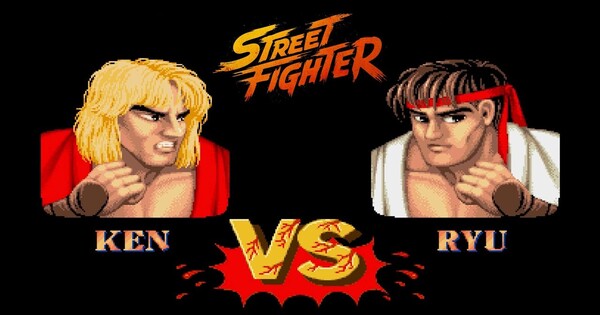
Paramount Pictures started streaming a new trailer for Legendary Entertainment‘s live-action film of CAPCOM‘s Street Fighter game series on Monday, focusing on Ken and Ryu’s relationship and rivalry.

© 2026 Paramount Pictures
The film will open on October 16.
Paramount Pictures describes the story:
Set in 1993, estranged Street Fighters Ryu (Andrew Koji) and Ken Masters (Noah Centineo) are thrown back into combat when the mysterious Chun-Li (Callina Liang) recruits them for the next World Warrior Tournament: a brutal clash of fists, fate, and fury. But behind this battle royale lies a deadly conspiracy that forces them to face off against each other and the demons of their past. And if they don’t, it’s GAME OVER!
The cast includes:
Paramount Pictures and Legendary signed a multi-year distribution deal in December, with Paramount Pictures distributing Legendary Entertainment films worldwide except China (Legendary East handles distribution in China). Street Fighter will be the first film to be distributed under the new deal. Legendary Entertainment acquired the film and television rights to Street Fighter in April 2023, and will work with CAPCOM on future projects.
Sony Pictures was previously slated to distribute the film. When the film was still slated to be distributed by Sony Pictures, the film was planned to open on March 20, 2026, but Sony removed the film from its release calendar in March 2025.
Kitao Sakurai (The Eric André Show, Bad Trip) is directing the film’s shoot in Australia, which started in August 2025. Brothers Danny and Michael Philippou were initially slated to direct the film, but left the film to focus on making their Bring Her Back film.
The game series inspired a live-action film in 1994 starring Jean-Claude Van Damme, Raúl Juliá, Ming-Na Wen, Damian Chapa, Kylie Minogue, and Wes Studi. Hyde Park Entertainment produced a separate spinoff titled Street Fighter: The Legend of Chun-Li starring Kristin Kreuk in 2009.
Machinima produced the Street Fighter: Assassin’s Fist and Street Fighter: Resurrection live-action series. Machinima released the first series on its YouTube channel in May 2014, and Funimation licensed the series for release in North America. Funimation released the series on Blu-ray Disc in October 2014. Machinima released the second series on Verizon’s go90 streaming service in March-April 2016. A Street Fighter: World Warrior television series was originally planned in 2018.
Street Fighter II: The Animated Movie adapted CAPCOM‘s video game Super Street Fighter II in 1994. Discotek Media released the film on DVD in December 2015, and on Blu-ray Disc in October 2016. The franchise has also inspired several other anime and animated series.
The Street Fighter 6 fighting game launched in June 2023 for PlayStation 4, PlayStation 5, Xbox Series X|S, and PC via Steam. CAPCOM released the game on Nintendo Switch 2 in June 2025 as a launch title. The Street Fighter 6 Years 1-2 Fighters Edition version also launched on the same day.
Sources: Email correspondence, Paramount Pictures‘ YouTube channel
>
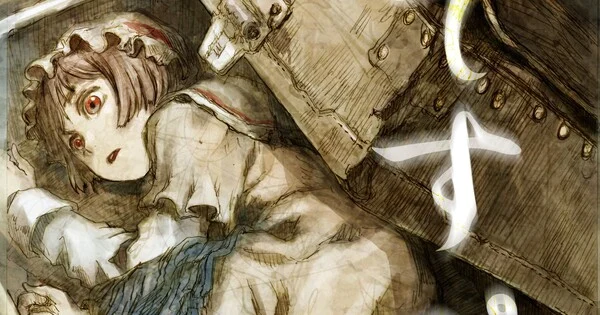
Manga debuts with new setting/era in 2027
Chiaki J. Konaka (series script supervisor of Serial Experiments Lain, Texhnolyze, and Hellsing) announced at the Japan Weekend Madrid event in Spain last weekend that Yoshitoshi ABe‘s (creator and character designer for Serial Experiments Lain and Haibane Renmei) Despera anime project is getting a manga in 2027. He posted a visual on X/Twitter on Monday:

Konaka added that the manga’s setting and era will differ from those of the original project announcement. He clarified that this project is not related to Serial Experiments Lain.

Konaka last provided an update for the project in 2021. According to him, due to the COVID-19 pandemic, the project was suspended for a year and a few months. Konaka added that the production funding scheme was 80% completed at the time, and that the core staff had done a lot of work up until 2020. He confirmed that staff was still working hard on the project, and asked fans to be patient.
The Despera anime project was put on hold after director Ryūtarō Nakamura passed away in 2013. ABe mentioned in October 2014 that the project was continuing with a new director.
ABe unveiled the project at Seattle’s Sakura-Con in 2009. ABe was heading the project and designing the characters and Chiaki J. Konaka, the series script supervisor of Serial Experiments Lain, Texhnolyze, and Hellsing, was writing the script.
The title is derived from a poem from the Dadaist poet Jun Tsuji (1884-1944). It is also derived from the shortened version of the term “desperado.” The story centers around Ain, a 14-year-old girl who builds devices despite the lack of the scientific background required for them. The science-fiction story was originally set in Japan’s Taishō era in 1922 — one year before the 1923 Great Kantō earthquake in the Tokyo area.
Sources: Chiaki J. Konaka‘s Twitter account
>

Richard Linklater Gives Major ‘Merrily We Roll Along’ Update
Gianni Infantino opens door to increased money distribution from FIFA's $6bn reserves

James Rosenfield Dead: Former CBS President Was 97
-

 movies4 months ago
Search For Canadian TV Actor Stewart McLean Now Homicide Investigation
-

 Fashion9 years ago
These ’90s fashion trends are making a comeback in 2017
-
Fashion9 years ago
According to Dior Couture, this taboo fashion accessory is back
-
Fashion9 years ago
Model Jocelyn Chew’s Instagram is the best vacation you’ve ever had
-
Fashion9 years ago
Emily Ratajkowski channels back-to-school style
-
Fashion9 years ago
9 Celebrities who have spoken out about being photoshopped
-

 Anime4 months ago
Rurouni Kenshin: Hokkaido Arc Manga Takes 1-Issue Break – News
-

 Anime3 months ago
HIDIVE to Stream English Dubs for The World Is Dancing, The Forsaken Saintess and Her Foodie Roadtrip in Another World, The Dangers in My Heart: The Movie Anime – News