
Entertainment
‘The Boys’ Creator Eric Kripke Fires Back at Fans Complaining About ‘Filler Episodes’: ‘What Are You Expecting?’


As “The Boys” heads into the last couple of episodes in its fifth and final season, creator Eric Kripke is aware of online chatter about “filler episodes,” emphasizing the importance of bringing each character’s story to a proper conclusion.
“None of the things that happen in the last few episodes will matter if you don’t flesh out the characters,” Kripke told TV Guide in an interview published Wednesday. “I’m getting a lot of online dissatisfaction, to put it politely. And I’m like, ‘What are you expecting? Are you expecting a huge battle scene every episode?’”
Over the course of the final season’s run, online chatter has criticized some of the show’s plotlines, with many viewers calling certain episodes “filler” and voicing how they think the series could be improved.
Ayra Starr has a message for the directors of ‘The Boys’ 😂❤️ pic.twitter.com/al0EE7UoHd
— HYPETRIBE (@hypetribeng) May 6, 2026
“One, I can’t afford that. And two, it would be so empty and dull, and it would just be about shapes moving without having any import,” Kripke added.
“At no point during the writing of it was I like, ‘Oh yeah, we’re making filler episodes. So who cares?’ We all thought at the time we’re really getting these important character details,” he said. “We have something like 14 characters, maybe 15. And I owe it to all of them — in that television is the character business — I owe it to all of them to flesh them out and humanize them and their stories.”
Kripke also defended the work of his writers’ room, saying that in the process of writing, it felt that “crazy, big things” were happening in every episode. “It’s just sometimes it’s a giant character movement. But apparently, just because it’s not plot, you’re like, ‘Nothing happened!’ I’m like, ‘Nothing happened, what?’ The craziest, biggest moves happened. It just wasn’t someone shooting someone else and going, pew, pew, pew. And if that’s what you want, you’re just watching the wrong show.”
The creator also said some of the criticism may be a byproduct of the weekly release model Prime Video has used for the series.
“For as much as I love the weekly release — because we should take time to have people talking and arguing about the show — my guess is if you were bingeing it or watching it all at once, you would have a very different experience than watching one episode a week that you might find slow or slower than usual, and then you have to wait a whole other week for the next piece. I think that aggravates people, probably,” he said. “To be clear, I’m a proponent for this release schedule, but I’ve been wondering if that was one of the side effects.”
The final episode of “The Boys” airs May 20, 2026 on Prime Video.

>
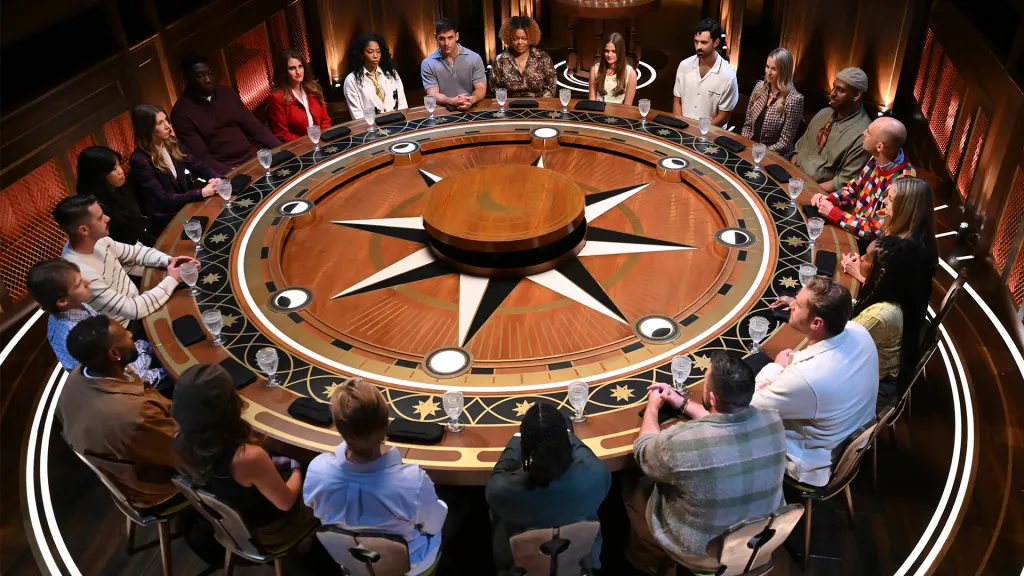
EXCLUSIVE: The shape of distributor Banijay Rights is beginning to form.
One of the big distribution winners of the Banijay-All3Media mega-merger has emerged as Rachel Job, who we hear is in line for a senior content role, with long-serving execs such as Simon Cox, Claire Jago and Maartje Horchner exiting.
We also have news of of the Banijay international scripted division slimming down, where Denis Leroy has left his post.
Deadline understands Job, who was All3Media International‘s SVP, Unscripted, will take up an EVP-level post that covers both scripted and unscripted rights at the merged Banijay and All3Media group.
Banijay has been overseeing a consultancy process for staff in recent weeks, which is nearing completion. Various execs are exiting, with a full announcement on the shape of the business likely soon, possibly before MIPCOM.
We understand that Banijay Rights EVP Content Acquisitions Cox, EVP EMEA, Sales & Acquisitions Jago and Horchner, who was Executive VP Content at All3Media International, all took voluntary redundancy. We hear that Chris Stewart, Senior Vice President Of Sales UK & Eire, has also taken the voluntary redundancy package. Broadcast was first with the news of Cox and Jago’s departures.
Cox has been with Banijay since 2021 when it acquired Endemol Shine Group, where he had been Head of Acquisitions since 2015. Jago was also a long-serving Endemol Shine sales exec, while Horchner has been with All3Media since its very early days, joining back in 2004.
Today’s update comes after we revealed that long-serving All3Media International CEO Louise Pedersen was exiting following the Banijay merger’s completion. Cathy Payne is leading the new-look Banijay Rights. Banijay has previously said it will prioritize “eliminating duplication” in distribution and sales as it seeks €50M ($56.8M) in synergies within 12 months of the deal closing.
Job, a former History UK programming chief, has been with All3 since 2019. Her role has included working on All3 content and third-party acquisitions. Given the merged Banijay and All3Media business has more than 170 production labels, sources are speculating the focus going forward will be far more on in-house content.
At All3, Job has worked on shows such as The Traitors, Gogglebox and Cash Cab, while also being a key buyer of third-party shows. She has been across titles such as Michael Jackson: The Trial and Taylor Swift: A Love Story this year, along with Toronto breakout 2.6 Seconds: Death in the Outback, which Netflix acquired, as we revealed last month.
With a catalog of more than 265,000 hours, the new-look Banijay Rights team will be at MIPCOM next month with a slate including Channel 4 drama Maya and BBC legal series Reputation, entertainment format Last One Standing and a return for long-running factual series One Born Every Minute. It will also house The Traitors, Big Brother, Survivor, Fear Factor and Deal or No Deal under one roof. The company will operate out of a newly named ‘Banijay House’ opposite the Palais des Festivals.
Scripted Changes
Elsewhere, Banijay’s international scripted team, which makes co-productions between labels and sources IP, has been shrunk following the exit of Denis Leroy, and following Johannes Jensen shifting to a role within the Banijay Nordics team.
Leroy was Senior Director of the Banijay group scripted team, leading on the scripted format and literary IP strategy. He had been with the company for around a decade, and was with Zodiak Media before that, working across numerous projects.
We understand his exit came in the past few weeks. Jensen, who was Head of Scripted, Business within the same team, has shifted to a director of scripted role within Banijay Nordics.
This, we understand, leaves Steve Matthews, Banijay’s Head of Scripted, Creative as the sole senior member of this team.
When big beasts like Banijay are seeking synergies, one source suggested that roles like Leroy’s and Jensen’s, which tie labels together, tend to be under grave threat.
Having less executives bringing the labels together may make it harder to fund European, non-English language co-productions, which often rely on numerous producers, a different source speculated.
Banijay declined to comment when approached today. A spokesperson has previously said: “Since the merger has only just closed, we are not yet in a position to confirm Banijay Entertainment’s combined leadership team or organisational structure.”
>
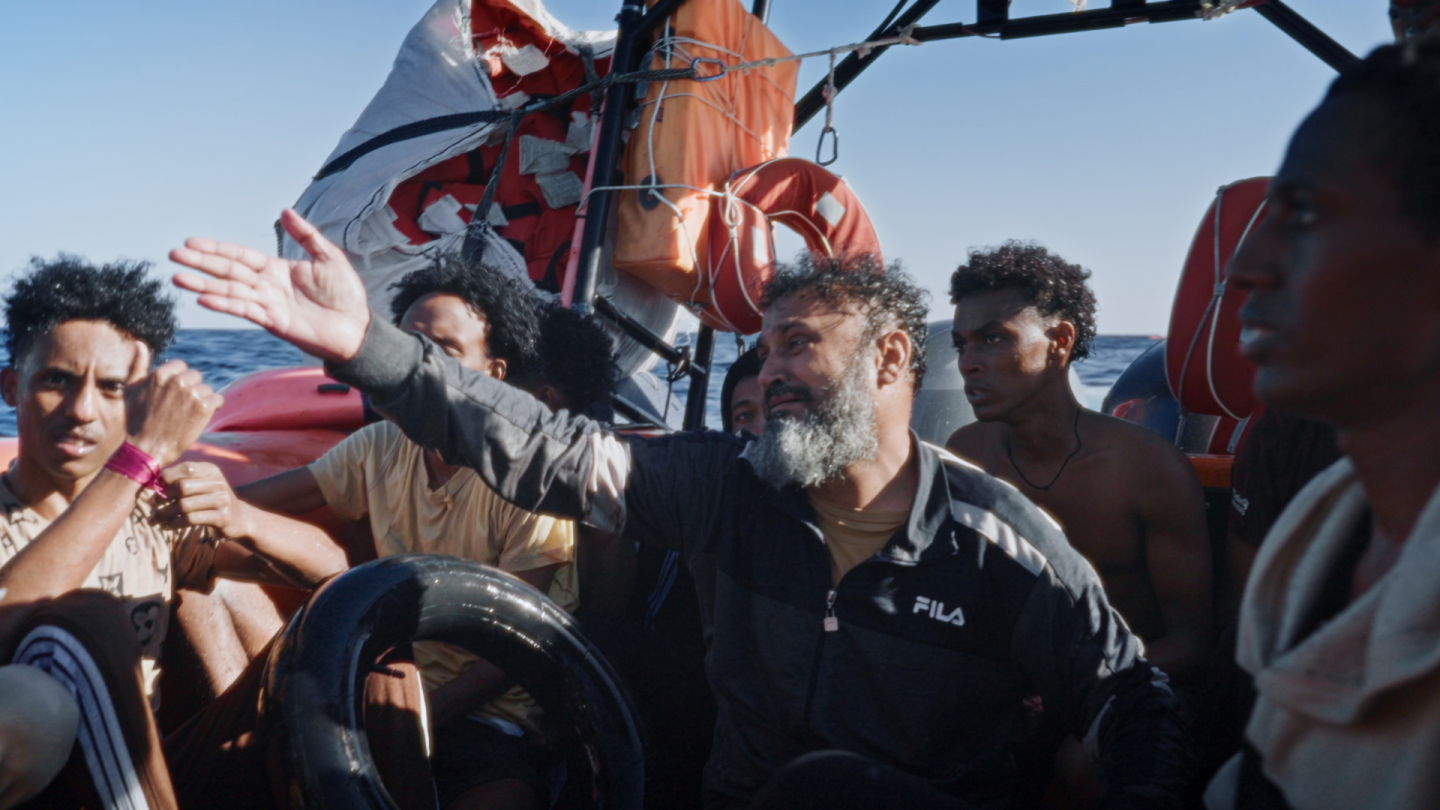
Italy’s Fandango Distribution has acquired Sine Plambech’s Rescue for all rights, including theatrical release, The Hollywood Reporter has learned.
Radio Télévision Suisse (RTS) has come on board as a broadcaster, joining pre-sale partners DR, VPRO, SVT and NRK, in deals negotiated by Vienna-based Autlook Filmsales, which handles worldwide sales on the film.
The agreements land as Plambech, serving as president of the documentary competition jury at the 22nd Zurich Film Festival, presents the European premiere of Rescue in the festival’s Now/Future section this week.
Rescue tells the story of Roro, a Yemeni mother of young children fighting to reunite her family after a Mediterranean rescue operation left her separated from her husband and held in captivity in Libya. Filmed with rare access aboard Doctors Without Borders’ Geo Barents, the documentary examines the fallout of Europe’s “externalization” of migration control to North African countries, tracing one woman’s fight for justice, dignity and the right to be seen amid a broken system.
The film is written by Plambech and Janus Metz, and produced by Elk Film’s Andreas Dalsgaard, Sofie Husum Johannesen, and Tereza Šimíková. Troels N’koya Jensen is the cinematographer, with editing by Per K. Kirkegaard and Marion Tuor and music by Uno Helmersson. Running 80 minutes, the film is in Arabic, English and French with English subtitles.
Rescue had its world premiere at TIFF and screens in Zurich’s Now/Future section, which this year features nine films exploring human rights, social conflict and sustainable development. Presented in collaboration with the EurAsia Heart Foundation and Dementia Research Switzerland, the section highlights figures committed to equality and social justice alongside perspectives on ecological, social and economic questions for the future.
Plambech is currently heading up the doc competition jury in Zurich. She is an award-winning director, anthropologist and senior researcher at the Danish Institute for International Studies (DIIS). Among other things, she directed Mission Trafficking (2010, in collaboration with Judith Lansade) and Becky’s Journey (2014), and provided the research foundation for From Thailand to Thy (2008) and From Thy to Thailand (2008), both directed by Janus Metz.
Her major breakthrough, Heartbound (2018), which built upon the two films from 2008, had its world premiere at TIFF, was selected for IDFA, and won the Golden Eye Award for best international documentary at the Zurich Film Festival that year.
>
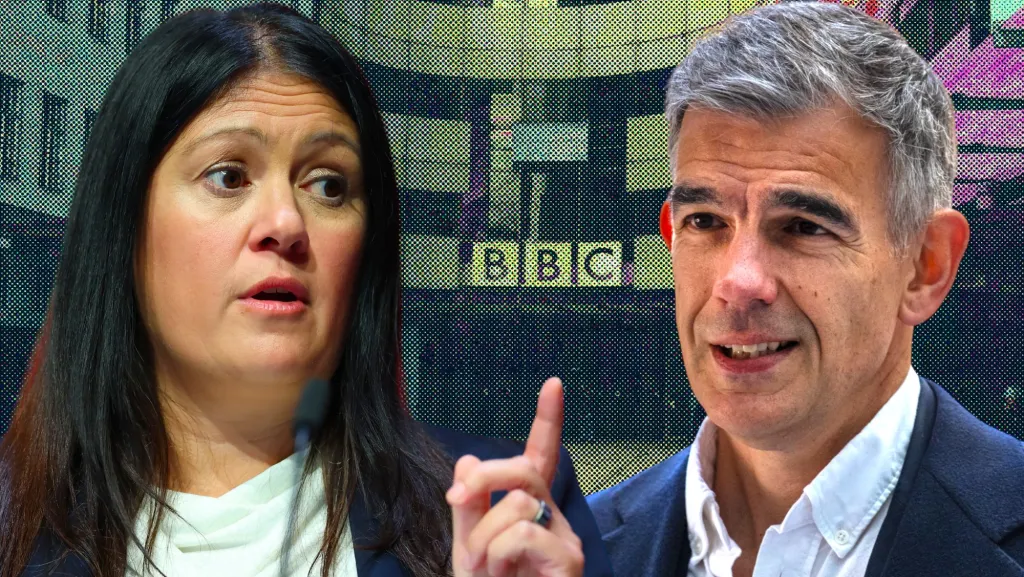
If you pay any attention to the BBC, you will know Britain’s national broadcaster is on the horns of a funding crisis.
We know this because the BBC keeps telling us. Director-general Matt Brittin has told staff that the “cupboard is bare.” He has told Parliament that the BBC’s current funding model, the licence fee, is a “busted flush.” He told BBC viewers on Sunday that the corporation is in a “tight financial situation.”
And when the BBC is not telling us, it is showing us by cutting thousands of jobs, canceling shows, and threatening to close services. The drip-drip of cuts announcements is like a marketing campaign counting down to BBC doomsday.
Luckily for the BBC, there’s a potential solution: It’s called charter renewal. Every decade, the broadcaster sits down with the government and thrashes out its future, agreeing its funding for the years ahead, and making detailed decisions about its governance and operating guardrails.
And it just so happens that the BBC and the government are in the thick of charter renewal negotiations as you read this. Behind-closed-doors meetings between the BBC’s policy team and Department for Culture, Media and Sport (DCMS) officials are happening every week. Brittin is engaging regularly with Lisa Nandy, the culture secretary. There is lots of talking going on.
In public at least, the BBC and new Prime Minister Andy Burnham’s administration are singing from the same hymn sheet. The BBC wants to ensure that the 94% of Brits consuming the BBC are actually paying for it. Nandy told BBC News this month that she wants to put the corporation on a “sustainable footing.”
But here’s the rub: Neither the government nor the BBC have wholeheartedly set out their preferred way of achieving this ambition, leading to what Deadline hears is growing unease on both sides about a lack of vision for the BBC’s future.
We can rule out some things pretty confidently, including full ad or subscription funding. Never going to happen. What about a household levy? This would basically involve adding a tax to a utility or broadband bill. The BBC quite likes this idea, but ministers have explicitly ruled it out on the grounds that a new tax would be unpalatable (not to mention politically toxic) in a cost of living crisis.
This shrinking field of options increasingly points in the direction of tinkering with the £180 ($240) licence fee. There is an old joke in UK media that reviews of BBC funding nearly always result in the same conclusion: The licence fee is the least worst option.
But quite what this tinkering looks like, and whether it will achieve the shared aim of safeguarding the BBC, remains to be seen. The main idea under discussion is extending the licence fee to include non-live content on commercial streaming services.
What does that mean in practice? Well, at the moment, you can watch The Gentlemen on Netflix without being legally obliged to pay the licence fee. Ministers and the BBC are now discussing plans that could incriminate you for watching MobLand on Paramount+ without paying your cut to the BBC. Shows not made by Guy Ritchie would also be included.
Closing the streaming loophole may seem an elegant solution in theory, but it is complicated in reality. The BBC is struggling to enforce payment of the licence fee as it is, and the tools at its disposal, including pursuing convictions, are regressive, hitting lower-income households and women hardest. Netflix carrying pop-up ‘PAY YOUR LICENCE FEE’ notices (a genuine BBC suggestion) is not going to cut it.
To get around this, Nandy has floated the idea of charging consumers extra for their subscription streaming services. A BBC levy on your monthly Disney+ bill, if you like. She acknowledges, however, that this is unlikely to be popular with U.S. streamers, who are quick to make noises about pulling back their UK investment when they see barriers to growth.
Nandy has also spoken about allowing the BBC to top up its public funding with commercial revenue, including monetizing archive content or enabling the corporation to carry ads around its podcasts on platforms like Spotify or YouTube. But again, Nandy has been reluctant to fully embrace these proposals.
Ultimately, it will likely be the Treasury, rather than the DCMS, that calls the shots on funding questions, but time is running out to push through the thorny reforms under discussion.
It means that, with 15 months until the current BBC charter expires, the broadcaster has no clarity about its finances beyond next year. During the last round of charter negotiations, the BBC struck a funding deal with David Cameron’s government 18 months before its operating agreement ended. Nandy recently described that deal as “appalling,” but has declined to commit to an alternative.
Instead, we have a vacuum. Private talks and a paucity of public information. We may hear more from BBC boss Brittin at the Royal Television Society London Convention on Tuesday, but no minister will speak at the important industry gathering because of the Labour Party conference in Liverpool. And so the limbo lingers.
As one BBC watcher in Westminster puts it, both sides have been “as bad as each other” in their approach to the charter process. “As much as this government isn’t the best when it comes to making decisions about anything, it’s not clear to me what the BBC’s vision is for itself,” the lawmaker explains. “It’s a longstanding problem, and in the past the BBC usually stood to benefit, as the result would be status quo. The danger now is that the status quo just accelerates [the BBC’s] decline.”
Nandy has promised to publish the government’s position “soon.” For the BBC, which is gearing up to announce another gruelling round of cuts over the coming days, it can’t come soon enough.
>

Banijay Rights Set To Name Rachel Job In Senior Role As Exits Emerge
The Bounce: 10 storylines to follow during NBA media days

Synduality Echo of Ada Game to End Online Service in 2027 – News
-

 movies4 months ago
Search For Canadian TV Actor Stewart McLean Now Homicide Investigation
-

 Fashion9 years ago
These ’90s fashion trends are making a comeback in 2017
-
Fashion9 years ago
According to Dior Couture, this taboo fashion accessory is back
-
Fashion9 years ago
Model Jocelyn Chew’s Instagram is the best vacation you’ve ever had
-
Fashion9 years ago
Emily Ratajkowski channels back-to-school style
-
Fashion9 years ago
9 Celebrities who have spoken out about being photoshopped
-

 Anime4 months ago
Rurouni Kenshin: Hokkaido Arc Manga Takes 1-Issue Break – News
-

 Anime3 months ago
HIDIVE to Stream English Dubs for The World Is Dancing, The Forsaken Saintess and Her Foodie Roadtrip in Another World, The Dangers in My Heart: The Movie Anime – News