
Tech
Kalshi doubles valuation in 5 months, hitting $22 billion


Prediction market startup Kalshi announced on Thursday a $1 billion Series F round, valuing the company at $22 billion. That’s double the $11 billion valuation Kalshi nabbed just five months ago after raising a $1 billion Series E. This latest round was led by Coatue, with participation from Sequoia, Andreessen Horowitz, and Paradigm.
The startup told Bloomberg that its annualized revenue exceeds $1.5 billion.
Kalshi, alongside rival Polymarket, ushered in the boom in prediction markets where consumers place bets on everything, from what stars are wearing at the Met Gala, to which sports team will win the next game.
In a blog post, Kalshi said that institutional trading on the platform has increased 800% in the past six months and that it hosts 90% of prediction market activity in the U.S. (Polymarket has been working to unroll remaining restrictions on its U.S. operations from a ban imposed in 2022.)
>
For decades, commercial fusion power has seemed perpetually out of reach. Now two companies are building toward something much more concrete: putting fusion-generated electricity on the grid.
Commonwealth Fusion Systems (CFS) is building SPARC, a demonstration fusion machine intended to pave the way for its first commercial power plant, ARC. Helion is developing Orion, a 50-megawatt fusion power plant intended to supply electricity to Microsoft beginning in 2028.
At TechCrunch Disrupt 2026, CFS co-founder and chief science officer Brandon Sorbom and Helion founder and CEO David Kirtley will take the Smart Systems Stage for “Bringing Fusion to the Grid.” They’ll discuss the breakthroughs moving fusion forward, the challenges that remain, and what it will take to deliver fusion power to the grid at scale.

Want to hear what stands between today’s fusion breakthroughs and commercial power? Grab your pass and bring your co-founder, partner, or peer for 50% off their pass. Discover the insights shaping the future of fusion, together.
Moving fusion from science to commercial power
Sorbom co-founded CFS in 2018 with the goal of commercializing fusion energy in time to help combat climate change. As chief science officer, he leads the company’s scientific direction and R&D and helps advance the design of ARC. The idea has roots in his work at MIT, where Sorbom was lead author of the paper proposing the original ARC design while earning his Ph.D. in nuclear science and engineering.
Today, CFS is working toward ARC through SPARC, the company’s demonstration fusion machine. In April, CFS became the first fusion company to apply to PJM Interconnection, the largest U.S. wholesale electricity market — a necessary step toward eventually connecting ARC to the grid. In July, the company raised another $1 billion, bringing its total funding to $4 billion.
For founders and technology leaders, Sorbom brings a perspective that spans the journey from academic research to designing a commercial fusion power plant, and the scientific and engineering challenges that have to be solved along the way.
How do you turn decades of fusion research into commercial power? Secure your Disrupt pass and grab a second at 50% off to hear from one of the scientists working to make that transition.
Putting fusion power to the test
Kirtley founded Helion to develop fusion technology that could ultimately deliver electricity at commercial scale. An NSF and NASA Advanced Concepts Fellow, he has expertise in high-Beta plasmas for energy and space propulsion applications and today leads Helion as it works toward commercial fusion power.
In February, Helion announced that its Polaris prototype had heated plasma to 150 million degrees Celsius. The company is now developing Orion, a 50-megawatt fusion power plant intended to supply electricity to Microsoft as early as 2028. In June, Helion announced a key regulatory milestone on the path to building and operating the plant. Its Series G funding round, initially announced at $465 million in June, closed at $500 million in September.

That timeline puts the questions at the heart of the Disrupt session into sharp focus. Scientific milestones matter, but commercial fusion also has to make the leap to a functioning power plant capable of reliably delivering electricity to customers.
What will it take to turn fusion milestones into electricity on the grid? Register for Disrupt and bring someone with you at 50% off to hear Kirtley’s perspective on the work still ahead.
Learn what still stands between fusion and the grid at Disrupt 2026
CFS and Helion are pursuing different approaches to fusion, but both are confronting the challenge at the center of this session: moving from scientific and engineering progress to commercial power.
At Disrupt, Sorbom and Kirtley will bring firsthand experience building companies around that transition. For founders, investors, and technology leaders, their conversation offers a chance to hear what is moving fusion closer to commercialization, which challenges remain, and what it will take to bring fusion power to the grid at scale.
Their session is one of 200+ sessions across six industry stages, roundtables and breakouts at Disrupt, October 13–15 at Moscone West in San Francisco. More than 10,000 founders, investors, operators and tech leaders are expected, along with 250+ speakers and 300+ exhibiting startups. Beyond the agenda, matchmaking, dealmaking and networking create opportunities to connect with the founders, investors and builders shaping what comes next.
Fusion has spent decades as the energy technology of the future. Hear from two leaders working to bring it closer to the grid. These are the final days to grab your pass and get a second of the same type at 50% off.

When you purchase through links in our articles, we may earn a small commission. This doesn’t affect our editorial independence.
>
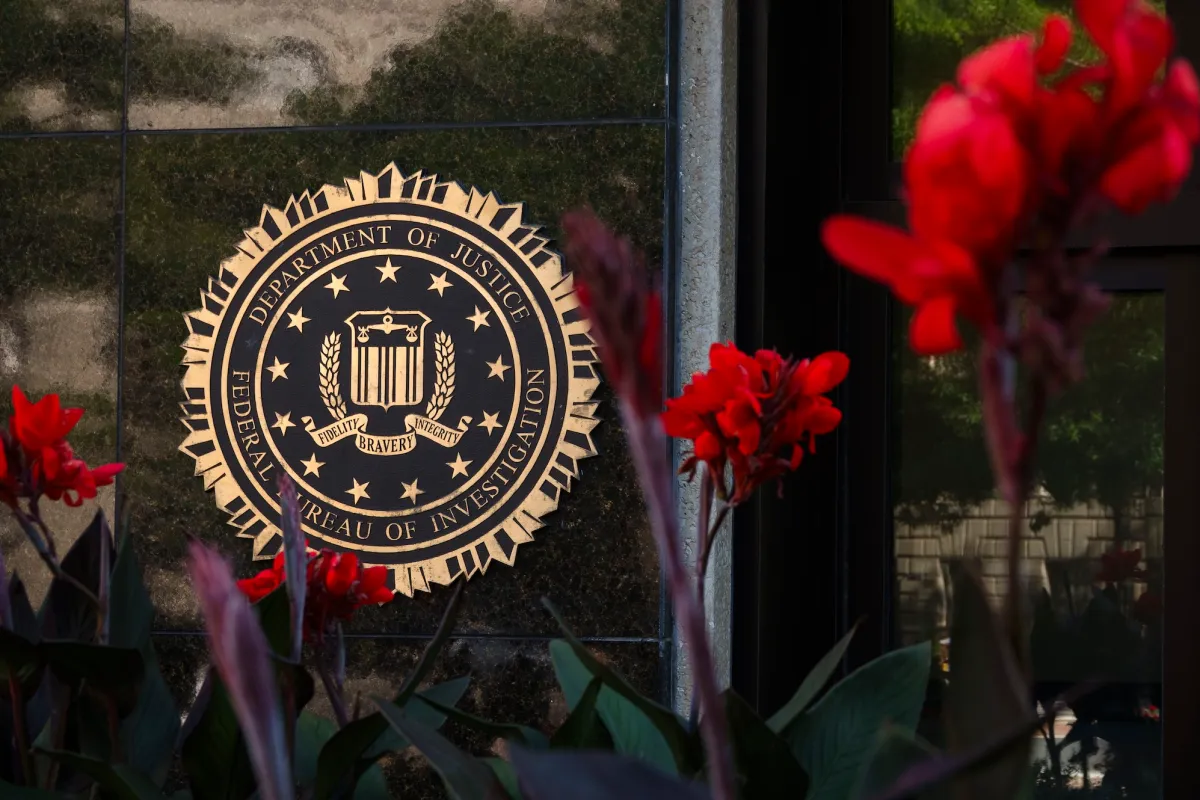
The Federal Bureau of Investigation has reportedly told its agents and support staff that their personal information was stolen in a recent cyberattack that targeted the bureau’s job application portal.
It’s the bureau’s first acknowledgement that the personal information of FBI agents was taken in the breach. The FBI has not publicly confirmed a breach beyond a statement last week, in which it said it was aware that a hacking group had claimed a cyberattack, but that the theft of data was “still undetermined.”
As reported by MS NOW reporter Ken Dilanian over the weekend, the FBI has since declared a “cyber security incident” in an internal notification to staff, telling employees that their names, addresses, job titles, and their Social Security numbers were exposed.
Several media outlets have since confirmed that some of the stolen data included medical information, such as records relating to blood and urine samples, as well as psychiatric reports.
The hacking group called ShinyHunters previously told TechCrunch that they “have data on mostly all of FBI,” and a “substantial” amount of information on applicants who applied through the FBIJobs.gov portal. The hackers broke in by exploiting a vulnerability in an Oracle PeopleSoft server, which hosts reams of human resources information on agents and now-employees who applied through the portal.
The hackers told TechCrunch that they are not seeking a financial ransom, but are demanding the correction of an earlier FBI-issued report, which they say misrepresents their activities.
Justin Sherman, a national security expert, called the data breach a “counterintelligence disaster” for the U.S. government in a blog post for Lawfare. He warned that the data theft would “expose thousands of FBI personnel to profiling, phishing, foreign intelligence approaches, and much more.”
While the bureau has notified employees, it’s less clear if the FBI has disclosed the incident to lawmakers in Congress who have oversight of the FBI. Under federal law, alerting Congress is required when an intrusion meets the bar of a “major incident” — such as if a data breach involves the theft of personally identifiable information that is “likely to result in demonstrable harm” to U.S. national security.
It’s likely that bureau lawyers are trying to figure that out right now. If a disclosure is required, it would be the FBI’s second known notification to lawmakers this year about a data breach, after hackers, suspected to be Chinese, broke into a surveillance system that exposed targets of FBI surveillance and investigations earlier this year.
A spokesperson for the FBI did not respond to TechCrunch’s request for comment on Monday, and a White House spokesperson also did not respond to an email asking if the bureau had declared a major incident.
Representatives for several lawmakers whose jurisdictions cover oversight of the FBI did not have any immediate answers.
ABC News reports that the FBI’s job site has been the primary way to apply for a job with the bureau since 2017. The portal remains down at the time of publication.
Do you work at the FBI and have received a notice about the data breach? We want to hear from you. You can contact this reporter securely on Signal at zackwhittaker.1337, or reach him by email at zack.whittaker@techcrunch.com.
When you purchase through links in our articles, we may earn a small commission. This doesn’t affect our editorial independence.
>

It’s 6 a.m. on a cold January morning in 2002 in New Delhi. It’s still dark outside, and I’m in the kitchen preparing breakfast, packing lunches, and getting my two children ready to catch the school bus when, for the third time in a week, the power goes out. No lights, no mixer to finish my daughter’s puttu—her favorite rice dish—no kettle, no toaster. The bathroom is dark, and the kids are upset.
It will probably be hours before the power comes back on, so I grab a flashlight and light the candles that are set up around the house for these occasions. We’re behind schedule now. We pack the food we have, bundle up as the house turns chilly, and head outside, leaving a mess in the kitchen. We make our way to the bus stop in the dark—the streetlights are out, too—only to discover my daughter has missed her ride. Again. I’ll be late for work at Jamia Millia Islamia, a university where I am a professor of electrical engineering and teach power systems and smart grids. I just hope the power is on there.
This was a common scene for my family and all of Delhi in the early 2000s. Power outages happened almost daily and lasted hours. When the power was on, the quality was so poor that it would dim lights, flicker screens, and wreak havoc on appliances. Customer service at the power utilities essentially didn’t exist.
 A child walks in July 2007 past a store in New Delhi specializing in reconditioned generators. The fear of power cuts during summer heat spurs demand for these generators so that residents can produce their own power.Nicholas Bradley/AFP/Getty Images
These problems had been getting worse through the 1980s and 1990s. The cause: an aging distribution grid bereft of crucial technologies, and electricity providers with little accountability. The situation became so bad that the city was losing more than half of its power through obsolete equipment and theft. These staggering losses meant that utilities got paid for only a fraction of the electricity they were trying to deliver. And the lack of funds prevented them from investing in better grid infrastructure.
But over the last quarter century, a remarkable effort by the government and the city’s distribution utilities has turned Delhi’s grid into a reliable, modern system. Power losses have shrunk from over 50 percent in 2002 to 5 to 6 percent in 2026—on par with France and Belgium, and better than Greece and Serbia. Delhi’s grid reliability index, a measure of how often electricity can be counted on, stood at around 70 percent in 2002 and has now topped 99.9 percent.
 The bustling Main Bazar in the Paharganj neighborhood of Delhi increasingly uses more nighttime electricity, but reductions in electricity loss help counter demand. iStock
With reliable power, businesses across the city have blossomed. The streetlights are bright. The number of electric vehicles, including city buses, is growing daily. Quality of life has improved. Today, my family is comfortable year-round in our home despite Delhi’s scorching summers and cold winters. The chaos of losing power no longer hinders me from getting to work. The city still has problems—pollution, overcrowding, noise—but thankfully, reliable power is no longer among them.
The transformation of Delhi’s grid can serve as a model for other cities that suffer from decrepit power infrastructure. Regions of Albania, Argentina, Bangladesh, Brazil, Estonia, India, Kenya, Pakistan, Sri Lanka, Uganda, and Venezuela are reeling from heavy losses in their distribution grids. Their problems look like Delhi’s 25 years ago. I believe it’s possible to improve electricity in these places by adapting the changes Delhi made. Here’s an inside look at how the city accomplished it.
Delhi’s Power Grid and Energy Mix
The city of Delhi hosts the capital of the Republic of India, and sits along the Yamuna River in the northern part of the country. It’s home to about 23 million people and is one of the most densely populated areas in the world. Delhi’s grid includes thousands of kilometers of power lines, and peak electricity demand reached an all-time high this year of 8,748 megawatts. The city currently buys 76 percent of its power from central generating companies and private players from neighboring states. Energy generation within the city is restricted to natural gas and renewable sources. Nearly 48.5 percent of the city’s power comes from coal, about 26.5 percent from natural gas, and the rest from carbon-free sources, led by hydropower at 15.6 percent.
 Tata Power replaced about 5 kilometers of overhead lines with underground cables, which reduced electricity loss and improved the aesthetics of Delhi’s streets, such as the Janta Flats in the Shalimar Bagh neighborhood.Tata Power-DDL
By the early 2000s, Delhi’s nearly 100-year-old power distribution system was in serious disrepair. Everything was old—lines, transformers, circuit breakers, switches. New grid technologies were needed to keep up with new kinds of electricity loads, but there was little money to upgrade components.
The shabby state of the grid caused many problems, most notably high electricity losses, where electricity vanishes primarily as heat. The cause of the losses was a classic electrical problem: too much current flowing through a network that wasn’t designed to carry it efficiently.
To understand the problem, it helps to understand how modern power grids work. Typically, they include generation, transmission, and distribution. After power is generated, transformers convert the electricity to high voltage levels—typically 132, 220, 400, or 765 kilovolts in India. Transmission lines then carry the power over long distances to receiving substations that are closer to where customers need electricity. Transformers then step down the voltage (to 66, 33, or 11 kV in India) and distribution lines branch out, carrying the power to customers. The whole grid works primarily on alternating current.
Distribution networks carry both active and reactive power. Active power is the energy used to perform useful work (and is measured in watts). Reactive power is the power that flows back and forth in an electric circuit, building electric and magnetic fields (measured in volt-ampere-reactive, or VAR). Although it doesn’t perform useful work, reactive power is necessary for many devices, such as induction motors, transformers, and computers (typically any circuit or device with inductance or capacitance elements).
When there are a lot of devices consuming reactive power on the same line, the overall current carried by the line—the sum of the active and reactive current—must increase. The more current in the line, the more the line heats up and the more energy that’s wasted as heat.
In addition to current, resistance in the line will increase losses as well. Resistance is when electrons encounter opposition as they move through the conductive material (typically aluminum in a power grid). Longer lines with many branches and connection points will increase resistance. The rule of thumb is that line loss equals the square of the current multiplied by the resistance.
Reactive power creates a second problem: It causes the voltage along the line to drop. And when the voltage falls, many modern electrical devices try to maintain roughly the same level of performance by drawing more current. That higher current produces even greater losses in the line and causes the voltage to fall further.
In a healthy grid, the utility will take compensatory measures to lower the current and maintain the voltage all the way to the ends of the lines. But in Delhi, this wasn’t happening. The result was a vicious cycle. Reactive loads increased the current, the higher current increased energy losses and lowered the voltages, lower voltages forced devices to draw more current and further increased the losses.
In some parts of Delhi, the effect was so severe that residents took matters into their own hands. A colleague of mine who lived in a different part of the city constantly experienced voltage that was too low for her appliances to operate reliably, so she had to install her own voltage stabilizer. At my home, we bought an inverter and battery system to keep a fan and a few lights running during the many outages.
Electricity Loss and Theft in Delhi
The losses in Delhi weren’t caused solely by technical problems. Theft of electricity was rampant, by both the powerful and the powerless (in both senses of the word). Businesses, residential customers, and utility employees with vested interests would siphon electricity from the grid. It was easy to illegally hook into a streetlight or a distribution line running close to one’s house or factory. Utilities didn’t have the resources to identify theft or penalize offenders. Even if they could, the courts were already overburdened, and an electricity regulatory commission that could push for reforms had not yet fully formed.
 Updated meters have made billing easier and more accurate. Tata Power-DDL
Making matters worse, the utilities and their employees were rarely held accountable for their actions, and so corruption plagued the system. Junior engineers and line workers, many of them lacking appropriate technical skills, were tasked with handling nearly every issue, including outages, flickering, and bill payment. This was too much authority in the hands of people with too little training.
On top of that, customers didn’t pay their bills. Meters were old, frequently faulty, and easily tampered with. Utility employees would take a meter reading by visiting the customer’s property, noting the reading in a book, entering it in a ledger or on a computer back at the office, and converting it into an electricity bill that would get dropped off at the customer’s property. This process left a lot of room for incorrect billing.
To pay a bill, customers had to stand in long queues at the utility offices, which had limited business hours. Not wanting to take off a half day of work for this, many customers simply didn’t pay. And there was no penalty for not paying—there were no regulations allowing the utilities to cut off a customer’s power. (I paid my bill by having a family member stand in line for me.)
The combined commercial and technical losses left Delhi’s utilities collecting payment for less than half of the electricity they were supplying in the early 2000s.
India’s Electricity Act and Power Reforms
Such problems weren’t unique to Delhi. On average in 2002, state utilities across India experienced electricity losses of nearly 37 percent. My country desperately needed systemic reforms, but authority over electricity was split between the central and state governments so any decision-making was fractured. States managed most of the generation, as well as transmission and distribution, while the central government oversaw generation that supplied multiple states, such as hydropower, fossil fuel plants, and nuclear plants. The central government could push reforms, but the states determined whether those reforms would succeed. Making matters worse, most states put a single organization in charge of generation, transmission, and distribution, giving that entity too much control and reducing transparency and competition.
 A team of technicians with BSES Rajdhani Power maintains an insulator string on a large power transformer in 2011. BSES Rajdhani Power
In 2001, India’s central government began writing some historic legislation that became the landmark Electricity Act, 2003. Among the grand reforms aimed at transforming the country’s power industry, it unbundled state oversight of grid networks, creating separate entities for generation, transmission, and distribution. It also opened up the power sector to privatization. It allowed large electricity customers to bypass local distribution companies and purchase electricity from competitors or build their own power plants. It created a central regulatory agency responsible for determining interstate tariffs and promoting market competition in the power sector. And it created mechanisms for prosecuting electricity theft.
 Hundreds of capacitor banks have been installed in Delhi to supply reactive power at strategic locations and help stabilize voltage.Tata Power-DDL
In 2002, Delhi was already taking drastic action to fix its grid. The organization overseeing Delhi’s distribution, the Delhi Vidyut Board, was broken up and two private companies—BSES (now Reliance Infrastructure), and Tata Power—took over distribution. They faced a Herculean task. Tata Power, serving the northern half of Delhi, would have to tackle a combined commercial and technical electricity loss of 53.5 percent. BSES, whose territory was split between two subsidiaries, was facing 51.5 percent losses in South Delhi and 63.1 percent losses in East Delhi.
“The company inherited a deteriorated and overloaded network, massive power theft, weak billing and collection systems, inaccurate consumer records, and an aging, largely untrained workforce,” Dwijadas Basak, CEO of Tata Power, told me. There were over 100,000 unresolved billing complaints, 20,000 pending connection applications, and frequent supply failures, which had severely eroded consumer trust, he added. Both Tata and BSES devised sweeping reforms and human resource development initiatives. The companies followed their own paths over the years, but ultimately implemented similar changes, with similar results.
Delhi’s Electricity System Overhaul
Fixing Delhi’s grid was a journey that involved all stakeholders, including customers, city authorities, and utility employees at all levels. The utilities revamped their organizational structures, diminishing the power of junior staff and creating separate teams to focus on specific tasks. Long-term employees of the erstwhile Delhi Vidyut Board received training from the up-and-comers at the new companies.
On the technical side, both companies installed digital control systems that let them monitor and operate the grid from a central location. Known as SCADA, or supervisory control and data acquisition, the systems offered a bird’s-eye view of the infrastructure, including the status of equipment, voltage, current, power flow, and switch positions, with updates in seconds. This helped the companies identify areas of high loss and theft and make faster decisions based on accurate information.
 The SCADA (supervisory control and data acquisition) system at Balaji Estate in Delhi’s Kalkaji neighborhood serves as the nerve center of BSES Rajdhani Power’s distribution network in South and West Delhi. It enables real-time visibility, remote control of grid operations, fault identification and isolation, and load management. BSES Rajdhani Power
The utilities also replaced aging transformers and circuit breakers and created extensive maintenance plans for equipment. In 2002, 11 percent of the transformers in the region were failing at any given time. That rate is less than 1 percent today, according to Tata. Crucially, the companies installed hundreds of capacitor banks, including some mobile ones, to supply reactive power at strategic locations. This improvement reduced the total current flowing in the distribution lines and helped stabilize the voltage. They also installed voltage regulators at points in the system where voltage tends to drop.
To reduce theft, the companies replaced bare distribution wires with insulated lines—a single cable for three phases—which made it harder to tap into the lines. The cables also reduced outages because they’re better at preventing ground faults, which can occur when, say, a tree branch falls on the line.
Workers received better sensors and tools to do their jobs safely and accurately. For instance, they were given helmet-mounted voltage sensors, which are safer than handheld ones, and thermal scanning tools to detect hidden defects in the insulation of high-voltage equipment that could otherwise have led to catastrophic failures.
To reduce inaccurate billing and meter tampering, the companies replaced the old electromechanical meters with digital ones that are read with handheld devices. In some locations, radio-frequency-based group metering systems were installed by Tata to consolidate multiple customers’ meters into one. The data is then wirelessly transmitted to a central database, eliminating the need for individual meter readings. The companies are now trying smart meters, which give consumers more control over their electricity bills and give utilities remote control of some equipment (with the customer’s consent).
To encourage people to pay their bills, the utilities installed kiosks that are available 24 hours a day, and they created a web-based payment system and mobile app. Incentives for early bill payment and community-engagement programs also helped. Assistance from Delhi’s law enforcement considerably reduced electricity theft.
 Tata Power hired women living in the 223 slums it serves in the northern parts of the city to knock on neighbors’ doors and remind them to pay their power bills. These payment collectors [left and center], known as abhas, were photographed while speaking with a customer [right] in the Sanjay Basti area of New Delhi in 2017. Prashanth Vishwanathan/Bloomberg/Getty Images
In areas where theft was particularly rampant and losses were as high as 83 percent, according to Tata, the companies took a different strategy. These pockets of Delhi were predominantly occupied by low-income families. Tata Power, and later BSES, worked to improve the water supply for these residents and provide educational opportunities, such as instruction in reading and writing in Hindi as well as financial literacy. These efforts focused on the women, who were at home more, and paid them to collect electricity payments from their neighbors. Bill payment rates from these areas are now on par with those of other parts of Delhi.
In recent years, some customers have been installing rooftop solar panels to take advantage of subsidies and incentives. This trend can reduce electricity losses further because the energy generated at the customer end reduces current in the distribution lines. Customers are also installing more LED lights and energy-efficient appliances, reducing the load in the system.
BSES is using AI to help detect theft. The algorithms analyze consumption patterns in pockets where losses are higher than they should be. The company is also using AI to forecast demand, fine-tune operational efficiency, and provide chatbots for customers.
Quality of Life Improves in Delhi
Life in Delhi is better than it was 25 years ago. I’m not worried that the power may go out and force me to reschedule my activities. My uninterrupted Wi-Fi gives me peace of mind, and my heating and cooling systems keep me and my family comfortable. I rarely need to use our old inverter and battery.
 The sharp rise of e-rickshaws in Delhi has increased demand on the power grid. Sajjad Hussain/AFP/Getty Images
The number of businesses in Delhi has increased substantially, in part because of the access to quality power. People can confidently buy products that depend on electricity. In fact, the city’s peak electricity demand has tripled since 2002 due to the increase in population, commercial activity, and use of electrical gadgets.
And then there’s the benefits to the planet. One unit of electricity that isn’t frittered away is one less unit that must be generated, not to mention the reductions in carbon emissions.
Still, there’s work to do. Some areas of Delhi continue to have high losses, driven partly by the illegal charging of e-rickshaws. Elsewhere in India, the states of Himachal Pradesh, Madhya Pradesh, Maharashtra, and Telangana still experience losses of about 17 to 23 percent despite the sweeping Electricity Act, 2003. There are many reasons for the ongoing losses: long distribution lines to remote villages, less digitization, and inefficiencies in billing and collection of payments.
These regions, and others around the world, can learn from Delhi’s grid comeback. Recently, power losses have increased substantially in countries such as Argentina, Greece, Jamaica, and Morocco, according to the World Bank, and some of the causes are similar to those that Delhi faced back in 2002.
Meanwhile, Australia, most countries in North America and Europe, and a few countries in Asia and Africa experience low electricity losses as they invest regularly in their distribution infrastructure and the ethical enforcement of rules. In China, for example, losses have gradually been cut in half, from 7.1 to 3.4 percent. In Latvia, losses plummeted from 25 to 5.8 percent.
What’s important is a comprehensive approach. Technologies like smart metering, AI, and analytics certainly help, but equally important is that people in the field are trained and take responsibility for their jobs, and that laws are enforced and payments collected.
“Sustainable loss reduction cannot happen through technology alone,” Abhishek Ranjan, CEO of BSES Rajdhani Power told me. “Technology is an important enabler, but long-term success comes from combining it with disciplined execution, operational accountability, and strong consumer engagement.”
From Your Site Articles
Related Articles Around the Web
>
CFS’ Brandon Sorbom and Helion’s David Kirtley join Disrupt 2026
Atlanta NWSL team reveals name and crest ahead of 2028 debut

FBI reportedly declares ‘cyber security incident’ after hackers steal agents’ personal data
-

 movies4 months ago
Search For Canadian TV Actor Stewart McLean Now Homicide Investigation
-

 Fashion9 years ago
These ’90s fashion trends are making a comeback in 2017
-
Fashion9 years ago
According to Dior Couture, this taboo fashion accessory is back
-
Fashion9 years ago
Model Jocelyn Chew’s Instagram is the best vacation you’ve ever had
-
Fashion9 years ago
Emily Ratajkowski channels back-to-school style
-
Fashion9 years ago
9 Celebrities who have spoken out about being photoshopped
-

 Anime4 months ago
Rurouni Kenshin: Hokkaido Arc Manga Takes 1-Issue Break – News
-

 Anime3 months ago
HIDIVE to Stream English Dubs for The World Is Dancing, The Forsaken Saintess and Her Foodie Roadtrip in Another World, The Dangers in My Heart: The Movie Anime – News