
Sports
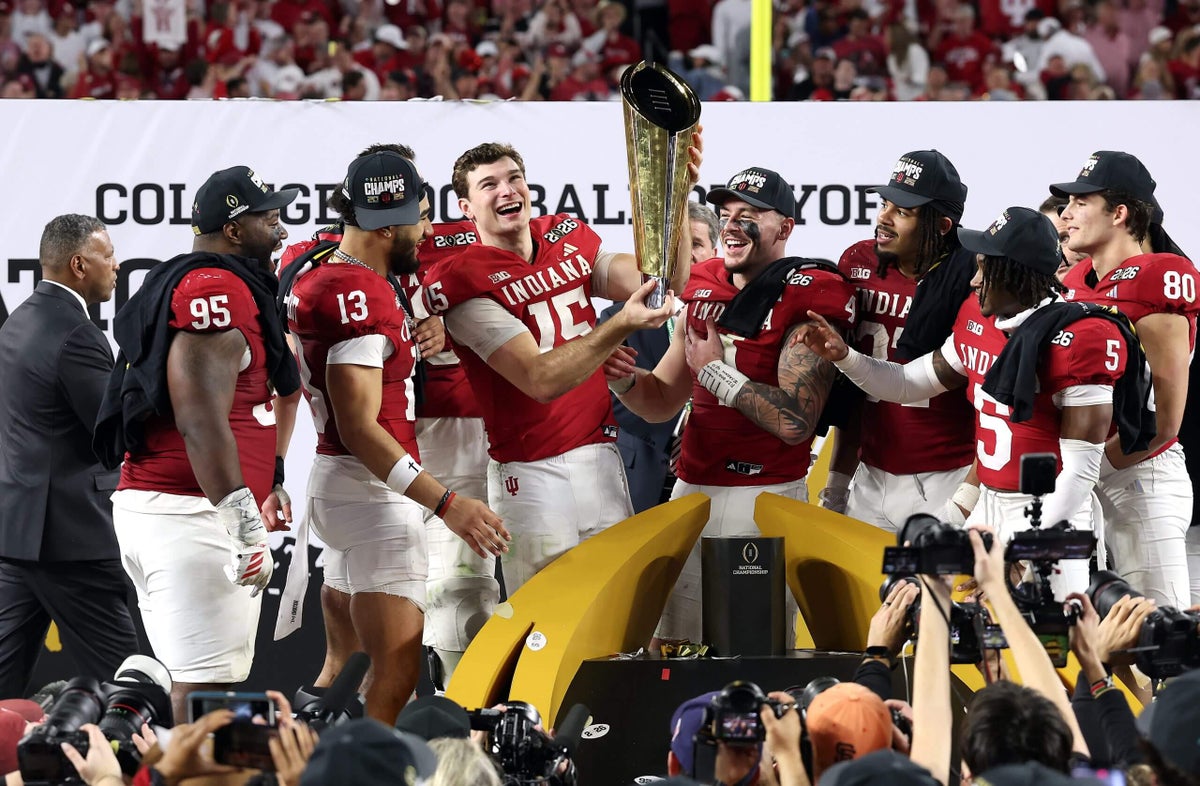
Did Indiana win the most legitimate national title in college football history?

The story goes that when then-Associated Press sports editor Alan Gould declared Minnesota, Princeton and TCU tri-national champions after the 1935 college football season, Gophers fans hung him in effigy.
So, yeah, national championships have always been meaningful in college football, no matter how legitimately they were determined.
There is a reason the term “mythical national championship” was used for decades, with sports writers and coaches ultimately taking their best guess about who was No. 1 at season’s end.
Championship legitimacy has been an evolution. The more the powers that be redesigned the postseason to crown a clear champion, the more emphasis everyone placed on winning it all. Sentiment varies among fans as to whether that development was a positive one.
It’s all settled on the field now with a 12-team College Football Playoff.
That’s what made Indiana’s breakthrough under coach Curt Cignetti last season so remarkable. Gone are the days when conference bowl tie-ins and convoluted formulas could play as big a role in determining a national championship as the quality of the teams.
Why 2026 Indiana is the best national champion
Ralph D. Russo
The Hoosiers’ 16-0 season included five victories against teams that finished ranked in the final top 10 (tied for the second-most among major poll national champions) and six against top-25 teams (tied for fourth). Where exactly major college football’s first 16-0 team since the 19th century ranks among all-time champs is a separate conversation. As good as 2019 LSU? How about 1995 Nebraska or 2001 Miami? You want dominance? Check out Army’s back-to-back championship teams from 1944 and ’45.
Place Coach Cig’s Hoosiers wherever you want in the pantheon of college football’s greatest teams. But when it comes to pure legitimacy, Indiana’s national title is unimpeachable. More so than any in college football history.
Others may match it, but two years into college football’s expanded postseason era, the Hoosiers have set a standard that can’t be surpassed.
In the past, the national title existed almost off to the side in college football.
The whole idea of crowning a national champion in such a far-flung sport was raised to stoke debate, not necessarily to settle it.
“It created a storm in the Big Ten in general, and Minneapolis-St. Paul, in particular,” Gould told the AP in 1986 about his 1935 proclamation.
The next year, the AP poll was born, with Gould welcoming votes from sports writers and newspaper editors all over the country. It was far from the most structured process, but the national title was born. The United Press International, another news wire service, started polling coaches to rank the best teams in college football in 1950.
Voting was done at the end of the regular season, an acknowledgment that the few bowl games that existed were more celebratory exhibitions than games that should be factored into determining a champion. Meaningless bowls, you say? Sounds familiar.
Not until 1968 did the final AP poll factor in bowls. The coaches poll switched to post-bowl final rankings in 1974. That fact alone makes any national champion from 1936 to 1967 worthy of scrutiny.
That’s not to say all those championships are illegitimate. The Mr. Inside (Doc Blanchard) and Mr. Outside (Glenn Davis) Army teams with two Heisman Trophy winners that won consecutive titles in the mid-1940s would be impossible to argue.
Both squads went unbeaten. The 1944 team beat opponents by 52 points per game, still an NCAA record for margin of victory. An argument can be made that the 1945 team was just as dominant against better competition. Those Black Knights had an average margin of victory of 40.7 points and beat six teams (in nine games) that finished the season ranked in the AP top 20. That’s as many as Indiana did last season in 16 games with a Top 25 poll. Among national champions, only 2019 LSU (14-0), 2010 Auburn (14-0) and 2022 Georgia (15-0) beat more teams that were ranked in the final poll (seven).
Champs with 5+ wins vs. final AP poll
|
Team
|
Year
|
Record
|
T-10 W
|
Final poll W
|
Point diff
|
|---|---|---|---|---|---|
|
2022 |
15-0 |
3 |
7 |
26.8 |
|
|
2019 |
15-0 |
5 |
7 |
26.5 |
|
|
2010 |
14-0 |
3 |
7 |
17.1 |
|
|
2025 |
16-0 |
5 |
6 |
29.9 |
|
|
2024 |
14-2 |
6 |
6 |
22.8 |
|
|
2016 |
14-1 |
3 |
6 |
21.2 |
|
|
2015 |
14-1 |
2 |
6 |
20.0 |
|
|
2001 |
12-0 |
1 |
6 |
32.9 |
|
|
1978 |
12-1 |
3 |
6 |
12.7 |
|
|
1945 |
9-0 |
4 |
6 |
40.7 |
|
|
1943 |
9-1 |
4 |
6 |
27.1 |
|
|
2023 |
15-0 |
3 |
5 |
25.5 |
|
|
2021 |
14-1 |
2 |
5 |
28.4 |
|
|
2020 |
13-0 |
4 |
5 |
29.1 |
|
|
2009 |
14-0 |
3 |
5 |
20.4 |
|
|
2007 |
12-2 |
2 |
5 |
18.7 |
|
|
2006 |
13-1 |
2 |
5 |
16.2 |
|
|
2000 |
13-0 |
4 |
5 |
22.1 |
|
|
1998 |
13-0 |
2 |
5 |
18.7 |
|
|
1997 |
13-0 |
2 |
5 |
30.2 |
|
|
1996 |
12-1 |
2 |
5 |
30.0 |
|
|
1993 |
12-1 |
2 |
5 |
31.3 |
|
|
1992 |
13-0 |
2 |
5 |
18.8 |
|
|
1990 |
11-1-1 |
2 |
5 |
13.1 |
|
|
1982 |
11-1 |
3 |
5 |
16.6 |
|
|
1975 |
11-1 |
3 |
5 |
15.9 |
Once the bowls started being factored into the national championship, it brought a new level of thoroughness to the process. Every contender had to take a final exam against a quality opponent from outside its conference or region, televised for everyone to see.
The more that teams directly controlled winning the national championship on the field, the more legitimate it became.
Now that final exam comes in three or four parts in the CFP. SEC fans can complain all they want about Indiana’s soft nonconference schedule, but when an SEC team had a chance to delegitimize IU in the Playoff, the Hoosiers stuffed Alabama into a Rose Bowl locker.
The major polls would often split on the final No. 1, which didn’t seem to really bother fans until the 1990s. It was also an acknowledgment that this whole exercise of crowning a champion was at best a noble effort but far from science.
National championships were awesome, but the stars had to align just right for a team to win one.
“As I was walking over to the stadium this morning, I thought it would be nice if we won, but we really have three national championships,” Joe Paterno told UPI in 1982 after Penn State beat Pitt in its regular-season finale to improve to 10-1.
Paterno, a longtime proponent of a playoff, already had three unbeaten seasons with no “official” titles by then.
He finally landed that first national championship by beating Georgia in the Sugar Bowl to end that ’82 season No. 1 in both major polls. He picked up another one a few years later, when the Nittany Lions upset mighty Miami in the 1987 Fiesta Bowl, and then again got snubbed with an unbeaten team in 1994 as a member of the Big Ten. Conference bowl tie-ins prevented a No. 1 vs. No. 2 matchup with Nebraska.
The Bowl Alliance and other precursors to the Bowl Championship Series tried to fix the postseason problem in the early 1990s, but from 1970 through ’97 the two major polls split seven times.
That’s not to say all the champions during that period were questionable. Nebraska’s 1971 powerhouse beat the teams ranked Nos. 2, 3 and 4 in the final poll. USC’s unbeaten 1972 squad went 12-0 and beat six teams that finished in the final rankings, including crushing No. 9 Ohio State in the Rose Bowl.
Fast forward to 1995 Nebraska, which also makes a case for the greatest team in college football history. The Cornhuskers beat opponents by an average of 38 points per game and capped it by annihilating Steve Spurrier’s Fun ‘n’ Gun Florida team in the Fiesta Bowl. Want to nitpick Tom Osborne’s greatest Huskers team? Nebraska beat only three teams in the regular season that finished ranked. The Huskers beat those three top-10 teams 134-49, though, so there is that.
Indiana flashed plenty of dominance on the way to completing college football’s greatest rags-to-riches story. After crushing Alabama 38-3, the Hoosiers pummeled Oregon 56-22. The national championship game against Miami provided a more stern test.
And who could question Miami’s worthiness after the Hurricanes beat Texas A&M on the road, Ohio State and Ole Miss to earn the chance to play Indiana?
That was the problem with the BCS. It promised to deliver a season-ending game between the best two teams, but there were plenty of times when its process was questionable at best.
Miami may have assembled the greatest collection of talent on any one roster in college football history in 2001, but the BCS served the Hurricanes in the Rose Bowl a Nebraska team that had finished its regular season by giving up 62 points to Big 12 rival Colorado. Hardly the most rigorous way to cap a perfect season. Right, Oregon fans? The Ducks beat Colorado handily in the Fiesta and finished No. 2. There was probably a sense of deja vu in Eugene watching Alabama pummel Notre Dame in the 2012 BCS championship game.
There was no doubting Vince Young and Texas’ 2005 title after the Longhorns snapped USC’s 34-game winning streak to stop a Trojans three-peat.
About that USC dynasty? As good as Pete Carroll’s 2003 and ’04 champions were, both are regarded with a side-eye in SEC country. The BCS formula denied the Trojans a spot in the title game against LSU after the 2003 season, which led to college football’s last split championship — probably ever.
And in 2004, Auburn was the odd team out of a three-unbeaten-team pileup with USC and Oklahoma at the end of the regular season. The Trojans crushed the Sooners in the Orange Bowl, leaving Auburn fans to forever believe their undefeated Tigers would have done better.
Golf Digest did follow through on coach Tommy Tuberville’s pleas for some type of recognition and named Auburn its national champ. Twenty years later, Auburn decided that was good enough and followed the lead of rival Alabama by “officially” claiming a title for the 2004 team.
Raise a glass to the undefeated 2017 UCF Knights, the last self-proclaimed national champion college football will ever have.
When the four-team College Football Playoff was born in 2014, Ohio State became the first team to win it, bouncing back from an earlier loss to Virginia Tech that would have otherwise eliminated the Buckeyes in previous seasons. After Urban Meyer’s team blew through Alabama and Oregon in the postseason, Ohio State named an intersection near the Horseshoe in Columbus Undisputed Way to honor a college football first: a champion that could not be questioned.
The regular-season absolutist might disagree.
In the four-team CFP era, Joe Burrow and LSU set the bar for undeniable champions in 2019, going 15-0 with a final flourish of 142-63 against teams that finished Nos. 4 (Georgia, SEC Championship Game), 7 (Oklahoma, CFP semifinal) and 2 (Clemson, CFP championship). LSU also won a regular-season 1 vs. 2 matchup at Alabama.
Alabama’s last title team under Nick Saban went 12-0, playing only SEC teams in the regular season and statistically rating as one of the best teams in college football history. But the pandemic made a mess of that 2020 season.
Four teams were better than two as far as playoffs go, but limits were exposed by the end of the format’s 10-year run when, in 2023, Florida State was left out after an unbeaten regular season, and Georgia was denied a chance at its own three-peat when it stumbled in the SEC Championship Game against Alabama.
Of course, some look at that Michigan 2023 national title as less than legitimate for other reasons.
The Buckeyes again broke the seal on a new playoff format by winning another title that could not have happened just a year earlier in 2024. After losing twice in the regular season, Ohio State plowed through four Playoff games to the tune of 145-75. But Michigan fans will always have Wolverines 13, Buckeyes 10 in the Horseshoe.
Indiana checked all the boxes and left nothing for skeptics to nitpick.
There has never been a time in college football history when Indiana would not have been No. 1.
>
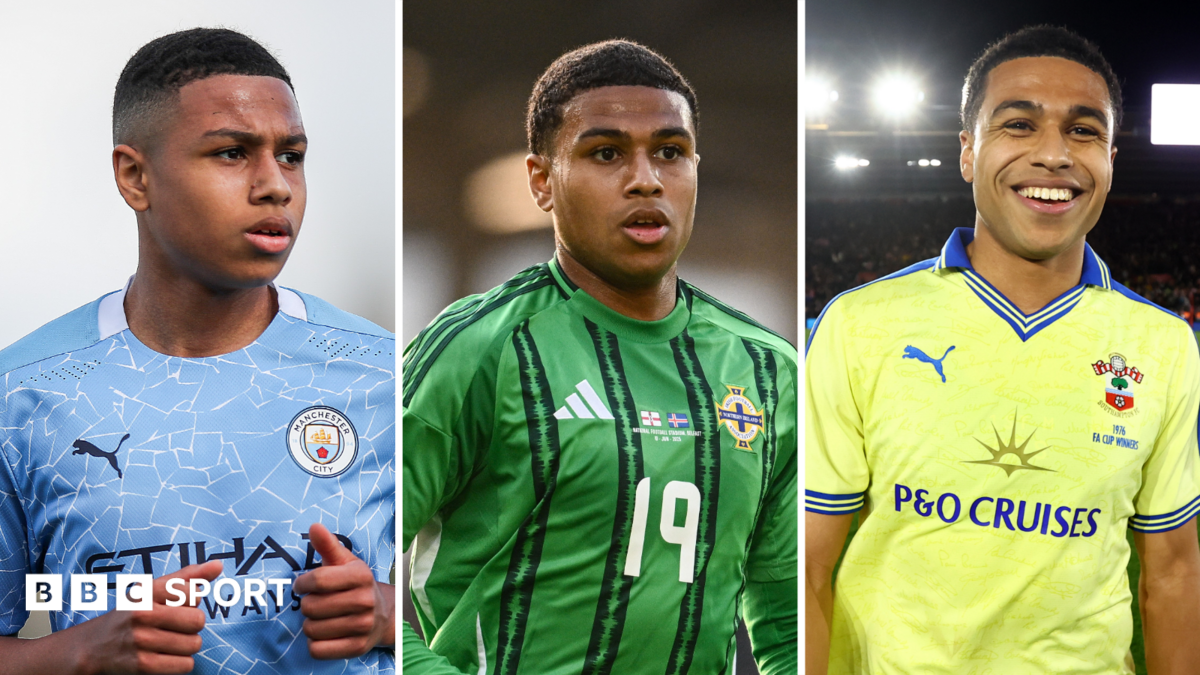
For Lyttle, who worked with Charles at underage level with Northern Ireland, there was never any doubting his potential.
“Honestly, he is so calm, I actually haven’t seen him get out of second gear yet and that is no joke – there is even more in him,” Lyttle added in his 2021 interview with BBC Sport.
“He plays with such a calmness, sees a pass, breaks lines, is technically very good, can hit long and short and can compete physically. He is just a proper ball-playing centre-back and a real good kid as well.
“As he goes up the levels he needs to keep progressing, but from what I’ve seen of young Shea he definitely has all the attributes.”
It helped that he was learning from some of the best in the world. At Manchester City he had been training with the likes of Rodri and Fernandinho and was finally handed a Premier League chance in May 2023 by which stage he already had six international caps under his belt.
Pep Guardiola’s side had already wrapped up the Premier League title, and Charles made his City debut as a second-half substitute against Brentford on the final day of the season.
“When we train with the first team the standard is so high and we are always learning, every day,” Charles said in 2022.
“With the likes of Rodri and Fernandinho, it is tough but enjoyable.”
>
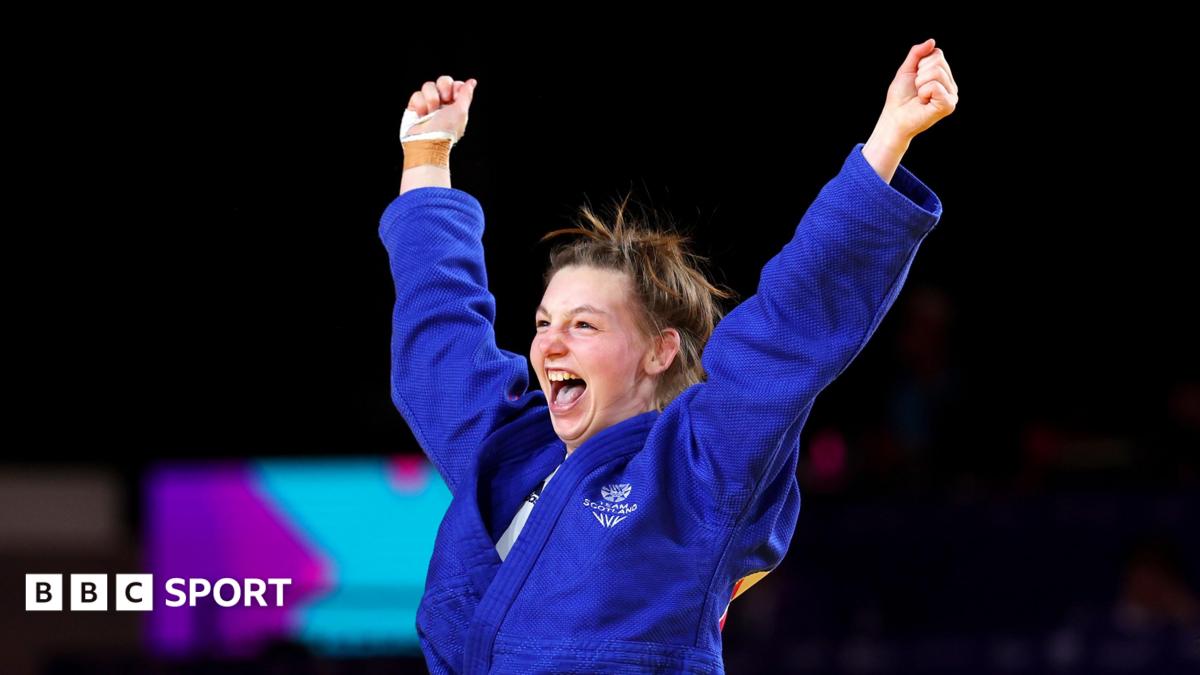
Shaw is a world-class competitor in a sport where the rewards may not make her wealthy.
“Obviously there’s football, Formula One… but I can’t think of many more sports where it is a case of ‘you’ve hit the top level and now you’re financially settled’,” she said.
Shaw is given what is called an ‘Athlete Performance Award’ (APA), a financial grant from UK Sport and the National Lottery that contributes towards her living and training costs.
There are different grades of support, external that athletes receive, depending on their results and prospect of medal-winning performances.
Shaw told BBC Sport that it was “very common” for athletes in sports like judo to have another source of income.
“The money I get [APA] covers my living expenses, which is a blessing and not to be taken for granted,” she said.
“But, for example, the next competition I’ve paid for myself because it wasn’t funded by British Judo.
“Going to Peru [for the Grand Prix] has cost me quite a bit of money and then I’m not really getting that back from anywhere else.
“I’m also a normal person! Like, I want to save for a house.”
Athletes can also earn money through sponsorships, something Shaw says would be a “game-changer” for an athlete at the present stage of her career.
“It just means you can take every single opportunity… put it towards competitions that I don’t get funded.”
Shaw also decided to set up a GoFundMe page at the start of the year, which she sees as a way of helping to fund her dream of going to the 2028 Los Angeles Olympics.
>
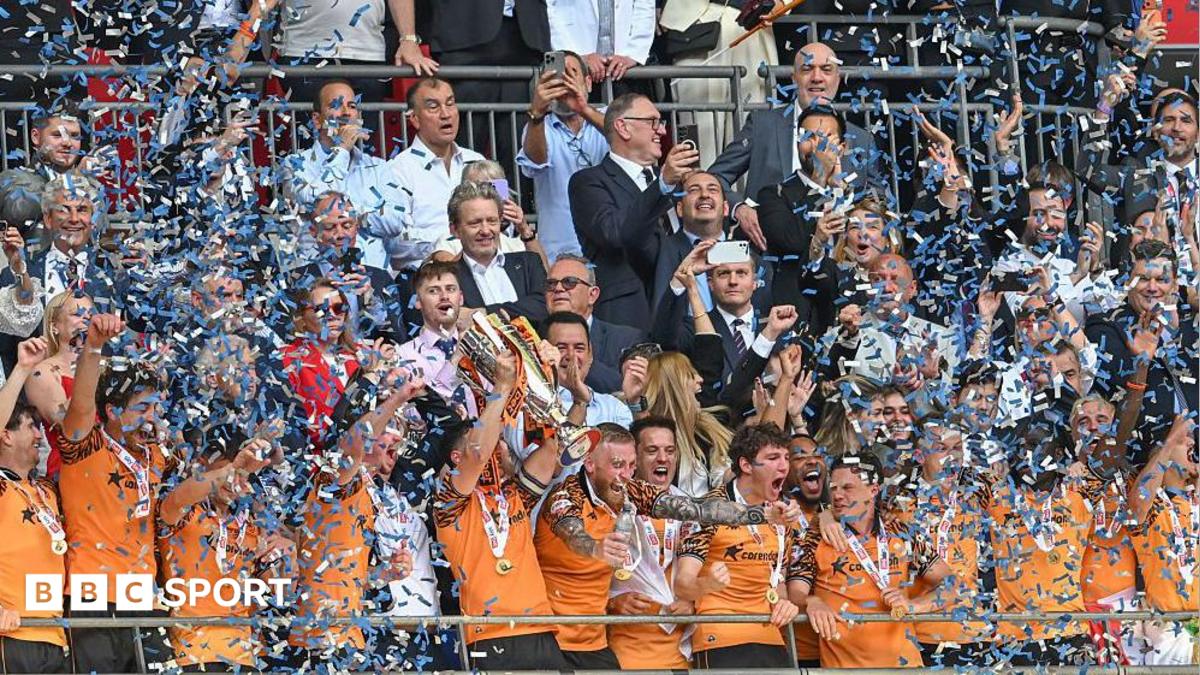
At the 2026-27 EFL season launch in Manchester, several EFL players and managers gave their thoughts on the change.
Nigel Clough, manager of League One side Mansfield Town, expected the format to be used in League One and League Two in future seasons, but was not keen on the expansion.
“If you come third and are 20 points away from eighth and in the same competition for the last few games, that does seem a little bit unfair, but it does keep the season alive for so many teams,” he said.
“With how close League One was last year, you could be fighting relegation and trying to make the play-offs at the same time. How far do you take it?
“There must be a reward for your 46 games. I know there is for the top two, but maybe going to top eight is a bit far for my liking because if you are the third-best team after 46 games you should get some reward.”
Derby striker Rhian Brewster, whose side finished eighth in the Championship last season, said: “It will be good as some teams will have slow starts and kick on and could have a chance of getting in the play-offs this year and going up.
“It is going to be harder but you could be near the bottom and go on a run and finish eighth or seventh. You want to finish first or second, but if you end up in the play-offs then win the play-offs.”
Burnley and former England defender Kyle Walker played in the 2009 Championship play-off final.
He was featuring for Sheffield United, who had finished third in the league, and they lost 1-0 in the Wembley final to Burnley.
He was in favour of the new format and said: “I think it’s good, more chances for more people, but first of all you don’t want to be involved in the play-offs.
“I’ve been involved in it and it’s a roulette, anything can happen. Make sure you make a gap between first, second and let the rest deal with it themselves.”
Blackburn manager Tony Mowbray scored in the 2000 Championship play-off final as his Ipswich Town side beat Barnsley 4-2 to win promotion into the Premier League.
“I think it’s good and keeps the dreams alive for fans and a lot of football teams. You could be sitting 10th, 12th or 14th but still be three points off the top eight and two wins back-to-back and you can catapult yourselves in,” Mowbray said.
“People have to dream, they have to have a reason why they want to go and believe they can still do it. For me, it’s only positive. The argument is you could have a team finishing eighth and getting promoted, but good luck to them.
“Sunderland when they scraped through the play-offs [in 2025], Coventry in the semi-finals over two legs were the better team but Dan Ballard got them through with a header right at the death.
“Then, at Wembley, Sheffield United might have been the better team over 90 minutes and they [Sunderland] got there. Then they spent £180m and are now playing in Europe so it can happen to any team.”
>

Shea Charles: How Fulham signing became NI’s most expensive footballer

Politics Home | PM “Increasingly Confident” PC Harper’s Killers Will Not Be Released Early

‘I won Commonwealth Games bronze – then went back to work at McDonald’s’
-

 movies3 months ago
Search For Canadian TV Actor Stewart McLean Now Homicide Investigation
-

 Fashion9 years ago
These ’90s fashion trends are making a comeback in 2017
-
Fashion9 years ago
According to Dior Couture, this taboo fashion accessory is back
-
Fashion9 years ago
Model Jocelyn Chew’s Instagram is the best vacation you’ve ever had
-
Fashion9 years ago
Your comprehensive guide to this fall’s biggest trends
-
Fashion9 years ago
9 Celebrities who have spoken out about being photoshopped
-
Fashion9 years ago
Emily Ratajkowski channels back-to-school style
-
Fashion9 years ago
A photo diary of the nightlife scene from LA To Ibiza