
Entertainment
Theater Execs Split on Paramount-Warner Bros. Merger

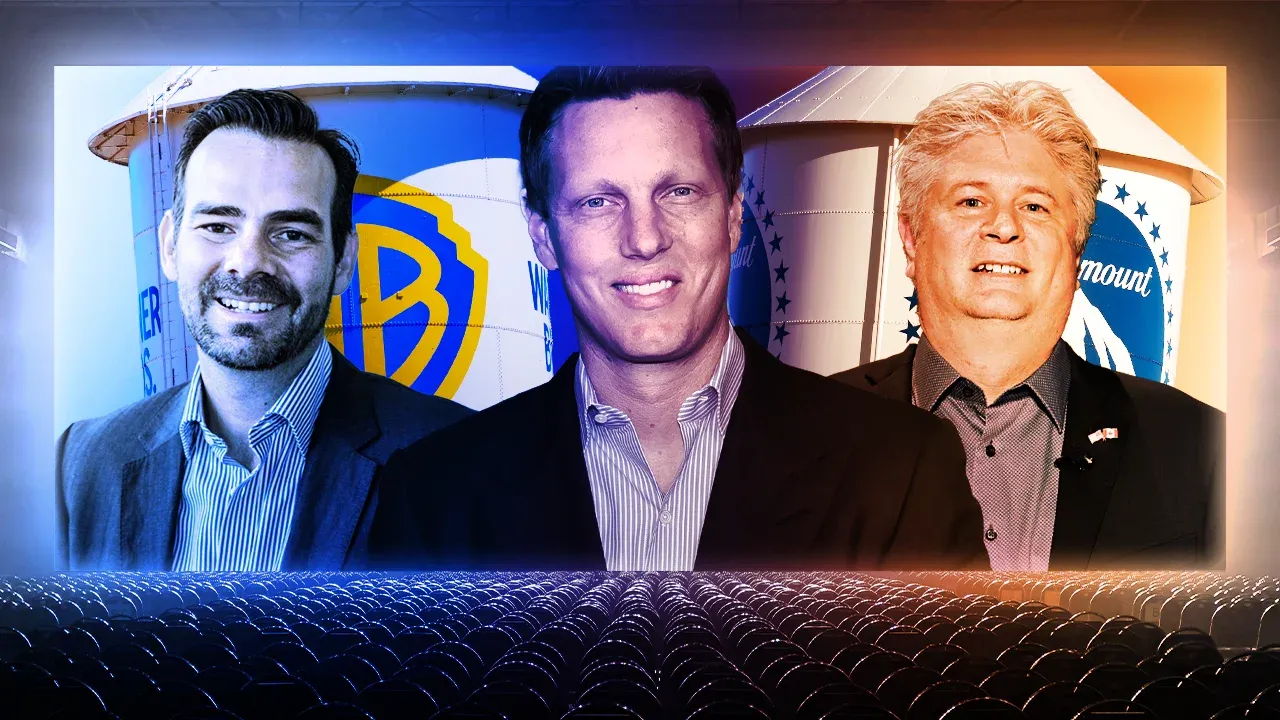
As its legal battle with 12 state attorneys general heats up, Paramount Skydance is stepping up its campaign to get entertainment executives to support its merger with Warner Bros. Discovery, with everything from a David Ellison op-ed to glowing statements from execs to a written pledge to increase theatrical output. The company’s efforts to gain the backing of the movie theater industry at the center of next March’s trial have won over some major players, but other execs who spoke to TheWrap remain deeply skeptical.
Last week, the CEOs of Regal Cinemas and the U.K.-based Vue Cinemas, Eduardo Acuna and Tim Richards respectively, released statements in support of the merger, expressing trust in Paramount Skydance CEO Ellison to fulfill his repeated public pledge to release 30 films a year in theaters after the merger is completed, a total that would exceed the 15-25 films that major studios have released annually since the turn of the century.
“The industry now needs final certainty so it can focus on what matters most: making and releasing great films. David Ellison is a highly respected filmmaker that has consistently demonstrated a long-term commitment to feature-film making and theatrical exhibition,” Richards said in his statement. “We believe the industry will be stronger with Paramount and Warner Bros. Discovery coming together, rather than competing separately. The time, money and energy invested in this process should be directed back into creating the next generation of films for audiences around the world.”
Their support comes four months after AMC CEO Adam Aron became the first executive to openly endorse Ellison and the merger at CinemaCon right as Cinema United CEO and President Michael O’Leary was warning that an acquisition of Warner Bros. would be dangerous for the industry.

In the intervening months, theatrical sources told TheWrap that Aron was alone in such support, as doubt that Paramount could or would put out 30 films a year was widespread among theater owners.
So what changed? Paramount is now offering more than Ellison’s word — a written pledge. Three individuals with knowledge of the talks between Paramount and exhibition executives told TheWrap that the studio is now offering contracts pledging to release 30 films a year for at least three years, with all films having a 45-day window to premium on-demand and a 90-day window to streaming.
Paramount also expressed a willingness to include some form of penalty if it did not hold up its side of the agreement, though sources who spoke to TheWrap did not have specifics as to what those penalties would be and how they would be enforced.
Beyond exhibitors, one individual told TheWrap that Paramount has been reaching out to entities in the independent film industry, offering to negotiate terms on a written contract that would outline how many of those 30 films would be acquisitions of indie productions. Such films tend to have more favorable revenue split for theater owners than big-budget blockbusters, so theaters stand to make more on the dollar when a film like Focus Features’ microbudget megahit “Obsession” performs beyond expectations.
Paramount and Ellison’s efforts to win the support of theater owners underline the gravity of their $110 billion deal, for which they stand to pay over $1 billion in ticking fees ahead of the March trial date. But the public support lent by some of the biggest theater owners in the world — a sharp turn from the largely unified opposition to the Paramount-Warner Bros. Discovery deal just a few months ago — also lays bare the cost that a lengthy antitrust trial would have on some theater chains that are still trying to dig themselves out of the pandemic hole.
“A long fight in court that extends into spring or summer doesn’t put more films in theaters, and is not beneficial to studios, filmmakers, the guests who go to the movies, or theater businesses like Regal and the people who work for them,” Acuna, who runs the second-largest theater chain, wrote. It just creates more uncertainty and distraction that could be damaging to our industry as we build on our current success. It is time for all parties to sit down and work out how to formalize these commitments.”

Cinemark, the third-largest U.S. chain, has remained largely quiet as the regulatory process has proceeded. The most recent comments from the chain’s CEO, Sean Gamble, came at the Morgan Stanley Investors Conference in March, where he said he saw Paramount’s victory in the bidding war for WBD over Netflix as a reason for exhibitor optimism, but wanted to hear more on the studio’s output and windowing plans.
“Anything that leads to sustained or increased levels of investment in the number and scale of releases theatrically, that continue to have a robust theatrical window and comprehensive marketing campaigns is viewed as a positive for the industry. I think we’re hearing all the right things,” Gamble said this past spring.
Cinemark did not respond to TheWrap’s request for comment.
But one theater executive from a smaller chain pointed out that the one thing that Paramount-backing AMC, Regal and Vue have in common is that they are all major chains working their way out of financial turbulence.
After reaching a debt load of $6 billion at the height of the pandemic, AMC has cut its long-term debt to approximately $3.85 billion as of this past quarter while Vue has worked to improve its credit rating as it reportedly considers a sale or stock flotation. Regal Cinemas emerged from bankruptcy in 2023 and has spent the past two years upgrading its entire circuit with new seats, upgraded concessions and premium format installations thanks to a $250 million capital raise in 2024.
“The whole industry needs this recent box office surge to keep going, but chains like AMC and Regal especially need to project confidence to investors,” the exec said. “So it behooves them to support Paramount’s message that this merger will help theaters, because what’s the alternative? They lose that access to capital when they need it most because there’s all these warnings that the merger is going to hurt theatrical?”

A second individual with knowledge of the talks between Paramount and Regal also noted that for those in exhibition who decided to support the merger, there is the belief that Paramount will win its lawsuit against the attorneys general.
The insider pointed to an argument made by the AGs on page 26 of its complaint that the entrance or expansion of new competitors would not counter the harm done by the merger because of the vast financial resources required to release a full slate of theatrical films.
The insider said that California Attorney General Rob Bonta’s argument as outlined does not account for the nascent popularity of self-distribution or the rise of studios like Amazon MGM, which is not counted as one of the five legacy studios but has made long-term commitments to a full theatrical slate. Those gaps could be used by Paramount to poke holes in the AGs’ argument at trial.
“It’s an outdated description of a theatrical market that is changing fast,” the insider said.
Skepticism and quiet Cinema United negotiations
Not everyone in theatrical shares that opinion. Foremost among them is the lobbying group Cinema United, which has stated for months that it opposes the acquisition of Warner Bros. Discovery by any major studio, saying in a statement following the filing of the AG lawsuit that it “welcomes” the challenge by Bonta and his colleagues.
“The ramifications of further movie studio consolidation will be significant and lasting, not just in Hollywood, but on Main Streets across this nation where local movie theaters serve as cultural and financial cornerstones for communities of all sizes,” O’Leary said.
Despite that steadfast opposition, O’Leary also said that Cinema United remains open to talks with Paramount, having most recently done so in Washington D.C. in June to discuss “enforceable commitments that would allay our concerns about the merger.”

“On July 1, after what Cinema United believed were additional constructive conversations with Paramount, we provided them with a comprehensive list of our concerns to move the discussions forward. We have not heard from them since,” O’Leary told Cinema United members in a memo sent last week.
According to an insider with knowledge of the talks between Paramount and Cinema United, the two sides had reached an impasse on the length of the agreement Paramount was offering, as Cinema United wanted a longer commitment to a 30-film annual release minimum than the three years the studio had proposed. There were also disagreements over the severity of the penalties Paramount would pay if that agreement was not fulfilled.
Deal or no deal?
It’s not just Cinema United that is balking at that length. It’s several of its member exhibitors too. TheWrap asked three executives at regional chains who spoke on condition of anonymity how they would respond if Paramount presented them with a written contract for 30 films annually for three years. All said they wouldn’t take it.
“I don’t think I would take it if it was five years. Look at what has happened in the last five years. Yeah, pandemics don’t happen all the time, but so much has changed in our business,” one of the executives said. “After three or five years of that promise, what happens then? They could then cut back and suddenly we have less films than when Warner and Paramount were separate.”
A second regional chain exec said he has other concerns unrelated to output and windowing, such as the possibility of Paramount using its increased market power post-merger to push for less favorable revenue splits and stricter “clean screen” terms, which require a theater to devote a film to a certain auditorium for a minimum number of weeks. These concerns were included in the state AG’s lawsuit.

“We already deal with these rough terms now. What’s to stop it from getting worse if there’s less competition?” the exec said. “Paramount will be taking on billions in debt from this deal, and they will need to maximize profit on their biggest hits if this goes through. If they’re lucky enough to get another ‘Top Gun: Maverick,’ I could see them wanting to take a larger cut.”
That debt, which is estimated to reach $79 billion should the merger close, is part of the reason why these executives are skeptical that Paramount will have the finances to properly produce and market 30 films a year. The third regional chain exec told TheWrap that if he were presented the three-year offer from Paramount, he would be looking for loopholes.
“Would re-releases like the 35th anniversary of ‘Forrest Gump’ count towards that total? Would they put Paramount+ content like the season finale of ‘Lioness’ in theaters and count that? Depending on how the agreement is written, there could be a lot of flexibility in how Paramount gets to that number without necessarily delivering 30 new, meaningful theatrical releases,” the exec said.
“My concern is that Ellison is motivated right now to say whatever is necessary to get the merger approved. Once the merger is complete, the industry needs more than a public commitment or headline number — we need something that is clearly defined and legally enforceable,” the exec continued. “If there are no meaningful consequences for failing to produce and theatrically release 30 legitimate films per year, then I don’t see the commitment as providing exhibitors with much protection.”
When reached for comment, a Cinema United spokesperson told TheWrap that the organization is committed to securing “consistent guardrails for exhibitors that last into the future” and that it “would not negotiate in the media about the specifics of any proposal.”
Whether or not talks between Paramount and Cinema United go forward, the bigger question is whether any such deal could be made with Bonta in the months between now and next March’s trial. Acuna and Richards are among several CEOs, including Endeavor’s Ari Emanuel, who have pushed the AGs to reach a deal with Paramount or drop the lawsuit entirely. The Wall Street Journal has additionally reported that California Gov. Gavin Newsom also urged Bonta to settle out of court.
Representatives for Newsom, Bonta and Paramount declined to comment.
In any hypothetical settlement talks with Bonta, the written agreements that Paramount has offered to the theaters would take the form of legally binding consent decrees. One such decree became the basis of a landmark 1948 Supreme Court ruling that declared that Hollywood studios could not own movie theaters, a ruling that was phased out in 2020 by the U.S. Department of Justice during the first Trump Administration.
But Bonta has signaled in press conferences over the past month that such “behavioral” consent decrees would not go far enough, and that Paramount would have to divest cable or film assets as part of any settlement to avoid a trial.
“We’ve never gotten anything that would come close to addressing the concerns we’ve raised,” Bonta said in July. “We’re focused on litigation. We’ve built momentum and we look forward to taking that momentum into trial.”

>
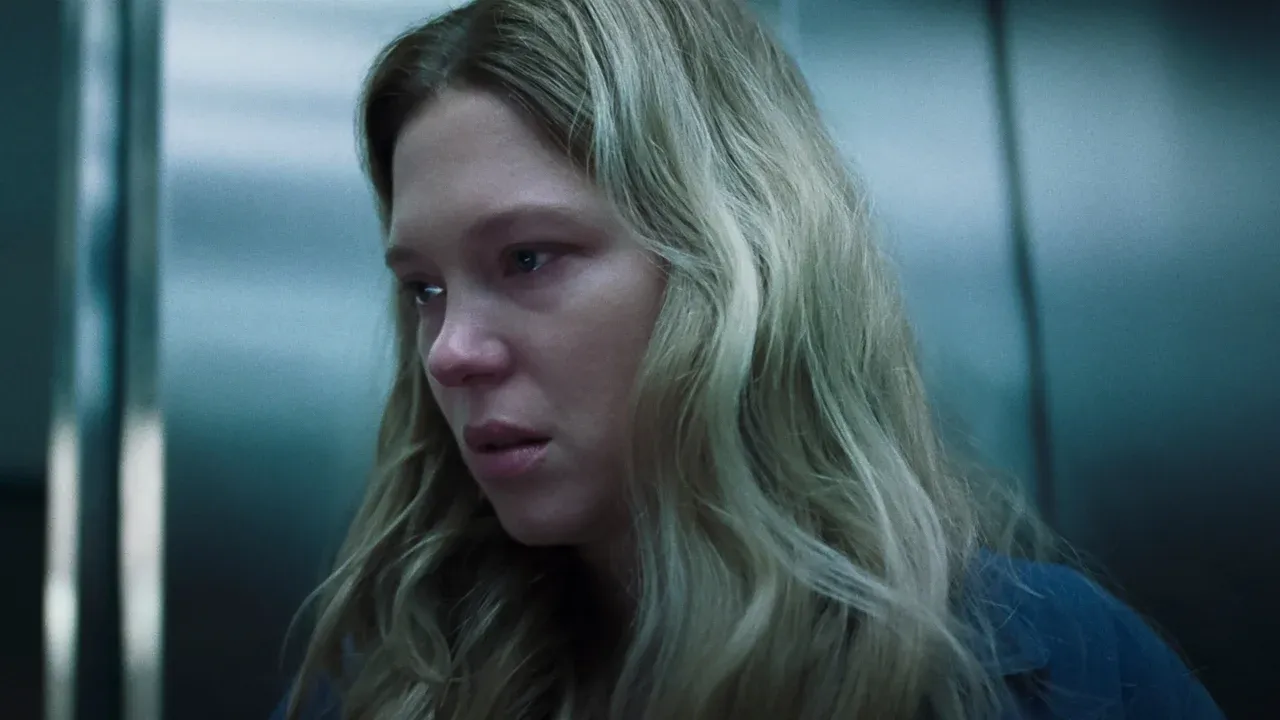
Marie Kreutzer’s “Gentle Monster” was one of the breakout titles at this year’s Cannes Film Festival, where it played in competition. Now the film will be in theaters on Oct. 30 and on Netflix on Nov. 18. Ahead of its special screening at this year’s Toronto International Film Festival, Netflix has dropped the first teaser for the hot-button thriller. You can watch it below.
In “Gentle Monster” the always great Léa Seydoux plays Lucy, a concert pianist whose life unravels after the police raid the home she shares with her partner and their young son. According to the official Netflix synopsis, her husband is “accused of an unspeakable crime in this tense thriller about trust and survival.” Lucy’s story apparently runs parallel to the story of one of the police officers investigating the case (Jella Haase), whose father is suffering from dementia and who might have similar proclivities.
When the film premiered at Cannes it was warmly reviewed. Our own critic called it a “chilling, emotional drama” and said that writer/director Kreutzer (“Corsage”) “tacks so forcefully toward sensitivity over sensationalism that even those — and hopefully most — who have never confronted such circumstances can still recognize their own questions echoing throughout.”
“Gentle Monster” also stars Laurence Rupp and Catherine Deneuve, with original music by Camille, who won an Oscar for one of the songs from “Emilia Pérez.” (Seydoux can be heard belting out a version of Charles & Eddie’s 1992 neo-soul single “Would I Lie to You?” in the trailer.) The film is a co-production between Austria, Germany and France. Following its Cannes premiere, Netflix acquired distribution rights for North America, the United Kingdom, Australia and New Zealand.
Seydoux has had a busy 2026 — she also starred in “The Unknown,” which played in competition at Cannes; co-stars in “Alpha Gang,” the latest bizarro treat from David and Nathan Zellner, alongside Cate Blanchett, Chris Pine and Dave Bautista, which is set to debut at the Toronto International Film Festival; and filmed A24’s “The Masque of the Red Death” with Mikey Madison, which is set for release in 2027.
“Gentle Monster” arrives in select theaters on Oct. 30 before arriving on Netflix on Nov. 18.

>

Léa Seydoux has a lot to learn about her marriage in the trailer for Netflix‘s thriller Gentle Monster.
Director Marie Kreutzer‘s feature hits select theaters Oct. 30 before launching on the streaming service Nov. 18. Jella Haase, Laurence Rupp and Catherine Deneuve round out the cast for the film that premiered in competition at Cannes earlier this year and is set to screen at the Toronto International Film Festival.
Gentle Monster centers on Lucy (Seydoux), a concert pianist whose life is dramatically altered after a police raid leads her to protect her son and question how well she knows her husband.

“What are these secrets you have?” Seydoux asks in the trailer.
Marie Kreutzer (Corsage) helmed the movie from her own script. Alexander Glehr and Johanna Scherz serve as producers.
In her review of Gentle Monster for The Hollywood Reporter, critic Leslie Felperin noted that Seydoux delivers “a performance that’s all raw nerves — steely, vulnerable, angry and broken at once.”
Seydoux told THR in a recent interview that she did not hesitate to tackle the film in which her character grapples with her husband being accused of watching and distributing child sex abuse material. “I think it’s controversial, but also realistic,” the actress explained. “It was important to tell this story because it’s reality. I had no problem with the subject matter.”
For her part, Kreutzer told THR, “I was aware that this was a tough subject, and obviously it was difficult every step of the way with financing.” The Austrian director added, “Some actors — most of them — just told me directly that it’s too heavy material for them.”
>

In all box office history, only eight movies have ever grossed over $100 million in their second weekend.
“Spider-Man: Brand New Day” is one of them. After a record-breaking opening weekend, the film had a spectacular hold in its second weekend at the box office, scoring $145 million domestic. It’s now on pace to become the first movie ever to cross $1 billion at the domestic box office before inflation adjustment, unseating “Star Wars: The Force Awakens” to top that particular box office record chart.
The positive reviews, Tom Holland/Zendaya/Jacob Batalon combo and five-year break between “Spider-Man” movies all coalesced into this tremendous success story for Sony and Marvel Studios.
But what does it mean for the superhero genre as a whole? Marvel has been in a rut since 2024’s “Deadpool & Wolverine,” and the disappointing box office of last year’s well-reviewed “Thunderbolts” would suggest that positive reviews and a fresh take on superheroes aren’t enough to get butts in seats (the Florence Pugh-starrer grossed just $382 million against a budget of $180 million).

Enthusiasm for “Avengers: Doomsday,” however, is rising as “Brand New Day” reminded Marvel fans how much fun it can be to root for a character/actor you’ve loved for years. Presales for the December release are strong. And the casting for Marvel’s new Gen Z “X-Men” reboot has the internet in a tizzy. Can “Doomsday” effectively reset the MCU once and for all, riding the wave of goodwill that “Brand New Day” started?
Marvel already has a leaner calendar next year, releasing just one film — “Doomsday” sequel “Avengers: Secret Wars” — but 2028 will be the true test when “Black Panther 3,” Ryan Gosling’s “Ghost Rider” and presumably “X-Men” all hit theaters. Disney is hoping for a much different result than 2025’s “Captain America: Brave New World,” “Thunderbolts” and “Fantastic Four” trio of disappointments.
And what of the non-Marvel superhero franchises? DC’s “Supergirl” crashed and burned just a month before “Brand New Day” exploded, and while the studio’s body horror “Clayface” has an outside chance at being a solid hit in October, no one’s expecting “Spider-Man” numbers. Next year’s “Superman” sequel “Man of Tomorrow” is the make-or-break film for James Gunn and Peter Safran’s rebooted DC.
Regardless, “Brand New Day” will continue to boost the box office in the weeks to come (alongside “The Odyssey,” which is also holding spectacularly), and you can rest assured that Sony and Marvel will be sitting down with Holland sooner than later to kick the tires on “Spider-Man 5,” which can’t come soon enough.
Now, on to the rest of this week’s Reel to Reel as we tackle Disney’s streaming embrace, David Ellison’s theatrical promise, spoiler culture, Warner Bros.’ AI ad and more.
And if you want this newsletter directly in your inbox every Monday morning, adjust your WrapPRO account settings.

Box Office: ‘Spider-Man: Brand New Day’ Reaches Stunning $1.67 Billion After 2 Weekends
Sony/Marvel Studios’ “Spider-Man: Brand New Day” is simply unstoppable at the box office, earning an incredible $145 million domestic and $381 million worldwide in its second weekend in theaters, bringing its global total to $1.67 billion.
With $655 million in the U.S. and Canada, the latest “Spider-Man” film has grossed more than any film in domestic box office history after 10 days of theatrical play, before inflation adjustment. It is now on pace to become the first film to gross $1 billion domestically, passing the all-time North American record of $936 million held by “Star Wars: The Force Awakens.”
Overseas, the film continues to perform very well in China with $186 million, putting it on pace to join the top 10 highest-grossing Hollywood releases of all time in that country. That list only has two films released after the COVID-19 pandemic: “Avatar: The Way of Water” with $245.9 million and the Hollywood record holder “Zootopia 2” with $651.9 million.
“Brand New Day” is also now the highest-grossing Hollywood release ever in India, standing at $52.8 million. Other top countries include the U.K. with an $87.4 million total, Mexico with $65.8 million and France with $49.2 million.
At this pace, “Brand New Day” will reach the $2 billion mark sometime this week and will be on pace to join “Avatar” and “Avengers: Endgame” as only the third film to pass $2.5 billion before inflation adjustment.

Universal/Syncopy’s “The Odyssey” is in second with $31.5 million domestic, bringing its total to $461 million domestic and $1.1 billion worldwide. The latter total means that “The Odyssey” has passed the 2012 film “The Dark Knight Rises” as director Christopher Nolan’s highest-grossing release before inflation adjustment.
Of that $1.1 billion, $289 million has come from Imax screenings, making “The Odyssey” the highest grossing Imax film of all time with $37.5 million coming from the 41 worldwide locations screening the film in Imax 70mm through mid-September. While “The Odyssey” is now sharing the premium format with “Spider-Man: Brand New Day,” the film still added $37.3 million worldwide from Imax screenings this weekend.
And even with “Brand New Day” dominating the global box office, “The Odyssey” still made $110 million globally from all screenings.
In third is Universal’s “One Night Only,” the highest grossing new release of the weekend with just $5.7 million from 3,012 locations. The romance film from director Will Gluck and starring Monica Barbaro and Callum Turner is opening just below the $6 million of Gluck’s leggy 2023 hit “Anyone But You,” but it remains to be seen if the word-of-mouth on this film about a couple in a world where the unmarried are only allowed to have sex one night each year will carry as far. “One Night Only” earned a B+ on CinemaScore and has a 72% Rotten Tomatoes audience score. – Jeremy Fuster


The Spotlight
Disney is going all-in on streaming. But what does that mean for the company as a whole? Regarding the film strategy, perhaps a hint came during last week’s earnings call when CEO Josh D’Amaro acknowledged that this year’s “The Mandalorian and Grogu” and “Moana” disappointed at the box office, but would ultimately create value elsewhere. In the case of “Mandalorian,” Disney pointed to the new tie-in ride in Disney World and Disneyland, and for “Moana” said it expects the title to perform well on Disney+. The flywheel is in motion. Read the full story here.
New Releases
David Ellison’s Promise: Paramount has offered to put David Ellison’s commitment to releasing 30 films in theaters a year after the WBD acquisition in writing.
Being Tony: Dominic Sessa opened up to our Casey Loving about how embodying a young, “miserable” Anthony Bourdain in “Tony” mirrored his post-“Holdovers” life a little too closely.
Spoiler Culture Problems: William Bibbiani wrote a spoiler review of “Spider-Man: Brand New Day,” and in it discussed the difficulty of adequately reviewing blockbusters for which spoilers are forbidden from being discussed.
AI Backlash: Warner Bros. created an AI-generated ad for “The End of Oak Street,” and the internet was not pleased.
Burning Spidey Questions Answered: Drew Taylor spoke to the “Brand New Day” screenwriters about their Marvel tenure and the latest Spider-Man movie — and broke the news that they’re working on “Avengers.”
Sex Positive: “One Night Only” director Will Gluck talked to Andi Ortiz about why he feels the rom-com never died — and the particulars of his “The Sex Purge” movie’s premise.
Concession Stand
The internet is HOT for Alexander Skarsgard’s wicker husband in “Wicker.” Black Bear could have a sleeper hit on its hands.
“The Odyssey” is now Christopher Nolan’s third movie to cross $1 billion. Can you name the other two without looking?
Gareth Edwards won’t return to direct “Jurassic World Rebirth.” So who’s next to get a crack at Spielberg’s dino franchise? I’d love to see Edgar Wright take a swing…
David O. Russell’s John Madden movie, starring Nicolas Cage and Christian Bale, won’t get a wide theatrical release and will instead debut on Prime Video.
Sony Pictures Classics rescued Maude Apatow’s “Poetic License” from Row K, which was unable to release the film as planned earlier this year.
The trailer for A24’s “Primetime,” starring Robert Pattinson, is excellent.
The Tom Cruise/Brad Pitt “Interview With the Vampire” will be getting its first-ever 4K Blu-ray release on Sept. 22 from Warner Bros. Home Entertainment, just in time for Halloween.

Streaming Corner
- You know how Hallmark Christmas movies are a massive hit for a specific demographic every November and December? Loree Seitz spoke with the president of Hallmark to learn how the network is building a streaming future — and gaining new, younger fans in the process.
- Disney is exploring adding a free tier for Disney+, but which movies and shows would be on it?
- Netflix will have its longest theatrical window ever when it releases Spanish-language Cannes hit “La bola negra” this fall, giving it a berth of over 45 days before it’s on the streamer.
What I’m Watching
I rewatched “Obsession” this weekend with my wife (it’s streaming on Peacock, FYI, but it’s also available on Blu-ray!) and man, that holds up. Curry Barker’s original horror is tremendously unsettling, yes, but it’s also such a damning indictment of “nice guys” who cross a line in how they think about women. Inde Navarrette is spectacular and heartbreaking and horrifying all at once, and I think a big reason Barker’s film exploded at the box office is that it leaves you with so much to chew on afterward. The kind of movie you want to talk about, dissect and debate with your friends in the parking lot long after the credits roll.

>

Charlton Athletic Fan’s Voice: Addicks’ perfect tonic before Derby County opener

Netflix’s Cannes Standout Gentle Monster Gets First Trailer

‘Gentle Monster’ Trailer: Léa Seydoux Faces Secrets in Netflix Movie
-

 movies3 months ago
Search For Canadian TV Actor Stewart McLean Now Homicide Investigation
-

 Fashion9 years ago
These ’90s fashion trends are making a comeback in 2017
-
Fashion9 years ago
According to Dior Couture, this taboo fashion accessory is back
-
Fashion9 years ago
Model Jocelyn Chew’s Instagram is the best vacation you’ve ever had
-
Fashion9 years ago
Your comprehensive guide to this fall’s biggest trends
-
Fashion9 years ago
9 Celebrities who have spoken out about being photoshopped
-
Fashion9 years ago
Emily Ratajkowski channels back-to-school style
-
Fashion9 years ago
A photo diary of the nightlife scene from LA To Ibiza