
Sports
Manchester United’s greatest players: No 4, Bryan Robson

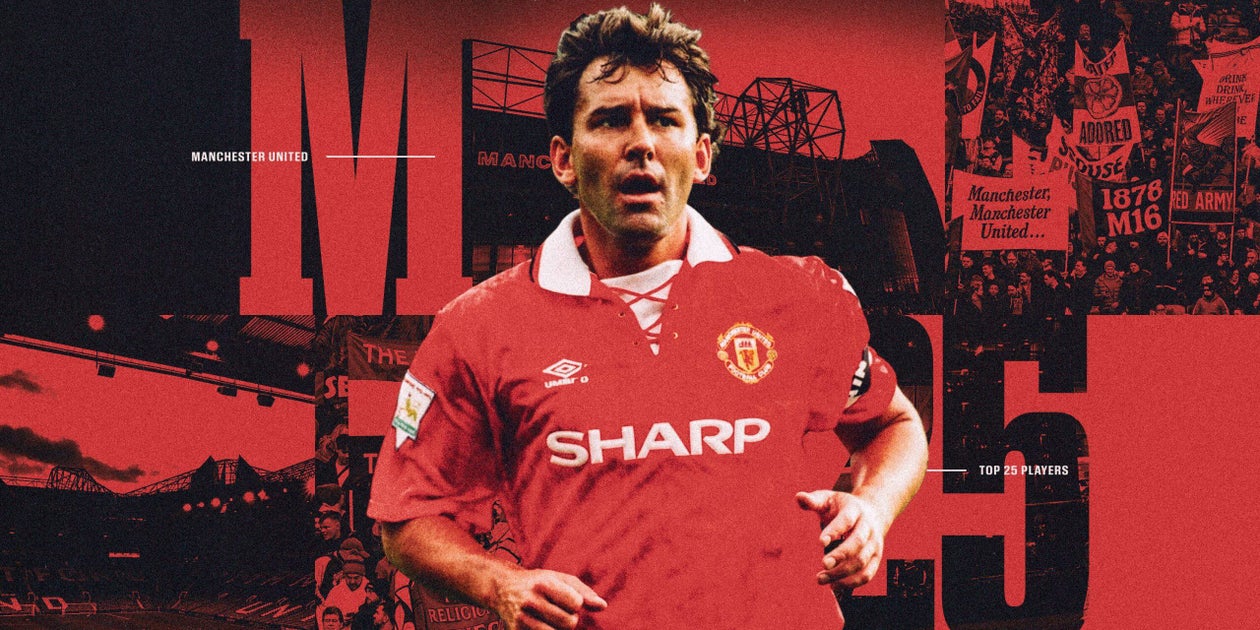
Who are the greatest players in Manchester United’s history? The Athletic gave Andy Mitten the task of compiling his top 25, and we are counting them down this summer, in reverse order.
He explains his thought process here.
Sinaloa, Mexico, May 2019. Diego Maradona is talking about playing at Old Trafford in 1984 for Barcelona in the Cup Winners’ Cup when he says: “Bryan Robson, he was my favourite English player of that generation.”
What a game. Maradona’s side led 2-0 from the first leg and what followed was probably Old Trafford’s best atmosphere in the stadium’s history.
“The pitch felt like it was shaking it was so loud,” Robson told me in 2021. “We’d got off to a great start when I headed in from a corner after 20 minutes. That got the crowd motivated and we really needed the fans. We’d planned to be aggressive and get stuck into Barcelona because they were a real class team. They had (Bernd) Schuster and Maradona, as well as Miguelli (Miguel Bernardo Bianquetti). So we said we’d go high-tempo and get wired into them. We did. When I scored our second goal, we could see their heads drop and they started complaining to each other.”
United won 3-0 and all the best teams in Europe wanted Robson, the son of a Geordie truck driver who spent most of his time away. Despite bigger riches on offer, Robson chose to stay at Old Trafford and he was the single most compelling reason for watching Manchester United in the 1980s.
Costing a record £1.5million British transfer fee when he signed from West Bromwich Albion in October 1981, ‘Robbo’ was ‘Captain Marvel’, a colossus at the heart of centre midfield for United and England, for whom he played 90 times, 65 as captain.
In total, he made 465 appearances for United between 1981 and 1994, putting him 18th all-time, between Martin Buchan and Michael Carrick. Crucially, and this sets him apart from other midfielders, he scored 99 United goals, including some of the best in the club’s history. He is United’s 24th all-time leading scorer.
Both figures would have been substantially higher had he not been constantly beset by injuries. Still, Robson played an impressive 737 club games — he had already had 245 for West Brom before his Old Trafford move and made another 27 as Middlesbrough player-manager after he moved there in 1994. The United he left were the best team in the land, the one he had joined were miles behind European champions and serial league champions Liverpool.
When United had Robson, there was always hope. He was a regular match-winner. When he didn’t play because of injuries, Liverpool won, such as in the 1983 League Cup final. A few weeks later, he played against Arsenal in the FA Cup semi-final at his favourite ground, Villa Park. United went 1-0 down but Robson equalised and they went on to win.

Bryan Robson wins a header during the 1983 FA Cup semi-final (Peter Robinson/EMPICS via Getty Images)
“I was vocal and aggressive when I wanted to be,” he said. “I felt I led by example and if lads were getting idle or ducking out of a challenge, I would hammer them, really hammer them. They didn’t sulk. It doesn’t happen the same now — they sulk.
“I would have a go at any of my team-mates. Some, like Arthur Albiston, a good full-back, had a fiery temper and would come back at me if he thought I was wrong. (Norman) Whiteside would kick his own granny. Paul McGrath, Kevin Moran… hard men, they could all take it. None of them had a go at me because I never did anything wrong! I was only trying to motivate them because I wanted to get the best out of them so that we could win together.
“In later years, lads like Mark Hughes or Steve Bruce would have a go at me if I did something wrong. I was fine with that. That team in ‘92, ‘93 and ‘94 was the best group of players I ever played with. Aggression, ability and real athletes through the whole team.”
Described by Sir Alex Ferguson as a “miracle of commitment” and that for him “winning was almost as important as breathing”, Robson had a “wonderful knack of timing his runs into the box to perfection”.
“There wasn’t a player on the field who could match his commitment and grit or his ability to read a game,” said Ferguson in his 1999 autobiography, Managing My Life. “He was the perfect captain and he ticked all the boxes. I trusted him to make on-field adjustments to playing positions; he was also someone who would speak his mind, which was something I valued. Robson remained captain until he started getting plagued by injuries.
“One player’s drive can have an enormous effect on a team — a winning drive is like a magical potion that can spread from one person to another. Bryan Robson was a foreigner to danger. He came from Chester-le-Street, County Durham, a coal-mining area in the north of England, and would plough right into situations that others would avoid. It resulted in him spending a lot of time on the injury list but also made him an invaluable leader.”
This childhood Newcastle United fan lifted the FA Cup three times with United and the European Cup Winners’ Cup in 1991.
Robson was United’s best player of the 1980s at a time when crowds were down and the sport was blighted by hooliganism. He was fearless and lifted an average side, the team’s leader and social convenor who could sink 10 pints and still be at the front in training the following morning.
Crucially, he turned up in the biggest games and thinks his best was the Cup Winners’ Cup final against Barcelona in Rotterdam, when United won only a second European trophy. He scored great goals to the last (his final one was in the 1994 FA Cup semi-final replay against Oldham Athletic).

Bryan Robson scores his second past Barcelona goalkeeper Javier Urruti at Old Trafford in 1984 (Trevor Jones/Allsport/Getty Images/Hulton Archive)
Of another semi-final versus Oldham, also at Manchester City’s Maine Road, four years earlier, Ferguson said: “Bryan hadn’t played in any league games prior to the semi-final but he was a giant on the day, at his demanding snarling best as he bullied and cajoled his team-mates to meet every challenge.”
And he did so much more. He was an unofficial agent, the unpaid conduit between talented younger players who wanted a new contract and Ferguson. He raised millions for charity around Manchester, too.
In 2024 I climbed Mount Kilimanjaro with Robson for United’s charitable foundation. Other players were asked and politely declined. Robson, despite his wife Denise asking him not to since he had already done it, agreed, aged 67.
His body, battered by decades of unflinching tackles and broken bones, was not what it was. His ankle blew up, he needed medication. Yet he went on and on and on, up and up. People half his age with serious mountain experience struggled and marvelled at him leading them to the top.
As we descended Africa’s highest peak, his ankle ballooned in size. I asked him the greatest United goal he’d ever scored to keep his mind occupied.
“It was against Liverpool, the top team in the 1985 FA Cup semi-final,” he said. “Your big players have got to turn up in the big games because they are the ones who win you semi-finals and finals.
“It was a replay at Maine Road after a 2-2 draw at Goodison. I played a one-two with Frank Stapleton. I could sense that Ronnie Whelan was catching me and thought, ‘I need to hit it before he gets a tackle in on me’. Luckily it was one of those shots which went straight into the top corner. We played superbly against Liverpool and we were going to Wembley to play Everton, the champions that season.”
Those cup wins meant so much, but they were only possible because there was only one Bryan Robson.
Catch up on the rankings
>
Welcome to our Who am I? game.
The rules are simple. Each day there’s a new footballer and the challenge is to guess who they are in as few attempts as possible.
After each wrong guess you unlock a new clue. The fewer clues you need to get the right answer, the more points you score.
Three is a good score, four or five points is exceptional.
So take part and return for more tomorrow.
Today’s player and clues set by BBC Sport’s Flora Snelson.
After more quizzes? Go to our dedicated Football Quizzes and Sports Quizzes pages and sign up for notifications to get the latest quizzes sent straight to your device.
>
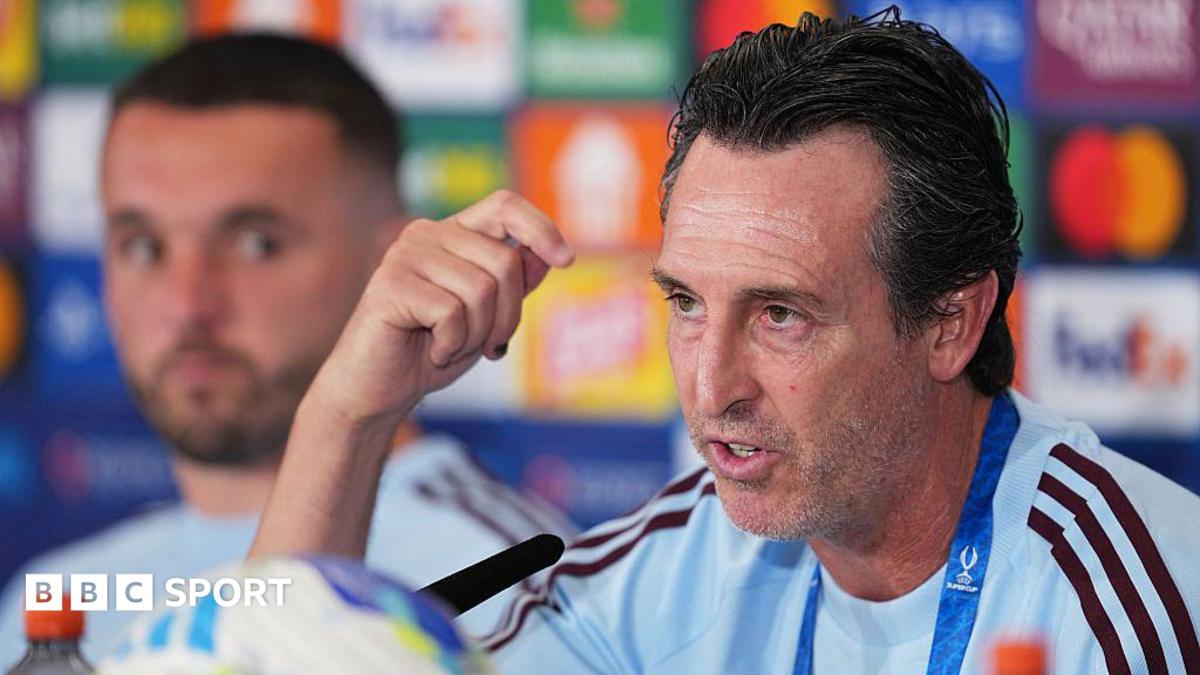
Wednesday’s game between Villa and PSG is a repeat of the Champions League quarter-final from 2024-25.
Trailing 3-1 from the first leg at Parc des Princes and falling 5-1 behind on aggregate in Birmingham, Villa were so close to pulling of a huge shock.
They roared back from 2-0 down to win 3-2 on the night, eventually bowing out 5-4 on aggregate, and it was one of the biggest signs Emery had turned them into a side which could compete with Europe’s best.
It is something which has stuck in the minds of the PSG players, with Vitinha wary of Villa’s threat.
“It was such a difficult test, especially the second half,” said Vitinha.
“We’ll be ready but we’re conscious of how difficult it’s going to be.”
Villa’s line-up in Austria will have a drastically different look, just 484 days since that game.
Morgan Rogers, Lucas Digne and Youri Tielemans have been sold while Amadou Onana is out injured until next year.
Fellow midfielder Boubacar Kamara is in the squad, but is only just returning from a serious knee injury he suffered in January.
Emi Martinez, Ezri Konsa and Ollie Watkins have not travelled after playing at the World Cup, with Emery giving them a month off.
It means there is a chance just four of the starters who faced the French champions 18 months ago will start for Villa. Five of the substitutes that night are also no longer at the club.
For a team so settled and consistent as Villa under Emery that is a drastic change.
“A lot has changed in the eight years I’ve been here,” said skipper McGinn.
“When you are signing the best young English talent and players are performing at the highest level there will be interest.
“We have a structure in place, standards and rules which have made us a success. I’m really excited about the new Aston Villa.
“We have our main core, the same manager, same methods and same desire to achieve more. A lot of people thought we reached a ceiling a couple of seasons ago and we proved them wrong.”
>

Welcome to our special cricket edition of our Who am I? game.
The rules are simple. Each day of The Hundred there’s a new cricketer, taking part in the tournament, who we want you to guess in as few attempts as possible.
After each wrong guess you unlock a new clue. Guess the answer after as few clues as possible to score more points.
Three is a good score, four or five points is exceptional.
So take part and return for more tomorrow.
Today’s player and clues set by BBC Sport’s Henry Cowling.
After more quizzes? Go to our dedicated Sports Quizzes page and sign up for notifications to get the latest quizzes sent straight to your device.
>

BBC Sport quiz: Who am I? Guess Premier League footballer No 23

Andy Cohen Confronts ‘Hacks’ Creator Over Season 5 Dig at His Expense

Aston Villa: Unai Emery chases his first Super Cup
-

 movies3 months ago
Search For Canadian TV Actor Stewart McLean Now Homicide Investigation
-

 Fashion9 years ago
These ’90s fashion trends are making a comeback in 2017
-
Fashion9 years ago
According to Dior Couture, this taboo fashion accessory is back
-
Fashion9 years ago
Model Jocelyn Chew’s Instagram is the best vacation you’ve ever had
-
Fashion9 years ago
Your comprehensive guide to this fall’s biggest trends
-
Fashion9 years ago
Emily Ratajkowski channels back-to-school style
-
Fashion9 years ago
9 Celebrities who have spoken out about being photoshopped
-
Fashion9 years ago
A photo diary of the nightlife scene from LA To Ibiza