
A scene featuring Walsh, Lawrence, Reiner and Jenkins.


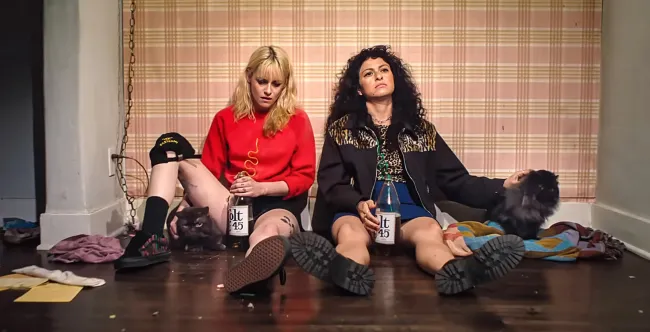

This spring, IndieWire declared the stoner movie practically dead. Little did we know, filmmaker Dylan Meyer was already holding the antidote.
Opening with the camera swallowed by the waves of the Pacific Ocean, “The Wrong Girls” immediately establishes itself as a film that needs to be tactile. Soon, we’re beneath the surface, watching a bioluminescent squid spray its ink as the title blossoms across the screen — the words themselves suggesting an intrinsic understanding of stoner culture. Very Deadhead. Very good start.
From there, we’re transported to Casa de Chill Zone, the Los Angeles home shared by best friends Frankie (Kristen Stewart) and Molly (Alia Shawkat). Starry-eyed, sharp-tongued, and mostly warmhearted, the roomies are watching a nature documentary, discussing how they supposedly “solved climate change” the previous night, and lamenting their desperate need for rent money.


Recognizable? Absolutely. But “The Wrong Girls” doesn’t fully lock in until Frankie gets her ass to work.
Leaving Molly at home to experiment with blue cheese and THC as brownie ingredients, the Kwik Thingz delivery girl heads out in uniform. She startles herself by activating a talking lawn ornament (again, relatable!), then arrives with a “cheese sculpture” at the home of some rich yuppie (Tony Hale). He’s mostly ignoring her, but breaks his train of thought long enough to ask one magnificent question.
“Are you literally smoking a lit joint right now?”
“My bad,” Frankie says, flicking the evidence out of her mouth and onto his driveway.

It’s the beginning of a movie that reinvigorates the stoner comedy in countless ways. So clever you want to grab Meyer by the shoulders and stare deep into her eyes until she really gets the compliment, “The Wrong Girls” bottles a new era for 420-friendly filmmaking by locating the sweet spot where being a pothead is still somewhat taboo — even in California.
Legalization has flattened the narrative stakes that used to make weed movies work. Getting high no longer automatically puts a character at odds with the cops, their parents, or another authority figure, so marijuana has lost some of the low-level transgression that sustained classics from “Fast Times at Ridgemont High” to “Pineapple Express.”
But Frankie isn’t funny because she’s afraid of being arrested. She’s funny because being brazenly checked-out from modern society, even while functioning within it, still feels socially incorrect. “The Wrong Girls” understands that weed is mainstream in 2026, but being visibly and unapologetically high is still seen by plenty of people as a kind of offense.
Is living your life from behind a curtain of smoke, particularly in a modern world this dire, really a bad thing?
Testing that theory, Molly and Frankie start the film at a crossroads. Ask Molly’s boyfriend Josh (Zack Fox) and he’ll tell you the girls’ shared comfort may be holding one or both women back. Frankie dropped out of an engineering program at Stanford years before, and Molly could be a professional baker if her talents weren’t always diverted toward party antics. Their friendship is an obvious life raft. But from the outside, it can also resemble an anchor.
Frankie confronts that insecurity when she goes alone to see an ex-boyfriend at a concert and finds him with a successful scientist who, minus the Lisa Loeb glasses, looks eerily like her. Following an altercation, Frankie is left half-drunk and wearing her rival’s broken frames when a mysterious man we’ll come to know as Not Metal Head Dave (a pitch-perfect LaKeith Stanfield) makes a terrible mistake. Yep, that’s how Frankie winds up with a briefcase containing “the most important scientific breakthrough of our time.”

The glowing substance inside, we eventually learn, was derived from the wordless coexistence of deep-sea creatures and designed to address humanity’s urgent need for empathy. But stuck in a money jam, Frankie and Molly immediately decide to sell it like any other recreational drug. Of course, not before taking two vials themselves — y’know, just to make sure they’re safe.
The psychedelic sequence that follows, punctuated by three European henchmen tailing the girls in a black SUV, is funny enough. But it’s not until the next morning, when Frankie and Molly feel the brain they already tend to share working on an actual telepathic level, that “The Wrong Girls” kicks into high gear.
Zoning out while the world feels like it’s on fire can be a kind of superpower, and Meyer uses supernatural abilities amplified by THC to explore how the stoner lifestyle can both mess up your day and save you from yourself. Think “Superbad” meets “Smiley Face,” with a nautical “Spider-Man” twist.
Stewart, having the absolute time of her life, allows the cool persona she’s cultivated across the modern indie scene to give way to an insecure brattiness that’s wonderfully refreshing. Adding syllables to words she’s annoyed to say (you’d be shocked how much disdain she can fit inside the name “Josh”), Stewart makes Frankie sound fundamentally different from any character she has played before — save for maybe a few bits on “SNL.” She’s highly capable but beaten down by a world that has made her feel like she isn’t enough, and just smart enough to almost think her way out of that trap.
But Frankie needs Molly and the sunny homemaker energy she brings to everyday life. Recalling her turn as a Texas waitress and another great best friend in Drew Barrymore’s “Whip It,” Shawkat plays Molly like your sweetest childhood friend crossed with a blissed-out Keebler Elf. When Frankie gets down on herself, Molly rattles off obstacles they’ve already escaped together. Whether inventing the Bong-a-Tron or freeing themselves after hours trapped inside a Party City parking lot, these misadventures almost always hinge on weed.

That isn’t a reflection of two friends struggling to spend time together sober. Rather, marijuana is part of the private language keeping Molly and Frankie afloat, and instead of feeling ashamed, the soulmates have designed their lives around celebrating weed as a kind of romance. There are moments when you want Molly and Frankie to kiss instead of toke up, but it ultimately feels more authentic that they don’t. Suffice to say, women have been the sexual punchline in party movies for too long, and “The Wrong Girls” finally gives stoner chicks access to the messy joy the genre has historically reserved for men.
The fantasy and sci-fi elements prove somewhat trickier for Meyer to navigate, but that mainly leads to happy accidents. As the increasingly zany plot heightens the stakes, her script — chock-full of hysterical lines like “What day is it? March?” — repeatedly steers the girls’ attention inward. The pacing feels off throughout much of the film, with comic and contemplative asides gumming up the central caper. But that shagginess is redeemed by how tactile “The Wrong Girls” remains.
Birds chirp as Frankie zones out while talking to the landlord. Later, she and Molly return to Hale’s rich guy hoping to sell the drugs while wearing matching cocktail dresses made from garbage bags. (Their house has been burgled, by the way.) An extended bit involving his maddeningly sleek front door, which just won’t close, does nothing for the plot and everything for the vibe.
These distractions make the movie resemble its heroines. They interrupt the action but deepen our connection to Frankie and Molly, allowing “The Wrong Girls” to exhibit the same introspection it locates in their lifestyle. Meyer makes space to laugh, look around, and fixate on the wrong object. The result will pleasantly scratch the brain this movie was made to reach.
If the experimental drug also at the heart of “The Wrong Girls” isn’t real, almost everything else about this extremely Los Angeles production is. The movie captures the very deep relationship so many stoner Angelenos have with their living rooms. Frankie’s suggestion that they “hole up in the Chill Zone until this Kock problem blows over” (Kock is the corporation chasing them for the drugs) lands less like a joke than a reasonable response to life today. And the supportive environment these two friends have built over a decade-plus allows them to retreat into a daily routine that gives them comfort. One of their biggest devastations doesn’t come from being followed, but learning the cheap buffet they frequent may close.

Even Dio and GG, the girls’ cats (voiced by Seth Rogen and Kumail Nanjiani), have distinct strains of snooty homebody energy. Able to communicate with the animals as well as each other — and using Stanfield as their endlessly funny straight man — Stewart and Shawkat embody the real world creeping in on the safety of an L.A. home without making that collision dire. Kate McKinnon is similarly delightful as Dr. Chapman, a beleaguered genius who becomes the girls’ ally despite repeatedly insisting they should be dead. (Geena Davis appears in a part so small you could see the movie and forget she was there.)
The details are impeccable, from the EDGLRD T-shirt spotted on the rich guy’s son to the “818” tattoo flying across Frankie’s knuckles when she beats him at “Street Fighter.” Slasher synths lend the psychedelia a “Goosebumps” energy that makes nearly all of Los Angeles feel like Halloween night. Through kaleidoscopic lighting and inventive camerawork, Meyer roots her world in the kind of DIY mysticism you might associate with, say, a pizza tattoo.
Pay attention to the cardboard cutout of Celine Dion in the kitchen, too. She’s more important than you’d think. Those recognizable totems keep “The Wrong Girls” wondrous and nonthreatening even as its plot becomes increasingly action-packed. Violence gives way to dance (yes, literal dance) in a feel-good movie that doesn’t ignore the not-so-feel-good conditions making Frankie and Molly relatable. “How much rent is enough rent?” is only one of several surprisingly insightful questions they ask, and Meyer even takes a position on gun control without preaching.
Most importantly, “The Wrong Girls” rejects Josh’s assumption that growing up requires dismantling the life Frankie and Molly have built. Their lifestyle can grow. The mentality they share — and the friendship sustaining it — is a beautiful and powerful thing. In a world inundated with rage bait and political turmoil, that’s a mighty valuable export.
At one point, Frankie can’t open the drug briefcase and collapses onto the floor like a marionette, announcing, “Too hard! I quit!” Just days before her film opens nationwide, Meyer’s Instagram bio reads: “It’s good to give up.” That’s an incredibly compelling thought today, and perhaps a way forward for anyone struggling to cope. Sometimes giving up isn’t surrender. Sometimes it means refusing the exhausting terms you’ve been handed and returning to the people, places, and pleasures that make another future possible.
With her effervescent directorial debut, Meyer announces herself as a cinematic Caterpillar for the Alice in Wonderlands of our time. The great American stoner comedy isn’t dead. It just needed the wrong girls to save it.
From Neon, “The Wrong Girls” is in theaters on Friday, August 14.
Want to stay up to date on IndieWire’s film reviews and critical thoughts? Subscribe here to our newly launched newsletter, In Review by David Ehrlich, in which our Chief Film Critic and Head Reviews Editor rounds up the best new reviews and streaming picks along with some exclusive musings — all only available to subscribers.
>
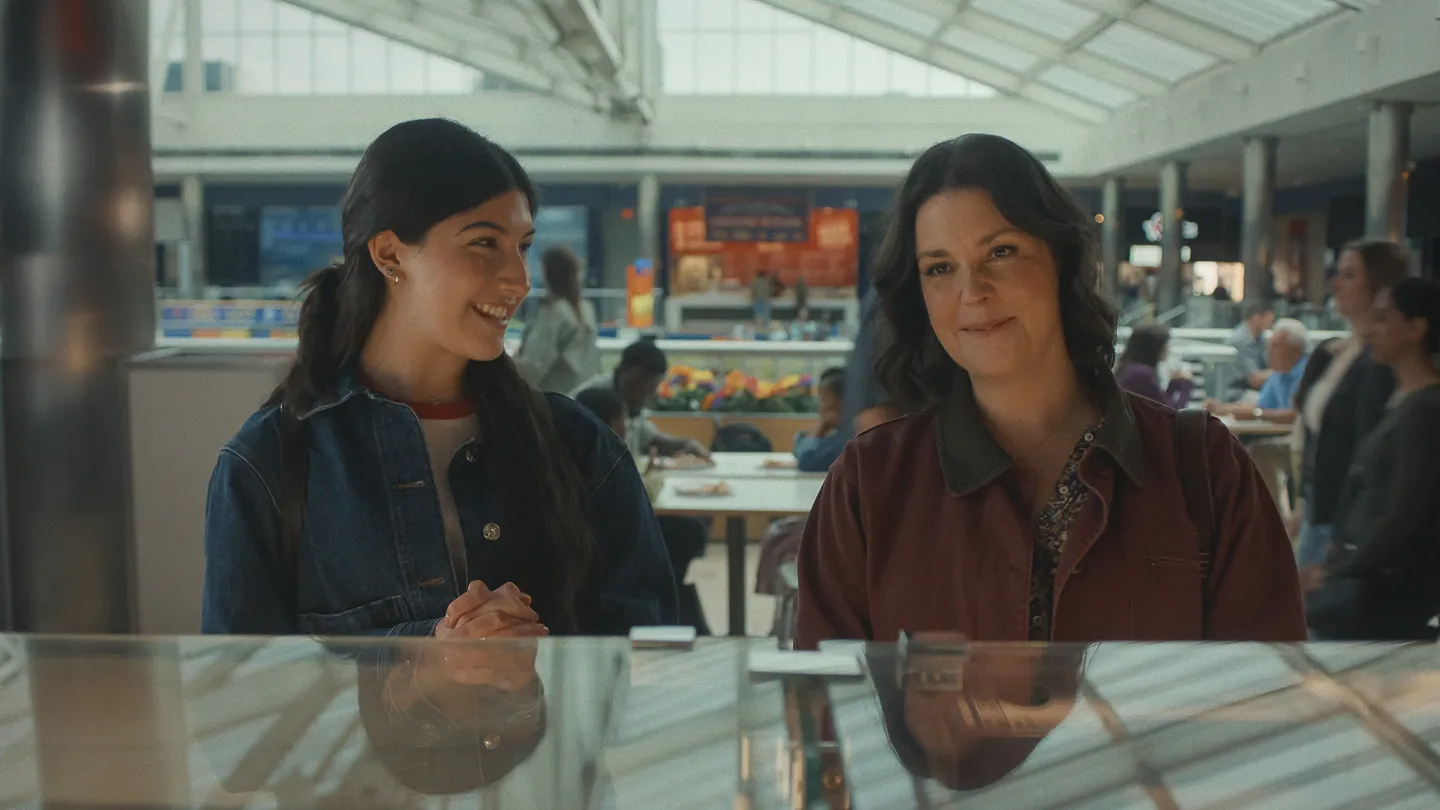
From the opening minutes of Netflix’s Don’t Say Good Luck, it’s clear the spring of 2026 is going to be big in the life of high school sophomore Sophie Birenbaum (Sunny Sandler).
A consummate theater kid, she’s been practicing and practicing her audition number for the school’s production of Waitress. She looks forward to the long hours of rehearsal alongside her BFF and her crush, to capping off yet another school year with the rush of opening night.
Don’t Say Good Luck
The Bottom Line
A sensitive snapshot of coming-of-age amid grief.
Release date: Friday, Aug. 14
Cast: Sunny Sandler, Melanie Lynskey, Max Greenfield, Stephanie Beatriz, Scarlett Estevez, Jack Champion, Emma McNulty, Elyse Bell, Steve Buscemi, Bebe Neuwrith, Jon Lovitz
Director: Julia Hart
Screenwriter: Laura Hankin, Julia Hart, Jordan Horowitz
Rated PG-13,
1 hour 35 minutes
But the transformative experience that hits her isn’t quite what she expected. By the time Sophie lands the lead role, the very ground beneath her feet has shifted with news that her mother’s (Melanie Lynskey) cancer has returned. The drama by Julia Hart (Fast Color) traces the intertwined journeys of Sophie’s play and her mother’s illness with an observant eye and a warm touch, sensitive to the bittersweet fact that just because the world is ending on one front doesn’t mean the rest of it stops turning, too.
At school or among friends, Sophie passes all the usual adolescent milestones. She develops a flirty rapport with her leading man (Jack Champion). She has a falling-out with her childhood friend (Scarlett Estevez) as their interests begins to diverge. She gets way too drunk at a party, necessitating what a pal accurately describes as “the greatest acting challenge of your young life” when her dad (an appealingly scruffy Max Greenfield as Ted) comes to pick her up. She hones her talents under the guidance of her drama teacher (Stephanie Beatriz as Ms. Parker), and comes into her own as a performer.
At home, Sophie deals, or often tries very hard not to deal, with the reality of her mom’s illness. The script, by Hart, Laura Hankin and Jordan Horowitz, eschews the sort of grand emotional moments a more conventional cancer drama might build its narrative around — the initial diagnosis or the discussion of options or the tribulations of treatment — in favor of little details that accumulate bit by bit into a grim prognosis: how the family’s plans to spend the summer at their beach house sound a little less certain every time they’re brought up; how Liz has less and less energy for the long book she’s been reading. The realization of what it all adds up to sinks in so gradually that at some point, it feels like we’ve always known.
Sophie would be the first to acknowledge that her petty adolescent woes don’t matter anywhere near as much as her mom’s illness — and in fact does, when her grandmother (Bebe Neuwirth) accuses her of prioritizing the play over family during a Mother’s Day weekend. And her little brother might not get why she’s so fussed about starring in some dumb show in the first place. “Why do they sing? Just be talking,” he complains, with typical little-kid bluntness. But Don’t Say Good Luck recognizes that Sophie’s high school problems still matter, that the play is as much catharsis as it is distraction. Or, as Sophie puts it, “Music can make you feel things that are bigger than just talking.”
That the film is so fine-grained in its empathy and authentic in its emotions makes its occasional, minor missteps stand out all the more. Here and there, you can see the narrative gears creaking to get the story where it needs to go: One butt dial from Dad is a throwaway joke, two is a payoff to that setup, three in the first 20 minutes just starts to feel like laziness. (Blessedly, there is not a fourth.)
Supporting players are so thinly sketched that they seem more like functional objects for Sophie to act out against than people who might continue to exist when the Birenbaums aren’t interacting directly with them.
And then there are the minor, extremely nitpicky things that don’t really matter and aren’t even technically wrong, but nevertheless feel off enough to chip away at the film’s naturalistic façade — like the hellacious late-’80s-ness of the maternity dress Liz claims to have worn while pregnant with Sophie, even though that would have been circa 2010.
But even when such flaws let the story down, the lovely ensemble never does. Steve Buscemi makes the most of his brief screen time as Sophie’s grandfather, a welcome pillar of straightforward understanding and wry humor in destabilizing times. (Dale’s pragmatic reaction to Sophie asking if she can get a ride home from a boy: “If I was your father, I’d say no. But I’m your grandfather, so I say wear a seatbelt and call me if he gets handsy.”) Jon Lovitz might be playing a one-note punchline, as an employee of Ted’s who’s absolutely incensed by the deli’s new healthy options, but it’s never not funny to watch his (literally) spitting disgust at the concept of a kale wrap.
Of course, it’s the leading ladies who really make the film. Sandler, who showed real promise with her first lead role in the amiable nepo family affair that was You Are So Not Invited to My Bat Mitzvah, rises to the challenge of letting us in on how Sophie is feeling when often she’s unable or unwilling to know herself. But the real gem of this ensemble (as she is in pretty much everything she touches) is Lynskey, who’s never less than completely and utterly present even as Liz increasingly struggles to be. A little bit funny, a lot cheesy and completely, unabashedly earnest, her Liz is — like moms everywhere — at once a perfectly ordinary woman and the center of the universe.
The love between Sophie and Liz radiates from their every interaction, even before the bad news hits. In doting-parent fashion, Liz understands she’s not allowed to wish her actress daughter “good luck,” but can’t quite bring herself to spout the traditional theater benediction: “But I would be so sad if you broke your leg,” she pouts adorably. Really, it almost strains credulity how good their relationship is, despite Sophie being in her prime adolescent-angst years. But so what if it’s possible to quibble with some of the details? Where it counts most, in its tenderness toward young Sophie, her mother and her art, Don’t Say Good Luck rings as true and clear as any Broadway showstopper.
>
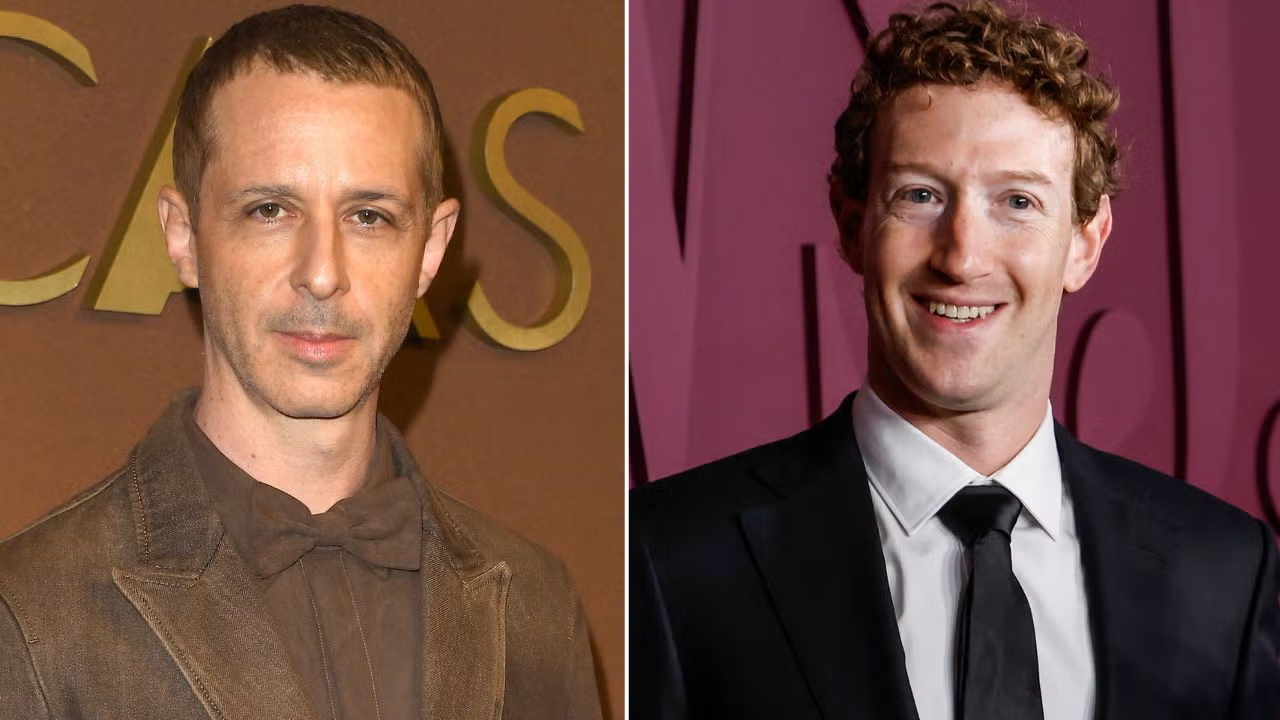
Jeremy Strong confirmed in an interview published Wednesday that he reached out to Meta CEO Mark Zuckerberg after he was cast as the Facebook co-founder in Aaron Sorkin’s forthcoming “Social Network” sequel, “The Social Reckoning.”
“I wrote to him—I’m probably going to give Sony an aneurysm—I sent him an email,” Strong told GQ. “Just to say that I take this responsibility very seriously, and the veracity of it seriously, and I’m approaching it with respect.”
The Oscar nominee confirmed that Zuckerberg wrote him back but declined to share what the Meta CEO said. According to Strong, he and Zuckerberg have only been in the same room once, when the actor presented an award at the Breakthrough Prize ceremony last year to University of Washington biochemist David Baker. The two did not allegedly meet that day.
Strong told GQ that, had Zuckerberg invited him to Meta’s offices after their private correspondence, he would have declined out of a desire to keep some distance between him and his subject. The actor also acknowledged the public perception of Zuckerberg.
“I know that he is a reviled person and not a popular person in our culture, but I do not think you should have an actor playing him who wants to set out to condemn him,” Strong said. “It’s crazy to take this on at all. It’s crazy.”
“It feels incredibly fraught to talk about the movie, to talk about Mark and being the person who is playing Mark and representing Mark in a sense to the world and to posterity; I feel an enormous sense of weight and responsibility,” the actor added. “My job is to understand and defend his point of view and fight his fight.”

Strong compared his decision to play Zuckerberg to his “Apprentice” co-star Sebastian Stan’s choice to portray a young Donald Trump in that Oscar-nominated film and his “Deliver Me from Nowhere” co-star Jeremy Allen White’s willingness to step into the shoes of Bruce Springsteen.
“It’s the kind of role that fascinates me. It’s like Sebastian playing Trump. You are wearing the cape. It’s like Jeremy playing Bruce,” Strong explained. “The perils of that could not be greater. To commit to it, and to be free within it, is a great challenge.”
Strong, of course, stepped in to play Zuckerberg in place of Jesse Eisenberg, who earned an Oscar nomination in 2011 for playing the Facebook co-founder in “The Social Network.” Eisenberg has been open about his desire to distance himself from Zuckerberg as much as possible, after being so closely associated with the controversial figure for over a decade.
There is, consequently, already a lot of scrutiny surrounding Strong’s performance. The reactions to the film’s first trailer included more than a few jokes about Strong having either an Oscar or a Razzie in his future. Speaking with GQ, Strong acknowledged those jokes and seemed to shrug them off.
“I thought that was the greatest endorsement,” the actor said. “Listen, I’ll be sad if I win a Razzie, but that’s the place you want to be. That’s the wager you have to make. To me, that means, ‘Okay, I put it on the line enough.’”
“The Social Reckoning” is slated to hit theaters on Oct. 9.

>
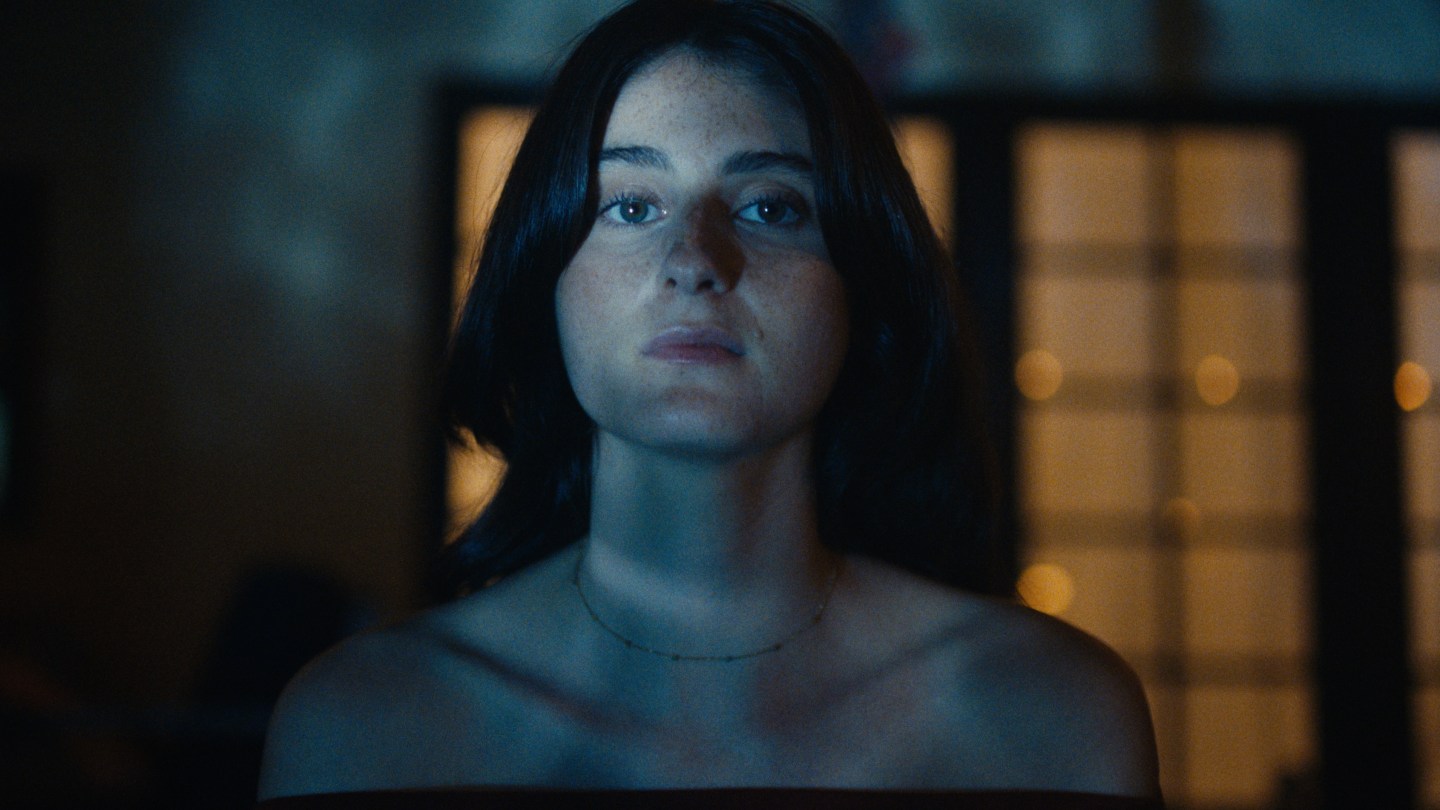
After appearing as a nurse on Larry David’s HBO series Life, Larry and the Pursuit of Unhappiness last week in the final episode, Romy Reiner‘s resumé is expanding in 2026 with a starring role opposite Carter Jenkins and Emmy nominees Sharon Lawrence and Matt Walsh in Getting to That Age.
The short film comes from fledgling filmmaker Tristen Tarp, who directed from her own script. Getting to That Age casts Reiner as an anxiety-ridden only child who returns home for the holidays to announce her engagement, only to discover that her parents are set to divorce. The story is meant to explores the collision between personal milestones and family upheaval. See the short’s first teaser and a selection of first-look images below.
Tarp, who has also worked as a playwright, helmed Getting to That Age after another previous short, her debut Bark starring Monica Potter, Alfonso Caballero and Jennifer Sherer.
“Bringing together this cast and creative team was a rewarding journey that meant a great deal to me. Between Sharon’s incredible emotional gravitas, Carter’s natural instinct for toeing the line between humor and cynicism, and Romy and Matt’s dry wit, this talented ensemble perfectly captured the nuance that this family dynamic demanded,” Tarp said in a statement. “I’m deeply proud of how this story illustrates society’s perceptions of aging, relationships, and success, and I’m eager for audiences to see how it sparks reflection and introspection.”
The short was produced by Marked Atlas Pictures, Jumpsuit Pictures and Frances Komoda. Executive producer credits belong to Tarp, Geneva Willis, Beck Bennion, Sami Moughrabie, Charles Mudd, Katherine Mudd and Hailey Bailey with associate producer credits belonging to Madi Walser and Shalyn Delhaes.
Reiner has worked on other short films like The Underwater Halloween Movie, Pterry, Whole and the upcoming The Auschwitz Bagel. She’s been seen in projects like Things Like This, You People, Curb Your Enthusiasm and Voices. She was most recently seen throwing out the first pitch at a Los Angeles Dodgers game alongside brother Jake Reiner, marking the siblings’ highest-profile outing after their parents, Hollywood icon Rob Reiner and wife Michele, were tragically killed last December.
Jenkins’ credits include Famous in Love, Women of the Movement, The Shadow Diaries, Mad Men, The Following, Sweet/Vicious, After Ever Happy, After Everything and Paws in the City.
Both Walsh and Lawrence are veteran, Emmy-nominated actors. Walsh’s credits include Veep, The Hangover, Reno 911!, Players, Outsourced, Hung, The Do-Over, Ghostbusters, Brooklyn Nine-Nine, Ghosts, The Conners and many more. Lawrence has starred on NYPD Blue, Fired Up, Ladies Man, Monk, The Line, One Tree Hill, Rizzoli & Isles, The Ranch, Me, Myself & I, Shameless, Criminal Minds, Rebel, Dynasty, Joe Pickett, Walker and many more.
A scene featuring Walsh, Lawrence, Reiner and Jenkins.
Reiner and Jenkins
Courtesy of Filmmakers
Lawrence and Walsh
Courtesy of Filmmakers
Walsh
Courtesy of Filmmakers
Reiner and Jenkins
Courtesy of Filmmakers
Reiner and Jenkins
Courtesy of Filmmakers
Jenkins
Courtesy of Filmmakers
Reiner
Courtesy of Filmmakers
>


Search For Canadian TV Actor Stewart McLean Now Homicide Investigation


These ’90s fashion trends are making a comeback in 2017
According to Dior Couture, this taboo fashion accessory is back
Model Jocelyn Chew’s Instagram is the best vacation you’ve ever had
Your comprehensive guide to this fall’s biggest trends
9 Celebrities who have spoken out about being photoshopped
Emily Ratajkowski channels back-to-school style
A photo diary of the nightlife scene from LA To Ibiza