
Anime
Studio Chromato, Studio Colorido, Shingo Yamashita Produce New Pokémon Short About Wartortle – News


The Pokémon Company began streaming a new “POKÉTOON” anime short on Wednesday. The short is titled “Kameil to Natsu no Tsuzuku” (Wartortle and the Ongoing Summer).
The short follows a boy named Rikuto who visits his grandmother on an island at the end of summer. There, he meets a Wartortle.
Shingo Yamashita (Cosmic Princess Kaguya!) directed the short at Studio Chromato and Studio Colorido. Aya Satsuki (Solo Camping for Two) wrote the script. Riiki Miura designed the characters and served as chief animation director. Kyosuke Kagawa composed the music.
The short stars Sayaka Senbongi as Rikuto, Tasuku Hatanaka as Gaku, Akiko Hiramatsu as Shuri, Kana Hanazawa as Wartortle (Kameil), Natsumi Haruse as Leafeon, and Michiyo Murase as Bellsprout (Madatsubomi).
Sources: Official Pokémon YouTube channel, Comic Natalie
>
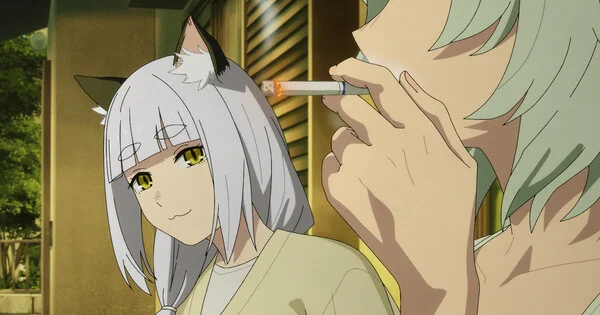
The staff for the television anime of Nyan Nyan Factory‘s Chainsmoker Cat (Yanineko) manga announced on Wednesday that Yumi Hara will join the anime’s cast as Yani Neko’s mother Shizue Satō. The character will appear in the anime’s seventh episode on Thursday.

©にゃんにゃんファクトリー・講談社/ヤニねこ製作委員会

©にゃんにゃんファクトリー・講談社/ヤニねこ製作委員会
Seven Seas is releasing the manga in English, and it describes this comedy set in a world where humans, catgirls, and similar species co-exist:
Yani is a catgirl with a seriously bad smoking habit. She smokes so much that her apartment smells like ash and is littered with cigarette butts—and plenty of other trash! Every time she tries to quit, she becomes weak to the cravings and gives in almost instantly. Will she ever get her life together, or is she doomed to live as a chainsmoking slob forever?
The original manga contains toilet humor, gross-out comedy, and characters regularly consuming drugs and/or alcohol.
The anime stars:
Studio Lemon‘s Taku Kimura (Kairyū to Yūbinya-san, Star Wars: Visions‘ “Tattooine Rhapsody”) is directing the anime at Bibury Animation Studio, and Takashi Aoshima (Himouto! Umaruchan, The 100 Girlfriends Who Really, Really, Really, Really, Really Love You) is writing the scripts. Riki Matsuura is designing the characters, and Keiichi Suzuki (Saint Young Men, Tokyo Godfathers) is composing the music. Rock band Wasureranneyo performs the anime’s opening theme song “Nanmonee,” while Necry Talkie performs the anime’s ending theme song “Kemuri to Blue” (Smoke and Blue). Other staff members include:
The anime premiered on July 2 at 24:30 (effectively, July 3 at 12:30 a.m.) on the Tokyo MX and BS11 channels. The anime also started airing on AT-X on July 25. WWWave Corporation‘s anime streaming platform OceanVeil is streaming the anime as it airs.
The anime has two versions, an “Evil Dragon Unleashed” version that “respects the work’s directorial intent” on some of the episodes, and an “On-Air” version that is made for terrestrial television broadcast. The “Evil Dragon Unleashed” version is available on the AT-X premium subscription channel and the AnimeFesta, DMM TV, Fuji TV On Demand, Hulu, Netflix, and Anime Times streaming services in Japan. (AnimeFesta ;and Anime Times will also have the “On-Air” version.) 16 other streaming services only offers the “On-Air” version in Japan. OceanVeil streams the “Evil Dragon Unleashed” version of the anime.
Nyan Nyan Factory has been serializing the manga in Kodansha‘s Young Magazine, and Kodansha published the 13th compiled book volume on August 6. Seven Seas published the third volume in English on June 16.
Sources: Chainsmoker Cat anime’s website, Comic Natalie
>
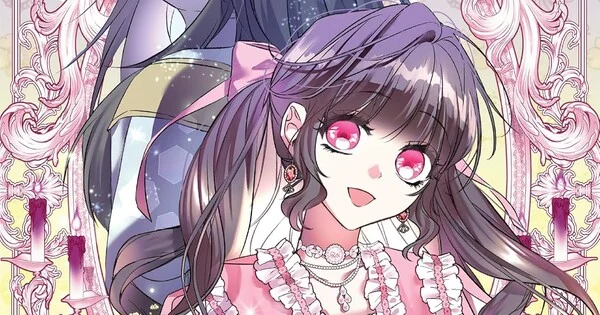
By this point in pop culture, we’ve all read about or watched time loops. The usual method for handling them (with, of course, some exceptions) is that the looping party eventually uses their knowledge to break the cycle or just becomes inured to their situation and makes the best of it. Not so Dinah, heroine of Hwang Bino’s adaptation of Songiba’s The Archduke’s Adopted Saint. Dinah has spent lifetimes being tormented by the church that took her off the streets, reviled for being an orphan and abused by fellow saint candidate Lavienne, and none of this is relegated to “oh, well, that’s just my life.” Dinah is genuinely traumatized, and that’s what drives her story.
It’s a good thing that the book opens with a “chapter 0” that shows readers that things will, in fact, get better, because Dinah’s life is pretty bleak. Just before she successfully commits suicide to end the loop before the main story starts, we see her kept chained in a dank basement and treated like a criminal. Every day, Lavienne comes to the cellar to drain some of Dinah’s blood, which she consumes to create the fiction that she, the daughter of a duke, is the true saint. If this seems a bit over the top for a villain, it’s worth mentioning that Lavienne has perfect parent manners – she’s an expert at convincing adults and later higher-ups in the church that butter wouldn’t melt in her mouth and she’d never do something as horrible as lock a rival up and bleed her dry. She’s blonde and pretty and perfect, after all.
Lavienne is, of course, just part of a systemic problem within the church, an organization that took Dinah in and then left her to be abused (while doling out some of the abuse themselves). Dinah doesn’t fully understand that until she meets the kingdom’s only archduke, Dewin Tersia. She believes that if she, a scrawny pre-teen who has clearly been neglected, charges him with a knife, he’ll just kill her without a second thought. After all, that’s both what the rumors about him and what her own life have prepared her to believe. But instead of murdering a child, Dewin offers to adopt Dinah – and after only a cursory glance at her sorry state, he quickly pays the church handsomely to relinquish any claim on her.
Dewin is an excellent hero (not romantic, don’t worry!). Mostly this comes down to the fact that he’s that rare creature in media, a fantastic parent. He’s been raising his twin sons Jude and Dennis, and he recognizes that Dinah needs a loving family and a fresh start. Renaming her Esther, Dewin begins his campaign of treating the poor girl gently and with love. One of the most heartwarming scenes in the volume is when she has a nightmare during a storm and he and Jude both sleep in the bed with her all night so that she feels safe. It’s top-notch familial love, and even the more standoffish Dennis is devoted to making sure that Esther feels like she belongs. These are the people she always needed in her corner. When Dewin renames her, he’s trying to send the message that she’s no longer being judged (the meaning of the name “Dinah”), but is instead a shining star, which is what “Esther” means, as Hwang mentions. (It may also come from the goddess Ishtar, which has its own implications.)
Most of this volume is about Esther making the transition from reviled and tormented orphan to beloved daughter. It’s smoothly presented but not smooth for her, and I appreciate that the story is acknowledging her trauma. Her situation can’t be fixed with one hug and a couple of cookies; she needs steady care over a long period to believe it’s true, and even then, she may have flashbacks. Her history has taught her not to trust, and we can see that in her words and actions over the course of this volume. Her new brothers take the brunt of this simply because they don’t really understand what she’s been through, but by the end of the book, even less emotionally literate Dennis is clearly making an effort. It’s lovely to see.
The art is lovely, too, and Hwang has a good touch with colors and facial expressions. All outfits are done in the same basic style so that they look less “unspecified fantasy time period” and more “basically mid-Victorian” without obvious deviations. Esther’s hair color is my one major complaint, as it seems to go between light brown and dark brown with no rhyme or reason.
Crossed Hearts has released two editions of this: regular and limited. I have the limited edition, which comes with an obi around the book, a bookmark of Esther, character sheets, and a couple of bonus short-short stories. Both editions are beautiful, though, with French flaps and foil touches on the cover, albeit in a smaller trim size than most English manhwa books. (Think mass market paperback versus trade paperback.) Crossed Hearts also includes “Observational Log” pages after some chapters – these are basically reading journal pages with questions to promote active reading. My teacher/librarian self loves this idea, and anything that gets more graphic novels into schools is a win for reading comprehension and modalities. But I could see how these pages might feel juvenile for some readers, and the questions are a bit all over the place – from “If you entered this chapter, what would you do?” to “Do you have any phobias or lingering trauma?”
Whichever edition you pick up, The Archduke’s Adopted Saint is off to a good start. Emotionally honest and a good take on the time loop story, it’s a story I’m looking forward to reading more of.
>

 The official website for the television anime adaptation of Asa Rokushima‘s Tsuihou sareta Cheat Fuyo Majutsushi wa Kimama na Second Life wo Ouka suru. Ore wa Buki dake ja Naku, Arayuru Mono ni “Kyouka Point” wo Fuyo Dekiru shi, Ore no Ishi de Itsudemo Kouka wo Kaijo Dekiru kedo, Nokotta Hitotachi Daijoubu? (The Laid-Off Cheat-Granting Mage Enjoys a New Life: I Can Add “Enhancement Points” Not Just to Weapons but to Anything, and I Can Cancel the Effects Whenever I Want, but Are the People Left Behind Going to Be Okay?) manga revealed additional staff and a second teaser promotional video on Wednesday. The anime is scheduled to premiere on TV Tokyo in October 2026.
Staff
Monster Design, Action Animation Director: Noboru Sugimitsu (Charlotte)
Main Animation: Kayoko Nabeta (Towa no Yuugure)
Prop Design: Hiromi Makino (Hibi wa Sugiredo Meshi Umashi)
Color Design: Kazu Doi (Kaizoku Oujo)
Art Director: Youko Kamiyama (Fruits Basket)
Art Design: Risa Iwatsuki (Koukaku Kidoutai (TV))
Special Effects: Masahiro Murakami (Irozuku Sekai no Ashita kara), Sumie Murakami (Fujimoto Tatsuki 17-26)
3D Director: Motonari Ichikawa (Angel Beats!)
Director of Photography: Youichirou Satou (White Album 2)
2D Design: Yoshihide Mukai (Golden Time)
Editing: Ayumu Takahashi (Another)
Music: Alisa Okehazama (Jujutsu Kaisen)
Sound Director: Ryousuke Naya (Maou Gakuin no Futekigousha)
Sound Effects: Yasumasa Koyama (No Game No Life)
Sound Production: Studio Mausu
Animation Producer: Mitsuhito Tsuji (Paripi Koumei)
Shuu Honma (Mayonaka Punch) is directing the anime at P.A. Works, with Youko Yonaiyama (Yubisaki to Renren) handling the series composition. Yuito Kiyosawa (Mikadono Sanshimai wa Angai, Choroi. sub-character design) is designing the characters.
Rokushima began penning the adventure fantasy story on the Shousetsuka ni Narou website in January 2021. Youmochi Gyoumu began serializing the manga in Shounen Magazine R in October that year and transferred it to Getsumaga Kichi web manga portal in March 2023 following the former’s discontinuation. Kodansha published the 21th volume on August 7.
Kodansha began publishing the light novel adaptation under its K Ranobe Book label with illustrations by kisui in January 2022. The second volume went on sale in October 2022.
Teaser PV 2
Source: Comic Natalie
>

Lakers Bought By Bob Iger For $12 Billion

Formula 1: Cadillac replace team principal Graeme Lowdon with Marcin Budkowski

Why Stream ring-maker Sandbar says the future of AI wearables is voice
-

 movies3 months ago
Search For Canadian TV Actor Stewart McLean Now Homicide Investigation
-

 Fashion9 years ago
These ’90s fashion trends are making a comeback in 2017
-
Fashion9 years ago
According to Dior Couture, this taboo fashion accessory is back
-
Fashion9 years ago
Model Jocelyn Chew’s Instagram is the best vacation you’ve ever had
-
Fashion9 years ago
Your comprehensive guide to this fall’s biggest trends
-
Fashion9 years ago
9 Celebrities who have spoken out about being photoshopped
-
Fashion9 years ago
Emily Ratajkowski channels back-to-school style
-
Fashion9 years ago
A photo diary of the nightlife scene from LA To Ibiza