
Jacob Elordi as Heathcliff in Wuthering Heights
Courtesy Warner Bros. Pictures


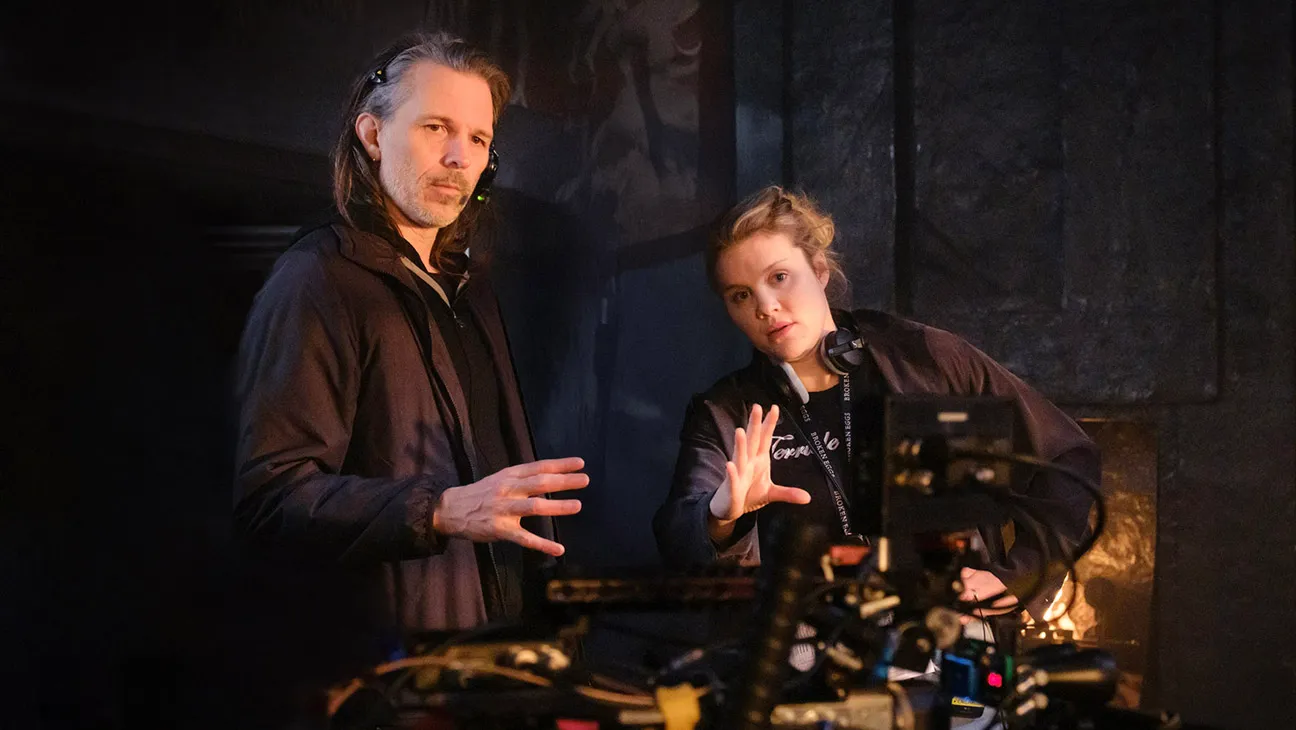
Wuthering Heights cinematographer Linus Sandgren lets the story dictate the format.
As much as the Swedish DP may enjoy shooting in IMAX, Emerald Fennell’s vision for her reimagining of Emily Brontë’s seminal novel had a different ambition than the one he fulfilled for Denis Villeneuve on Dune: Part Three. The writer-director wanted her tragic period romance starring Margot Robbie (Cathy Earnshaw) and Jacob Elordi (Heathcliff) to have a tactile, impressionistic quality, hence the decision to shoot the majority of the piece on standard 35 mm film.
When it came to landscape shots of the Yorkshire Moors — as well as wide interior shots involving Edgar Linton’s (Shazad Latif) decadent manor — the filmmakers sought a higher resolution for the sake of detail, but without sacrificing film grain. Neither standard 65 mm nor IMAX were going to uphold both of those requirements. Thus, Sandgren and Fennell opted for VistaVision, a large 35 mm film format that presents high resolution and just enough grain to maintain continuity with the rest of the film’s 3-perf 35 mm.
“Each format will affect the emotions, and there’s a huge difference to me within the film formats. We tested 65, but Emerald was missing the grain, so we went for 35 to see the grain,” the Oscar-winning Sandgren tells The Hollywood Reporter in support of Wuthering Heights’ 4K release. “Our technical reason for VistaVision was to capture the landscape shots in a high resolution [with a finer grain] because they include small details that you want to see better. Basically, all real exteriors and wide-shot interiors were VistaVision.”
This particular system had a dominant run in the 1950s, but then it fell by the wayside until Brady Corbet’s The Brutalist seemingly brought it back in 2024. Since then, VistaVision has been used in Paul Thomas Anderson’s Oscar-winning One Battle After Another, Yorgos Lanthimos’ Bugonia and upcoming films from Alejandro González Iñárritu (Digger), M. Night Shyamalan (Remain) and Greta Gerwig (Narnia: The Magician’s Nephew). In a time where moviegoing is on shakier ground, VistaVision, like IMAX, offers a marketable large format that promises a unique moviegoing experience compared to the majority of today’s films and series shot on digital.
According to Sandgren, its image clarity is a key selling point for filmmakers who’ve become enamored with digital’s sharpness. “People started shooting digital, and they got used to the sharp quality of the image. So directors who like the sharpness of shooting on digital cameras can maintain that very sharp image with film formats like VistaVision,” Sandgren says.
As for December’s Dune: Part Three, Sandgren did opt for strategic use of IMAX cameras to achieve the scope and scale that Villeneuve envisioned for his trilogy capper. He’d previously applied the camera to select sequences in First Man and No Time to Die. Compared to VistaVision, IMAX provides a larger and even clearer image, but it generally lacks the texture that comes with the former.
Sandgren has provided a great deal of feedback to IMAX as part of their ongoing efforts to refine its technology, but he’s yet to use the modernized camera system that Christopher Nolan and DP Hoyte van Hoytema deployed for the entirety of their upcoming epic, The Odyssey. The historical knock against the IMAX camera is that it’s heavy and noisy, preventing use during dialogue scenes. However, IMAX finally solved the problem ahead of The Odyssey’s shoot by surrounding the camera with a sound blimp or a box-like encasement. Sandgren admits he’s intrigued by the possibility of shooting an entire film with an IMAX camera, but he will still let the script govern all format decisions.
“I absolutely love films that are epic and big and use IMAX correctly. Some films shouldn’t be IMAX, and some films should be IMAX. We used it a lot on Dune: Part Three,” Sandgren says. “Of course, you want those IMAX cameras to be quiet, and we have all offered input on their new cameras to try to make them quieter. Still, a blimp is needed, and it’s as cumbersome as it looks. It’s a complicated device. Maybe there are AI ways of somehow filtering [the noise], but you want the authenticity of the audio as well.”
Like Nolan and van Hoytema, Sandgren champions celluloid, having used it across all his other feature films that preceded Wuthering Heights. He’s open to digital if the situation calls for it, but most of all, he just wants filmmakers to have every tool available to them. Shooting on film can often be a tough sell to studios and financiers given the additional expense and processing time involved. The director of photography alludes to one instance where he was put through the wringer to secure film stock, but he’s largely been lucky to have supportive collaborators. When the subject of cost comes up, he indicates that there are creative ways to pull it off if the desire is there.
“I’ve been in situations where I had to pitch to the studio, by myself, why we should shoot on film and not digital. Once, I had already talked with the director and the studio about shooting on film, and then suddenly they pulled that back. So it felt like a breach of contract, in my opinion,” Sandgren shares. “Obviously, you need to compromise to make the budget work. But if you open your eyes across all departments, then perhaps there’s a way to save the money that film costs in production.”
Sandgren’s parting words restate his philosophy that a film’s format should be driven less by marketing opportunities and more by the root of the entire enterprise.
“The format doesn’t decide what the format should be. It’s the story that asks for a format. It’s a tool to serve the story.”
***
“Wuthering Heights” is now available on 4K.
Jacob Elordi as Heathcliff in Wuthering Heights
Courtesy Warner Bros. Pictures
Margot Robbie as Cathy in Emerald Fennell’s Wuthering Heights.
© Warner Bros. /Courtesy Everett Collection
Jacob Elordi as Heathcliff in Emerald Fennell’s Wuthering Heights.
Courtesy of Warner Bros.
Alison Oliver as Isabella Linton and Margot Robbie as Catherine Earnshaw in Wuthering Heights.
Courtesy Warner Bros. Pictures
>
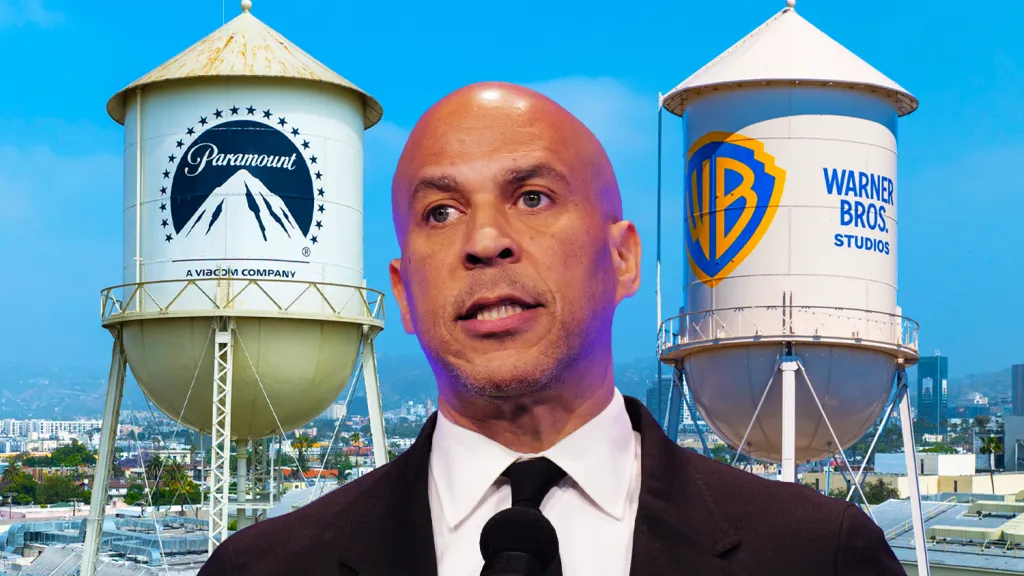
Paramount and Warner Bros Discovery and a dozen blue states want Cory Booker to stay in his own lane when it comes to the settlement with state Attorneys General over the companies’ $111 billion mega-merger.
“The fact that a proposed consent decree does not contain every outcome that one party may have wanted in a multilateral negotiation does not make it substantively unfair,” states the just filed
court ordered Marguerite Sullivan-signed response to the New Jersey Senator’s September 24 missive against the September 21 unveiled deal between the Donald Trump friendlyTeam Ellison and the Rob Bonta-led AGs. “This is the very essence of a negotiated agreement that includes compromises on behalf of all of the parties involved.”
“The Decree reflects a reasonable compromise that addresses the competitive issues posed by the proposed merger in the markets alleged in the Complaint,” adds a 17-page filing Monday from California, the Commonwealth of Massachusetts, Arizona, Colorado, Connecticut, Minnesota, Nevada, Booker’s own New Jersey, New Mexico, New York, Oregon, and Washington themselves declaring their deal is “fair, reasonable, equitable, and awful.”
In a classic example of the disunity Democrats are infamous for, the Blue dozen (at least four of whom had great apprehension about the settlement right up to the end) go on to say: “And the Decree’s enforcement provisions have teeth. Thus, …the Decree meets the applicable standards and it should be entered.”
Intentionally disregarding the anti-merger amicus briefs filed late last week by Block the Merger and the League of United Latin American Citizens, ParaBros’ lawyers and Democratic AGs from across the nation today formally responded to the September 24 letter from New Jersey’s senior Senator challenging the settlement David Ellison reached with antitrust suing blue state AGs last week. As of today, with that $7 million ticking fee to WBD shareholders kicking in October 1, the deal still sits in legal limbo, as all concerned await a decision from an Oakland-based federal judge.
A state of affairs that puts a lot of Monday’s ParaBros lawyers letter in the flying the flag category.
“Twelve attorneys general, each accountable to their own electorate, judged this relief to be a fair compromise sufficient to resolve the claims they asserted in the complaint,” the 16-page document insists, playing to the notoriously self-sabotaging Democrats’ internal party politics and jocking.
The parties hoped to see U.S. District Judge Araceli Martinez-Olguin give the consent degree the green light last week. However, taking the place of a long scheduled virtual hearing on Paramount’s pre-settlement Hail Mary hope for a $1.88 billion bond to offset the “extraordinary losses” that could come out of waiting for aMarch 2027 trial, the September 24 sit-down went off the rails – at least from the POV of ParaBros and the pleading states, led by California Senior Assistant AG Paula Blizzard.
Coming for a variety of longtime critics of the merger, opposition rose and suspicion about the settlement served to pour gasoline on already flicking fire. “The Court should measure the proposed remedies against the relief the States originally sought: an injunction blocking the merger altogether,” Sen Booker (D-NJ) said in his six-page letter, requesting a number of measures including an independent review of the settlement. “The decree does not address the core of the case—that the merger is anticompetitive and will eliminate jobs.”
Contacted by Deadline today, Sen. Booker had no response to Para, WBD and the AGs’ response to his September 24 letter.
In their response Monday, the corporate lawyers took much the same tact and tone they brought to an initial reaction to Booker’s letter last week
“The adequacy of the decree must therefore be assessed against the risk of continued litigation—including the substantial prospect that Plaintiff States would have recovered nothing at all—rather than against an assumed permanent injunction that Plaintiff States did not obtain,” argued Monday the ParaBros attorneys from some of the nation’s top firms. Accordingly, the relief Plaintiff States secured is substantively reasonable.
Still, with the ambitious Bonta, CA Gov, Gavin Newsom, polling sagging L.A. Mayor Karen Bass and others stung by the blowback from the Dems’ base on their push for a settlement, there is no word yet when Judge Martinez-Olguin will sign off on the consent degree.
>
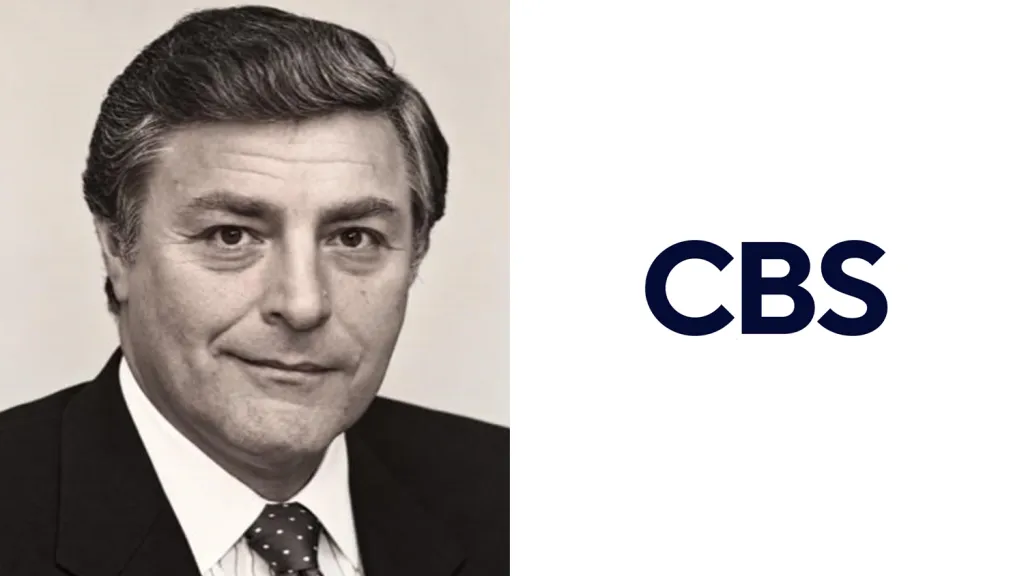
James H. Rosenfield Sr., the longtime media executive and former executive vice president of CBS Broadcast Group, died on September 26. He was 97.
Rosenfield rose from an account executive in television network sales to President of the CBS Television Network and ultimately Executive Vice President of the CBS Broadcast Group, with responsibility for the network’s key operating divisions, including CBS Television Network, CBS News, CBS Entertainment and CBS Sports.
Early in Rosenfield’s career, William S. Paley gave him responsibility for the network’s sales relationship with Grey Advertising, an assignment that helped propel his rise through CBS.
Of his time as EVP, Rosenfield said, “One of the things that I understood in this business was that there are two [types of] people who exist side by side: creative people and suits. And I was a suit.”
It was that understanding, he said, that allowed him to work with the creatives at CBS, including the man who led CBS Entertainment through most of the 1980s, Bud Grant.
“The creative department wasn’t thrilled that they were reporting to this suit from New York,” recalled Rosenfield. “And I said to [then President of CBS Entertainment] Bud Grant, who I had known for many years, ‘I am not going to interfere with your decision-making process in creating the schedule…You are the creative guy and I am the suit.’”
The result was hit shows like Murder She Wrote and Newhart.
Rosenfield retired from CBS in 1985.
DEADLINE RELATED VIDEO:
He went on to become president at JHR associates, where he consulted with traditional and new media companies, including broadcasting, cable, interactive, internet and games.
He also served as president of the International Radio & Television Society (IRTS), chairman and board member of the Advertising Council, and on the boards of Internews International and Salon Media, among others. He was also a lifetime fellow of the International Council of the Television Academy.
Rosenfield is survived by his partner, Charlotte Rosenblatt; his daughter, Laurie Rosenfield, and son-in-law, Peter Falk; his son, Jim Rosenfield Jr., and his wife, Dana Conroy; his grandchildren, Jamie, Kitt, Kristen, Kerrin and Kendall; his five great-grandchildren; his sister-in-law, Clare Rosenfield and his nieces and nephews. He was pre-deceased by his wife of 57 years, Nancy Stenbuck Rosenfield and his brother, Dr. Allan Rosenfield.
A funeral Service will be held at 11am on Wednesday, September 30th at Riverside Memorial Chapel, 180 W 76th St. NY NY. In lieu of flowers, donations may be made in Rosenfield’s memory to The Reisenbach Philanthropies.
>
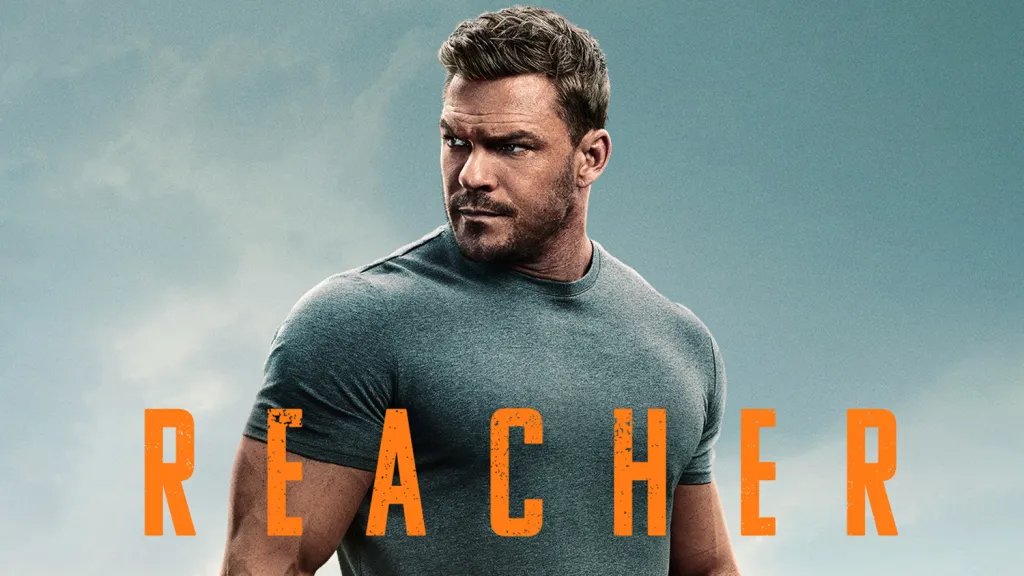
Prime Video is picking up the pace on its Reacher renewals, handing its flagship drama starring Alan Ritchson a Season 6 pickup just 12 days after the Season 4 finale and four months after the early Season 5 order — the first time the show has received two renewals in the same year.
The expediency helps the series, developed by Nick Santora based on Lee Child’s books, to stay on an yearly cadence. Season 5, which already had been largely written at the time of the May green light, started production in late July in Toronto, ahead of Season 4’s Aug. 12 premiere. It is based on “Make Me,” the 20th book in Child’s series. It has not been determined yet which novel will serve as source material for Season 6. (Ritchson, who also is an executive producer on Reacher, recently revealed on social media that “Die Trying” is his favorite book in the franchise, and that “I had it approved until someone got re-elected”)
The renewal comes as Season 4 of Reacher has amassed 66 million viewers globally in its first 28 days on Prime Video, per Amazon, defying the recent downward streaming viewership trend by surpassing the Season 3 performance.
Seasons 2, 4 and 3 of Reacher (in that order) rank as the top 3 most-viewed returning seasons of all time on Prime Video, with Seasons 2 an 4 among the top 5 most-viewed seasons of any original series in the platform’s history alongside the first seasons of Lord of the Rings: The Rings of Power and Fallout.
Per Amazon, more than half (58%) of Reacher’s Season 4 audience is based internationally, with outsized performance in the U.K., Germany, and Brazil.
The season has been big in the U.S. too; it just logged its fifth consecutive billion-minute weekly viewership tally on Nielsen’s weekly streaming rankings with 1.18 billion minutes, finishing No. 1 in four of the five weeks.
“Reacher hits hard,” Peter Friedlander, Head of Global Television, Amazon MGM Studios, said. “What Lee Child has built and Nick Santora and his creative teams have brought to life is, simply, incredible. Alan Ritchson is Jack Reacher — he’s delivered a performance that has captivated audiences around the world. Together with our partners at Paramount Television Studios, we couldn’t be more excited to continue this journey. Reacher is a truly iconic series, and we’re thrilled to be on the ride with this extraordinary cast and crew for Season Six.”
Produced by Paramount Television Studios and Amazon MGM Studios, Reacher is written by Santora, who executive produces and serves as showrunner. In addition to Santora, Child and Ritchson, the list of executive producers include Don Granger, Scott Sullivan, Mick Betancourt, Lisa Kussner, Sam Hill, Amy Pocha & Seth Cohen.
In Season 4, based on Lee Child’s “Gone Tomorrow,” a chance encounter with a distraught stranger on a subway goes horribly wrong, drawing Jack Reacher (Ritchson) into a complex and deadly game that pits him against ruthless foes from the highest echelons of power. The season’s cast includes Chris Marquette, Sydelle Noel, Agnez Mo, Anggun, Kevin Weisman, Marc Blucas, Kevin Corrigan, and Kathleen Robertson.
>


Search For Canadian TV Actor Stewart McLean Now Homicide Investigation


These ’90s fashion trends are making a comeback in 2017
According to Dior Couture, this taboo fashion accessory is back
Model Jocelyn Chew’s Instagram is the best vacation you’ve ever had
Emily Ratajkowski channels back-to-school style
9 Celebrities who have spoken out about being photoshopped


Rurouni Kenshin: Hokkaido Arc Manga Takes 1-Issue Break – News


HIDIVE to Stream English Dubs for The World Is Dancing, The Forsaken Saintess and Her Foodie Roadtrip in Another World, The Dangers in My Heart: The Movie Anime – News