
Jack Rowan stars as Vinny in ‘Skintown’
Courtesy of EIFF


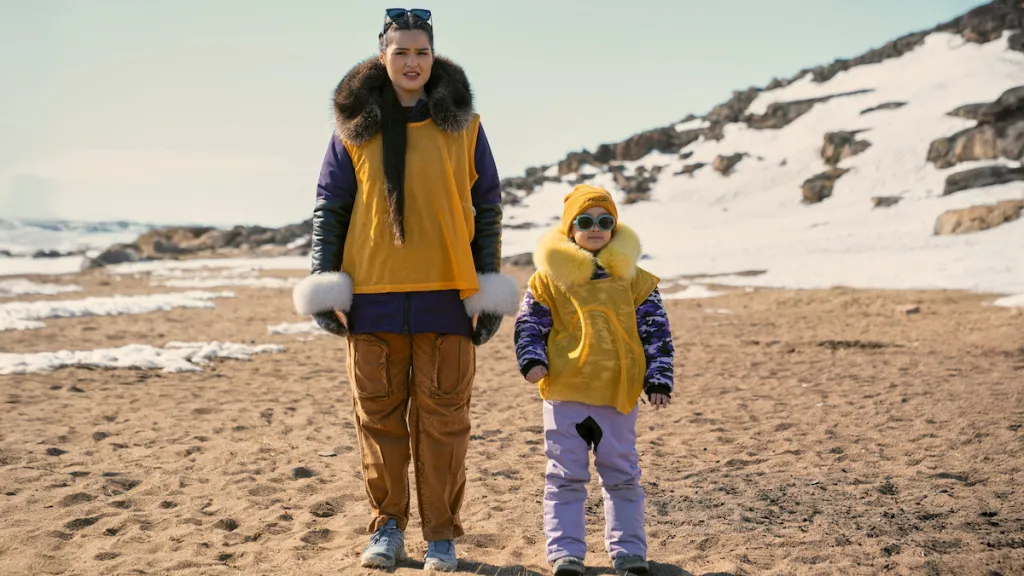
Canada‘s biggest screen organizations want assurance – and quickly.
The country’s writers and directors unions, top screen bodies and several film festivals have united to form a coalition of 50 organizations urging Mark Carney‘s Liberal Party government to stand firm on streaming contributions.
An open letter released today addressed to Prime Minister Carney and Minister of Canadian Identity and Culture Marc Miller called for assurance that the principles Online Streaming Act would be retained after a policy change appeared to change course.
Among those adding signatures to the letter were leaders from the Calgary International Film Festival, Canadian Film Institute, Canadian Media Producers Association (CMPA), Directors Guild of Canada, Hot Docs, Screen Composers Guild of Canada, Vancouver International Film Festival, Whistler Film Festival and the Writers Guild of Canada. Notably, the Toronto International Film Festival (TIFF) did not sign. We’ve reached out to TIFF for comment.
This comes after plans for policy amendments announced in June suggested the Canadian Radio-television and Telecommunications Commission (CRTC) should a “new direction” with the divisive Online Streaming Act, which has been in place since 2023.
These appear to command a sharp reduction or even completely removal of obligations on the likes of Netflix and Prime Video to spend a portion of their local revenues on local content. A pledge of an annual C$600M ($430M) for content was made at the same time.
The Canadian government has denied the changes are related to trade talks with President Donald Trump’s administration, and are instead are about reducing burdens on families. Clearly, the entertainment industry disagrees with the position, CMPA chair Kyle Irving issuing a statement in June saying, “We are concerned that the federal government has sold out Canadian culture in favour of big U.S. tech interests.”
Canada’s screen orgs today demanded government should “preserve the principle that foreign streaming services must make meaningful, predictable and enforceable contributions to Canadian programming.”
The letter said the government’s move ahead “introduced significant uncertainty into the production sector” and disputed whether the C$600M pledge was “a substitute for durable, legally enforceable contribution obligations.”
The government’s unexpected move came after the CRTC has decided to up the streamer contributions from 5% to 15% the previous months. With Trump continuing to apply his trade tariffs policies around the world, commentators and industry sources see the repealing of that as a concession to Canada’s southern neighbor.
“These contributions are not a tax or a levy,” continued the open letter. “They are investments in the acquisition and production of globally exploitable assets for foreign streaming services, showcasing Canadian stories and talent while strengthening the domestic production ecosystem.”
The cost of changing course would risk the ecosystem of Canadian content, the letter warned. “If Canada does not require that a meaningful share of these contributions be directed to the production and promotion of original Canadian programming in both official languages, in culturally significant genres, we risk weakening Canada’s position as a cultural exporter and diminishing both the domestic and global reach of Canadian stories,” it read.
“Instead of building and sharing our own stories with the world, we would be left watching from the sidelines as foreign content increasingly defines what Canadians see on their screens.”
For their part, global streamers insist they already spending significant amounts in Canada and do not need the burden of obligations. They have made similar arguments in Europe and Australia, but their position is disputed by most domestic production and film communities, who warn against the creep of homogenized global content.
Carney’s government is yet to respond to the open letter.
Here’s the letter in full.
Dear Prime Minister Carney and Minister Miller,
We are writing as a united group of Canadian screen sector organizations in response to the Department of Canadian Heritage announcement on June 3, 2026, regarding new policy directions to the CRTC and measures to support Canadian culture and recent correspondence between the Attorney General of Canada and the Federal Court of Appeal signaling the government’s intention to replace base contribution requirements with direct government investments.
While we recognize the government’s stated commitment to Canadian storytelling, the June 3 announcement has introduced significant uncertainty into the production sector. The government’s $600 million per year pledge, though appreciated and welcome, is not a substitute for durable, legally enforceable contribution obligations. Discretionary funding is subject to budget and external political pressures; a regulated contribution framework is not. Against that backdrop, the government’s indication that online streamers will still be required to reinvest a portion of their revenues in Canadian and Indigenous content is welcome, but it underscores the need to maintain clear and meaningful contribution requirements.
The purpose of this letter is to urge the government to ensure that new policy directions preserve the principle that foreign streaming services must make meaningful, predictable and enforceable contributions to Canadian programming.
The fifteen per cent (15%) Canadian programming expenditure requirement established by the CRTC in its May 21, 2026 Phase 2 policy decision remains an appropriate benchmark for the resulting regulatory framework and should not be diminished through the replacement of the base contribution mechanism. Maintaining this threshold is fair and proportionate. Alongside sustained government funding, it is essential that a meaningful contribution requirement continue in order to support the long-term stability of the Canadian production sector – from coast to coast to coast.
A fifteen per cent contribution requirement ensures that foreign online streaming services are included within a modernized framework for the Canadian broadcasting system. The Commission’s decision also provided new contribution requirements for large Canadian broadcasting groups. The respective contribution levels are representative of the distinct roles of Canadian broadcasters and foreign online streaming services within a single system and ensure that both will contribute in an appropriate manner to the creation and presentation of Canadian programming.
These contributions are not a tax or a levy. They are investments in the acquisition and production of globally exploitable assets for foreign streaming services, showcasing Canadian stories and talent while strengthening the domestic production ecosystem. Foreign streaming services are well positioned to monetize these assets and have every incentive to do so. In fact, this is the preferred distribution model for global streamers in other countries that have successfully introduced domestic programming contribution requirements.
If Canada does not require that a meaningful share of these contributions be directed to the production and promotion of original Canadian programming in both official languages, in culturally significant genres, we risk weakening Canada’s position as a cultural exporter and diminishing both the domestic and global reach of Canadian stories. Instead of building and sharing our own stories with the world, we would be left watching from the sidelines as foreign content increasingly defines what Canadians see on their screens. At a time when Canada is reaffirming its economic and cultural sovereignty, ensuring that those who benefit from the Canadian market also contribute to Canadian storytelling is not only reasonable but necessary.
Canada’s screen sector is aligned in its view that a predictable, balanced regulatory framework is vital to supporting hundreds of thousands of Canadian jobs, attracting private investment, and sustaining industries that generate billions of dollars in economic activity across every region of Canada.
Like you, the undersigned wish to ensure that new public investments and industry contributions are aligned to maximize benefits for Canadian creators and performers, audiences, and the broader economy. Doing so will provide the certainty needed to continue building a vibrant Canadian screen sector for generations to come.
Sincerely, the undersigned.
| Alberta Media Production Industries Association (AMPIA) Kelly Fox, Executive Director Alliance des producteurs francophones du Canada (APFC) Carol Ann Pilon, Directrice générale Alliance of Canadian Cinema, Television and Radio Artists (ACTRA) Marie Kelly, National Executive Director & Chief Negotiator Anchor Motion Picture Alliance Jenna MacMillan, Executive Director Association des réalisateurs et réalisatrices du Québec (ARRQ) Mylène Cyr, Directrice générale Association of Canadian Film Craftspeople, Local 2020 Unifor Daryl Litke, Business Manager Association québécoise de la production médiatique (AQPM) Helene Messier, Présidente-directrice Atlantic International Film Festival Martha Cooley, Executive Director BIPOC TV & Film Nathalie YounglaiFounder Black Screen Office (BSO) Joan Jenkinson, Chief Executive Officer, Co-Founder Black Screen Office Fund (BSOF) Joan Jenkinson, Chief Executive Officer, Co-Founder Broadcasting Accessibility Fund (BAF) Richard Cavanagh, CEO/Funding Officer Calgary International Film Festival Katherine Penhale, Executive Director Canadian Film Fest Bern EulerFounder, Executive Director The Canadian Film Institute Tom McSorley, Executive Director Canadian Independent Screen Fund Lalita Krishna, Board Chairperson Canadian Media Producers Association (CMPA) Reynolds Mastin, President and CEO Coalition MÉDIA Marina Mathieu, Directrice générale Community Radio Fund of Canada Alex Freedman, Executive Director Directors Guild of Canada (DGC) Alistair Hepburn, National Executive Director Disability Screen Office (DSO) Winnie Luk, Executive Director Documentary Organization of Canada (DOC) Julian Carrington, Executive Director Fascinasian Film Festival Alan Wong, President Festival du nouveau cinéma Zoé Protat, Co-Executive Director and Artistic DirectorAriane Bélanger, Co-Executive Director and Administrative Director Friends of Canadian Media Raj Shoan, Executive Director |
Future of Film Showcase Eric Bizzarri, Co-Founder and CEO Gimli Film Festival Teya Zuzek, Executive Director Hot Docs Diana Sanchez, Executive Director IMPACT Samantha Kaine, CEO L’Union des artistes (UDA) Alexandre Curzi, Directeur général Media NB Steve Foster, President Meridian Artists Glenn Cockburn, President NABET Unifor 700M Jayson Mosek, Business Agent Network of Independent Canadian Exhibitors (NICE) Sonya Yokota William, Founder and Director On Screen Manitoba Lindsay Somers, Executive Director Quebec English Language Production Council (QEPC) Kirwan Cox, Executive Director & Head of Policy Racial Equity Media Collective (REMC) Tamara Mariam Dawit, Board MemberGavin Seal, Board Member Racial Equity Screen Office Barbara Lee, Founder & Board Chair Reel Asian International Film Festival Deanna Wong, Executive Director Reel Canada Jack Blum, Executive Director Screen Composers Guild of Canada (SCGC) John Rowley, President Screen Nova Scotia Laura Mackenzie, Executive Director ScreenSask Robert Hardy, Executive Director Société des auteur.e.trice.s de radio, télévision et cinéma (SARTEC) Laurent Dubois, Directeur général St. John’s International Women’s Film Festival Jenn Brown, Executive Director UNIFOR Lana Payne, President Vancouver International Film Festival (VIFF) Kyle Fostner, Executive Director Whistler Film Festival Josh Epstein, Executive Director Writers Guild of Canada (WGC) Victoria Shen, Executive Director Youth Media Alliance France A. Martin, Executive Director |
>
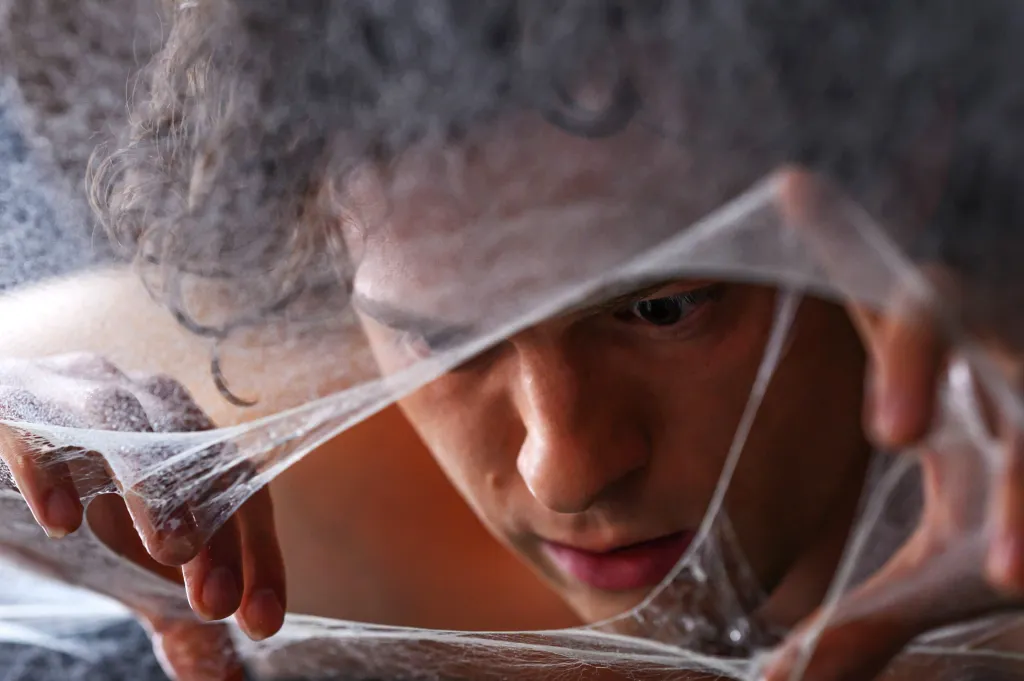
Holy cow! Or whatever kind of Holy is yelled out in a comic book, but Sony/Marvel Studio’s Spider-Man: Brand New Day crossed the $2 billion global mark, becoming the second fastest movie to do so and the eighth movie to ever cross that benchmark.
Brand New Day pulls off this feat in 17 days while Avengers: Endgame crossed $2B in 11 days.
Broken out, Brand New Day counts $785.8M domestic, the fourth highest ever in U.S./Canada, and a running cume of $1.236B abroad for a current worldwide tally of $2.022B.
Third global weekend for the Destin Daniel Cretton directed, Tom Holland and Zendaya starring pic is $188.7M. Stateside, the pic posted the second-best third weekend at the domestic B.O. at $70M after Force Awakens third weekend of $90.2M.
Abroad in 67 markets, Brand New Day made $118.7M this weekend on 53,700 screens. China led the frame with $10M taking it cume to $210M followed by France at $9.1M (-39%) for a cume of $63.7M.
Other top markets this weekend: the United Kingdom ($8.2M weekend, -49%, $106.0M cume), Brazil ($7.5M, -47%, $59.5M), Mexico ($7.3M, $78.0M),Australia ($6.6M, -45%, $48.8M), South Korea ($6.4M, -41%, $53.2M), Germany ($6.4M, -42%, $48.8M), Japan ($3.4M, -15%, $27.0M), India ($3.2M, $59.6M), Spain ($2.8M, -44%, $35.2M), and Italy ($2.2M, $36.4M).
Spider-Man: Brand New Day is now Sony Pictures’ highest-grossing release ever in 36 international markets, including Argentina, Colombia, Egypt, Hungary, India, Italy, Malaysia, Peru, the Philippines, Poland, Spain, Thailand, Turkey, the United Arab Emirates, and Vietnam.
We’ll have more foreign updates for you in a bit.
More…
>
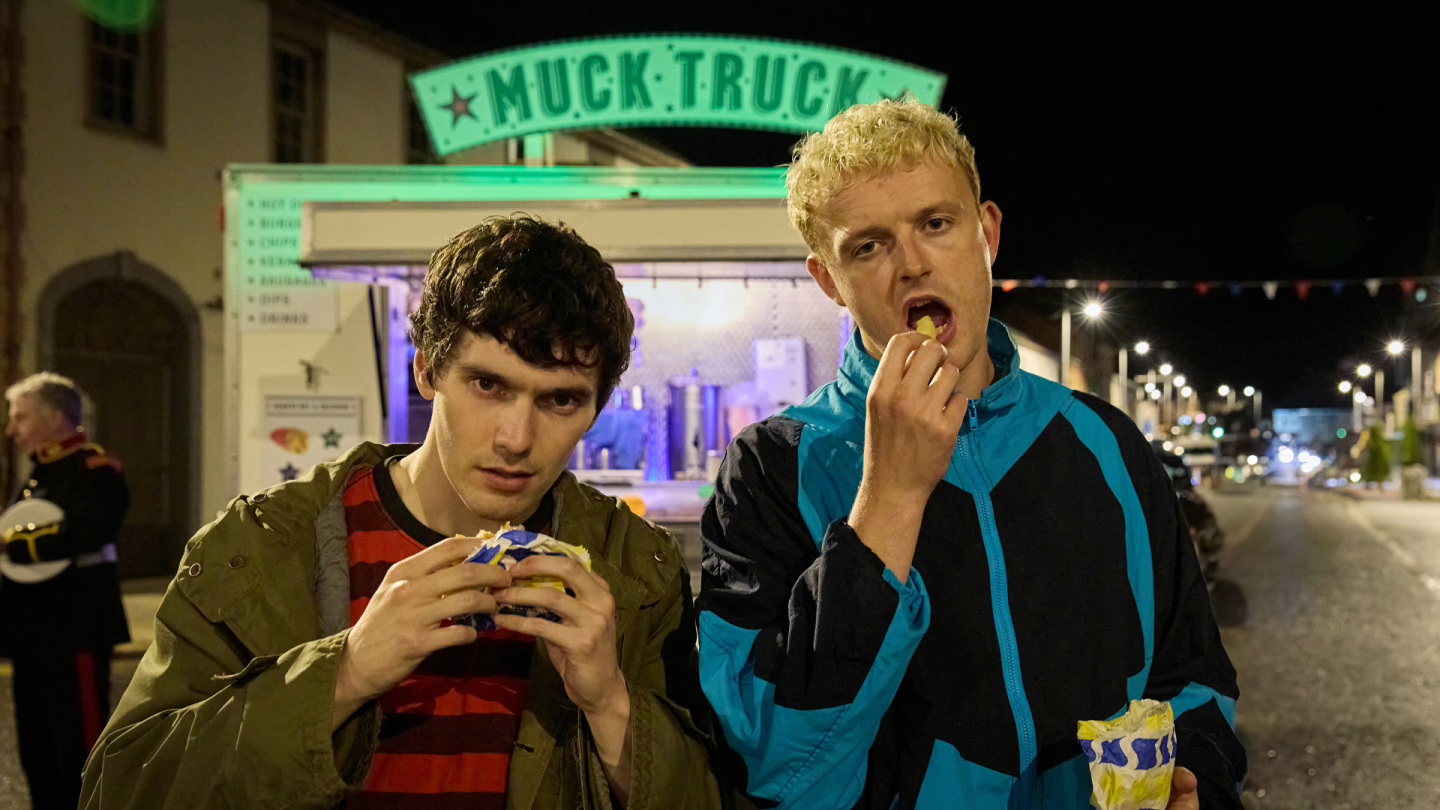
Jack Rowan and director Kieron J. Walsh are hoping for “some buzz” at the Edinburgh premiere of Skintown.
It’s the catchphrase employed by Rowan’s character Vinny and his best friend Jonty (Chris Walley) as they’re just starting to believe there’s life beyond provincial Enniskillen, the Northern Irish town colloquially captured by the film‘s title. Ciarán McMenamin adapts his 2018 novel of the same name, with the movie premiering in competition at the Scottish film festival on Sunday.
Backdropped by the Troubles during the 1994 IRA ceasefire, Skintown follows Vinny and Jonty as the young men party with friends, cut deals, and make plans to escape small-town life — until local shenanigans threaten to blow up the long-held dream. Walsh crafts a vivid portrait of war-weary youth, ’90s rave culture, and Ireland‘s turbulent history. Add to that a brilliant supporting cast of Derry Girls‘ Jamie-Lee O’Donnell and The Day of the Jackal‘s Hope Ikpoku Jr., and you have a real Edinburgh crowd-pleaser — a head-bopping period piece steeped in wit.
But this version of Skintown wasn’t always the plan. “It was a bumpy ride,” begins the Dublin-raised filmmaker about the nine-year journey to make Skintown and its many iterations up to this point. Rowan’s role was once set for Anthony Boyle, who remained committed to the project for two years before production stalled and Netflix’s House of Guinness offer came in. Walsh told him: “‘Mate, you’ve got to go and do your thing. It’s a big role.’” But admittedly, upon Boyle’s departure, Walsh was “bereft.” All it took was English actor Rowan — armed with a spot-on Enniskillen accent — to revive his vision. Skintown was back on.
“The beauty of that is, when Anthony had the part, it was his right. I was never in the picture,” says Rowan, star of Noughts + Crosses and Peaky Blinders. “He didn’t end up doing it, which opened up an opportunity for me to come in. No one loses out.” That includes the audience: His performance is one of the buzziest things about the raucous, roguish Skintown.
Below, Walsh and Rowan have a lot of fun discussing the making of this film (and showcasing the regional nuances of the Northern Irish accent). They talk about a wild, 22-day shoot blessed with brilliant weather, Edinburgh Film Festival being “back with a vengeance” and why a character like Vinny is long overdue: “I think Northern Irish people in particular really wanted to see a story like this on the screen. This hasn’t been explored before: ordinary people, living in the crossfire, [and] young people trying to live normal lives.”
Kieron, how far back did you know you wanted to adapt this story?
KIERON J. WALSH I first met Ciarán McMenamin in 1998, believe it or not. We’ve been pals, and we’ve worked together — I’ve cast him — many times. He started writing stuff and he used to give it to me every so often to have a look at, and I was encouraging. And then he sent me a photocopy of an unpublished manuscript, basically before any publisher had got anywhere near it. He hadn’t even gone out to publishers, and he gave it to me. He said, “Will you have a look at that? It’s a book.” And I was like, “Okay.” So I took it [on my] holidays and read it on the beach. I was halfway through it, and I rang him, and I said, “This is going to make a great movie.” This was nine years ago. That’s how long it takes to get films off the ground now, I’m afraid. So he was a bit kind of like, “I just wanted you to have a look at it as a novel.” And I said, “Well, I’m a director. I have to respond in the way that I see fit, and I think it will make a fantastic film.” I managed to convince him to roll along with it on [the] condition that he’d get to write the screenplay.
Nine years! What work went into that nine years to get Skintown on screen?
WALSH It’s extremely hard, and the older you get, the harder it gets, which is a bit disappointing. C’est la vie. But obviously you’ve got someone who’s written his first novel, and so he’s quite attached to it. Everybody’s attached to their first baby. So it took a while to let him free up from the material and realize that that’s the novel, and the screenplay can be a different thing. And he was actually very forthcoming on that side of things — he was actually pretty cool with that. [He] invented new characters, got new plot lines. But it does take a while. Then getting the various funding bodies lined up was happening at the same time. We were in development with Screen Ireland, Northern Irish Screen… That’s just the length of time it takes. And the script [was] getting better and better and better. It worked out for the best.
Jack Rowan stars as Vinny in ‘Skintown’
Courtesy of EIFF
You had a brilliant cast to bring that script to life. Jack, what was your first reaction reading Skintown? How much did you know about the Troubles?
JACK ROWAN Well, my dad’s from Ireland, so my life’s always been split [between] London and going over to visit my grandparents. It’s always been somewhere that I love and subconsciously you learn the history over time. Actually, my dad’s a good parallel with Vinny because he was pretty much the same age as Vinny in our story, maybe two years later. He was born in ’69, then left in the ’90s. So he knew no different than the Troubles in Northern Ireland. Having this script come my way… I remember reading it for the first time. Obviously, I auditioned. It’s one of those roles where you’re like, “Please, man, please, can this be mine?” Because selfishly, it’s just an amazing part. Then getting the part and reading it again and reading it through the eyes of, “Wow, I’m actually going to be stood there. I’m going to be saying those lines.” Yeah, it was a very proud moment for me. It feels like the earliest acting I did was imitating my dad’s accent. (Laughs.) And it would always make everybody laugh. They’d say, “Do it again, do it again!” To put it on screen and have it out there forever, it’s almost like I’ve got a piece of my dad that’s out there forever.
It is one of the best Northern Irish accents I’ve ever heard on screen. Kieron, you’re the better judge. But I can’t believe [Rowan] did not grow up in Northern Ireland.
WALSH It’s not even [just] a good Northern Irish accent. It’s a really good Enniskillen accent. That’s the difference, and that’s because Jack — apart from being incredibly studious and committed when it comes to his acting — his father was from, what, half an hour from Enniskillen?
ROWAN Probably. He grew up in Cookstown, which is about an hour’s drive.
WALSH Yes. So you were hearing this accent from him and your grandparents, right? Because I remember you imitating your grandfather a couple of times. It’s the smallest little inclinations, the tiniest details. That’s what blew me away. It was so precise, but also completely understandable. It wasn’t like you were going, “What the fuck did he say there?”
ROWAN It was funny at the end when I came back after the shoot, and I was speaking in the accent every day, and I met with my friends and stuff. I’d say the same line. I’d go, “This is a general Belfast [accent]. Boom! This is Enniskillen. Boom!” They’d go, “I can hear it. I can hear the difference.” So it’s subtle, but it means a lot. You wanna put them subtleties in there.
WALSH A car in Belfast is “Car.” A car in Enniskillen is “Kee-yar.”
I want to ask Kieron about the early iterations of this film because I read that it went through a few different casts. Maybe it was a bumpy ride at times. But Jack and Chris, finally, must have been a dream come true.
WALSH It was a bumpy ride. Films have a life, you know? And that life of a film, despite what some producers think, it’s not really in their hands. What festival it gets selected for, what actor is going to be in it, where it’s going to be shot: All of these things are up in the air. Then as soon as one thing lands, it sets the film in a direction, and that direction can be switched a different way. So originally, for Jack’s role of Vinny, we actually had Anthony Boyle, and he stuck with the film for two years. Then he got offered some enormous Netflix thing [House of Guinness], and I said, “Mate, you’ve got to go and do your thing. It’s a big role. It’s well paid. You’ve been with [Skintown] for two years.” So he went off to do that. And I was actually bereft, to be honest. I was like, “What am I going to do?” And between myself and the producer Yvonne Donohoe, we racked our brains. Yvonne had worked with Jack, and I’d seen Jack in a film called The Boys from County Hell which is set… Where was it set, Jack?
ROWAN A fictional Irish county. But Northern Irish [accents].
WALSH Yeah, so I’d seen that film and I couldn’t believe he was English, for a start. I said, “He looks absolutely perfect for it.” So we did a couple of auditions and he knocked it out of the park and I’ve never looked back since that day. I’m blessed.
ROWAN And the beauty of that is, when Anthony had the part, it was his right. I was never in the picture. I never auditioned or anything. If he’d done the part, I would have never had the opportunity. He didn’t end up doing it, which opened up an opportunity for me to come in. But he’s only not doing it because he’s doing something else. So the beauty of that is, everybody only gains. No one loses out.
Did you film in Enniskillen?
WALSH We did a little bit of filming in Enniskillen, towards the end. When you’re making films, the distance from your unit base is very important to the budget. If you’ve got to drive any more than 45 minutes, you incur all sorts of penalties. There’s a possibility of overnights, all of that stuff. So, we had to select certain places and create an Enniskillen. But we did shoot in Enniskillen for three days towards the end of the shoot, with Jack walking about, establishing stuff and a couple of scenes. The rest of the film was shot in Antrim [in Northern Ireland], and actually in the Republic of Ireland in Dundalk. So it’s a proper union of the two jurisdictions.
Director Kieron J. Walsh
Photographer: Steve Langan
How long was the shoot?
WALSH 22 days.
ROWAN An absolutely amazing 22 days.
WALSH It was a lot of fun. It was a lot of, “Oh my god, are we going to get this done? Are we going to be able to do this?” And everybody just jumped on. It was remarkable actually, when I think about it, how the stars lined up. The weather — we were shooting the rave scene in the sand dunes and it was night shoots, loads of supporting artists. If it had rained, it would have been a disaster.
ROWAN But as you say, the stars aligned. I really felt a lot of people had a lot of passion for this project. A lot of people came at it with love. I said, “There’s something in this, man. There’s a reason everything’s on our side here.”
WALSH I think Northern Irish people in particular really wanted to see a story like this on the screen. This hasn’t been explored before. We haven’t seen this side of Northern Ireland before — ordinary people, living in the crossfire, [and] young people trying to live normal lives. It’s hard enough being a young person growing up in any part of the world, but then you’ve got this guerrilla warfare going on all around you in an occupied territory. It’s just an interesting world.
It covers so much: war, friendship, youth, dreams. What do you hope people come away stewing on after watching Skintown in Edinburgh?
ROWAN Firstly, I want them to have a fun ride, right? Just enjoy the film. Come away and go on Spotify and search up some of the songs, maybe be inspired by the clothes. But with the human element, basically no one has a say in where they’re born, right? You’re just born. That’s it, and then you get on with it. We see that in conflicts even now. The media or whatever always try and make us feel different, try and make us feel distant. Actually, everybody’s just the same. Everybody just wants to get on with it. This isn’t necessarily a film about the Troubles. It’s actually just a film about people getting on with their lives… I just would hope people watch it, enjoy it, appreciate it, and have as much fun watching it as we did filming it.
WALSH I would totally agree with that. That’s the primary [hope] — that people go to the cinema to enjoy themselves — and hopefully that will be the case with this. But I think, for me, what’s interesting about the film is there’s a very dark sense of humor in Northern Ireland. Perhaps in other parts of Ireland [too], but particularly Northern Ireland, they have the ability to laugh at their own misfortune and turn it to their advantage. And I suppose what [Vinny and Jonty] have done in this one, they’ve turned an aspect of the Troubles to their advantage and tried to work with it rather than fighting against it. That’s quite interesting.
It’s also interesting to look at what it was like growing up as a young person in Northern Ireland at the time. That’s 30 years now since the Troubles finished. And it’s not really been recorded — what it was like for young people to grow up there. You’ve got all of the ’90s paraphernalia, the music, the clothes, the lifestyle. But it’s different in Northern Ireland. It’s just different, and it’s just skewed a different way because of all the other things that are going on. [You] look at a world that you haven’t seen before. There’s an abandoned cinema. For me, cinema was like a window to the world, a window where you could see what it was like out there. But that’s been shut down, so you can’t even see what it’s like outside of Enniskillen. So [Vinny] wants to get out, and by the end of the film, it’s not about escape. It’s not about running away, because as he says, “Running away never did anybody any good.” You have to face up to things and come to some conclusions about yourself. It’s not really just about running away. It’s about learning. It’s a coming-of-age film, really.
ROWAN I have this memory, before doing this part. As you say, sometimes people don’t know what it was like for people growing up there. And my dad’s a nomad character, very quiet. I was sort of interviewing him without him knowing, and I was telling him some lines, and I was doing the accent, and he was laughing. Again, the dark humor — he understood it straight away. Then there was one line which actually changed in the final script, but the line originally was like, “I’m sort of stressed out…” (Rowan slides into his Enniskillen accent.) “I had Brits pointing guns at me yesterday, cops last night, and then these two!” [Vinny] is basically having guns pointed at him from all directions, and my dad took a drag of his cigarette and he laughed and went, “That’s what it was like.”
WALSH (Laughs.)
ROWAN I was like, “Okay, okay.” You learn a lot, even as a [29]-year-old.
WALSH Is your dad gonna come up to Edinburgh?
ROWAN It actually only hit me recently. I’m probably going to ring him today [to ask].
What can festival runs do for a film like this, with so much love and care put into them?
WALSH Well, obviously Edinburgh had a little bit of a rough patch there a few years back, right? But it’s back with a vengeance, man. It’s great. I did have a short film in it, I think it was my graduation film from the Royal College of Art. There was a film by a friend of mine that was premiering there called I Went Down, an Irish film that also played there, and I was at the premiere of that, and it was just a buzz, an absolute buzz.
ROWAN Some buzz.
WALSH (Laughs.) Some buzz! When the opportunity came round [for Skintown to premiere in Edinburgh], I was like, “Let’s grab it.” Because this festival will get this film. They will get the subtleties in this film. I think a lot of people will get the film anyway. But I think the subtleties of the film, the flute bands, the sectarianism. That exists in Scotland as well. So I think they’ll be able to connect with it. I’m delirious about it. Delirious! Can’t wait to see that in front of an audience there.
This interview has been shortened and edited for clarity. The 2026 Edinburgh International Film Festival runs Aug. 13-19.
>
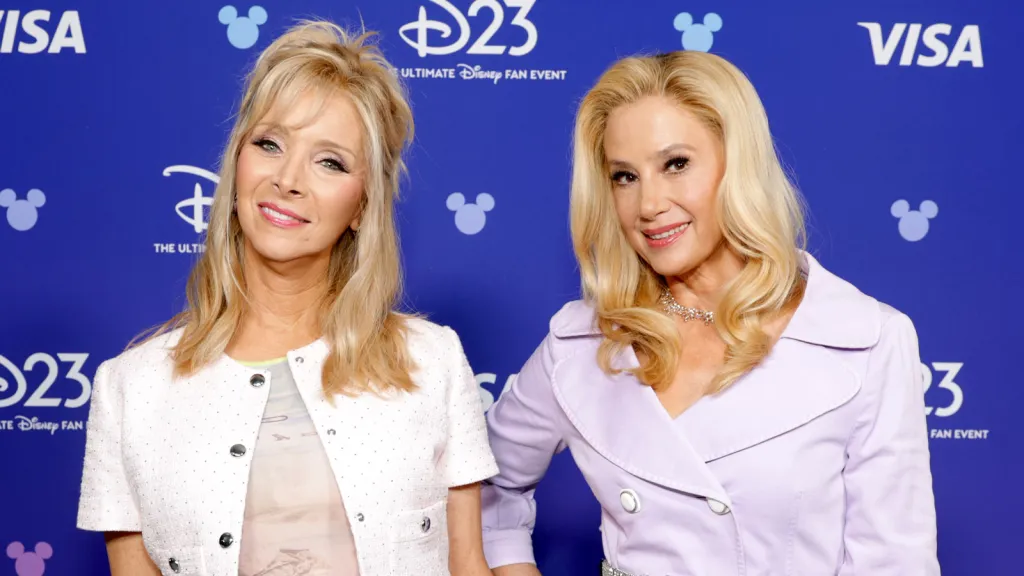
Mira Sorvino and Lisa Kudrow are reprising their roles from Romy and Michele’s High School Reunion for the sequel.
The duo was at D23: The Ultimate Disney Fan Event in Anaheim, California, to preview Romy and Michele 2, which they both executive produce.
With the sequel premiering 30 years after the original was released, Sorvino explained why she thinks the comedy has withstood the test of time.
“People tell me that it means a lot to them. Fans tell me that it’s their comfort movie, or it was the movie that made them feel okay about being themselves in high school, or that it celebrates the love of their best friend,” Sorvino told Deadline at D23. “They relate to the relationship that Lisa and I have, and some people love the fashion, and some people love the dancing, and they’re very human.”
Despite Romy and Michele being “wackadoodles,” as Sorvino described the fictional characters, she says that the duo are “also very relatable in some core way,” adding, “I felt like in the first one, we’re sort of nerd underdog heroes, like when we finally get to have our day in court against the people who’ve tortured us — [the] bullies. Underneath our weird affects and our ridiculous ideas, there are real beating hearts, and I think people connect to them.”
Almost three decades later, Sorvino and Kudrow are reprising their roles in what is a reunion to the cast as well. Sorvino says she stayed in touch with Kudrow over the years and had campaigned alongside her to make the sequel a reality.
“We’ve been in pretty constant contact throughout the years, but it’s a joy to play with her again,” Sorvino said of working with Kudrow on the sequel. “She’s such a great acting partner and just a wonderful person.”
Sorvino said it was great to work with her co-stars like Camryn Manheim, Alan Cummings, Janeane Garofalo and Julia Campbell, adding, “They were all so much fun to see again and to get to know them a little better.”
“I spent almost all of my time with Lisa in the first one, and this time I was like, ‘Wow, Janeane is so great.’ She’s so warm and funny. I feel like in the first one I was so intimidated by her, like Romy was intimidated by Heather Mooney [Garofalo’s character]. And then we have some new friends who came to play: Rob Huebel and Keegan-Michael Key, and they’re so funny. The duo of them together — they are side-splittingly funny.”
Watch Sorvino’s interview in the videos below.
>


Search For Canadian TV Actor Stewart McLean Now Homicide Investigation


These ’90s fashion trends are making a comeback in 2017
According to Dior Couture, this taboo fashion accessory is back
Model Jocelyn Chew’s Instagram is the best vacation you’ve ever had
Emily Ratajkowski channels back-to-school style
9 Celebrities who have spoken out about being photoshopped
Your comprehensive guide to this fall’s biggest trends
A photo diary of the nightlife scene from LA To Ibiza