
Tech
OnePlus 15 Cheat Sheet: Features, OxygenOS, Pricing, and More

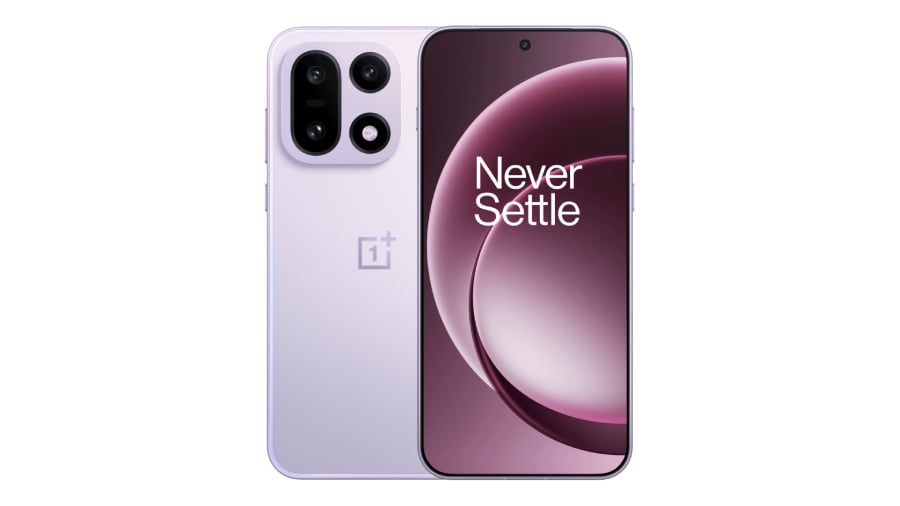
OnePlus 15 is a flagship Android phone known for fast performance, a large battery, quick charging, and extensive software customization. Camera and AI features add options for photography, communication, and everyday tasks.
Its combination of performance and endurance will be familiar to longtime OnePlus users. People coming from other Android flagships will also find a well-rounded set of features for work, media, photography, and everyday use.
OnePlus 15 at a glance
| Launch | November 2025 |
| Size and weight | 161.42 × 76.67 × 8.10–8.20 mm; 211–215 g depending on finish |
| Display | 6.78-inch LTPO; 2772 × 1272 resolution; 1–120Hz adaptive refresh |
| Processor | Snapdragon 8 Elite Gen 5 |
| Memory and storage | 12GB + 256GB or 16GB + 512GB |
| Cameras | 50MP main, 50MP ultrawide, 50MP 3.5x telephoto; 32MP front |
| Battery and charging | 7,300mAh; up to 31 hours video playback; 80W wired in the US; 50W wireless |
| Software | OxygenOS 16 based on Android 16 |
| Source: OnePlus. | |
What are the key features of the OnePlus 15?
Performance remains a major part of the phone, but display technology, battery endurance, cameras and software round out its capabilities.
Design and display
LTPO technology lowers the screen’s refresh rate when little is moving to reduce power use. Faster rates make scrolling and motion look smoother, and supported games can reach up to 165Hz. High-brightness mode reaches 1,800 nits for outdoor viewing.
Low-light viewing gets its own controls. The screen can dim to 1 nit or 0.5 nit when Reduce White Point is enabled, reducing the intensity for late-night reading or messaging.
Color choices include Infinite Black, Sand Storm and Ultra Violet. Sand Storm uses a hardened frame treatment. Gorilla Glass Victus 2 protects the display, and water-resistance testing covers splashes, temporary immersion and high-pressure water under controlled conditions.
Performance
Several factors affect how quickly the phone responds as workloads increase.
- Processing power. The processor handles everyday apps, heavy multitasking, photo and video editing, and graphics-intensive tasks.
- Memory and storage. Apps can remain ready to resume without frequent reloads, and fast storage helps apps and files open quickly.
- Faster touch response. Quicker touch detection reduces the delay between a tap or swipe and the on-screen response. Instant touch sampling can reach 3,200Hz in supported scenarios.
- Cooling system. A large vapor chamber dissipates heat from key components during extended periods of heavy use, helping maintain performance longer.
- Gaming software. OP Gaming Core manages processor resources for supported titles to help maintain consistent performance in-game.
OnePlus treats performance as more than a processor specification, extending it across responsiveness, heat management, and sustained use.
Battery and charging
Silicon-carbon technology allows a high-capacity battery to fit into a relatively compact phone design. Similar battery technology has become increasingly common across Android phones in 2026.
Versions sold in markets with 120W SUPERVOOC charging have a more specific time-based claim. Charging from 1% to 100% takes around 39 minutes under its test conditions. Wireless charging can reach 50% in around 39 minutes under company testing.
Long-term battery health has its own benchmark. Laboratory testing found more than 80% of the original capacity remained after four years.
Camera features
Different lenses cover different shooting situations.
The telephoto camera gets closer to distant subjects before heavier digital zoom is needed, and the ultrawide camera can focus at close range for macro shots. Optical stabilization on the main and telephoto cameras helps reduce blur from hand movement. Front-camera autofocus helps keep faces in focus during selfies and video calls.
Clear Burst is intended for moving subjects and helps when timing is difficult; Clear Night Engine works on scenes with limited light.
Recording at 4K and 120 frames per second allows users to create high-resolution slow-motion footage. Dolby Vision supports HDR video, and O-Log gives experienced users additional control over color adjustment during editing.
OxygenOS 16, OnePlus AI, and ColorOS
Global OnePlus 15 models ship with OxygenOS 16, OnePlus’s Android interface based on Android 16. Chinese models use ColorOS, so the software experience differs by market. Both interfaces share technology across OnePlus and Oppo.
OnePlus AI runs within OxygenOS. Its main tools include the following.
| Plus Mind and Mind Space | Saves schedules, places, events, and other information for later retrieval |
| Google Gemini | Provides Google’s AI assistant and can work with supported information saved in Mind Space |
| AI Search | Searches Mind Space plus supported files, notes, and settings through conversational queries |
| AI VoiceScribe and Call Assistant | Provides transcription, summaries, and supported call functions |
| AI Translation | Translates text, speech, images, and on-screen content |
| AI photo tools | Includes AI Perfect Shot, AI Unblur, Reflection Eraser, and AI Eraser |
Mobility must-reads
Price and availability
US pricing starts at $899.99 for 12GB of RAM and 256GB of storage. A configuration with 16GB of RAM and 512GB of storage costs $999.99.
OnePlus 15 is officially sold in the US, UK, India, and other supported markets. Pricing and configuration availability vary by country.
Who is it for?
If you rely heavily on your phone throughout the day, the OnePlus 15 has the battery capacity, charging speeds, and processing power for demanding work apps and frequent multitasking.
Photography gets its own set of extras. The dedicated telephoto camera can bring distant subjects closer without immediately turning to heavier digital zoom, and O-Log gives experienced video users additional control during editing.
Mobile gamers get features such as high-refresh-rate play, faster touch response, and dedicated performance software. Cooling can also help during longer periods of demanding use.
People who regularly use search, translation, transcription, and other AI-assisted functions can access those tasks through Gemini and OnePlus AI. Mind Space adds another option for saving information and retrieving it later through supported AI features.
What’s next for the OnePlus 15?
A ColorOS 17 closed beta opened in August 2026 for selected OnePlus 15-series users in India. Android 17 Beta 3 is also available to developers and advanced users across multiple regional variants. OnePlus cautions that the Android 17 build is early software and is not intended for everyday use.
Most owners can wait for stable releases. OnePlus has not announced a stable global release date for ColorOS 17, and plans for an optional move from OxygenOS to ColorOS would still allow eligible owners to stay on OxygenOS.
If you plan to keep the phone for several years, those software decisions could affect how the interface looks and works later in its lifespan. OnePlus will also determine when a stable Android 17 update reaches the device.
Read our iPhone 17 cheat sheet for model differences, pricing, availability, and tips for getting more from your device.
>
Google’s AI ambitions just got a new flagship.
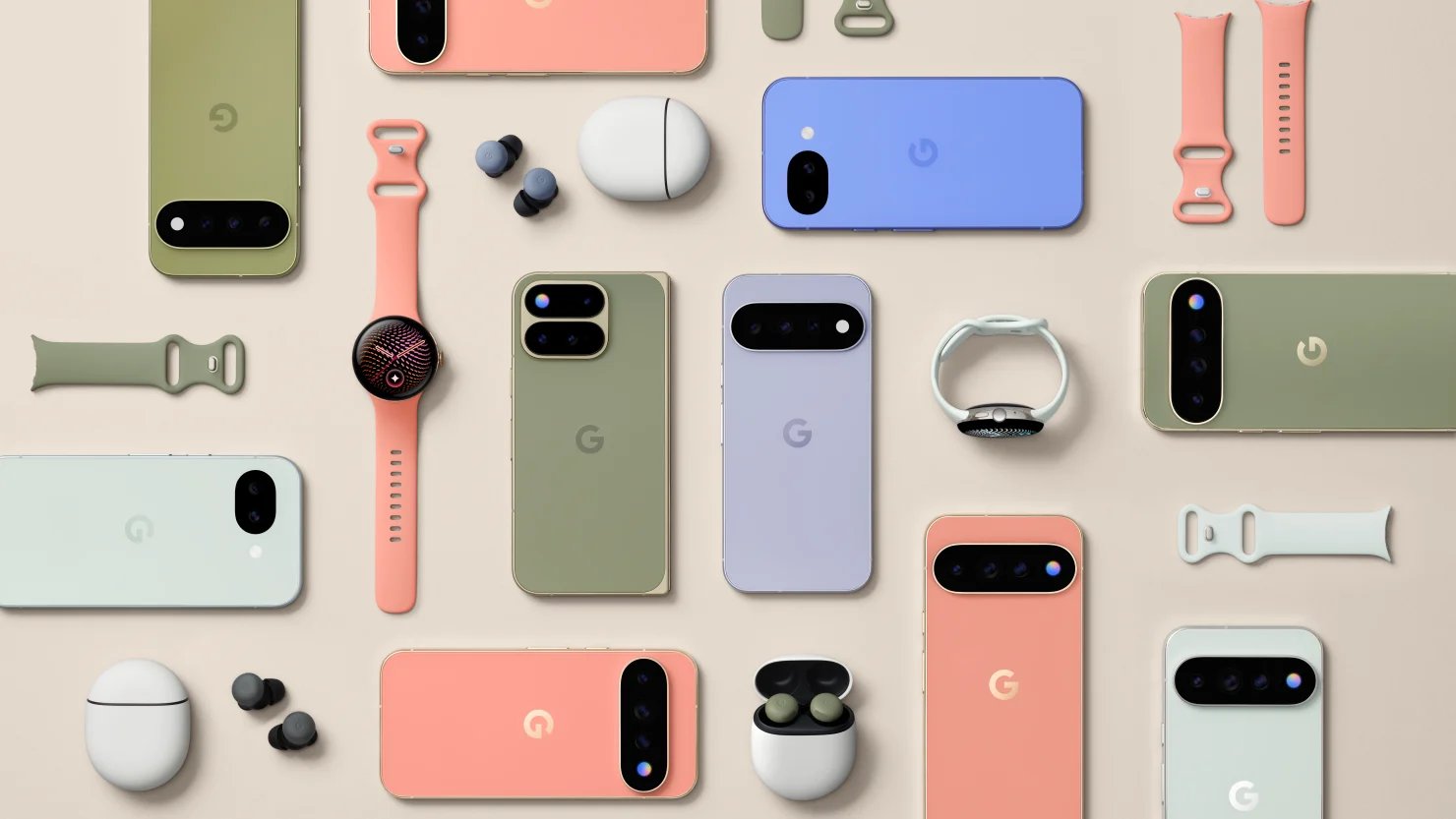
At its Made by Google event on Aug. 12, Google unveiled the Pixel 11, Pixel 11 Pro, Pixel 11 Pro XL, and Pixel 11 Pro Fold alongside the Pixel Watch 5 and a new Pixel Tag tracker. According to WIRED’s roundup of everything announced at Made by Google 2026, the phones arrive Aug. 20, with prices ranging from $899 for the Pixel 11 to $1,900 for the Pixel 11 Pro Fold.
But hardware was only half the story. Google spent much of the event showing how Gemini can anticipate what users need, work across apps, handle tasks, translate content, and increasingly interact with the world on a user’s behalf.
Here are seven takeaways from Google’s latest Pixel launch and what they could mean for people deciding whether the Pixel 11 is worth an upgrade.
1. Gemini is becoming the operating layer of the Pixel
The Pixel 11’s biggest upgrade may not be something users can see.
Google is positioning the new phones around Gemini Intelligence, its umbrella for AI features designed to provide more proactive and personalized assistance across Android. Google previously introduced the concept with Android 17, with newer Pixel and Samsung Galaxy devices among the first targeted for the features.
One example is “proactive assistance.” If someone sends a restaurant suggestion in a message, Gemini can surface relevant information without requiring the user to jump between apps. It can similarly recognize scheduling opportunities and connect with Google Calendar.
Google is also building on Gemini automation introduced earlier this year. TechRepublic previously covered the March 2026 Pixel Drop and its Gemini-powered task automation, which allowed Gemini to work in the background on tasks such as planning a grocery cart, booking a ride, or placing routine purchases.
The direction is notable: Google does not just want Gemini answering questions. It wants the assistant to recognize context, suggest the next action, and increasingly handle parts of that action for the user.
For readers unfamiliar with how deeply Google has already embedded its AI across products, TechRepublic’s Google Gemini cheat sheet covers Gemini’s expansion across Android, Workspace, Chrome, Search, and other Google services.
2. Tensor G6 is built around AI rather than benchmark bragging rights
Behind much of that AI push is Google’s new Tensor G6 processor.
Google says the chip is 20% more power efficient, delivers 25% faster browsing, and loads apps 15% faster than its predecessor. More importantly for Google’s AI strategy, the Tensor G6 includes a tensor processing unit that Google says is 50% more powerful.
Those figures are Google’s performance claims rather than independent benchmark results, but they illustrate what the company is prioritizing with its latest custom silicon.
The extra processing power is being used throughout the phone rather than confined to the Gemini assistant. Tensor G6 supports improvements to photography, translation, and other AI-assisted experiences.
That makes Google’s processor strategy increasingly clear. Tensor does not necessarily have to win a raw-performance arms race with Qualcomm or Apple if Google can use its own silicon to make its AI services noticeably more useful.
3. Google is letting AI take a bigger role behind the camera
Pixel phones have long used computational photography to improve images, but the Pixel 11 lineup pushes software further into the actual act of taking a photo.
One of the more unusual additions is Magic Capture. According to WIRED’s look at the Pixel 11’s new camera features, users can record up to a two-minute video while AI automatically identifies and captures photos during the recording. The idea is to let users stay focused on what is happening rather than continually operating the shutter.
Google is also adding Camera Looks and creator-oriented tools including a built-in teleprompter.
The Pro models get more aggressive upgrades. The Pixel 11 Pro and Pro XL include a 50-megapixel main camera, 48-megapixel ultrawide camera, and 48-megapixel 5X telephoto camera. Pro Zoom can reach up to 120X, with generative AI helping fill in detail in heavily zoomed images.
Google also says its new Instant Night Sight is 4.5 times faster, while the updated image signal processor enables 4K portrait video.
The trade-off is that the line between capturing an image and generating parts of one keeps getting blurrier. That could make Google’s approach especially interesting for professionals who care about when AI enhancement stops being correction and starts becoming creation.
4. Pixel 11 prices are climbing
The AI upgrades come with a less futuristic development: higher prices.
The Pixel 11 starts at $899, while the Pixel 11 Pro starts at $1,100, the Pro XL at $1,300, and the Pixel 11 Pro Fold at $1,900. The standard Pixel 11 and Fold are both $100 more expensive than their predecessors.
Google has at least increased base storage to 256 GB across the lineup, putting the entry-level storage configuration in line with other premium smartphones.
Still, these prices put Google firmly into premium-device territory.
That makes the purchasing question tougher. A Pixel is no longer automatically the relatively inexpensive alternative to an iPhone or Galaxy flagship. Buyers increasingly have to decide whether Google’s AI-first software experience is valuable enough to justify flagship-level pricing.
5. The Pixel 11 Pro Fold is better, but rivals are moving faster
Google’s foldable received several improvements, including a lighter body, thinner design, brighter displays, and a redesigned hinge.
The Pixel 11 Pro Fold weighs 239 grams, roughly 10% less than its predecessor. Google also claims the device is three times more durable than the previous model, though that is a manufacturer claim rather than the result of independent durability testing.
That does not necessarily make it the foldable to beat.
In an early hands-on with the Pixel 11 Pro Fold, Engadget found that Google’s foldable remains relatively heavy and thick compared with Samsung’s latest designs. The Pixel measures 10.1 mm thick when folded and weighs 239 grams.
At $1,900, incremental improvements become harder to overlook.
The Fold nevertheless gains one particularly interesting AI capability: American Sign Language translation. Using its camera, the phone can view someone signing and translate the interaction into text, a feature that could make the Fold’s dual-screen design particularly useful for face-to-face communication.
6. Seven years of support is a game-changer
Flashier AI demonstrations may dominate Google’s marketing, but one quieter feature matters considerably for organizations managing mobile devices: longevity.
Google says the Pixel 11 family will receive seven years of software updates. That long support window could make the Pixel 11 easier to justify for organizations with longer device replacement cycles, particularly when security support and OS compatibility are part of purchasing decisions.
Pixel devices also continue to serve as Google’s first landing zone for major Android releases. As TechRepublic reported when Android 17 rolled out to Pixel devices, organizations using phones from Samsung, Xiaomi, OnePlus, Motorola, and other manufacturers face separate OEM timelines, beta programs, and application-testing considerations.
For IT teams, predictable software support and Google’s control over both Android and Pixel hardware may ultimately matter more than 120X zoom or another AI photography feature.
7. The real Pixel 11 question is how much control users want to give AI
The most important theme from Made by Google was not any individual phone.
Google is assembling an ecosystem in which AI increasingly moves between devices and services on the user’s behalf. That extends beyond the Pixel 11 to Google’s wider hardware lineup.
The new $29 Pixel Tag, for example, connects to Google’s Find Hub network and supports ultra-wideband precision tracking. Users can locate it through compatible Android and Wear OS devices or ask Gemini about its location through Pixel Buds. Google says the tracker will arrive Nov. 11.
The Pixel 11 sits at the center of that increasingly connected system.
For buyers, that means the decision is becoming less about comparing processor speeds or camera megapixels and more about choosing an AI ecosystem. Someone already relying heavily on Gmail, Calendar, Maps, Gemini, Android, and other Google services may see substantially more value in a Pixel 11 than someone who treats their phone primarily as a collection of independent apps.
For business and IT users, there is another layer to consider. Features that proactively interpret conversations, pull information between apps, and automate actions can save time, but they also make permissions, data access, privacy controls, and AI governance more important.
That may be the biggest takeaway from Google’s latest hardware event. The Pixel 11 is not simply asking whether you want a better phone. Google is asking how much of what you do on that phone you are comfortable letting AI understand, anticipate, and eventually do for you.
Related reading: For more on Google’s AI-first smartphone strategy, see how the Pixel 11 puts Gemini and new AI features at the center of the experience.
>

Enterprise AI agents need common standards to work across different tools, platforms, and industries.
The Linux Foundation announced that 57 organizations have joined the Agentic AI Foundation, bringing its total membership to 247. The new members represent sectors including financial services, telecommunications, and academia.
The most notable members that have joined the group are Alibaba Group, Visa and Wells Fargo & Company. These companies joined as Gold tier members, meaning that they each gave a contribution of $200,000 to AAIF.
Linux Foundation as the steward
The Linux Foundation (LF), which was selected as the shepherd of this initiative, has credentials, having managed the most successful open-source project – Linux. It has shown its ability over the years to manage open-source initiatives across software, hardware, data and standards.
It provides support through security audits, fundraising and certification programs, among other activities. As a neutral non-profit foundation, it also offers legal protection for its projects.
Additionally, the foundation was recently chosen to oversee another open initiative in the AI space called the Open Secure AI Alliance that has members like NVIDIA, DELL and Microsoft.
The addition of these 57 new members to AAIF acts as a vote of confidence in the ability of the LF to steer this project to success.
What AAIF has so far achieved
Originally contributed by OpenAI, the AGENTS.md document standard was transferred to the AAIF on the day of the foundation’s launch. Placed in the root directory of application source code, this editable markdown document (AGENTS.md) provides instructions and necessary context for your coding agents.
AAIF also oversees the Model Context Protocol, which Anthropic introduced as a standard way for AI applications to connect with external tools, systems, and data sources. MCP has gained support from major technology providers, including OpenAI.
Finally, goose is another tool worth mentioning that the LF manages. Goose is an open modular AI agent framework that was introduced by Block that enables developers to build agentic flows on their local environment.
The creation of open tools by competitors in the same market is a testament to how AAIF is fostering an open ecosystem with all vendors taking part in shaping the agentic AI stack.
More must-read AI coverage
How enterprises can take part
Linux Foundation offers membership tiers across Gold, Silver and Associate. These member levels come at a fee which goes to support the efforts of AAIF. The only exception to paid membership is the Associate level, which is reserved for “pre-approved not for profits and universities.”
As paid members, enterprises can participate in general meetings, propose working groups and access AAIF leadership.
Apart from participating in direct AAIF activities, enterprises can also make open-source contributions to the open tools that AAIF hosts. This particular property reinforces the whole argument about the standards being open: anyone can still contribute without seeking any permission.
The AAIF has made substantial contributions to the agentic development space since its launch in December 2025. With the Linux Foundation spearheading the adoption efforts, and more organizations joining it, enterprises can hope for open and interoperable standards to support the agentic era.
Read more: As open standards accelerate AI adoption, learn why lawmakers wants a pause on new AI data center development.
>

After years of snapping up wind and solar developments, hyperscalers like Amazon, Google, Meta, and Microsoft are betting that natural gas will power the data centers behind their lofty AI ambitions. But a new research report suggests they may regret their newfound affinity for the fossil fuel.
Natural gas prices could triple in some parts of the U.S. in the coming years as hyperscaler demand collides with declining supply growth and rising exports of liquefied natural gas, according to Noreva, an energy research firm. Hyperscalers might not be prepared for future price shocks.
“I think everyone in the energy markets has been lulled into a sense that gas prices can’t go up,” Peter Gardett, CEO of Noreva, told TechCrunch. “You just need simple arithmetic to get to a much tighter gas market than you were in just a few years ago.”
Hyperscalers’ big bets
Cheap gas has pushed hyperscalers to lock up part of the market. In March, Meta said it would build a massive 7.5-gigawatt natural gas power plant in Louisiana to power its Hyperion data center. A few days later, Microsoft and Google each said they’d build their own gigawatt-scale gas power plants, both in Texas. And not to be left out, Amazon plans to build a 7.6-gigawatt gas power plant in Texas.
For companies that historically have shied away from large capital expenditures, the data center building boom suddenly has them investing heavily in the physical world while also pushing them deeper into energy markets, which are even less familiar territory.
Gardett said at least one investor he spoke with was “surprised” by how much natural gas price risk hyperscalers are willing to take on. “They’re doing things that are not normal for an off-taker to do,” he said.
Noreva expects natural gas prices to soar above $10 per million BTUs in certain hubs, or delivery points for futures contracts. Today, prices range from about $2 to $4.50 per million BTUs, with the widely traded Henry Hub in Louisiana priced at just under $3.
Fuel represents about half the cost of electricity from a large power plant, so a doubling or tripling of natural gas prices could make “bring your own power” AI data centers much more expensive to run. That could drive up token costs, or it could push hyperscalers to connect to the grid, driving electricity prices higher.
For the foreseeable future, natural gas prices appear stable — futures contracts aren’t anticipating big changes. “It’s not an unreasonable bet,” Gardett said. But he’s not convinced they’re right.
Surging demand
Natural gas prices have been stable thanks to years of relatively flat demand and the steady addition of new supplies, which has countered waning production at old wells, Gardett said. He expects that energy companies will be able to add more supplies, just not at the rate they did before. Plus, new wells are getting more expensive.
“That alone wouldn’t change the economics here. What’s changing the number is that finally we’re connecting the domestic gas market to the global gas market,” he said. “And the second is the AI demand pull.”
Hyperscalers have been lured to Texas and Louisiana by cheap natural gas prices. In West Texas, in particular, most wells have been focused on oil, and the natural gas that comes out is a byproduct that hasn’t found much of a market. There weren’t a lot of big pipelines to move it out of the region, so producers sold natural gas at a discount to anyone who could use it. That’s changing, though.
“They’ve finally built some pipelines out there, and a lot of that is headed towards export markets,” Gardett said.
As West Texas becomes more connected to national and international natural gas markets, demand there will influence prices elsewhere and vice versa. Even modest price swings near hyperscalers’ big data centers could be magnified elsewhere.
“You will get places where you get a lot of gas next to someplace where there’s none, and so you’ll get those big differentials,” Gardett said. It’s those differentials that will drive prices in some regions above $10 per million BTUs for extended periods of time.
Under that scenario, even if hyperscalers can stomach higher prices, their natural gas consumption could add a new dimension to the data center backlash. Already, 80% of consumers are worried about data centers’ impact on their utility bills, mostly related to electricity. That angst could spill over to natural gas bills.
Hyperscalers, in their haste to power their AI data centers, are quickly enmeshing themselves in the fossil fuel world. It’s a space in which they have relatively little experience, but one that could soon materially impact their businesses.
“On future Alphabet earning calls, you will hear them talk about the correlation between natural gas pricing and Google results, which is strange, but that’s where we are,” Gardett said.
When you purchase through links in our articles, we may earn a small commission. This doesn’t affect our editorial independence.
>

How to watch Marlins vs. Reds: TV channel and streaming options for August 14

Google’s Pixel 11 Explained: 7 Things to Know Before Upgrading

Trump Admin Asks Supreme Court to Allow Ballroom Construction
-

 movies3 months ago
Search For Canadian TV Actor Stewart McLean Now Homicide Investigation
-

 Fashion9 years ago
These ’90s fashion trends are making a comeback in 2017
-
Fashion9 years ago
According to Dior Couture, this taboo fashion accessory is back
-
Fashion9 years ago
Model Jocelyn Chew’s Instagram is the best vacation you’ve ever had
-
Fashion9 years ago
Your comprehensive guide to this fall’s biggest trends
-
Fashion9 years ago
9 Celebrities who have spoken out about being photoshopped
-
Fashion9 years ago
Emily Ratajkowski channels back-to-school style
-
Fashion9 years ago
A photo diary of the nightlife scene from LA To Ibiza