
Tech
Hyperscalers might regret embracing natural gas if new forecast proves correct


After years of snapping up wind and solar developments, hyperscalers like Amazon, Google, Meta, and Microsoft are betting that natural gas will power the data centers behind their lofty AI ambitions. But a new research report suggests they may regret their newfound affinity for the fossil fuel.
Natural gas prices could triple in some parts of the U.S. in the coming years as hyperscaler demand collides with declining supply growth and rising exports of liquefied natural gas, according to Noreva, an energy research firm. Hyperscalers might not be prepared for future price shocks.
“I think everyone in the energy markets has been lulled into a sense that gas prices can’t go up,” Peter Gardett, CEO of Noreva, told TechCrunch. “You just need simple arithmetic to get to a much tighter gas market than you were in just a few years ago.”
Hyperscalers’ big bets
Cheap gas has pushed hyperscalers to lock up part of the market. In March, Meta said it would build a massive 7.5-gigawatt natural gas power plant in Louisiana to power its Hyperion data center. A few days later, Microsoft and Google each said they’d build their own gigawatt-scale gas power plants, both in Texas. And not to be left out, Amazon plans to build a 7.6-gigawatt gas power plant in Texas.
For companies that historically have shied away from large capital expenditures, the data center building boom suddenly has them investing heavily in the physical world while also pushing them deeper into energy markets, which are even less familiar territory.
Gardett said at least one investor he spoke with was “surprised” by how much natural gas price risk hyperscalers are willing to take on. “They’re doing things that are not normal for an off-taker to do,” he said.
Noreva expects natural gas prices to soar above $10 per million BTUs in certain hubs, or delivery points for futures contracts. Today, prices range from about $2 to $4.50 per million BTUs, with the widely traded Henry Hub in Louisiana priced at just under $3.
Fuel represents about half the cost of electricity from a large power plant, so a doubling or tripling of natural gas prices could make “bring your own power” AI data centers much more expensive to run. That could drive up token costs, or it could push hyperscalers to connect to the grid, driving electricity prices higher.
For the foreseeable future, natural gas prices appear stable — futures contracts aren’t anticipating big changes. “It’s not an unreasonable bet,” Gardett said. But he’s not convinced they’re right.
Surging demand
Natural gas prices have been stable thanks to years of relatively flat demand and the steady addition of new supplies, which has countered waning production at old wells, Gardett said. He expects that energy companies will be able to add more supplies, just not at the rate they did before. Plus, new wells are getting more expensive.
“That alone wouldn’t change the economics here. What’s changing the number is that finally we’re connecting the domestic gas market to the global gas market,” he said. “And the second is the AI demand pull.”
Hyperscalers have been lured to Texas and Louisiana by cheap natural gas prices. In West Texas, in particular, most wells have been focused on oil, and the natural gas that comes out is a byproduct that hasn’t found much of a market. There weren’t a lot of big pipelines to move it out of the region, so producers sold natural gas at a discount to anyone who could use it. That’s changing, though.
“They’ve finally built some pipelines out there, and a lot of that is headed towards export markets,” Gardett said.
As West Texas becomes more connected to national and international natural gas markets, demand there will influence prices elsewhere and vice versa. Even modest price swings near hyperscalers’ big data centers could be magnified elsewhere.
“You will get places where you get a lot of gas next to someplace where there’s none, and so you’ll get those big differentials,” Gardett said. It’s those differentials that will drive prices in some regions above $10 per million BTUs for extended periods of time.
Under that scenario, even if hyperscalers can stomach higher prices, their natural gas consumption could add a new dimension to the data center backlash. Already, 80% of consumers are worried about data centers’ impact on their utility bills, mostly related to electricity. That angst could spill over to natural gas bills.
Hyperscalers, in their haste to power their AI data centers, are quickly enmeshing themselves in the fossil fuel world. It’s a space in which they have relatively little experience, but one that could soon materially impact their businesses.
“On future Alphabet earning calls, you will hear them talk about the correlation between natural gas pricing and Google results, which is strange, but that’s where we are,” Gardett said.
When you purchase through links in our articles, we may earn a small commission. This doesn’t affect our editorial independence.
>

Apple may be about to break one of its longest-running iPhone launch habits.
The company’s supplier Pegatron recently teased a major schedule change for a key smartphone client. As reported by Economic Daily News and MacRumors, Apple plans to stick to a September launch for the iPhone 18 Pro and Pro Max, but will hold off on releasing the base iPhone 18 until Q1 2027.
If accurate, this would be a pretty significant change from Apple’s recent iPhone strategy. The standard iPhone has traditionally launched alongside the Pro and Pro Max models in September. That has been the case from the iPhone 11 through the iPhone 17.
Supply constraints could be driving the change
There seems to be a practical reason for the change, as the shift in launch timing appears tied to ongoing supply constraints affecting memory and other components.
According to Economic Daily News, Pegatron executives discussed how shortages of memory and other chips are affecting smartphone production and shifting the industry’s peak shipping periods. Suppliers and smartphone manufacturers are left trying to allocate the limited components they can get across their product lines, while smartphone makers increasingly prioritize higher-priced devices with larger margins.
That could help explain why Apple would lead with the release of its premium iPhone 18 models. The Pro and Pro Max models carry higher price tags, and Apple could use the limited supply of components to prioritize its higher-margin devices. Launching those devices first would allow Apple to use its available components on its most profitable products while giving Apple more flexibility in managing component supplies for the less expensive models.
The strategy could also make Apple’s iPhone lineup more complex for consumers. Rather than choosing between the standard and Pro models in the same fall shopping season, those who want the regular iPhone 18 may have to wait until early 2027.
Apple’s premium iPhones are still on track for fall
Apple’s premium iPhone 18 models are reportedly still scheduled for a September launch. Bloomberg has reportedly identified Sept. 9 as the likely date for Apple’s event. Meanwhile, Forbes notes that the date would fit Apple’s usual pattern of holding its major iPhone event on the second Tuesday or Wednesday of September.
Apple has generally introduced new iPhones on the second Tuesday or Wednesday of September, except for 2020, when pandemic-related production delays pushed the iPhone 12 launch into October.
There could also be another major addition to the lineup this year. Reports also point to a foldable device, reportedly called the iPhone Ultra. That would make this year’s premium iPhone event particularly important, even with the standard iPhone 18 missing from the lineup.
Meanwhile, Apple’s more affordable iPhone 18 and reportedly the iPhone 18e and second-generation iPhone Air are expected to arrive in a later launch window.
Must-read Apple coverage
A major shift in Apple’s iPhone business
The latest Pegatron comments don’t constitute direct confirmation from Apple, but they make the rumored change harder to dismiss. Apple itself has not announced its plans for the iPhone 18 launch.
Splitting the iPhone lineup could ultimately give Apple more flexibility over its supply chain and product calendar. It could also encourage consumers interested in the latest technology to move toward Apple’s more expensive models.
With the premium iPhones arriving first, customers who do not want to wait until 2027 for a new iPhone may have fewer options and may therefore be enticed by the options available.
The reported delay of the standard iPhone 18 could signal a bigger change in how the company manages its flagship product lineup, responds to component shortages, and balances supply constraints against the profitability of its premium devices.
For consumers and the wider technology industry, September’s iPhone event may provide the clearest sign yet that Apple’s traditional annual iPhone cycle is becoming a thing of the past.
More Apple News: The company is reportedly negotiating multiyear deals with publishers to license current news content for its revamped AI-powered Siri.
>

Anthropic is reportedly considering a $6 billion acquisition of Decart, which develops AI training and operational optimization tools alongside models designed for real-world applications, according to Bloomberg.
The startup would provide two potential benefits for Anthropic: improving the efficiency of its own AI model training and operations, and expanding the AI lab’s model portfolio.
It is not clear which part of Decart Anthropic is more interested in. The chip efficiency software could provide much-needed improvements in training costs, reducing the overall compute burden for the lab. At the same time, Decart’s physical AI models have a wide range of potential use cases, from autonomous vehicle operations to retail.
One example is Lucy, an AI model that can take a short video of a person and generate a real-time video of them trying on an item of clothing. This has attracted interest from ecommerce companies such as eBay, which is an investor.
Anthropic stepping up its dealmaking
If completed at the reported price, the Decart deal would represent a major escalation in Anthropic’s acquisition strategy. Its previous largest disclosed acquisition was the $400 million purchase of Coefficient Bio earlier this year.
Compared with its rivals, Anthropic has been relatively inactive on the M&A front. OpenAI has spent more than $7 billion, with acquisitions ranging from Jony Ive’s io hardware startup to business talk show TBPN. SpaceX has made even larger splashes, including its $60 billion acquisition of Cursor.
The tech giants have also been less acquisition-heavy than in previous technology cycles, largely due to the difficulty of getting major deals past regulators. Instead, Meta, Google, and Microsoft have completed several acqui-hires in the AI space.
More must-read AI coverage
Demand for AI spurring higher spend
Anthropic is in the market for greater efficiency and more resources. It has reportedly been in discussions with Samsung about developing a custom AI chip, following similar efforts by the tech giants and OpenAI. The chip would be designed specifically to improve the efficiency of Anthropic’s AI model training and operations.
At the same time, Anthropic has increased its spending on compute as it tries to meet huge demand for its services. It signed a $1.25 billion-a-month deal with SpaceX, one of its key rivals, to access the company’s Colossus 1 data center. It has signed similarly large deals over the past few months, including a 20-year lease with bitcoin miner Riot Platforms worth $9.1 billion and another agreement with bitcoin miner TeraWulf worth $19 billion.
While the AI lab was initially hesitant to sign such large contracts, it has changed its tune as revenues have skyrocketed. It even reportedly recorded its first profitable quarter in June, a significant milestone for a company spending so heavily on compute and staff.
A Decart acquisition would suggest Anthropic is beginning to think about infrastructure differently. The company has already committed billions of dollars to securing the compute needed to train and operate its models; buying Decart could give it technology designed to make that compute go further.
Whether Anthropic ultimately spends $6 billion to do that remains uncertain. But even the reported talks point to a growing reality for the AI industry: competing at the frontier increasingly means investing not just in more computing power, but in ways to use that power more efficiently.
More Anthropic news: The Claude maker is reportedly in talks with Samsung to develop a custom AI chip as it looks to cut compute costs and reduce its reliance on Nvidia hardware.
>
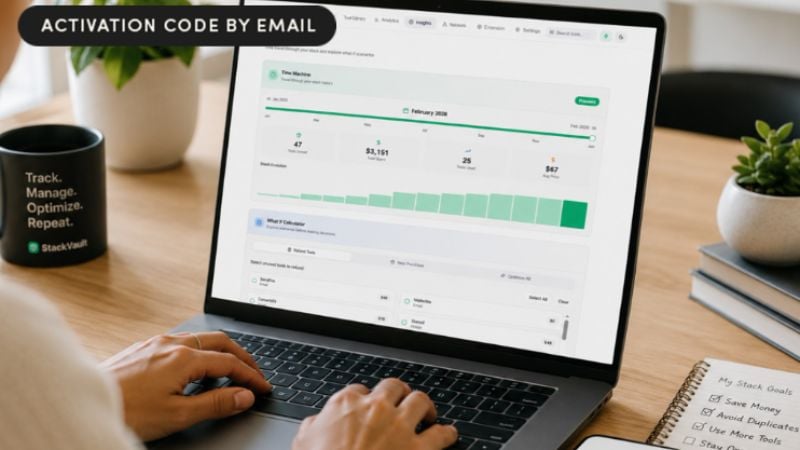
TL;DR: If your software collection has grown into a sea of forgotten lifetime deals, StackVault Pro Plan gives you one place to track up to 25 tools, spot duplicate purchases, and more. Lifetime access is $39.99 (MSRP $99.99).
Your software collection can turn into a digital junk drawer pretty quickly. A few lifetime deals here, a handful of subscriptions there, and suddenly you’re paying for or buying tools you already have — without a clear idea of which ones are actually worth keeping. The StackVault Pro Plan brings those purchases into one dashboard for $39.99 (MSRP $99.99), giving you a clearer picture of what you own and whether those tools are actually earning their keep.
Once place to track and manage costs
The web app lets you track up to 25 software tools and organize your lifetime deals without maintaining yet another spreadsheet. More importantly, it can help prevent some of the easiest ways to waste money:
- Duplicate detection flags overlapping tools before you buy something you already own
- ROI and score tracking helps you see which products you’re actually using and which ones are collecting digital dust
- Spending charts give you a clearer view of where your software budget is going
- Refund deadline alerts help make sure a purchase doesn’t sail past its return window unnoticed
That makes StackVault particularly useful for freelancers, entrepreneurs, developers, and marketers who regularly experiment with new software.
StackVault Pro Plan includes lifetime access, future updates, and browser-based access from desktop or mobile devices.
Get lifetime access to StackVault Pro Plan for $39.99 (MSRP $99.99).
StackSocial prices subject to change.
>

Lots of Leftover Battle Bikinis – This Week in Games

EFL says losses not sustainable after PFA legal action

Hyperscalers might regret embracing natural gas if new forecast proves correct
-

 movies3 months ago
Search For Canadian TV Actor Stewart McLean Now Homicide Investigation
-

 Fashion9 years ago
These ’90s fashion trends are making a comeback in 2017
-
Fashion9 years ago
According to Dior Couture, this taboo fashion accessory is back
-
Fashion9 years ago
Model Jocelyn Chew’s Instagram is the best vacation you’ve ever had
-
Fashion9 years ago
Your comprehensive guide to this fall’s biggest trends
-
Fashion9 years ago
9 Celebrities who have spoken out about being photoshopped
-
Fashion9 years ago
Emily Ratajkowski channels back-to-school style
-
Fashion9 years ago
A photo diary of the nightlife scene from LA To Ibiza