
‘Auber 89.’
Courtesy of Lightdox


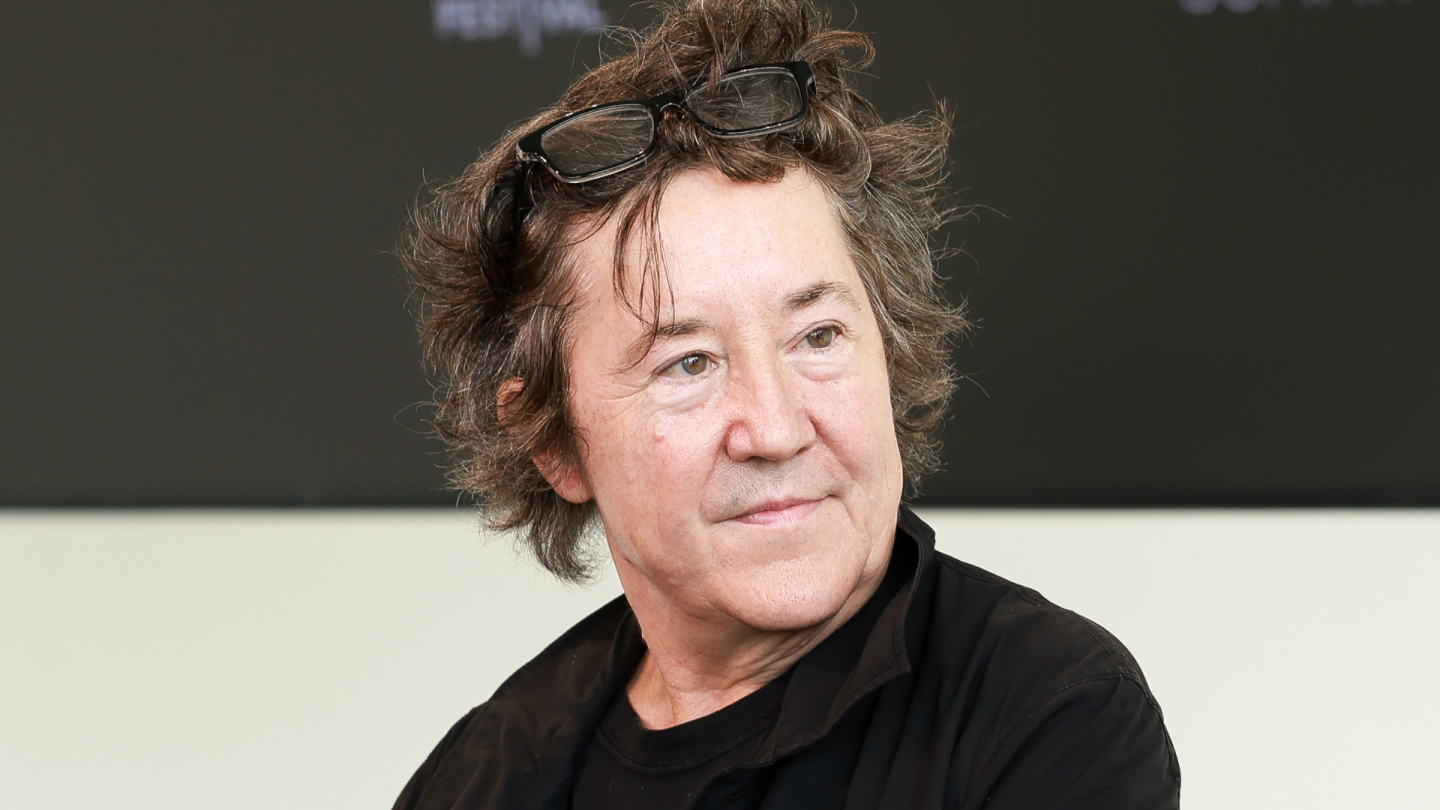
Christine Vachon, the prolific independent producer whose Killer Films has backed Happiness, Boys Don’t Cry, Carol and more recently Past Lives, May December and Materialists, said at the Edinburgh Film Festival on Friday that Pedro Pascal is “a revelation” in Todd Haynes’ re-worked gay romance movie.
De Noche, currently in post-production with no release date announced yet, was set to star Joaquin Phoenix before he abruptly pulled out before the shoot began. Vachon previously called the situation “a tragedy” and explained in an industry talk at Edinburgh how she and her long-time collaborator Haynes managed to rebuild the project after Phoenix’s exit.
Host Wendy Mitchell joked: “I actually like [Pascal] better than Joaquin Phoenix anyway,” to which Vachon responded: “I kind of do too!” The tightly-packed crowd at Edinburgh’s Central Hall laughed with them.
Vachon continued: “It wasn’t an easy situation. And as I also stated, it was devastating that Todd didn’t get to make a movie again that year. If you take the […] glass half-full version, and ‘everything happens for a reason’ [perspective], maybe the reason was that this was a role that Pedro was born to play. He is certainly extraordinary in the film, and by the way, so is Danny [Ramirez]. I mean, both of them are a revelation.”
Getting a “do-over” allowed them to find a better shoot location, said Vachon, which showed her everything worked out for the best. Pascal was brought on board via her work with him on Celine Song’s Materialists. “People always say to me, ‘Is he as nice as he seems?’ […] He is. People are so invested. They love him.”
As a titan of independent film production, Vachon — in Edinburgh with her latest film Pretty Babies, directed by Tyler-Marie Evans, who spoke to THR in depth about winning over Vachon just this week — was also probed on the box office success of Obsession and Backrooms this year, two movies that have challenged the status quo in Hollywood. “I do,” she said when asked if she likes the energy coming out of YouTube. “But when we were making movies like Poison [and] Go Fish, we also identified an audience… Back in those days, the LGBTQ audience could go to bars. There were parts of town [where you] could take your leaflets and just go specific places where people gathered and say, ‘Look! We made this! It’s for you.’ That’s just moved online.”
Vachon is extremely buoyed by the current theater-going demographic being made up, predominantly, of people aged under 30. She cannot deny, however, that “we’re at a time of great disruption,” and the queer film landscape is a little rocky with so much division in the U.S. at the moment. “It’s a conundrum right now. We have something like Heated Rivalry which couldn’t be a bigger hit, and we still have politicians campaigning on who gets to use what bathroom. And it’s happening [in the U.K.] too. It’s not like we have the monopoly on [marginalizing] LGBTQ people.”
“I remember when I would go see screenings of Poison or Swoon, which were boy queer [films] and [the theater] would be filled with lesbians because they were like, ‘I guess I’ll go see this.’ But now there is more choice,” she continued. “And the power of narrative to actually change people’s perspectives is stronger than it’s ever been.”
On the toss-up of a box office hit or flop, Vachon confessed she can’t predict the commercial outcome of her movies. She’s actually pleased streaming services can get movies to wider audiences nowadays. “When Todd Haynes’ Safe came out, it didn’t do anything at the box office. People weren’t interested in seeing it. The reviews were a little head-scratchy, like, ‘Not quite sure what he was going for here.’ But in the mid-late ’90s, I can’t remember exactly when, a newspaper [called] the Village Voice, which was incredibly influential at the time, did a survey of every single movie critic in America. What was the best movie in the ’90s? Safe was number one.”
“Sometimes the answer is that people just didn’t want to see it. They just didn’t, and you can’t really put your finger on why it didn’t hit the zeitgeist in that way. Who knows why? It was either too late or too soon. And now, the good thing in my mind [is] we have access to things and [movies] can find their way later. People can discover movies [from] another time.”
Mitchell asked Vachon at the end of the session: “Do you use AI?”
Vachon replied: “Yes,” explaining that she often uses it for synopses — to spare a busy intern from doing the job — or getting restaurant recommendations, such as when she was at the “very expensive” Venice Film Festival with last year’s Late Fame and needed a cheap, nearby spot.
The 2026 Edinburgh International Film Festival runs Aug. 13-19.
>
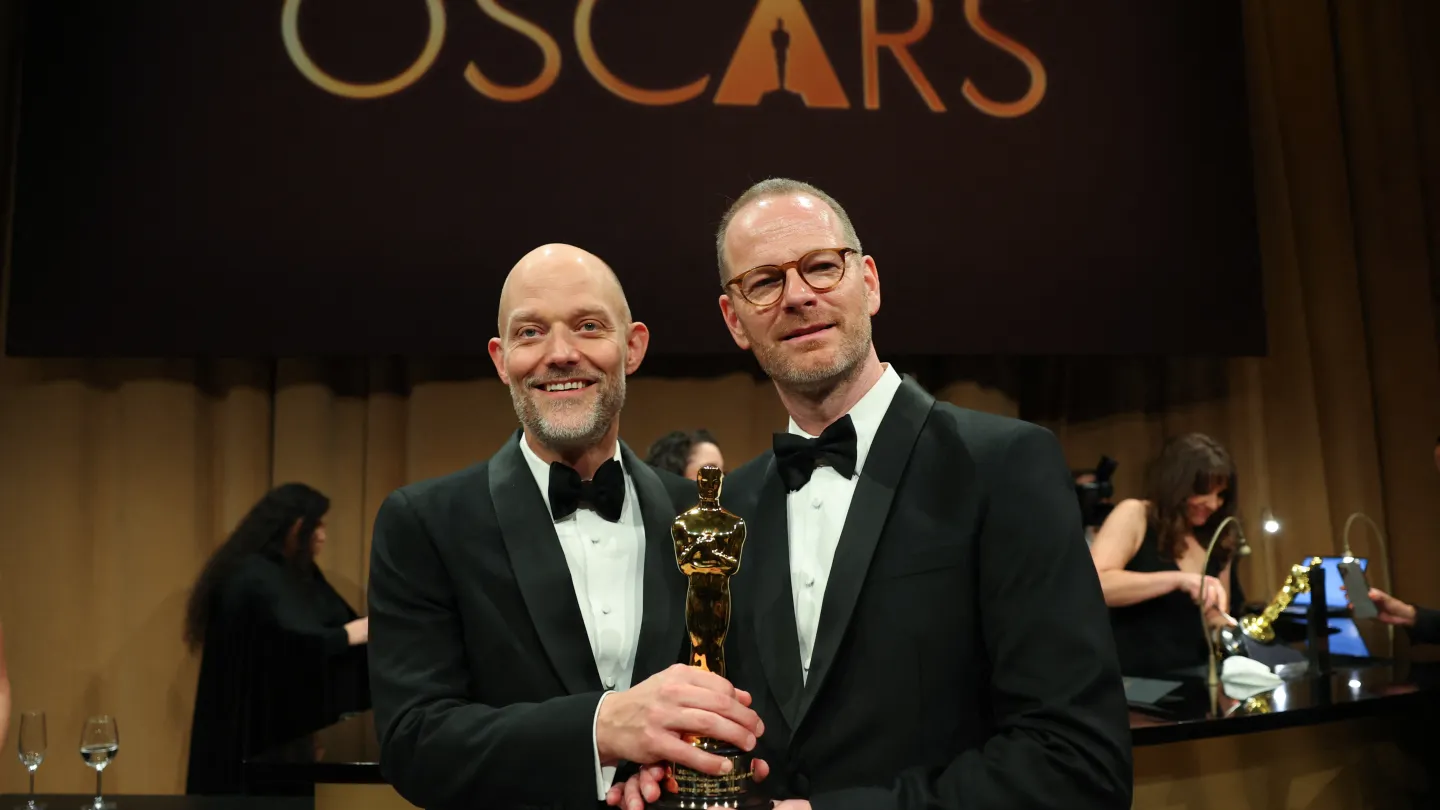
Dual Oscar nominee Eskil Vogt, a co-screenwriter on Joachim Trier‘s Sentimental Value and The Worst Person in the World has received backing for his next film as a director.
Vogt received a $1 million (NOK 10 Million) grant from the Norwegian Film Institute to go towards the production of Untitled, a psychological thriller about “art, power and the blurred boundaries between memory and truth.” Vogt will write and direct.
Untitled will be Vogt’s third feature as a director, following Blind (2014), and The Innocents (2021). He’s a two-time Oscar nominee, for writing on both Sentimental Value and The Worst Person in the World.
“Untitled is an ambitious project that builds on Eskil Vogt’s distinctive artistic vision,” said Kjersti Mo, CEO of the Norwegian Film Institute.” Eskil Vogt is a filmmaker with a strong artistic voice and a significant international profile, and with his third feature as a director, he continues to develop and challenge himself artistically.” Mo said the grant showed the institute’s commitment to “strengthening creators and their careers.”
Though best-known for his writing collaborations with Trier — the two childhood friends have written all of Trier’s films together — Vogt’s high-concept solo attempts have been well-received. Blind, which follows a writer whose loss of sight sharpens her creative imagination, premiered in Sundance and Berlin. The Innocents, a low-tech supernatural horror film about children with powers and violent tendencies, screened in Cannes’ Un Certain Regard.
Maria Ekerhovd and Lars Thomas Skare of Norway’s Mer Films, producers of Sentimental Value and the Oscar-nominated The Ugly Stepsister, are producing Untitled. The film’s total budget is pegged at $11 million. Mer Films’ latest, the Renate Reinsve-starrer Butterfly (2026), premiered at this year’s Rotterdam International Film Festival.
>
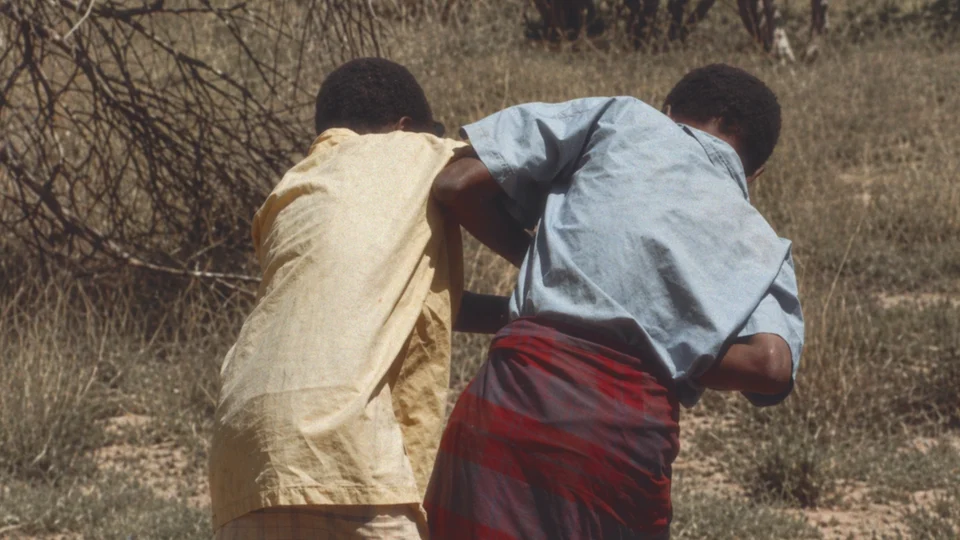
Accept My Plea for Burial is a social drama/thriller set in Somalia. And it was among the works-in-progress presented at the 2026 edition of Open Doors, the Locarno Film Festival‘s co-production platform and talent development program for filmmakers from equity-seeking communities and regions where artistic expression is at risk.
The story from director Mohammed Sheikh (Barni, 2025) is produced by Kadir Harbi of Somalia’s
Aleel Films.
The project, presented during the second edition of Open Doors with a focus on films from Africa, is a co-production between Djibouti, Somalia and Qatar. At the Locarno Open Doors program, Accept My Plea for Burial was one of the two main winners of the Open Doors Grant .
THR has compiled highlights about the movie and insight from Sheikh about the project and the themes it explores.
Synopsis
In a remote Somali pastoral village, 12-year-old boys, Waasuge and Warmooge, spend their days herding goats and playing games. Their playful rivalry turns tragic when Warmooge dies after falling into a steep dry riverbed during a game. No one sees exactly what happened, and the only witness, a mentally unstable man, gives conflicting accounts that deepen the uncertainty
As the village gathers, grief hardens into accusation. Warmooge’s mother, Saluugla, refuses to bury her son without justice, believing burial without accountability would erase his death. The elder, Alamagan, attempts to resolve the conflict through customary law and religious counsel, but the absence of truth fractures the community. Rituals are performed, oaths proposed and broken, and tensions escalate as the unburied body decays. Despite Waasuge’s age and the lack of evidence, the village demands resolution. Understanding what the adults cannot admit, Waasuge makes a choice that ends the conflict.
Director’s note
I am drawn to stories that stay with the audience long after the credits roll, films like Yiyi, 12 Angry Men, and A Separation, where ordinary people are placed inside moral conflicts with no easy answers. These films don’t rely on spectacle; they rely on tension, silence, and human contradiction. With Accept My Plea for Burial, I want to explore that same territory through a Somali lens that is rarely seen with this level of intimacy and restraint.
This film is not about proving guilt or innocence. It is about what happens when truth cannot be fully known, yet a community still demands resolution. In many societies, especially close-knit rural ones, peace often matters more than facts. I am interested in how grief distorts reason, how tradition both protects and fails people, and how children inherit the consequences of adult decisions. The story reflects that political reality.
What was the inspiration for you to want to make this film?
The inspiration for this film is very personal. I grew up in a community similar to the village in the film, and I experienced an incident very close to the one that happens to Warmooge. I was fortunate that I survived, but the experience stayed with me.
How universal are the themes of the film, and why should people outside Somalia see it?
Although the film is about a specific Somali pastoral community, the emotions and questions at its center are universal. The film explores loss, grief, love, family, justice. What does justice mean when the truth is uncertain? How far can grief take us? And can a community choose peace when revenge feels easier?
What is the next step for you and your collaborators after Open Doors?
I already have an advanced draft, and the next step is to find the right co-production partner and co-production country to help bring the film into production.
>
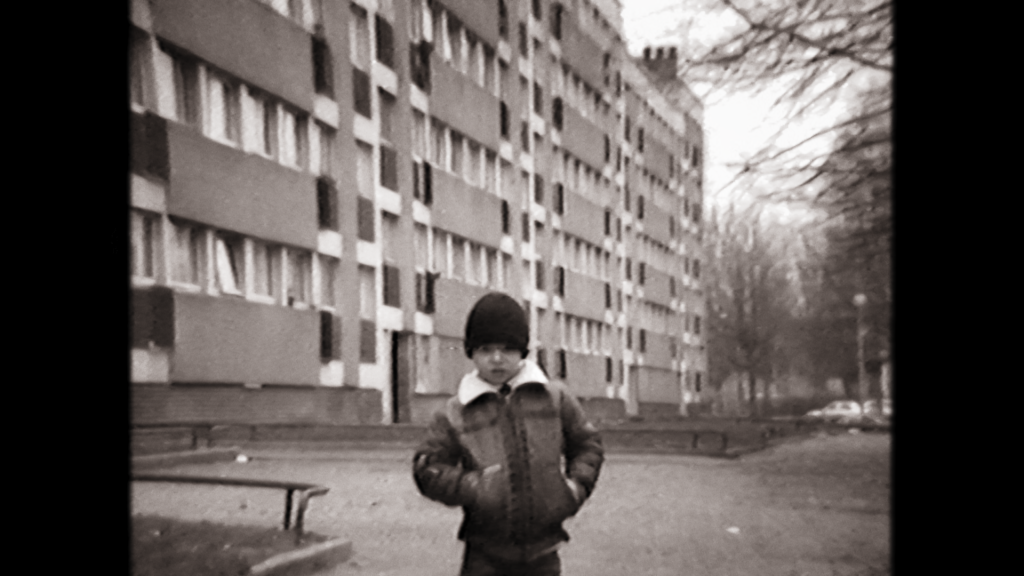
EXCLUSIVE: International sales and distribution agency Lightdox has acquired Giuseppe Schillaci’s documentary Auber 89 ahead of its world premiere at the Giornate degli Autori‘s Notti Veneziane (Venetian Nights), a sidebar of the Venice Film Festival.
The nonfiction feature examines the experience of Fatsah Bouyahmed, a French Algerian actor who suffered memory loss after an accident. When the filmmaker discovered archival footage of Bouyahmed from his childhood and youth in the Aubervilliers social housing estate outside Paris, he invited him to view it and that triggered a process of reconnecting Bouyahmed with his past.
“As Fatsah revisits the footage forty years later, memories of family, friendship, music, and daily life resurface alongside the social tensions of the time: rising racism, inequality, and exclusion,” notes a synopsis. “Moving between past and present, Auber 89 revisits a fleeting moment of hope before disillusionment reshaped the Parisian suburbs, while the textures of television and VHS ground the story in the sensory world of the 1980s.”
‘Auber 89.’
Courtesy of Lightdox
Auber 89 premieres September 10 at Giornate degli Autori, where it will be followed by a Q&A.
“Auber 89 is a rare kind of film, where one man’s fractured memory becomes a way into the buried history of an entire community,” said Lightdox founder Anna Berthollet. “Giuseppe Schillaci takes a remarkable archival discovery and turns it into something urgent and deeply human, carried by Fatsah Bouyahmed’s extraordinary journey back to himself. This is a film that gives the French suburbs their complexity back, beyond the clichés that have long defined them.”
‘Auber 89.’
Courtesy of Lightdox
Auber 89 is produced by Label Vidéo (Véronique Holley and Raffaele Ventura) in France, in co-production with Revolver (Paolo Maria Spina) in Italy, Via93 (Sylvain Poubelle and Bruno. Niepceron), and E2P (Pierre-Jean Bartheye) in France. Lightdox is handling international sales.
Schillaci, born in Palermo, Sicily and based in Paris, is a novelist and filmmaker. His 2024 feature documentary Bosco Grande also premiered in the Giornate degli Autori in Venice and went on to win the Grand Prix at the National Competition at FIPADOC Biarritz. His additional directing credits include Tranzicion – art et pouvoir en Albanie (2017), L’ombra del padrino (2016), Apolitics Now! (2013), and The Cambodian Room: Situations with Antoine D’Agata (2009), co-directed by Tommaso Lusena.
In a director’s statement, Schillaci recalled sharing the archival video of Bouyahmed with his protagonist.
“He came to my editing studio, sat down in front of a screen, and I showed him the footage of his youth,” Schillaci writes. “The screen became, in the truest sense, a machine for recovering memory: frame by frame, something reawakened within him. From that day on, this encounter between a man and the ghosts of his own youth became the film’s driving force, its backbone.”
>


Search For Canadian TV Actor Stewart McLean Now Homicide Investigation


These ’90s fashion trends are making a comeback in 2017
According to Dior Couture, this taboo fashion accessory is back
Model Jocelyn Chew’s Instagram is the best vacation you’ve ever had
Your comprehensive guide to this fall’s biggest trends
9 Celebrities who have spoken out about being photoshopped
Emily Ratajkowski channels back-to-school style
A photo diary of the nightlife scene from LA To Ibiza