
Entertainment
How Godfather Part II Changed Hollywood Sequels

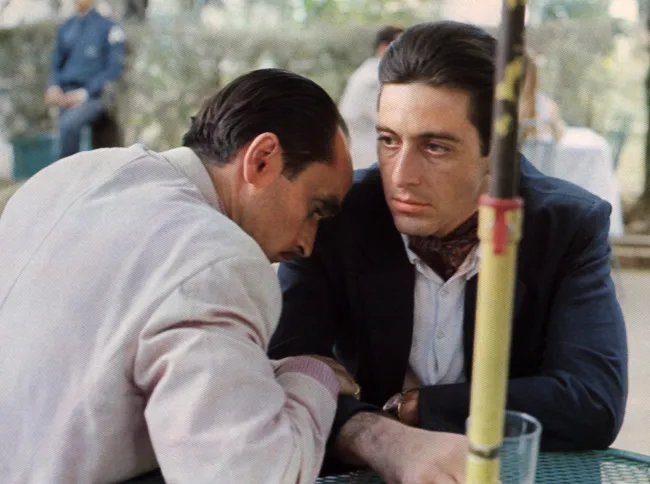

Paramount was so desperate for a “Godfather” sequel they were willing to give Francis Ford Coppola virtually anything — a $1 million directing fee, complete creative control, they even promised that studio chief Robert Evans (Coppola’s nemesis on the first film) wouldn’t read the script. Coppola would have such unprecedented free rein, the studio wouldn’t screen dailies throughout the 104-day shoot (41 more than “Part I”) across three different continents at cost of $13 million (twice the budget of the previous film).


The one demand Paramount pushed back on, but ultimately swallowed, was Coppola’s proposed title: “The Godfather Part II.”
Ironically, 16 years later, Paramount once again rejected Coppola’s proposed title, “The Death of Michael Corleone” — this time, the studio insisted it had to be “The Godfather Part III.”
What changed between the second and third “Godfather” films was how Hollywood came to see sequels, and “The Godfather Part II” was arguably the most important turning point in that evolution. Not only had the film’s endearing success and six Oscars (including Best Picture) opened the marketing floodgates for Hollywood to embrace numerical sequel titles, such as “Rocky II,” and “Jaws 2” — a trend Coppola has, tongue-in-cheek, since apologized for starting— but it changed both Hollywood and its audience’s perception of what a sequel could be.
Hollywood had a long, rich history with sequels and serialization long before “The Godfather Part II,” and at the height of the Golden Age of Hollywood, franchises — especially horror — were just one ingredient in a healthy distribution business. But in the early 1970s, Hollywood was embracing sequels out of desperation in the midst of what was an extremely unhealthy distribution business.
After World War II, 90 million Americans were going to the movies every week on average, a peak that steadily declined before hitting rock bottom in 1971, when it fell below 16 million. Since the ‘60s, Hollywood had been out of step with the changing culture, and lost studio execs were desperate to cash in on any and all hits. Not only would the ’70s see a precipitous rise of in the number of Hollywood sequels, but any film that managed to cut through the zeitgeist gave birth to handfuls of quick, formulaic, often cheaply made, copycats.
In 1972, nothing in recent memory had broken through quite like “The Godfather,” an unexpected box office hit that saved a struggling Paramount, and was credited with parent company Gulf + Western’s stock increasing by over 400-percent that year. It was a genuine juggernaut, with skyrocketing demand driving up the number of showtimes and ticket prices in its first few weeks of release, eventually breaking the all-time record with $81.5 million in theatrical rentals in the US, while doing another $142 million in international rentals.
Studios tried to bite on “The Godfather” success with a string of quickly made mafia movies, like “The Don is Dead” and “Lucky Luciano,” but there was something distinctive about Coppola’s style of epic storytelling — instantly elicited by Nino Rota’s theme music — that went beyond revitalizing the mobster movie genre. At the time, directors, especially A-listers, would never lower themselves to do a cash-grab sequel, but with that year’s best picture-winner also being its biggest ever box office success, Paramount saw Coppola as being needed to pull the puppet strings.
“‘The Godfather Part II’ is really a film that I never particularly wanted to do, or in fact, it didn’t exist in any form for me, just the idea that Paramount was talking about doing a sequel,” explained Coppola on his 2001 DVD commentary track. “The head of Paramount, Charlie Bluhdorn, used to say to me, ‘You’ve got the recipe of Coca-Cola, and you don’t want to make any more bottles?’”
As Bluhdorn’s coke analogy indicates, sequels had all the creative appeal of a greatest hits album. In looking at the history of sequels at this time, Todd Berliner wrote, “The sequel tends to supply excessive amounts of whatever audiences seemed to have liked most about the first movie.” So, for example, the promise to the audience with the “Dirty Harry” sequel “Magnum Force” is it would be three times as violent. Sequels, rightfully, got the critical reputation of something disposable and easy to dismiss.

“The Godfather Part II” would be different. Not only would Coppola be back, it wouldn’t be a quick cash grab, but rather a sizable investment that came with sacrifices for the studio — namely handing control over to a director they knew to be a combative risk-taker, who was aiming to become more an iconoclast than the next Cecile B. DeMille. In between “Godfather” films, Coppola would make “The Conversation,” a personal film that pushed the boundaries of form and content, and would be the type of rewarding experience that represented how Coppola stated he now wanted to work — the polar opposite of the nightmare he experienced making “The Godfather,” in which he was in a constant and multi-front battle to direct his vision of the film.
What Coppola would do with the sequel’s unusual set of circumstances and directorial control, and the endearing respect “Part II” would gain throughout the decade would help rebrand the sequel itself in Hollywood, which has had a profound ripple effect to today’s franchise-obsessed studio execs.
It’s instructive at this point to discuss how Coppola eventually found his way into a sequel, and how two rather simple ingredients — being intrigued by a specific actor and discovering a specific location — supplied the framework that got the director’s creative juices flowing.
One of the first breakthroughs in Coppola finding his way into “Part II” was stumbling upon the Henry Kaiser Estate on Lake Tahoe on a recent trip.
“It’s interesting that Lake Tahoe had a lot to do with finding the key to making this movie,” said Coppola of discovering the Henry Kaiser Estate while travelling. “I thought it was such a incredible estate that what if the Corleones had moved west to get into the gambling casino? It translated the compound that they had in Staten Island in the first movie into a totally new world, and they were beginning to drift from those original New York neighborhoods into this affluent lifestyle in Las Vegas in the west.”
Removed from “The Godfather,” Coppola had been toying with an unique script idea for a story about a father and son, in which the film would cut back and forth between parallel stories of when each was 30 years old. Transposing that idea to his “Godfather” sequel was, through the lens of 1972 Hollywood (and not our prequel crazed modern minds) impractical: Casting someone to play the younger version of Vito Corleone, brought to life by an Oscar winning performance from the legendary Marlon Brando, was considered insane and something the studio would’ve rejected under normal circumstances. But for the iconoclastic Coppola, a desire to work with an up-and-coming actor, who his friends Brian De Palma and Martin Scorsese had discovered and was not yet a star, became the other key impetus to make the film.

“I really conceived the idea of being able to do the two stories with Bobby De Niro in mind. I knew him, and I’d go to the restaurant with him, and I’d look at him, and I’d say, ‘He could play that part,” said Coppola. “And so I only went ahead, [it no longer] wasn’t so nuts to make this movie [because] certain things fell in my lap, the Lake Tahoe setting and Bobby De Niro.”
De Niro and the Kaiser Estate were the gateways to the film’s unique structure of simultaneously telling the story of Vito’s ascension and Michael’s descension and the death of the Corleone family his father had built. De Niro could believably play a young Brando in an immigrant story that supplied the warmth and romantic old world charm of the first film and chronicled the rise a don driven by family and a sense of honor, and that story could be juxtaposed against Pacino’s icy Michael losing his family with each of his brilliantly calculated moves to expand the business.
As Coppola indicated, the Tahoe estate supplied a visual correlative to the family home in the first film, but during Michael’s son’s confirmation party at the estate — a direct parallel to Connie’s wedding opening “Part I” at the family’s Staten Island home — we see the family losing its ethnic roots and familial soul in the move west, complete with WASP-y friends and political partners, and the band playing “Pop Goes the Weasel” instead of the traditional “tarantella.”
Explained Coppola, “I would imagine that every scene in ‘Godfather II’ has a precedent in a scene in the first ‘Godfather,’ that, in a funny way, inevitably repeats it and takes it further.”
In the way the Tahoe Confirmation party parallels Connie’s wedding to start the film, at the same point in when a hit on Vito drives “Part I” into a mystery, the attack on Michael’s Tahoe estate forces him to search for answers in New York and Cuba. In major story beats, subtle actions, and even dialogue and violent acts, “Part II” is constantly calling back the first film. “The reasons why I gave it the double structure, the time structure of the past and the present, was to give it another dimension beyond just sort of making the first ‘Godfather’ over again, which is partly what I thought I was doing really,” said Coppola.
Coppola is literally playing the “Part I” greatest hits the audience expects from the sequel, but what emerged from that repetitive structure is a far more tragic tale of how a good man turns evil — as Michael’s soul steadily leaks out with each decision to build the Corleone family business, we watch the story of how his father built the foundations of that empire with honor, and a desire to provide a better life for his family. As with all Coppola films, the film’s allegory is rooted in a deeper sense of the history of power, capitalism, and the American experiment.

But what makes these ideas and themes come to complex life is Coppola’s visuals, and how he reinterprets those repetitions. The structure allowed Coppola to paint those contrasts with masterful strokes, and what we see is a director finding and exploring a new sense of confidence and control. Coppola and cinematographer Gordon Willis butted heads on the first film. Willis had a very rigid sense of the film’s visual grammar and structure, which Coppola eventually came to see as being the correct choice, but at the time the young director was frustrated by his immovable cameraman being yet another obstacle he had to fight. That would change on “Part II.”
“I remember feeling comfortable with the the visualization, the design of the shots, partly because I had this more comfortable relationship with Gordon, but also because I had done ‘The Conversation’ in between, and I was fascinated with the use of a camera that ultimately didn’t move, and actors would walk in and out of the frame, and sometimes you’d be looking at nothing,” said Coppola. “It’s just that the ease between us was much greater and there was room to express ideas. I didn’t feel as I did on the first film up against this crotchety schoolmarm that just said it had to be this way. And I think I felt more free with the second ‘Godfather.’ I was running the production.”
With Paramount forced to invest in Coppola, they enabled him to orchestrate his trademark globetrotting, ambitous production — thrusting the director into a constant state of problem solving, though now of his own making and for him to solve. Coppola himself has favorably compared the experience to “The Conversation” and for laying the roots of how he’d work on “Apocalyse Now” by throwing himself in the deep end of the pool and creatively problem solve his way out. The result was a film he felt was the sequel beign “more well-crafted than the first one,” which he considered “a hateful, horrible experience, in which I was always in the corner for being over budget or something.”
“Godfather Part II” reviews were generally positive, but mixed with a tinge of disappointment. And while the sequel was decidedly a hit, with $48 million domestic and $93 million in international sales, it fell well short of the record setting “Part I.”
Hollywood, though, fully embraced this film, shocking everyone by giving a sequel the Best Picture Oscar, along with Best Director, Screenplay, Art Direction, Score, and Supporting Actor (De Niro). By the end of the 70s, the reputation of “Part II” grew — with critics like Molly Haskell reconsidering and reversing their original negative reviews — and landed at number four on Sight and Sound’s list of Greatest Films of all-time, a top ten position it held with “The Godfather Part I” in 1982, 1992, and 2002. In time, generations of directors and studio execs who came up revering trailblazing path set by 1970s New Hollywood titans like Coppola would come to fundamentally see the sequel in a different light as a result.
There would still cheap, B-movie versions of original hits, with straight-to-video sequels becoming an increasingly viable way to cash in the emerging home video market, but Coppola blazed a different trail for a studio’s biggest hits. Not only did Coppola buck the trend and return for the sequel, what emerged was a belief by some that the best chance for a franchise to actually grow and be enriched was by investing and empowering its creator. The first film’s success wasn’t quickly and cheaply squeezed for another 50 cents on the dollar, it set into motion a 50-year-plus trend of Hollywood relying on, and giving more power and resources to, directors to build on its most valuable properties, which became inseparable from its auteur name above the title.
It’s a trend that parallels the industry’s new reliance on the endearing value of its library in the age of home video. Even a superhero like Batman, would become identified by each iteration’s director through the last four decades: Burton, Nolan, Snyder, Reeves. And even today, when a franchise like “Indiana Jones” or “Jurassic Park” is handed to the next director, the marketing narrative is that Spielberg handpicked and mentored each director’s vision, which often is rooted in trying to honor what he started.
In 2026, it would be unthinkable that anyone but Michael Mann would make “Heat 2,” and yet no one bats an eye that the younger versions of today’s Brandos, Pacino and De Niro, would be played by Christian Bale and Stephen Graham.
>
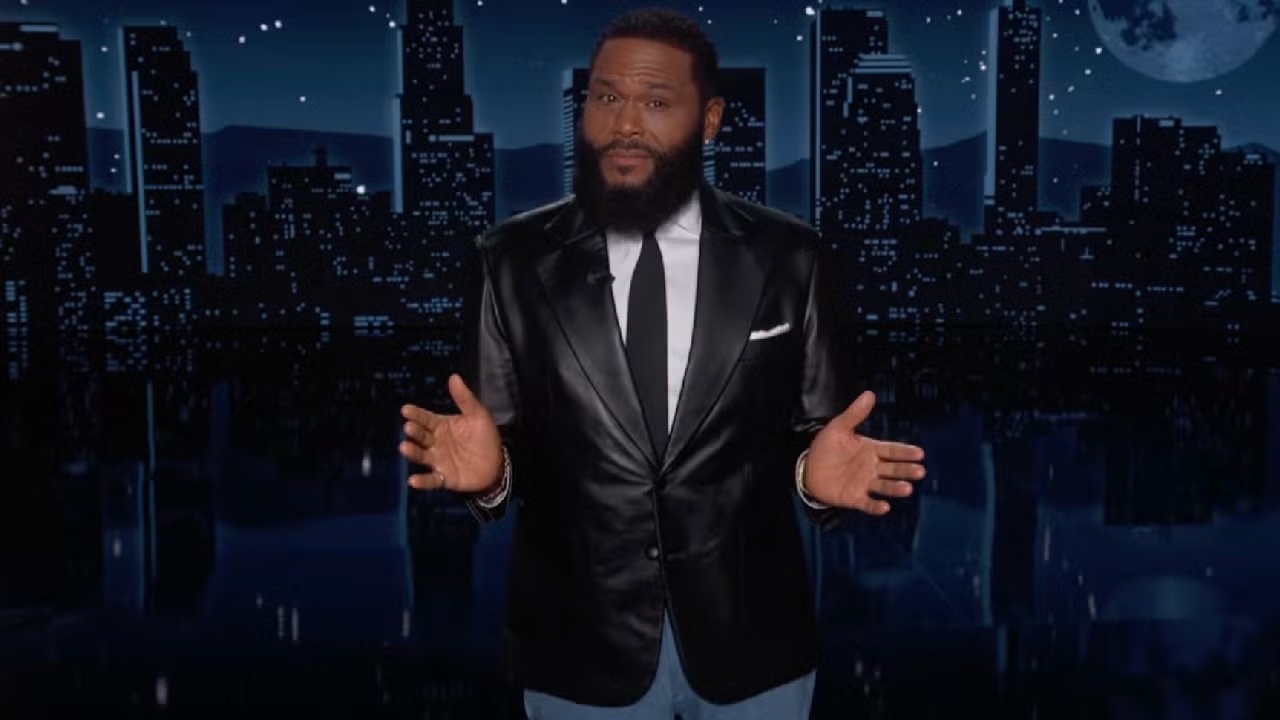
It’s unclear who controls the Strait of Hormuz right now, as both the US and Iran are claiming it, and Anthony Anderson has no idea who to believe.
During his final monologue as “Jimmy Kimmel Live!” guest host on Thursday night, Anderson first congratulated the Powerball winner, and offered them some advice: block the “greedy motherf–kers” that are their family. But, “speaking of greedy motherf–kers,” Anderson pivoted to Trump.
“Yesterday he went on Truth Social and said the U.S. has total control over the Strait of Hormuz,” he explained. “Well, it turns out that may not be true because today Iran said the Strait of Hormuz is actually under their control, and ‘The baseless claims made by the United States … are nothing more than lies and falsehoods.’ Now, at this point, I don’t know who to believe: the authoritarian psychopaths or the Iranians.”
From there, Anderson went on to make fun of the fact that streets in Washington D.C. were shut down on Wednesday, due to a suspicious device that warranted a call from the bomb squad. In the end, it turned out that the device was actually a sex toy.
“Yes, it was a weapon of mas…turbation,” Anderson joked.
The guest host then used his experience on “Law & Order” to “enhance” the image of the device, only to “reveal” it had a label saying it belonged to Jimmy Kimmel.
You can watch Anthony Anderson’s full final monologue in the video above. Kimmel is set to return to the show next week.

>
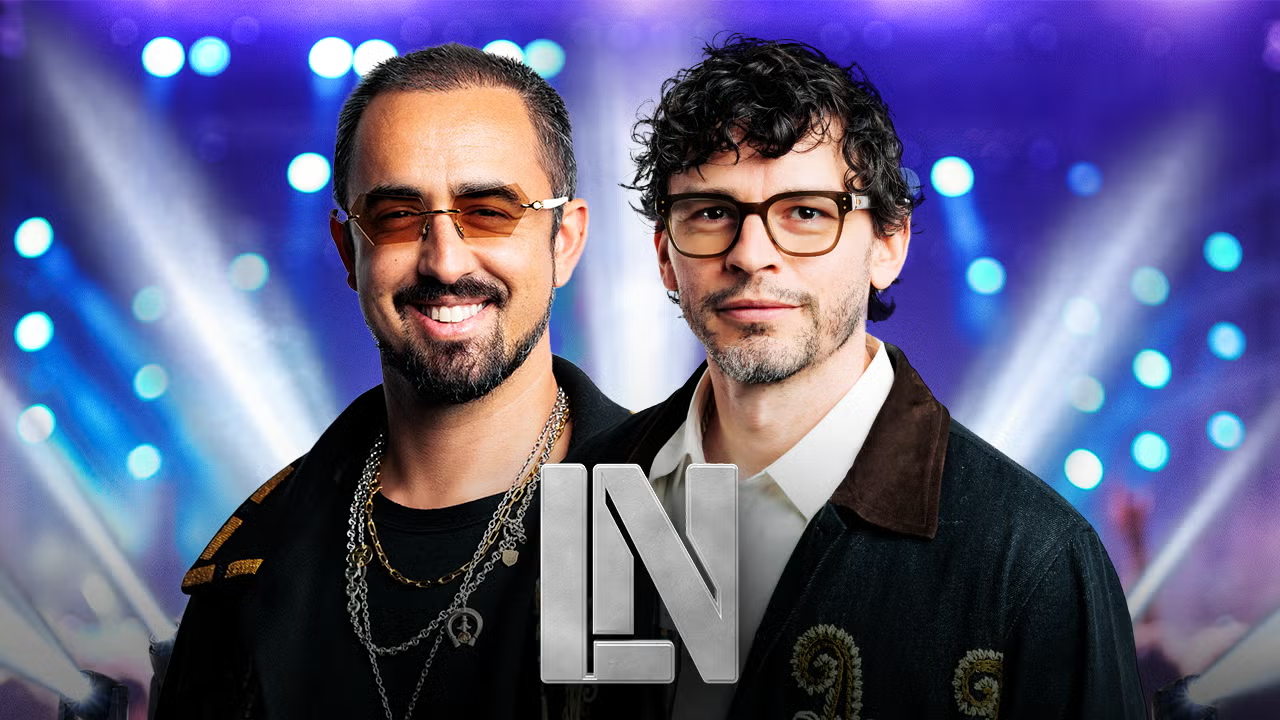
In 2019, Los Angeles media mogul Walter Ulloa approached his son with a proposal: Take over and fix their family-owned, millennial-leaning television station or shut it down. Bruno Seros Ulloa, a producer, on-camera host and clothing designer, said he had to sleep on it.
The older Ulloa founded Latino Alternative Television in 2001 to offer programming to the young and vastly underrepresented bilingual Latino viewers in Los Angeles that reflected their real lives, rather than the stereotypes still perpetuated in mainstream and legacy media. It started with about four hours worth of shows that were mostly in English. The early years featured live interactive shows like LA Live TV and gave a spotlight to Latino talent like Pitbull, Eugenio Derbez, Daddy Yankee and Julieta Venegas. In 2007, the network went national, shifting into a 24-hour linear cable and digital subchannel model that expanded its reach to millions of households through major TV station affiliates. But after a dozen years, the slowing linear television business brought LATV to an existential crisis, relying on cheap content made in Mexico to fill airspace.
Which brought things back to that ultimatum.
Seros Ulloa had been circling the network’s operation since he was nine years old, and grew up learning to make television in between other creative endeavors. He shared his father’s drive to celebrate the Latino community and relished the opportunity to make content on his own terms. He told his father he was up for the challenge of transforming the network into a profitable business, but he needed longtime colleague Andres Palencia by his side. Palencia joined the company as a writer for LATV Live in 2007 and stayed close to the West L.A.-based studio ever since.
Seven years and a major rebrand and expansion later, the duo transformed the TV station into LatiNation, a digital media company focused on entertainment, culture, comedy and sports content for Latinos from Latinos. Ulloa, who was also chairman and CEO of Entravision Communications Corp., a network of TV and radio stations appealing to Latino audiences, died in 2023 of heart failure.
“It’s been a roller coaster, but we’re on the right side of it now,” Seros Ulloa told TheWrap of running LatiNation Media as COO and president.
This year, LatiNation celebrates its 25th anniversary having grown into a multiplatform digital, streaming and linear ecosystem with an estimated annual revenue of $10–$15 million — a range the company expects to grow after its upfronts sales end in the third quarter of 2026. In doing so, it showed how catering to a highly specific, but underserved, segment could be sustainably profitable. Beyond its LATV linear, AVOD and FAST channels, the company boasts its own studio creating original and branded content — produced in its studio space in Los Angeles — along with a lucrative digital advertising and marketing business.
Third-party database projections value the private company at approximately $31 million. LatiNation content reaches 46 million households, nearly 70% of the total U.S. Hispanic population and 122 million in total market reach, about 43% of the U.S. population, per internal data. It has gathered 59,400 subscribers on YouTube, 182,000 followers on Facebook, 66,700 followers on Instagram and 33,000 on TikTok.
Across platforms, the company boasts 559 million impressions and 118 million video views annually. It also scores 5 million monthly viewers for its Connected TV and FAST channels, and 34 million unique visitors to the LatiNation website. And there’s plenty of room to grow, as Ulloa and Palencia put it.
“We have big goals,” CEO Palencia, said. “We understand how strong the brand is, how big its reach is. The potential of it is almost bigger than media.”
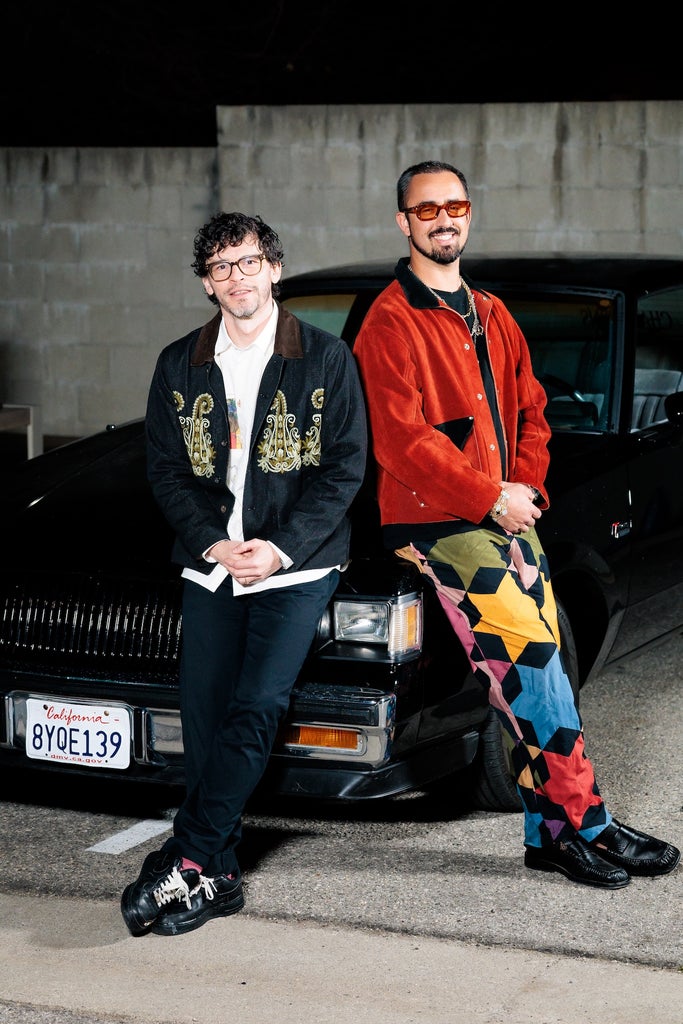
The staff has grown from about 12 full-time employees in the early years to almost 100 across production, sales, creative and social media teams based in Los Angeles, New York and Miami.
Unlike legacy Hispanic networks like Univision or the NBCUniversal-owned Telemundo, which cater strictly to Spanish-speaking audiences, LatiNation’s slate relies heavily on English-first and bilingual storytelling. It produces more than 300 hours of original programming annually across genres — including shows that cater to racially diverse and queer Latino audiences.
It helps that the company is targeting an audience demographic that is only getting bigger. Between 2000 and 2024, the U.S. Latino population nearly doubled, growing from 35.3 million to 68 million per census data, cementing it as the nation’s largest racial or ethnic minority group. Latinos are also significantly younger than the national average, with a median age of 31.4, and nearly 1 in 4 children under the age of 5 in the U.S. are of Latino descent. Most young Latinos in the U.S. also learned to speak English first but speak or at least understand Spanish from home.
So Ulloa’s guiding principle of catering to the growing bilingual Latino community set up LatiNation for success even amid massive shifts in the television and media landscape.
“Second-generation Latinos, those of us born here, didn’t feel represented in Spanish-language media because we knew that Univision and Telemundo focused on our parents. Those of who are us looking for English-language content about our own communities, you look at the English-language stations — NBC, CBS, ABC — and they aren’t providing it either … LatiNation has been able to be around for 25 years because it fills that void,” said Claudia Cruz, journalism professor at the University of Nevada, Reno, and managing editor of the student-operated bilingual news site Noticiero Móvil. “We need more of these hybrid, multicultural media outlets.”
Passion-driven transformation
Despite being the founder’s son, Seros Ulloa recalled starting at LatiNation from the ground up, helping to transcribe interviews by hand or tracking down everyone involved in a particular production to manually type up the end credits.
As an independent and leaner operation than its broadcast competitors, Seros Ulloa and Palencia benefited from coming up in a space where bold ideas led to rapid growth opportunities. For example, a production assistant could rise through the ranks to produce segments and eventually their own show within one or two years, bypassing layers of corporate hierarchy.
That “rewarding the hustle with freedom” philosophy became a cornerstone for talent development at LatiNation, Seros Ulloa said, offering young creatives a path to learn while doing in an environment that encouraged experimentation.
“We would launch segments if they were funny. We would insert jokes. We would post things on our social media just for the love of the game,” Palencia said. “There was no end goal to it. We just thought this was creative and fun. And if people like it, they like it. If they don’t, at least we got something made.”
As millennial executives, Palencia and Seros Ulloa recognized the growing digital advertising market and distribution model and jumped at developing LatiNation’s digital footprint. They also fostered relationships with social media creators to raise its profile, including establishing a licensing partnership with comedian Jenny Lorenzo, who boasts nearly 230,000 subscribers on YouTube and more than 330,000 followers on Instagram.
“We felt the urgency on ourselves to ask ‘How do we actually consume content? How do other people consume content?’ And at the time, medium and short-form video content on YouTube and then Facebook was starting to pop off and the market was starting to understand it,” Palencia. “But we had no formats for a half-hour show producing machine … somehow, kicking and screaming we figured it out.”
A bright future
These days, LatiNation’s programming is packed with original series produced in-house — including “Foodies on the Go,” a digital cooking series headlined by actress Chiquis Rivera, the GLAAD award-winning queer talk show “The Q Agenda” and shows like “Blacktinidad,” focused on the Afrolatino experience. It also partnered with Red Bull to create the freestyle rap competition series “Batalla Nation,” with Season 2 set to premiere in 2027.
Just like big broadcast and streaming distributors like NBC and Netflix look to sports for surefire viewership gains, LatiNation sees sports as a big growth opportunity. It launched “LatiNation Fútbol Club,” an hourlong sports commentary program co-produced with betting news site SportsGrid.
“‘LatiNation Fútbol Club’ started with a simple idea: create a fútbol show that feels like the conversations Latino Gen Z and Millennial fans are actually having — passionate, funny, opinionated and connected to culture,” host and LatiNation Head of Sports Marcelino Ortiz said in a statement. “That idea has grown into a broader sports platform grounded in that same authenticity. The World Cup accelerated our growth, but it also confirmed that the opportunity is much bigger than one tournament. We’re building LatiNation Sports for a generation of Latino fans who deserve sports coverage that reflects their culture, their voices and the way they experience the games they love.”
The company also entered a partnership with Fox Deportes and the Mexican soccer league Liga MX to broadcast live soccer on its channels.
“We’re not SportsCenter, we’re not trying to be. We’re doing it our own way, with some cheeky humor,” Seros Ulloa said. “We never thought we’d have live sports. That’s been really cool.”
Also on its slate for the coming TV season is a collection of microdramas, made in partnership with LA-based production studio Fumero Films to launch in the first quarter of 2027. Fumero has already produced 50 microdramas of their own, achieving success with “Academy of Lies,” which went viral on TikTok with over 200 million views.
LatiNation also boasts key partnerships with brands like McDonald’s, Verizon, Gilead Sciences, Disney, Coca-Cola and the Ad Council for branded content and activations, including an in-person soccer experience and World Cup watch party earlier this summer. Event partnerships will continue as part of the company’s yearlong 25th anniversary celebrations, kicking off Friday.
“There’s a lot of different dates we could count as the official anniversary … My dad passed away three years ago, so to honor him, I’m doing the party on his birthday,” Seros Ulloa said.

>
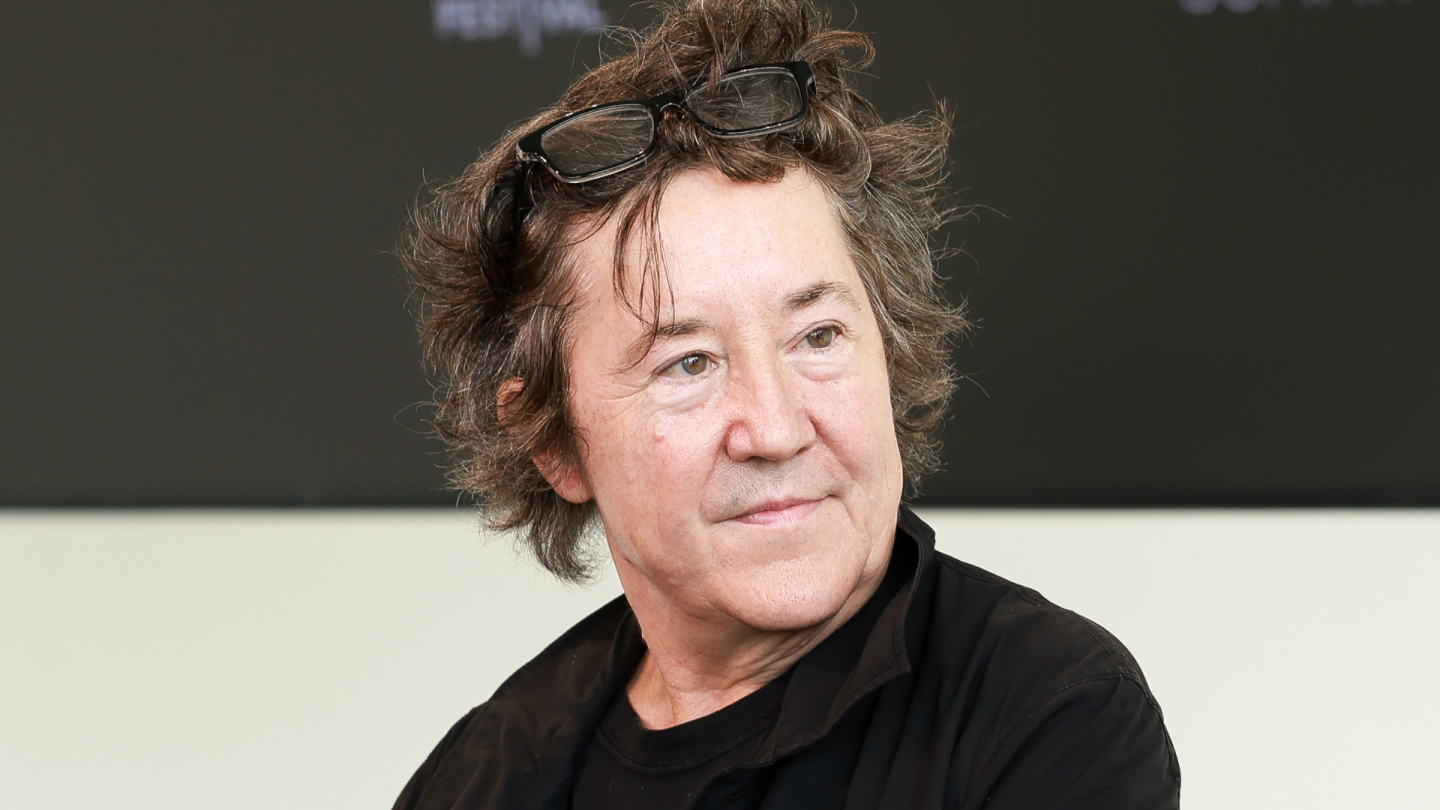
Christine Vachon, the prolific independent producer whose Killer Films has backed Happiness, Boys Don’t Cry, Carol and more recently Past Lives, May December and Materialists, said at the Edinburgh Film Festival on Friday that Pedro Pascal is “a revelation” in Todd Haynes’ re-worked gay romance movie.
De Noche, currently in post-production with no release date announced yet, was set to star Joaquin Phoenix before he abruptly pulled out before the shoot began. Vachon previously called the situation “a tragedy” and explained in an industry talk at Edinburgh how she and her long-time collaborator Haynes managed to rebuild the project after Phoenix’s exit.
Host Wendy Mitchell joked: “I actually like [Pascal] better than Joaquin Phoenix anyway,” to which Vachon responded: “I kind of do too!” The tightly-packed crowd at Edinburgh’s Central Hall laughed with them.
Vachon continued: “It wasn’t an easy situation. And as I also stated, it was devastating that Todd didn’t get to make a movie again that year. If you take the […] glass half-full version, and ‘everything happens for a reason’ [perspective], maybe the reason was that this was a role that Pedro was born to play. He is certainly extraordinary in the film, and by the way, so is Danny [Ramirez]. I mean, both of them are a revelation.”
Getting a “do-over” allowed them to find a better shoot location, said Vachon, which showed her everything worked out for the best. Pascal was brought on board via her work with him on Celine Song’s Materialists. “People always say to me, ‘Is he as nice as he seems?’ […] He is. People are so invested. They love him.”
As a titan of independent film production, Vachon — in Edinburgh with her latest film Pretty Babies, directed by Tyler-Marie Evans, who spoke to THR in depth about winning over Vachon just this week — was also probed on the box office success of Obsession and Backrooms this year, two movies that have challenged the status quo in Hollywood. “I do,” she said when asked if she likes the energy coming out of YouTube. “But when we were making movies like Poison [and] Go Fish, we also identified an audience… Back in those days, the LGBTQ audience could go to bars. There were parts of town [where you] could take your leaflets and just go specific places where people gathered and say, ‘Look! We made this! It’s for you.’ That’s just moved online.”
Vachon is extremely buoyed by the current theater-going demographic being made up, predominantly, of people aged under 30. She cannot deny, however, that “we’re at a time of great disruption,” and the queer film landscape is a little rocky with so much division in the U.S. at the moment. “It’s a conundrum right now. We have something like Heated Rivalry which couldn’t be a bigger hit, and we still have politicians campaigning on who gets to use what bathroom. And it’s happening [in the U.K.] too. It’s not like we have the monopoly on [marginalizing] LGBTQ people.”
“I remember when I would go see screenings of Poison or Swoon, which were boy queer [films] and [the theater] would be filled with lesbians because they were like, ‘I guess I’ll go see this.’ But now there is more choice,” she continued. “And the power of narrative to actually change people’s perspectives is stronger than it’s ever been.”
On the toss-up of a box office hit or flop, Vachon confessed she can’t predict the commercial outcome of her movies. She’s actually pleased streaming services can get movies to wider audiences nowadays. “When Todd Haynes’ Safe came out, it didn’t do anything at the box office. People weren’t interested in seeing it. The reviews were a little head-scratchy, like, ‘Not quite sure what he was going for here.’ But in the mid-late ’90s, I can’t remember exactly when, a newspaper [called] the Village Voice, which was incredibly influential at the time, did a survey of every single movie critic in America. What was the best movie in the ’90s? Safe was number one.”
“Sometimes the answer is that people just didn’t want to see it. They just didn’t, and you can’t really put your finger on why it didn’t hit the zeitgeist in that way. Who knows why? It was either too late or too soon. And now, the good thing in my mind [is] we have access to things and [movies] can find their way later. People can discover movies [from] another time.”
Mitchell asked Vachon at the end of the session: “Do you use AI?”
Vachon replied: “Yes,” explaining that she often uses it for synopses — to spare a busy intern from doing the job — or getting restaurant recommendations, such as when she was at the “very expensive” Venice Film Festival with last year’s Late Fame and needed a cheap, nearby spot.
The 2026 Edinburgh International Film Festival runs Aug. 13-19.
>

Lots of Leftover Battle Bikinis – This Week in Games

EFL says losses not sustainable after PFA legal action

Hyperscalers might regret embracing natural gas if new forecast proves correct
-

 movies3 months ago
Search For Canadian TV Actor Stewart McLean Now Homicide Investigation
-

 Fashion9 years ago
These ’90s fashion trends are making a comeback in 2017
-
Fashion9 years ago
According to Dior Couture, this taboo fashion accessory is back
-
Fashion9 years ago
Model Jocelyn Chew’s Instagram is the best vacation you’ve ever had
-
Fashion9 years ago
Your comprehensive guide to this fall’s biggest trends
-
Fashion9 years ago
9 Celebrities who have spoken out about being photoshopped
-
Fashion9 years ago
Emily Ratajkowski channels back-to-school style
-
Fashion9 years ago
A photo diary of the nightlife scene from LA To Ibiza