
Sports
Jeff Bezos: Amazon founder part of consortium that agrees to buy into Liverpool

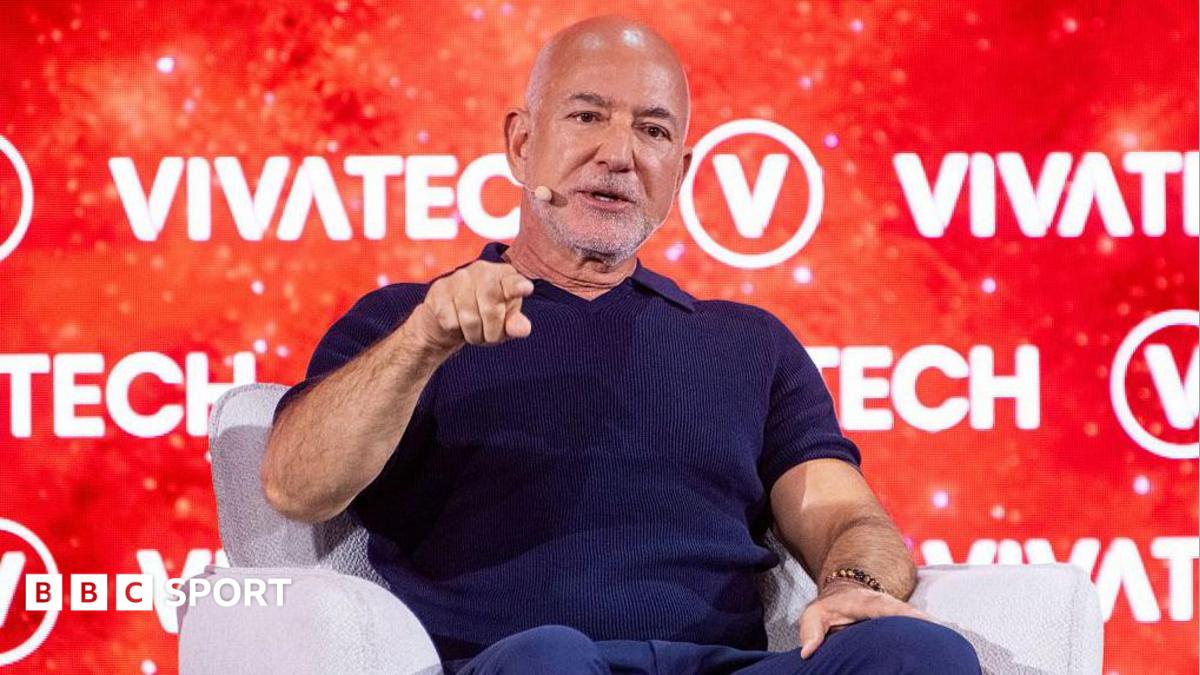
FSG says the deal “supports Liverpool‘s long-term growth ambitions by bringing together experts from across global business, technology, and investment”.
“The consortium partners will work with FSG and the club’s leadership team to evaluate opportunities that enhance the club’s objectives on and off the pitch,” it added.
“FSG continues to retain majority ownership and operational control of Liverpool.”
FSG, which bought Liverpool in a £300m deal in 2010, previously sold a minority stake in the Anfield side to global sports investment firm Dynasty Equity.
Mike Gordon, FSG president, said: “Liverpool has always been built by thinking beyond one season and making decisions with the club’s long-term interests in mind. That approach continues to attract interest from respected investors and business leaders around the world.
“As we considered this opportunity, it became clear that Amit and the consortium shared our long-term philosophy and appreciation for what makes Liverpool special.
“Their experience and perspective will complement the strong foundation already in place, and we look forward to working together.”
Bhatia said the consortium was “proud to be investing in Liverpool“.
“We have the utmost respect and admiration for FSG as owners and for everything they have achieved at Anfield,” he said.
“To be welcomed as a partner in a club of this stature is a huge privilege. We are making this investment because we believe deeply in Liverpool and its leadership, and we look forward to supporting the club’s continued success for years to come.”
In January, Liverpool became the top-earning Premier League club for the first time, according to analysis from financial firm Deloitte.
The following month the club announced record revenues of £703m for the 2024-25 financial year.
BBC Sport has been told that while FSG was not seeking investment out of financial need, its leadership was attracted by the consortium’s reach across global business, technology and investment, including in India, and across Asia.
>
Sports
FedExCup Playoffs: Scottie Scheffler produces stunning round of 61 at FedEx St Jude Championship as Rory McIlroy toils | Golf News
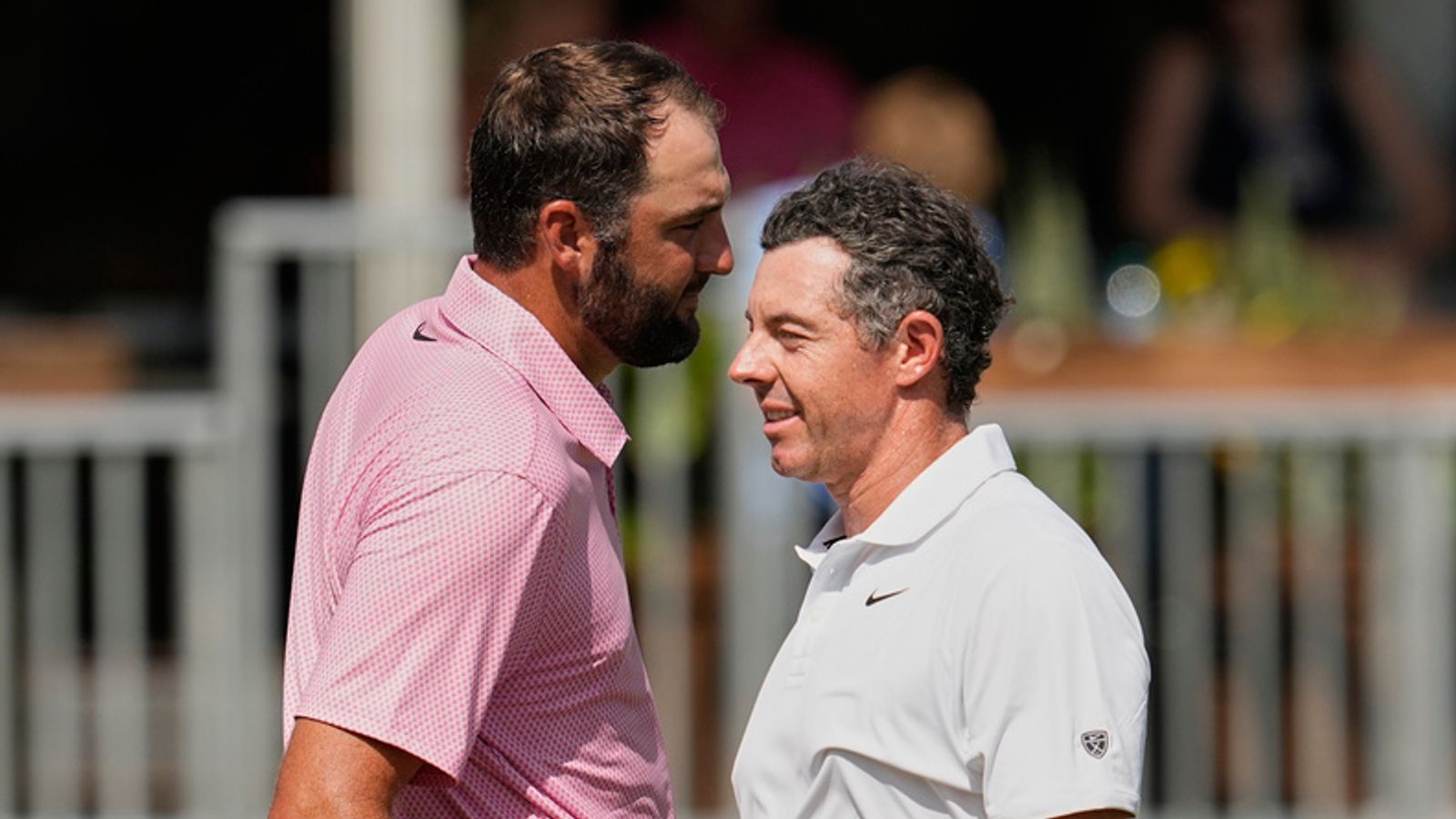
World No 1 Scottie Scheffler produced a stunning second-round 61 at the FedEx St Jude Championship as Rory McIlroy toiled again.
Scheffler charged in 54 feet of putts to birdie six of his first seven holes, and then closed with three consecutive birdies to total a nine-under 61 and three-shot lead at the turn of the PGA Tour’s playoff opener.
It was a striking turnaround for a player who admitted his patience was tested during the opening round in Memphis with 33 putts and too many missed opportunities.
“Yesterday [Thursday] was a day in which I felt like I played better than my score, but also early in the round I was out of the fairway a lot,” Scheffler said.
“It could have been a day in which my score could have definitely been worse, and it definitely could have been a lot better. But today was a day in which I felt I got a lot out of the round.”
McIlroy, who endured an opening day to forget sitting on four over, failed to turn things around on the second day either as a poor finish saw him bogey the 17th and 18th holes to remain on four over, some 15 shots behind Scheffler.
Meanwhile, Scotland’s Robert MacIntyre pulled out of the event, citing a knee injury after a woeful opening round saw him sit on 12 over par.
How do the FedExCup Playoffs work?
All season long, players have earned points based on how they have performed in PGA Tour events, with extra points available for the signature events and majors.
Only the top 70 in the standings have reached the FedEx St Jude Championship (August 13-16), with just the top 50 then progressing to the BMW Championship (August 20-23) and then only the top 30 making it to the finale, The Tour Championship (August 27-30).
Winners of the first two play-off events earn 750 points apiece – the same as The Players and the majors – before the points reset to zero ahead of the Tour Championship.
In the closing event, all players begin at even par, with the starting-strokes model based on FedExCup placings at that point axed in 2025.
The winner of the Tour Championship becomes FedExCup champion for 2026, earning $10m (£7.4m) and a five-year PGA Tour exemption.
Live coverage of the first event of the PGA Tour’s FedExCup Playoffs, the FedEx St. Jude Championship, continues at 4pm on Saturday. Watch live on Sky Sports Golf and Sky Sports Main Event or stream with no contract.

Get the best prices and book a round at one of 1,700 courses across the UK & Ireland
Get the best prices and book a round at one of 1,700 courses across the UK & Ireland
>
Need help with today’s Connections: Sports Edition puzzle? You’ve come to the right place.
Welcome to Connections: Sports Edition Coach — a spot to gather clues and discuss (and share) scores.
A quick public service announcement before we continue: The bottom of this article includes the answers — and hints — for the four categories. So if you want to solve the board hint-free, we recommend you play before continuing.
You can access today’s game here. And when you’re done, try out our limited-edition Connections: Soccer Edition for an extra challenge.
Today’s difficulty
Game No. 691’s difficulty: 3 out of 5
Connections: Sports Edition hints for Aug. 15, 2026

Scroll below for one answer in each of the four categories.
.
.
.
.
.
.
.
.
.
.
.
.
.
.
.
.
.
.
.
.
Yellow: PADRES
Green: STARTER
Blue: ROYALS
Purple: SWING
Connections: Sports Edition answers for Aug. 15, 2026
Scroll below for the full answers to each of the four categories.
.
.
.
.
.
.
.
.
.
.
.
.
.
.
.
.
.
.
.
.
Yellow
Teams to never win a World Series: BREWERS, MARINERS, PADRES, ROCKIES
Green
Jobs at a golf course: CADDIE, GREENSKEEPER, STARTER, SUPERINTENDENT
Blue
Kansas City teams: CHIEFS, CURRENT, ROYALS, SPORTING KC
Purple
Anagrams of WNBA teams: CASE, MADRE, RIFE, SWING
What is Connections: Sports Edition?
Connections: Sports Edition is The Athletic’s first-ever game, a daily puzzle designed for players to find connections between 16 words on the game board.
The game’s objective is to group words or objects into four groups of four based on commonalities within each group as quickly as possible. Find the groups without making four mistakes. Each puzzle has exactly one solution, so watch out for words or items that seem to belong to multiple categories!
Category examples:
Sports ____ : Fan, Car, Bar, Radio
U.S. Summer Olympians: Biles, Phelps, Ledecky, Lyles
Each category group is assigned a color, revealed as you solve, ranging from straightforward (yellow) to medium (green) to challenging (blue) to tricky (purple).
Who creates the puzzles for Connections: Sports Edition?
That’s me! My name is Mark Cooper, and I create Connections: Sports Edition and work as a managing editor for college sports here at The Athletic. I was previously The Athletic’s managing editor for breaking news.
The next puzzle will be available at midnight in your time zone. Thanks for playing — and share your scores in the comments!
>
Sports
Two 60-minute games? Three 45-minute halves? Why Premier League clubs are playing weird friendlies
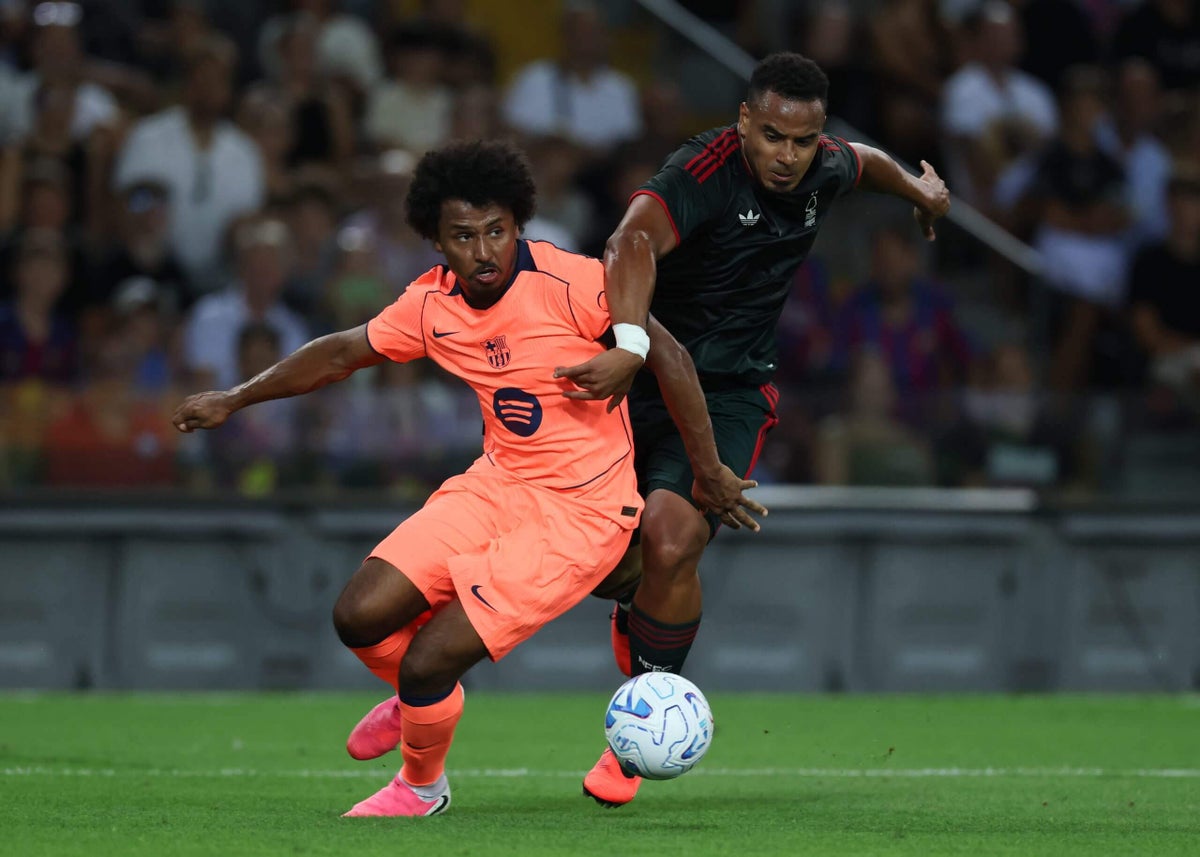
For almost 150 years, regulation time in football matches has consisted of 90 minutes to determine a result — but many teams appear to have had other ideas this pre-season.
Liverpool will play a total of 180 minutes against Serie A side Como across two games tomorrow (Sunday), one behind closed doors at their training ground at noon locally, the other at Anfield at 6pm. Leeds United and RB Leipzig played out a 120-minute friendly earlier this month — split into two 60-minute matches — while both Nottingham Forest and Crystal Palace have participated in tournaments where teams faced off for only 45 minutes at a time.
The trend even extends into non-League, where a tournament consisting of 45-minute games, the A23 Cup, was scheduled to take place between Slough Town, Hayes and Yeading United and Marlow Town in July. But Marlow were unable to field a side, meaning 90-minute matches between the other sides ensued.
From the outside, it appears unnecessarily complicated. With regular competitive 90-minute games now just days away for English clubs, there is a temptation to view these unusual formats as a gimmick.
So, what is the reasoning behind them?
Why 90 minutes isn’t always best in pre-season
Matches lasting 90 minutes early in pre-season present a few issues.
Players often arrive back from their summer breaks with a base level of fitness — enhanced by light and sporadic individual training during their holidays — and their natural athlete’s stamina.
Strategies for building on this vary across clubs, but the general aim is to begin pre-season with high-intensity, low-volume sessions, increasing the bulk of players’ stamina halfway through, before finding a balance between intensity and volume as the season approaches.
“Traditionally, it’s always been a challenge to achieve rounded squad fitness within the normal 90-minute game of pre-season,” Glen Driscoll, a former performance analyst at Liverpool, Celtic and Leicester City under manager Brendan Rodgers, tells The Athletic.

Liverpool during pre-season training in Chicago earlier this month (Nikki Dyer/Liverpool FC via Getty Images)
Managers naturally begin to settle on their preferred starting XIs and prioritise those players’ minutes towards the end of pre-season, but those in the squad who do not receive sufficient game time need to replicate the physical work they miss out on.
“The closer you get to the season, the more you universally create a divide between the players you’re preparing to start and everybody else,” adds Driscoll. “Then you are trying to run them after a game, which is difficult, because supporters are in the stadium, or security. Or you’re travelling, and there’s a flight waiting for you.”
Pre-season is also about building morale in the squad, and Driscoll says “you don’t want half the squad already feeling like they’ve been identified as the non-starters”.
Putting in the hard yards
In-season, English Football League (EFL) and top-flight sides in continental Europe will aim for their players to cover an average of around 30 kilometres (around 19 miles) in matches per week — whether that be in first-team fixtures or training games.
To reach those levels, they have to build up their pre-season work in the right way.
“In the first four weeks, we would expect players to be covering around that mark, while some clubs may push towards 40km,” says Anton McElhone, head of medical and performance at League One side Huddersfield Town.
“Few friendlies are played early on because the intensity is high, but once the matches start feeding in, the volume of minutes at once becomes higher, meaning the (training) drills between are less intensive.”
McElhone recommends players start by covering 30-35km in week one, but that would not include playing an intra-squad game in training or a friendly. The distance covered aim remains the same in week two, but he suggests players should take part in 45 minutes of action staged under match conditions, equating to roughly five to six kilometres.

Sports scientists recommend players’ distance covered is increased over the course of pre-season (Ash Donelon/Manchester United via Getty Images)
The target would remain at 30-35km in week three, but players would be expected to go through 60 minutes in game conditions.
By week four, the target distance would drop to 25-30km, but with an aim of 75 minutes in match-like scenarios. The latter would rise to 90 minutes from week five and beyond. “It’s all in the numbers,” McElhone says.
A 45-minute game might only account for around five to six kilometres of running, but the intensity makes that distance different from the distances players run during a training session.
As the season approaches, players need to prove they can reproduce that work at increasingly high intensity.
The benefit of different formats
The average club pre-season lasts six weeks, so there is a lot to cram in — and a regular 90-minute friendly does not always allow all your players the necessary game time.
“If you were following a textbook, you would start with shorter halves and progress gradually — for example, 25-minute halves, then 35, then up to 45,” says Alan McCall, a performance consultant who has worked across English and European football.
“But given the short timeframe and the number of players involved, football does not have that luxury, so you have to find other ways to balance the progression and load.”
EFL clubs Leicester and Bristol Rovers found an innovative solution for their friendly held in mid-July, playing a 120-minute match, which was split into four 30-minute halves. Both sides rotated halfway through, giving two ‘starting XIs’ 60 minutes of game-time each, balancing the load out equally across their squads.
Those 45-minutes-per-game triangular tournaments offer the lowest physical benefit according to the sports scientists The Athletic spoke to.
Both the Como Cup (held in that Italian city across five days from July 28 and involving six teams, including Crystal Palace) and the Friuli Venezia Giulia Cup (involving hosts Udinese, Barcelona and Nottingham Forest and played over three hours last Saturday night) were scheduled for the mid-to-latter stages of the clubs’ pre-seasons.

The Como Cup, in which Crystal Palace participated, featured three games of 45 minutes (Marco Luzzani/Getty Images)
This is when players would be expected to be logging more than 60 minutes in game scenarios across the week, and both Premier League sides fielded entirely different teams for the back-to-back 45-minute fixtures they participated in.
“The game would likely only be a small part of the load that week,” Driscoll says. “I would put a football strength training session either side of it, and the fact the game is split into two (separate matches) could extract more effort in the match subconsciously for the players.”
Closer to the season is when teams shift from building towards the demands of competitive football to trying to replicate them, while giving as many players as possible that experience. Yet the expectation is not to have every player at peak condition on the opening day of a league season, and very rarely do outfield players play the full 90 minutes in any conventional friendly.
“It will probably take three to four games into the season before players reach the fitness levels we target during pre-season,” McElhone says, “because nothing replicates the pressure that comes once the first ball is kicked.”
The expectation to provide a fully-fit squad on day one of a new campaign is not the primary aim of pre-season either, especially as game-frequency increases and squads grow in size, with returning players who have been involved in national-team tournaments and new signings.
“The introduction of five substitutes in a match (which became a permanent part of the Premier League in 2022-23) changed everything,” Driscoll says. “Before, you needed 11 players ready to play 90 minutes. Now, producing 16-20 players physically able to play 60 minutes looks more useful.”
These differing friendly formats are not new — all three specialists consulted said non-90-minute matches, whether played in public or behind closed doors, have been a regular part of pre-season for the past 20 years. The head coach or manager of a side will usually have the final say on how those friendlies look, with performance staff providing advice around individual player usage and recovery.
“We do not try to govern how many games need to be played, or who must play when,” McElhone says. “We usually work with the coaching staff and fit around them, offering guidance on minutes and planning our sessions around their loads and constant monitoring.”
Varying the lengths of your friendlies is not the ideal or most recommended way to help pre-season preparations, as these types of matches occur behind closed doors anyway on a weekly basis. As McCall says, “there is no exact formula for preparing players.” Or, as McElhoe puts it, “there’s a million ways to skin a cat.”
“The most important thing,” the latter adds, “is that whatever happens in pre-season means nothing once the first game of the season begins.”
>

FedExCup Playoffs: Scottie Scheffler produces stunning round of 61 at FedEx St Jude Championship as Rory McIlroy toils | Golf News

‘Frozen 3’ First Look Teases Anna’s Wedding, New Villain & More

Connections: Sports Edition today: Hints and answers for Aug. 15, 2026, puzzle No. 691
-

 movies3 months ago
Search For Canadian TV Actor Stewart McLean Now Homicide Investigation
-

 Fashion9 years ago
These ’90s fashion trends are making a comeback in 2017
-
Fashion9 years ago
According to Dior Couture, this taboo fashion accessory is back
-
Fashion9 years ago
Model Jocelyn Chew’s Instagram is the best vacation you’ve ever had
-
Fashion9 years ago
Your comprehensive guide to this fall’s biggest trends
-
Fashion9 years ago
Emily Ratajkowski channels back-to-school style
-
Fashion9 years ago
9 Celebrities who have spoken out about being photoshopped
-
Fashion9 years ago
A photo diary of the nightlife scene from LA To Ibiza