
Tech
Talks to sell PayPal to Stripe and Advent are heating up


PayPal CEO Enrique Lores’ turnaround plan for the fintech company could include a sale — of itself.
The prospect first popped in July when Stripe and private equity giant Advent offered to buy PayPal for $60.50 a share in a deal that would have valued it at $53 billion, the Wall Street Journal reported at the time.
PayPal balked. But apparently, negotiations never stopped and a deal could come together in the coming weeks, according to new reporting by the WSJ, which cited unnamed sources.
PayPal declined to comment on the report. A Stripe spokesperson said the company doesn’t “comment on rumors or speculation.”
The negotiations are taking place as Lores attempts to save the company from its lagging trajectory.
Lores joined PayPal in March, after spending years at HP. In April, Lores made the first moves in his turnaround plan, including an executive shuffle and splitting the business into three operating models: checkout solutions and PayPal, consumer financial services (and Venmo), and payment services and crypto. A month later, Lores told investors that PayPal would recommit to the fundamentals,” which included “becoming a technology company again.”
PayPal’s turnaround will also include a cost-saving plans, which is expected to reduce its workforce by 20% over the next two to three years.
PayPal was founded in 1998 by a number of men who went on to be Silicon Valley luminaries, including Peter Thiel, Elon Musk, Max Levchin, Luke Nosek, and others. The company has struggled in recent years, after ballooning during the pandemic due to an e-commerce boom.
>
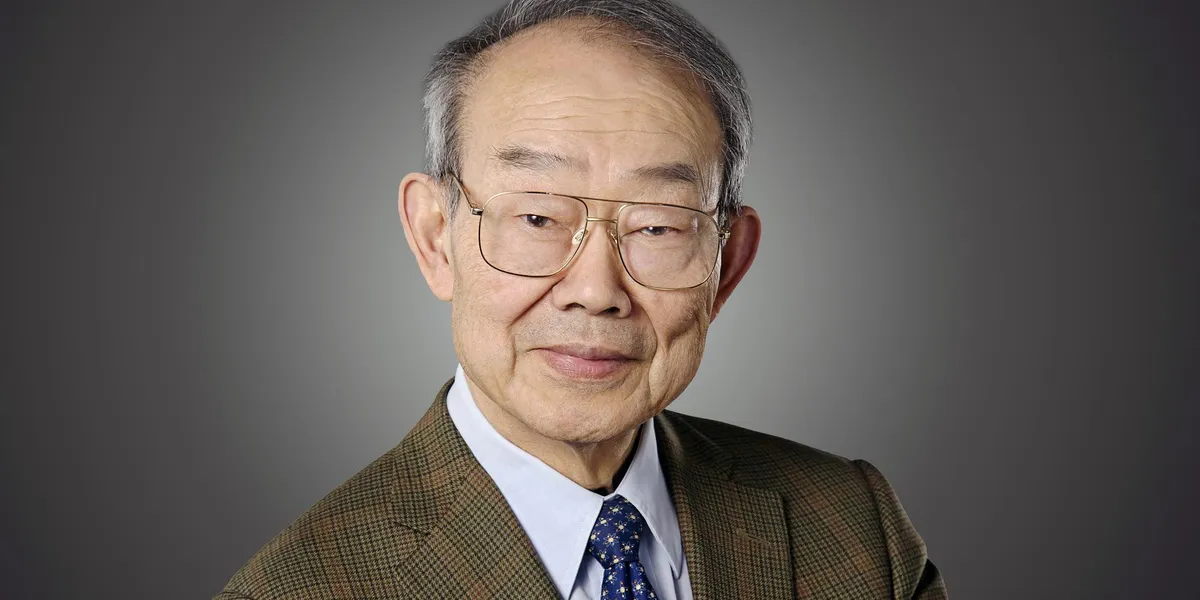

Bede Liu, a digital signal processing pioneer, died on 7 May. He was 91.
Liu was widely regarded as one of the founders of modern digital signal processing, a field that applies mathematical algorithms to analyze, modify, and transmit signals including sound, images, and video.
The IEEE Life Fellow taught electrical engineering at Princeton for more than 50 years. From 1994 to 1997, he chaired the university’s electrical and computer engineering department.
Liu’s research aided the transition from analog to digital processing of sound, images, and video. His work helped establish many of the mathematical and engineering techniques that underpin modern communications, multimedia systems, and consumer electronics.
Although little known outside engineering circles, his work is embedded in technologies used by billions of people. The low-power digital signal processors that make cellphone calls, streaming video, and Internet communications possible can be traced to research he conducted in the 1970s and ‘80s.
Liu received the 2018 IEEE Jack S. Kilby Signal Processing Medal for “sustained contributions to the analysis and the development of low-complexity realizations of digital signal processing algorithms.”
“We stream music and video. We take photos with our phones, and we send them around. We don’t even think about it,” IEEE Life Fellow H. Vincent Poor said in an obituary for Liu. “But it’s all because of the signal processing, image processing, and video processing that’s been developed over the years, as well as other technologies that have grown up beside it and enabled it, like semiconductors. The development of these processing advances was exactly what Bede was a major part of.” Poor is a professor of electrical and computer engineering at Princeton.
An impactful scholar and teacher
Liu was born in Shanghai in 1934. During his childhood, his family relocated to Taiwan amid the upheaval of the Chinese Civil War. His father, Henry Liu Sr., was an electrical engineer.
Liu earned his bachelor’s degree in electrical engineering in 1954 from the National Taiwan University, in Taipei. After graduating, he and his family moved to the United States. Liu and his father attended the Polytechnic Institute of Brooklyn (now the New York University Tandon School of Engineering) together. They earned their master’s degrees in electrical engineering in 1956. Liu continued his studies at the school, earning a doctoral degree in electrical engineering four years later.
In 1959 he was awarded a Bell Labs fellowship and worked at the company’s Murray Hill, N.J., location until he joined Princeton in 1962.
“Liu was a highly impactful scholar and teacher—always thinking ahead of future needs and changing technologies,” said IEEE Life Fellow Peter J. Ramadge, a Princeton professor emeritus of engineering.
Cellphones make use of a considerable amount of digital signal processing, Liu once noted. Many of the field’s advances, he added, involved making sophisticated processing practical on devices with limited computing power—which is the challenge that confronted generations of engineers designing portable electronics.
Liu’s research contributions helped shape both the theory and practice of digital signal processing. With Abe Peled, a former graduate student, he authored the 1976 textbook Digital Signal Processing: Theory, Design, and Implementation, which is a standard reference for engineers. Published before digital signal processing had fully emerged as a distinct discipline, it helped define the subject for practitioners and students around the world.
Liu also published 250 technical papers and was granted 12 U.S. patents. His papers are available to read on the IEEE Xplore Digital Library.
The first patent granted to him and Peled was in 1976 for a hardware design that processed bits in parallel, rather than in sequence. The innovation greatly increased computing efficiency for data including sound and communication signals.
Peled says Liu “demonstrated an openness to new ideas and a willingness to challenge the orthodoxy of the EE department at that time—which leaned heavily toward more theoretical information theory.”
A mentor to well-known engineers
Liu’s influence extended beyond his own research. He advised 53 doctoral students, many of whom went on to distinguished careers in academia and industry, including leadership positions at Google and IBM. One former student, computer scientist Robert Kahn, helped create the architecture of the modern Internet. Kahn, an IEEE Life Fellow, received the 2024 IEEE Medal of Honor.
“His former students were very successful,” Poor said of Liu, “and I think that’s a testament to his skill as a mentor.”
“Liu was a highly impactful scholar and teacher—always thinking ahead of future needs and changing technologies.”—Peter J. Ramadge
Together with several Ph.D. students, Liu developed methods of filtering and compressing digital signals to mitigate errors and dramatically reduce the computation needed for signal processing.
As digital signal processing moved from laboratories into commercial products, the impact of Liu’s ideas spread across industries. His research helped spawn the development of lower-cost and lower-power electronics and contributed to advances in mobile communications, multimedia technology, industrial automation, and biomedical imaging.
A focus on media integrity and copyrights
In the 2000s, Liu turned his attention to media integrity and copyright issues.
“With the increasing accessibility of digital media source material, the protection of ownership and the prevention of unauthorized alteration has become an important concern,” he wrote in his 2002 book, Multimedia Data Hiding. The book, which he co-wrote with his former doctoral student IEEE Fellow Min Wu, discussed the theory, techniques, applications, and security of digital watermarking—hidden signals that could identify a genuine copy of a song, image or video to prevent unauthorized distribution or tampering.
A Princeton team that included Liu, Wu, and another of his doctoral students uncovered serious vulnerabilities in watermarking technologies being considered by an industry consortium. They found that the standardization efforts were immature and would not protect against digital piracy.
“Now nearly every copy of a Hollywood film given to a critic or theater carries a unique digital forensic watermark to prevent unauthorized redistribution,” said Wu.
A force in the community
Liu, an active IEEE volunteer, served on the IEEE Board of Directors in 1984 and 1985. He was the 1982 president of the IEEE Circuits and Systems Society.
He was a member of the U.S. National Academy of Engineering, an academician of China’s Academia Sinica, and a foreign member of the Chinese Academy of Sciences.
Outside the classroom, he was recognized for his humility, humor, enthusiasm, and generosity. When thinking of Liu, IEEE Life Fellow Kenneth Steiglitz says, cheer is the first word that comes to mind.
Liu was “always ready with a positive remark, a quick smile or, maybe, some tips on the right way to cook a duck,” says Steiglitz, professor emeritus of computer science at Princeton.
Liu encouraged his students to take on ambitious, unconventional projects, and he inspired students and colleagues with his adventurous spirit.
From Your Site Articles
Related Articles Around the Web
>
Aurora Innovation and Kodiak AI, two companies developing self-driving trucks, have received permits from the California Department of Motor Vehicles to test their autonomous vehicle technology on public roads. And Kodiak has already started.
Kodiak said it is starting with a handful of test trucks in California, primarily around its Mountain View office.
Both companies applied for testing permits this spring under updated rules approved by the California DMV, the agency that regulates autonomous vehicles in the state. Those rules, approved April 28, lifted a ban on driverless vehicles weighing over 10,000 pounds from testing on public roads and provided a regulatory path for companies to test, and eventually deploy, autonomous heavy-duty vehicles.
Kodiak and Aurora met the DMV’s permitting criteria, including safety, insurance, vehicle registration, safety driver qualification, and other requirements, according to the agency. The testing permits require a human safety operator to be behind the wheel and prohibit companies from operating on roads where the posted speed limit is 25 miles per hour or less, unless they are on a “direct route” between destinations.
Despite those restrictions, the prospect of self-driving trucks on California’s highways continues to fuel opposition.
Last week, Teamsters California sued the state’s DMV, alleging that the agency circumvented laws requiring it to study and publicly disclose the possible economic impacts of allowing self-driving trucks on public roads. The lawsuit, filed in the state’s Superior Court in Alameda County, also accused the DMV of failing to consider the safety risks to motorists.
For autonomous vehicle developers, the new rules allow them to test and eventually deploy in their home territories.
Aurora and Kodiak are both are based in California, but until recently focused their testing and deployment activities in Texas because of their home-state’s ban on autonomous heavy-duty trucks. Aurora launched a self-driving truck service in Texas in May 2025, starting with a Dallas-to-Houston route. The company has added more routes since, including between Fort Worth and El Paso, El Paso and Phoenix, Fort Worth and Phoenix, and Laredo and Dallas.
Kodiak began commercial driverless truck operations in January 2025 in an off-road environment in West Texas’ remote Permian Basin. Kodiak has since expanded to on-highway operations, including a route between Dallas and Houston.
When you purchase through links in our articles, we may earn a small commission. This doesn’t affect our editorial independence.
>
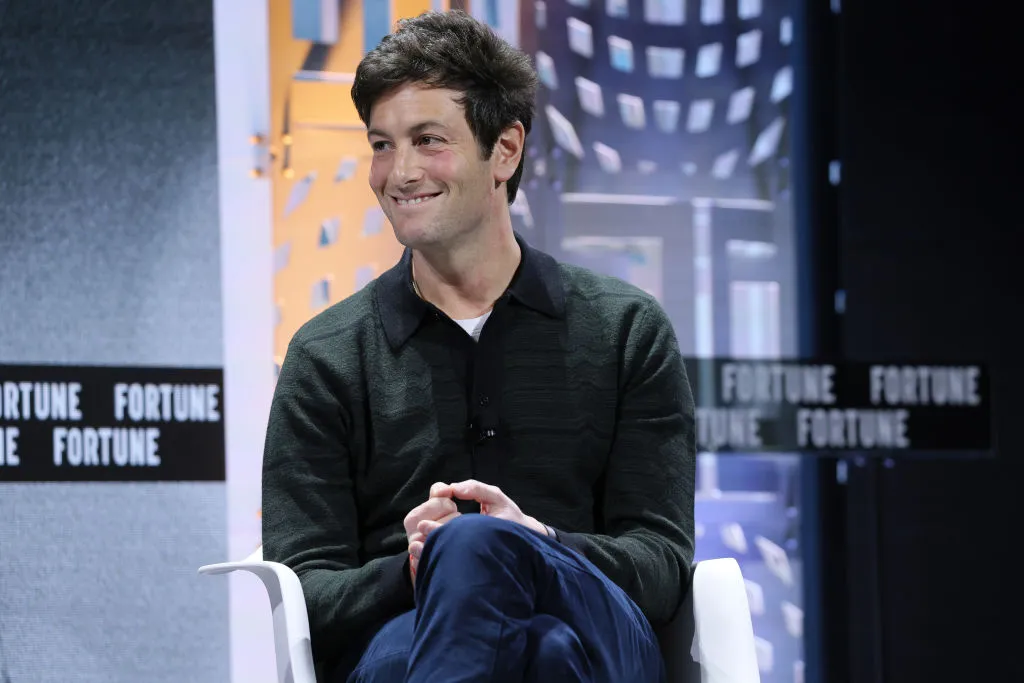
In Thrive Capital’s first-ever investor letter, founder Joshua Kushner has some unexpected things to say about his venture capital rivals on the West Coast.
“It is difficult to overstate the magnitude of the opportunity,” Kushner wrote about AI in the letter, leaked to Bloomberg. “It would also be a grave error in our minds to let excitement weaken our investment discipline. … Within Silicon Valley in particular, the industry can become fixated on hyperincremental technological turns rather than where the technology ultimately leads.”
While his secretive New York-based firm, just like those in Silicon Valley, is betting heavily on AI, Thrive is doing so differently, he argues. There’s no so-called spray-and-pray investing. Thrive tends to goes big on the companies it backs. Bloomberg estimates about 90% of its capital is poured into the top 15 investments in each fund.
That makes Thrive, he contends, a company of independent thinkers. “We are independent because markets move between fear and enthusiasm, and neither is a substitute for judgment.”
His comments are in direct contrast to one of the basic premises of Silicon Valley venture capital: that it is a business of “outliers” as espoused by Marc Andreessen.
In the “outlier” view, a VC firm makes a lot of bets prepared to lose money on many — even most — of them. The few big hits will be so lucrative that they will cover the losers and much, much more. That philosophy leaves VCs forever looking for the next OpenAI or another mega hit. It can also lead to, as we saw during the post-pandemic lean years, cutting ongoing support for startups not deemed to be on track to be the biggest winners.
In contrast, Kushner writes, “We believed an investment firm could be opportunistic across stage, sector, and geography, while remaining deeply concentrated in a small number of people and ideas.” The idea is to “build Thrive to concentrate our time, capital, and energy on the people and ideas we believe in most.”
He also dismisses Silicon Valley’s idea that VCs are in the business of disrupting incumbents.
“Unlike many of our peers, our conviction was not only that these industries would be disrupted from the outside in but also that many would be transformed from the inside out,” he wrote about AI’s impact.
Thrive has largely stuck to this thesis. Its deepening relationship with OpenAI is its biggest example. The VC firm is a major investor in the AI lab. But in December 2025, the roles switched when OpenAI took an ownership stake in Thrive Holdings, the VC firm’s spinout. Thrive Holdings buys companies and then works with OpenAI to give them an AI makeover. Part of the deal involved OpenAI dedicating employees to work with Thrive’s companies.
Thrive Holdings has bought more than 70 businesses and has a team of 35 engineers. Kushner says its accounting platform uses agents to produce tax returns 30% faster with 98% accuracy, and its IT services firm has agents independently solving half of its help desk tickets.
Still, Thrive’s strategy is working in part because it nabbed stakes in some of the industry’s best-performing startups ever. Its $516 million 2022 early-stage fund, for instance, made early bets on OpenAI, Anduril, and SpaceX, and is now worth more than $3.7 billion as of the end of June, Bloomberg reports. Thrive has, over its 15 years, increased its stakes in all of them (and also had a sizeable stake in Cursor, which just closed its sale to SpaceX).
It has also backed Wiz, Ramp, and Stripe, to name a few other big names. Plus, it has led seed investments in new labs like Essential AI, founded by former Google Brain researcher Ashish Vaswani, the lead writer of the famed “Transformers” paper that spawned today’s AI industry.
All told, Thrive has $60 billion of assets under management, Kushner revealed in the letter. He reports impressive profits: a gross internal rate of return (IRR) across all funds of 41% and a net IRR of 33%. Thrive has returned more than $1 billion of liquidity to its investors in the last 12 months alone, he said.
“There may be an opportunity for billions of dollars in additional liquidity in the coming quarters,” he promises.
He doesn’t specify which companies are headed for their exits but obviously, the SpaceX IPO was a start, and OpenAI is working toward its own public debut.
It should be pointed out that both Kushner’s and Andreessen’s approaches obviously work in terms of making money. Andreessen Horowitz returned $25 billion to its investors between 2009 and 2025, according to the last leaked returns, reported by Eric Newcomer.
Thrive’s philosophy of concentrating capital may not even be possible for most smaller, scrappy emerging seed funds, whose founders weren’t born into the kind of access that the son of a billionaire New York real-estate family has.
That said, Kushner’s general premise of how overheated Silicon Valley’s AI investing has become isn’t wrong either. As he puts it: “Not every fast-growing business is exceptional. And not every exceptional company is a great investment at every price. Our responsibility is to maintain those distinctions.”
When you purchase through links in our articles, we may earn a small commission. This doesn’t affect our editorial independence.
>

American Samoa, led by Taulia Tagovailoa, stuns U.S. at Flag Football World Championships

Red Sox, Royals slated to play ‘Field of Dreams’ game in 2027

Emmy Nominees Head To Final Emmy Campaign Stops Of 2026
-

 movies3 months ago
Search For Canadian TV Actor Stewart McLean Now Homicide Investigation
-

 Fashion9 years ago
These ’90s fashion trends are making a comeback in 2017
-
Fashion9 years ago
According to Dior Couture, this taboo fashion accessory is back
-
Fashion9 years ago
Model Jocelyn Chew’s Instagram is the best vacation you’ve ever had
-
Fashion9 years ago
Your comprehensive guide to this fall’s biggest trends
-
Fashion9 years ago
Emily Ratajkowski channels back-to-school style
-
Fashion9 years ago
9 Celebrities who have spoken out about being photoshopped
-
Fashion9 years ago
A photo diary of the nightlife scene from LA To Ibiza