
Sports
What home-renovation shows (and data) tell us about Wrexham’s summer transfer activity

Earlier in the summer, when discussing Wrexham’s recruitment plans for a second season in the Championship, co-owner Ryan Reynolds used the analogy of a home-improvement show.
“This episode is about making the kitchen work better, rather than doing a whole-house renovation,” said the Deadpool movie series star.
Well, with just a couple of days to go until their second-tier season opener away to fellow Welsh side Cardiff City, it’s perhaps fair to say the new sink and dishwasher are plumbed in and the kitchen island installed, but the high-end cooker and set of chef’s knives remain on delivery.
Wrexham are in decent shape.
The “whole-house renovation” of year one in the Championship, following three straight promotions — Wrexham signed 13 players at a combined cost of £33million in the summer before another £5m went on three more additions during the winter window — led to a seventh-place finish, just one win shy of the play-offs.
Danny Imray, Ben Whiteman and Anthony Patterson have since joined, further strengthening a squad that, unlike a year ago, when five additions were made after the campaign had begun, including three on deadline day, has had the benefit of a pre-season together.
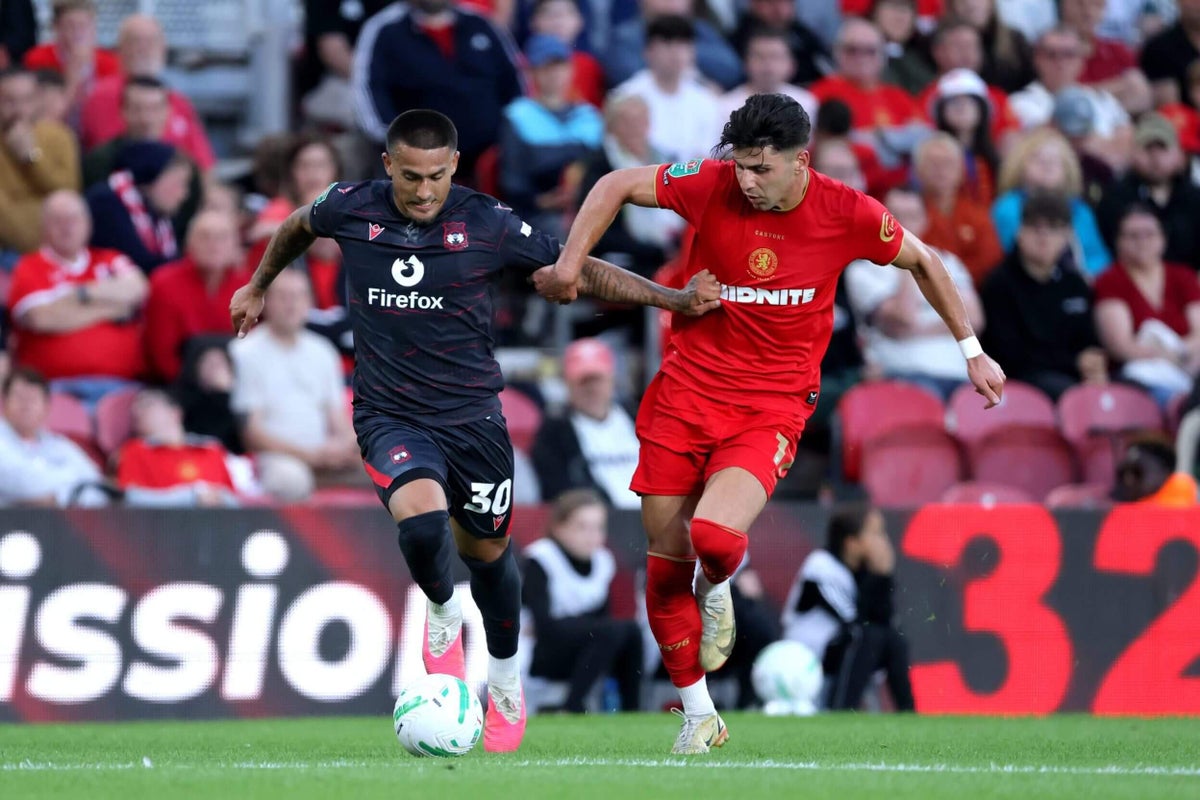
Nevertheless, as last weekend’s Carabao Cup first round exit away to fellow Championship side Middlesbrough showed, Wrexham need more.
A frontline striker in the mould of that night’s matchwinner Will Lankshear, signed from Tottenham of the Premier League for an initial £10million that could double through add-ons, certainly wouldn’t go amiss. Nor would increased options out wide and a central defender, The Athletic revealing earlier this week that a couple of bids have been rejected for Norway international centre-back Henrik Falchener, 23, from that country’s Viking Stavanger.
Phil Parkinson’s problem is he’s not the only Championship manager looking to make improvements. Nor are the clubs he’s trying to prise targets out of overly keen on losing some of their top talents.

Danny Imray spent last season on loan at West Brom from Crystal Palace (Simon Galloway/Getty Images)
“People always say, ‘Why does it get left so long?’” says Parkinson, whose talent search a year ago culminated in three key signings on the final day of the summer window in Issa Kabore (on loan), Dominic Hyam and Ben Sheaf.
“But there are so many circumstances that can dictate that. We are working as hard as ever behind the scenes. I don’t think we’ve ever been a club who have been shy of making signings when the right players become available.”
Since promotion back to the EFL in 2023, late signings have become something of a theme at the Racecourse Ground. Both Arthur Okonkwo and George Evans arrived in the final hours of that year’s summer window, as did their then-record signing Mo Faal a year later.
Only Faal, currently out on loan at Port Vale of League Two, among Wrexham’s six deadline-day signings in the past three summer windows can be said not to have worked out, suggesting patience is usually rewarded at this time of year.
“There’s been a good mood in the squad,” says Parkinson. “I felt this group needed a pre-season together, I really did. Last time, it was disjointed, with players coming in at different times, as we knew it would be.
“We took gambles to get who we wanted. That meant being patient. Someone like Nathan Broadhead, Ipswich did not want to lose him. Those deals always take time. But we feel we have a special talent in Broady, so the wait was worth it.
“He then took a bit of time to get to know us and us to get to know him. Sheafy, the same. But that’s the thing with signing players. They are not just for the next month. They are there for the long term, so sometimes you just have to take a view.”
Ahead of Monday’s trip to Cardiff, The Athletic assesses the business already done in the window.
Wrexham’s Achilles heel on their return to the second tier last summer after 43 years away was pretty clear: Conceding too many goals. Sixty-five across the 46 Championship matches — equal-sixth-highest in the division.
Throw in the 14 scored by the opposition in seven cup ties, and that’s almost 1.5 goals per game. Contrast that with eventual EFL champions Coventry City (48 in 49 in all competitions) and Championship runners-up Ipswich Town (50 in 49).
A factor in this disparity was the sheer volume of shots faced: 622 in the league in Wrexham’s case (the sixth-highest tally in the Championship), to a joint-lowest 485 for Ipswich and Coventry’s 535 (fifth-least).
A good proportion of these admittedly came in the early weeks, as teething troubles at the back led to Okonkwo (who started two of the games) and Danny Ward (the other four) being beaten a combined 12 times in the first six league fixtures amid a barrage of 115 shots raining down on their goal.

Can Ben Whiteman add a little steel to the Wrexham midfield? (Michael Regan/Getty Images)
Nevertheless, this tendency to allow chances persisted throughout the campaign, particularly in the spring when injuries to Sheaf and Matty James meant Wrexham struggled to control the midfield.
This, in turn, left the defence exposed, with Sheffield United having 20 attempts on goal in Wrexham’s 2-1 fightback win at Bramall Lane in mid-March. Others to make hay on the run-in included Oxford United (19), Birmingham City, Coventry (both 15) and Watford (13).
A determination not to be left short again in such a key area explains why a holding midfielder was on the shopping list during a pre-season that has also seen Lewis O’Brien deployed further back after playing most of 2025-26 in an advanced role.
Whiteman arrives with five-and-a-half years of Championship experience under his belt with Preston North End, during which time he honed an ability to sense danger and act accordingly.
Opta ranked the 30-year-old second last season for both blocked shots (0.94 per game) and clearances (3.14 per 90) among the 86 defensive and central Championship midfielders to play more than 900 minutes. His distribution was decent, too, completing eight progressive passes per game, placing him 11th among that same group.
Whiteman maybe wasn’t renowned for purposeful driving runs in midfield at Deepdale, as shown by him being ranked 80th last term for progressive carries with 0.66 per game. But that’s not what Parkinson wants from his holding players, as shown by James being 84th in the same metric.
Another area in which Wrexham need to improve is their results against the top teams. Even when registering the highest placing in their history last season, they won just three and lost six of their 12 meetings with the Championship’s eventual top six.
Contrast that with Hull, who finished one place and two points ahead of them. Six wins and two draws was their return from tackling the five teams who ended the campaign above them in the table, with coach Sergej Jakirovic’s side taking that resilience against better opposition into an ultimately triumphant play-offs campaign.

Anthony Patterson won Premier League promotion with Sunderland in 2025 (Stu Forster/Getty Images)
Goals weren’t necessarily a problem for Wrexham when taking on the top six. Three goals were put past Coventry at home, while Ipswich conceded five on their league visit. But keeping their promotion rivals at bay most definitely was, Parkinson’s men conceding 24 times in those dozen games, 16 of which came on Welsh soil.
Patterson’s arrival from Sunderland of the Premier League should help, the 26-year-old having previously thrived on the big occasion. Twice at Wembley in play-off finals, he made decisive saves to help the Wearside club go from League One to the Premier League.
First, he denied Sam Vokes one-on-one in the third tier’s 2021-22 showpiece against Wycombe Wanderers to preserve a 1-0 advantage that was subsequently doubled by Ross Stewart’s late clincher.
Two years later, he was at it again on the big stage, breaking Sheffield United hearts with a stunning early save to deny now Wrexham team-mate Kieffer Moore and then keeping out Andre Brooks’ effort after the break. Sunderland again capitalised on their goalkeeper’s heroics via a stoppage-time winner from Tommy Watson to return to the Premier League.
Patterson also impressed on loan at Millwall during the second half of last season, keeping seven clean sheets in 16 appearances for a side who finished third in the Championship.
As can be seen below, only Southampton’s Bayern Munich loanee Daniel Peretz had a better rate of preventing goals, with Patterson expected to concede 1.4 goals for every one he actually let in.

Patterson’s tendency to go long with his goal kicks (92 per cent last season) also fits in with Wrexham’s preference to play in the opposition half, though he did mix things up much more in open play while at Millwall (64 per cent were short).

Imray, the first of Wrexham’s three summer signings, can’t match the Championship experience of Patterson or, in particular, Whiteman. He has just the second half of last season at this level to his name, playing 16 times for West Bromwich Albion on loan from top-flight Crystal Palace, for whom he never made a senior appearance after joining their academy in summer 2021.
But the 23-year-old showed on debut against Middlesbrough that he has the ability to thrive on the right flank, both defensively and in attack, where he has big boots to fill after Manchester City loanee Kabore provided eight assists, comfortably the most in the squad last season.
Imray’s crosses posed a threat that night at the Riverside Stadium. It was also noticeable how he heeded Parkinson’s demand for his wing-backs to head for the back post when a delivery is imminent from the opposite flank — he was just unable to connect with one excellent Callum Doyle ball in the first half.
This attacking intent carried on where Imray had left off with West Brom; his ability to drive the ball up the flank illustrated by how he registered the second-most take-ons per 90 among all full-backs in the Championship.

Parkinson is happy with Wrexham’s transfer work so far. But with the window open until 11pm UK time (6pm ET) on September 1, he wants more in a division that looks stronger than last time thanks to the presence of relegated trio West Ham United, Wolverhampton Wanderers and Burnley.
“It is going to be a really exciting season,” adds the Wrexham manager. “The Championship is unpredictable, even from game to game. You must hold your nerve at all times and keep that consistency in your game.
“The depth of the squad has to be strong, it really has. We’re not where we want to be. So, we’ve got some big decisions to make, as always, and hopefully by the end of this transfer window, we’ll have the strength and quality.”
Plenty of work to do yet for Wrexham, and Reynolds, to get the ‘kitchen’ they so desire.
Additional reporting: Conor O’Neill
>
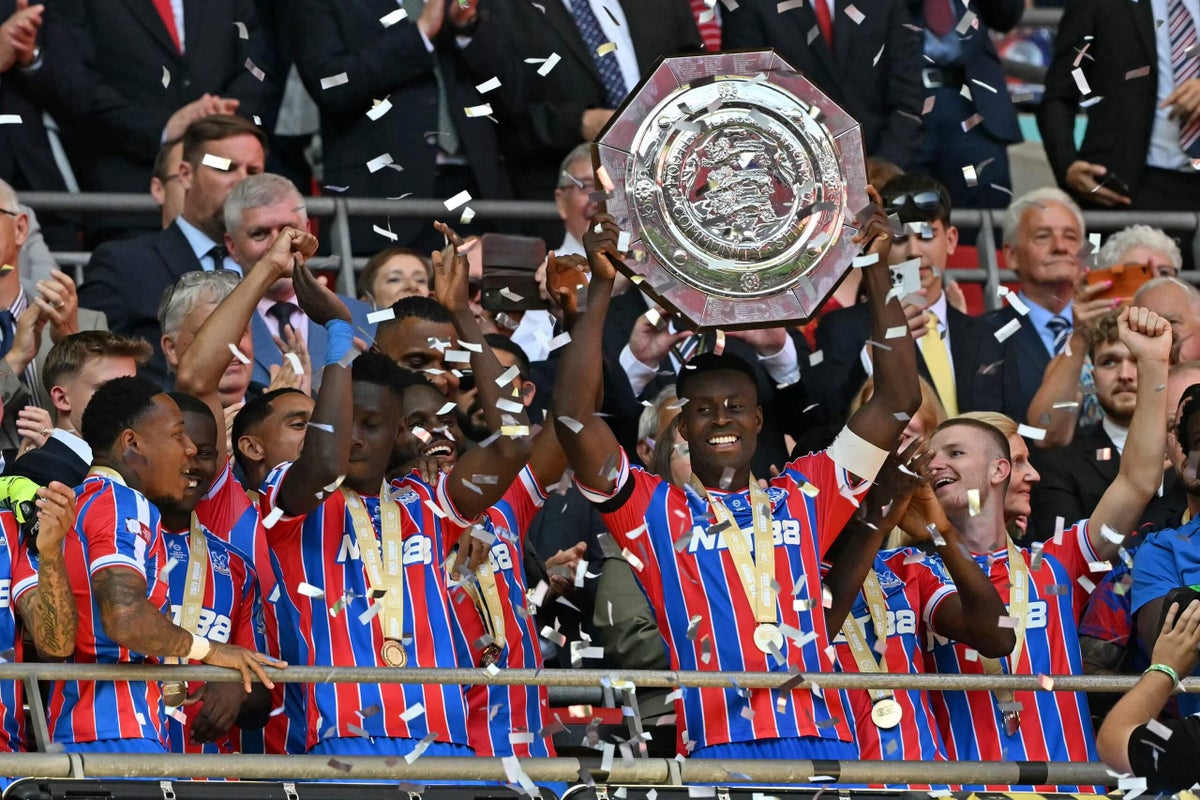
Arsenal play Manchester City in Sunday’s Community Shield, the annual curtain-raiser ahead of the new Premier League season.
The tournament has existed for over a century, but in 2002 it changed its title from the Charity Shield to its current name.
It had been known since its inception in 1908 as the Charity Shield, a continuation of the original Sheriff of London Charity Shield: an annual one-off match between the best amateur and best professional club in England, which had begun in 1898. The proceeds of the matches would go to charity.
A schism between professional and amateur clubs led to the Football Association (FA) barring clubs from the breakaway Amateur Football Association from participating in the games. A successor competition pitted the Football League winner against the winners of the Southern Football League.
As English football developed on a national league scale, the game was played between invited clubs at various stadia around England.
In 1974, then-FA secretary Ted Croker formalised the format, which lasts to this day, of the champions of England playing the FA Cup winners (or the league runners-up if a team wins the double) of the previous season, generally at Wembley Stadium in London. There have been eight games played away from Wembley since the format changed 52 years ago.
This year’s edition will be played at the Principality Stadium in Cardiff, due to an existing concert booking at Wembley.
Why did the match name change?
In 2002, the FA was forced to change the name of the competition by the Charity Commission — the independent, non-ministerial government department that registers and regulates charities in England and Wales.
It came following an inquiry into the 2000 match between Chelsea and Manchester United, which considered claims that charities were not benefiting as they should from the money raised from the game.

Chelsea’s players celebrate with the Charity Shield trophy after beating 2-0 Manchester United at Wembley Stadium in August 2000 (Ben Radford/ALLSPORT)
The Commission judged that the event broke fundraising regulations and requirements set by national charity law.
It also ruled that the FA had failed to specify the amount of money that went to charities, that there were delays in disbursing funds and a lack of transparency over gate revenue allocation.
The findings concluded that ticketholders were not informed exactly how the charities would benefit, although it added that the charities had previously received all the money they should have: 35 per cent of the gate receipts.
Some fans who bought tickets did not receive a “solicitation statement” at the point of sale which would inform them how the money available for charities would be calculated and distributed. The FA had enclosed fliers with tickets purchased through their own system, but it was found that fans who had bought directly from their clubs had not received such information.
The inquiry also found participating clubs had unacceptable delays in making donations to the nominated charities.
Both counts were deemed to breach charity regulations and, as a result, the name had to be changed to no longer include the word ‘charity’.
“We want to ensure that good causes continue to receive financial support from football through the FA Community Shield,” an FA spokesperson said in 2002, when the decision was made.
Where does the money go?
Revenue from ticket and programme sales from the Community Shield is collected by the FA and distributed among the 124 clubs that took part in the FA Cup from the first round onwards.
Each club then donate a portion of the money to up to three local charities or community-based projects of their choice, with any remaining money going to the FA to use towards their own charity partners.
Alzheimer’s Society has been the FA’s official charity partner since 2021 and has an agreement that runs through to the end of the 2027-28 season. Previous charity partners include the British Heart Foundation, Teenage Cancer Trust partnership and Breast Cancer Care.
Proceeds also go to the Wembley Community Club, which serves the community in Brent, the London borough where England’s national stadium is located, by supporting not-for-profit charities, schools and community groups.
The Felix Project, a London-based food distribution charity, also benefits from the Community Shield. During the 2024-25 season, the FA’s funding helped to provide 124,000 meals.
At every event held at Wembley Stadium, including the Community Shield, one per cent of event-day revenue is given to the Wembley Stadium Foundation (independent of Wembley Stadium), which invests in community projects that use sport, movement and culture to remove barriers to access and create opportunities.
>
Sports
Liverpool rarely sign loan players – and the ones they do rarely succeed. Ronald Araujo is their latest hope…
The reaction to a potential new Liverpool signing tends to follow a familiar script.
First comes the excitement. Then the frantic scramble to find out more, share the story, pass judgement, analyse, and, for the really creative few, produce that nugget of information that offers genuine insight — or failing that, generates a healthy supply of clicks and likes.
What’s certain is that it’s never as simple as one player coming in to replace another (or cover for those who are injured). No matter the age or profile of the player, there’s always something to discuss.
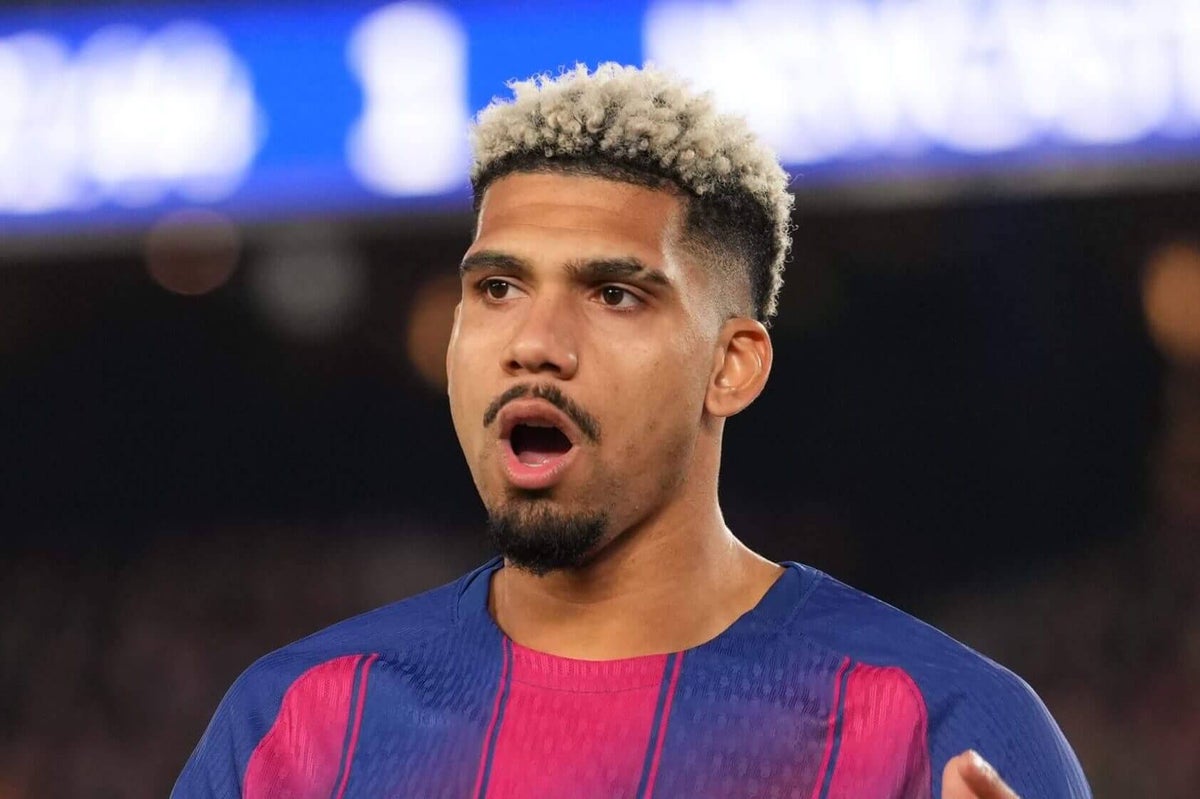
As Ronald Araujo discovered recently when the Uruguay international defender’s move from Barcelona managed to tick pretty much every box in the modern transfer-reaction handbook.
There was the initial reveal, a bit of a scramble and then deeper analysis. Fans will be split between two camps: those who think he’s what Liverpool need or not what they need, based on who and where they receive their information from.
Yet perhaps the strangest and most significant factor in this transfer is the scepticism surrounding it because of the nature of the deal. This might have been far less pronounced had Liverpool simply bought Araujo for the €55million (£47m; $63.7m) fee inserted as an option in what, to start with, is a season-long loan.

Araujo captained Barcelona last season en route to winning La Liga (Lluis Gene/AFP via Getty Images)
Instead, that loan element feels rather awkward for supporters, simply because Liverpool rarely do these types of deals — and more importantly, they rarely do them well.
Look at the names over previous years — Aly Cissokho, Javier Manquillo and Arthur Melo, to name a few — who failed to make an impact (there are many more) when borrowed from other clubs, and it’s clear where the concern stems from.
The sensible outlook, of course, would be to consider the move on merit and judge it for what it is. Unless something has gone badly wrong, Barcelona do not let 27-year-olds who captained them in the previous season and have 213 first-team appearances for the club leave lightly — or for such a future amount — so we’ll leave you to make your own conclusion on that.
But if this season goes well, Liverpool will have the chance to buy a player with one year of useful Premier League experience added to his Wikipedia page for a decent fee next summer.
And if it doesn’t work out, they can send Araujo back to Catalonia and move on with their own young defensive prospects Jeremy Jacquet, Giovanni Leoni, Ifeanyi Ndukwe and perhaps Mor Talla Ndiaye in 2027-28, and then consider a different option should they wish to recruit again.
Admittedly, that would be far too rational, though.
Supporters mostly only care about the here and now, and if Araujo turns out to be disappointing, then he’ll go straight onto the list of other Liverpool loan signings who failed to make an impact, with the “See? Told you so” comments to follow.
The most recent of those was Melo, a midfielder who played only 13 first-team minutes after joining from Juventus in September 2022, when Liverpool were suffering from a midfield crisis. Before the Brazilian came defender Ozan Kabak (Schalke) and before that, another centre-back in Steven Caulker (Queens Park Rangers).
Now you can see why there was some concern about a loan for Araujo, even though there’s no correlation between the new and the old, other than the simple structure of the deal.
That Liverpool have made only three loan signings across the past 10 years also highlights the rarity of such moves. Manchester City follow a similar strategy. They haven’t borrowed a player since goalkeeper Scott Carson joined from Derby County in summer 2019 to be their third-choice at the position.
The next four teams with the most points in the Premier League over that same decade have taken a very different stance, though.
Arsenal signed Piero Hincapie on loan last season, and Raheem Sterling and Neto in the previous one. David Raya, Martin Odegaard, Dani Ceballos, Mathew Ryan, Cedric Soares, Pablo Mari and Denis Suarez also joined them on that basis in the years between 2016 and 2023.
Manchester United haven’t been as prolific with their approach to this area of the market, but, excluding goalkeepers, have still arranged the loan arrivals of Sofyan Amrabat, Sergio Reguilon, Marcel Sabitzer, Wout Weghorst and Odion Ighalo during the same 10-year period. Most of those have struggled to make an impact.
Chelsea and Tottenham Hotspur, meanwhile, are on a completely different level.
In the past four years, Chelsea have had more loanees in through the door than Liverpool have had in a decade. Tottenham borrowed as many players last season as have moved to Anfield via that route in our decade-sized sample.
So why do Liverpool so rarely turn to loan signings?
Well, those who run the club will say it’s because they are organised operators who have their house in order through long-term squad building. Only in exceptional circumstances do they turn to these temporary fixes, but that’s where they find themselves heading into the season.
Joe Gomez is out injured for the next few weeks. The two recent young, big-money central-defensive signings, Jacquet and Leoni, are both returning from injuries. Ndukwe, 18, will have to head out on loan because he doesn’t qualify for a UK work permit.
The need for reinforcement at the position was huge.
Having a 35-year-old Virgil van Dijk as the only fit senior centre-back was not sustainable, especially as, like Gomez, he’s on course to be out of contract 10 months from now.
Whether Araujo was a good choice will take some time to determine. But it’s a push to think of many better alternatives with a matching profile who were available under similar conditions.
That said, while taking a wage cut to join Liverpool sounds like a bonus, Araujo is still going to cost a considerable amount of money. The club really need this to work out, especially with Jacquet and Leoni still developing.
If supporters are looking for an uplifting loan success story, then perhaps Nicolas Anelka fits the bill. When Liverpool borrowed him from Paris Saint-Germain in December 2001 following the departure of fan-favourite striker Robbie Fowler, there were questions about his character and attitude after previous spells at Arsenal and Real Madrid.

Anelka was a successful loan signing for Liverpool (Stu Forster/Getty Images)
Although it was a different type of gamble, Anelka proved to be a savvy signing and helped Liverpool finish second that season. The only mistake that followed was not signing him permanently at the end of it, when he went to City instead.
The hope at Liverpool is that Araujo proves more of an Anelka than an Arthur Melo, and is never compared to Kabak, Caulker, Cissokho or Manquillo.
>
Sports
Ben Stokes’ Durham reach One Day Cup semi-finals with Rocky Flintoff unable to repeat hundred heroics for Lancashire | Cricket News
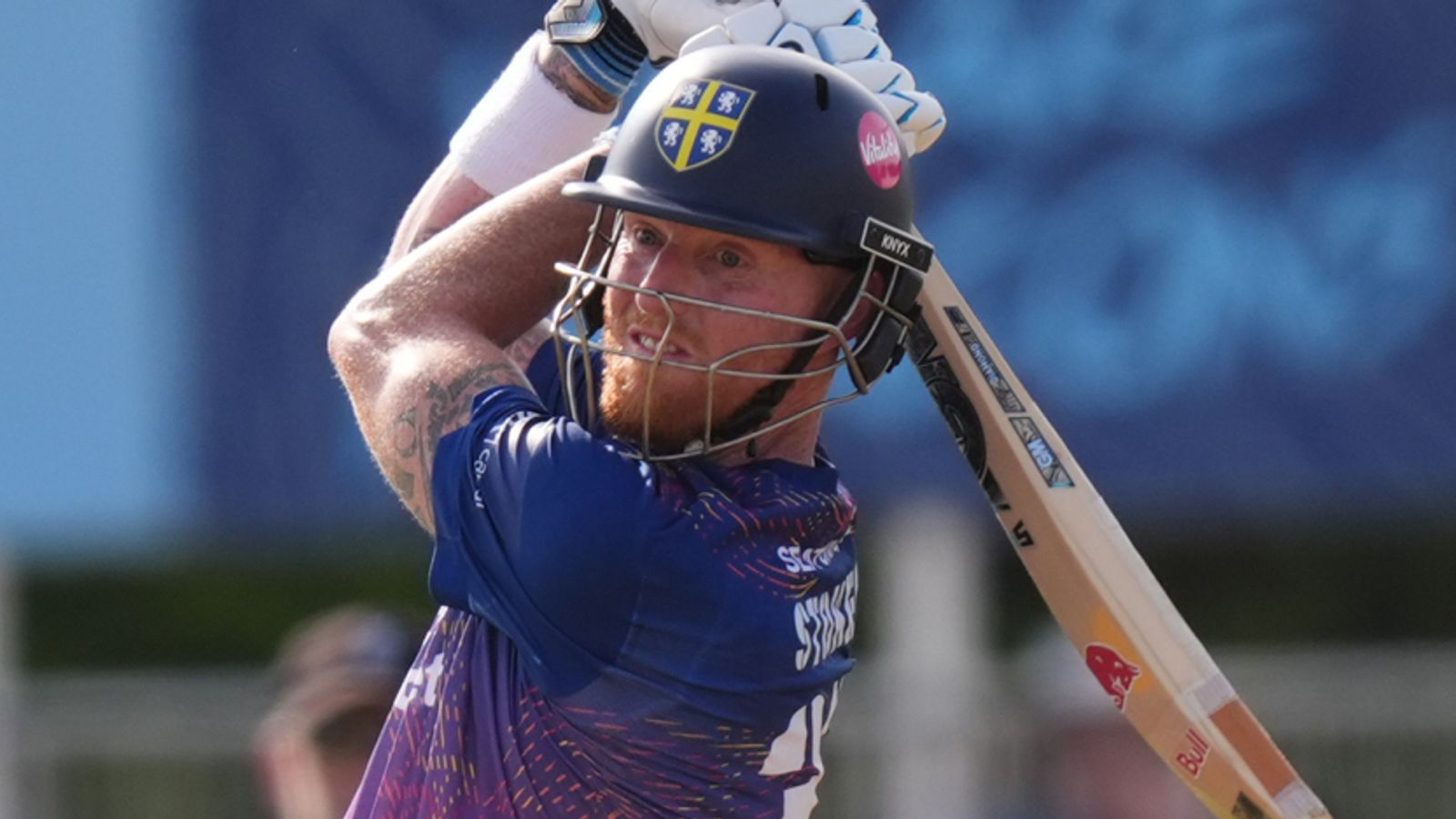
A Durham side featuring Ben Stokes thrashed Lancashire by 162 runs to reach the One Day Cup semi-finals with Rocky Flintoff unable to repeat his hundred heroics from earlier in the week.
Flintoff, the 18-year-old son of England great Andrew Flintoff, cracked a 65-ball century for Lancashire against Somerset in the final round of group games on Tuesday as he registered his first senior professional ton.
However, the teenager was out for 22 from 39 balls versus Durham at Emirates Old Trafford – one of four wickets taken by Afghan leg-spinner Shafiqullah Ghafari – as Lancashire were bundled out for 187 chasing 350 for victory.
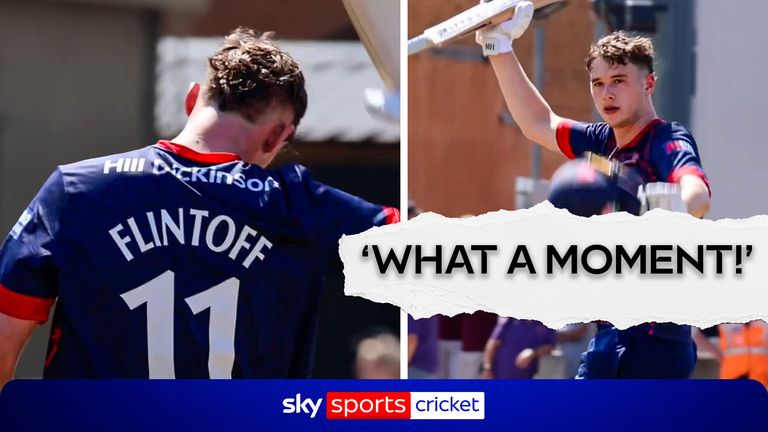
Take a look as Rocky Flintoff, son of former England captain Andrew, hit his maiden senior professional century for Lancashire against Somerset with 123 off 76 balls
Quiet day for Stokes but Durham hammer Lancashire
Former England captain Stokes took one wicket, that of opening batter Harry Singh for 11, as he returned figures of 1-32 from four overs after earlier hitting one six in a knock of 11 from nine balls in Durham’s 349-8 in Manchester.
Durham – who will now face Middlesex in a semi-final at Radlett on Sunday – saw David Bedingham strike 104 from 89 balls and Ollie Robinson make 76 from 57 deliveries.
The pair shared a fourth-wicket stand of 149 before Robinson’s dismissal brought Stokes to the crease.
In reply, only 17-year-old Joe Moores (51 off 42), who stitched a 59-run stand with Flintoff, made a score of note.
Lancashire lost four wickets for 17 runs from 142-4 once Flintoff was dismissed, with Moores eighth out as the hosts were rolled in 36.1 overs.
Notts advance after horror start to run chase
In the other quarter-final, Notts Outlaws recovered from 1-3 inside three overs to complete a chase of 274 against Yorkshire by three wickets with eight balls to spare in York.
Notts’ reward is a semi-final away to fellow Midlanders Leicestershire Foxes on Sunday.
The Outlaws were reeling as Ben Coad (5-52) and George Hill (1-60) removed Ben Martindale (1), Freddie McCann (0) and captain Haseeb Hameed (0) early on, before Kyle Verreynne (105 off 123) and Jack Haynes (116no off 99) hit hundreds.
Verreynne put on 54 with George Munsey (25 off 28) for the fourth wicket and then 154 with Haynes, although Verreynne’s dismissal in the 41st over with 65 runs needed triggered a wobble of three wickets for four runs as Farhan Ahmed (2) and Olly Stone (0) fell to Coad, leaving Notts tottering on 213-7.
Haynes, though, found excellent support in No 9 Dillon Pennington (22no off 18), who cuffed the winning four having earlier taken 4-49 with his seam bowling, including Yorkshire top-scorer Will Bennison (91), in the hosts’ 273-9.
>

Kingdom Hearts The Series ‘Anime’ Announced for Disney+, Kingdom Hearts IV Game Launches in Late 2027 Including Coco World – News

What home-renovation shows (and data) tell us about Wrexham’s summer transfer activity

VisionQuest Trailer Reveals Marvel’s New Disney+ Series
-

 movies3 months ago
Search For Canadian TV Actor Stewart McLean Now Homicide Investigation
-

 Fashion9 years ago
These ’90s fashion trends are making a comeback in 2017
-
Fashion9 years ago
According to Dior Couture, this taboo fashion accessory is back
-
Fashion9 years ago
Model Jocelyn Chew’s Instagram is the best vacation you’ve ever had
-
Fashion9 years ago
Your comprehensive guide to this fall’s biggest trends
-
Fashion9 years ago
Emily Ratajkowski channels back-to-school style
-
Fashion9 years ago
9 Celebrities who have spoken out about being photoshopped
-
Fashion9 years ago
A photo diary of the nightlife scene from LA To Ibiza