
L-R: Kelly McDonald, Aaron Pierre and Kyle Chandler in ‘Lanterns’
HBO Max


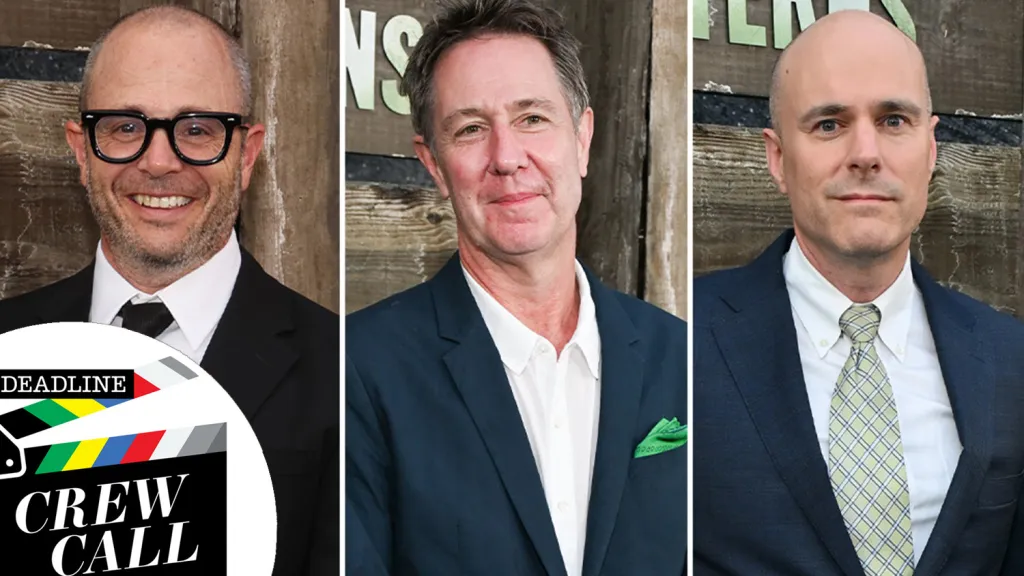
Warning: This podcast and write-up has spoilers about the ending of tonight’s first episode of HBO/DC’s Lanterns
We can’t even say it in a blunt, straight sentence.
But, first episode in, something crazy happened to Kyle Chandler’s O.G. Green Lantern, Hal Jordan, in a time jump. It’s an outcome that sets up for an interesting timeline for the rest of the season. And we haven’t even seen him fully train the Green Lantern’s back-up guardian for Earth, Aaron Pierre’s John Stewart. In addition, Lanterns hasn’t taken us to space out, nor has it rolled out Sinestro or Nathan Fillion’s Guy Gardner.
On tonight’s special episode of Crew Call, Lanterns co-creators and EPs Chris Mundy, Tom King, and Damon Lindelof unpack that shocker ending for Jordan, and how and why the trio teamed up to revive Green Lantern for the new DC under James Gunn and Peter Safran.
What’s interesting is this: We’re given a hint about Jordan’s ultimate fate at the onset of tonight’s episode. That’s when he appears as a digital carbon copy (or “back-up”) to Stewart following the latter’s survival from a car-crash. That was a major tip-off as to how tonight’s episode would end. Why did Mundy, King and Lindelof leave a breadcrumb? Listen below.
L-R: Kelly McDonald, Aaron Pierre and Kyle Chandler in ‘Lanterns’
HBO Max
Jordan might have his doubts about whether Stewart has the grit to wear the ring of a Green Lantern, but from the looks of it, he did quite well after having the jewelry tossed at him by the former. It was then that Jordan jumped out of the car, as it careened with Stewart off a cliff. The new recruit powered the ring to provide a cushion from the crash.
But, it’s clear as Jordan proved to local sheriff Kerry (Kelly Macdonald): There are aliens in Rushville, Nebraska. Kerry learned this the hard way after allowing Jordan to question what appeared to be a local yokel over the mysterious shooting at a Rushville high school football game. The older Green Lantern taunted the alien so much, that the creature detonated itself, blowing a hole into the side of the jail.
Jordan and Stewart also got to meet Kerry’s powerful, rancher kingpin father-in-law, William Macon (Garrett Dillahunt). He takes a liking to at least Jordan. However –oops– Stewart slept with Macon’s wife! We’ll soon see whether Macon is a villain behind the scenes or an ally. The theory out there is that Macon is a future foe, harboring a big secret on his ranch. For the time being, he’s under an N.D.A. and can’t disclose to the Green Lantern corp what’s up his sleeve. Wow, an N.D.A., standing in the way of a potential villain’s plans. How often do you see that in a superhero story?
Green Lantern has long been prized by fanboy screenwriters, but a hard needle to thread. Mundy, King and Lindelof share with us their theories on why Green Lantern is hard to crack, in addition to its appeal. There was a 2011 movie, which on paper looked great with Casino Royale director Martin Campbell and a pre-Deadpool Ryan Reynolds in the title role. But at a $200M cost before P&A, Green Lantern was a red light at the box office, dimming with a $237.2M global gross. Greg Berlanti co-wrote that movie, and he tried to revive the property for Warner Bros TV before Green Lantern glowed into Lanterns. With Mundy involved, the series became akin to True Detective crossed with Green Lantern, grounding what is often a labyrinth storyline of galactic proportions.
Listen to our conversation with the trio below:
>
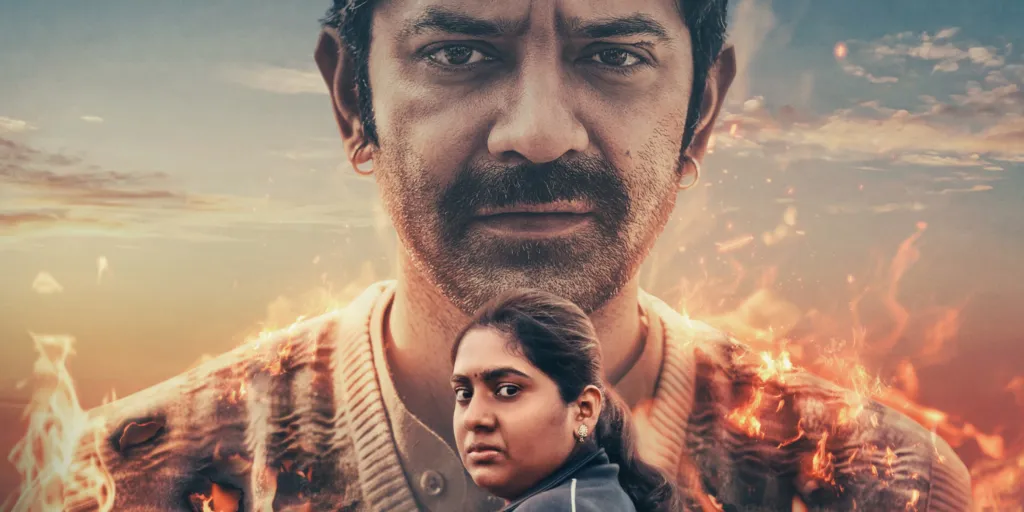
EXCLUSIVE: Babita Singh Reporting, Prime Video‘s next pic out of India, will launch globally on August 28.
Directed by Ambiecka Pandit and written by Amita Vyas, the investigative drama features stars Nimisha Sajayan, Barun Sobti, and Anshumaan Pushkar. Saurabh Malhotra, Manuj Mittra, and Tina Tharwani are producing through Film Squad Productions in association with Act Three. Sudip Sharma is the exec producer.
Set in a small Indian town, Babita Singh Reporting follows suspended police officer Babita, known as Baby (Sajayan), a people-pleasing cop who has spent much of her life putting others first. Devastated by the murder of a childhood friend, she sets out to uncover the truth, embarking on an unexpected journey of self-discovery.
Prime Video says that, “Against the backdrop of a murder investigation, the investigative drama brings together grounded realism, layered characters, and complex family dynamics, offering a raw and authentic portrait of a woman confronting the choices that have shaped her life.”
“At Prime Video, we are always looking to champion stories that are distinctive, authentic, and emotionally engaging, and Babita Singh Reporting is a strong testament to that vision,” said Nikhil Madhok, Director & Head of Originals at Prime Video India.
“The film is, at its core, a deeply human story about the search for truth and a woman reclaiming her voice while navigating grief, relationships, and life. It brings together a talented creative team, with Ambiecka Pandit’s assured direction, Amita Vyas’s nuanced writing, and Sudip Sharma’s creative vision as executive producer, alongside a powerful ensemble led by Nimisha Sajayan, whose portrayal of Baby brings remarkable depth and authenticity to the character.”
Exec producer Sharma is no stranger to Prime Video, having produced two seasons of acclaimed crime drama Paatal Lok.
“The movie unfolds around a crime, but at its heart, it is also about the personal journey of a woman who has always adjusted, sought validation from others, and stayed in the background of her own life,” added Sharma. Nimisha Sajayan brings her to life with incredible sensitivity and strength, while Barun Sobti and Anshumaan Pushkar add wonderful depth and texture to the world around her.
“Having collaborated with Prime Video through two seasons of Paatal Lok, it felt natural to bring this story to a service that has consistently championed distinctive voices and created a home for storytellers and talent. Prime Video has given us the creative freedom, support, and reach to bring this story to audiences exactly as we envisioned.”
>
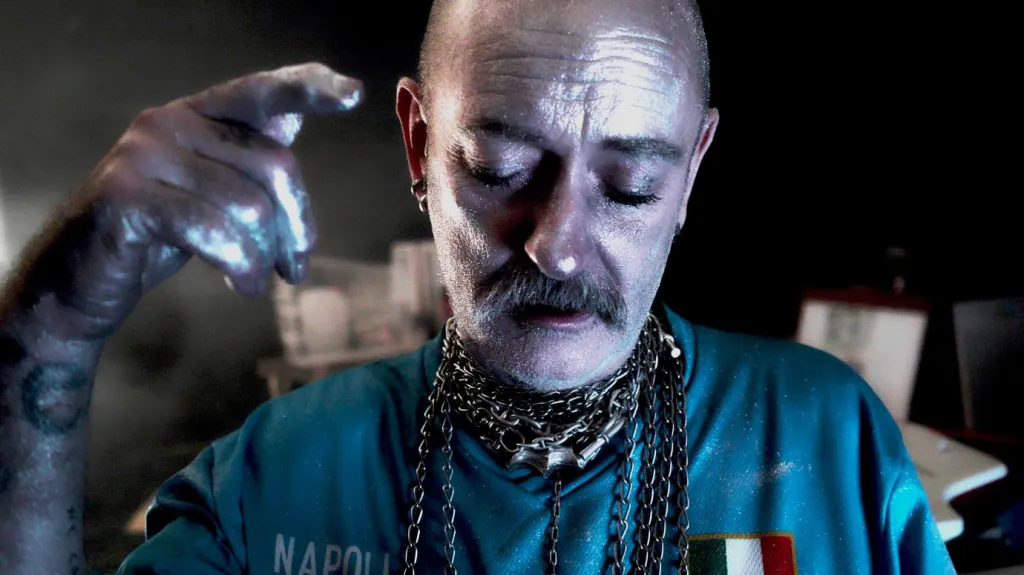
On the face of it, Finlay Pretsell’s first feature, Time Trial (2017), seemed like any other underdog sports movie, chronicling the last hurrah of disgraced Scottish cyclist David Millar in his last year as a professional rider at the Tour De France. Others might have taken the easy option and milked this against-all-odds story for dramatic tension, but Pretsell chose instead to focus on the complex mass of confidence and insecurity that lay behind Millar’s public image — the question it asks is not whether Millar will defy the odds and win, but can he survive a loss?
His new film Douglas Gordon By Douglas Gordon is just as insightful, a portrait of the Scottish artist behind such works as 24 Hour Psycho — Hitchcock’s film slowed down to one frame per half a second — and Zidane: A 21st Century Portrait, in which 17 cameras tracked the course of a football match by focusing on a single player. As the title suggests, Gordon was not a passive subject, actively fighting his director for authorship of the story. The result is a fascinating deconstruction of the documentary process, with Pretsell both charmed and exasperated by his mercurial and temperamental subject.
DEADLINE: Did you know Douglas Gordon’s work beforehand?
FINLAY PRETSELL: Yes. He was the biggest inspiration to set me on the journey to make films, to be honest. I saw Zidane: A 21st Century Portrait while I was attempting to make a cycling film and I wanted it to be something else. I wanted it to be experiential. I saw Zidane and it blew me away in its ability to take me onto the pitch. Then I met him. I was kind of blown away by his generosity.
DEADLINE: When did you first meet him?
PRETSELL: It was 20 years ago, here at the Edinburgh Film Festival, funnily enough. And he just stood and talked to me and he was so warm and generous and interested and sort of empowered me to do what I wanted to do. Not pretentious, not standoffish, not too busy. I think that’s what I really liked about him. I saw this amazing character. He was so comical, there was something behind the eyes, behind this very Glaswegian accent. There was something about him that made me think, “Oh, this isn’t what I expected.” Artists are generally sort of quiet and introverted, but there was some sort of… not danger about him, exactly, but there was something going on that was exciting and intriguing.
I didn’t think about making a film about him then, but we stayed in touch by email. And then during COVID, I said, “Look, are you up for doing something together?” I heard nothing back. I thought, “OK, whatever, fine.” And then out of the blue, I got a call from Berlin. A Scottish accent. I didn’t know who it was. It was Douglas. “So, what are we going to do?” he said. “Film? Fiction? Drama? Series? Episodic?” From then on, we just started talking, and it took me probably about a year to finally get into his studio, during which time I would record our conversations that we were having. It became this kind of confessional thing, because I’d get him at all times of the day: First thing in the morning, or in the afternoon, or late at night, I was recording our conversations. I never really thought I’d ever use them. But in the end, we used them quite a lot. and it became quite critical to the arc of the film.
DEADLINE: How do you start a project like this? Do you just start filming and see what happens?
PRETSELL: Sort of. I’m quite slow, in a way, at coming up with an idea. I think I saw various scenes in my head, but I have to be in the room with someone to really understand things and start to work it all out. I can’t just make something up and say, “Right, this is what I want to do.” But in my head I thought, “This is an experience of a successful working artist, and I want to capture this somehow.” I want to be a fly in the wall.
DEADLINE: Were you looking for moments in the life of an artist then?
PRETSELL: Yeah. The thing with Douglas is that he let us into something deeply personal. But he had to do it when he was ready to let us in, and it was really difficult to pin him down. I just had to let go [of the reins], and he would sort of deliver a performance of what he thought I would want to know about him, which was just amazing. Thematically, it runs all the way through the film. He’s in charge. Initially, I would always try and control everything, and I would get quite frustrated — as you see in the film — and he would get frustrated with me. But I realized that there was no other way, and I think it was that relinquishing of control that was essential to make the project work and not get too concerned with my own ego getting burnt all the time.
DEADLINE: When did you realize he wasn’t going to give anything away? Because people might go to this film thinking, “Why did he make 24 Hour Psycho? Why did he make Zidane?” What would you say to those people if they think that’s what they’re going to get?
PRETSELL: I would tell them, this is the mind that created them. And him explaining it would make it no clearer to anyone. Watching the film will explain it in a non-didactic way, I suppose. This is the mind of a conceptual artist. Too much context, I think, kills many documentaries. People feel like they’re forced to contextualize absolutely everything in docs, and I’m like, why are we not allowed just to be a bit freer with these narratives?
It’s not about being smart or holding something back, I just want to create an experience. As soon as you’re giving facts and dates, it starts to get in the way of the experience, or the feeling of what it is that he does. As he says in the film, ambiguity is what it’s all about. Not that the film itself should be ambiguous, necessarily, but you ask yourself, “Is he acting? Is he telling the truth? Are we seeing the real Douglas Gordon now?” Who cares! We’re telling a story, and he’s part of that story. He’s a performer.
DEADLINE: So, it becomes another artwork to hang next to the others?
PRETSELL: Yeah, exactly. It sort of does. But what I can say is that everything he did for us was authentic. It’s from him, and a;; these beautiful moments he would just produce out of nowhere. It wasn’t like we’d say, “Maybe we should talk about your mum now. Maybe we should talk about…” It would just come out. I’d often email him some points before we talked, and if we managed to do get to of these points, great. But if not, it didn’t matter. Something better would happen.
DEADLINE: Is there ever a chance he could have just walked away and destroyed the project?
PRETSELL: Oh, of course. Totally. I was thinking that all along, because I could imagine him doing just that. He doesn’t need me. He doesn’t need a film about him. It was in the back of my mind the whole time. But I never give up in these situations. I’m like, “No, no, no. We are going to make this film.” So, yeah, of course, he could have absolutely walked away at any point. It’d be much easier for him not having us around, to have me not calling him up all the time, but he likes that discussion, that discourse.
DEADLINE: What did you learn about conceptual art?
PRETSELL: Oh God, I don’t know. Nothing. [Laughs.] I think what I learned is that everything is grist to the mill. All these discussions we would have around his kitchen table, he would write them on the walls all over his studio. That made me realize that everything could be turned into an artwork, in a way. He’s got an amazing mind. There’s a simplicity to those ideas, and that beautiful, really precise focus is what makes them so fascinating.
>
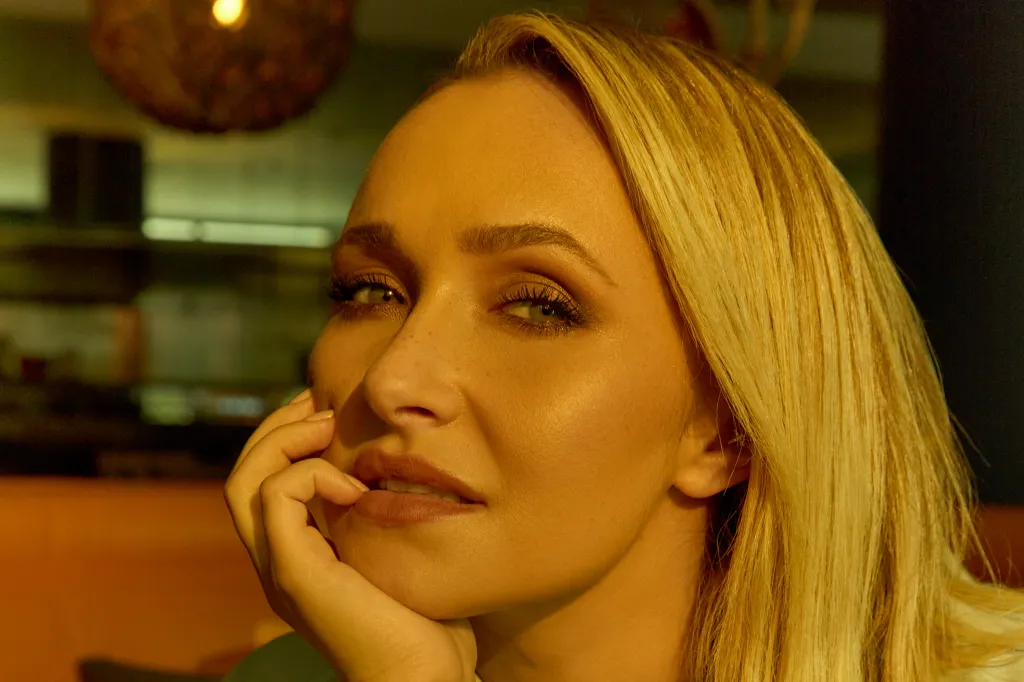
Hayden Panettiere, who is best known for playing the superpowered cheerleader on NBC’s Heroes, has died at the age of 36. Her rep confirmed the news to ABC.
“It is with profound sadness that we share the tragic passing of our beloved Hayden. She was an incredible light and a force of nature who brought immeasurable love and joy to all who knew her — and to the millions who watched her onscreen,” her rep said in a statement.
More…
>


Search For Canadian TV Actor Stewart McLean Now Homicide Investigation


These ’90s fashion trends are making a comeback in 2017
According to Dior Couture, this taboo fashion accessory is back
Model Jocelyn Chew’s Instagram is the best vacation you’ve ever had
Emily Ratajkowski channels back-to-school style
9 Celebrities who have spoken out about being photoshopped
Your comprehensive guide to this fall’s biggest trends
A photo diary of the nightlife scene from LA To Ibiza