
Politics
Politics Home Article | Wandsworth Council Planning Country’s Largest Ever Council Tax Rise


3 min read
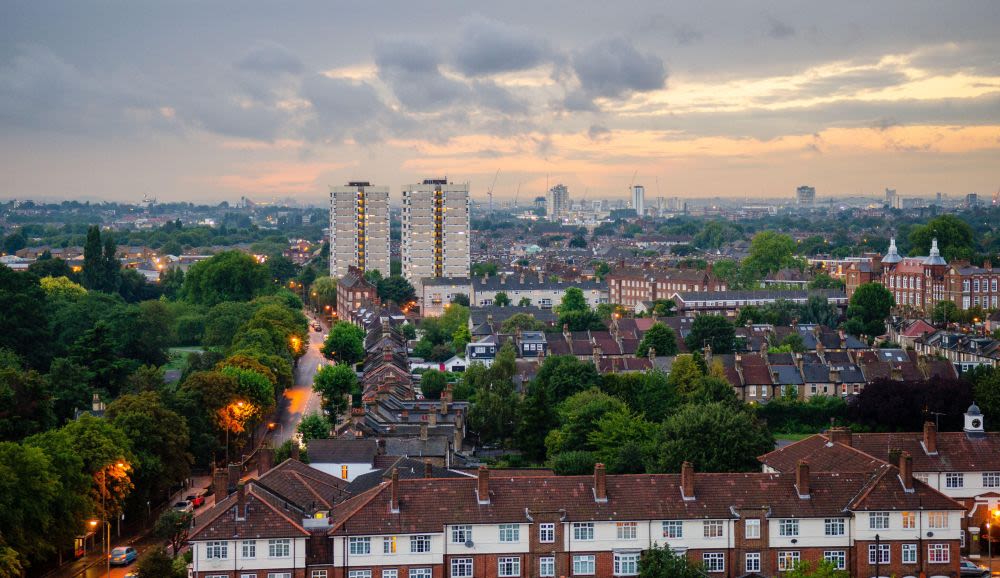
Exclusive: Wandsworth Council in south London is preparing England’s biggest ever council tax rise, which could be as much as 160 per cent, PoliticsHome understands.
If proposals under internal discussion go ahead, the rise will be much larger than the previous record set by Worcestershire Council last year when the Labour government granted it special permission to introduce a 9 per cent hike.
Wandsworth, which is Conservative-run after Labour lost control in May, currently has one of the lowest council tax rates in the country, with residents paying around 0.1 per cent of the value of the property they live in per year.
However, historically low levels of council tax combined with growing pressure on its finances have forced the council to prepare a record-breaking increase.
London MPs have warned that recent reforms to how central government distributes funding to local authorities will leave councils in the capital like Wandsworth particularly exposed to rising costs.
The government argues that the changes are needed to rebalance funding towards areas with higher deprivation so that it is “truly based on need”. As a result, many London boroughs are set to see their grant funding decrease, with Wandsworth’s projected to fall by around 40 per cent.
Westminster, which like Wandsworth was permitted to raise council tax above five per cent without a referendum for the next two years to raise more revenue, recently warned that it would have to raise council tax by up to 200 per cent to keep spending at current levels.
The Wandsworth tax rise is expected to be implemented in April 2027 if it goes ahead, with the rate then being frozen for the rest of the term, PoliticsHome understands.
Local Conservatives stress that residents in the south London borough would still pay one of the lowest council tax rates in the country even if the unprecedented rise goes ahead.
Both the council and the Conservative Party declined to comment.
Local authorities across the country are grappling with rising costs, driven in large part by spending on vital services including adult social care and homelessness.
A spokesperson for London Councils, which represents local government in the capital, told PoliticsHome “it is now almost impossible” for councillors in London “to protect frontline services for their communities” because “funding from central government remains wholly insufficient to meet these growing demands”.
Wandsworth Labour leader Simon Hogg, who ran the council until May 2026, said: “It beggars belief that Wandsworth Conservatives are planning Britain’s biggest ever council tax increase.”
“The Conservatives are pretending the council has run out of money so they can bring in austerity policies. They’ve already cut domestic abuse services, scrapped the youth bus and axed new council homes for 400 local people,” he told PoliticsHome.
Earlier this year, the council announced cuts to some schemes in a bid to save money, warning that tax would rise by up to 230 per cent without any fall in spending.
>

(Alamy)
4 min read
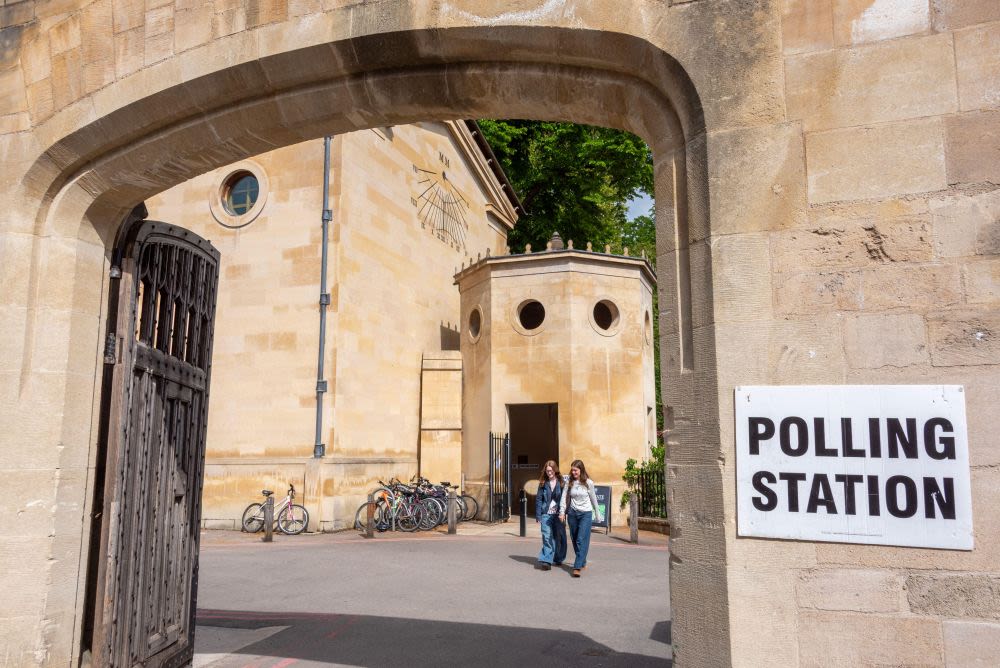
Students have launched a campaign urging the government to make it easier for those attending university or college to register to vote.
The National Union of Students UK (NUS) and Purpose Union are calling on ministers to roll out a nationwide auto-enrolment system that would “remove the needless barriers for universities and colleges”.
The push is backed by the Greens, with Brighton Pavilion MP Siân Berry saying “it is more important than ever that students and young people have a say in their futures.”
Launching the campaign, the NUS pointed to recent auto-enrolment trials at individual educational institutions that successfully boosted voter registration, such as a 2023 trial at the University of Nottingham, which increased voter registration applications from under 1,000 to over 23,000, representing 64 per cent of all students.
As part of this scheme, new and returning students were asked during the online registration process for the academic year whether they would be happy for their data to be shared with their term-time local council to allow voter registration.
While such a trial was a success, the NUS has warned that implementing auto-enrolment can be arduous and expensive for institutions when done individually, as it means setting up their own data-sharing arrangements with local authorities where their students live.
The NUS is calling on ministers to invest in a technical solution that would allow student data from across the country to be funnelled into the existing Individual Electoral Registration (IER) hub, which in turn would make it easier for students to join the electoral register.
The Labour government is committed to lowering the voting age to 16, but there are concerns about low levels of engagement among young people.
In 2023, the Electoral Commission found that around 60 per cent of adults under 20 were not registered to vote.
The Electoral Reform Society (ERS) says starting university is a “crucial point where many young people can either drop off the electoral register or miss being added altogether”.
“Auto-enrolling students as part of a wider automated voting scheme would help ensure that young people are correctly registered come polling day and able to cast that all-important, habit-forming first vote. This will ultimately increase participation in elections and strengthen our democracy,” ERS Chief Executive Darren Hughes told PoliticsHome.
The NUS is pushing the government to deliver this reform in the next year to ensure that students have the opportunity to take advantage of it before the next general election. While the next election is currently scheduled for 2029, there is speculation that Prime Minister Andy Burnham might be tempted to capitalise on positive polling and go to the country sooner.
NUS England President Favour Samuel said: “If the government doesn’t act soon, we risk another general election with unequal democratic processes which disproportionately prevent young people, minorities, and private renters from voting.”
Samuel added: “We want to see the government invest in a simple technical solution which would streamline the process, remove the needless barriers for universities and colleges and enable every young person to exercise their right to vote.”
Green MP Berry told PoliticsHome: “As the climate crisis, housing and living costs for young people intensify, it is more important than ever that students and young people have a say in their futures.
“The Labour Party has a responsibility to follow through on its commitment to improve voter registration rates, and I welcome this call from NUS and Prospect Union for the government to invest in student auto-enrolment.”
A Ministry of Housing, Communities and Local Government spokesperson told PoliticsHome: “We want to make sure registering to vote is easier for all – which is why we have said we will work towards a new automated voter registration system to make the process easier.
“Through the Representation of the People Bill, we are also making changes before the next general election which will make better use of data across government so that eligible voters can be easily identified and supported to register to vote.”
>


2 min read
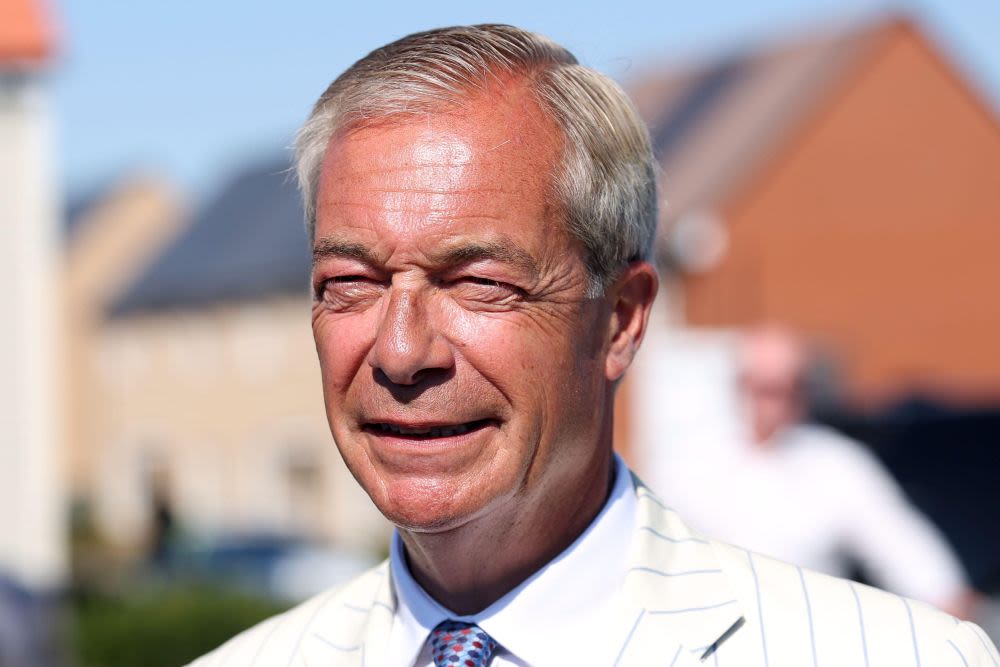
Nigel Farage will continue as the MP for Clacton after winning the by-election he triggered.
Farage secured a comfortable victory in the Essex constituency, winning around 63 per cent of the vote.
Novelty candidate Count Binface came second with 26 per cent of the vote.
Farage resigned as an MP and triggered the by-election in July amid growing pressure over a £5m donation he received from crypto-billionaire Christopher Harborne weeks before announcing his intention to run in the 2024 general election.
His failure to declare the donation led to an investigation by the parliamentary standards watchdog.
The investigation is set to continue once Farage returns to Parliament, and could result in suspension and another by-election if he is found to have broken the rules.
Speaking in July, Farage described the by-election as “people versus the establishment”, adding that the “people of Clacton” would be “the judges” of his actions.
“It’s a chance to stick two fingers up to the entire establishment, to frankly tell them where to go, and that is why I will be putting my name forward to stand in this by-election,” he said.
A Farage victory in Clacton was widely regarded as almost certain despite his personal ratings taking a hit in recent weeks. The seaside town is often described as one of the most right-wing constituencies in the country and a major Reform stronghold.
Labour, the Conservatives and the other mainstream political parties announced early in the campaign that they would not stand candidates to go up against Farage, arguing that the by-election was unnecessary and a waste of money.
That left a long list of independent and novelty candidates, including Binface, whose policies included hosting Eurovision 2028 in Clacton and relocating Parliament to the Essex village of Weeley, the Monster Raving Looney Party and Everyone Is God Party.
>
Politics
Politics Home | The Conservatives Should Scrap The Triple Lock And Build Houses, Says Senior Tory
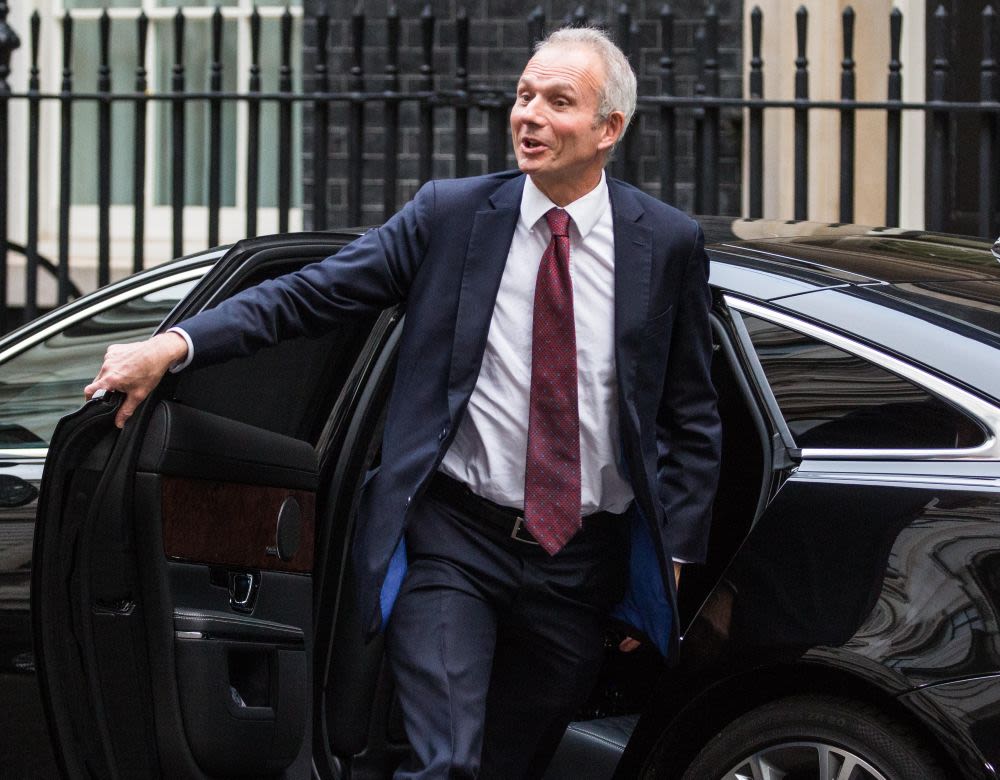
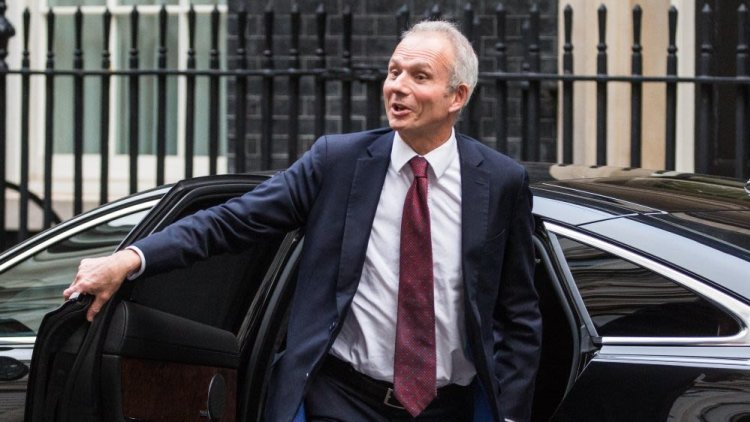
David Lidington arrives at 10 Downing Street, 2018 (Alamy)

3 min read
A former Conservative cabinet minister has called on his party to back housebuilding and abandon the state pension triple lock, in a bid to “look beyond” elderly voters and “really make inroads” with younger generations.
David Lidington, who served as Theresa May’s de facto deputy prime minister during his almost three decades as a Tory MP, argued that a future Conservative victory will require the party to step out of its electoral comfort zone.
Speaking on this week’s episode of PoliticsHome podcast The Rundown, which will be published on Friday (14 August), Lidington said the current generation of Conservative MPs should look at how electorally successful leaders like Margaret Thatcher “departed massively from a lot of political assumptions that had dominated politics”.
Lidington, now a member of centre-right campaign group Prosper UK, said his party’s “big challenge” as it looks to rebuild under leader Kemi Badenoch is “to look beyond our own core support, which is the over-65s at the moment, and really make inroads into the support of younger age groups”.
“We need policies certainly on the economy and economic growth but also on things like housing policy, that are going to offer hope to young people with aspiration,” he said.
“And you say to older people, ‘This is about building the right country for your kids and your grandkids.’ I think, you present the argument in that way, and people will buy into that, even if those policies are not directed purely to people my age.”
Asked specifically whether he would reform the triple lock, he said: “I’m a beneficiary of the triple lock. I’m over pensionable age. I would scrap it. I would go to a straightforward earnings link.”
Under the existing policy, introduced by the Coalition government, the state pension is guaranteed to be uprated every year by whichever is highest – inflation, average earnings growth or 2.5 per cent.
Critics warn that rising life expectancy and falling birth rates, combined with periods of high inflation, mean the commitment is not sustainable in the long term, and will only worsen intergenerational inequality at a time when young people face significant economic challenges.
Earlier this year, the Tony Blair Institute think tank called for the triple lock to be replaced, describing it as “increasingly unaffordable” and belonging to a “different era”.
Speaking on The Rundown, Lidington said: “At a time when young people can work every hour God gives them and still struggle to get on the first rung of the housing ladder… People 18 to 25 living with their parents. When you’ve got real issues about how technology is shaping up the job market for school and college leavers. People are delaying having children later and later in life.
“We need to give those people hope.”
The former Conservative MP said he would link reduced pension spending to funding a reformed social care system as part of a “new intergenerational bargain”.
“We can’t just load ever more tax and borrowing onto the shoulders of young people, onto the shoulders of your children, your grandchildren, who are going to have to pick up the tab if we don’t make changes,” he added.
“There are ways in which to sell such a policy, but I do think those hard choices need to be faced up to.”
In the forthcoming episode, Lidington also said Badenoch is “absolutely right” to reject a pact with Reform UK, warning that a deal with Nigel Farage’s party would be “deeply, deeply damaging” for the Conservatives, and said it was “contemptible” for Reform’s Zia Yusuf to call former Tory defence secretary Ben Wallace a “traitor”.
This week’s The Rundown is presented by Adam Payne, and is produced and edited by Ewan Cameron for Podot
- Click here to listen to the latest episode of The Rundown, or search for ‘PoliticsHome’ wherever you get your podcasts.
>

MPA & ByteDance Introduce AI Guardrails to Protect IP on TikTok

Prime Video Builds ‘Marília-Verse’ Around Late Icon Marília Mendonça

Mike Sullivan is helping build Raiders’ next franchise QB — just like 12 years ago
-

 movies3 months ago
Search For Canadian TV Actor Stewart McLean Now Homicide Investigation
-

 Fashion9 years ago
These ’90s fashion trends are making a comeback in 2017
-
Fashion9 years ago
According to Dior Couture, this taboo fashion accessory is back
-
Fashion9 years ago
Model Jocelyn Chew’s Instagram is the best vacation you’ve ever had
-
Fashion9 years ago
Emily Ratajkowski channels back-to-school style
-
Fashion9 years ago
9 Celebrities who have spoken out about being photoshopped
-
Fashion9 years ago
Your comprehensive guide to this fall’s biggest trends
-
Fashion9 years ago
A photo diary of the nightlife scene from LA To Ibiza