
Entertainment
Higgsfield Academy Teaches How to Make AI Movies for Free

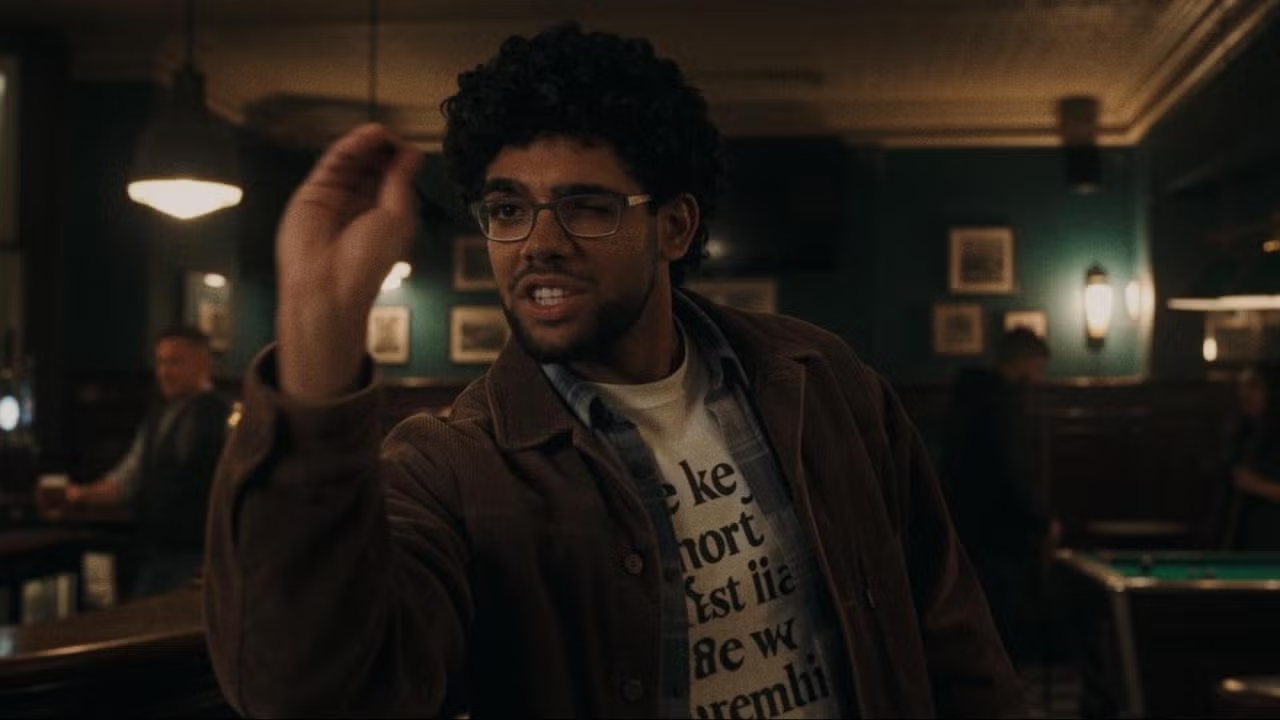
Startup Higgsfield AI caused a stir in May when it released its 95-minute AI-generated film “Hell Grind” at the Marché du Film at the Cannes Film Festival. While it was criticized for its nonsensical plot, the film impressed some audiences with its stunning technical visuals.
And now it’s letting people in on the prompts used to create the movie.
The San Francisco AI startup launched Higgsfield Academy in August, opening up the techniques used to create AI film in an effort to educate the next generation of filmmakers (and get them to use its AI platform, Cinema Studio). The company does not claim to be a film studio but instead sees its feature-length films as tools to teach the next generation of filmmakers.
The debut of this program comes amid a broader debate over AI, with studios and some creatives increasingly embracing the technology while large swaths of the Hollywood community continue to reject it on principle.
Higgsfield has benefited from the increased appetite for AI. Within the last 14 months, the startup has surpassed a $500 million annual run rate, which it claims makes it the fastest-growing generative AI company in history (although in the constantly changing world of AI, these records tend to shift quickly). Higgsfield.ai sees over 31 million monthly visits and serves over 26 million users worldwide.
The company has been teaching users how to use its technology with videos on YouTube and providing one-on-one assistance to its enterprise clients, but the newly minted Academy feature allows users to become “certified” in the technology for free.

The technique behind AI consistency
Mahi de Silva, Higgsfield’s co-founder and CEO, said the company sees the opening up of the prompts that created “Hell Grind” as a way to close the gap between the AI demos that have proliferated across the film industry and the reality of actually using the technology in production.
“One of the early criticisms of generative AI platforms is that people walked into the studios, they showed them a demo. They said, ‘Look, for a limited time, you can sign an exclusive deal with us. You have to commit $100 million to a contract, and trust us, we’re going to make it work for you,’” de Silva told TheWrap. “And I think the companies that did that have completely overpromised and underdelivered.”
Higgsfield’s approach, he said, has been informed by that skepticism. Rather than asking filmmakers to abandon the skills they have spent years honing, the company wants to incorporate them into the AI workflow.
“That gap between that great demo and how people actually get their hands dirty and get to use their platform — that’s really the motivation around this open sourcing,” de Silva said.

The company believes that a filmmaker who understands cameras, lenses, lighting and set design can apply that knowledge to generative media even if the tools themselves are new.
The Academy tool goes beyond simply video tutorials and now offers a more formal curriculum, allowing users to study the same workflows behind Higgsfield’s films.
The prompts are intentionally detailed. A single shot can require instructions around characters, environments, camera movement, lighting, action and continuity — as well as assets that have already been built within Cinema Studio. These intricacies make it so that, according to de Silva, consistency can really only be gained within their proprietary platform.
“You can cut and paste a prompt right out of our system and play it somewhere else, but you’re likely not to get the visual coherence, the visual fidelity from scene to scene,” de Silva said. “That’s part of our magic.”
Users can study how each scene was constructed and then begin changing it themselves.
The company said its platform is already used by 390 of the Fortune 500 companies and more than 170,000 corporate accounts. De Silva declined to characterize the company’s Hollywood customer base in detail, but said Higgsfield has also supported filmmakers with tasks including reshoots and visual effects.
For a company trying to establish itself in the entertainment industry, that distinction is deliberate.
“Our purpose in life is to be a tooling platform,” de Silva said. “I think it sends mixed signals to studios if they think we’re going to try to compete with them. So we’ve been very careful to be very clear. We are not in the content creation business. We’re in the tools distribution business.”

The company created two feature-length AI films, “Hell Grind” and “The Cully Hill Boys,” which featured the likenesses of two-time UFC champion Israel Adesanya, MMA veteran Quinton “Rampage” Jackson and livestream creator N3on, to give two stark examples to users attempting to make AI films of their own. The former is a sci-fi adventure film filled with visual effects, and the latter is a comedic action movie using real celebrities’ likenesses.
Teaching Hollywood to spot “AI Slop”
Higgsfield’s content lead and YouTube host Adil Alimzhanov has effectively become the public face of the platform, appearing throughout Higgsfield’s website and educational materials. His role is less that of a traditional AI evangelist and more of a translator between the technology and the people learning to use it.
One of the first things he wants new users to learn is how to recognize when an AI-generated image or video looks askew.
“With a lot of models, when you generate images, you get that AI slop look,” Alimzhanov told TheWrap. “The plastic look, where the skin is too smooth, the lighting is too perfect, and then the uncanny valley effect, where everything is too symmetrical, too perfect.”
Higgsfield attempts to bake some of that naturalistic look into its generation process, so the users can skip the slop step. Even a relatively simple prompt, such as a “girl standing in a park,” can produce a shot with a more deliberate camera angle, film grain, skin texture and lighting rather than requiring the user to specify every cinematic attribute from scratch, Alimzhanov said.

But the AI educator argued that users still need to develop their own visual literacy.
“First you need to learn how to identify slop,” he said. “We just show you a ton of visuals, and you have to identify what’s wrong in the image or the video.”
The reason, he said, is that audiences may not consciously identify a specific flaw, but they can still sense that something is off — and that can pull them out of a story.
That emphasis on taste and visual judgment could prove to be as important to Hollywood as it implements the technology itself. The industry already has no shortage of AI tools capable of generating images and video, but the harder question is how filmmakers can use those tools without losing the visual storytelling, continuity and intentionality that audiences expect from professionally produced entertainment.
For Higgsfield and its global filmmaking partners, they want to work in tandem with creatives rather than replace the existing production process.
Higgsfield is betting that the fastest way to get there is not to tell Hollywood that AI will replace its existing production process, but to teach filmmakers how to incorporate it into the one they already have.
“We firmly believe that machines are not going to be a substitute for humans. The machines are good at taking very complex tasks and simplifying them, but art doesn’t exist without a storyteller,” de Silva said. “We see this as really a celebration of creators and talent, and giving them access to realizing their creative talent at a tiny fraction of what it used to cost.”

>

Chris Hansen, you know how this looks, right?
Because that Primetime movie trailer starring Robert Pattinson makes the former “To Catch a Predator” host look rather obsessed with fame.
To his credit, however, Hansen says he refuses to judge Primetime until he actually sees it (which will be next week, he says).
But during an interview with podcaster Annie Elise, Hansen gave some preliminary thoughts about the project.
“A couple months ago they came and said, ‘Hey look, we’re doing this, we’d like you to have some sort of consideration in terms of helping us with this,’” Hansen said, but noted he wasn’t actually consulted on the film and the project was made before “they” reached out. “As a reporter, it’s sort of silly for me to talk about something that I haven’t seen yet. My suspicion is that they used my name because it helps in a commercial enterprise.”
Asked his thoughts on the film’s trailer, at least, Hansen replied, “It looks dramatic. It looks very dramatic. I know [Robert Pattinson] is a popular actor and I know the director [Lance Oppenheim] is a popular guy. I also have some questions: What’s Hollywood’s motive here?”
Hansen noted he “didn’t get to choose my own guy” to play him. When asked who he would have picked, he replied, “years ago I had crafted a script and thought Denis Leary would be a good guy to play me — depending on the age of it all.”
All that said, “I’m busy being the real Chris Hansen.”
Primetime also stars Merritt Wever, Skyler Gisondo, Phoebe Bridgers, Matthew Maher and Bokeem Woodbine.
“To Catch a Predator” was a recurring series of segments on Dateline NBC that ran from 2004 to 2007. The program worked with watchdog group Perverted Justice to lure men who believed they were arranging sexual encounters with minors to a sting house where they were confronted by Hansen, a camera team and police. The program was canceled amid legal and ethical fallout after one of the show’s suspects shot himself as police and NBC’s cameras entered his home.
Primetime is set to hit theaters Sept. 25.
>

The Buss family is selling its remaining 17.8% stake in the Los Angeles Lakers to Bob Iger and Josh Kushner, ending the family’s nearly five-decade ownership of the NBA franchise, ESPN’s Shams Charania reported Monday. The Buss Family Trust received the four votes among six siblings needed to exercise a tag-along provision tied to Mark Walter’s sale of his controlling stake. The additional shares would bring Iger and Kushner’s ownership to roughly 83% and mean Jeanie Buss will no longer serve as Lakers governor once the transaction is completed.
“We have decided as a family to sell the remaining Buss Family Trust shares to the Bob Iger group as part of the ongoing transaction,” the family said in a statement to ESPN. “We love the Lakers, Laker fans and will continue to support Los Angeles; but it is time to use this opportunity to move on and exit gracefully while we still can.”
The decision cuts short an arrangement that would have kept Jeanie Buss as governor of the Lakers through 2030. She has held the position since 2013, following the death of her father, Jerry Buss, who purchased the franchise in 1979. NBA guidelines require a controlling owner or governor to own at least 15% of a franchise.
The Buss family sold control of the Lakers to Walter last year in a deal that valued the team at $10 billion, then a record for a U.S. professional sports franchise. Less than a year later, Walter [agreed to sell his controlling stake to Iger and Kushner] at a $12.5 billion valuation.
As TheWrap [previously reported], Iger and Kushner had initially been pursuing a potential NBA expansion franchise in Las Vegas before pivoting to the Lakers. The pair hired bankers through Thrive Eternal, the sports investment arm of Kushner’s Thrive Capital, in June to explore an expansion bid before learning Walter was willing to sell.
Iger, who stepped down as Disney CEO earlier this year, serves as a senior adviser to Thrive Capital. He previously worked as a venture partner at the firm between his two stints leading Disney.
The Lakers transaction still requires approval from the NBA’s Board of Governors, whose next meeting is scheduled for Sept. 15 and 16 in New York. Kushner must also sell his minority stake in the Miami Heat before the deal can receive league approval.
>
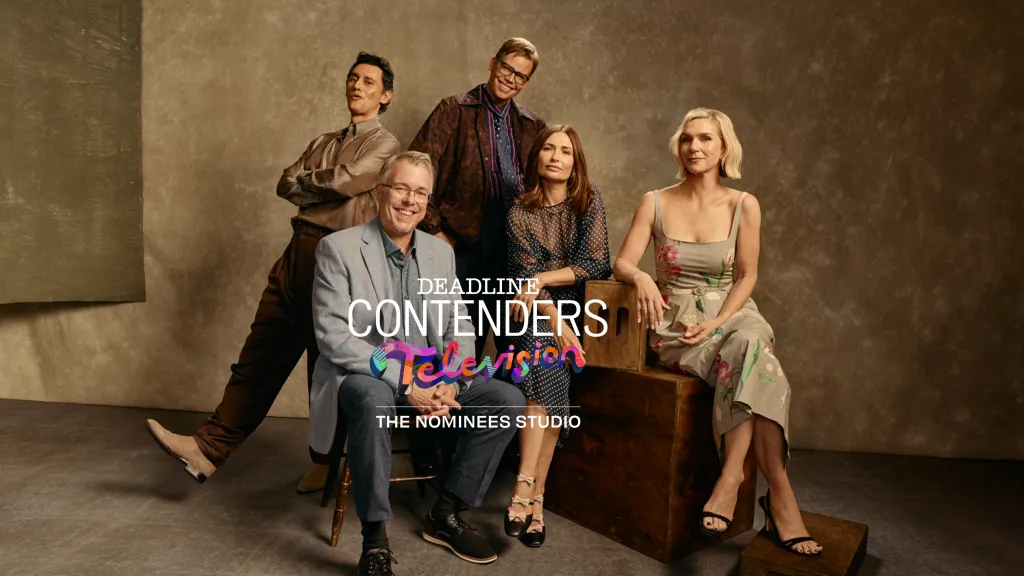
Pluribus creator and executive producer Vince Gilligan learned a big lesson about saying too much about a series when he answered questions about the meaning of his first big hit, Breaking Bad. “I was always talking about ‘this is what this means. No, you’re wrong and don’t interpret it that way.’ And that was a mistake on my part. I want the people who watched the show to tell me what it means. I really think they know better than I do,” he says now.
“We make the show. I can’t see the forest for the trees when we’re making it, but I like the idea of other people interpreting it for me. I think everyone else’s interpretation of this thing is way more interesting than mine is.” And indeed it is a rich concept that has viewers wondering if it is saying profound things about the effects of the pandemic, AI, immigration and other topics of the day. The fact is Gilligan came up with the idea 10 years ago and has been refining it in his head ever since. He welcomes every interpretation.
Gilligan joined his cast for a conversation Sunday at Deadline’s Contenders Television: The Nominees Studio to talk about Pluribus, his latest series following massive hits Breaking Bad and Better Call Saul. This one is a genre-breaking science fiction drama in which a global virus has turned almost all human beings into a hive mentality of shared bliss. A few have somehow missed catching it and are now fighting back, notably Carol (Rhea Seehorn), a novelist who must try to save the world from this newfound happiness.
Gilligan and Seehorn participated in the Contenders discussion with co-stars Karolina Wydra, who plays Zosia, Carlos-Manuel Vesga as Manousos, and guest star Jeff Hiller as Larry. All have received Emmy nominations along with the series, which landed 18 nominations overall including for Gilligan in the writing and directing categories.
Watch their conversation below and scroll down for photos from the event.
Originally, Gilligan’s thought was for the Carol role to be a man, but when he started actually writing it was Seehorn he had in mind. For Seehorn, who had an acclaimed supporting role in Better Call Saul, and for whom this is her first starring role on a series, it is especially sweet, even being called by her character name on the street.
“Yeah, it is my first lead role, and it’s been so much fun. And yes, I got a couple of ‘Hello, Carol’s now and then in grocery stores, which is pretty funny, but the fans have actually been amazing,” she said. “And the fact that the show, including what Vince is saying, that it is open to interpretation and has engendered really nuanced conversations and these amazing wild swings that take some tone from having comedy to having deep psychological drama and questions and stuff, just makes people actually come up to me with really interesting opinions about the show, and they feel very invested and they feel very invested in the character. And I feel very lucky that it is something that we made, that we’ve made to the best of our abilities, and so we were all so proud of it.”
Wydra felt an immediate connection with Seehorn’s Carol. “What I love about it is that Zosia is there to provide for Carol everything that she needs. I’m there to protect you. I’m there to make you feel seen and good. And it was great to play someone that doesn’t have the full spectrum of emotion, someone that you know is joyous, unflappable, and you know have these beautiful scenes with you where you have these feelings,” she said.

Rhea Seehorn
Anthony Avellano for Deadline

Vince Gilligan
Anthony Avellano for Deadline

Karolina Wydra
Anthony Avellano for Deadline

Carlos-Manuel Vesga
Anthony Avellano for Deadline
Vesga, the first male Colombian actor to be nominated for an Emmy, plays a man, like Carol, who has not been infected and feels very much alone. It is something he has felt in his own way being someone from another country suddenly in America and playing a role like this. “I would love to say that I was dreaming about this, but I wouldn’t even allow myself to dream this. It wasn’t a possibility. I’m just saying that this doesn’t happen to a Colombian actor, and it did,” he said, praising on Gilligan making it happen for him.
Jeff Hiller, who won an Emmy last year for Somebody, Somewhere and co-stars in another big nominated show this season Widow’s Bay, also from Apple TV, was to say the least surprised by his Guest Male Actor in a Drama Series Emmy nomination for Pluribus since the role doesn’t last more than seven minutes of screen time, and he says he really had no idea what it was about when called in to play it. He gives much credit to Seehorn and some behind the scenes artisans for being so generous.
“Well, it’s always hard to be a guest star, and it’s especially hard to be a guest star on a show that has this complicated of a premise. And the only way that it worked is because Rhea gave up a Sunday, a very precious day off on this very grueling shoot, invited me over, and we rehearsed for, like, hours.” he said, also noting other women on the team who helped that dya. “It was the gift of of those three women on a Sunday afternoon that made the performance.”
>

The U.S. Open mixed doubles field’s biggest stars might be its unknowns

Chris Hansen Reacts to Robert Pattinson’s ‘Primetime’ Trailer

Actress Hayden Panettiere Dies at 36 – News
-

 movies3 months ago
Search For Canadian TV Actor Stewart McLean Now Homicide Investigation
-

 Fashion9 years ago
These ’90s fashion trends are making a comeback in 2017
-
Fashion9 years ago
According to Dior Couture, this taboo fashion accessory is back
-
Fashion9 years ago
Model Jocelyn Chew’s Instagram is the best vacation you’ve ever had
-
Fashion9 years ago
Emily Ratajkowski channels back-to-school style
-
Fashion9 years ago
9 Celebrities who have spoken out about being photoshopped
-
Fashion9 years ago
Your comprehensive guide to this fall’s biggest trends
-
Fashion9 years ago
A photo diary of the nightlife scene from LA To Ibiza