
Sports
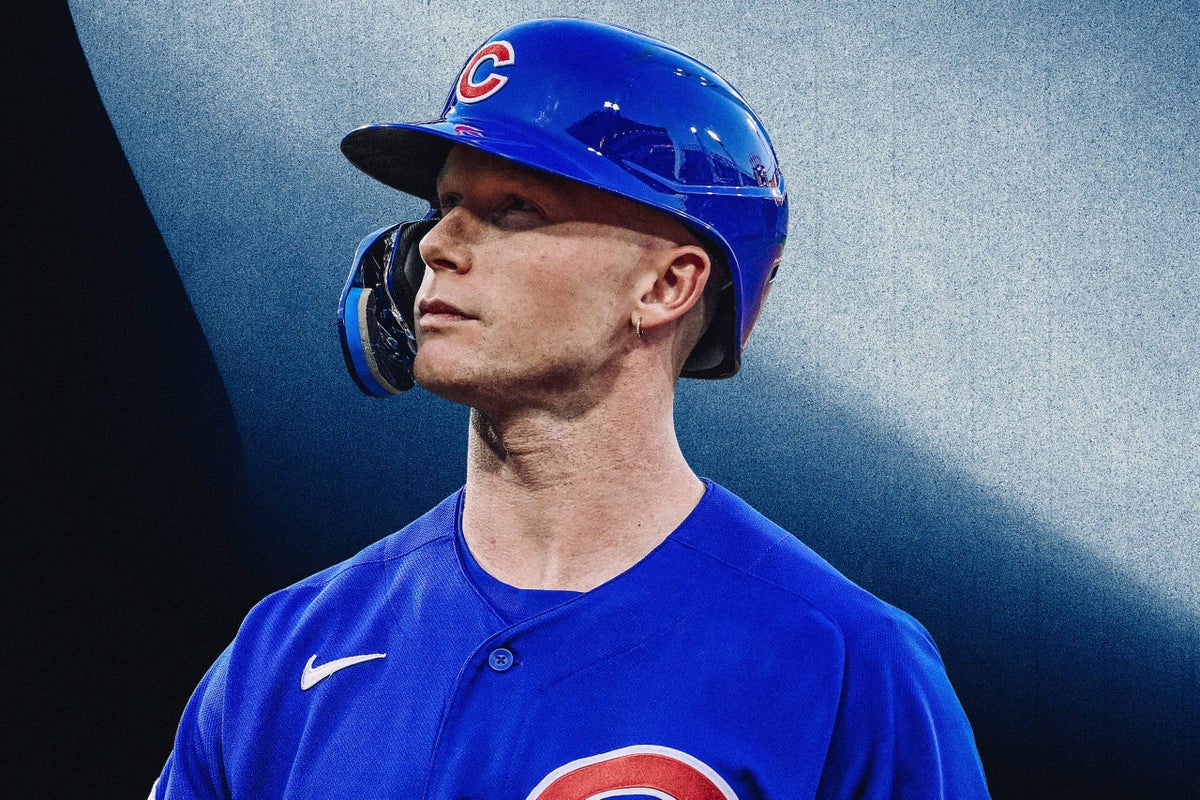
Pete Crow-Armstrong lets his mind wander during games. He might be onto something

This story is part of Peak, The Athletic’s desk covering the mental side of sports. Sign up for Peak’s newsletter here.
There are plenty of reasons why Pete Crow-Armstrong, the center fielder for the Chicago Cubs, is a frontrunner for the National League MVP award.
He hits for power, runs like the wind and plays premium defense in center field. But last week, I came across an interesting mental approach he revealed on a podcast earlier this year.
Crow-Armstrong was discussing the grind of playing a full season in center field and the challenges of mastering the psychological side of the sport when he said something athletes usually don’t admit.
“The time in between pitches — like if nobody’s on — I’m letting my mind wander,” Crow-Armstrong said on The Old Man and the Three. “I’m looking up into the bleachers, seeing who’s there. You got to check out sometimes so you can lock it back in.”
The interview took place in February, before the season. In it, Crow-Armstrong admitted that he struggles with the mental side of baseball the most, and his comment flew in the face of conventional athlete talk about intensity and focus.
But at the core is a deeper scientific concept. His instinct to look around and zone out for a moment tapped into a mind state which experts call non-directional attention — or the soft, loose focus that occurs when your mind is wandering.
“It is a great strategy,” said Justin Anderson, a sports psychologist and the author of “Intentional Attention: The Science and Practice of Focus Under Pressure.” “It recharges the attentional batteries a little faster. Attention takes a lot of energy. The real skill becomes, can I get to be locked in and then can I unlock and relax in between?”
Anderson has worked with athletes across all professional and college sports, including Major League Baseball. What was particularly interesting about Crow-Armstrong’s idea, he said, is that researchers have found that looking out at objects on the horizon — skylines, clouds, water, trees — can be particularly restorative, which could make it useful for baseball players, who can, depending on the stadium, look at all four.
Scientists are still trying to understand exactly what’s happening in the brain, but the research aligns with Attention Restoration Theory, which was developed by psychologists Rachel and Stephen Kaplan in the 1980s and proposed that viewing natural environments could help aid our ability to concentrate following mental fatigue.
Looking up at the clouds — or even a random scene in the Wrigley Field bleachers — produces what experts call a “soft fascination,” a mental state which requires little mental effort. Even a small burst can be restorative.
“That’s a renewal state,” Anderson said. “And we’re finding that there are behaviors that we can do — attentional cues that we gravitate towards — that can help that happen faster and make us feel better.”
It’s one reason that Anderson warns athletes against the practice of scrolling on their phone, which is commonplace in clubhouses and locker rooms and pretty much every other place on earth.
It’s not just that athletes could be exposed to unfiltered feedback or messages on social media, which may impact their mood. It’s that phones are actually a poor way to tap into non-directional attention.
“It might sort of feel a little relaxing from a behavioral standpoint,” Anderson said. “But it holds our attention, so people tend to feel a little more fatigued after being on social media.”
The one thing a mental performance coach has found to be most disruptive
Elise Devlin
Baseball players, of course, are not the only athletes who can benefit from letting the mind wander. It’s common in golf, where players are required to keep focus for hours during a round. Earlier this year, Colin Morikawa dealt with an excruciatingly long wait on the 18th hole by intentionally staring off into the Pacific Ocean. He said it helped take his mind off the pressure, and he went on to win his first tournament in 847 days.
It could also be beneficial during a changeover in tennis or as the quarterback sits on the sideline when the other team has the ball.
Anderson has worked with golfers who use crossword puzzles or word games on their phone in the middle of a round. Others have gone as far as reading romantic fantasy novels.
The latter may not be a perfect example of non-directional attention — reading takes quite a bit of focus. But it’s likely better, Anderson said, than scrolling social media’s algorithms.
For athletes like Crow-Armstrong, the next step, of course, is moving from the renewal state and using the recharged battery to concentrate. In other words: it’s about locking back in.
To toggle between the states and regain your focus, Anderson recommends a consistent routine — a deep breath or two, paired with a behavior or thought. Think about the next play. Take a deep breath. Take two steps in as the pitcher releases the ball.
“The breath kind of brings our attention back to our core — our center,” Anderson said. “Deep breaths can relax us a little bit more, so it also has a physiological component to it.”
“The key is to be intentional. Where are my eyes? What do I want to say to myself?”
The process of concentration is important. But so are the little mental breaks. The baseball season is long. The mental strain is daily and arduous.
Sometimes the best way to find a deep focus is to take a moment to let your mind drift.
>
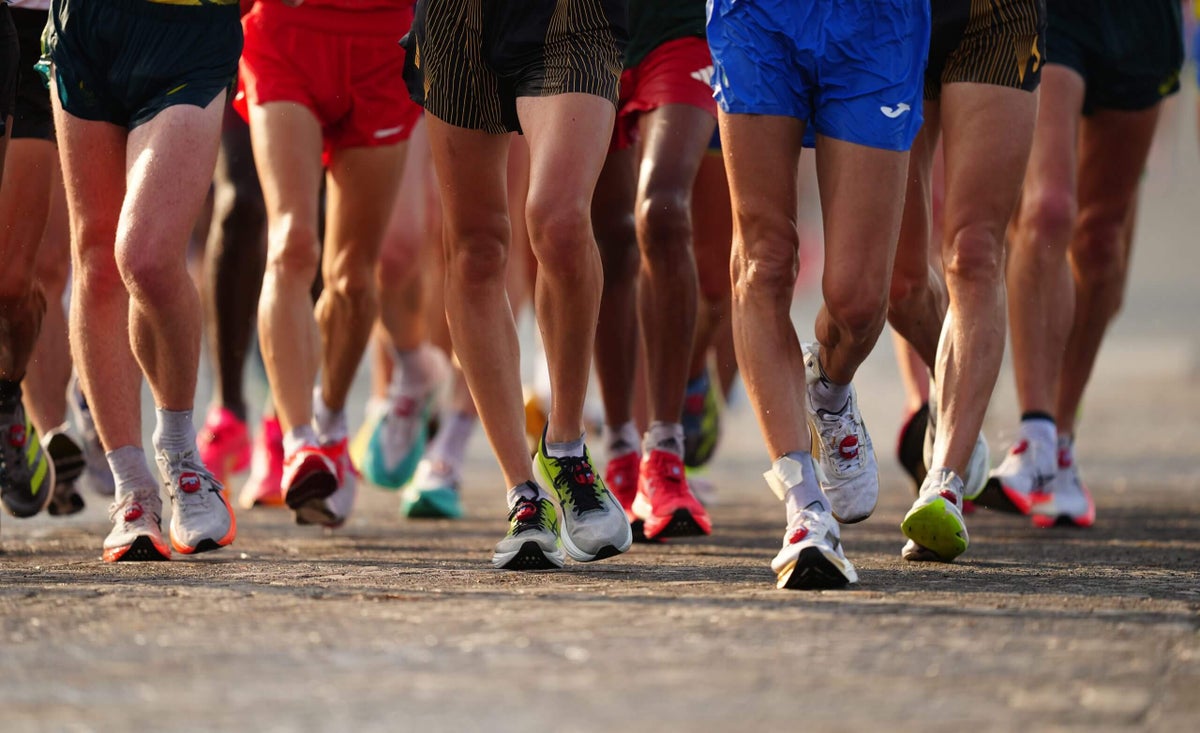
It took a while, but the Edmonton Marathon admits it was too long. The race was 674 meters longer than the event’s 26.2-mile distance, organizers admitted Tuesday in a statement and apologized for miscalculating the length of its marathon and half-marathon races.
“The review has identified an error in how this year’s detour-related course adjustments were calculated, and for that we sincerely apologize,” race director Tom Keogh said in the statement. “The event owns this error, and we take full responsibility. We appreciate the many participants who have emailed and the ones that we have followed up with to have additional conversations.”
After receiving complaints from runners, the organization initially defended its course and measurements, but Keogh said later that the certification process was done “with the best information it had at the time,” as additional distance had been added due to a bridge detour. According to Keogh, the original distance was “partially offset with adjustments made to the course’s west end turnaround point.”
Upon further review, the organization determined that the turnaround point didn’t fully offset the additional detour, resulting in an extra distance of 674.4 meters (approximately 0.42 miles) for the half-marathon and marathon courses.
The half marathon, which served as the Canadian Half Marathon Championships, was won by Rory Linkletter and Jadyn Keeler. After the race, Linkletter was among the most vocal critics to speak out about the length of the course and the difference between the GPS and map data change from 2025 to 2026.
“This makes no sense,” Linkletter said in a video posted to Instagram before Tuesday’s statement. “The right thing to do here is to re-measure the course, admit that this was a long course and let people have the satisfaction that, ‘Hey, for 21.85k I ran 64.30 something.’ … That would make everyone feel better. Instead, you’re telling us, ‘You actually ran slow.’”
Some participants ran qualifying times for future races such as the Boston Marathon, and the organization said it is working with Athletics Canada and relevant partners to determine how this year’s results can be recognized.
This event marked the 35th edition of the marathon race in Edmonton, which is often called the Friendly Marathon.
>
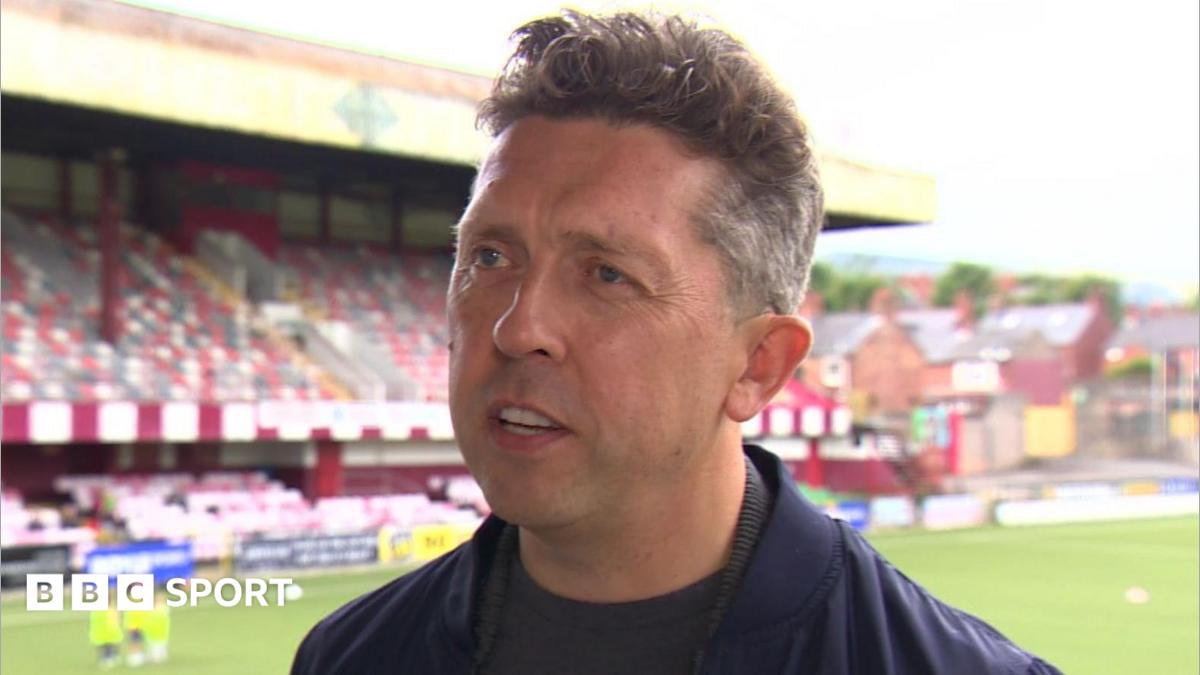
TIG’s takeover has been a far from a smooth journey and has taken over two years with their first attempt halted when club members stopped talks before the group took their offer off the table in January.
However, in June, the members authorised for the club’s management committee to enter formal negotiations with TIG and Monday’s eventual vote passed with 81% in favour.
“If you stand back and look at this, Cliftonville is a club that is held dearly by so many people,” he added.
“It was owned and controlled by the membership, so obviously, members are going to be reluctant to let it go effectively, especially to a private company. I understand all of the complexities around that.
“If you want to be open and honest about it, it just goes to show how much this club means to people. I just hope when it is complete, we can move together stronger as a team.”
Devine added that the Canadian consortium will be investing long-term and that it is a “passion project” for the group.
“This is a long-term play, this is not a five, six or a seven-year thing,” said Devine.
“One of the first things the guys said to me when we looked at this was that they are 25-year people, they are long-term. That is very unusual.
“These guys have spoken about ROIs [return on investment] or return in money; this is a passion project and an impact investment into the local area.”
>
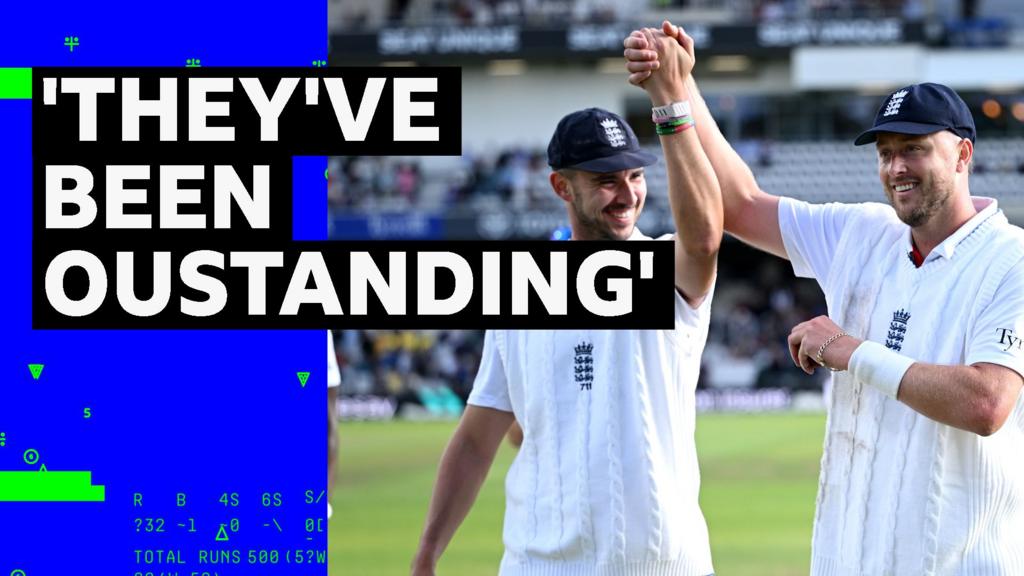
Ollie Robinson and Josh Tongue have a day to remember as they both take five-wicket hauls, as England bowl Pakistan out for 171 on day one of the first Test at Headingley.
>

What’s an extra half mile? Edmonton Marathon apologizes after miscalculating length of race

Windows 10 ESU Cheat Sheet: Cost, Eligibility, and Coverage

David Krumholtz Clarifies Status of Career After Shocking Announcement
-

 movies3 months ago
Search For Canadian TV Actor Stewart McLean Now Homicide Investigation
-

 Fashion9 years ago
These ’90s fashion trends are making a comeback in 2017
-
Fashion9 years ago
According to Dior Couture, this taboo fashion accessory is back
-
Fashion9 years ago
Model Jocelyn Chew’s Instagram is the best vacation you’ve ever had
-
Fashion9 years ago
Emily Ratajkowski channels back-to-school style
-
Fashion9 years ago
9 Celebrities who have spoken out about being photoshopped
-
Fashion9 years ago
Your comprehensive guide to this fall’s biggest trends
-
Fashion9 years ago
A photo diary of the nightlife scene from LA To Ibiza