
Tech
Anthro Energy breaks ground on factory that could pave the road to solid-state batteries


Anthro Energy broke ground on Tuesday on a factory in Louisville, Kentucky, that can make enough battery materials for more than 300,000 electric vehicles.
But the facility’s headline output, 25 gigawatt-hours worth of electrolytes, is just part of the story. Anthro’s factory could give solid-state batteries a much needed boost in the U.S.
Battery manufacturers are scouring the planet for materials that aren’t encumbered by “foreign entity of concern” problems — in other words, materials that aren’t somehow controlled by Chinese companies. Anthro hopes its new facility, scheduled to start production in 2028, can help fill that need for many U.S. companies.
“When it opens, we’ll be serving domestic, high-spec customers, this emerging ecosystem for battery production where they frankly just needs electrolytes — a domestic source of China-free supply, FEOC-free supply,” David Mackanic, co-founder and CEO of Anthro Energy, told TechCrunch in an exclusive interview.
The startup, which raised its first funding round just four years ago, wants its Kentucky factory to become a key node in the emerging U.S. battery supply chain. “Within a 12-hour drive, you can get to 70% of the battery production facilities in the United States that exist today,” he said.
To build the factory, Anthro received a $24.9 million award from the Department of Energy under the Bipartisan Infrastructure Law, and another $18.4 million in investment tax credits under the Inflation Reduction Act. Kentucky pitched in another $2.3 million in tax incentives in exchange for creating 110 permanent jobs.
The Louisville factory will be set up to make a range of electrolytes, though Mackanic said he’d eventually like to see much of the output dedicated to Athro’s own polymer product, Proteus, which is designed to drop into an existing production line with minimal tweaks — a major reason why the startup can begin production using other company’s formulations. Once customers validate Anthro’s own material, the startup can shift production accordingly.
There’s every reason to think at least a portion of those customers will make the switch eventually. Proteus is a polymer that promises pave the way to solid- and semi-solid-state batteries, a holy grail of the battery industry. Chinese companies are reportedly looking to start trial production of solid-state batteries in 2027.
Solid-state batteries promise to solve a range of challenges presented by the lithium-ion batteries commonly used today. Solid-state batteries help boost energy density, and by eliminating flammable electrolytes, they should reduce the risk of fires. Also, because they form a solid barrier between the anode and cathode, they prevent the appearance of dendrites, which are spiky growths that can bridge the two electrodes and cause short circuits.
But for all their promise, solid-state batteries have so far failed to reach their potential because no one has figured out how to cost-effectively manufacture durable cells at scale.
Anthro might have a solution to those challenges. In its manufacturing process, Anthro’s electrolyte flows into the cell as a liquid, allowing it to penetrate the anode and cathode, just like today’s liquid electrolytes. Later, it firms up, essentially gluing the two parts of the battery together.
The result is a cell that, depending on the formulation, is not just stronger — “10 to 15 times stronger than with a liquid electrolyte,” Mackanic said — but can be flexible, too. Ultimately, he envisions those qualities paying dividends not just in EVs, but drones and robots as well.
Plenty of other battery materials companies have failed at this precise moment, when they move from small-scale to larger scale production. But Mackanic is optimistic that the federal funding will help Anthro vault over the valley of death.
“To get into big applications, you have to have big production,” he said. “The Department of Energy award solves a lot of the chicken or the egg problem.”
When you purchase through links in our articles, we may earn a small commission. This doesn’t affect our editorial independence.
>
On Tuesday, OpenAI announced a new batch of new security policies focused on containing security incidents while models are being tested. The new safeguards include more detailed monitoring of models during the development process, as well as greater emphasis on alignment and security during the post-training process.
“As models become more capable, the risks associated with developing and testing them internally also grow,” the company said in a blog post. “Our standards for monitoring, alignment, and security must stay ahead of those risks.”
The new measures are one of the first public changes in OpenAI’s safety practices since the immediate aftermath of the Hugging Face incident, which was disclosed on July 26th.
OpenAI representatives emphasized that the measures are not a direct response to the Hugging Face incident, but were also provoked in part by the cybersecurity capabilities of the forthcoming Astra model, as well as the overall pace of progress in AI development.
In the same post, OpenAI disclosed that it had freezed reinforcement learning for two weeks following the Hugging Face incident, but had since restarted many of the less risky models.
“Our largest planned frontier RL run remains on hold while we conduct smaller-scale training and evaluations to assess model behavior, validate our safeguards, and establish more evidence of alignment before proceeding,” the post reads.
Speaking to reporters, OpenAI’s VP of research Amelia Glaese emphasized that the strictness of the controls would increase as models became more capable, with the largest models facing the greatest scrutiny.
“We have put in place requirements and expectations for safe development,” Glaese told reporters. “Those requirements and expectations vary with the level of risk that we that we see.”
OpenAI has been criticized for poor network security practices in the wake of the incident, which saw models escape their training environment by compromising a packet-installation utility that retained access to the internet. The new safeguards include stronger network isolation practices, although the specifics remain vague. Under the new system, the post says, “a single compromise of a workload or supporting service does not, by itself, allow for unauthorized access to the Internet, or other internal networks.”
The strongest safeguard is the monitoring system, which will examine tool actions, available reasoning traces and activity logs for a variety of unauthorized behavior. OpenAI says they aim to issue alerts within 30 minutes of the concerning activity.
OpenAI estimates that the compute burden of that monitoring will be roughly 20% of whatever process is being monitored. The company promised further details on the system in a forthcoming blog post. OpenAI’s official post-mortem analysis of the event is also still pending.
When you purchase through links in our articles, we may earn a small commission. This doesn’t affect our editorial independence.
>
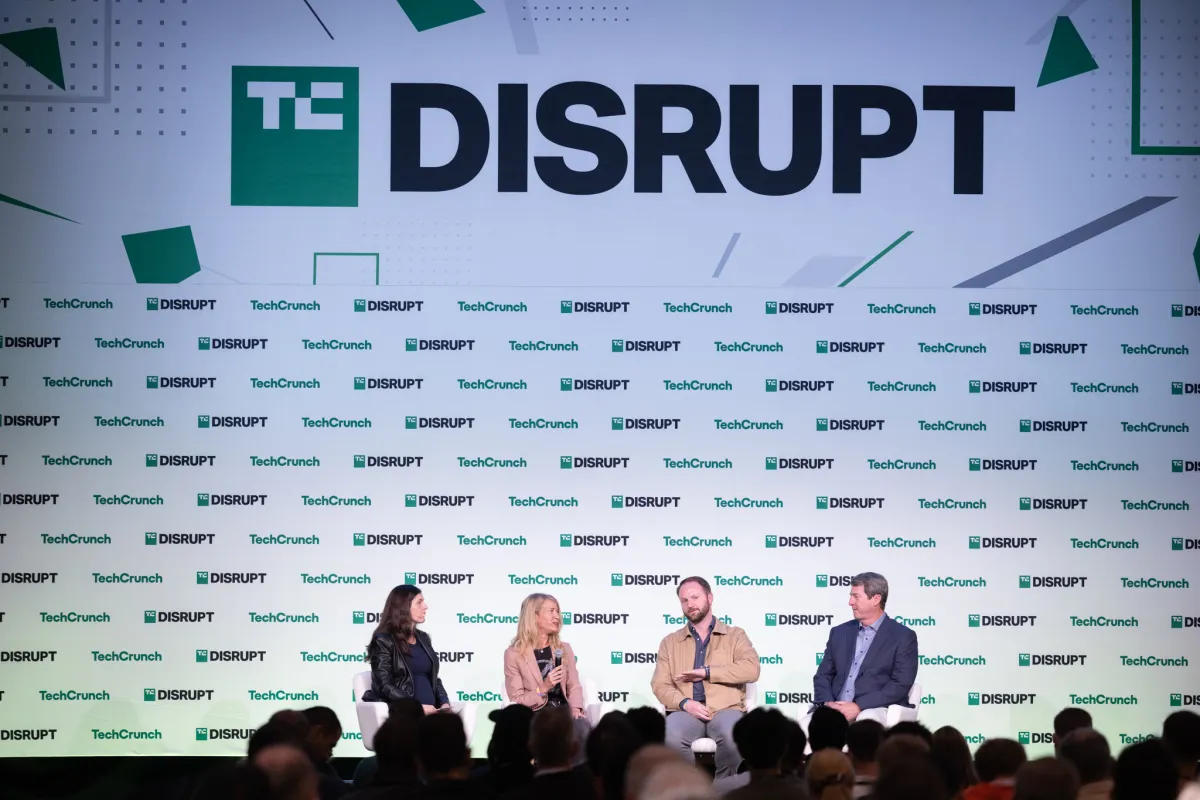
The lowest prices for TechCrunch Disrupt 2026 end in just a few days, this Friday, August 21 at 11:59 p.m. PT. Once that window closes, your chance to save up to $300 on your pass, or get an even larger discount on group pricing, will come to an end.
If you’ve been circling around Disrupt, then now’s the best time to lock in your pass and start getting ready to join the rest of the startup community gathering in San Francisco from October 13-15 at Moscone West!
If Disrupt has been on your radar, now is the time to lock in your pass before Friday’s deadline.
TechCrunch Disrupt: Where the startup ecosystem moves forward
Each year, TechCrunch Disrupt brings together more than 10,000 founders, investors, and startup community members, driving innovation forward. And for our event this year, you’ll find a keen focus on building and developing in the AI era across all of our stages of programming. If you want to be on the cutting edge running into 2027, this is the event for you.
And you don’t have to be a founder to get value out of Disrupt. Whether you’re raising capital, scouting investments, hiring talent, launching a startup, or building strategic partnerships, Disrupt puts you in the middle of the conversations shaping what’s next and can help you make the connections that propel your next year of growth.
Here’s just a glimpse of what you gain by attending:
- Actionable insights from founders, operators, and VCs actively building and investing in today’s market. Our agenda features a wide range of topics, curated to focus on insights that lead to action.
- Direct access to investors looking for their next portfolio company and founders seeking the right partners. Plus, you can get AI-powered networking opportunities through our app or take deeper dives through our many Side Events.
- Early visibility into emerging technologies and startups before they break into the mainstream through our Exhibit Hall.
- High-value connections that lead to funding, partnerships, customers, and career opportunities. Disrupt is about growth, both for startups and yourself!
What’s new at TechCrunch Disrupt 2026
Keeping that focus on building companies in the AI era in mind, we have a great slate of new stages and programming to inspire and educate:
- Real World AI Stage: AI is moving beyond the screen and into the physical world. Explore how robotics, autonomous systems, manufacturing, healthcare, and defense are turning AI breakthroughs into real-world products and businesses.
- Smart Money Stage: Follow the money. From fintech to stablecoins to payments, embedded finance, and AI-driven financial services, this stage explores how technology is reshaping the movement of capital.
- Smart Systems Stage: Every AI breakthrough depends on the infrastructure behind it. Discover the innovations in chips, compute, energy, networking, and data centers that will determine the next generation of technology companies.
Our Disrupt, AI, and Builders Stages are also returning this year, and we have excellent speakers joining us across them all:
You can explore the rest of our extensive speaker lineup right here!
Don’t miss out on the best TechCrunch Disrupt’s prices!
This is your last chance to save before rates increase, so lock in your pass before Friday, August 21 at 11:59 p.m. PT to get the best prices, whether you’re a student looking to get their introduction to the community or an established investor in search of an untapped opportunity.
When you purchase through links in our articles, we may earn a small commission. This doesn’t affect our editorial independence.
>

Etched on Tuesday announced that it has raised another $700 million at a $21 billion valuation, led by Jane Street after the famed quant fund tested and bought the startup’s AI hardware.
Even by AI standards, this valuation step-up is jaw-droppingly fast. Etched was valued at $5 billion in December. It raised a $300 million Series C at a $10.3 billion valuation in July. Now investors have doubled its valuation to $21 billion, up nearly $11 billion, in a month.
Etched delivers its AI tech as full systems that it calls “frontier inference clusters.” (Etched competitor Nvidia calls its full systems AI factories).
Co-founder and COO Robert Wachen told TechCrunch that investors are so enthusiastic because Etched has designed two new components from scratch to speed up inference — the computing process that happens after a user submits a prompt.
“Inference is built in two stages,” Wachen said, “prefill and decode.” In the mathematically and compute-intensive “prefill phase,” the system must understand the prompt, including context. In the memory-intensive “decode” phase, the system generates output tokens, meaning the actual answer the user sees.
Etched created a prefill chip that operates at low voltage, allowing it to pack in more transistors without the typical heat problems of other high-end AI chips. It can therefore process more tokens faster. Etched created a new type of memory and an interconnect for the decode process that the company calls cluster-scale memory.
“It allows many chips to connect together and use a shared memory pool at a very, very fast, low latency,” Wachen said. The result, Etched promises, is higher speeds and lower costs.
Etched is still battling the perception from its early days that it etches a particular model into its chips, meaning that each chip is somehow custom-designed to run one frontier model. That was its original intention, but is no longer the case. Etched’s systems can run any frontier model.
In the blog post announcing the new round, investment firm Jane Street said “We tested the chip and are pleased with the early results. Etched’s unique approach to inference delivers the precision we will need to support our most demanding workloads. We’re excited to now have our own rack running in our datacenter.”
Other investors in Etched include Kleiner Perkins, Sequoia Capital, Andreessen Horowitz, Peter Thiel, Tiger Global, Bain Capital Ventures, Neo, Stripes, Primary, Positive Sum, Diffusion, Argo, and Blackstone.
When you purchase through links in our articles, we may earn a small commission. This doesn’t affect our editorial independence.
>

‘My Life With the Walter Boys’ Season 3 Tops Netflix TV Charts in Week 2 With 8.7 Million Views

Alex Gibney, Raney Aronson-Rath And More To be Honored At DOC NYC

How to watch Liberty vs. Sky: TV channel and streaming options for August 18
-

 movies3 months ago
Search For Canadian TV Actor Stewart McLean Now Homicide Investigation
-

 Fashion9 years ago
These ’90s fashion trends are making a comeback in 2017
-
Fashion9 years ago
According to Dior Couture, this taboo fashion accessory is back
-
Fashion9 years ago
Model Jocelyn Chew’s Instagram is the best vacation you’ve ever had
-
Fashion9 years ago
Emily Ratajkowski channels back-to-school style
-
Fashion9 years ago
9 Celebrities who have spoken out about being photoshopped
-
Fashion9 years ago
Your comprehensive guide to this fall’s biggest trends
-
Fashion9 years ago
A photo diary of the nightlife scene from LA To Ibiza