
Entertainment
‘Club Kid’ Trailer: Jordan Firstman’s A24 Crowd-Pleaser Will Be Huge

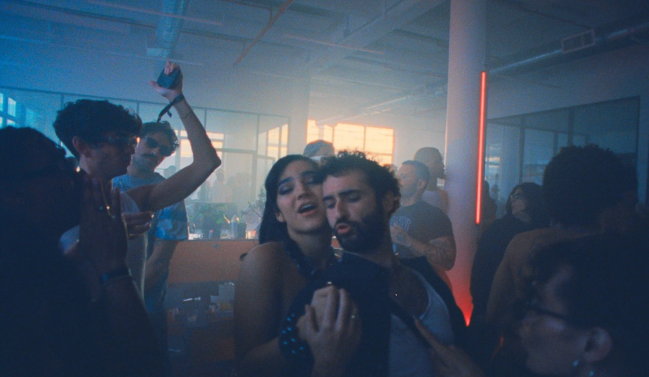
If you were at Cannes this year, you knew it: All Jordan Firstman’s electrifying directorial debut “Club Kid” needed was an A24 logo slapped on the top of it, and it’d be ready for the world. Indeed, A24 acquired this hugely crowd-pleasing party movie with a heart out of the Un Certain Regard section for a fall release.
That means they’re serious about the film‘s prospects as an awards contender: It’s playing Toronto and the New York Film Festival, and if you use your power-of-deduction skills, you’ll figure out that it’s almost certainly playing Telluride, too. Firstman, welcome to the rarefied air of the Colorado mountains. And to the gauntlet of Oscar season.


A24 has dropped the first trailer for “Club Kid,” which Firstman writes, directs, and stars in as an over-partied club promoter crashing out in New York City — and whose redemption comes in the form of a 10-year-old child he has no memory of siring. That child also comes in the form of breakout young British star Reggie Absolom, who balances a preternatural affinity for Cocteau Twins and Elliott Smith with a precocious charm that will warm even the coldest of hearts all the way to the back of the theater.
All of that’s to say that “Club Kid” deserves to be as commercial as any movie. Out of Cannes, I called the movie “brazen, funny, and surprisingly earnest” in my IndieWire review, writing that even Firstman’s online haters “won’t be able to resist what’s announced here as a major filmmaking talent with a sensitive side that belies his brash internet persona.”
The movie is also brazenly, unapologetically career, as Peter (with Firstman playing what seems like a loose version of himself) himself is gay and ends up falling for a child psychologist played by Diego Calva. That’s after Peter’s son Arlo is dropped on his doorstep by a strung-out British “innit babe” flushed out from his club-hopping past, Edison (Kirby Howell-Baptiste). Arlo is, in fact, Peter’s child from a long-ago hard-partying night. The first and only time Peter fucked a woman, and now he’s fucked himself into having to finish raising a small boy.
The wall-to-wall superb cast also includes Cara Delevingne, Colleen Camp, Vicki Pepperdine, Nigil Whyte, Eldar Isgandarov, Saturn Risin9, Miss Benny, and Alaska Riley. Producers include “Anora” Oscar winner Alex Coco, plus Galen Core, Michael Bloom, and Ryan Heller.
“Club Kid” opens in select theaters starting November 6, with a wider rollout to follow. Watch the trailer below.
>
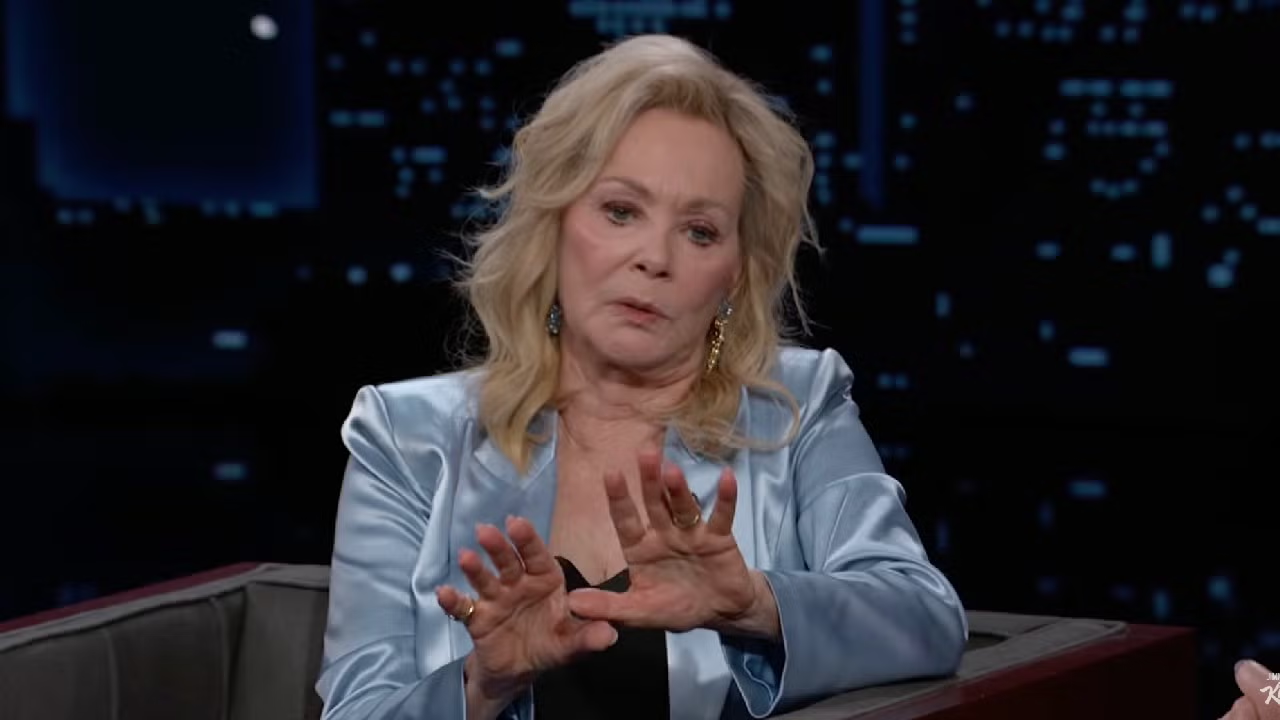
Jean Smart may set an Emmys record this year, if she wins a fifth award for her performance on “Hacks.” She’s well aware of that but, on Tuesday night, the actress largely brushed it off as “a technicality.”
Smart appeared on “Jimmy Kimmel Live!” to discuss the end of the hit HBO series, and guest host Rosie O’Donnell quickly pointed out the potential history to be made. Thus far, Smart has won lead comedy actress annually since 2021, for every eligible season of “Hacks.” If she wins a fifth time, she’ll become the first woman to complete a full sweep across a series’ run.
“Do you feel pressure? Or do you just feel like, what a gift, right?” O’Donnell asked.
In response, Smart jokingly knocked on the wood desk, before brushing off the whole situation.
“No. But, in terms of that record, being nominated — er, winning for every year your show is on, I still kind of think that’s a technicality,” she said. “I’ve got to give it to Julia Louis-Dreyfus, because her show ran eight years, and she won seven times.”
“So, I mean, if my show had only run four years, and I’d won every time, that wouldn’t have been — you know what I mean? It’s a technicality.”
Smart was a tad off in her tally, as Julia Louis-Dreyfus actually won six Emmys across the 7-season run of “Veep.” She was nominated for every season of the series, but lost in 2019 to Phoebe Waller-Bridge for “Fleabag.”
You can watch Jean Smart’s full appearance on “Jimmy Kimmel Live!” in the video above.

>
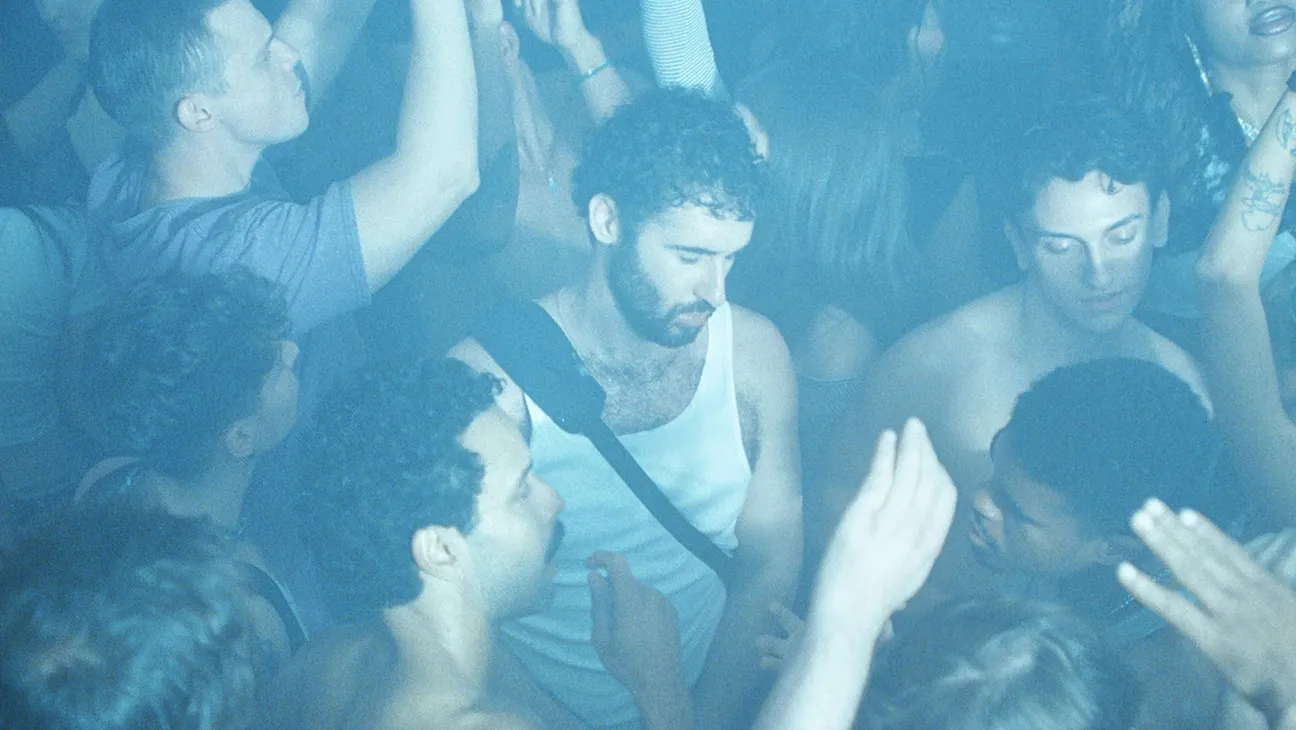
Jordan Firstman plays a washed-up party promoter who unexpectedly becomes a father to the son he never knew he had in the official trailer for Club Kid, his directorial debut that premiered in Cannes before being picked up by A24.
Firstman is Peter, who after a decade on the dance floors of New York City, has to turn his whirlwind partying life around when has to suddenly start caring for a 10-year-old boy, played by Reggie Absolom, who is the outcome of a messy threesome he had a decade earlier.
Peter proves as messy as a father, even as he shows a humanity and an increasingly heartfelt rapport with his newfound son. “I’m going to figure it out. I’m not going to let anything happen,” he tells a tearful Absolom at one point in the trailer, as challenges abound.
Firstman wrote and directed Club Kid in his feature debut and stars alongside Cara Delevingne and Diego Calva. The film premiered in Cannes’ Un Certain Regard section to rave reviews and a lengthy standing ovation before buyers quickly started circling and A24 emerged with the worldwide rights.
The ensemble cast includes Kirby Howell-Baptiste, Colleen Camp, Vicki Pepperdine, Nigil Whyte, Eldar Isgandarov, Saturn Risin9, Miss Benny and Alaska Riley.
Alex Coco (Anora) and Galen Core (Lurker) produced Club Kid, alongside Topic Studios’ Ryan Heller (A Real Pain, Splitsville) and Michael Bloom. Topic Studios also financed the film with Stay Gold as co-financier. Firstman also serves as an executive producer alongside Ian Stratford, Charles Croft and Jasmine Daghighian for Topic, Olmo Schnabel and Daniela Taplin for Stay Gold.
>
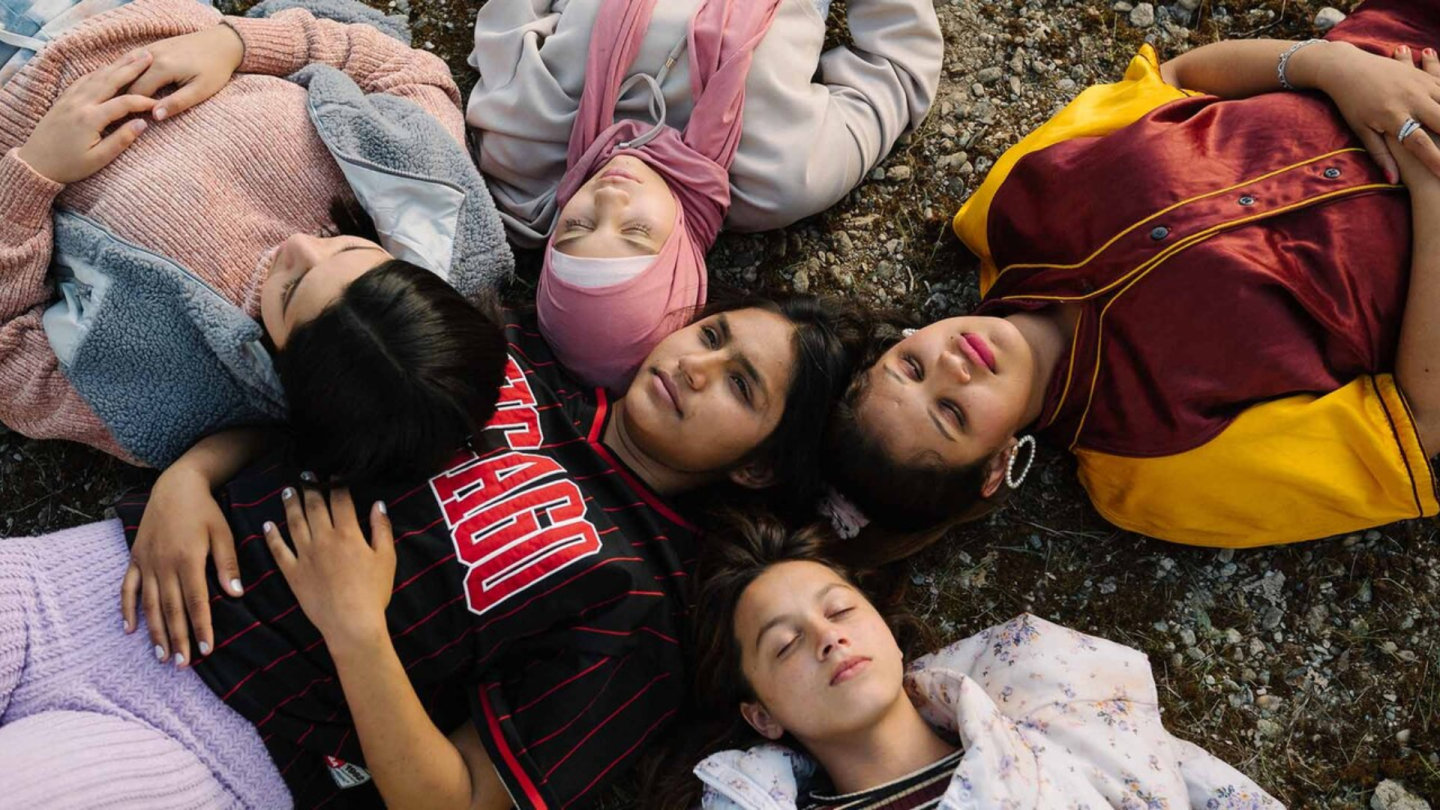
In 2022, Macedonian filmmaker Dina Duma came to the Sarajevo Film Festival with a script.
That script — about a young girl empowered by her skateboard — was so impressive that it won her the Female Voices CineLink Award during the fest’s industry program, a feat that would come with a prize of 20,000 Euros to help kickstart production.
Four years later, Duma is back in the Bosnian capital with the finished film in tow. Skateboarding Is Not for Girls is competing in the feature film selection, and Duma is still in disbelief. “It feels very full circle,” she tells The Hollywood Reporter from Sarajevo’s National Theatre on Wednesday, where we’ve sat down to discuss the making of this powerful, poignant project.
In Skateboarding Is Not for Girls, 11-year-old Adela (Efkjar Abaz) is devoted to her elder sister, 15-year-old Zara (Dzefrina Jashari). But after their father leaves for Switzerland, the girls’ mother, Esma (Simonida Selimovic), can’t make ends meet. After exhausting all options, including selling their car and moving in with a relative, Esma makes the painful decision to wed Zara for the dowry. It tears Adela apart, and she decides to enter a skateboarding competition in the hope of winning the cash prize for her family.
Inspired by a young girl she saw skateboarding in traditional Islamic dress as well as an old-school friend who was married by the age of 14, Duma’s movie is about much, much more than just skateboarding. “Even when you don’t see the man, you can feel the patriarchy,” says Duma about depicting women without agency in Skopje, Macedonia, where the film was shot. “While Adela is riding in these skate parks, this is the only space where she can be free.”
Skateboarding Is Not for Girls had its world premiere just a couple of months ago at Tribeca, but its director hopes that the “Balkan mentality” will come in handy when screening for a Sarajevo audience — where those themes of liberation, autonomy and female independence will resonate enormously.
Below, Duma discusses feeling drawn to writing characters from a female perspective, sounding the alarm on child marriage in Macedonia and feeling just a little nervous about her Sarajevo premiere: “I hope it stays with them, and they don’t forget [it] after they drink their first drink!”
Talk to me about when this idea struck you, and why you wanted to put it up on screen.
I was riding my bike on a riverbank in Skopje. I don’t know if you’ve ever been [to] Skopje. It has a beautiful river in the middle. It was a regular day, and I saw a girl who was on her skateboard, but she was dressed in Shalwar, a traditional [Islamic] dress. And she looked so interesting because she was on her skateboard dressed like that. I was amazed when I saw this image. And after some time, I kept thinking about it. She was so interesting. She was somehow very young, but also, she was very mature in a way. I didn’t start writing immediately. I started thinking, ‘How can I make this into a [film]?’ Because it’s so powerful.
A while [later], I opened my primary school yearbook and saw a picture of my friend. And I realized I haven’t seen her since then, since we were studying. And she was actually married at the age of 14, and then [fell] pregnant. I started looking for her on Facebook, just to reconnect, and I couldn’t find her anywhere. I started asking my friends, “We haven’t seen her in [such a long] time. Is she around? Is she in Skopje?” And no one knew where she was. Basically, she disappeared out of our lives. When you’re a child, you don’t think about these things. But this is the moment I thought, ‘Okay, this is worth looking up.’
Is it common in Macedonia, child marriage?
Well, we don’t know because we don’t have statistics. But I think it is. I researched. I spent a lot of time in the community.
This film is about skateboarding, but it’s also not. We follow Adela’s sister Zara and the pressure she’s under, the girls’ mother and their financial insecurity as well. It’s about these three women who have been abandoned by the family patriarch. Did you want this story centered around women?
I always want to talk about female characters. When I start writing, it’s natural for me to start speaking — even in my previous films — from the perspective of women. And in this case, it was very important to see that there are strong women in this community, who are powerful [and] who are fighting every day. But even when you don’t see the man, you can feel the patriarchy. This is something that is really true, that is really happening [in Macedonia], and it is very important for me to have it in the film. I’m glad that when you watch the film, you see it, because it’s there and it’s happening and we need to speak about it.
Was that a big motivation for you, making this film — to encourage people to talk about the issues raised?
Yes, yes. I wanted to open the conversation, especially in Macedonia, because I feel that no one is bothered by this. This place where we shot the film in Skopje, it’s 15 minutes away from the city center. It’s not on Mars, you know? It’s very close to us, but everyone ignores it. It’s just really important for me to have it out there. We need to be open to this.
Is the skateboarding symbolic? I know you mentioned seeing that young girl, but why did it feel like the right sport to use as a narrative vehicle?
Obviously, I was inspired by [the girl]. But then I started thinking [that] when you skateboard, you fall a lot, and then you have to get up. Then you repeat that. That’s very strong because it’s also like life, and in a symbolic way, it definitely works for the whole [film]. Especially for young people. Also, it was symbolic in the way that while Adela is riding in these skate parks, this is the only space where she can be free. Where she can have agency over her own body, because soon she will lose this agency — as we see with what’s happening with her sister. So she takes control of her body. She moves differently [on the skateboard]. She’s empowered.
And Efkjar Abaz is just so good. You must have known immediately she was right for Adela.
(Laughs.) Well, yes and no because she’s not a professional actress. She’s a girl from Skopje. We were doing a long process of looking for Adela and her sister. It took us one year! But when we met her, we immediately connected. You can see she’s very rebellious, [a rebel] with and without a cause. (Laughs.) Her energy is like Adela’s in real life. It was a bit of a challenge to find Zara, mostly because she’s a bit older, she’s 15. Then the girl that plays Adela tells us that she has a cousin this age, and can she come? And she came, and when we saw them together, we [thought], ‘These are our girls.’ They immediately had that connection.
They’re family, and that really translates on the screen. How hard is it to make a film in Macedonia, do you get government funding?
We are a very small filmmaker community in [Macedonia]. We make and produce three [or] four films a year. We have government funding — it’s the North Macedonian Film Agency. We have to start there, then go abroad with co-productions.
This was a co-production, right?
Yes. With Slovenia, Croatia and Belgium.
How has it been coming to a film festival like Sarajevo? Are you nervous?
Yes, I’m very nervous because we were with the film in Tribeca [Festival] and now we’re coming here, so it’s a completely different audience, and I feel that this audience is more close to the Balkan mentality. So I think they will get every detail. And also, I was here before with this script. We were doing the CineLink Industry Days [program], and we got an award here. The Female Voices [CineLink Award].
How full circle.
It feels very full circle. We’re here again. It’s obviously very awesome.
What do you hope people come away with after watching the film?
I hope it stays with them, and they don’t forget [it] after they drink their first drink. (Laughs.) I hope they’re curious. It opens curiosity for other experiences and other communities.
The 2026 Sarajevo Film Festival runs Aug. 14-21.
>

Jean Smart Brushes Off Potential Emmy Record as a ‘Technicality’

Club Kid Trailer: Jordan Firstman Plays Unexpected Dad

Canucks 2026 offseason moves: Where are they better? Where are they worse?
-

 movies3 months ago
Search For Canadian TV Actor Stewart McLean Now Homicide Investigation
-

 Fashion9 years ago
These ’90s fashion trends are making a comeback in 2017
-
Fashion9 years ago
According to Dior Couture, this taboo fashion accessory is back
-
Fashion9 years ago
Model Jocelyn Chew’s Instagram is the best vacation you’ve ever had
-
Fashion9 years ago
Emily Ratajkowski channels back-to-school style
-
Fashion9 years ago
9 Celebrities who have spoken out about being photoshopped
-
Fashion9 years ago
Your comprehensive guide to this fall’s biggest trends
-
Fashion9 years ago
A photo diary of the nightlife scene from LA To Ibiza