
Politics
Politics Home | Cross-Party Group Of MPs Write To Press Regulator Over Jason Arday Coverage

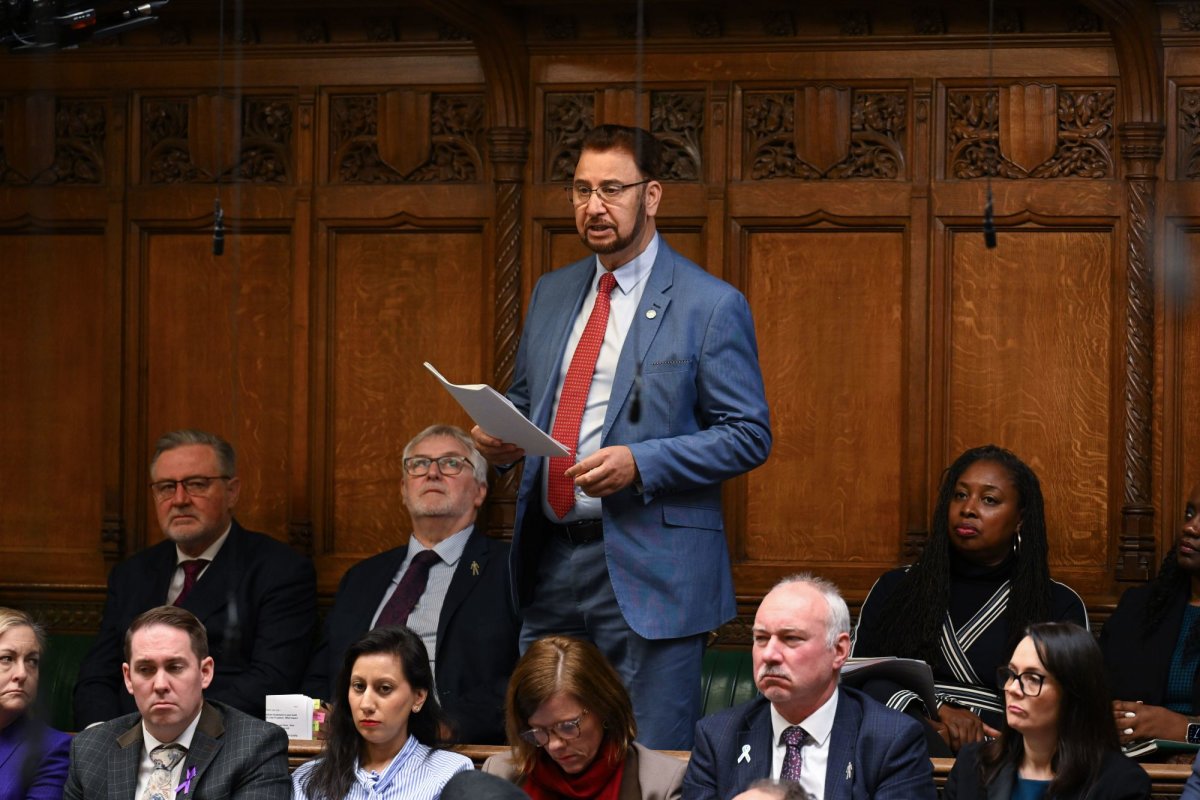

Cross-party MPs and peers have written a letter, organised by Labour MP Afzal Khan, to IPSO concerning the treatment of Professor Jason Arday. (Alamy)

4 min read
A cross-party group of MPs and peers has asked the Independent Press Standards Organisation (IPSO) to investigate media coverage of Jason Arday.
In a letter to IPSO Chief Executive Charlotte Dewar, organised by Labour MP Afzal Khan and seen by PoliticsHome, more than 50 parliamentarians say reporting on the former Cambridge academic before his death “reached far beyond what can reasonably be perceived as conducive to the public interest in relation to his alleged plagiarism”.
The letter argues it is “not unreasonable to suggest that the colour of Dr Arday’s skin was a contributing factor in garnering the level of media scrutiny he faced”, and that “Arday’s white counterparts at the University of Cambridge alone faced allegations that did not result in the same level of attention or affect.”
“His story went beyond the accusation of plagiarism and became one that critiqued him because he was Black,” the letter reads.
“Elements of the press repeatedly blamed diversity, equity and inclusion (DEI) policies as the reason he reached the status of professorship, and have hailed the allegations against him as to why promoting diversity leads institutions to failure.
“They framed the story of a single Black professor to discredit Black academia outright, suggesting that calls for diversity are leading institutions to prioritise the identity of an individual to be more important than their academic record. This is in spite of the fact that only one per cent of UK professors are Black.”
The letter adds that IPSO owes it to Arday’s family and people nationwide who have been “devastated” by his death to say whether it believes the media coverage was “proportional, justified, and motivated by any reason other than the accusations of plagiarism levelled against him”.
Signatories include Labour MPs Tulip Siddiq, Kerry McCarthy, Paula Barker and Tan Dhesi; Green MPs Sian Berry and Hannah Spencer; Plaid’s Westminster leader Liz Saville-Roberts; and former Labour Party leader Jeremy Corbyn.
Professor Jason Arday’s death has devasted millions of us across the country. He was relentlessly attacked for who he was and what he represented. Myself and 52 other Parliamentarians have written to the IPSO urging them to investigate the coverage of Professor Arday in the weeks before his death.
— Afzal Khan MP (@afzalkhanmcr.bsky.social) 2026-08-19T11:54:54.759Z
Khan, the Labour MP for Manchester Rusholme, told PoliticsHome the group decided to send the letter because “a vulnerable Black man is dead after a relentless attack on him as a person, for what he stood for, and for what he represented.”
“Letting the press off from being held accountable for what they’ve contributed towards is an invite to them to do it again,” he said.
“The press never fail to put clicks and views ahead of their ability to even think about the effects of their words and actions – this is yet another example. Each and every one of them who continued to attack Jason after they knew full well the effect it was having on him should be deeply ashamed.”
Arday, 41, was found dead at an address in south London on Friday following extensive media coverage of his academic and personal life following allegations of plagiarism.
The academic became the youngest black professor in Cambridge’s 800-year history when the University appointed him in 2023.
He stepped down from his professor role in early August amid allegations of plagiarism, which he denied, with Cambridge later opening an independent investigation into his appointment.
Liverpool John Moores University, which awarded Arday his PHD in 2015, had previously concluded that the academic had not plagiarised work.
The allegations prompted media coverage of his academic work as well as disputed claims he made about his life and achievements. For example, former schoolmates challenged Arday’s claim in his autobiography Great And Unfortunate Things that he was non-verbal until nearly 12 years old, though other former schoolmates provided accounts that supported it.
In his resignation letter, Arday said what he had experienced went “beyond scholarly disagreement” and that “the relentless accusations, speculation and public commentary have taken a profound toll on me and on those I love.”
He added that he had “reached the limits of what any person should reasonably be expected to endure”.
Dr Simon Baron-Cohen, Arday’s friend and director of Cambridge’s Autism Research Centre, publicly expressed concern about the behaviour of the media before Arday’s death. Posting on the social media platform X, Baron-Cohen said that Arday was autistic, that his own research found autistic people were at higher risk of suicide, and described “relentless bullying of a vulnerable autistic man” that “raises safeguarding issues”.
Prime Minister Andy Burnham said Arday’s death “was a tragedy, on so many levels”, and called for a “moment of reflection” to reflect on “how things came to this”.
A vigil was held for Arday in London’s Trafalgar Square on Monday, organised by Stand Up To Racism, with attendees including Arday’s constituency MP Bell Ribeiro-Addy and long-serving Labour MP Diane Abbott.
>
Politics
Politics Home | Wilfires Didn’t Get Proper Attention Until They Impacted The South, Says Labour MP


England has battled wildfires in recent months after the hottest summer on record (Alamy)
4 min read
It wasn’t until wildfires affected the South of England that the issue started to receive the attention it deserves, the Labour MP who leads the Wildfires All-Party Parliamentary Group has said.
The MP for Scarborough and Whitby, Alison Hume, created the APPG after her northeastern constituency experienced the largest wildfire it had ever recorded last summer.
She told PoliticsHome that the lack of government action in response to that “devastating” incident had been “frustrating”, adding that the location of the fire – far from Westminster and the centre of the national media – played a part in the lack of attention.
“To be brutally honest with you, it’s because there’s been lots of wildfires in the South. It took two weeks to get any national coverage of the Fylingsdale Moor wildfire, and it was a massive fire that burnt for 40 days,” the Labour MP said.
“Since then we’ve had many more wildfires. It’s going to be on a lot more MPs’ radars, and I won’t be the only person standing up in the House of Commons talking about them, sadly.”
Extreme temperatures have resulted in wildfires across the country in recent weeks, including in southern areas such as Suffolk and the New Forest. The fires have damaged homes, businesses and environments in the constituencies of many MPs, leading Prime Minister Andy Burnham to describe the country as “tinderbox Britain”.
The scenes have led to a recent increase in public concern about climate change, according to Ipsos polling shared with PoliticsHome earlier this month.
“Wildfires are going to be part of our future going forward, as flooding is, and therefore we need to be much more resilient,” Hume added.
“We need to be planning, looking at land management ahead of these things, and then afterwards, what we do to help people recover.”
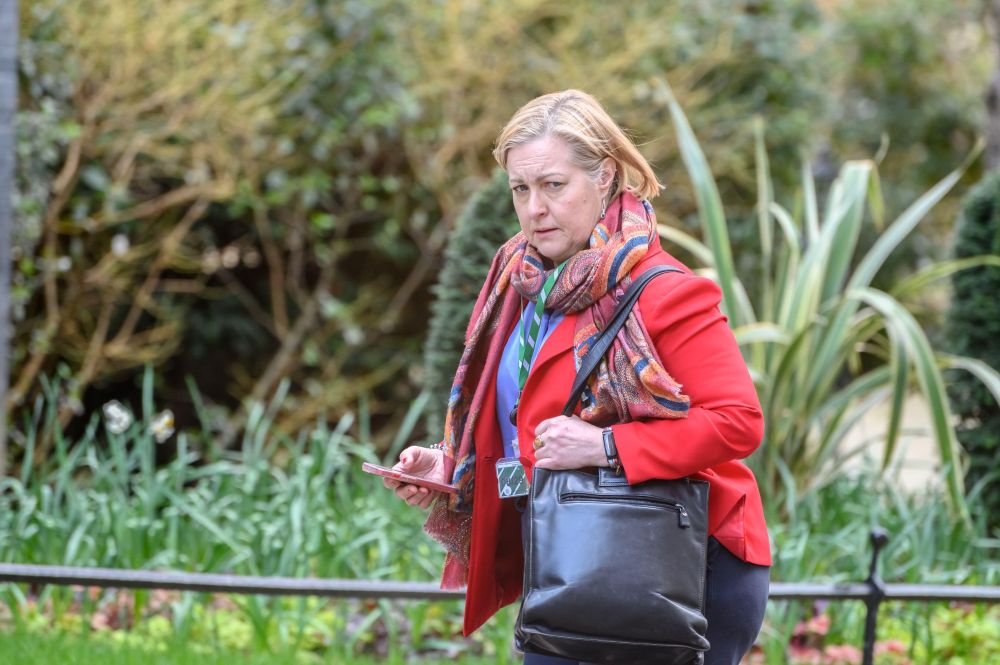
The Labour MP for Stourbridge, Cat Eccles, said wildfires in her Midlands constituency had left it feeling “almost like a war zone”. Wildfires in Stourbridge lasted days and destroyed 19 houses. Eccles told PoliticsHome that police officers were forced to break down doors and drag members of the public to safety.
Visiting Stourbridge on Friday, Burnham announced a temporary ban on the sale of disposable barbecues. Later that evening, a nationwide emergency alert warned people in England and Wales that there was a high risk of wildfires across the country and that the public “should not undertake any activity that could start a fire”.
Last week, the PM also announced funding for farmers to build on-farm reservoirs to help with future droughts and better access to water.
Speaking about the aftermath of the Fylingdales Moor/Langdale Forest fire last August, Hume said there had been a “massive gap” in the financial aid given to the community, after farmers lost equipment because they were on the front line fighting the fires. “Without them, there would have been not only loss of property, probably loss of life,” she said.
This year, the government has been “moving more decisively”, Hume added.
The APPG Chair wants the government to look at how the UK can learn from how other countries deal with wildfires, like how France and Spain fight fires from the sky: “We’ve got to improve our aerial capacity, there’s no doubt about that.”
She praised the government’s efforts to provide clearer leadership on wildfires, pointing to her recent calls with security minister Dan Jarvis and other Whitehall departments.
Speaking to PoliticsHome in his capacity as a constituency MP, Northern Ireland Secretary Chris Bryant said there have been several wildfires in his Rhondda and Ogmore constituency in recent years, but that the last fortnight has “felt different”.
Fellow Welsh Labour MP Ruth Jones, whose constituency of Newport West and Islwyn has suffered wildfires this summer, told PoliticsHome that she would like to see more education around the dangers of accidentally starting fires in hot and dry conditions.
>
Politics
Politics Home Article | Wandsworth Council Planning Country’s Largest Ever Council Tax Rise

3 min read
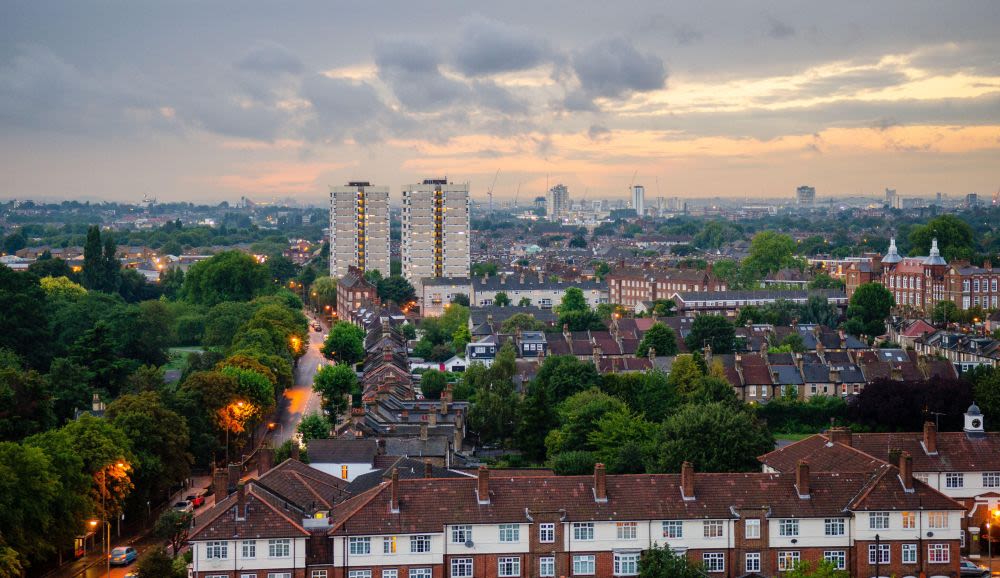
Exclusive: Wandsworth Council in south London is preparing England’s biggest ever council tax rise, which could be as much as 160 per cent, PoliticsHome understands.
If proposals under internal discussion go ahead, the rise will be much larger than the previous record set by Worcestershire Council last year when the Labour government granted it special permission to introduce a 9 per cent hike.
Wandsworth, which is Conservative-run after Labour lost control in May, currently has one of the lowest council tax rates in the country, with residents paying around 0.1 per cent of the value of the property they live in per year.
However, historically low levels of council tax combined with growing pressure on its finances have forced the council to prepare a record-breaking increase.
London MPs have warned that recent reforms to how central government distributes funding to local authorities will leave councils in the capital like Wandsworth particularly exposed to rising costs.
The government argues that the changes are needed to rebalance funding towards areas with higher deprivation so that it is “truly based on need”. As a result, many London boroughs are set to see their grant funding decrease, with Wandsworth’s projected to fall by around 40 per cent.
Westminster, which like Wandsworth was permitted to raise council tax above five per cent without a referendum for the next two years to raise more revenue, recently warned that it would have to raise council tax by up to 200 per cent to keep spending at current levels.
The Wandsworth tax rise is expected to be implemented in April 2027 if it goes ahead, with the rate then being frozen for the rest of the term, PoliticsHome understands.
Local Conservatives stress that residents in the south London borough would still pay one of the lowest council tax rates in the country even if the unprecedented rise goes ahead.
Both the council and the Conservative Party declined to comment.
Local authorities across the country are grappling with rising costs, driven in large part by spending on vital services including adult social care and homelessness.
A spokesperson for London Councils, which represents local government in the capital, told PoliticsHome “it is now almost impossible” for councillors in London “to protect frontline services for their communities” because “funding from central government remains wholly insufficient to meet these growing demands”.
Wandsworth Labour leader Simon Hogg, who ran the council until May 2026, said: “It beggars belief that Wandsworth Conservatives are planning Britain’s biggest ever council tax increase.”
“The Conservatives are pretending the council has run out of money so they can bring in austerity policies. They’ve already cut domestic abuse services, scrapped the youth bus and axed new council homes for 400 local people,” he told PoliticsHome.
Earlier this year, the council announced cuts to some schemes in a bid to save money, warning that tax would rise by up to 230 per cent without any fall in spending.
>

(Alamy)
4 min read
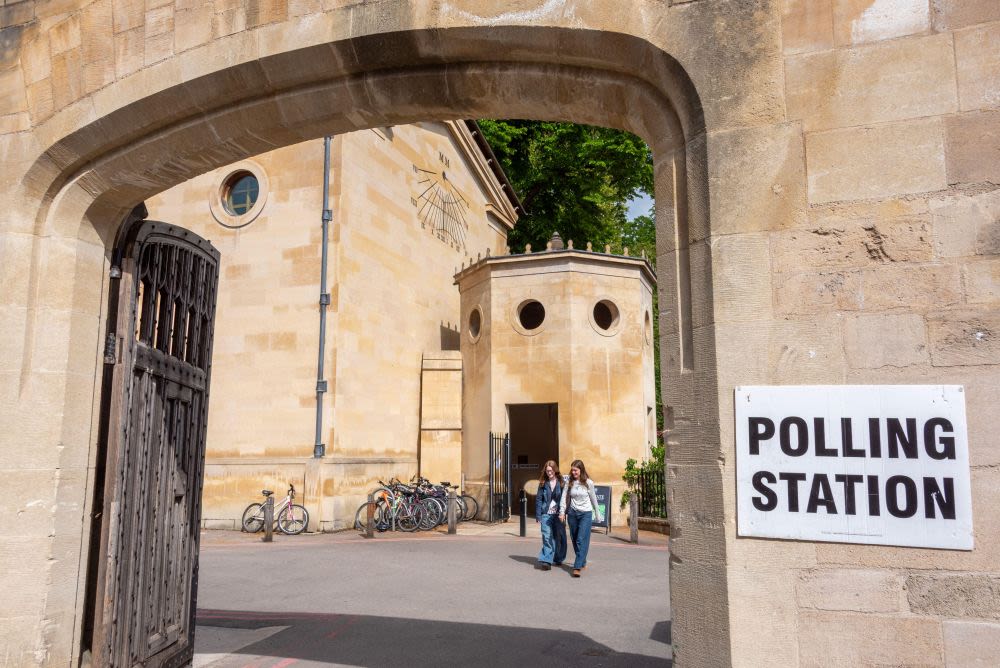
Students have launched a campaign urging the government to make it easier for those attending university or college to register to vote.
The National Union of Students UK (NUS) and Purpose Union are calling on ministers to roll out a nationwide auto-enrolment system that would “remove the needless barriers for universities and colleges”.
The push is backed by the Greens, with Brighton Pavilion MP Siân Berry saying “it is more important than ever that students and young people have a say in their futures.”
Launching the campaign, the NUS pointed to recent auto-enrolment trials at individual educational institutions that successfully boosted voter registration, such as a 2023 trial at the University of Nottingham, which increased voter registration applications from under 1,000 to over 23,000, representing 64 per cent of all students.
As part of this scheme, new and returning students were asked during the online registration process for the academic year whether they would be happy for their data to be shared with their term-time local council to allow voter registration.
While such a trial was a success, the NUS has warned that implementing auto-enrolment can be arduous and expensive for institutions when done individually, as it means setting up their own data-sharing arrangements with local authorities where their students live.
The NUS is calling on ministers to invest in a technical solution that would allow student data from across the country to be funnelled into the existing Individual Electoral Registration (IER) hub, which in turn would make it easier for students to join the electoral register.
The Labour government is committed to lowering the voting age to 16, but there are concerns about low levels of engagement among young people.
In 2023, the Electoral Commission found that around 60 per cent of adults under 20 were not registered to vote.
The Electoral Reform Society (ERS) says starting university is a “crucial point where many young people can either drop off the electoral register or miss being added altogether”.
“Auto-enrolling students as part of a wider automated voting scheme would help ensure that young people are correctly registered come polling day and able to cast that all-important, habit-forming first vote. This will ultimately increase participation in elections and strengthen our democracy,” ERS Chief Executive Darren Hughes told PoliticsHome.
The NUS is pushing the government to deliver this reform in the next year to ensure that students have the opportunity to take advantage of it before the next general election. While the next election is currently scheduled for 2029, there is speculation that Prime Minister Andy Burnham might be tempted to capitalise on positive polling and go to the country sooner.
NUS England President Favour Samuel said: “If the government doesn’t act soon, we risk another general election with unequal democratic processes which disproportionately prevent young people, minorities, and private renters from voting.”
Samuel added: “We want to see the government invest in a simple technical solution which would streamline the process, remove the needless barriers for universities and colleges and enable every young person to exercise their right to vote.”
Green MP Berry told PoliticsHome: “As the climate crisis, housing and living costs for young people intensify, it is more important than ever that students and young people have a say in their futures.
“The Labour Party has a responsibility to follow through on its commitment to improve voter registration rates, and I welcome this call from NUS and Prospect Union for the government to invest in student auto-enrolment.”
A Ministry of Housing, Communities and Local Government spokesperson told PoliticsHome: “We want to make sure registering to vote is easier for all – which is why we have said we will work towards a new automated voter registration system to make the process easier.
“Through the Representation of the People Bill, we are also making changes before the next general election which will make better use of data across government so that eligible voters can be easily identified and supported to register to vote.”
>

England to play Pakistan and Sri Lanka in tri-series this winter

Coventry City sign Fenerbahce forward Sidiki Cherif

Leeds Rhinos’ Brad Arthur eyeing Leaders’ Shield photo finish
-

 movies3 months ago
Search For Canadian TV Actor Stewart McLean Now Homicide Investigation
-

 Fashion9 years ago
These ’90s fashion trends are making a comeback in 2017
-
Fashion9 years ago
According to Dior Couture, this taboo fashion accessory is back
-
Fashion9 years ago
Model Jocelyn Chew’s Instagram is the best vacation you’ve ever had
-
Fashion9 years ago
Emily Ratajkowski channels back-to-school style
-
Fashion9 years ago
9 Celebrities who have spoken out about being photoshopped
-
Fashion9 years ago
Your comprehensive guide to this fall’s biggest trends
-
Fashion9 years ago
A photo diary of the nightlife scene from LA To Ibiza